Tooth 47 :
- Fractured MB cusp with Mesial Caries
- Positive response to Pulp Testing
- Very Tender to percussion
- Possible diagnoses
- Endodontic
- Reversible or irreversible pulpitis
- ==more pain history needed
- if irreversable then treatments are the same anyways!
- Primary acute apical periodontitis
- Reversible or irreversible pulpitis
- Crack based
- Dentine is exposed causing the tooth to feel cold
- Then it will be:
- Necrotic and infected Pulp
- Primary acute apical periodontitis
- Endodontic
Prognosis
EXAM Prognosis
Zitzmann et al. Prognosis Factors
Factors Good Questionable Hopeless Periodontal PPD ≤3 mm, BoP-, PAL loss ≤25%, FI degree ≤I Residual PPD ≥6 mm and BoP+, PAL loss of approximately 50%, FI degree II or III, root proximity Insufficient residual attachment Endodontics No clinical signs and absence of or decreasing radiolucency No clinical signs and persisting radiolucency Symptomatic situation and radiolucency, no further treatment feasible Implants Absence of BoP, suppuration, bone loss BoP with/without bone loss Mobility Prosthetic Sufficient residual tooth substance, adequate retention and resistance forms (ideally, 4-mm wallheight with 15- to 20-degree convergence angle, 1.5- to 2-mm ferrule) Reduced retention/ resistance form (<3-mm wall height and/or >25-degree convergence angle) Insufficient residual tooth substance (<1.5-mm circular ferrule), no crown lengthening or extrusion feasible (PPD: probing pocket depth; BoP: bleeding on probing; PAL: probing attachment level; FI: furcation involvement (degree 0 to 3))
Jotkowitz and Samet (2009) Classification System
Link to original
Class A Good Class B Fair Class C Questionable Class D Poor or Compromised Class X Hopeless or Illogical Periodontal condition 80%-100% bone support. Easily maintained. 50%-80% bone support. Can be well maintained. 30%-50% remaining bone support. Difficult to be well maintained. <30% bone support. Cannot be cleaned or maintained well and has evidence of active periodontal disease. < 30% bone support. Cannot be cleansed or maintained without acute outbreaks of periodontal infection. Restorative condition 80%-100% remaining sound coronal tooth structure. Easily restored. 50%-80% remaining sound coronal tooth structure. Restoration results in no infringement of biologic width, has adequate ferrule, good crown-root ratio. 30%-50% remaining sound coronal tooth structure. Achieving adequate ferrule would compromise crown-root ratio to some extent or affect adjacent structures. <30% sound tooth structure. Extent of lost tooth structure does not enable good ferrule to be achieved without totally compromising support of adjacent tooth structures or crown-root ratio. No remaining supragingival sound coronal tooth structure. Loss of tooth structure deep into the root dentin/canals. Endodontic condition Can receive straightforward primary endodontic treatment, or already has good endodontic therapy. Failing endodontic treatment can receive predictable re-treatment, or requires a difficult primary endodontic treatment. Failing endodontic treatment that is difficult to predictably re-treat. Failing endodontic treatment that cannot be predictably re-treated. A vertical root fracture or a tooth that has been retreated several times endodontically and/or surgically without resolution Occlusal plane & tooth position Tooth in correct occlusal plane, position, slightly deviated from ideal. Tooth out of correct occlusal plane, can be adjusted to function within correct occlusal plane. Tooth out of occlusal plane and requires multiple procedures to function within occlusal plane. Tooth severely out of occlusal plane, severely tilted that after extensive treatment will exhibit reduced crown-root ratio, prevent from serving as long-term unit in arch. Position impacts health of adjacent structures. A tooth so far super-erupted or tilted out of the occlusal plane that it cannot be restored into correct position function, or would interfere with the restoration of that arch or the restoration of the opposing arch.
- Fair restorative but need to investigate tooth to figure out amount of coronal tooth loss
- Fair periodontal (50-80%) bone support
- Good endodontic can receive straightfoward endodontic treatment
Acute Phase - 47
- Tooth Investigation
- Determine how far the crack will go and the prognosis of the tooth
Endo Acute Phase Pulpitis
- Visit 1
- Tooth investigation
- Negotiate Canals
- Apply anti - inflammatory/ remineralizing dressing
- Interim restoration
- Visit 1
Control Phase - 47 Circular transclusion detected: School/DMD2S2/DENT4219_GDP/Final-Exam/EXAM---Endo-Treatment
Circular transclusion detected: School/DMD2S2/DENT4219_GDP/Final-Exam/EXAM---Endo-Treatment
Definitive Phase - 47
Circular transclusion detected: School/DMD2S2/DENT4219_GDP/Final-Exam/EXAM---Endo-Treatment
- Also need crown because of crack!
Maintenance Phase - 47
Circular transclusion detected: School/DMD2S2/DENT4219_GDP/Final-Exam/EXAM---Endo-Treatment
Circular transclusion detected: School/DMD2S2/DENT4219_GDP/Final-Exam/EXAM---Endo-Treatment
- No increasing Radiolucency
- no caries etc
Tooth 26
- Pain in upper LHS
- Mesial Caries into outer 1/3 dentine
- Distal Caries into inner 1/2 dnetine
- Disto occlusal decay under restoratoin
- 26 has previously had a pulpotomy
- and MOD amalgam restoration
- some amalgam might be in the pulp hcamber
- Radiolucency could indicate
- J-shaped lesion = Vertical root fractoin
- Hopless prognosis
- ==additional Diagnostic testing = crack finder, transillumination or even cbct
- Hopless prognosis
- Endodontic
- 26
- pulpotomy with pulpless and infected root canal system
- secondary acute apical periodontitis
- Caries under restoration
- Prognosis is fair , but it does have a failing endodontic treatment
- J-shaped lesion = Vertical root fractoin
NCTSL
- Finding: Generalized erosion of palatal surfaces maxillary anterior Teeth
- Sensitivity : 12,11,21,22
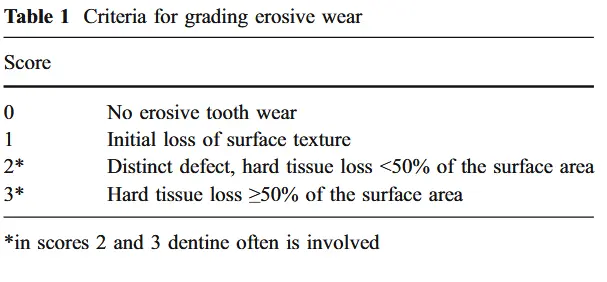
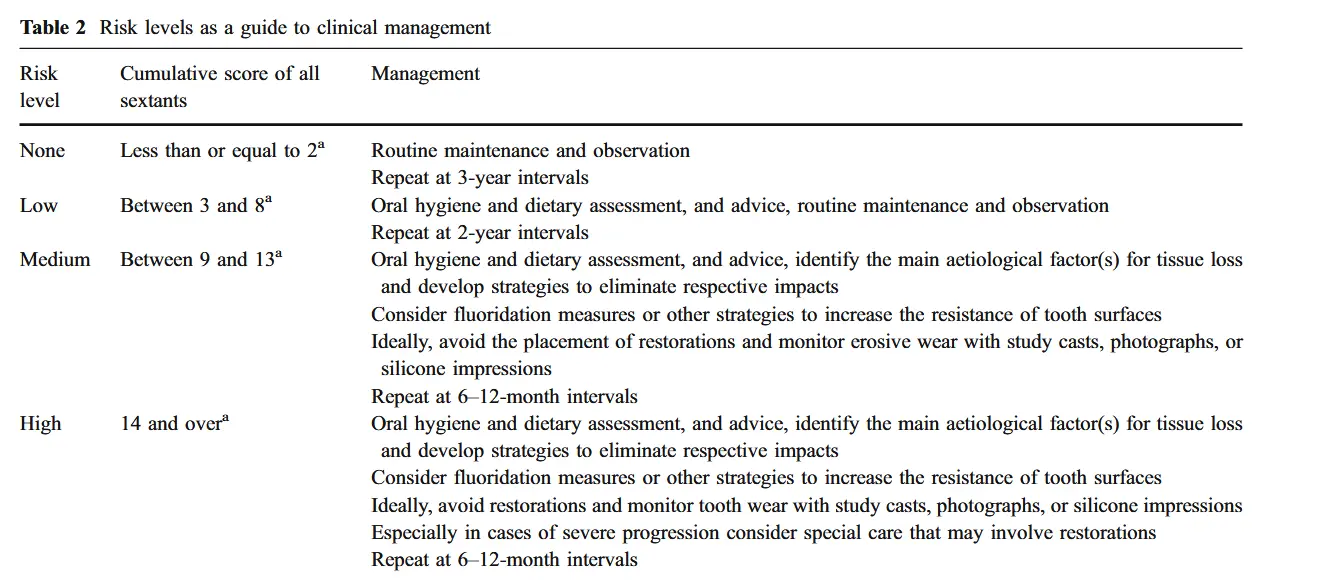
- BEWE 2