Diagnostic Procedures: Facial Analysis
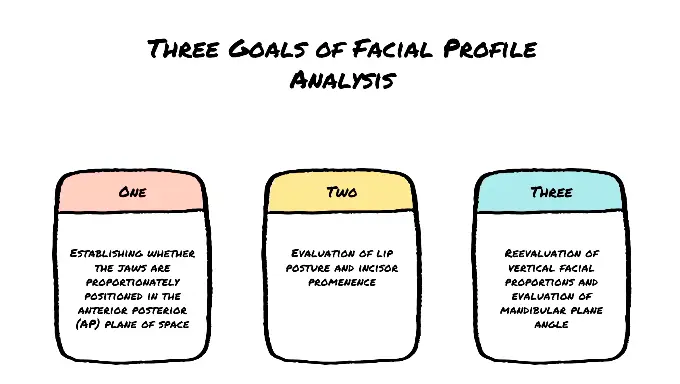
Facial analysis serves as a fundamental diagnostic tool to assess skeletal relationships, symmetry, and vertical proportions without radiographs.
Photographic Documentation
- Intraoral: Frontal, occlusal (upper/lower using mirrors), and direct lateral views (without mirrors to avoid parallax errors that distort molar relationships).
- Extraoral: Frontal and profile views with lips relaxed and in smile, using cheek/lip retractors for intraoral visibility.
Frontal Analysis
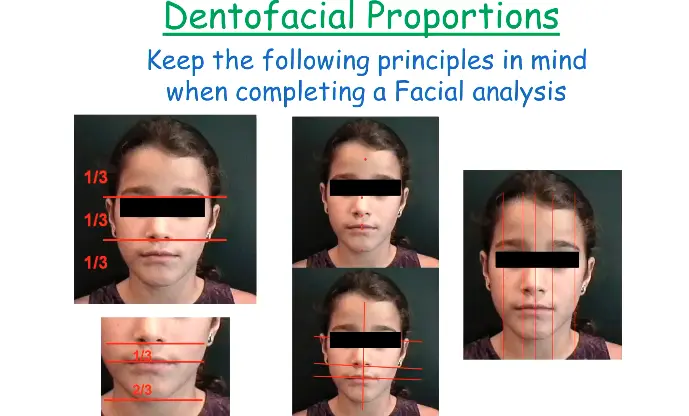
- Horizontal Fifths: Face divided into five equal vertical segments (central, medial, lateral) aligned with nasal bridge and chin; assesses symmetry and nasal deviation.
- Vertical Thirds:
- Upper third: Hairline to glabella.
- Middle third: Glabella to subnasale.
- Lower third: Subnasale to chin (further divided: mouth to chin should be lower two-thirds of lower face).
- Tooth Display: 2-3mm gingival exposure acceptable during smile; excessive display indicates vertical maxillary excess.
 Profile Analysis
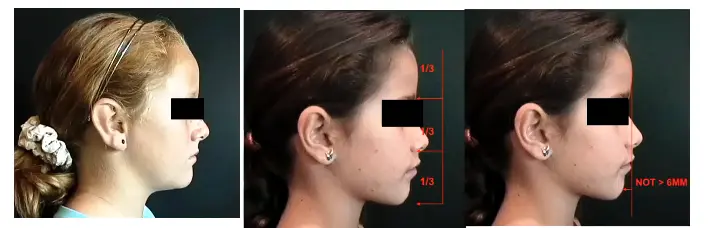
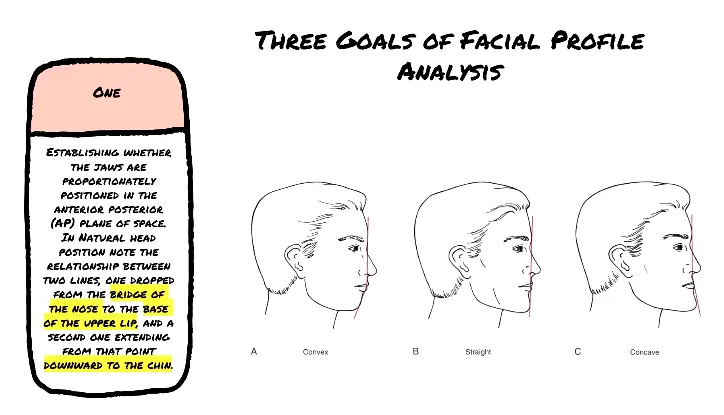
- Skeletal Patterns:
- Convex: Mandible posterior to maxilla (Class II tendency).
- Straight: Balanced jaws (Class I tendency).
- Concave: Mandible anterior to maxilla (Class III tendency).
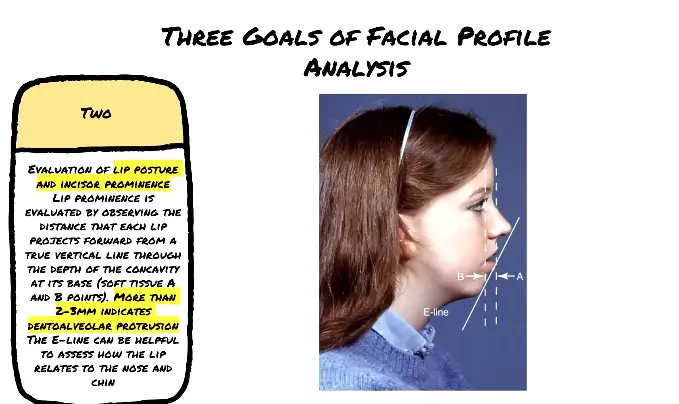
- Reference Lines:
- E-Line (Esthetic Line): Tip of nose to chin; evaluates lip prominence (lips should be 2-4mm behind line in Caucasian populations).
- Vertical Line from Nasion: Perpendicular to Frankfurt Horizontal; chin position relative to this line indicates mandibular anteroposterior position (beyond 6mm indicates deficiency).
- Vertical Dimension:
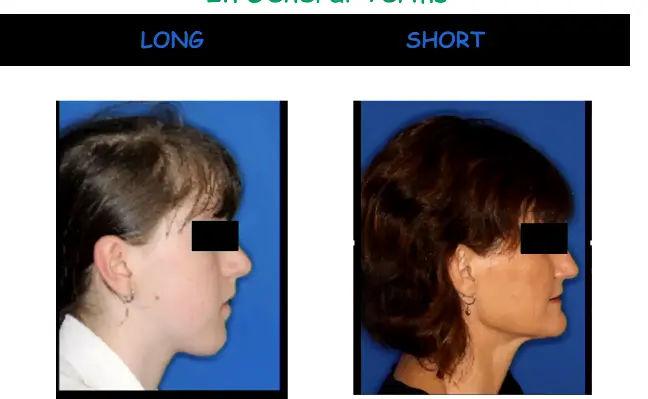
- Hypodivergent (Short Face): Reduced lower anterior face height, flat mandibular plane angle.
- Hyperdivergent (Long Face): Increased lower anterior face height, steep mandibular plane angle, often associated with open bite tendencies.
Diagnostic Application These soft tissue assessments predict underlying skeletal patterns (Class I, II, or III) and vertical growth patterns, guiding the selection of orthodontic mechanics (e.g., high-pull headgear for hyperdivergent patients, functional appliances for deficient mandibles).