Case 3: Dental Trauma
Patient Profile1
- Age: 3 years old
- Gender: Male
- Chief Complaint: Oral bleeding
 |  |
Clinical Overview
- Initial discussion and history taking
- Clinical and radiographic investigations
- Diagnosis based on clinical presentation and imaging
- Comprehensive management plan
Trauma History and Clinical Assessment
Injury History2
- Mechanism of Injury: Fell forwards onto the edge of play equipment while playing at a park
- Timing: 2 hours ago (acute presentation)
- Location: At the park
- Witnesses: Grandma and older brother
- ==Post-Injury Actions: The child was picked up, reassured, and brought directly for treatment.==
- ==Insurance/Legal Considerations: It is important to record the specific location of the accident (e.g., school, park, or under supervision) for potential insurance claims or legal purposes.==
Medical and Trauma Screening
- Loss of Consciousness: No
- Previous Dental Trauma: No
- Medical History: Fit and healthy; fully immunized
- Non-dental Injuries: None reported
- ==Concussion Screening: There was no loss of consciousness, vomiting, altered dizziness, or other signs of concussion.==
- ==Pain History: The patient reports that the area hurts.==
Clinical Examination Findings3
- ==Extra-oral Examination:==
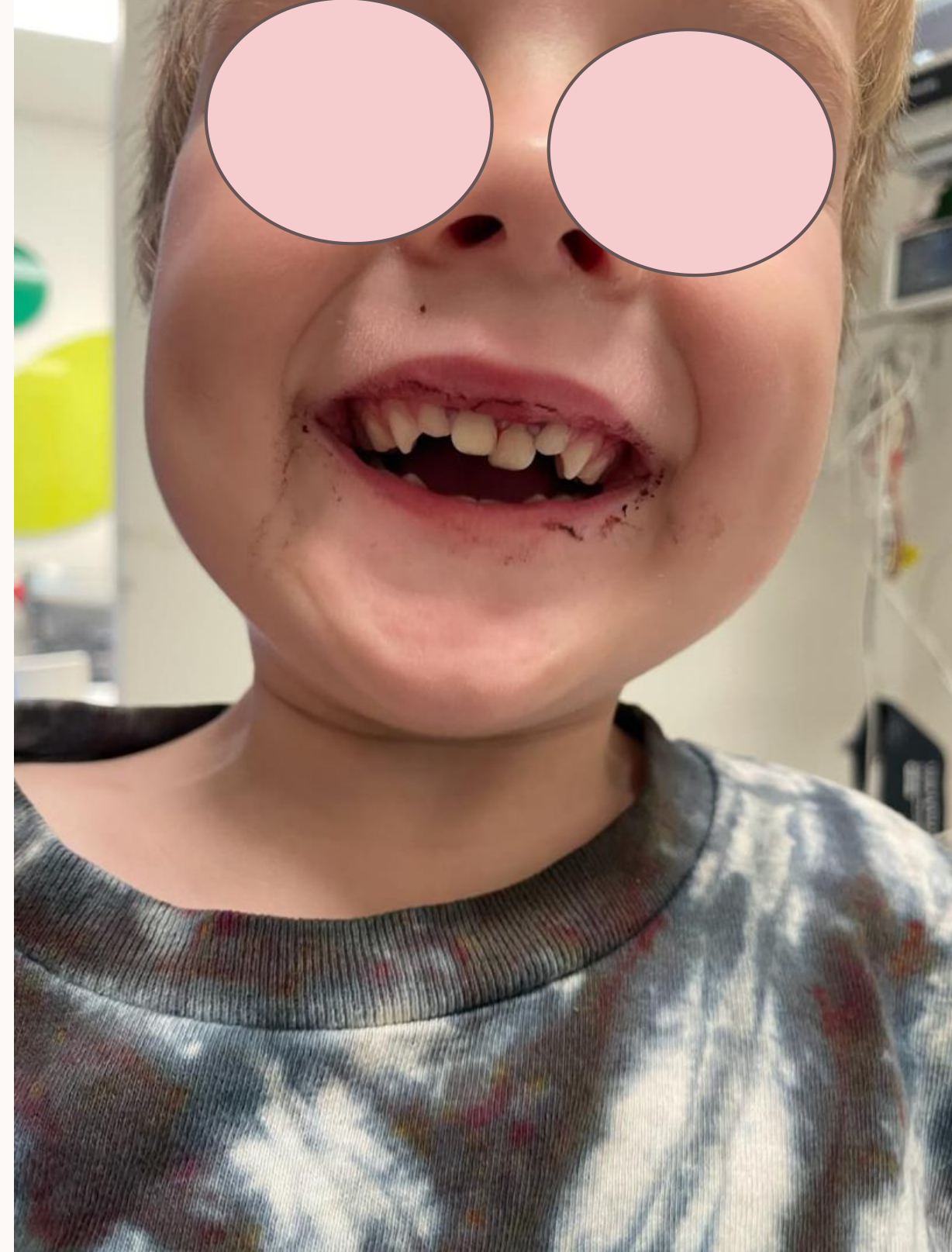
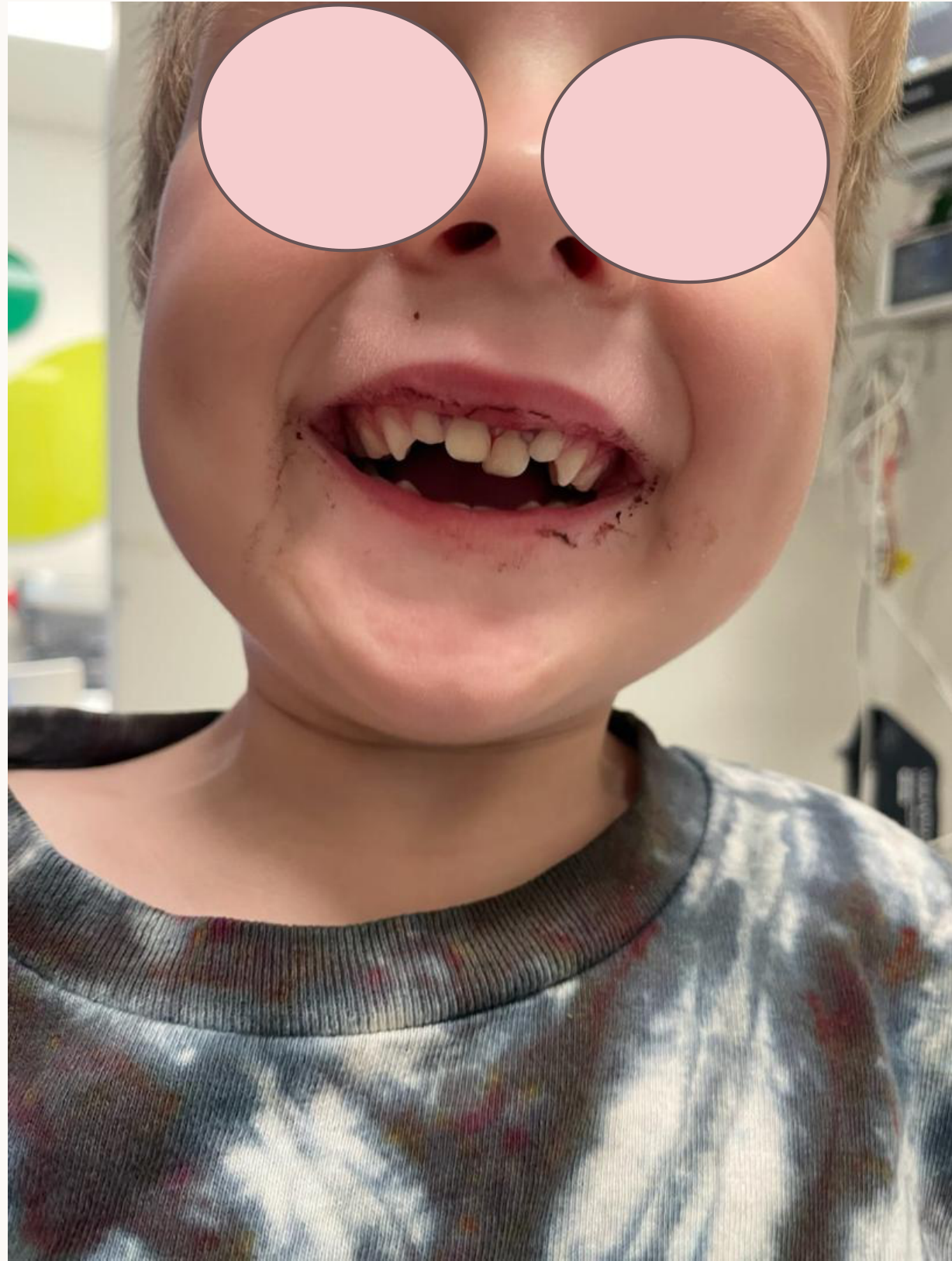
- Presence of dried blood on the mouth.
- The top lip appears slightly swollen.
- ==Intra-oral Examination:==
- ==Soft Tissues: Systematic check for degloving, lacerations, or horizontal tears.==
- Gingival Assessment:
- Bleeding at the gingival crevice of 51 and 61
- Soft tissue injuries: Mild gingival bruising only around the upper incisors. No significant lacerations or displacement of soft tissue.
- Tooth Displacement:
- Tooth 61 is palatally luxated and appears slightly extruded
- Mobility:
- Tooth 51: Grade I mobility
- Teeth 61 and 62: No mobility (for 61, the root apex is likely locked into bone)
- Tenderness to Percussion/Palpation:
- Teeth 51 and 61 are tender to touch
- ==Sensibility Testing: Not performed as it is highly unreliable in primary dentition and for patients of this age.==
Radiographic Diagnosis
Radiographic Imaging4
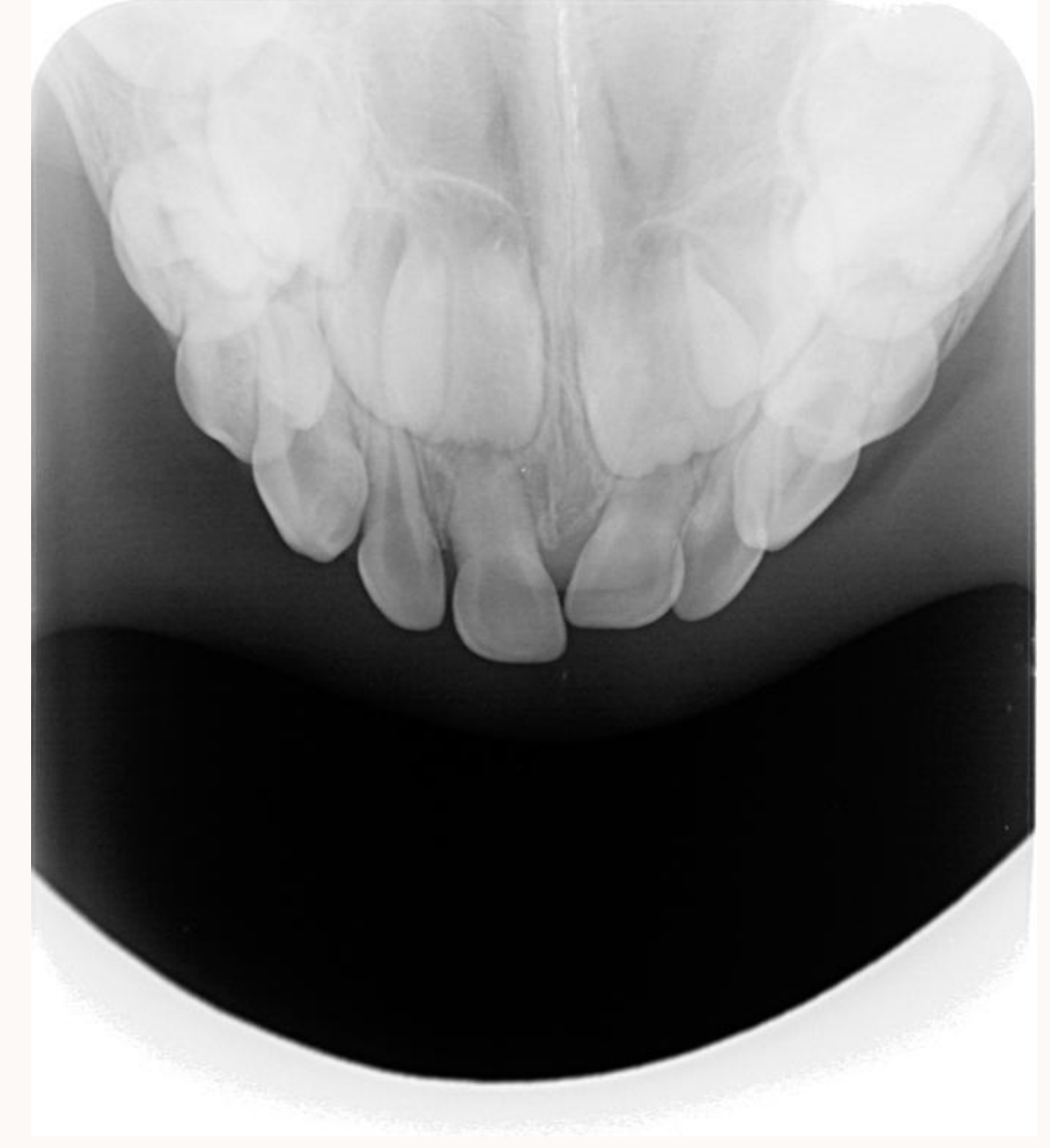
- Views Obtained: Maxillary occlusal and 3 Periapical (PA) radiographs
- ==Rationale: A full trauma series or anterior PAs are difficult to obtain due to the limited cooperation of a young child; a Maxillary Occlusal (Maxoc) is often the primary modality used.==
Radiographic Findings
- Tooth 51:
- Normal Periodontal Ligament (PDL) space and continuous PDL; no signs of displacement.
- Tooth 61:
- Root appears foreshortened due to the angulation of the tooth
- Tooth is displaced
- Widened PDL space at the apex.
- ==Tooth 62: PDL can be traced around the root; no significant findings.==
Clinical Diagnosis5
- Tooth 61: Lateral luxation in a palatal direction (The tooth is displaced palatally and locked into the bone).
- Tooth 51: Subluxation (Injury to the PDL resulting in mobility and crevicular bleeding without displacement).
[!example] Differential Diagnosis Note
A concussion injury would involve tenderness without mobility or bleeding; subluxation involves micro-tears and bleeding without displacement.
Trauma Management Plan
Treatment Plan by Tooth6
Tooth 61
- If there is occlusal interference: Extraction (Exo)
- If there is no occlusal interference: Conservative management (leave and monitor).
- ==Decision Criteria: Extraction is indicated if there is significant occlusal interference preventing the child from biting together. If an anterior open bite exists, the tooth may be left.==
- ==Contraindications: Do not reposition primary teeth due to the risk of iatrogenic damage to the underlying permanent tooth bud.==
- ==Monitoring: Long-term review is required to monitor for necrosis or resorption. If infection (e.g., a parulis/sinus tract) develops, the tooth must be extracted to protect the permanent successor.==
Tooth 51
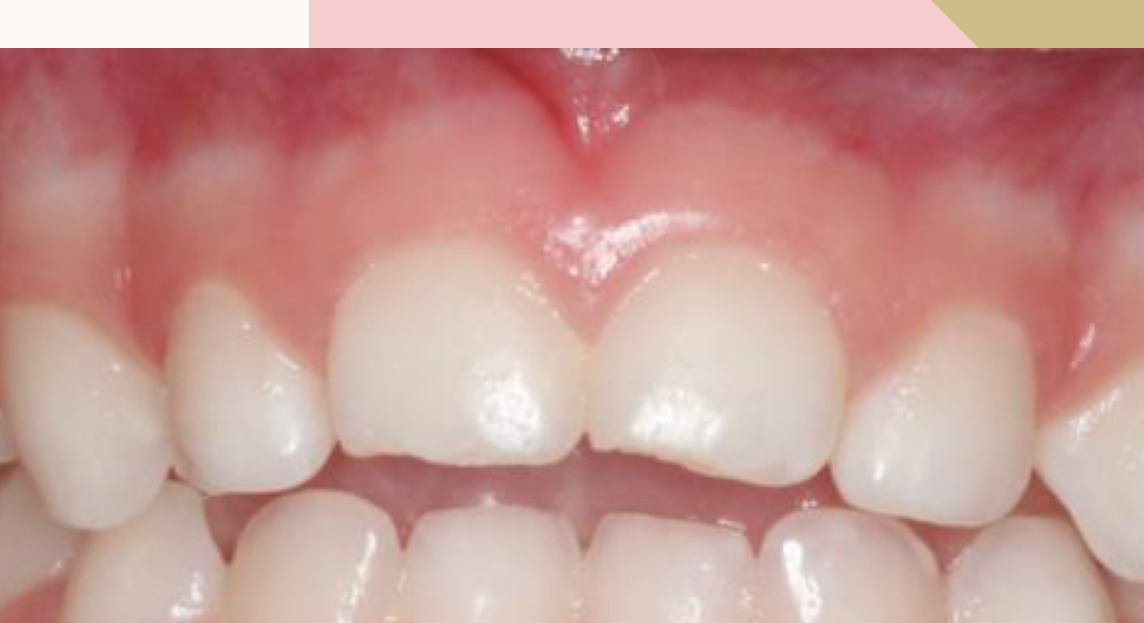
- Conservative management (Symptomatic management only).
 |  |
General Post-Trauma Instructions
- Soft diet to allow the area to heal.
- Analgesia as required (e.g., Panadol).
- Ongoing review and clinical monitoring
- ==Oral Hygiene:==
- Chlorhexidine gel applied with a finger if brushing is too painful on the first day.
- Gentle brushing with chlorhexidine gel starting from day two for one week.
- ==Home Monitoring: Parents should lift the lip nightly to check for signs of infection, such as a “gum boil” or draining sinus.==
- ==Habits: Use of a dummy (pacifier) is acceptable and may even help slowly guide a luxated tooth back toward its original position through light pressure.==
: Original PDF page 1: W2 Case Based Discussion 2, p.1 : Original PDF page 2: W2 Case Based Discussion 2, p.2 : Original PDF page 3: W2 Case Based Discussion 2, p.3 : Original PDF page 4: W2 Case Based Discussion 2, p.4 : Original PDF page 5: W2 Case Based Discussion 2, p.5 : Original PDF page 6: W2 Case Based Discussion 2, p.6 : Original PDF page 7: W2 Case Based Discussion 2, p.7 : Original PDF page 8: W2 Case Based Discussion 2, p.8 : Original PDF page 9: W2 Case Based Discussion 2, p.9 : Original PDF page 10: W2 Case Based Discussion 2, p.10 : Original PDF page 11: W2 Case Based Discussion 2, p.11 : Original PDF page 12: W2 Case Based Discussion 2, p.12 : Original PDF page 13: W2 Case Based Discussion 2, p.13 : Original PDF page 14: W2 Case Based Discussion 2, p.14 : Original PDF page 15: W2 Case Based Discussion 2, p.15 : Original PDF page 16: W2 Case Based Discussion 2, p.16 : Original PDF page 17: W2 Case Based Discussion 2, p.17 : Original PDF page 18: W2 Case Based Discussion 2, p.18 : Original PDF page 19: W2 Case Based Discussion 2, p.19 : Original PDF page 20: W2 Case Based Discussion 2, p.20 : Original PDF page 21: W2 Case Based Discussion 2, p.21 : Original PDF page 22: W2 Case Based Discussion 2, p.22 : Original PDF page 23: W2 Case Based Discussion 2, p.23 : Original PDF page 24: W2 Case Based Discussion 2, p.24 : Original PDF page 25: W2 Case Based Discussion 2, p.25 : Original PDF page 26: W2 Case Based Discussion 2, p.26 : Original PDF page 27: W2 Case Based Discussion 2, p.27 : Original PDF page 28: W2 Case Based Discussion 2, p.28 : Original PDF page 29: W2 Case Based Discussion 2, p.29 : Original PDF page 30: W2 Case Based Discussion 2, p.30 : Original PDF page 31: W2 Case Based Discussion 2, p.31 : Original PDF page 32: W2 Case Based Discussion 2, p.32 : Original PDF page 33: W2 Case Based Discussion 2, p.33 : Original PDF page 34: W2 Case Based Discussion 2, p.34 : Original PDF page 35: W2 Case Based Discussion 2, p.35 : Original PDF page 36: W2 Case Based Discussion 2, p.36 : Original PDF page 37: W2 Case Based Discussion 2, p.37 : Original PDF page 38: W2 Case Based Discussion 2, p.38 : Original PDF page 39: W2 Case Based Discussion 2, p.39