“Diagnosing cracked teeth and vertical root fractures begins with the Dental History and an objective clinical exam. What is the patient’s chief complaint? Does the pain occur when chewing (either biting down or upon release)? Are fillings fracturing or dislodging? Are there brief episodes of cold sensitivity? Is there tooth mobility? The following steps are involved when performing the objective exam. Current recommendations dictate the use of a surgical operating microscope to visualize the tooth because the naked eye often misses the subtle details of cracks or fractures. Greater visual acuity is also achieved when transilluminating the tooth surface from multiple directions. Minute flexure at the site of the crack can sometimes be seen under magnification, and staining using a dye can accentuate the visualization of cracks. In addition, the clinical tests that are recommended when trying to diagnose a cracked or fractured tooth are as follows: • Soft tissue exam for localized swelling or sinus tract(s) • Percussion • Palpation • Biting tests (each cusp should be tested) • Vitality tests (Electric pulp testing and cold testing) • Periodontal probing (flexible plastic probes) • Restoration removal (if necessary for complete visualization)”
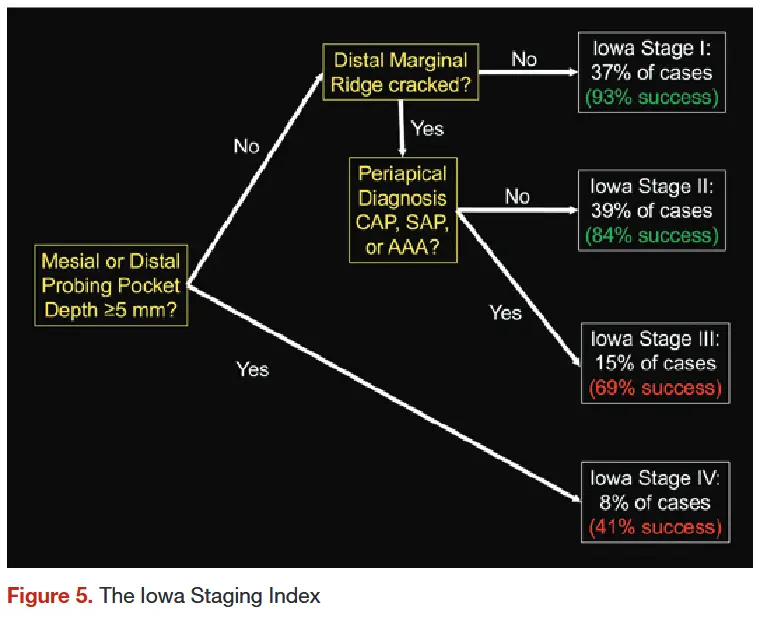
Iowa Staging Index
Clinical Treatment Improvements
“Reduction of occlusion is highly recommended as part of the initial treatment because the repetitive stress from bruxing or grinding is thought to lead to the propagation of a crack leading to fracture.” (pdf)