Oral Pathology1
Table Of Contents
Clinical Categories and Disease Classifications2
- Developmental Conditions
- Mucosal Lesions—Reactive
- Mucosal Lesions—Infections
- Mucosal Lesions—Immunologic Diseases
- Mucosal Lesions—Premalignant
- Mucosal Lesions—Malignant
- CT Tumors—Benign
- CT Tumors—Malignant
- Salivary Gland Diseases—Reactive
- Salivary Gland Diseases—Benign
- Salivary Gland Diseases—Malignant
- Lymphoid Neoplasms
- Odontogenic Cysts
- Odontogenic Tumors
- Bone Lesions—Fibro-Osseous
- Bone Lesions—Giant Cell
- Bone Lesions—Inflammatory
- Bone Lesions—Malignant
- Hereditary Conditions
General Principles Of Oncology
Clinical Presentation
Most cancers manifest as non-painful and non-healing indurated ulcers. Induration is a key clinical component for most of the cancers discussed.
High-Risk Sites:
- Floor of the mouth (Number one high-risk site)
- Posterior lateral tongue (Number two high-risk site)
Classification Of Cancer Types3
Cancers are classified based on the tissue of origin:
- Carcinoma: Originates from epithelial tissue
- Sarcoma: Originates from mesenchymal (connective) tissue
- Leukemia: Originates from blood-forming tissues
- Lymphoma: Originates from the lymphatic system
Stages Of Cancer Progression4
The progression of cancer typically follows these stages:
- Dysplasia: Pre-cancerous changes.
- Carcinoma in situ: A state where the entire thickness of the epithelium is affected, but the basement membrane remains intact.
- Malignant neoplasm: Defined as cancer once it invades past the basement membrane.
- Local invasion: Extension into the underlying connective tissue.
- Metastasis: Gaining access to blood or lymph vessels to travel to distant sites in the body
- TNM Staging: A system used to describe the stage of tumor invasion (T), node involvement (N), and the presence of metastasis (M)..

Malignant Mucosal Lesions
Verrucous Carcinoma
Etiology and Characteristics5
- Tobacco use and HPV 16 and 18 are primary causes.
- Can arise from proliferative verrucous leukoplakia.
- Characterized as a slow-growing malignancy.
Snuff Dipper's Carcinoma
Verrucous carcinoma is sometimes referred to as "snuff dipper's carcinoma."
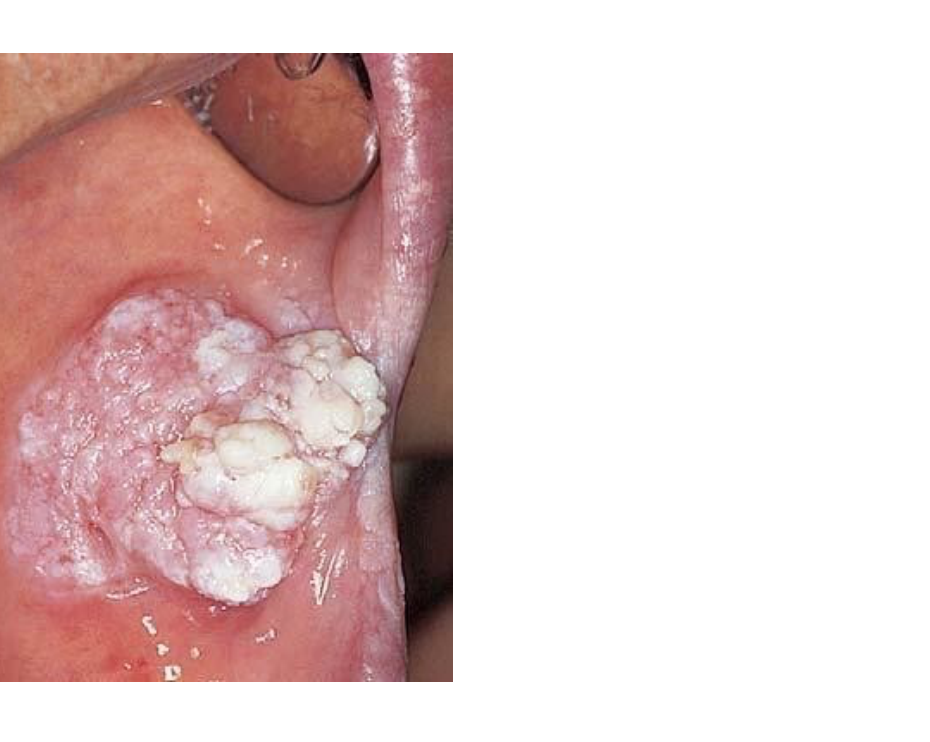
Treatment
- Treatment involves surgical excision.
Squamous Cell Carcinoma
Pathogenesis and Risk Factors6
- Caused by the activation of oncogenes or the inactivation of tumor suppressor genes.
- There is an increased incidence of oropharyngeal SCC associated with HPV 16 and 18.
- Plummer-Vinson Syndrome: A condition characterized by mucosal atrophy, dysphagia, and iron deficiency anemia; it is associated with an increased risk of oral cancer
- Mucosal atrophy often presents as an atrophic tongue.
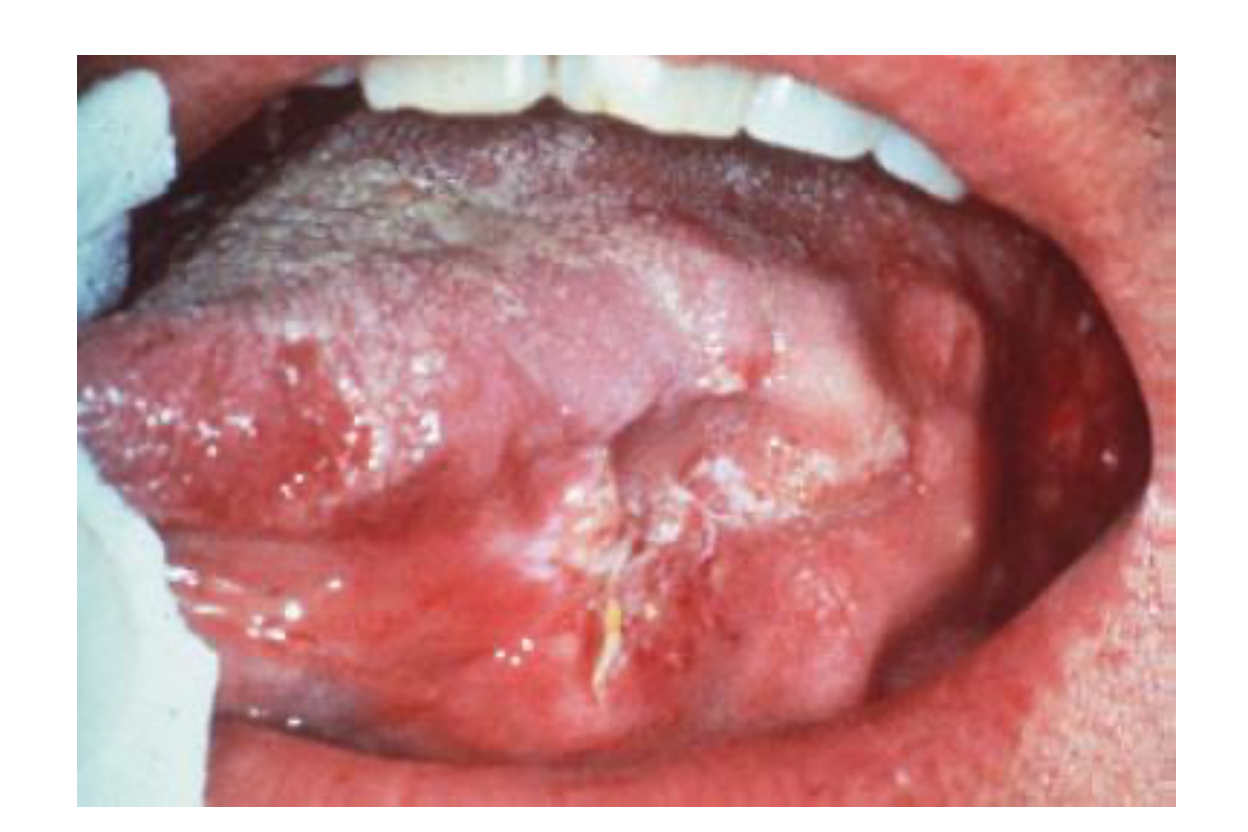
Prognosis and Treatment
- The 5-year survival rate is approximately 50%.
- Treatment options include surgical excision or radiation therapy.
Basal Cell Carcinoma7
- Etiology: Primarily due to sun damage.
- Behavior: Very rarely metastasizes.
- Considered one of the least dangerous types of cancer.
- Treatment: Managed through surgery.

Oral Melanoma
Clinical Features8
- A malignancy of the melanocytes.
- Typically presents with a dark, purplish-black appearance.
- High-risk sites for occurrence include the palate and the gingiva.
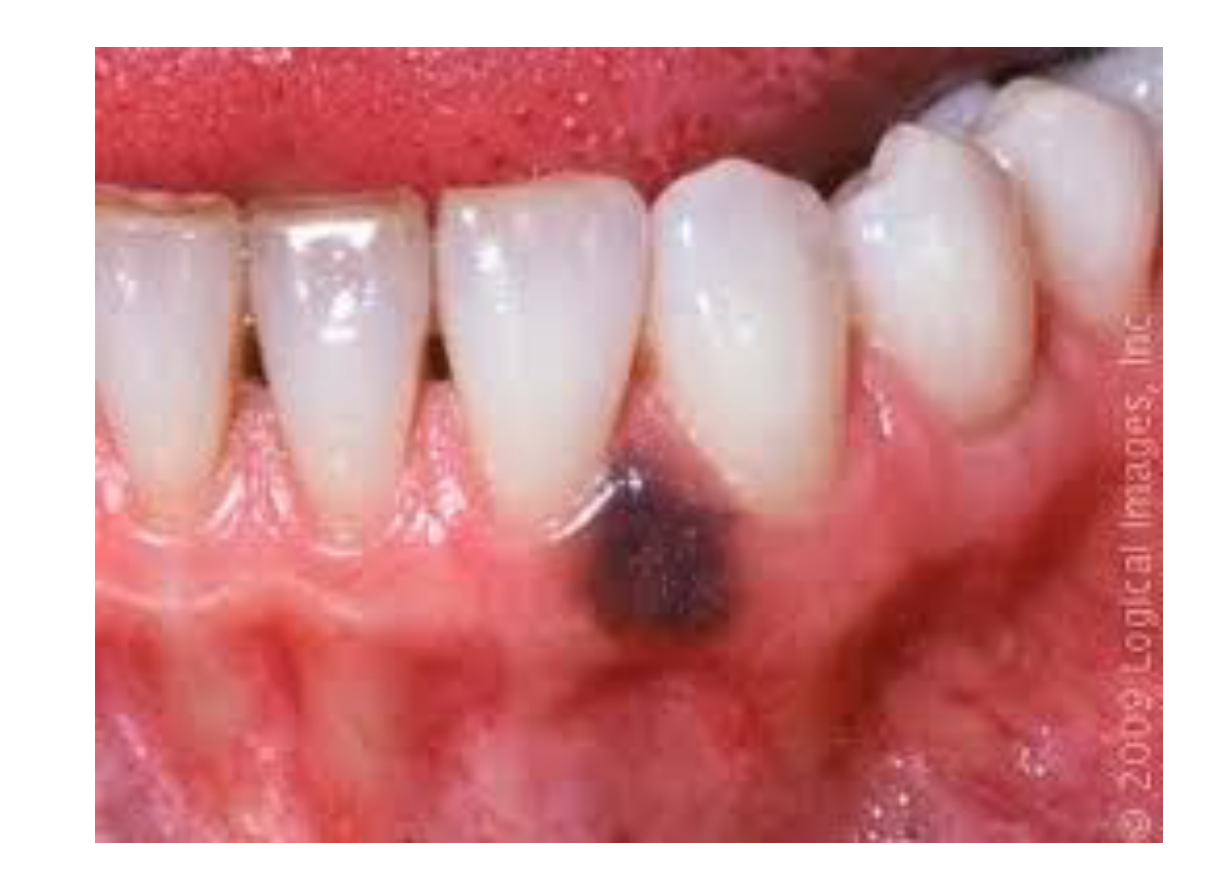
Prognosis
- The 5-year survival rate for skin lesions is greater than 65%.
- The 5-year survival rate for oral lesions is significantly lower, at less than 20%.
Footnotes
-
Original PDF page 1: Oral Pathology - 06 - Mucosal Malignant Lesions, p.1 ↩
-
Original PDF page 2: Oral Pathology - 06 - Mucosal Malignant Lesions, p.2 ↩
-
Original PDF page 3: Oral Pathology - 06 - Mucosal Malignant Lesions, p.3 ↩
-
Original PDF page 4: Oral Pathology - 06 - Mucosal Malignant Lesions, p.4 ↩
-
Original PDF page 5: Oral Pathology - 06 - Mucosal Malignant Lesions, p.5 ↩
-
Original PDF page 6: Oral Pathology - 06 - Mucosal Malignant Lesions, p.6 ↩
-
Original PDF page 7: Oral Pathology - 06 - Mucosal Malignant Lesions, p.7 ↩
-
Original PDF page 8: Oral Pathology - 06 - Mucosal Malignant Lesions, p.8 ↩