Prognosis of Periodontally Involved Teeth1
Dr Emma Perry | BDSc, AssocDeg DH, GradCert HPEd
Content courtesy of: Associate Professor Leticia A Miranda | DDS, Specialist (Perio), MSc (Perio), PhD (Perio, Medicine) Dr Anna Hughes | BDS, MSc, FDSRCPS, MRACDS (Perio) Dr Pradeep Koppolu | BDs, MDS (Perio), PhD, FICOI, FPFA, PDCR
Learning Outcomes and Lecture Outline2
- Define prognosis.
- Explain the importance of assigning periodontal prognosis before treatment and after each examination.
- Discuss the factors which affect periodontal prognosis.
- Compare different periodontal prognosis systems.
Learning Outcomes3
- Define prognosis.
- Explain the importance of assigning periodontal prognosis before treatment and after each examination.
- Discuss the factors which affect periodontal prognosis.
- Compare different periodontal prognosis systems.
Lecture Outline
- Define prognosis.
- Explain the importance of assigning periodontal prognosis before treatment and after each examination.
- Aims of prognosis
- Prognosis in context
- Prognosis systems
- Challenges and complexity
- Factors to consider
- Previous systems
- Future of prognosis
- Prognosis at OHCWA
- Case examples
- Implants
Introduction to Periodontal Prognosis
Definition and Clinical Importance45
Prognosis
- Greek
- Pro = before
- Gno = “to know”
- Foreknowledge
- The likely outcome or course of a disease; the chance of recovery or recurrence
Historically based on Experience
Aetiopathogenesis and Risk Factors
Statistics / Validated models or systems
- Prognosis is the prediction of the probable outcome of an individual’s current medical condition. A prognosis is made on the basis of the normal course of a disease, the individual’s physical and psychological condition, and additional factors such as therapeutic approach.
.
Prognosis
Aim: To predict the outcome of periodontally involved teeth, leading to better decision-making, treatment planning, and long-term predictable results
Prognosis is an essential part of periodontal care, together with diagnosis/treatment/maintenance
It directly influences treatment planning
Involves the analysis of all contributing factors to periodontitis - hence a good history, examination, and accurate diagnosis are essential prerequisites
Prognosis is a complex process and requires a multidisciplinary approach involving the patient
Prognosis is affected by the experience and skill of the clinician
McGowan et al 2017
Prognosis provides guidance
Questions from dentist to periodontist (Or dental student to tutor)
- Can I go ahead and restore this periodontally involved tooth?
Questions from patient to dentist
- How long will my teeth last?
- How successful will this treatment be?
- Should I have the tooth extracted and replaced with an implant?
- Should I have the tooth extracted and added to my denture? Will I then need a new denture in a few years?
Time and value for money
 |  |
 |
Prognosis in the Context of Therapy6
 |  |  |
 |  |
Challenges in Determining Prognosis
Multifactorial Nature and Provisional Prognosis78
Challenges of determining prognosis
Current consensus is periodontitis is a multifactorial disease influenced by many risk factors which individually impinge on disease progression, treatment management, and response.
- Prognosis may change for better or worse.
- Constant reassessment of prognosis necessary.
Provisional Prognosis
For periodontal prognosis, the McGuire & Nunn 1996 classification as modified by Kwok and Caton 2007 prognosis can be utilised as this is very familiar to the current prognosis system used for restorative treatment plans. The determination of prognosis is an evolving and dynamic process. Prognosis can change after treatment as well as after recurrent disease activity. Therefore, prognostication occurs after each examination of the patient (Kwok & Caton 2007).
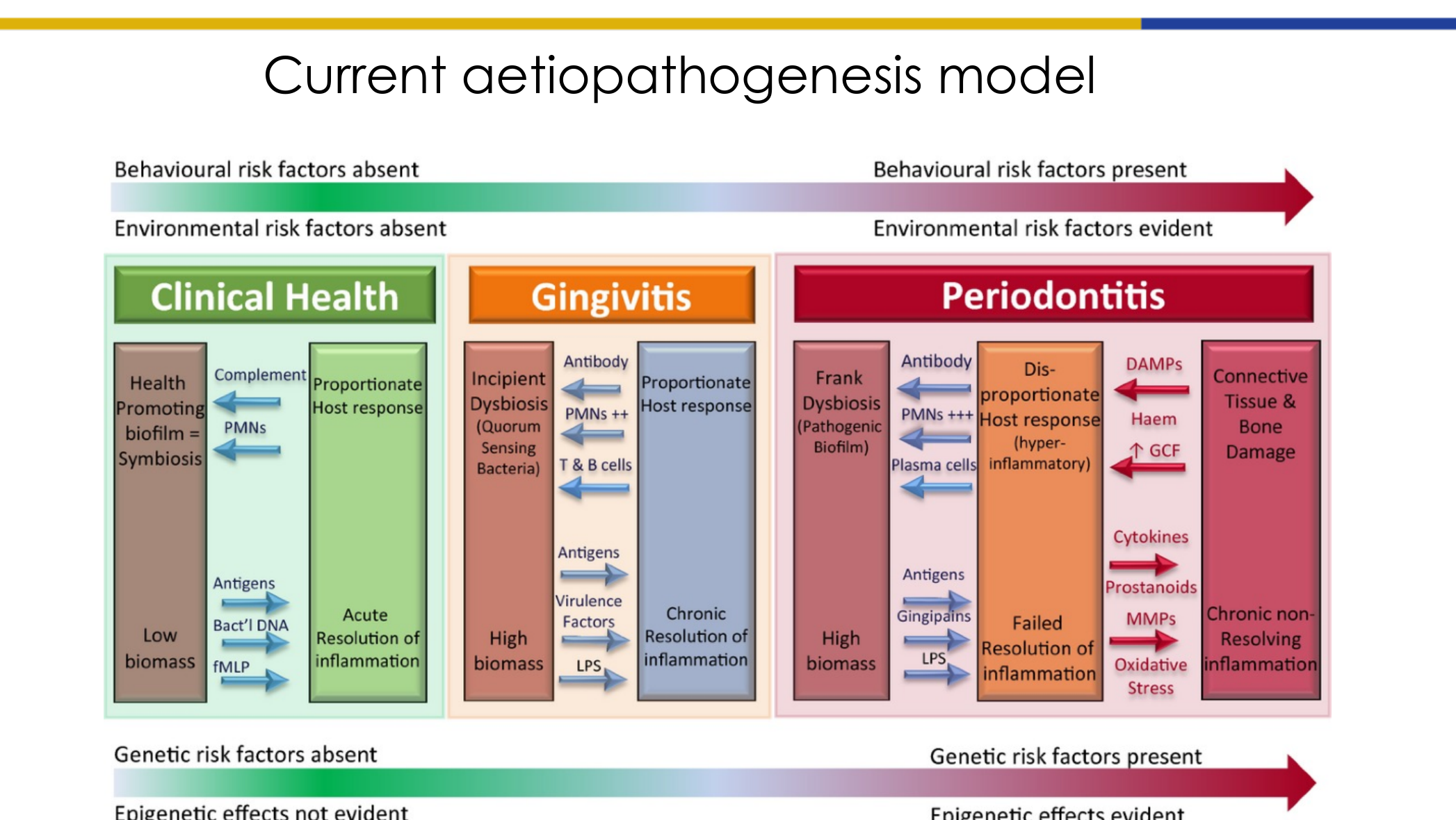
Challenges of determining prognosis Current aetiopathogenesis model
Behavioural risk factors absent Behavioural risk factors present Environmental risk factors absent Environmental risk factors evident
Health Promoting biofilm = Symbiosis Complement PMNs Proportionate Host response Antigens Bact’l DNA fMLP Low biomass Acute Resolution of inflammation
Incipient Dysbiosis (Quorum Sensing Bacteria) Antibody PMNs ++ T & B cells High biomass Chronic Resolution of inflammation
Antigens Virulence Factors LPS
Frank Dysbiosis (Pathogenic Biofilm) Antibody PMNs +++ Plasma cells DAMPs Haem ↑ GCF Cytokines Prostanoids MMPs Oxidative Stress High biomass Failed Resolution of inflammation Connective Tissue & Bone Damage Chronic non-Resolving inflammation
Antigens Gingipains LPS
Genetic risk factors absent Genetic risk factors present Epigenetic effects not evident Epigenetic effects evident
Chappelle 2015
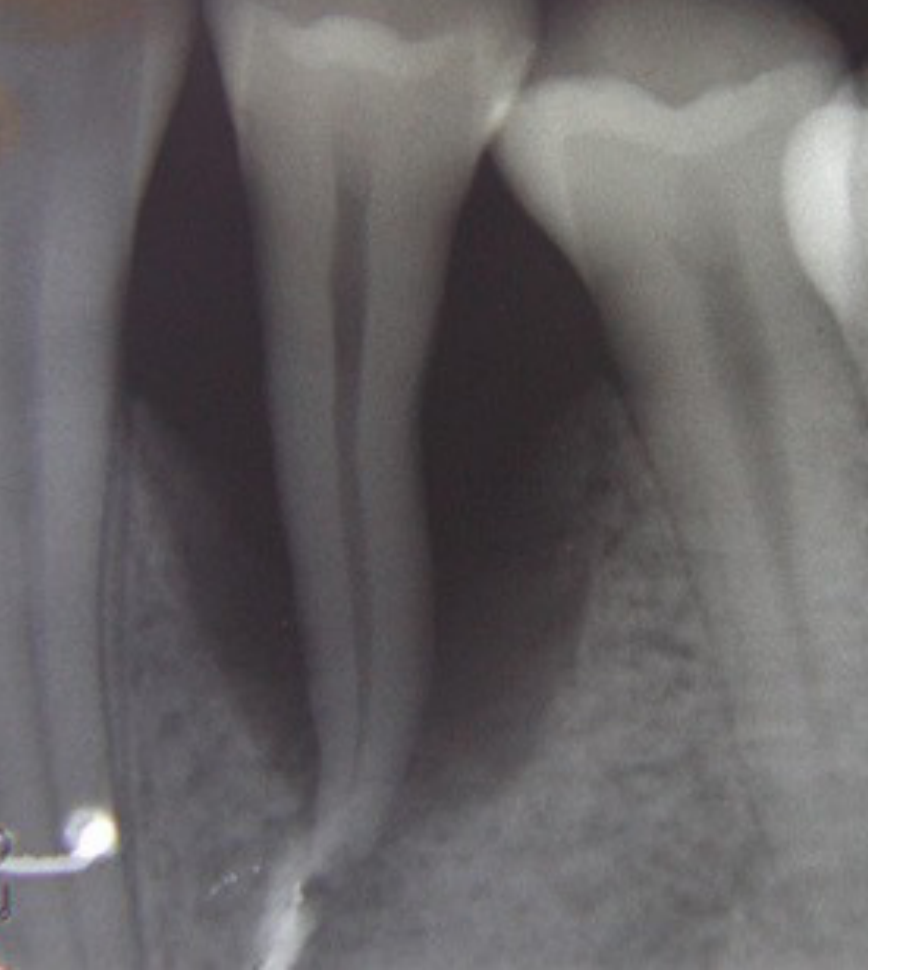
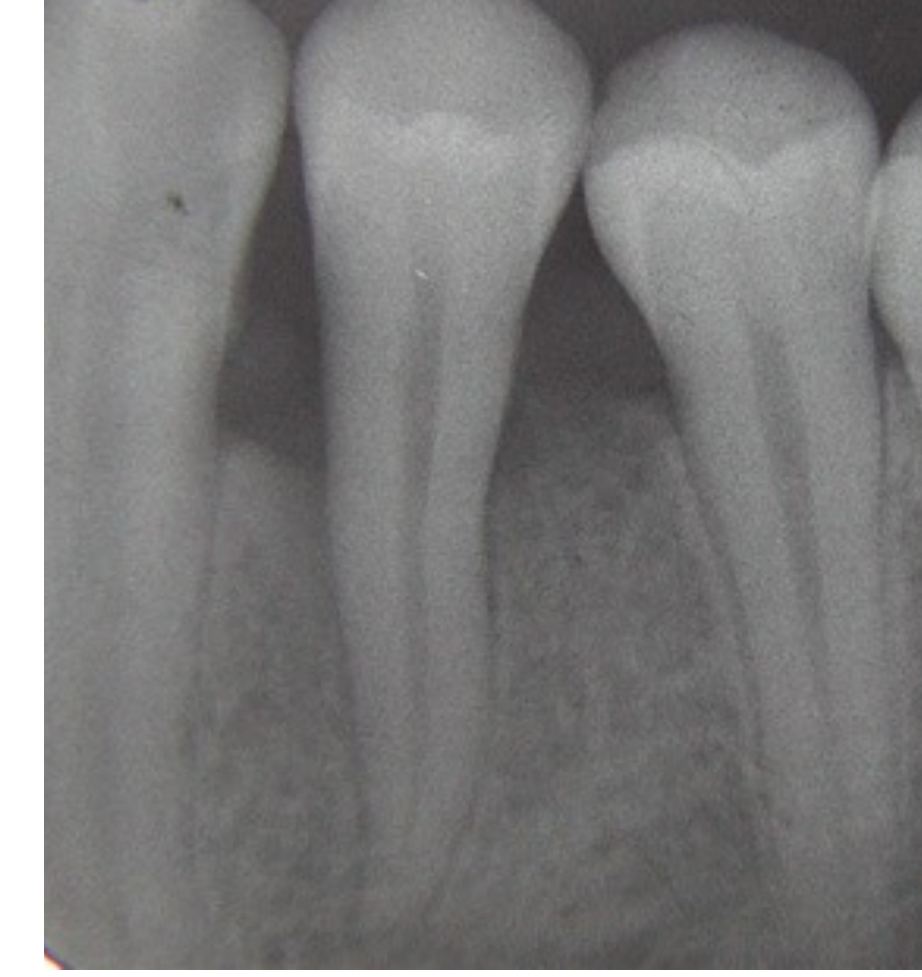
Challenges of determining prognosis
Left Column: How accurate are we at determining the prognosis of periodontally compromised teeth? [Dental Radiograph showing periodontal bone loss]
Right Column: The University of Western Australia | Are we too hasty in making the decision to extract? [Dental Radiograph showing healthy periodontal bone levels]
 |  |
 |
Prognosis Versus Actual Clinical Outcomes910
Prognosis vs actual outcome
Prognosis versus actual outcome. II. The effectiveness of clinical parameters in developing an accurate prognosis McGuire & Nunn 1996
- Assigned 5 categories
- Good, fair, poor, questionable hopeless
- Treated and maintained over 8 years
- Good prognosis stayed relatively stable
- Fair prognosis category mostly improved
- Poor/questionable categories generally improved
- 25% of hopeless teeth were retained after 8 years
- Overall accuracy 35 %
Prognosis vs actual outcome THE UNIVERSITY OF WESTERN AUSTRALIA
Periodontal attachment levels of extractions presumably performed for periodontal reasons Splieth et al 2002
• Looked at what were dentists “forceps level” • 500 teeth extracted for periodontal reasons • A considerable number of teeth were extracted at an attachment level of 50-70% • Concluded that the threshold for periodontal extractions was too low • Called for an improvement in the knowledge of periodontal diagnosis and treatment

Factors Determining Prognosis
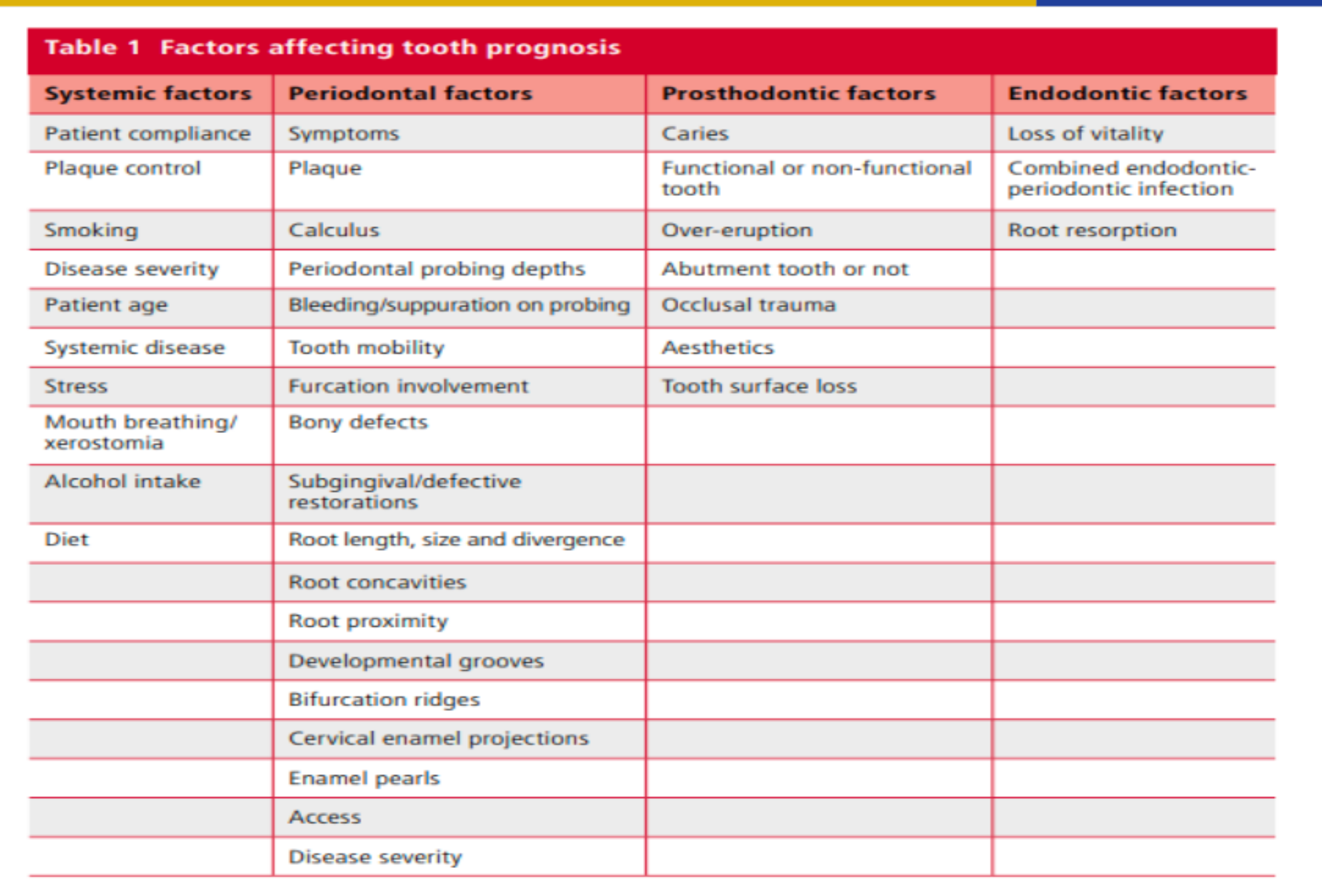
Overview of Prognostic Factors11
Table 1 Factors affecting tooth prognosis
| Systemic factors | Periodontal factors | Prosthodontic factors | Endodontic factors |
|---|---|---|---|
| Patient compliance | Symptoms | Caries | Loss of vitality |
| Plaque control | Plaque | Functional or non-functional tooth | Combined endodontic-periodontic infection |
| Smoking | Calculus | Over-eruption | Root resorption |
| Disease severity | Periodontal probing depths | Abutment tooth or not | |
| Patient age | Bleeding/suppuration on probing | Occlusal trauma | |
| Systemic disease | Tooth mobility | Aesthetics | |
| Stress | Furcation involvement | Tooth surface loss | |
| Mouth breathing/xerostomia | Bony defects | ||
| Alcohol intake | Subgingival/defective restorations | ||
| Diet | Root length, size and divergence | ||
| Root concavities | |||
| Root proximity | |||
| Developmental grooves | |||
| Bifurcation ridges | |||
| Cervical enamel projections | |||
| Enamel pearls | |||
| Access | |||
| Disease severity |
Prognostic Factors:
Factors which are associated with a particular outcome among diseased individuals. i.e. likelihood of survival vs likelihood of improvement.
One essential element of prognosis is the definition of the intended outcome.
- Patient level factors
- Local/Tooth level factors
- TIME
- Defined outcome
Individual Tooth Versus Overall Prognosis12
Prognosis for individual teeth vs overall
Periodontitis does not progress uniformly in the dentition, and has general/systemic factors as well as local/tooth-related factors.
INDIVIDUAL
- Considers each individual tooth as periodontitis does not occur uniformly and has an episodic nature
- Considers other aspects: endo, restorative…
OVERALL
- Considers dentition as a whole.
- Should include general factors that affect the dentition as a whole too
- Should treatment be undertaken?
- Is treatment likely to succeed?
- When restorative treatments are needed, are the teeth able to support them?
Patient Level Factors1314
- Age
- Patients’ expectations
- Risk factors (smoking, diabetes, stress)
- Compliance to biofilm control
- Compliance to maintenance care
The University of Western Australia
Patient Age
For two patients with comparable levels of remaining connective tissue attachment and alveolar bone, the prognosis is generally better for the older of the two. For the younger patient, the prognosis is not as good because of the shorter time frame in which the periodontal destruction has occurred; the younger patient may also have an aggressive pattern of disease progression because of systemic disease, smoking, or other factors. In addition, although the younger patient would ordinarily be expected to have a greater reparative capacity, the occurrence of so much destruction in a relatively short period would exceed any naturally occurring periodontal repair.
Local and Tooth Level Factors151617
Local/Tooth level factors
Anatomic factors • Short tapered roots • Cervical enamel projections • Enamel pearls • Root concavities • Developmental grooves • Root proximity
Tooth position and occlusion • Furcation involvement • Crown-root ratio • Abutment tooth • Traumatic occlusion
Disease severity • BOP • PPD • CAL • Bone loss for age
Distribution and type of bone loss • Localised • Generalised • Horizontal • Infrabony
Tooth mobility
Other involvements • Caries • Endodontic
The University of Western Australia
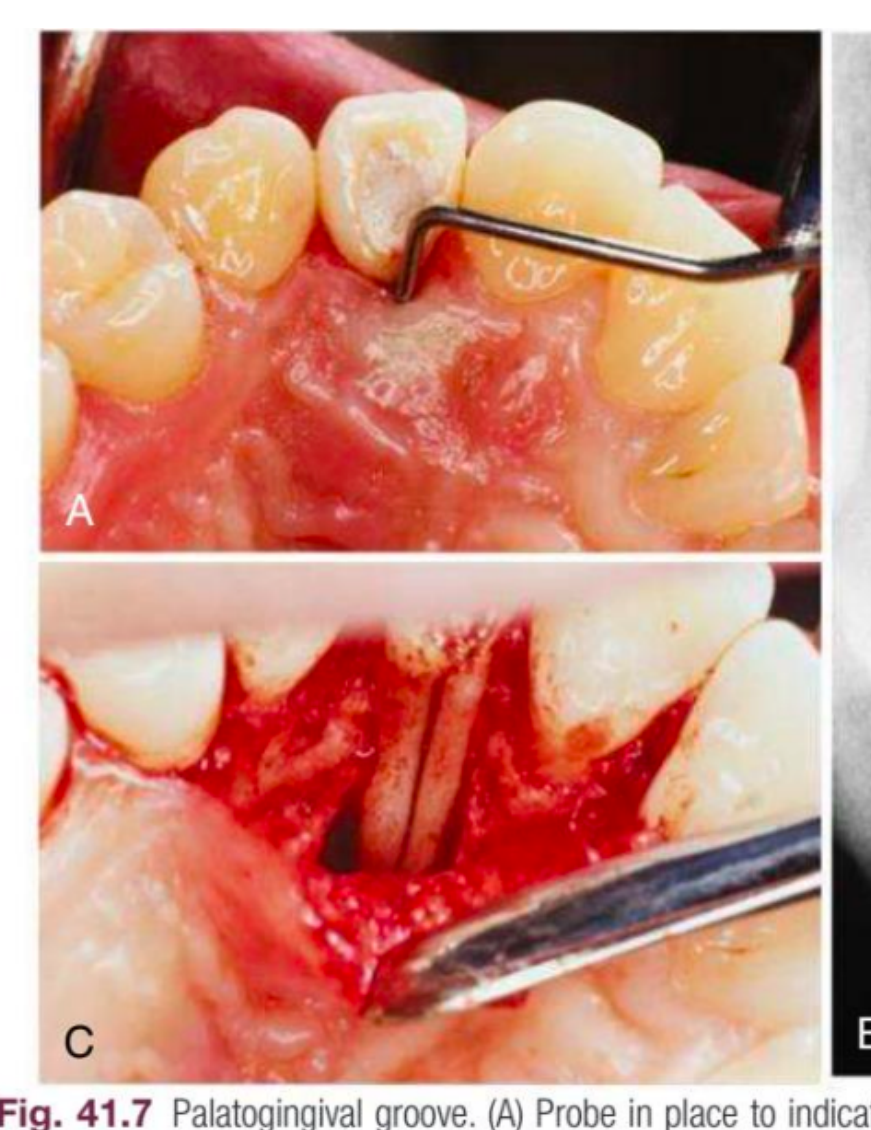
Local/Tooth level factors
A
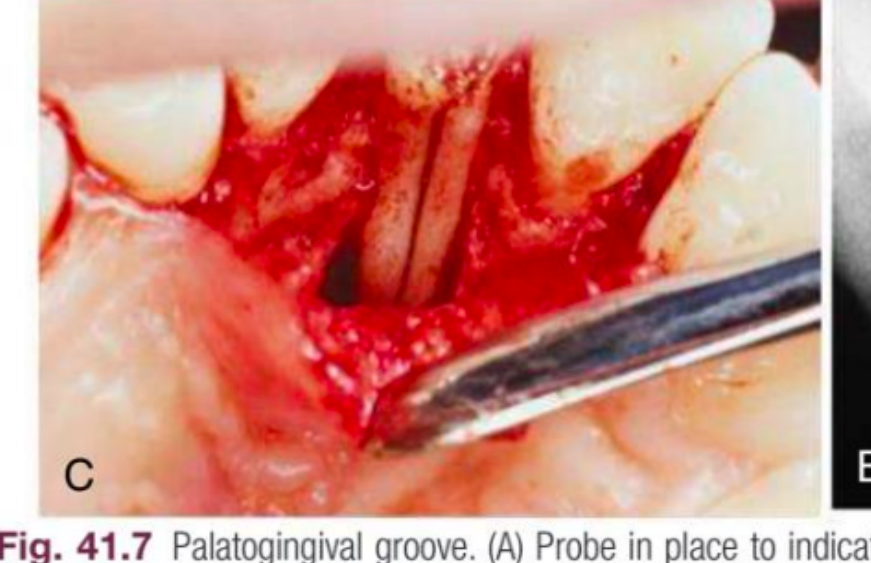
B
C
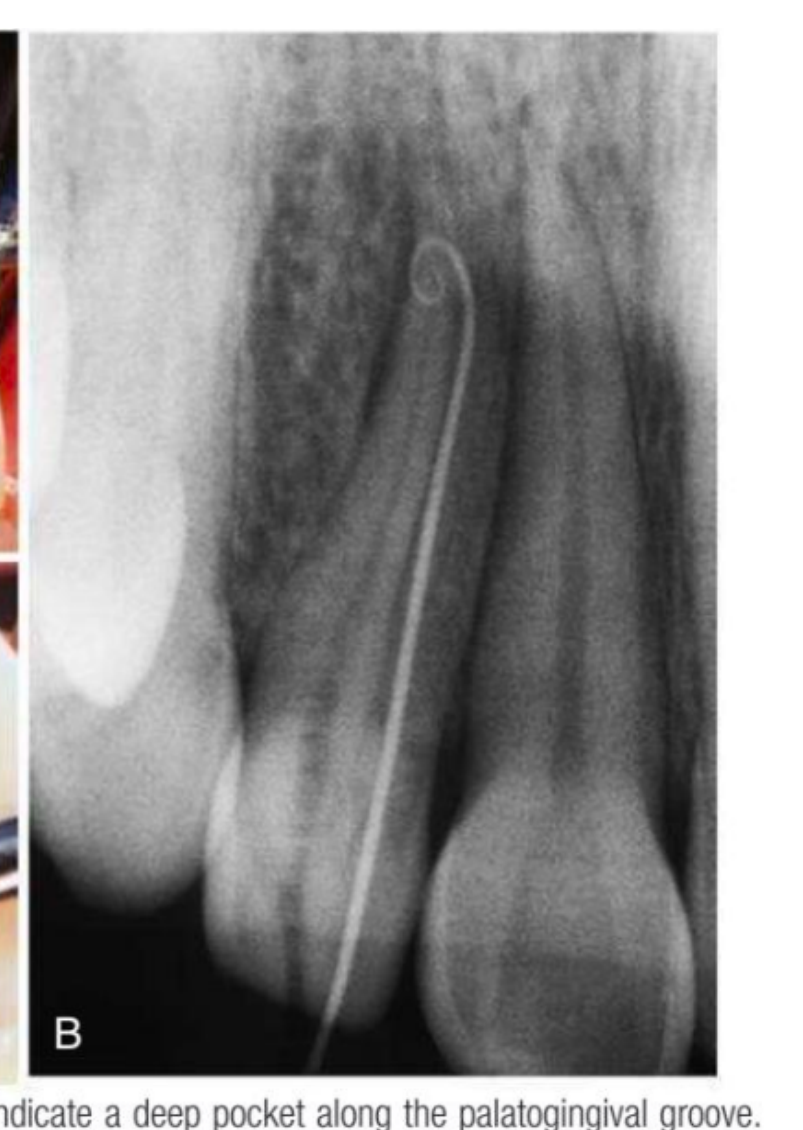
Fig. 41.7 Palatogingival groove. (A) Probe in place to indicate a deep pocket along the palatogingival groove. (B) Radiograph with a gutta-percha point placed in the pocket. (C) The area is surgically opened. Note the palatogingival groove along the entire palatal portion of the root. (Courtesy Dr. Nadia Chugal, University of California, Los Angeles.)
Local/Tooth level factors
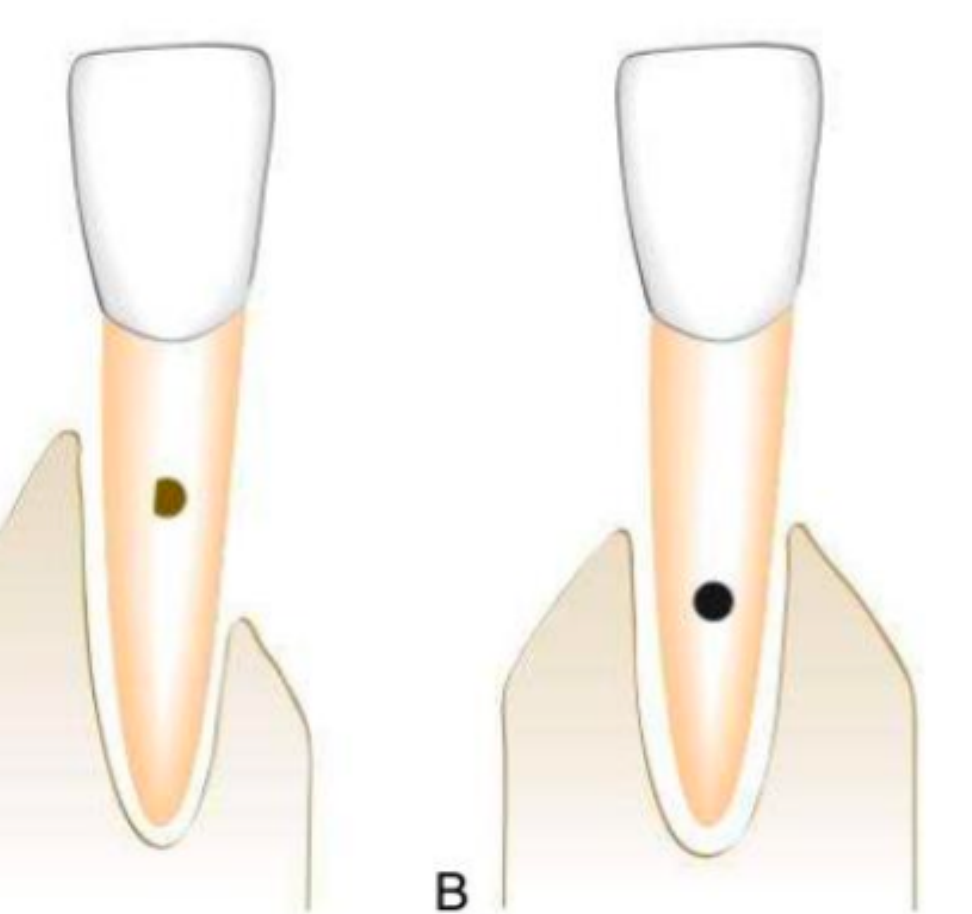
A B
Prognosis of A is better than B Centre of rotation for A is nearer to the crown
 |  |
 |  |
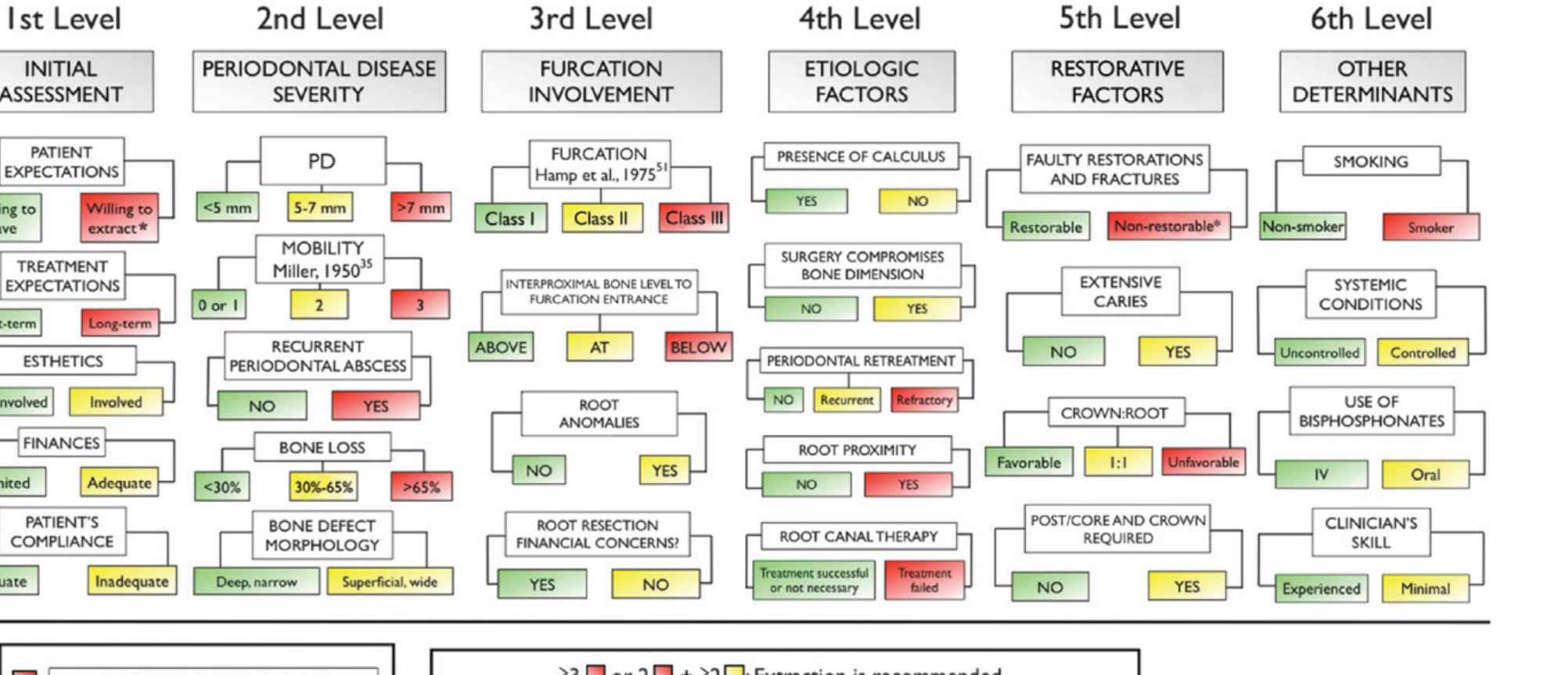
Clinical Decision Making for Extraction Versus Conservation18
Retain or extract - it’s complex
EXTRACTION VERSUS CONSERVATION
DECISION CHART
| 1st Level | 2nd Level | 3rd Level | 4th Level | 5th Level | 6th Level |
|---|---|---|---|---|---|
| INITIAL ASSESSMENT | PERIODONTAL DISEASE SEVERITY | FURCATION INVOLVEMENT | ETIOLOGIC FACTORS | RESTORATIVE FACTORS | OTHER DETERMINANTS |
| PATIENT EXPECTATIONS | PD | FURCATION Hamp et al. 197551 | PRESENCE OF CALCULUS | FAULTY RESTORATIONS AND FRACTURES | SMOKING |
| - Willing to save (Green, Favorable) | - <5 mm (Green, Favorable) | - Class I (White, Favorable) | YES (Green, Favorable) | - Restorable (Green, Favorable) | - Non-smoker (Green, Favorable) |
| - Willing to extract* (Red, Unfavorable) | - 5-7 mm (Yellow, Caution) | - Class II (Yellow, Caution) | NO (White, Favorable) | - Non-restorable* (Red, Unfavorable) | - Smoker (Red, Unfavorable) |
| TREアTMENT EXPECTATIONS | SURGERY COMPROMISES BONE DIMENSION | EXTENSIVE CARIES | SYSTEMIC CONDITIONS | ||
| - Short-term (Green, Favorable) | NO (Green, Favorable) | - NO (Green, Favorable) | - Uncontrolled (Red, Unfavorable) | ||
| - Long-term (White, Caution) | YES (Yellow, Caution) | - YES (Yellow, Caution) | - Controlld (Yellow, Caution) | ||
| ESTHETICS | RECURRENТ PERIODONTАL ABSCESS | INTERPROXIMAL BONE LEVEL TO FURCATION ENTRANCE | PERIODONTAL RETREATMENT | ||
| - Not involved (Green, Favorable) | - NO (Green, Favorable) | ABOVE (Green, Favorable) | NO (White, Favorable) | CROWN:ROOT | USE OF BISPHOSPHONATES |
| - Involved (Yellow, Caution) | - YES (Red, Unfavorable) | AT (Yellow, Caution) | - NO (White, Favorable) | - Favorable (Green, Favorable) | - IV (Green, Favorable) |
| FINANCES | - 2 (Yellow, Caution) | REMAINING ROOTS INTO FURCATION? | - Recurrent (Red, Unfavorable) | - Favorable (Green, Favorable) | - Oral (Yellow, Caution) |
| - Limited (Yellow, Caution) | - 1 (Yellow, Caution) | REMAINING ROOTS INTO FURCATION? | - 1:1 (Yellow, Caution) | - Minimal (Yellow, Caution) | |
| PATIENT’S COMPLIANCE | BONE LOSS | ROOT ANOMALIES | ROOT PROXIMAITY | CLINICIAN’S SKILL | |
| - Adequate (Green, Favorable) | - <30% (Green, Favorable) | - NO (White, Favorable) | NO (White, Favorable) | - Post/Core AND Crown REQUIRED (Red, Unfavorable) | |
| - Inadequate (Yellow, Caution) | - 30%-65% (Yellow, Caution) | YES (Red, Unfavorable) | - YES (Yellow, Caution) | ||
| - >65% (Red, Unfavorable) | FINANCIAL CONCERNS? | ROOT CANAL THERAPY | CLINICAN’S SKILL | ||
| YES (Green, Favorable) | - Treatment successful or not necessary (White, Favorable) | - Experienced (Green, Favorable) | |||
| BONE DEFECT MORPHOLOGY | YES (White, Favorable) | - Treatment failed (Red, Unfavorable) | |||
| - Deep, narrow (Green, Favorable) | NO (White, Favorable) | ||||
| - Superficial, wide (Yellow, Caution) |
4th Level:
| PRESENCE OF CALCULUS | SURGERY COMPROMISES BONE DIMENSION | |
| YES (Green, Favorable) | NO (White, Favorable) | YES (Yellow, Caution) |
| NO (Yellow, Caution) | NO (Green, Favorable) |
Figures/Legend:
| 1 or 2 | Extraction is recommended |
| >3 or 2 + 1 + >2 | Consider extraction |
| 1 + >2 | Attempt to treat; if fails, then extraction advisable |
| 2 | Tooth maintenance may be compromised but feasible |
| 3 | All + or 3: Tooth conservation is recommended |
Legend Meaning:
- Red Box: Long-term survival unfavorable. Strongly suggests extraction.
- White Box: Prosceed with caution recommended.
- Green Box: Long-term maintenance favorable.
Evolution of Prognosis Systems
Limitations of Previous Systems19
Previous prognosis systems
Several proposed since the 1970s
Main limitations
- Based exclusively on tooth level factors
- Patient level modifiers/factors generally not considered
- Subjective measures instead of objective and quantifiable, (“extensive”, “marked”, “poor”…)
- Complex systems
Often inaccurate due to input data and complexity of use
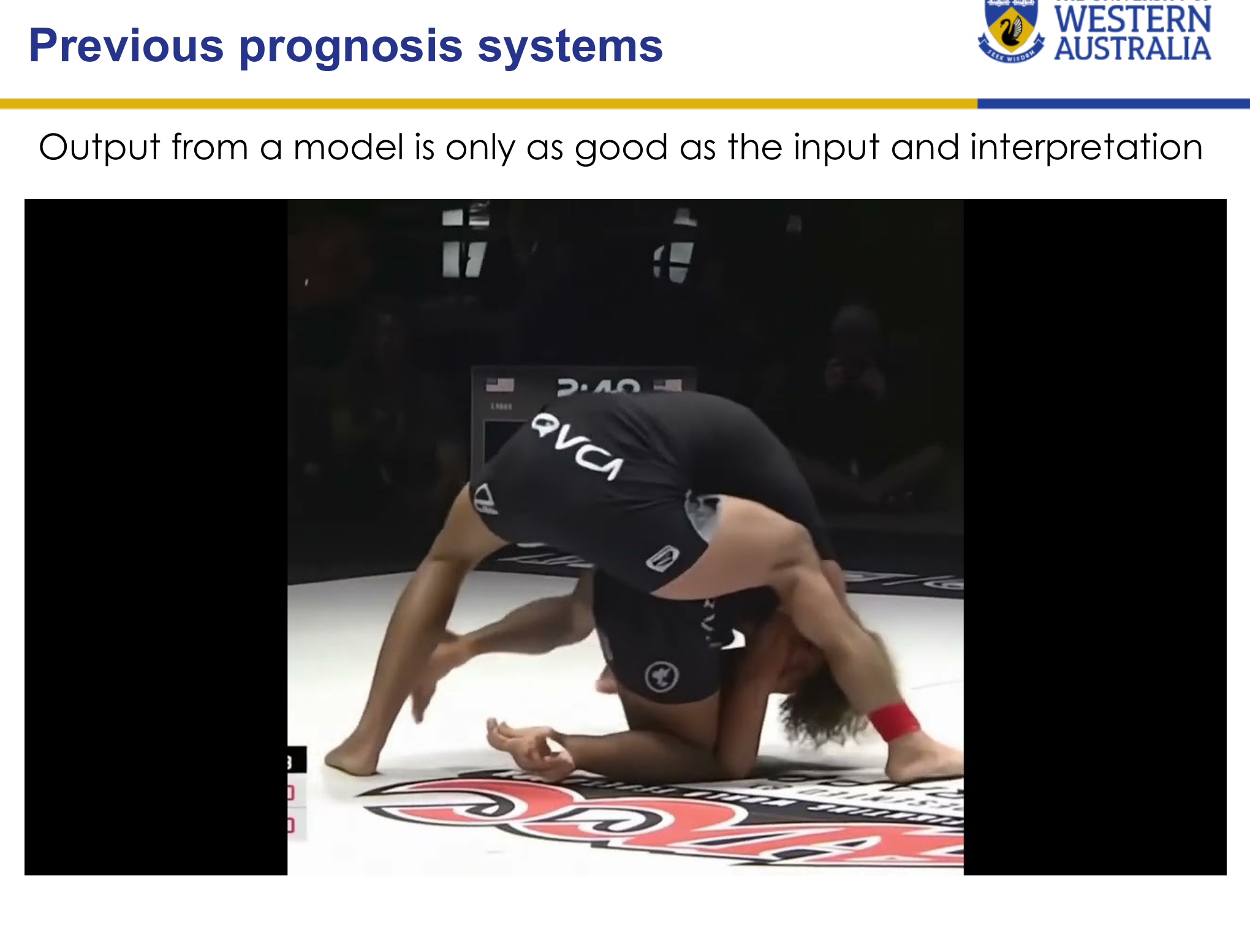
Previous prognosis systems
Output from a model is only as good as the input and interpretation
Criteria for an Ideal Prognosis System20212223242526
An ideal prognosis system McGowan et al 2017
- Include objective, quantifiable measures of clinical parameters
- % bone loss
- Grade of furcation involvement
- Grade of mobility
- …
- Include patient level modifiers
- Include only factors reported in the literature shown to influence tooth loss
- Provide short–term (< 5 year) and long–term (> 5 year) prognosis
- Define expected outcome in a way that is relevant to other treating practitioners
- As simple as possible
- Validated prospectively
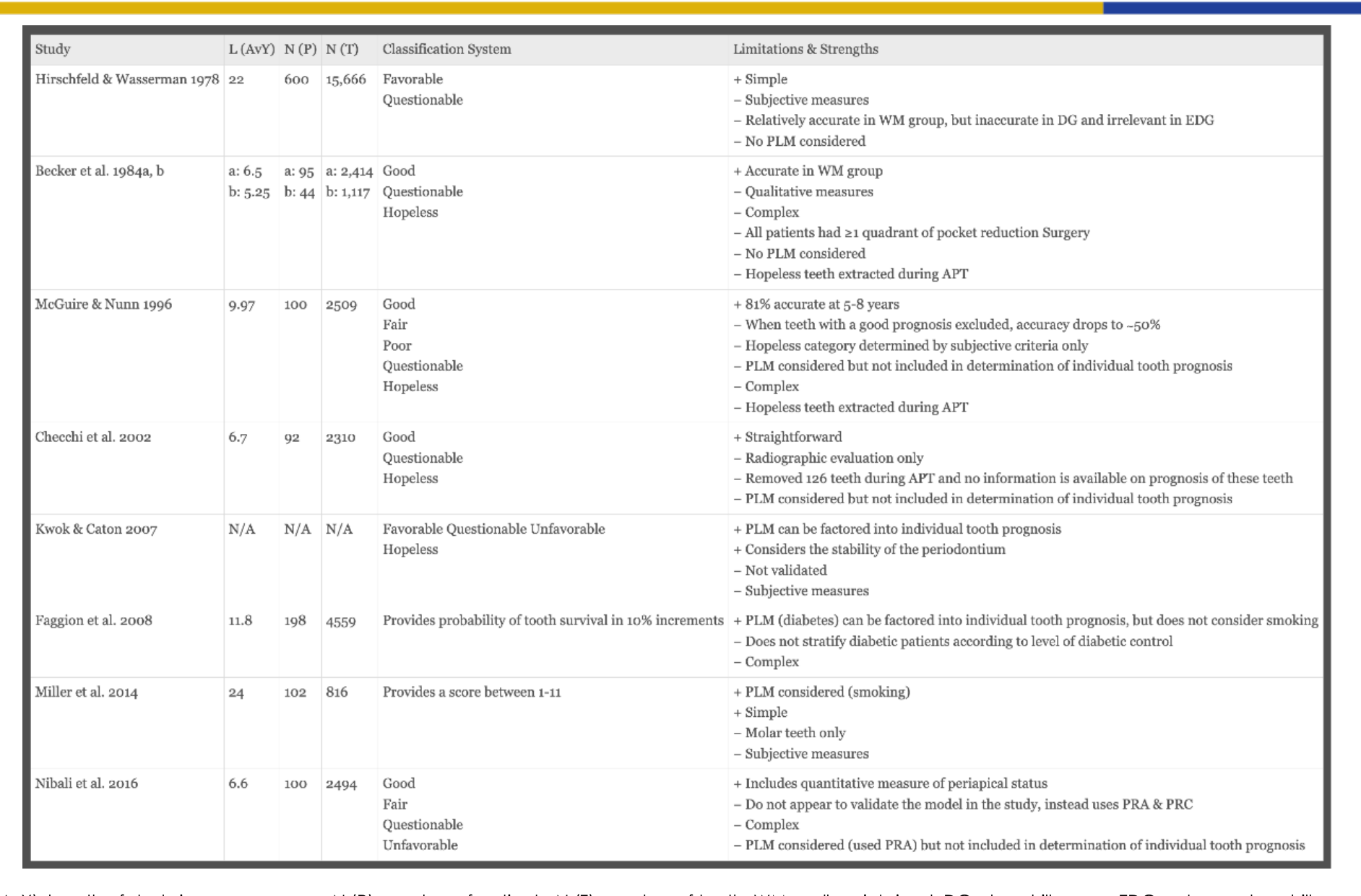
L (AvY), length of study in average years; N (P), number of patients; N (T), number of teeth; WM, well maintained; DG, downhill group; EDG, extreme downhill group; PLM, patient level modifiers; APT, active periodontal treatment; PRA, periodontial risk assessment; PRC, periodontial risk calculator.
| Study | L (AvY) | N (P) | N (T) | Classification System | Limiteditions & Strengths |
|---|---|---|---|---|---|
| Hirschfeld & Wasserman 1978 | 22 | 600 | 15,666 | Favorable Questionable | + Simple - Subjective measures - Relatively accurate in WM group, but inaccurate in DG and irrelevant in EDG - No PLM considered |
| Becker et al. 1984a, b | a: 6.5 b: 5.25 | a: 95 b: 44 | a: 2,414 b: 1,117 | Good Questionable Hopeless | + Accurate in WM group - Qualitative measures - Complex - All patients had ≥1 quadrant of pocket reduction Surgery - No PLM considered - Hopeless teeth extracted during APT |
| McGuire & Nunn 1996 | 9.97 | 100 | 2509 | Good Fair Poor Questionable Hopeless | + 81% accurate at 5-8 years - When teeth with a good prognosis excluded, accuracy drops to ~50% - Hopeless category determined by subjective criteria only - PLM considered but not included in determination of individual tooth prognosis - Complex - Hopeless teeth extracted during APT |
| Checchi et al. 2002 | 6.7 | 92 | 2310 | Good Questionable Hopeless | + Straightforward - Radiographic evaluation only - Removed 126 teeth during APT and no information is available on prognosis of these teeth - PLM considered but not included in determination of individual tooth prognosis |
| Kwok & Caton 2007 | N/A | N/A | N/A | Favorable Questionable Unfavorable Hopeless | + PLM can be factored into individual tooth prognosis + Considers the stability of the periodontium - Not validated - Subjective measures |
| Faggion et al. 2008 | 11.8 | 198 | 4559 | Provides probability of tooth survival in 10% increments | + PLM (diabetes) can be factored into individual tooth prognosis, but does not consider smoking - Does not stratify diabetic patients according to level of diabetic control - Complex |
| Miller et al. 2014 | 24 | 102 | 816 | Provides a score between 1-11 | + PLM considered (smoking) + Simple - Molar teeth only - Subjective measures |
| Nibali et al. 2016 | 6.6 | 100 | 2494 | Good Fair Questionable Unfavorable | + Includes quantitative measure of periapical status - Do not appear to validate the model in the study, instead uses PRA & PRC - Complex - PLM considered (used PRA) but not included in determination of individual tooth prognosis |
 |  |
Proposed New Classification Categories2728
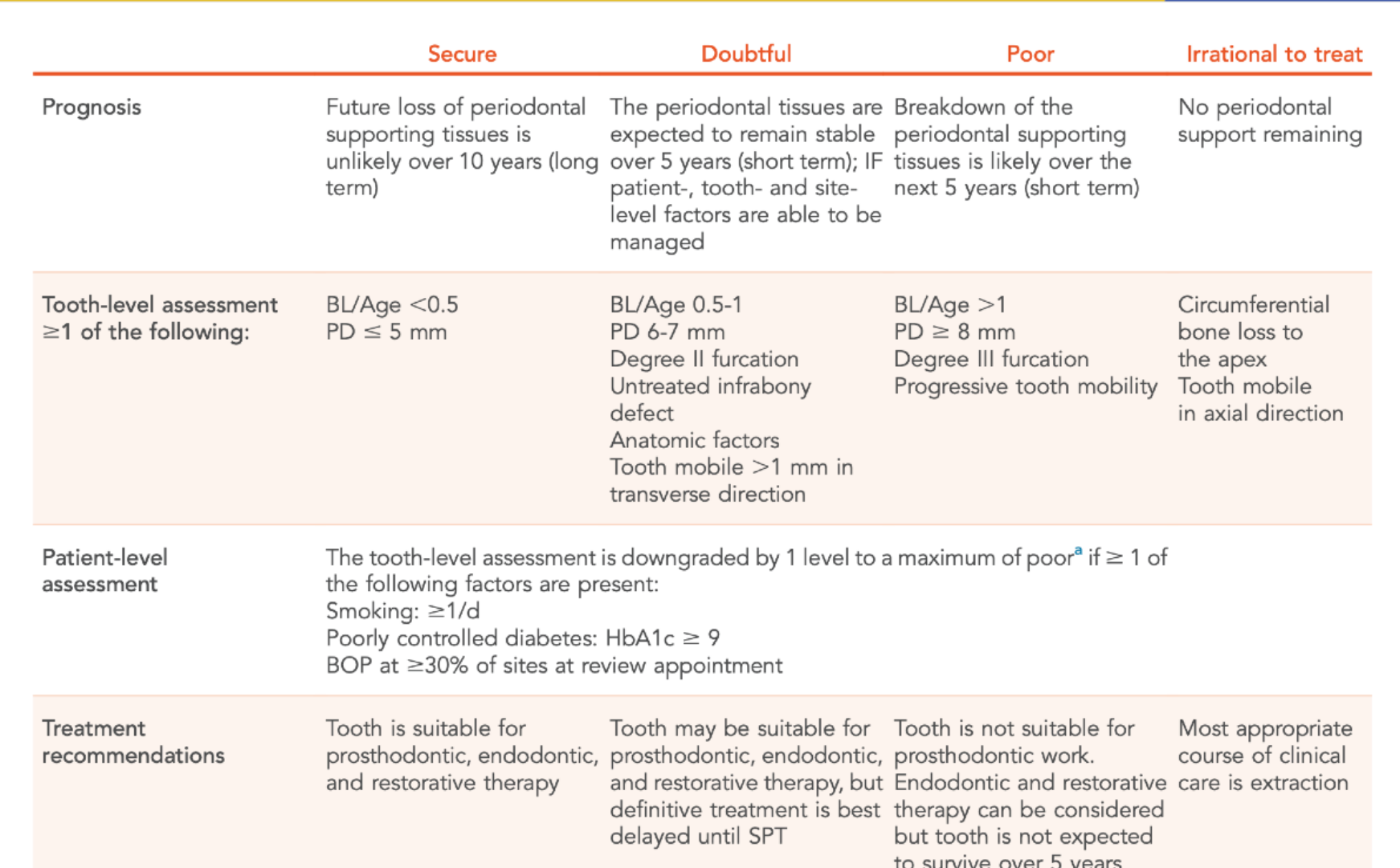
Proposed new prognosis system
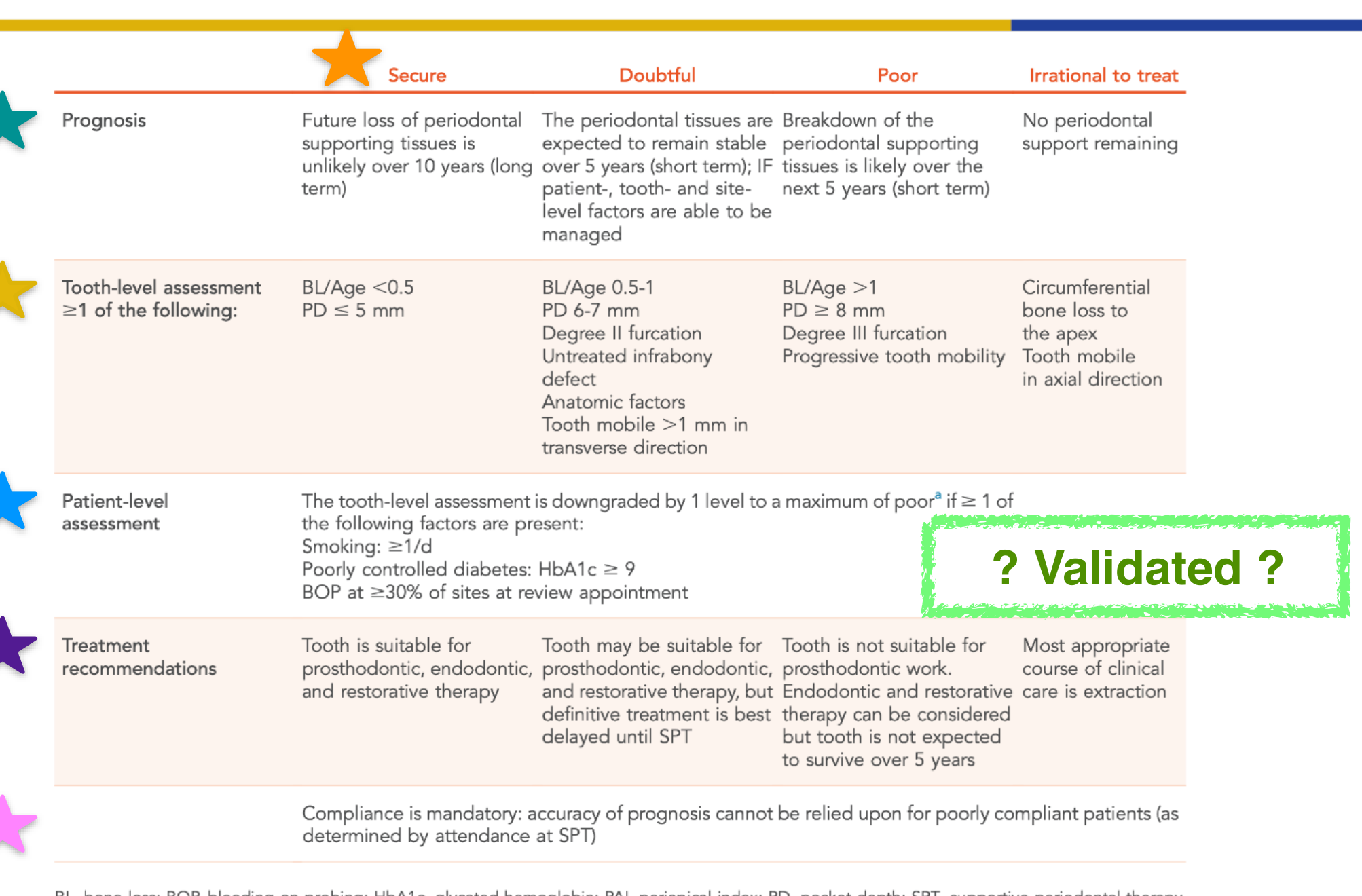
| Secure | Doubtful | Poor | Irrational to treat | |
|---|---|---|---|---|
| Prognosis | Future loss of periodontal supporting tissues is unlikely over 10 years (long term) | The periodontal tissues are expected to remain stable over 5 years (short term); IF patient-, tooth- and site-level factors are able to be managed | Breakdown of the periodontal supporting tissues is likely over the next 5 years (short term) | No periodontal support remaining |
| Tooth-level assessment ≥1 of the following: | BL/Age <0.5 PD ≤ 5 mm | BL/Age 0.5-1 PD 6-7 mm Degree II furcation Untreated infrabony defect Anatomic factors Tooth mobile >1 mm in transverse direction | BL/Age >1 PD ≥ 8 mm Degree III furcation Progressive tooth mobility | Circumferential bone loss to the apex Tooth mobile in axial direction |
| Patient-level assessment | The tooth-level assessment is downgraded by 1 level to a maximum of poora if ≥ 1 of the following factors are present: Smoking: ≥1/d Poorly controlled diabetes: HbA1c ≥ 9 BOP at ≥30% of sites at review appointment | |||
| Treatment recommendations | Tooth is suitable for prosthodontic, endodontic, and restorative therapy | Tooth may be suitable for prosthodontic, endodontic, and restorative therapy, but definitive treatment is best delayed until SPT | Tooth is not suitable for prosthodontic work. Endodontic and restorative therapy can be considered but tooth is not expected to survive over 5 years | Most appropriate course of clinical care is extraction |
| Compliance is mandatory: accuracy of prognosis cannot be relied upon for poorly compliant patients (as determined by attendance at SPT) | ||||
BL, bone loss; BOP, bleeding on probing; HbA1c, glycated hemoglobin; PAI, periapical index; PD, pocket depth; SPT, supportive periodontal therapy. a A secure prognosis is downgraded to doubtful, and doubtful to poor, but poor cannot be made irrational to treat.
An ideal prognosis system
- Include objective, quantifiable measures of clinical parameters
- % bone loss
- Grade of furcation involvement
- Grade of mobility
- Probing depths
- Include patient level modifiers
- Include factors reported in the literature shown to influence tooth loss
- Provide short-term (< 5 year) and long-term (> 5 year) prognosis
- Define expected outcome in a way that is relevant to other treating practitioners
- As simple as possible
- Validated prospectively
McGowan et al 2017
 |  |
 |
Criteria for Teeth Irrational to Treat29
Irrational to treat
- “Hopeless”
- Insufficient remaining tooth structure to support a restoration
- Vertical root fracture
- Concurrent endo-perio disease with communication and Grade III mobility, 100% bone loss
- Inaccessible, non-functional third molars
THE UNIVERSITY OF WESTERN AUSTRALIA
Future Directions in Periodontal Prognosis30
Future of prognosis
- Advances in periodontal therapy
- Diagnostics (volumetric analysis)
- Surgical approaches, lasers, regeneration
- Longer term reviews
- Understanding the value of long term maintenance (SPT)
- Advances in endodontic therapy
- Improved diagnostics
- Use of microscopes
- New instrumentation and disinfection techniques
- Risk assessment and understanding the risk factors in implant therapy
- Redefining success
- Absence of persistent signs/symptoms,
- No radiolucency/progressive bone loss
- Patient satisfaction with restoration… rather than survival
- Redefining success
Clinical Application at OHCWA
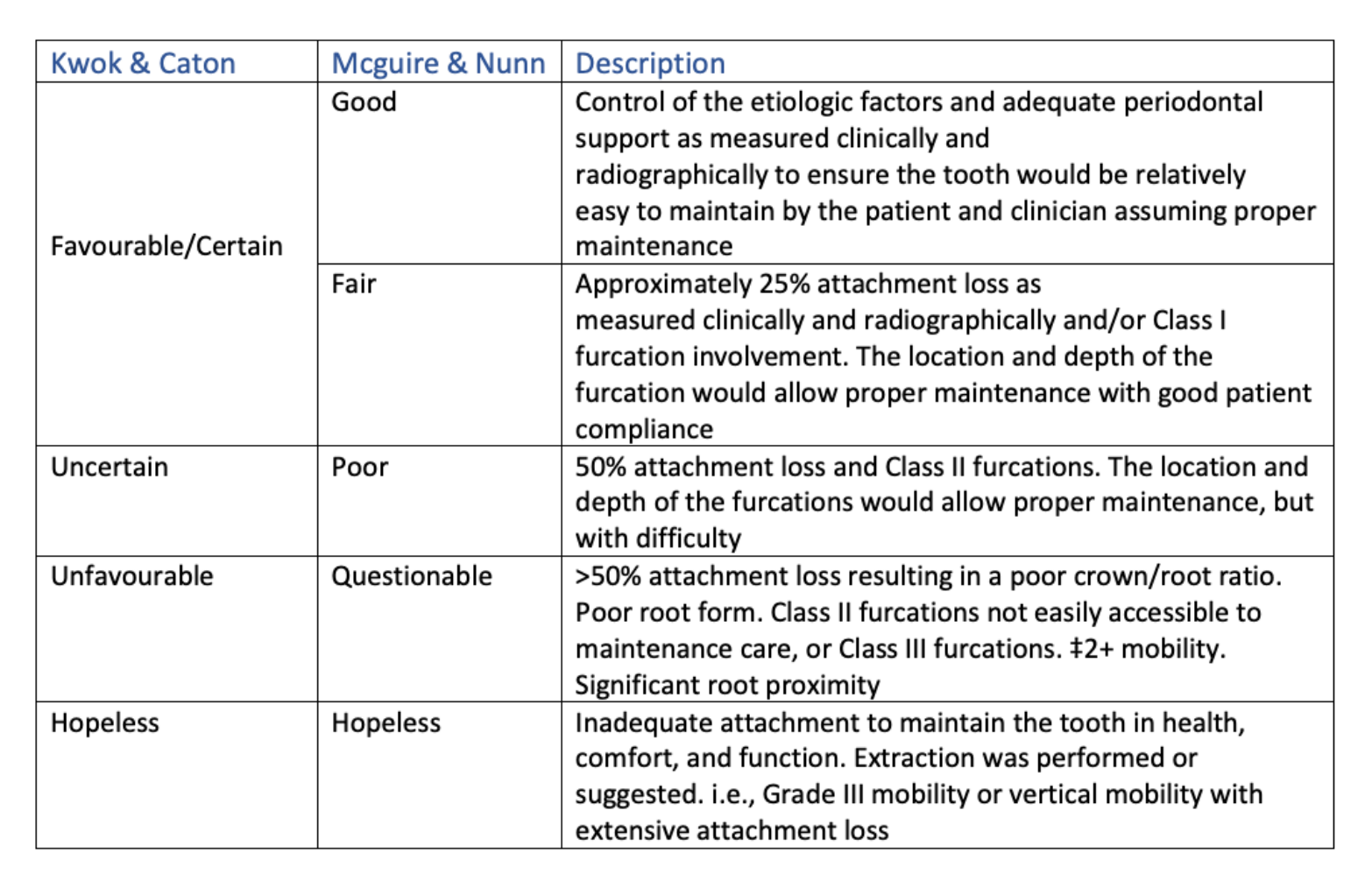
Comparison of Kwok and Caton vs McGuire and Nunn313233
Prognosis at OHCWA
<table border="1">
  <tr>
    <th>Kwok & Caton</th>
    <th>Mcguire & Nunn</th>
    <th>Description</th>
  </tr>
  <tr>
    <td rowspan="2">Favourable/Certain</td>
    <td>Good</td>
    <td>Control of the etiologic factors and adequate periodontal support as measured clinically and radiographically to ensure the tooth would be relatively easy to maintain by the patient and clinician assuming proper maintenance</td>
  </tr>
  <tr>
    <td>Fair</td>
    <td>Approximately 25% attachment loss as measured clinically and radiographically and/or Class I furcation involvement. The location and depth of the furcation would allow proper maintenance with good patient compliance</td>
  </tr>
  <tr>
    <td>Uncertain</td>
    <td>Poor</td>
    <td>50% attachment loss and Class II furcations. The location and depth of the furcations would allow proper maintenance, but with difficulty</td>
  </tr>
  <tr>
    <td>Unfavourable</td>
    <td>Questionable</td>
    <td>>50% attachment loss resulting in a poor crown/root ratio. Poor root form. Class II furcations not easily accessible to maintenance care, or Class III furcations. #2+ mobility. Significant root proximity</td>
  </tr>
  <tr>
    <td>Hopeless</td>
    <td>Hopeless</td>
    <td>Inadequate attachment to maintain the tooth in health, comfort, and function. Extraction was performed or suggested. i.e., Grade III mobility or vertical mobility with extensive attachment loss</td>
  </tr>
</table>
Prognosis at OHCWA
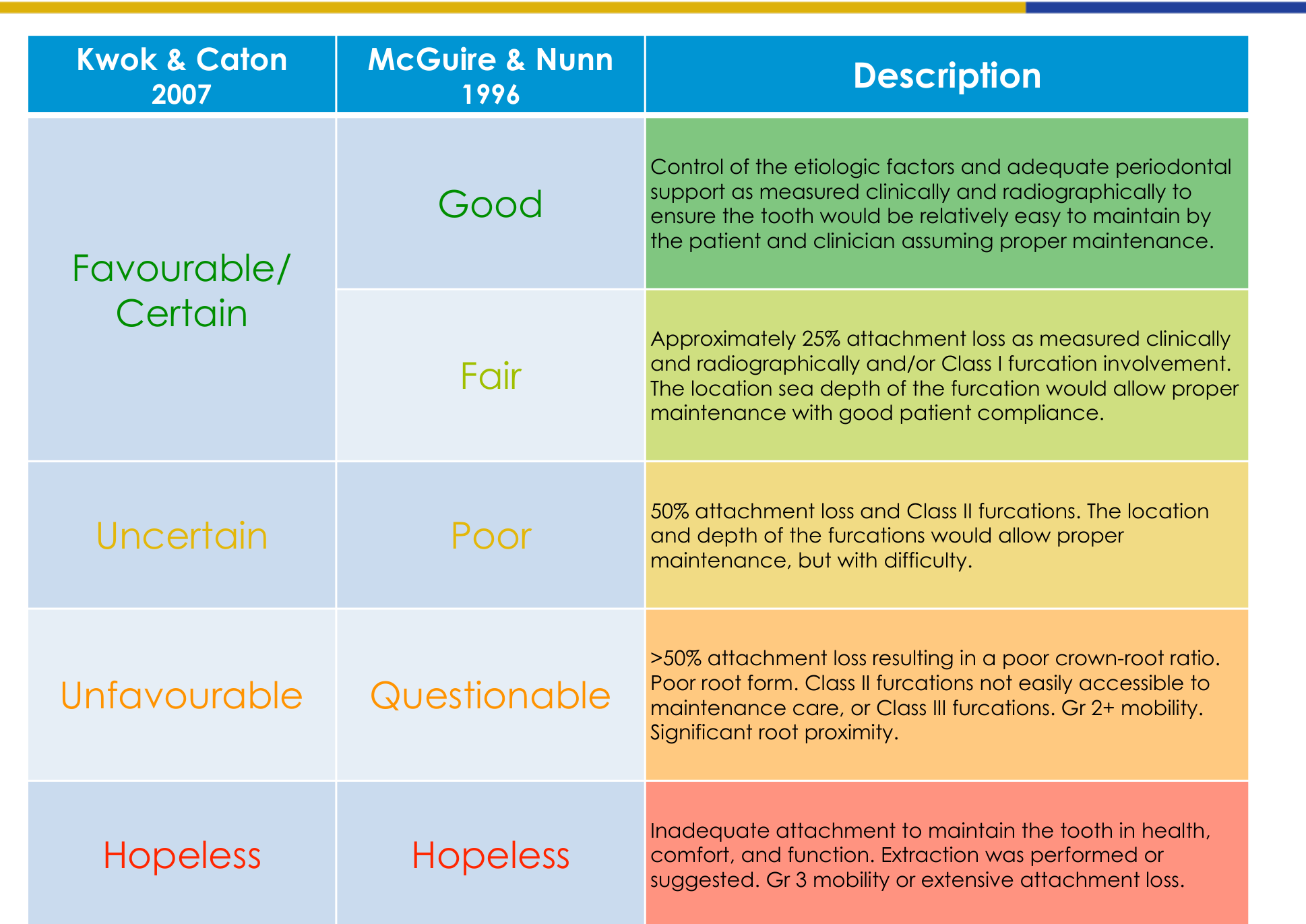
| Kwok & Caton 2007 | McGuire & Nunn 1996 | Description |
|---|---|---|
| Favourable/Certain | Good | Control of the etiologic factors and adequate periodontal support as measured clinically and radiographically to ensure the tooth would be relatively easy to maintain by the patient and clinician assuming proper maintenance. |
| Fair | Approximately 25% attachment loss as measured clinically and radiographically and/or Class I furcation involvement. The location sea depth of the furcation would allow proper maintenance with good patient compliance. | |
| Uncertain | Poor | 50% attachment loss and Class II furcations. The location and depth of the furcations would allow proper maintenance, but with difficulty. |
| Unfavourable | Questionable | >50% attachment loss resulting in a poor crown-root ratio. Poor root form. Class II furcations not easily accessible to maintenance care, or Class III furcations. Gr 2+ mobility. Significant root proximity. |
| Hopeless | Hopeless | Inadequate attachment to maintain the tooth in health, comfort, and function. Extraction was performed or suggested. Gr 3 mobility or extensive attachment loss. |
 |  |
 |
Recording Prognosis in Electronic Forms343536
Prognosis at OHCWA
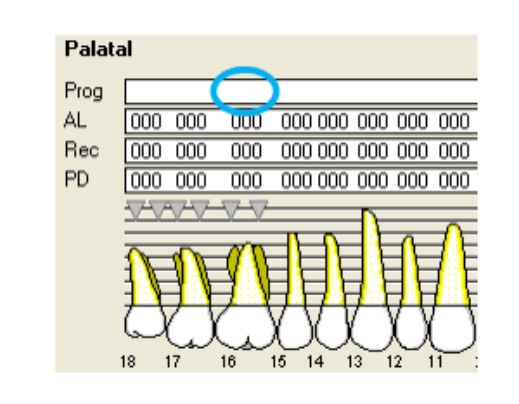
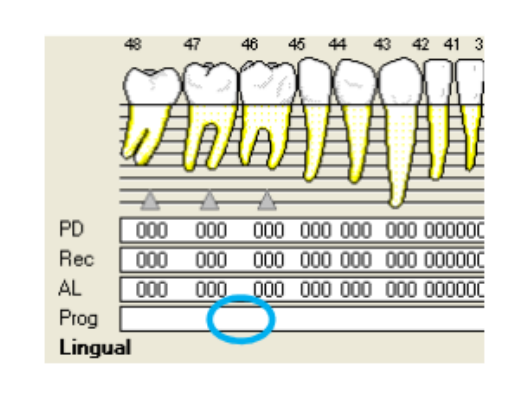
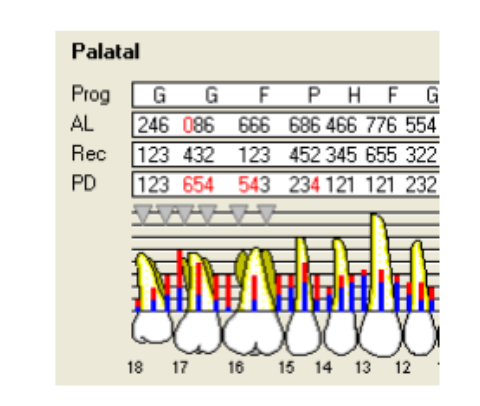
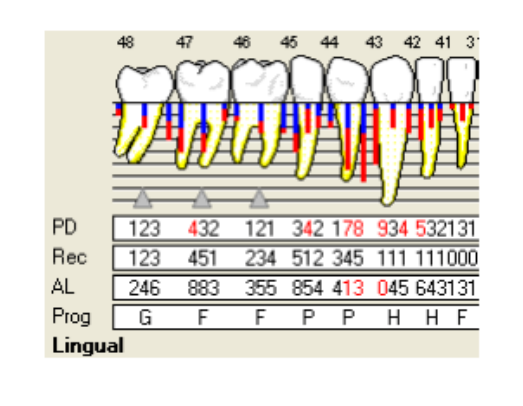
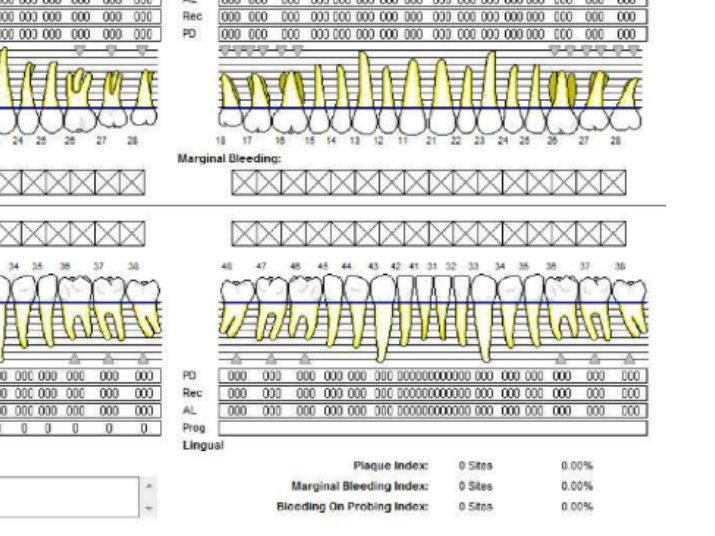
Prognosis Prognosis scores are recorded on the upper palatal and lower lingual charts in the corresponding ‘Prog’ rows
Palatal
Lingual
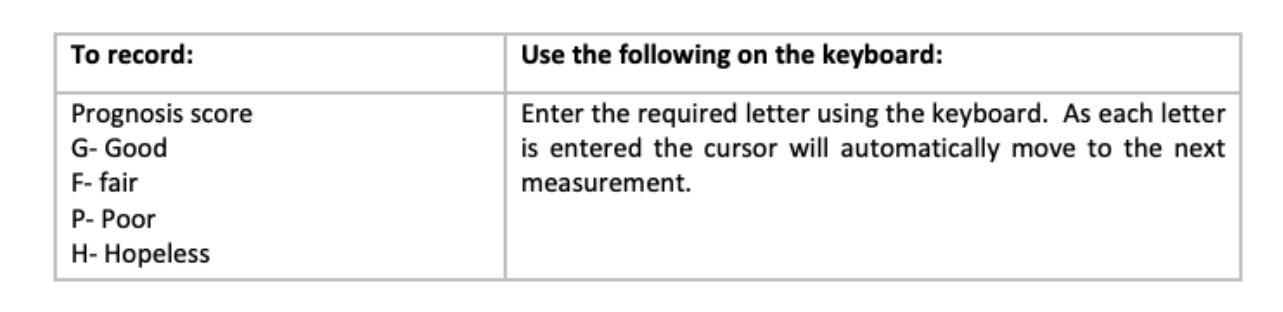
Left click, using the mouse, above the first tooth, then using the digits on the keyboard record the prognosis, as you type the cursor will automatically move along the chart. Any teeth, which are charted as missing, will be omitted when recording the scores.
| To record: | Use the following on the keyboard: |
|---|---|
| Prognosis score | Enter the required letter using the keyboard. As each letter is entered the cursor will automatically move to the next measurement. |
| G- Good | |
| F- fair | |
| P- Poor | |
| H- Hopeless |
Palatal
Lingual
OHCWA Perio eForm
Page 7
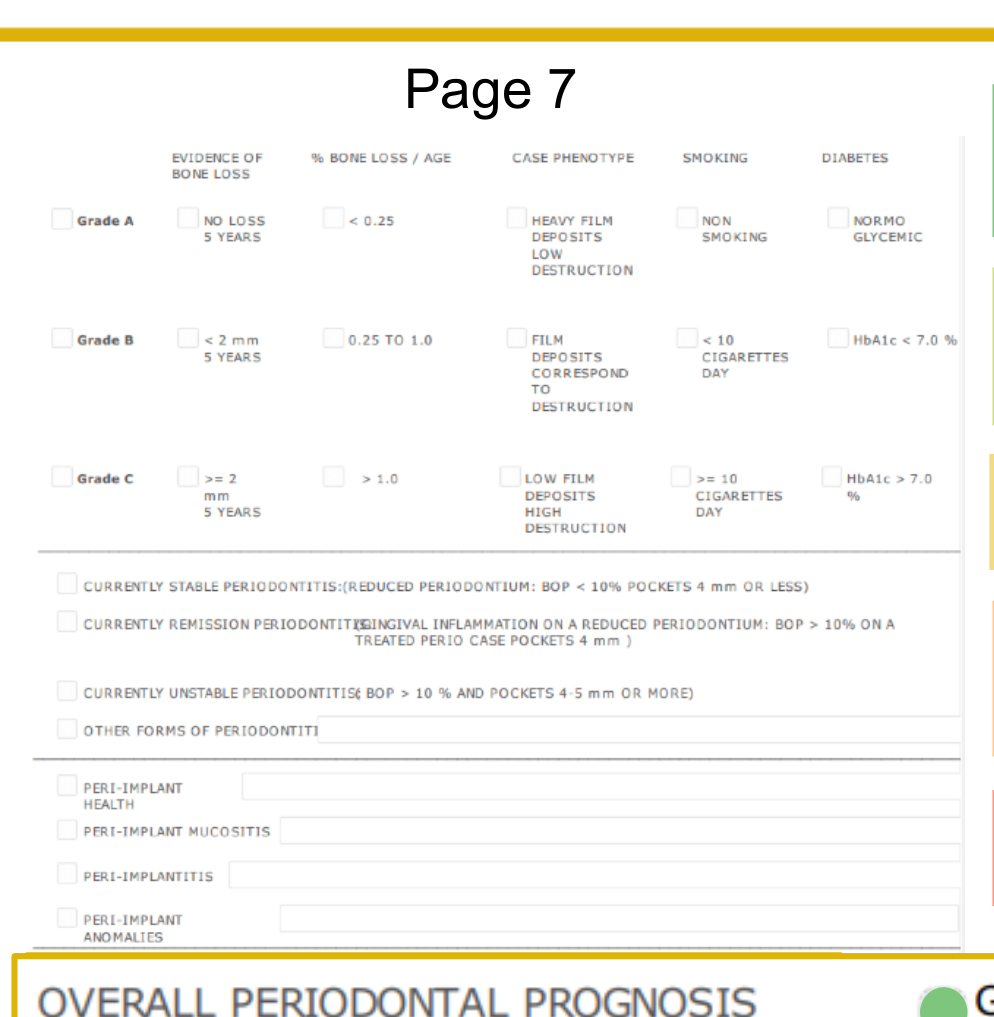
| EVIDENCE OF BONE LOSS | % BONE LOSS / AGE | CASE PHENOTYPE | SMOKING | DIABETES | |
|---|---|---|---|---|---|
| Grade A | NO LOSS | < 0.25 | HEAVY FILM DEPOSITS | NON SMOKING | NORMO GLYCEMIC |
| Grade B | < 2 mm 5 YEARS | 0.25 TO 1.0 | FILM DEPOSITS CORRESPOND TO DESTRUCTION | < 10 CIGARETTES DAY | HbA1c < 7.0 % |
| Grade C | >= 2 mm 5 YEARS | > 1.0 | LOW FILM DEPOSITS HIGH DESTRUCTION | >= 10 CIGARETTES DAY | HbA1c > 7.0 % |
| CURRENTLY STABLE PERIODONTITIS :(REDUCED PERIODONTIUM: BOP < 10% POCKETS 4 mm OR LESS) | |||||
| CURRENTLY REMISSION PERIODONTITIS (GINGIVAL INFLAMMATION ON A REDUCED PERIODONTIUM: BOP > 10% ON A TREATED PERIO CASE POCKETS 4 mm ) | |||||
| CURRENTLY UNSTABLE PERIODONTITIS (BOP > 10 % AND POCKETS 4-5 mm OR MORE) | |||||
| OTHER FORMS OF PERIODONTITI | |||||
| PERI-IMPLANT HEALTH | |||||
| PERI-IMPLANT MUCOSITIS | |||||
| PERI-IMPLANTITIS | |||||
| PERI-IMPLANT ANOMALIES | |||||
OVERALL PERIODONTAL PROGNOSIS
- Good
- Fair
- Poor
- Questionable
- Hopeless
REFERRAL REQUIRED describe unit and needs
Student Signature
Tutor Signature
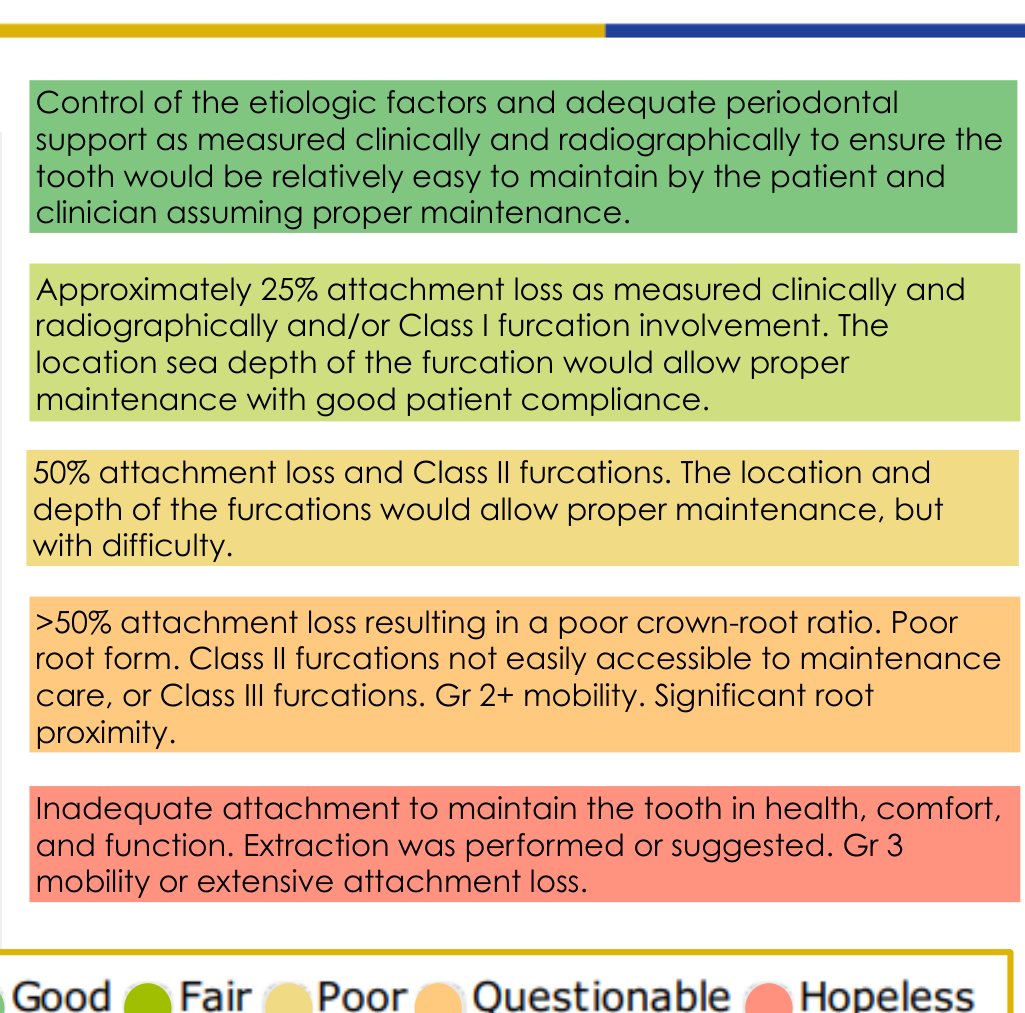
Control of the etiologic factors and adequate periodontal support as measured clinically and radiographically to ensure the tooth would be relatively easy to maintain by the patient and clinician assuming proper maintenance.
Approximately 25% attachment loss as measured clinically and radiographically and/or Class I furcation involvement. The location sea depth of the furcation would allow proper maintenance with good patient compliance.
50% attachment loss and Class II furcations. The location and depth of the furcations would allow proper maintenance, but with difficulty.
>50% attachment loss resulting in a poor crown-root ratio. Poor root form. Class II furcations not easily accessible to maintenance care, or Class III furcations. Gr 2+ mobility. Significant root proximity.
Inadequate attachment to maintain the tooth in health, comfort, and function. Extraction was performed or suggested. Gr 3 mobility or extensive attachment loss.
McGuire & Nunn 1996 Kwok & Caton 2007
OHCWA Perio eForm Page 6
PERIODONTAL DIAGNOSIS & PROGNOSIS
- CLINICAL GINGIVAL HEALTH BOP < 10% PROBING < 3mm
- CLINICAL GINGIVAL HEALTH ON A REDUCED PERIODONTIUM BOP < 10% ON TREATED PERIODONTITIS PATIENT PROBING < 3mm
- GINGIVITIS BOP MORE 10% NO POCKETS
- LOCALISED
- GENERALISED
- GINGIVAL INFLAMMATION ON A PERIODONTITIS PATIENT BOP > 10% TREATED PERIODONTITIS PATIENT RECESSON PROBING < 3mm
- OTHER FORMS OF GINGIVITIS: _________________________________________________
- PERIODONTITIS:
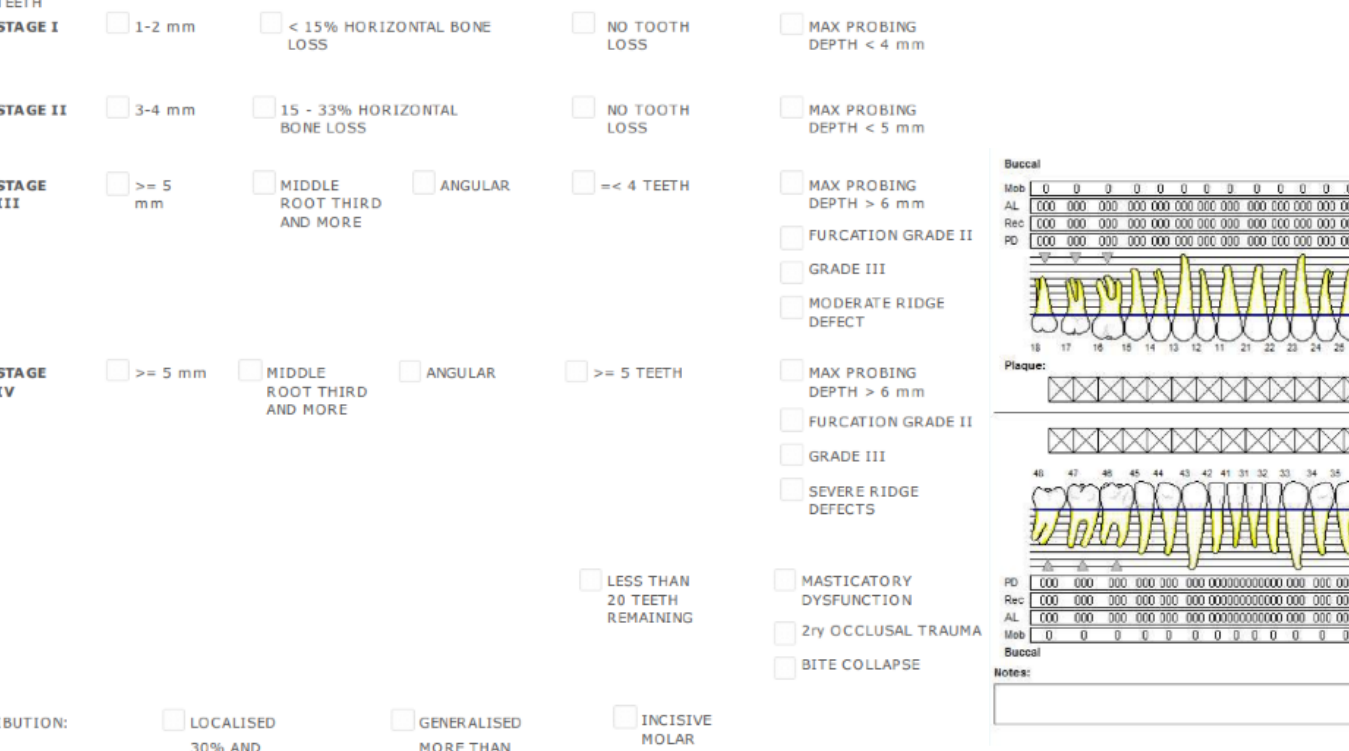
| STAGE | INTERDENTAL CAL | RADIOGRAPHIC BONE LOSS | TOOTH LOSS | COMPLEXITY |
|---|---|---|---|---|
| STAGE I | [ ] 1-2 mm | [ ] < 15% HORIZONTAL BONE LOSS | [ ] NO TOOTH LOSS | [ ] MAX PROBING DEPTH < 4 mm |
| STAGE II | [ ] 3-4 mm | [ ] 15 - 33% HORIZONTAL BONE LOSS | [ ] NO TOOTH LOSS | [ ] MAX PROBING DEPTH < 5 mm |
| STAGE III | [ ] >= 5 mm | [ ] MIDDLE ROOT THIRD AND MORE [ ] ANGULAR | [ ] =< 4 TEETH | [ ] MAX PROBING DEPTH > 6 mm [ ] FURCATION GRADE II [ ] GRADE III [ ] MODERATE RIDGE DEFECT |
| STAGE IV | [ ] >= 5 mm | [ ] MIDDLE ROOT THIRD AND MORE [ ] ANGULAR | [ ] >= 5 TEETH [ ] LESS THAN 20 TEETH REMAINING | [ ] MAX PROBING DEPTH > 6 mm [ ] FURCATION GRADE II [ ] GRADE III [ ] SEVERE RIDGE DEFECTS [ ] MASTICATORY DYSFUNCTION [ ] 2ry OCCLUSAL TRAUMA [ ] BITE COLLAPSE |
DISTRIBUTION:
- LOCALISED 30% AND LESS TEETH
- GENERALISED MORE THAN 30 % TEETH
- INCISIVE MOLAR
OHCWA Perio eForm
Page 1
Relevant Medical History
Presenting complaint [Blank Text Box]
Diabetic
- No
- Type I
- Type II
- Prediabetes
- Gestational HbA1c % level [Blank Text Box]
Smoker
- No
- Yes, Current
- Ex Smoker
- Number a day: [Blank Text Box]
- Years: [Blank Text Box]
- Quit date: [Blank Text Box]
Stress
- Yes
- No
Other medical conditions [Blank Text Box]
Page 2
Relevant Dental History
Signs of Gingival bleeding [Empty Checkbox] Bad Breath / Taste [Empty Checkbox] Teeth Migration [Empty Checkbox] Tooth Loss: Caries [Empty Checkbox] Perio [Empty Checkbox]
Brush Type: Manual [Empty Checkbox] Electric [Empty Checkbox] Interdental Clean: Floss [Empty Checkbox] Brushes [Empty Checkbox] Other [Empty Checkbox]
 |  |  |
 |  |  |
 |  |  |
 |
Plaque: [Placeholder for table or graphic itemizing plaque]
Biofilm Amount
- min
- max
- mod amount
- abundant
Biofilm Distribution %
Chart in Perio Tab and input result here
Page 3
CALCULUS DISTRIBUTION
- Mild
- 0
- 1
- 2
- 3
- 4
- 5
- 6
- 7
- 8
- 9
- 10
- Abundant
An ideal prognosis system
The University of Western Australia logo
- Include objective, quantifiable measures of clinical parameters Gold star icon
- % bone loss
- Grade of furcation involvement
- Grade of mobility
- Probing depths
- Include patient level modifiers Blue star icon
- Include factors reported in the literature shown to influence tooth loss Pink star icon
- Provide short-term (< 5 year) and long-term (> 5 year) prognosis
- Define expected outcome in a way that is relevant to other treating practitioners
- As simple as possible
- Validated prospectively McGowan et al 2017
Validity37383940
- The system must accurately predict the outcome of the tooth.
Reliability
- The system must produce consistent results when used by different clinicians or by the same clinician at different times.
Clarity
- The criteria must be clearly defined and easy to understand.
Simplicity
- The system should be easy to use in a clinical setting.
Comprehensiveness
- The system should consider all relevant factors that may affect the prognosis.
OHCWA Perio eForm
Received: 2 June 2020 | Revised: 18 August 2020 | Accepted: 28 August 2020 DOI: 10.1002/PERD.20-001
ORIGINAL ARTICLE
Analyzing the predictability of the Kwok and Caton periodontal prognosis system: A retrospective study
Lincoln Nguyen1,* | Goutam Krish1,* | Ahmed Alsaleh1 | James Mailoa2 | Yvonne Kapila1 | Richard T. Kao1,3 | Guo-Hao Lin1
1 Department of Oral and Maxillofacial Sciences, School of Dentistry, University of California San Francisco, San Francisco, CA, USA 2 Private practices, Makassar, Indonesia 3 Private practice, Cupertino, CA, USA
Correspondence Dr. Guo-Hao Lin, Department of Oral and Maxillofacial Sciences, University of California, San Francisco, 707 Parnassus Avenue, San Francisco, CA 94143, USA. Email: guo-hao.lin@ucsf.edu
*Lincoln Nguyen and Goutam Krish are co-first authors and equally contributed to this study
Abstract
Background: The aim of this study was to analyze the predictability of the Kwok and Caton periodontal prognosis system by investigating tooth survival within a 64-month period and to compare this to other well-established prognosis systems.
Methods: This retrospective study included the records of patients who had a minimum of two dental exams at least 12 months apart at a single University-affiliated Dental Center. Data including patient’s age, sex, length of follow-up period, initial tooth prognosis, revised tooth prognosis, tooth type, and number of teeth lost at the latest exam were recorded. Descriptive analysis was used for data interpretation.
Results: A total of 4,046 teeth from 174 patients qualified for the study. Teeth with initial poorer prognosis had a higher chance of being extracted compared to those with a better initial prognosis. Tooth survival rate at the latest follow-up for those with an initial favorable, questionable, unfavorable, and hopeless prognosis was 97.9%, 90.7%, 62.5%, and 17.7%, respectively. Teeth initially assigned to a poorer prognosis category had a higher proportion that changed to a worse prognosis at the latest periodontal exam.
Conclusions: The Kwok and Caton prognosis system can predictably determine tooth survivability within a 5-year period. The defined categories of this prognosis system are more reliable than that of other systems in the short-term. However, long-term (>5 years) prediction accuracy of this prognosis system needs further investigation.
KEYWORDS dentistry, diagnosis, periodontitis, prognosis, risk factor(s)
5 | CONCLUSIONS
Our study investigated the predictability of the Kwok and Caton prognosis system and found that this system can accurately determine tooth survivability within a 5-year period. The defined categories of this prognosis system are more reliable than other previously published systems for short-term predictions. However, the long-term (≥ 5 years) prediction accuracy of this prognosis system has to be further investigated.
- Include objective, quantifiable measures of clinical parameters
- % bone loss
- Grade of furcation involvement
- Grade of mobility
- Probing depths
- Include patient level modifiers
- Include factors reported in the literature shown to influence tooth loss
- Provide short-term (< 5 year) and long-term (> 5 year) prognosis
- Define expected outcome in a way that is relevant to other treating practitioners
- As simple as possible
- Validated prospectively
McGowan et al 2017
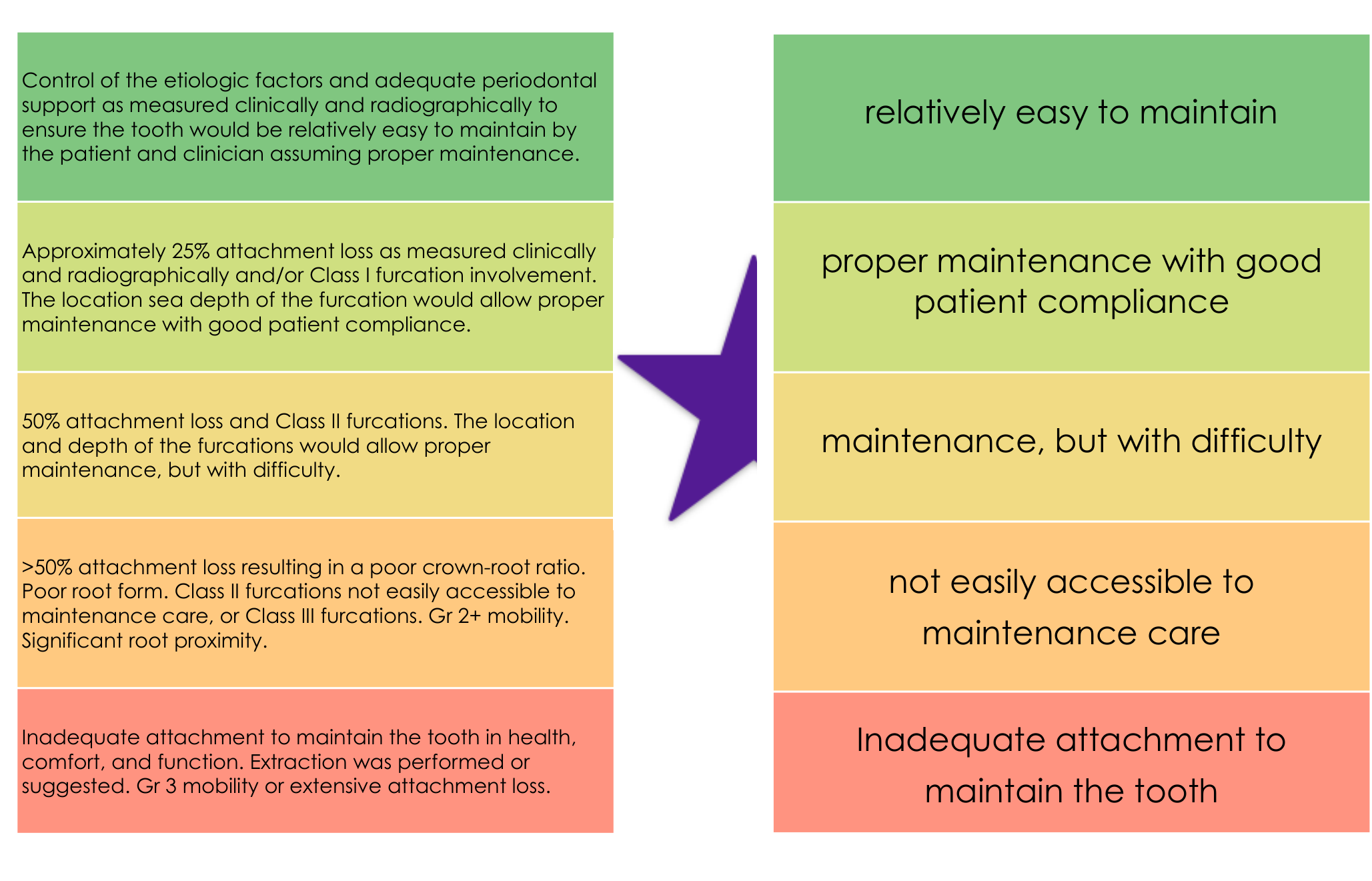
| Clinical Description | Maintenance Status |
|---|---|
| Control of the etiologic factors and adequate periodontal support as measured clinically and radiographically to ensure the tooth would be relatively easy to maintain by the patient and clinician assuming proper maintenance. | relatively easy to maintain |
| Approximately 25% attachment loss as measured clinically and radiographically and/or Class I furcation involvement. The location and depth of the furcation would allow proper maintenance with good patient compliance. | proper maintenance with good patient compliance |
| 50% attachment loss and Class II furcations. The location and depth of the furcations would allow proper maintenance, but with difficulty. | maintenance, but with difficulty |
| >50% attachment loss resulting in a poor crown-root ratio. Poor root form. Class II furcations not easily accessible to maintenance care, or Class III furcations. Gr 2+ mobility. Significant root proximity. | not easily accessible to maintenance care |
| Inadequate attachment to maintain the tooth in health, comfort, and function. Extraction was performed or suggested. Gr 3 mobility or extensive attachment loss. | Inadequate attachment to maintain the tooth |
An ideal prognosis system should:
- Include objective, quantifiable measures of clinical parameters
- % bone loss
- Grade of furcation involvement
- Grade of mobility
- Probing depths
- Include patient level modifiers
- Include factors reported in the literature shown to influence tooth loss
- Provide short-term (< 5 year) and long-term (> 5 year) prognosis
- Define expected outcome in a way that is relevant to other treating practitioners
- As simple as possible
- Validated prospectively
The University of Western Australia
McGowan et al 2017
Case Studies and Clinical Examples414243
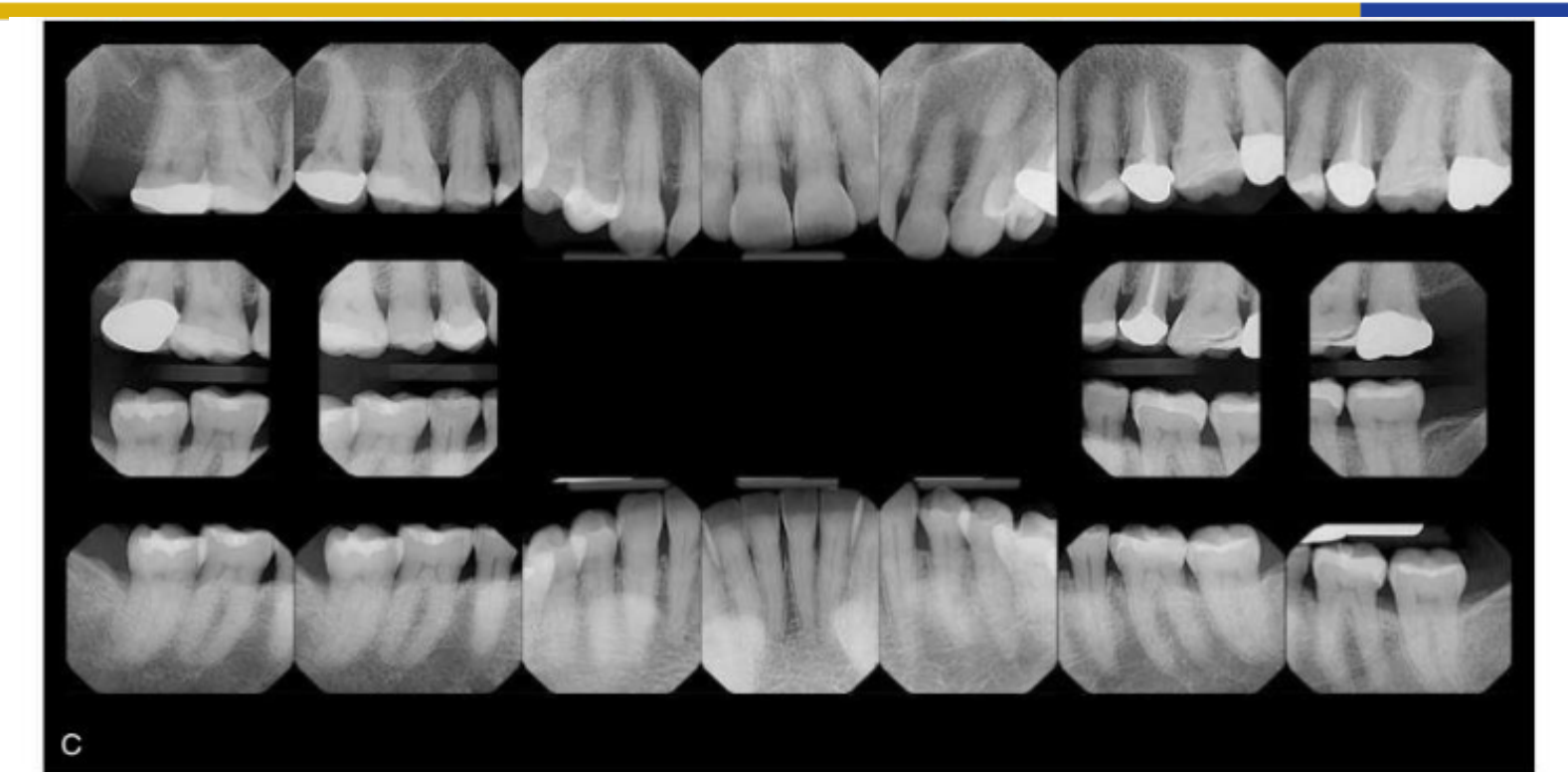
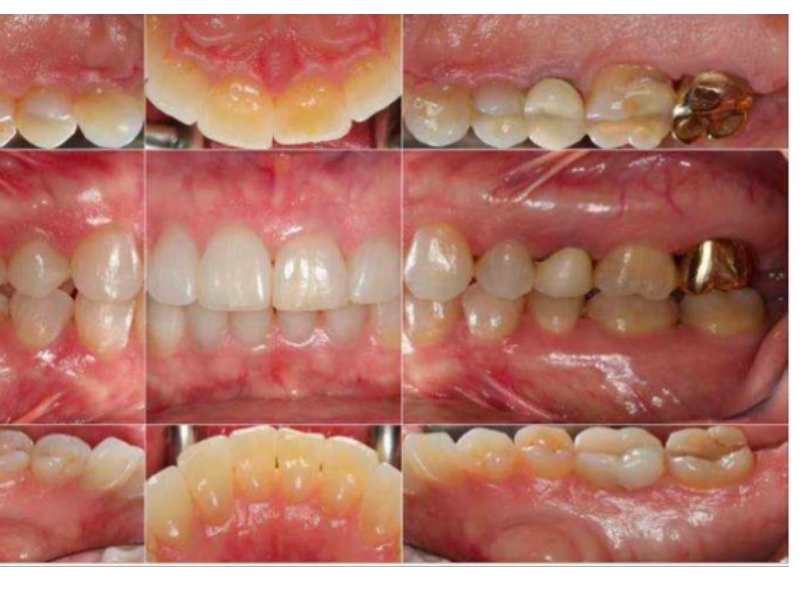
Case examples
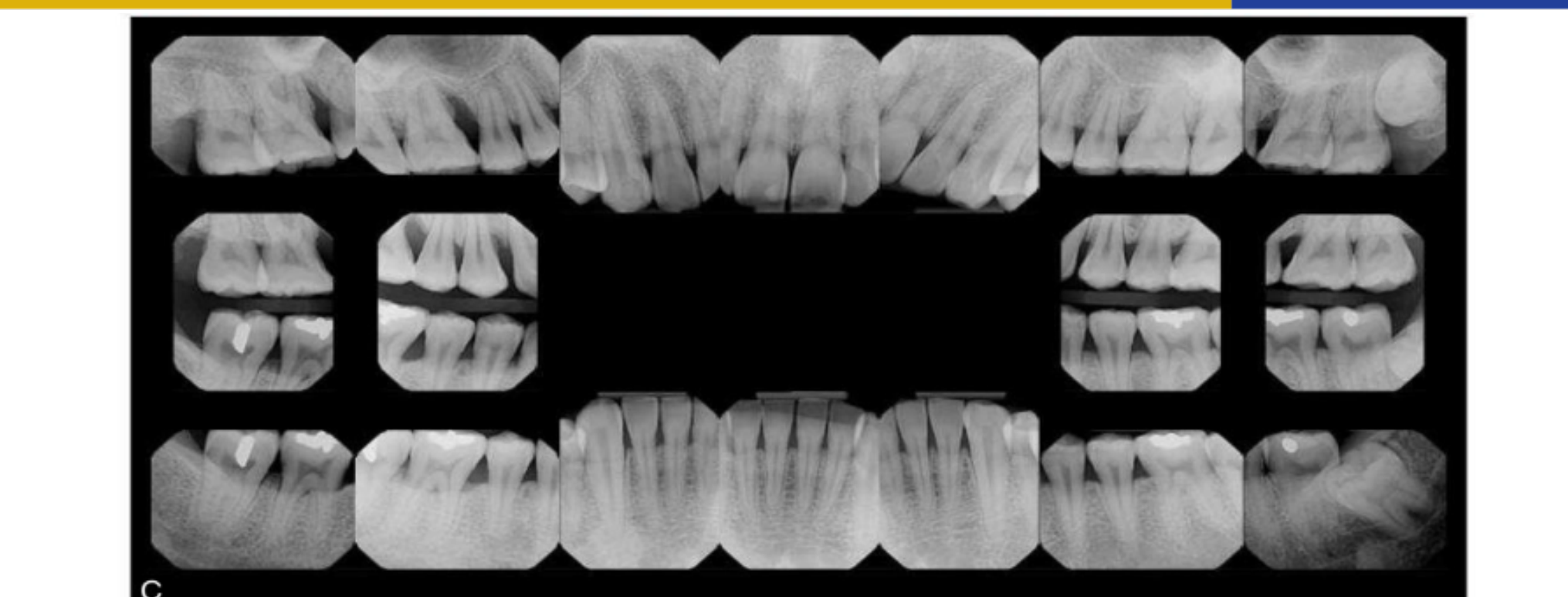
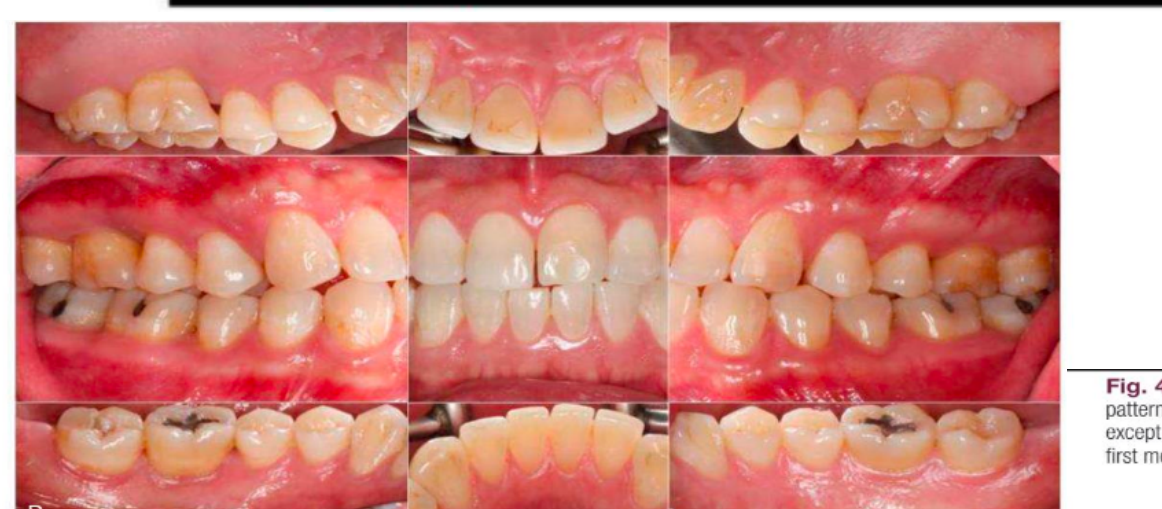
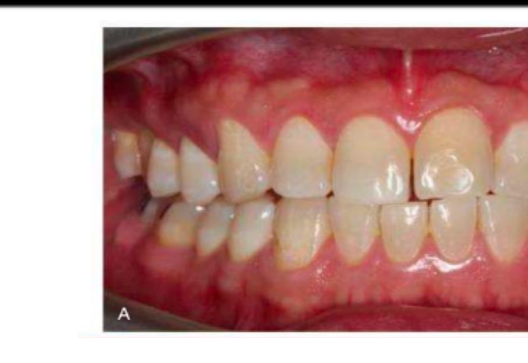
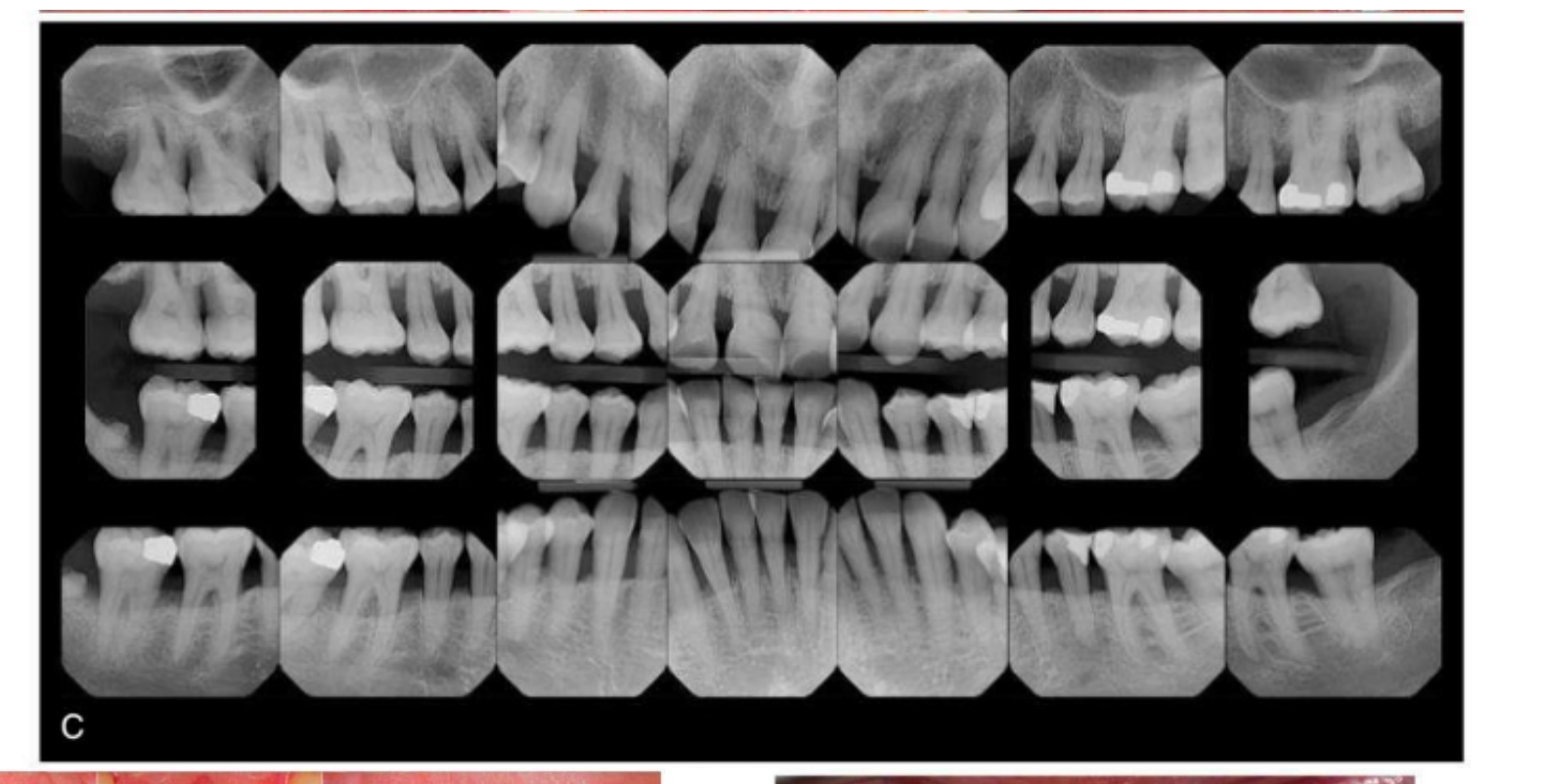
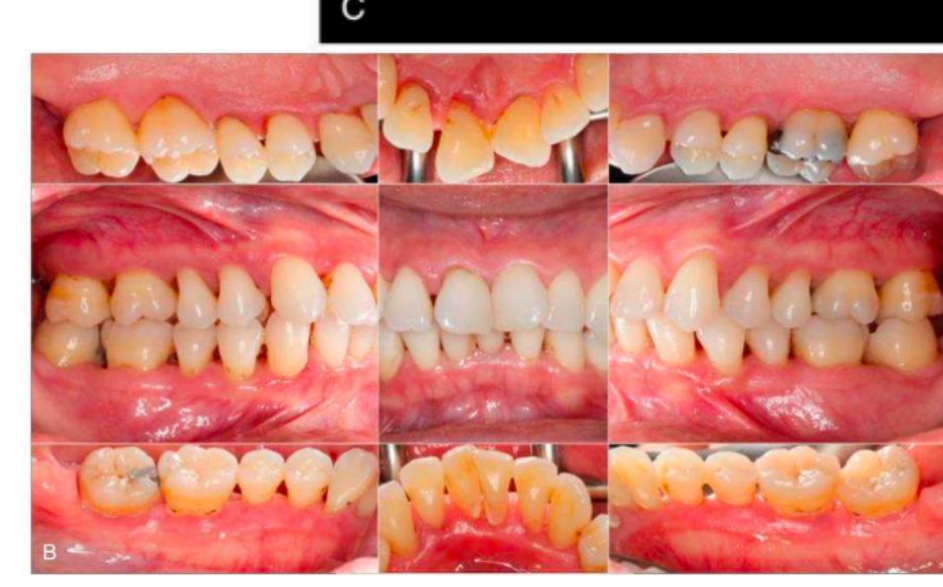
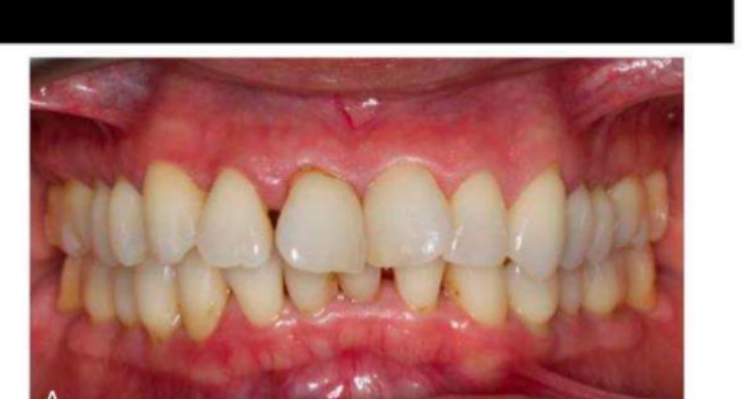
Fig. 41.10 Clinical photos (A and B) and full mouth radiographic series (C) of a patient who had molar-incisor pattern of periodontitis (used to be called “localized aggressive periodontitis”). The overall prognosis is favorable except for the maxillary right first molar (unfavorable), maxillary left first molar (questionable), and mandibular right first molar (questionable).
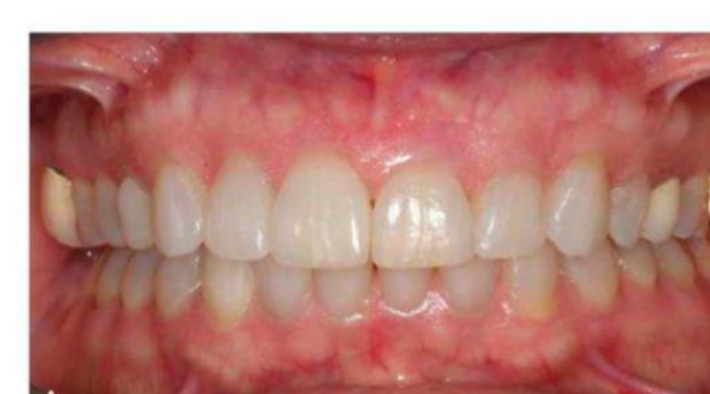
Case examples
Fig. 41. Generalized, stage III, grade C periodontitis in a healthy, nonsmoking 49-year-old female. (A and B), Moderate clinical biofilm, calculus, and gingival inflammation. (C) Moderate to severe radiographic bone loss. Overall prognosis is questionable/unfavorable. (Copyright Jonathan H. Do, DDS. All rights reserved.)
 |  |  |
 |  |  |
 |  |  |
 |
Implants Versus Natural Tooth Retention4445
Irrational to treat - now implants?
“In no way does the longevity of oral implants surpass that of natural teeth even of those that are compromised for either periodontal or endodontic reasons.” Holm-Pedersen et al 2007
“However, other colleagues have started to realize that there sometimes is an over-confidence in implant therapy and that expensive treatments with uncertain prognosis are provided when other solutions, saving a greater number of natural teeth, would have been a comparable, or even a better, choice long-term.” Lundgren et al 2008
“There is no evidence available to support an aggressive approach in early extraction of teeth, to preserve bone for later implant placement.” Chandki & Kala 2012
“Periodontal regeneration can change the prognosis of hopeless teeth and is a less costly alternative to tooth extraction and replacement.” Cortellini et al 2020
Irrational to treat - now implants?
- Implants do not survive more than treated periodontally compromised teeth
- Implants have common complications
- Management of implant complications is challenging
- Implants are not cheaper than periodontal therapy
- Tooth complication? Extract and replace with implant
- Implant complication? …
 |  |
 |
Footnotes
-
Original PDF page 1: L7 Prognosis of Periodontally Involved Teeth 2025, p.1 ↩
-
Original PDF page 2: L7 Prognosis of Periodontally Involved Teeth 2025, p.2 ↩
-
Original PDF page 3: L7 Prognosis of Periodontally Involved Teeth 2025, p.3 ↩
-
Original PDF page 4: L7 Prognosis of Periodontally Involved Teeth 2025, p.4 ↩
-
Original PDF page 6: L7 Prognosis of Periodontally Involved Teeth 2025, p.6 ↩
-
Original PDF page 7: L7 Prognosis of Periodontally Involved Teeth 2025, p.7 ↩
-
Original PDF page 9: L7 Prognosis of Periodontally Involved Teeth 2025, p.9 ↩
-
Original PDF page 10: L7 Prognosis of Periodontally Involved Teeth 2025, p.10 ↩
-
Original PDF page 11: L7 Prognosis of Periodontally Involved Teeth 2025, p.11 ↩
-
Original PDF page 12: L7 Prognosis of Periodontally Involved Teeth 2025, p.12 ↩
-
Original PDF page 13: L7 Prognosis of Periodontally Involved Teeth 2025, p.13 ↩
-
Original PDF page 15: L7 Prognosis of Periodontally Involved Teeth 2025, p.15 ↩
-
Original PDF page 16: L7 Prognosis of Periodontally Involved Teeth 2025, p.16 ↩
-
Original PDF page 17: L7 Prognosis of Periodontally Involved Teeth 2025, p.17 ↩
-
Original PDF page 18: L7 Prognosis of Periodontally Involved Teeth 2025, p.18 ↩
-
Original PDF page 19: L7 Prognosis of Periodontally Involved Teeth 2025, p.19 ↩
-
Original PDF page 20: L7 Prognosis of Periodontally Involved Teeth 2025, p.20 ↩
-
Original PDF page 21: L7 Prognosis of Periodontally Involved Teeth 2025, p.21 ↩
-
Original PDF page 23: L7 Prognosis of Periodontally Involved Teeth 2025, p.23 ↩
-
Original PDF page 24: L7 Prognosis of Periodontally Involved Teeth 2025, p.24 ↩
-
Original PDF page 25: L7 Prognosis of Periodontally Involved Teeth 2025, p.25 ↩
-
Original PDF page 27: L7 Prognosis of Periodontally Involved Teeth 2025, p.27 ↩
-
Original PDF page 35: L7 Prognosis of Periodontally Involved Teeth 2025, p.35 ↩
-
Original PDF page 37: L7 Prognosis of Periodontally Involved Teeth 2025, p.37 ↩
-
Original PDF page 39: L7 Prognosis of Periodontally Involved Teeth 2025, p.39 ↩
-
Original PDF page 40: L7 Prognosis of Periodontally Involved Teeth 2025, p.40 ↩
-
Original PDF page 26: L7 Prognosis of Periodontally Involved Teeth 2025, p.26 ↩
-
Original PDF page 28: L7 Prognosis of Periodontally Involved Teeth 2025, p.28 ↩
-
Original PDF page 29: L7 Prognosis of Periodontally Involved Teeth 2025, p.29 ↩
-
Original PDF page 30: L7 Prognosis of Periodontally Involved Teeth 2025, p.30 ↩
-
Original PDF page 31: L7 Prognosis of Periodontally Involved Teeth 2025, p.31 ↩
-
Original PDF page 32: L7 Prognosis of Periodontally Involved Teeth 2025, p.32 ↩
-
Original PDF page 44: L7 Prognosis of Periodontally Involved Teeth 2025, p.44 ↩
-
Original PDF page 33: L7 Prognosis of Periodontally Involved Teeth 2025, p.33 ↩
-
Original PDF page 34: L7 Prognosis of Periodontally Involved Teeth 2025, p.34 ↩
-
Original PDF page 36: L7 Prognosis of Periodontally Involved Teeth 2025, p.36 ↩
-
Original PDF page 41: L7 Prognosis of Periodontally Involved Teeth 2025, p.41 ↩
-
Original PDF page 42: L7 Prognosis of Periodontally Involved Teeth 2025, p.42 ↩
-
Original PDF page 43: L7 Prognosis of Periodontally Involved Teeth 2025, p.43 ↩
-
Original PDF page 45: L7 Prognosis of Periodontally Involved Teeth 2025, p.45 ↩
-
Original PDF page 46: L7 Prognosis of Periodontally Involved Teeth 2025, p.46 ↩
-
Original PDF page 47: L7 Prognosis of Periodontally Involved Teeth 2025, p.47 ↩
-
Original PDF page 48: L7 Prognosis of Periodontally Involved Teeth 2025, p.48 ↩
-
Original PDF page 49: L7 Prognosis of Periodontally Involved Teeth 2025, p.49 ↩
-
Original PDF page 50: L7 Prognosis of Periodontally Involved Teeth 2025, p.50 ↩