Resin-Bonded Bridges and Implant Considerations in Young Patients
Front Matter1234
We are learning on Noongar land
The University of Western Australia
Copyright Notice5
Material used in this recording may have been reproduced and communicated to you by or on behalf of The University of Western Australia in accordance with section 113P of the Copyright Act 1968.
Unless stated otherwise, all teaching and learning materials provided to you by the University are protected under the Copyright Act and is for your personal use only. This material must not be shared or distributed without the permission of the University and the copyright owner/s.
Developmental Changes and Growth6
[F] [020Y]
[mm]: orthogonal / 30.0
- 20
- 30
- 40
- 50
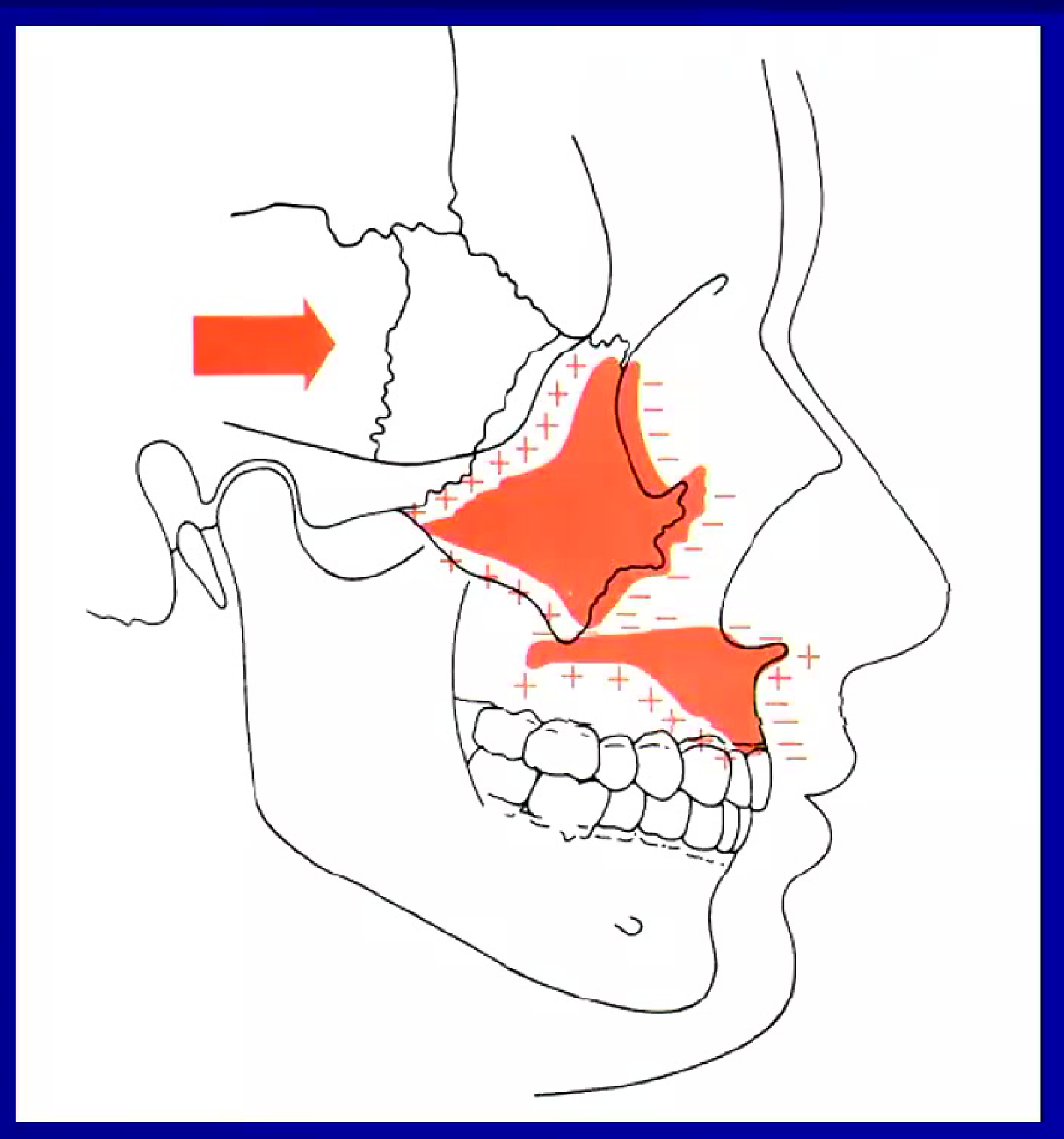
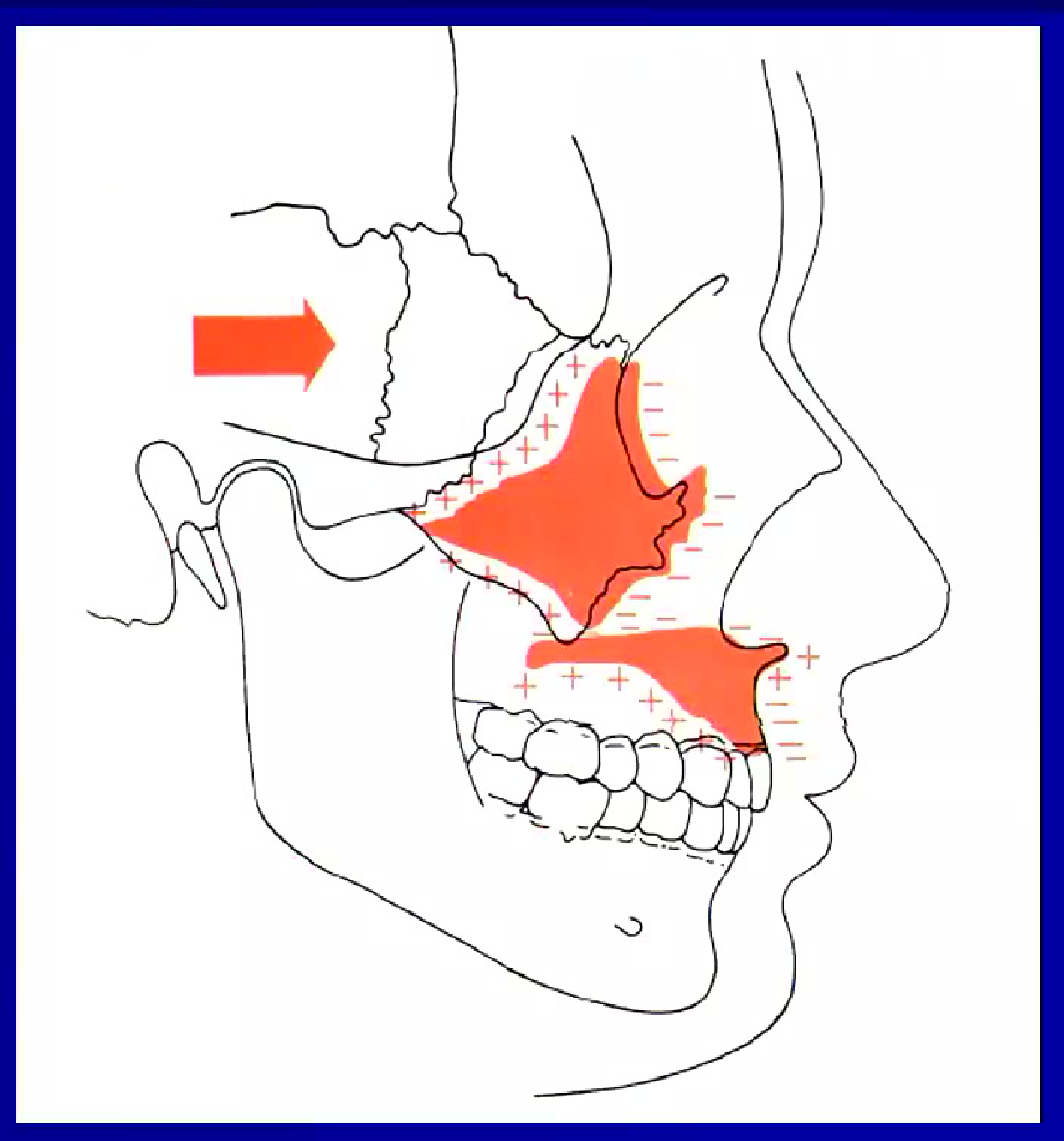
Maxillary Growth and Tooth Movement789
-
Maxilla grows down and forward
-
Resorption of labial bone over maxillary anterior teeth
-
Teeth extrude and upright
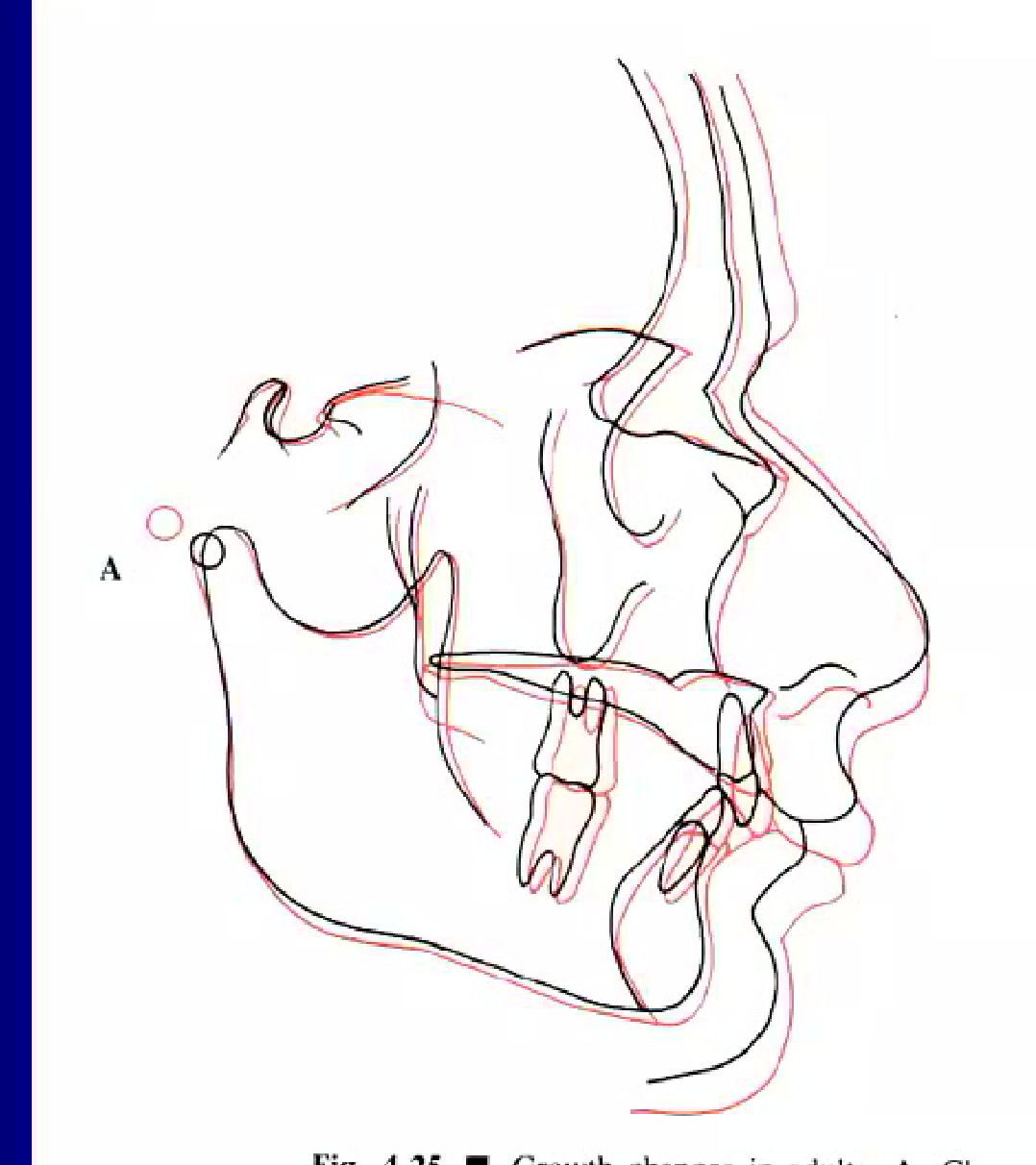
Adult Growth Changes1011
- Teeth extrude and upright
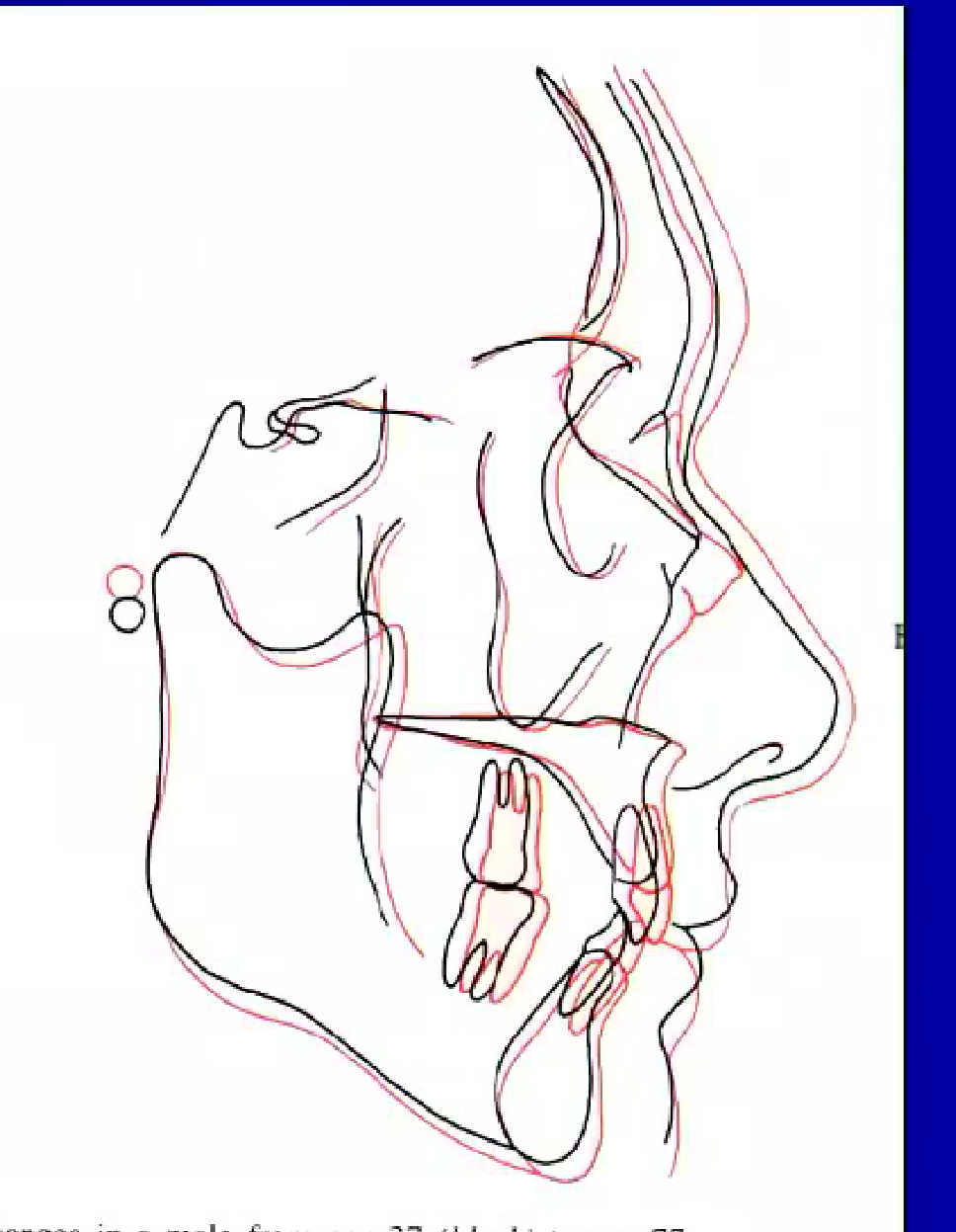
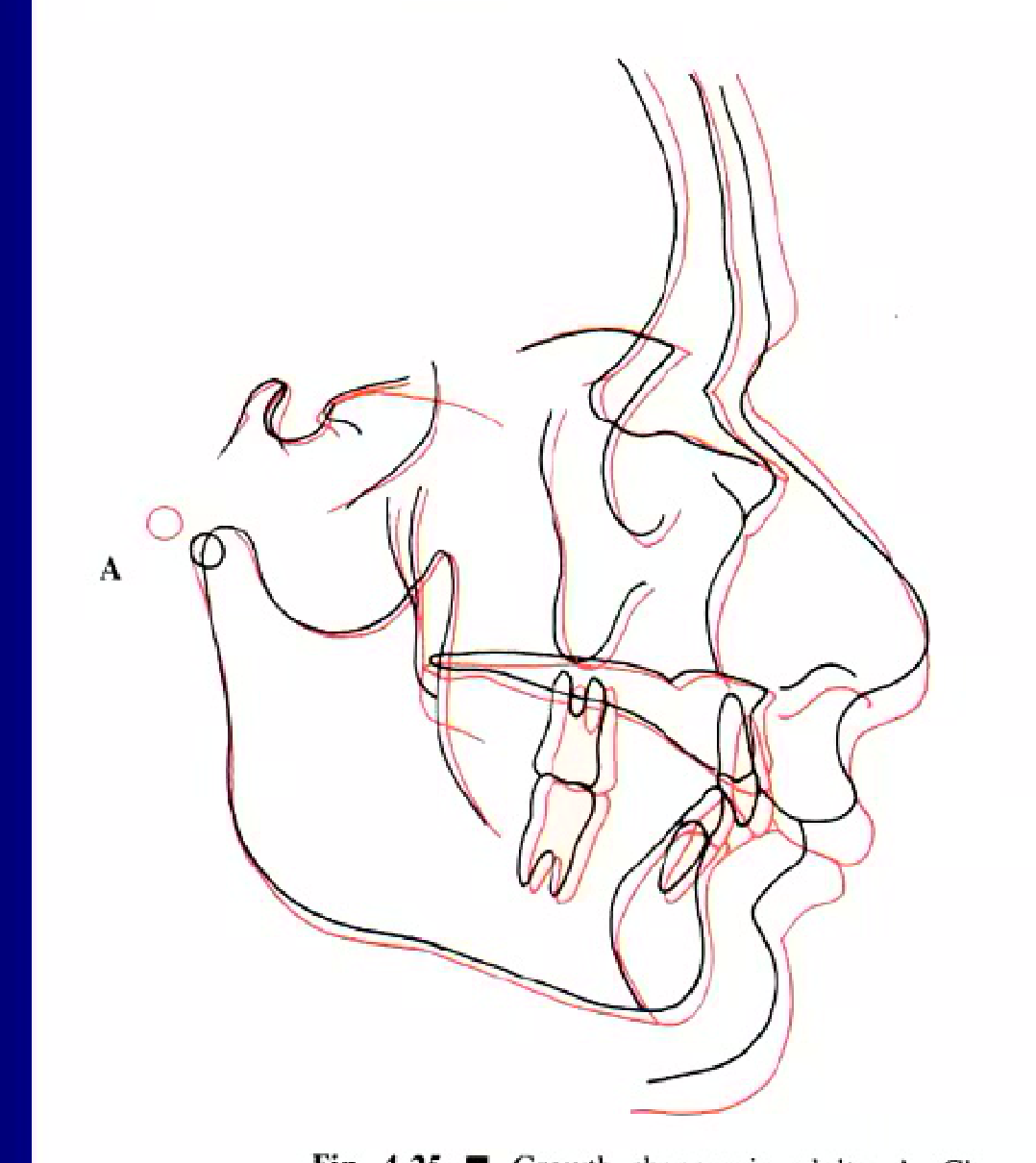
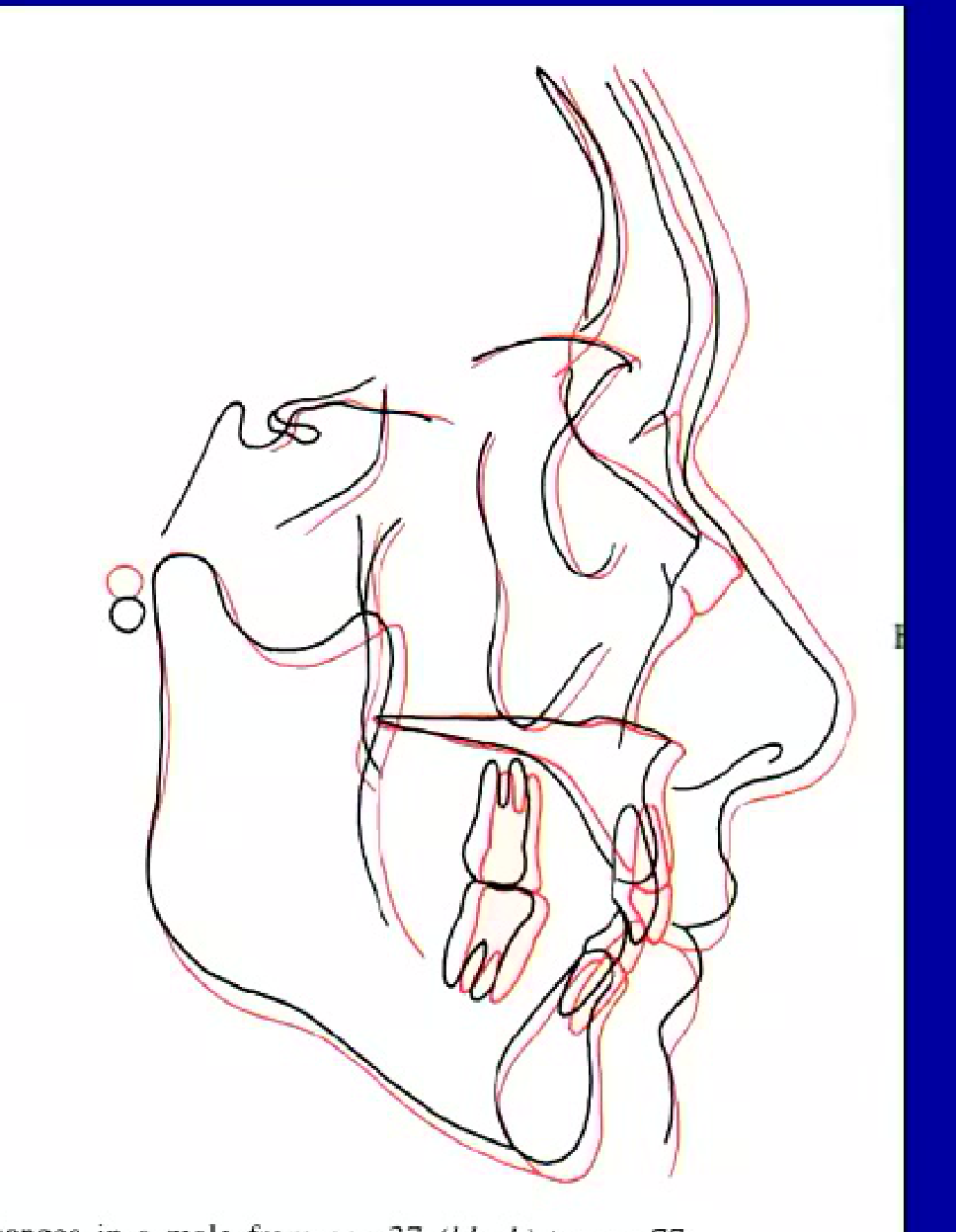
Fig. 4-25 — Growth changes in adults
- A: Changes in a male from age 37 (black) to age 77 (red). Note that both the maxilla and mandible grew forward, and the nose grew considerably.
- B: Growth changes in a woman between age 34 (black) and 83 (red). Note that both jaws grew forward and somewhat downward, and that the nasal structure enlarged.
From Behrents RG: A treatise on the continuum of growth in the aging craniofacial skeleton. Ann Arbor, 1984. University
 |  |
 |
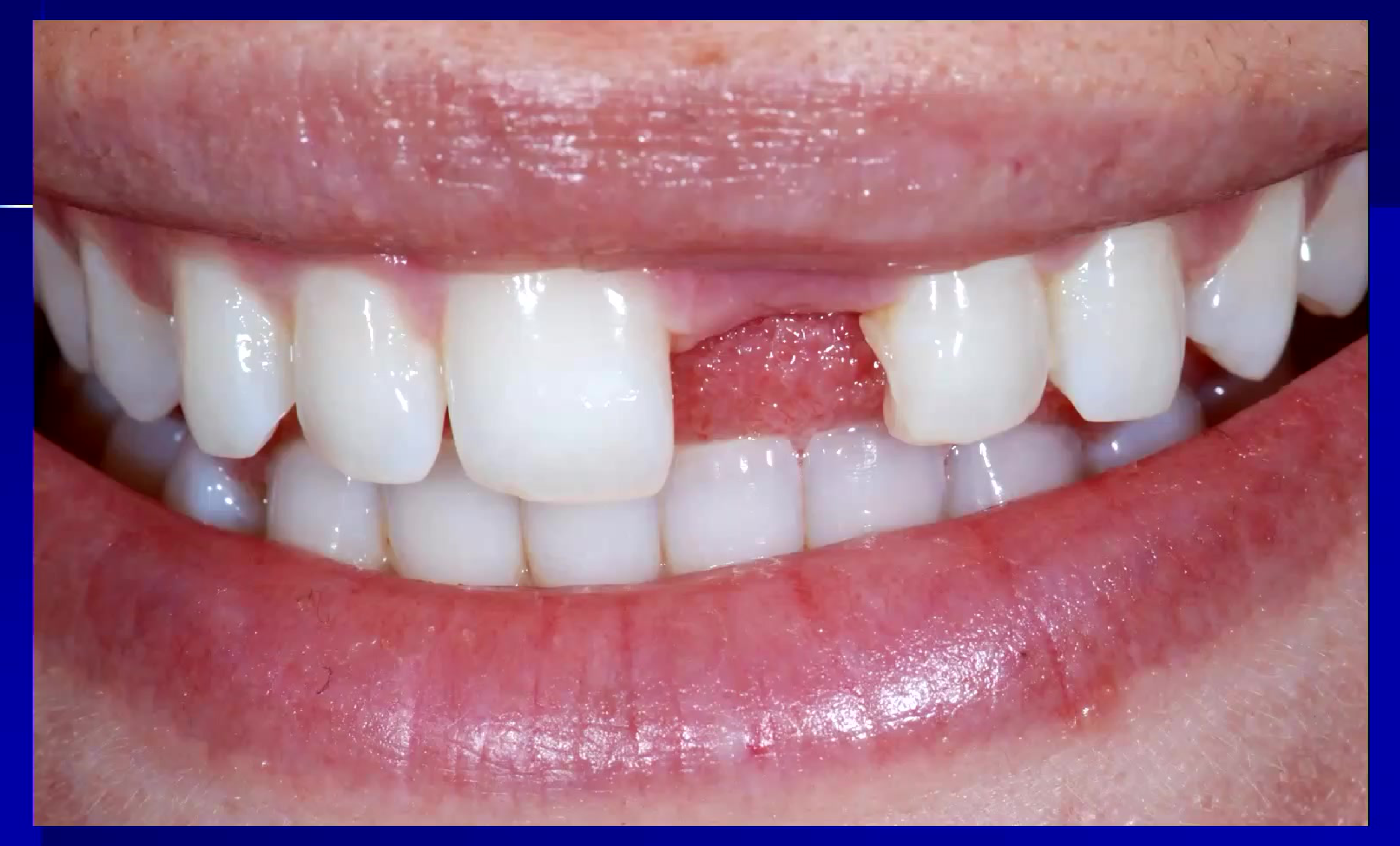
Risks of Implants in the Growing Anterior Maxilla1213
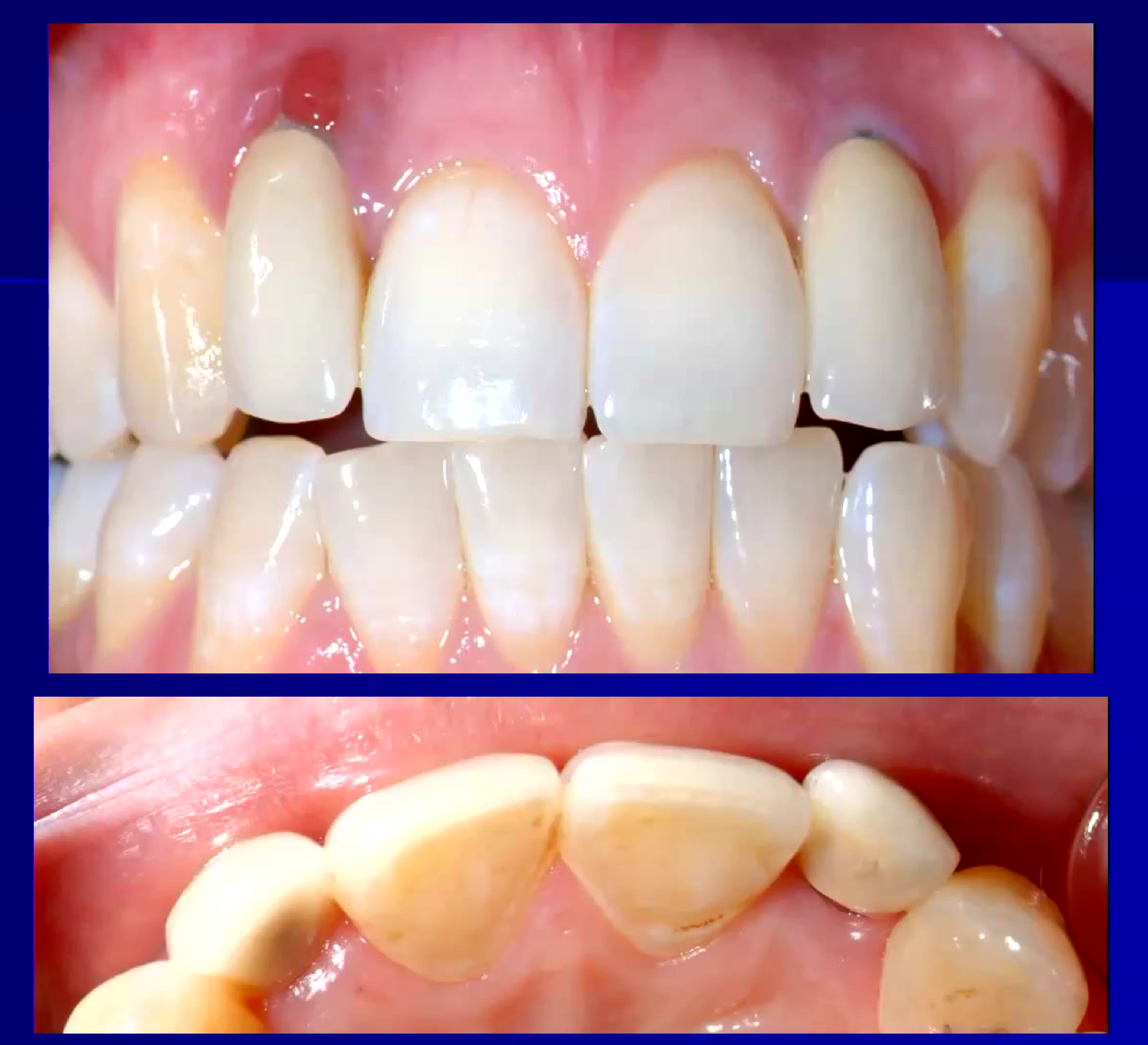
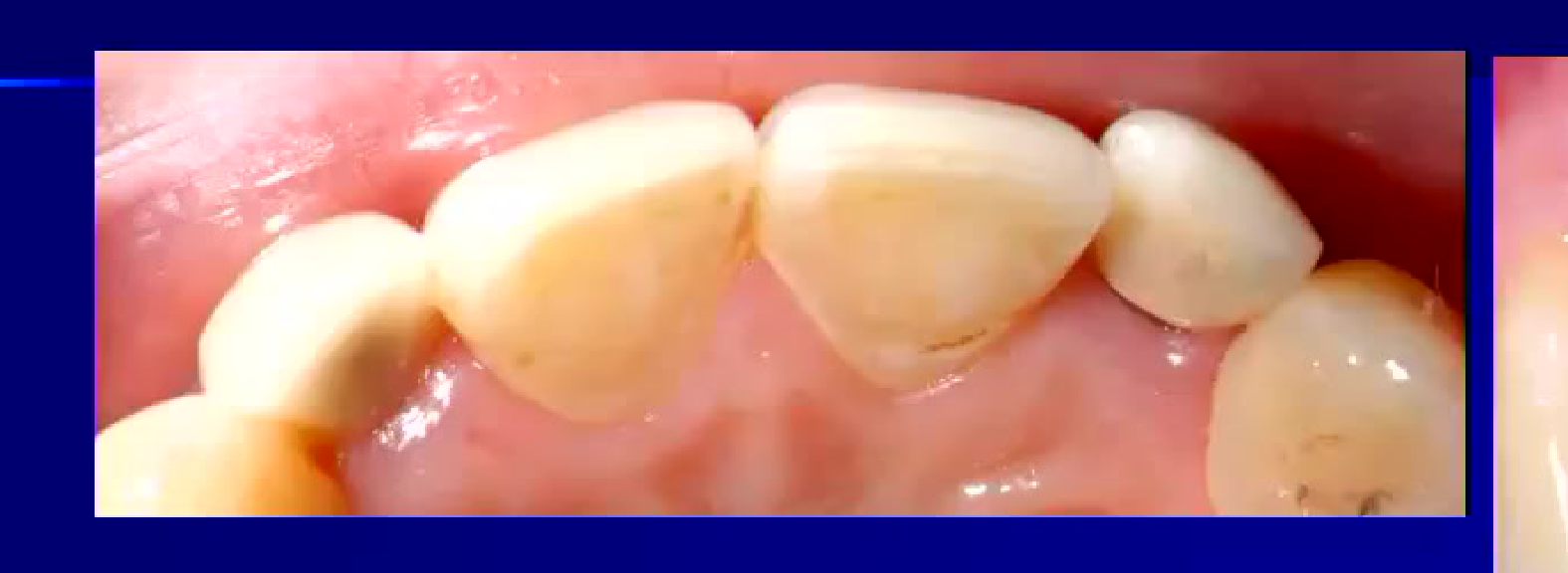
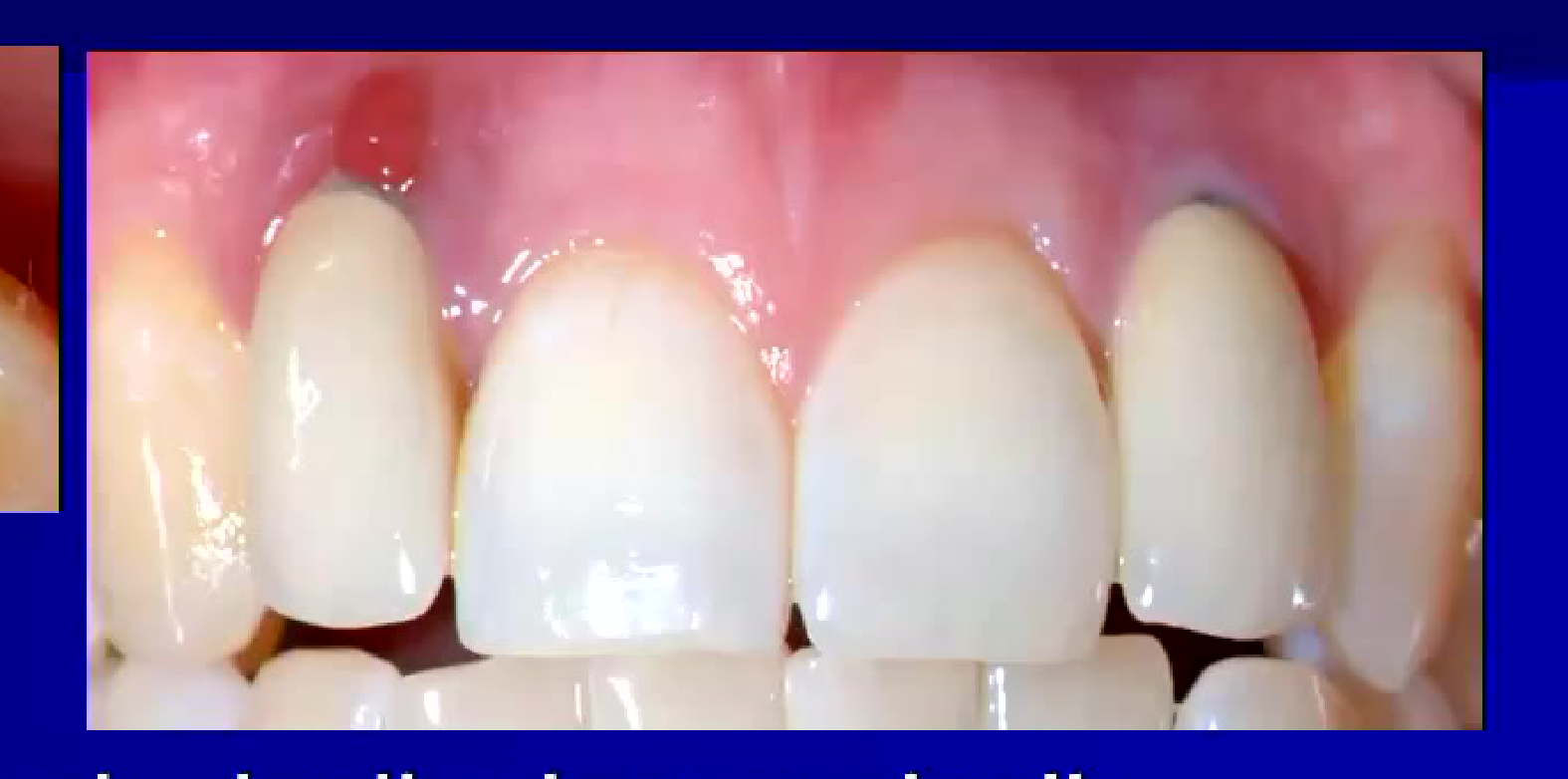
- Infraocclusion → shorter incisally + long apically
- Blue colouring of labial gingiva
- Collapse of labial soft tissue coverage
- Recession exposing abutment / implant
- Lack of papilla especially D
- Protrusion relative to natural teeth
In the anterior maxilla of a young adult, risk of unpredictable + unaesthetic side effects in the long term due to the ankylotic unit.
Thilander, Eur J Orthod 2001;23:715-
Jemt, CID+RR 2005;7:200-
 |  |
Timing Guidelines for Implants in Young Patients14
Koch et al 1996 — Consensus conference on oral implants in young patients
- Mandible: 5–6 years old
- Maxilla:
- A fixed chronological age cannot be recommended
- Use prostheses that won’t affect growth
- When growth is complete
- Can’t predict when, but can tell when:
- Longitudinal body height measurement
- Hand-wrist radiograph
- Serial (12-month) cephalometric radiographs
Treatment Planning and RBB Overview
Least Invasive Treatment Philosophy151617
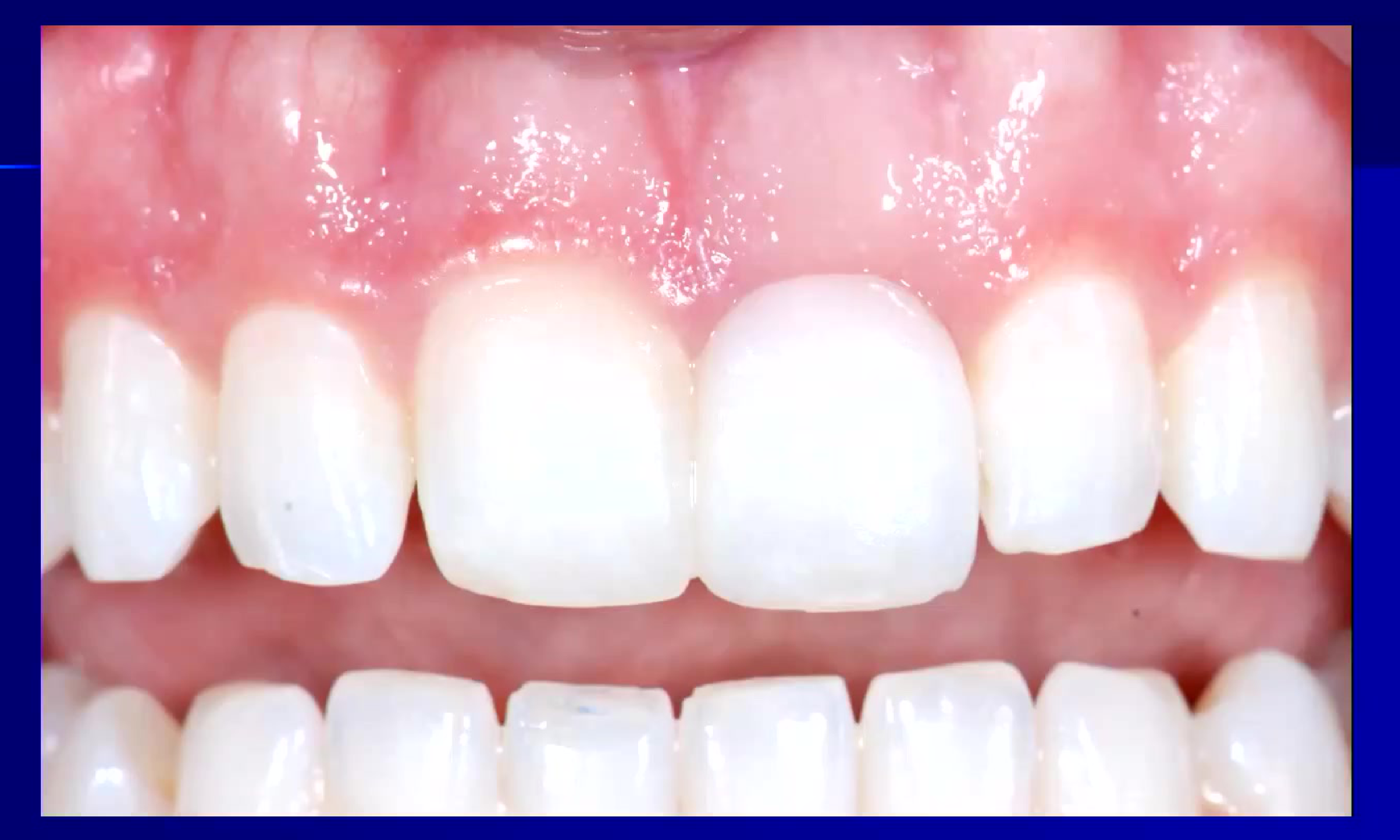
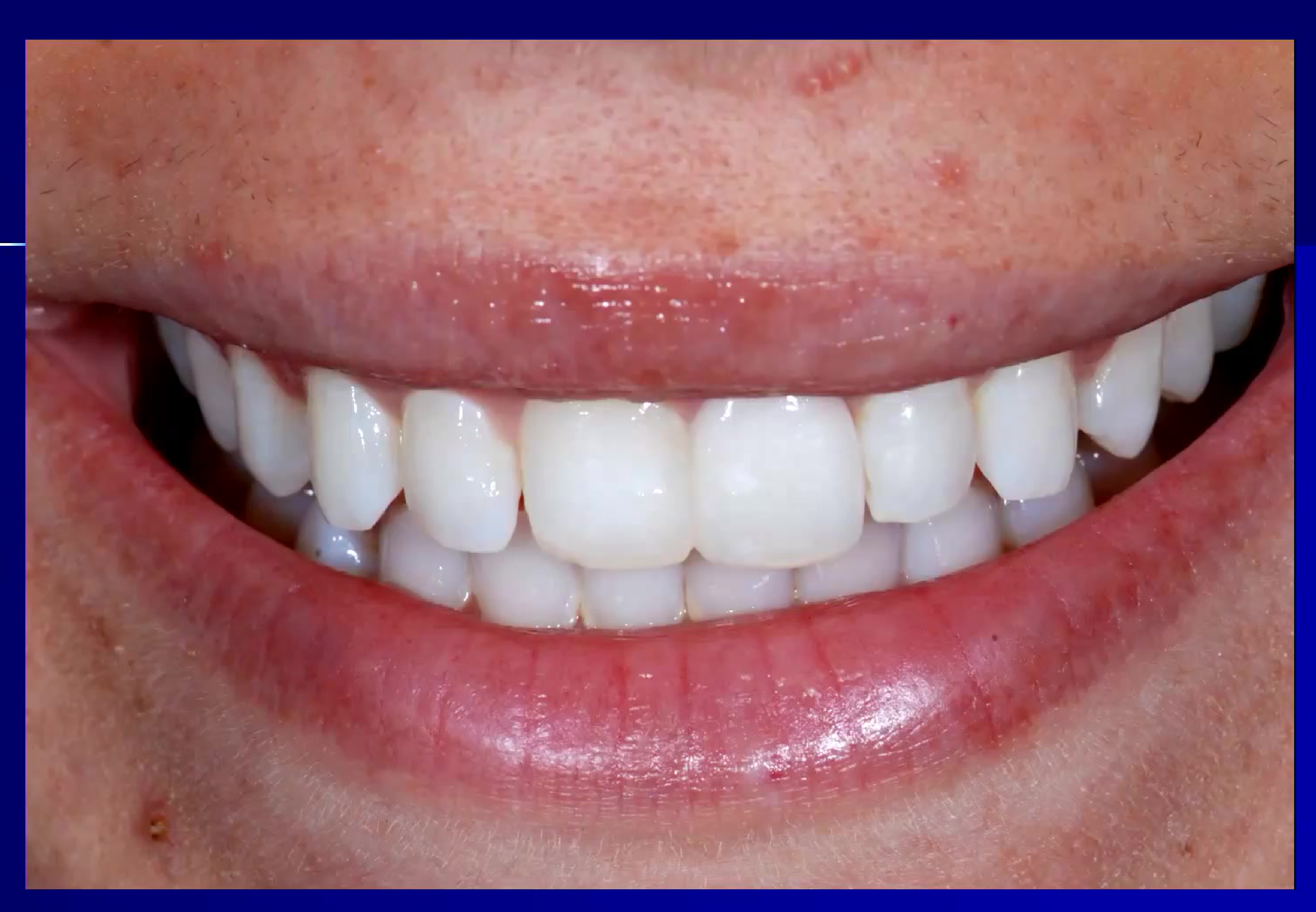
Treatment of choice is the least invasive option that satisfies the aesthetic and functional objectives
Think lifelong
 |  |
Radiographic Assessment of the Maxilla18
CT Maxilla — Series: 07/06/2023 8:35:16 AM; Series: CT #602; Image: 1/3. Panel A. R, W 3600, C 680.
Data acquired on 7/06/2023 8:31:55 AM at Envision Medical Imaging.
- Input Images — Number / Slice Thickness [mm]: 160 / 0.40
- Reconstruction Increment [mm] / Kernel: n.a. / Ur69u
- Panorama — Distance / Slice Thickness [mm]: 2.0 / 3.00
- Paraxial — Orientation / Length / Distance / Slice thickness [mm]: orthogonal / 30.0 / 2.0 / 1.00
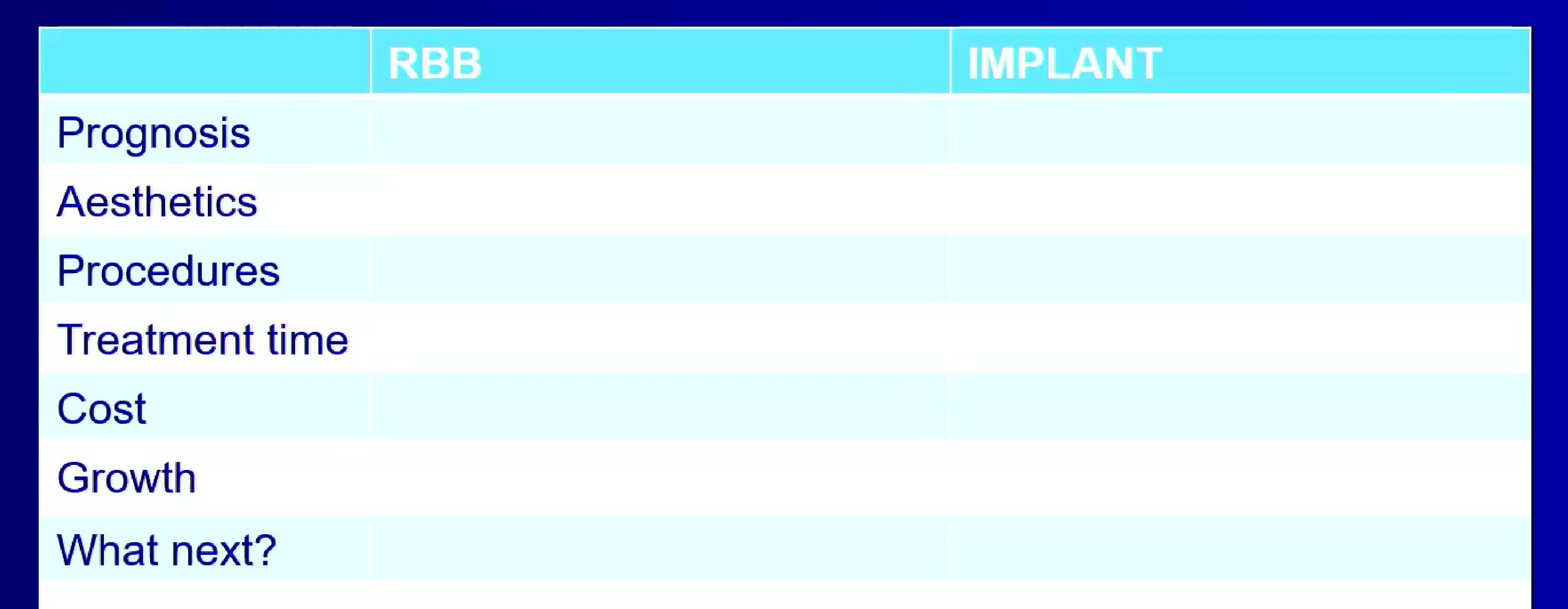
RBB Versus Implant Comparison1920
| RBB | IMPLANT | |
|---|---|---|
| Prognosis | ||
| Aesthetics | ||
| Procedures | ||
| Treatment time | ||
| Cost | ||
| Growth | ||
| What next? |
The three levels of surgical wisdom:
- Good surgeon — how to operate
- Better surgeon — when to operate
- Best surgeon — when not to operate
Options for Replacing Teeth21
3 ways to replace teeth:
- No treatment
- Space closure
- Autotransplant
- Removable
- Implant
- Bridgework — tooth supported (RBB)
Indications and Limitations of RBBs
RBB22
- Treatment of choice in some situations
- lower incisors
- maxillary laterals
- occasionally other teeth with risk
- Posterior RBBs
- low success
- aesthetic problem in mandible
RBB Materials and Bonding
Assessment of Tooth Substrate23
Need enamel to bond and seal.
Alloy Choice and Properties
Alloy Choice: Non-Precious24
What this means
- Ni-Cr
- CrCo
- NP2 non-Be
- Rexillium = Be-containing Ni-Cr
Properties
- Rigid → good for RBB
- Less accurate to cast; polishing challenging
- Grey oxide layer = bonding
- Possible Ni sensitivity
Surface Treatment of the Metal Framework
Root Canals25
- Air abrade (sandblast) 50 µm Al2O3 + ultrasonic
- Roughens
- Increases surface area
- Cleans
- Improves wetting
Root Filling
- Historically → biomarra
- Electrolytic etch → micromechanical
- Silanization/siloating via Silcoater or Rocatec → chemical bond to alloy
- 0.5 micron layer of SiOx-C (hybrid silica) added (this is already in porcelain)
- Then silane coupling agent
- Then unfilled resin
Resin Cement Selection26272829
Resin Cement: Panavia30
- Silanated quartz
- Methacrylate resins (not BISGMA)
- MDP
- Phosphate ester / adhesive functional monomer
- Chemical bond via metal oxide
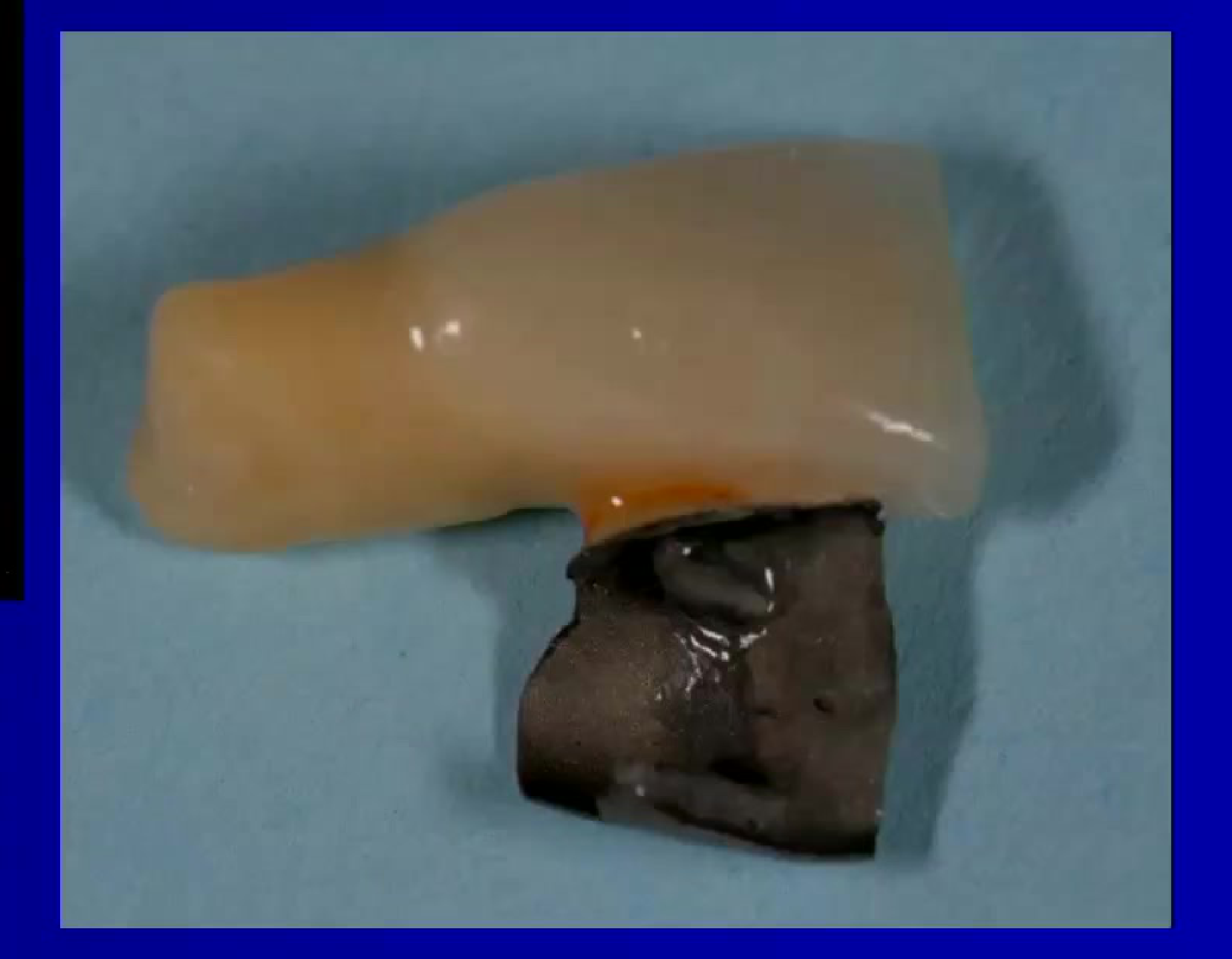
Opaque Panavia and Try-In Technique3132
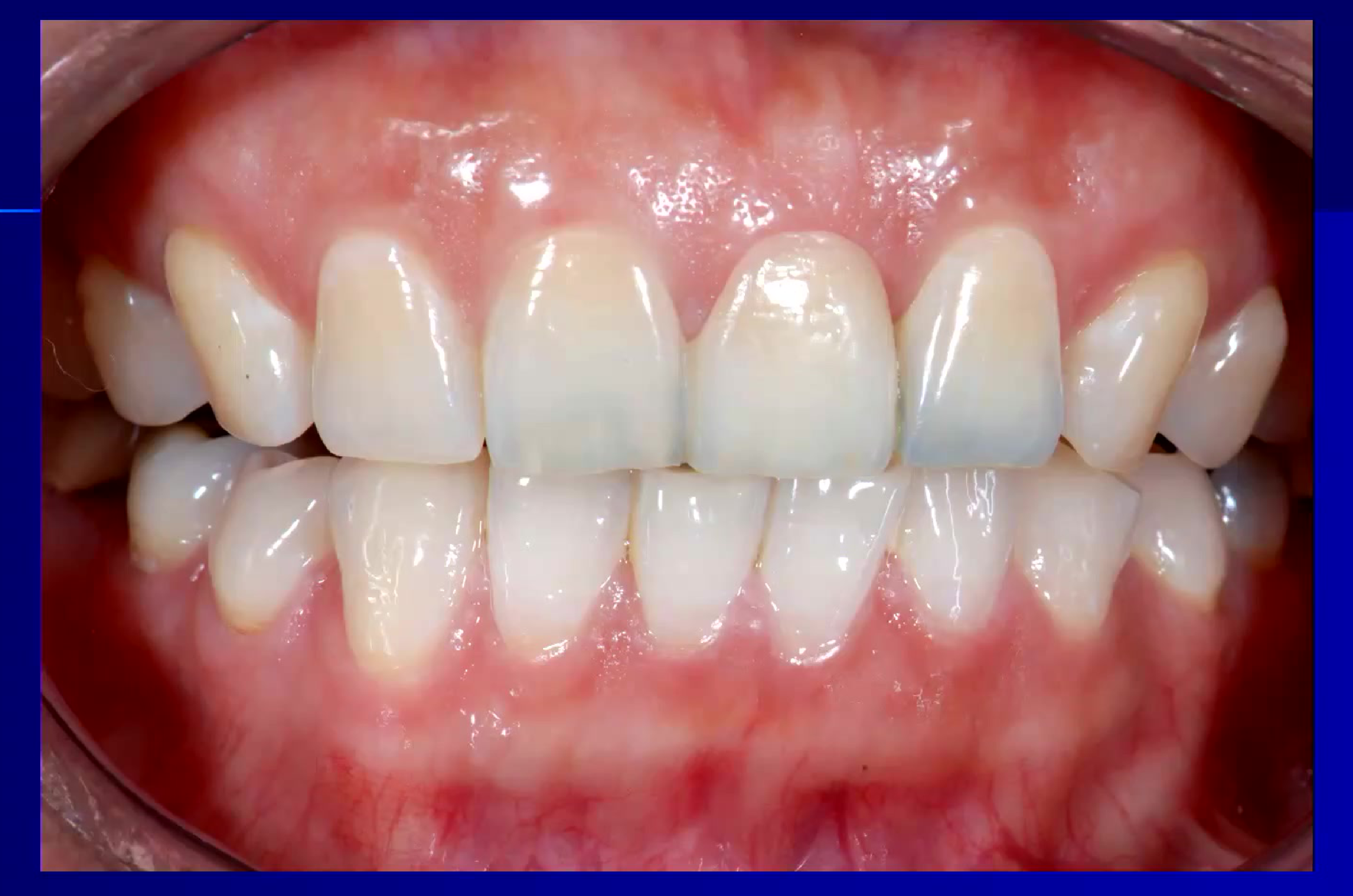 | 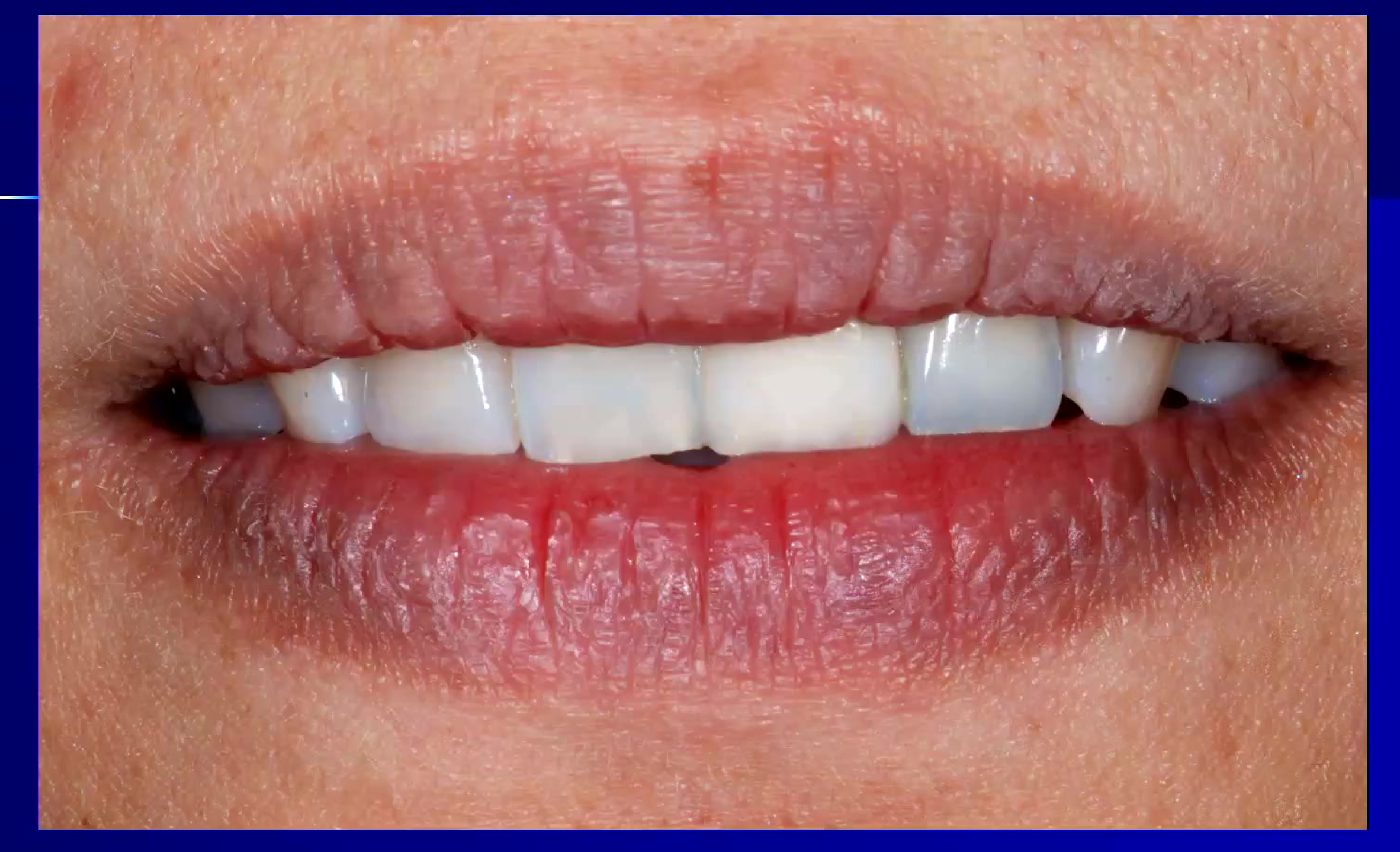 |
Always Opaque Panavia33
- Avoid grey show-through
- Can try in with opaque paste (no catalyst)
Metal-Resin-Enamel Bond Complex
Resultant Metal-Resin-Enamel Complex34
- Overall strong bond = 40 MPa
Components
-
Tooth–tooth: cohesive
-
Tooth–resin: adhesive, weak
-
Resin–resin: cohesive, weakest — failure is cohesive
-
Resin–metal: adhesive, stronger — high bond (2–3x tooth–resin)
-
Metal–metal: cohesive
-
No need to improve on resin–metal interface
-
Need to improve tensile strength of cement
This is the reason for tooth preparation — want R+R to decrease tensile forces on resin.
Tooth Preparation and Retraction353637
Preparation38
-
Precise mesial and distal grooves
- Mechanical retention
- Decrease tensile forces on resin cement
-
Retraction
- Often electrosurge
- 2 cords
-
Overall strong bond = 40 MPa
Components
-
Tooth–tooth: cohesive
-
Tooth–resin: adhesive, weak
-
Resin–resin: cohesive, weakest — failure is cohesive
-
Resin–metal: adhesive, stronger — high bond (2–3x tooth–resin)
-
Metal–metal: cohesive
-
No need to improve on resin–metal interface
-
Need to improve tensile strength of cement
This is the reason for tooth preparation — want R+R to decrease tensile forces on resin.
- Precise mesial and distal grooves
- Mechanical retention
- Decrease tensile forces on resin cement
- Retraction
- Often electrosurge
- 2 cords
Margin Configurations and Clinical Images
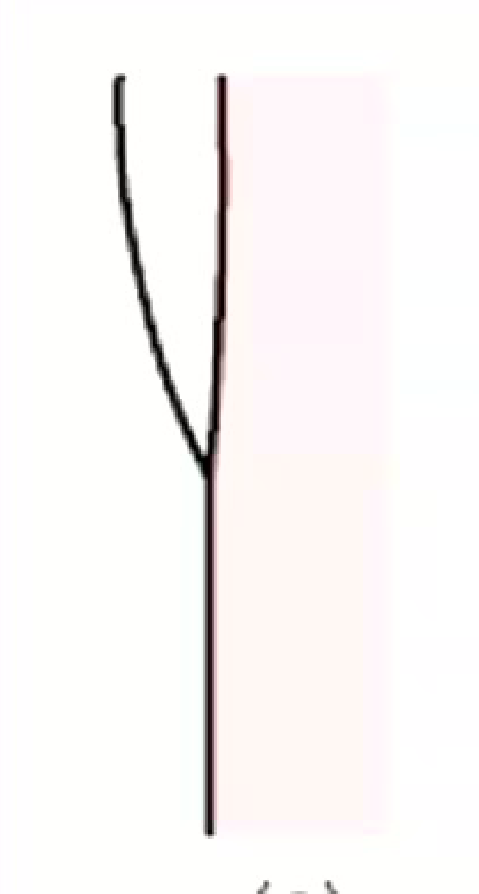
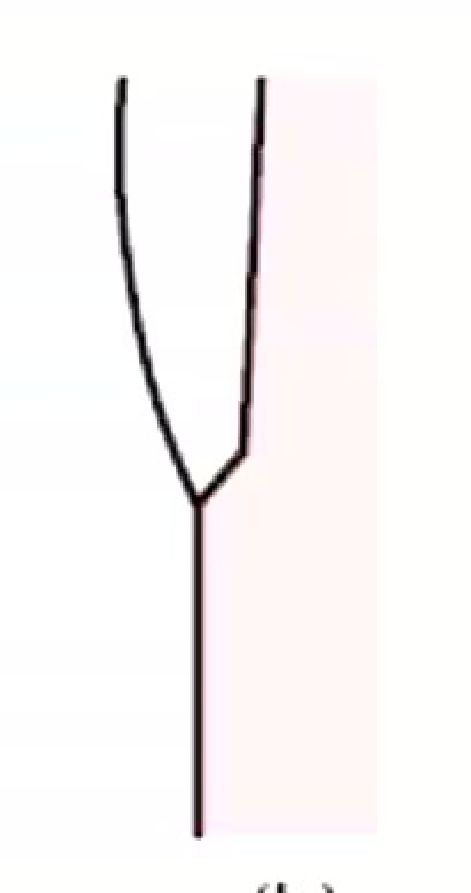
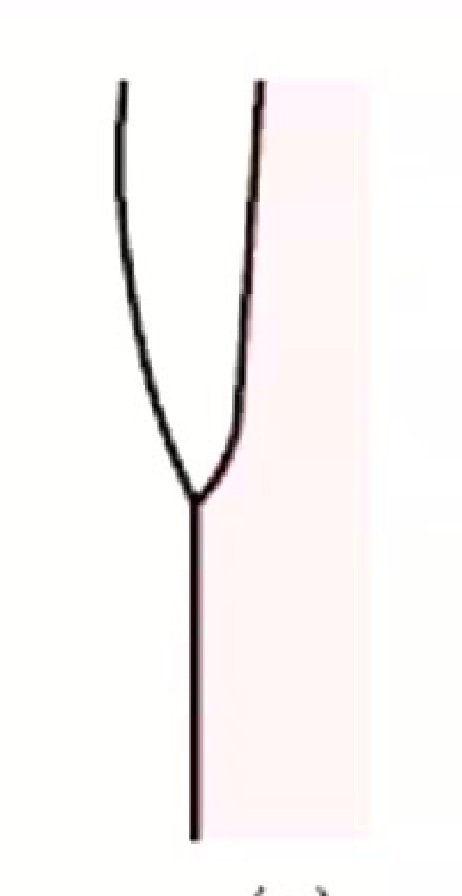
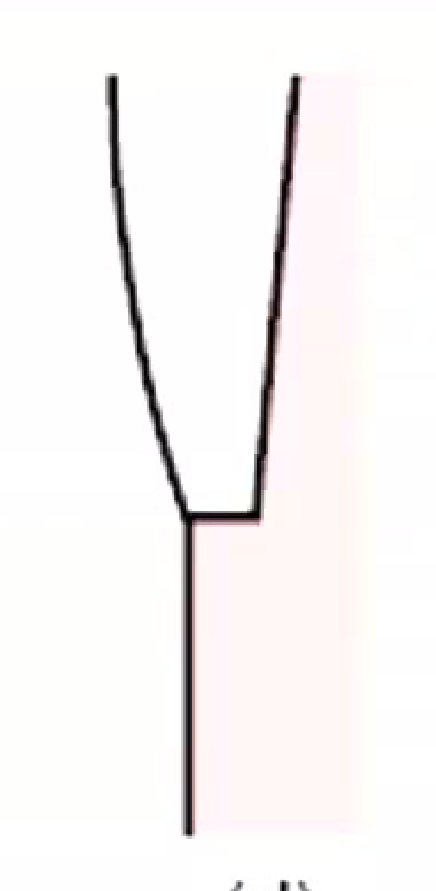
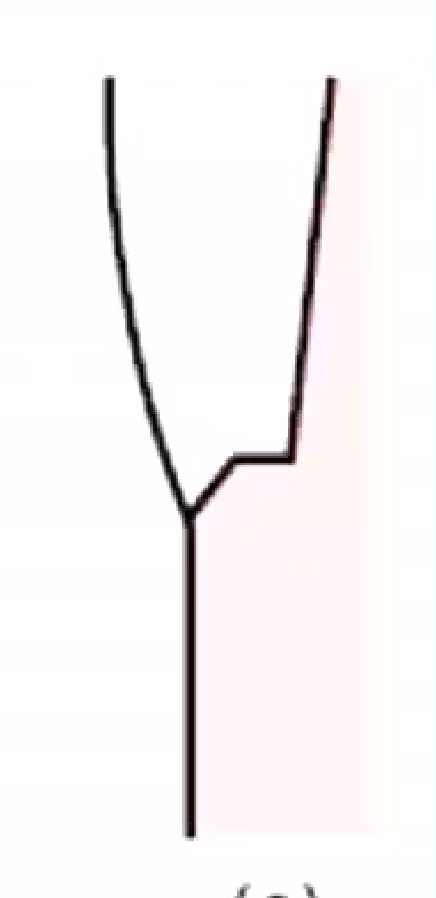
Margin Designs39
Margin configurations
(a) (b) (c) (d) (e)
 |  |  |
 |  |
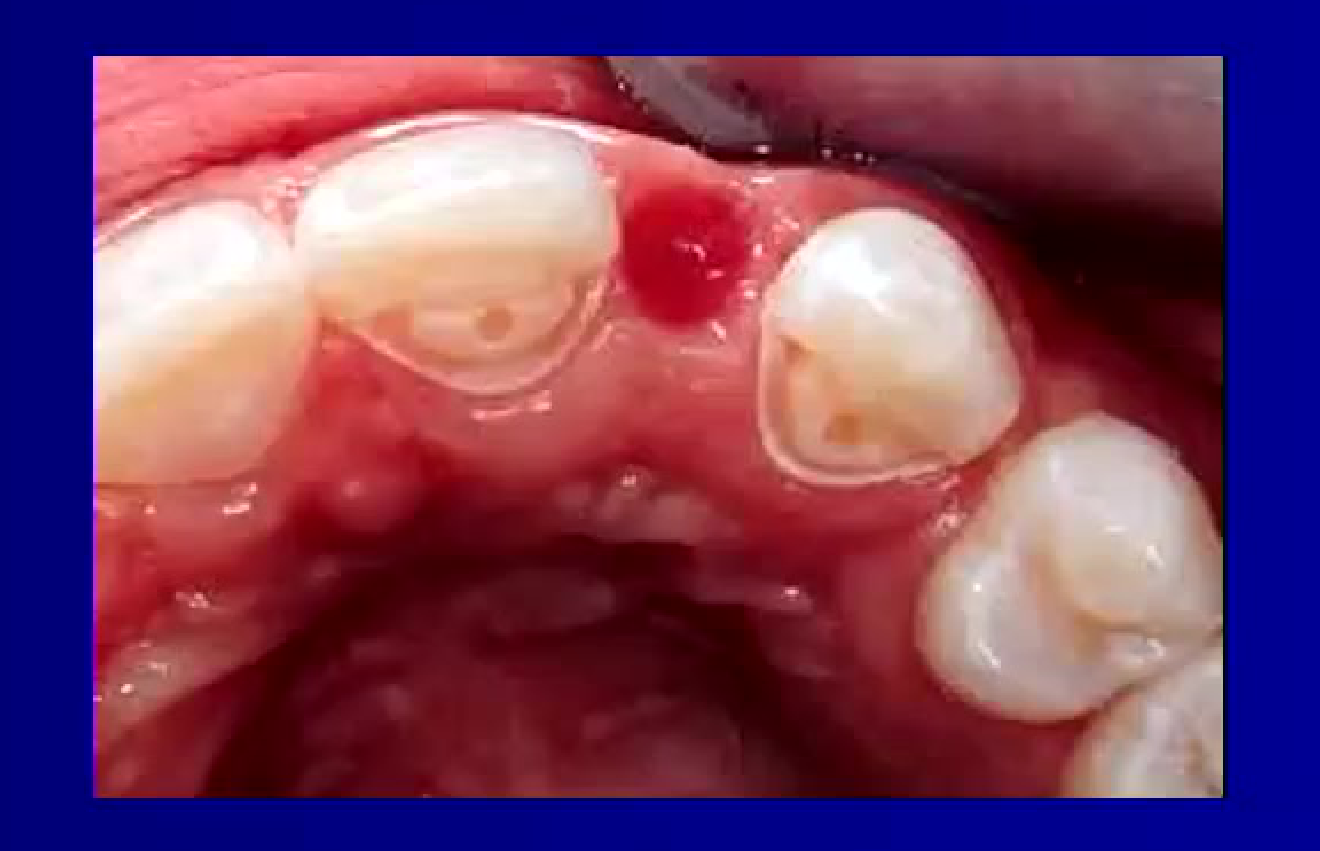
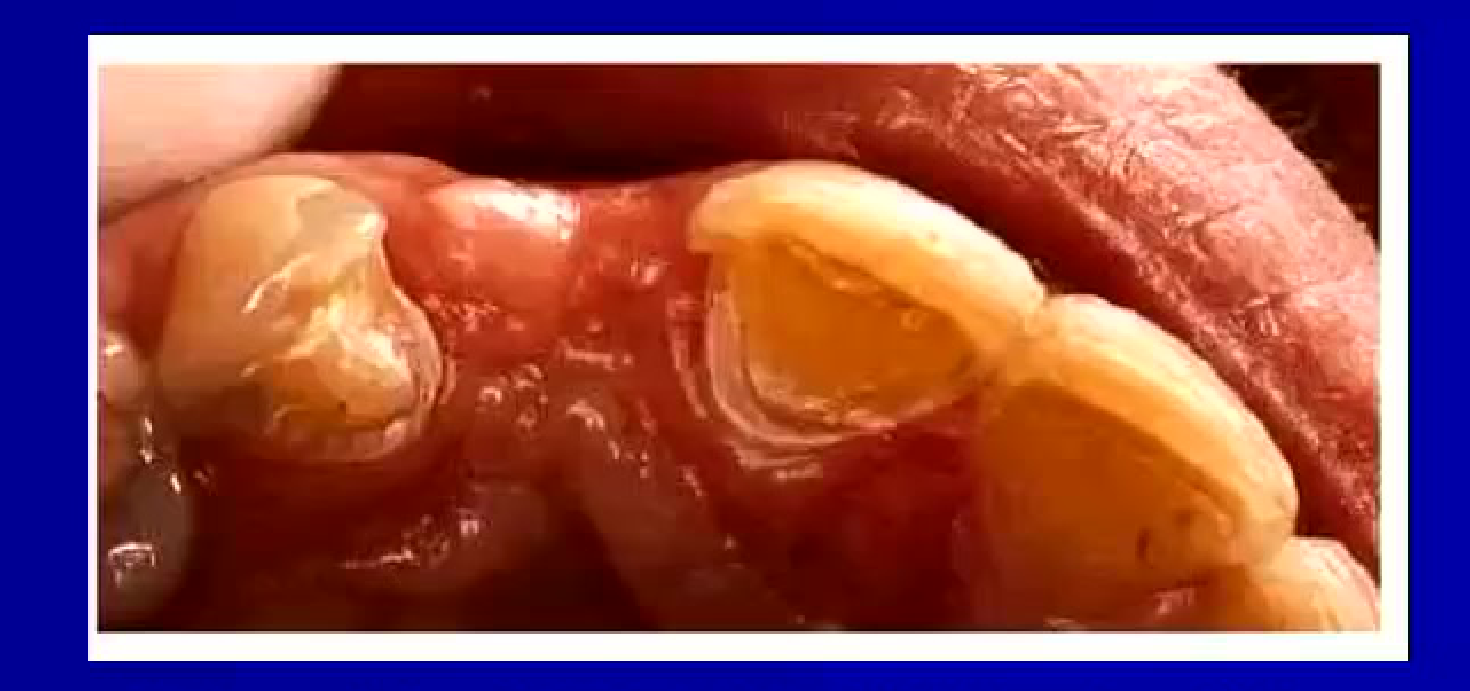
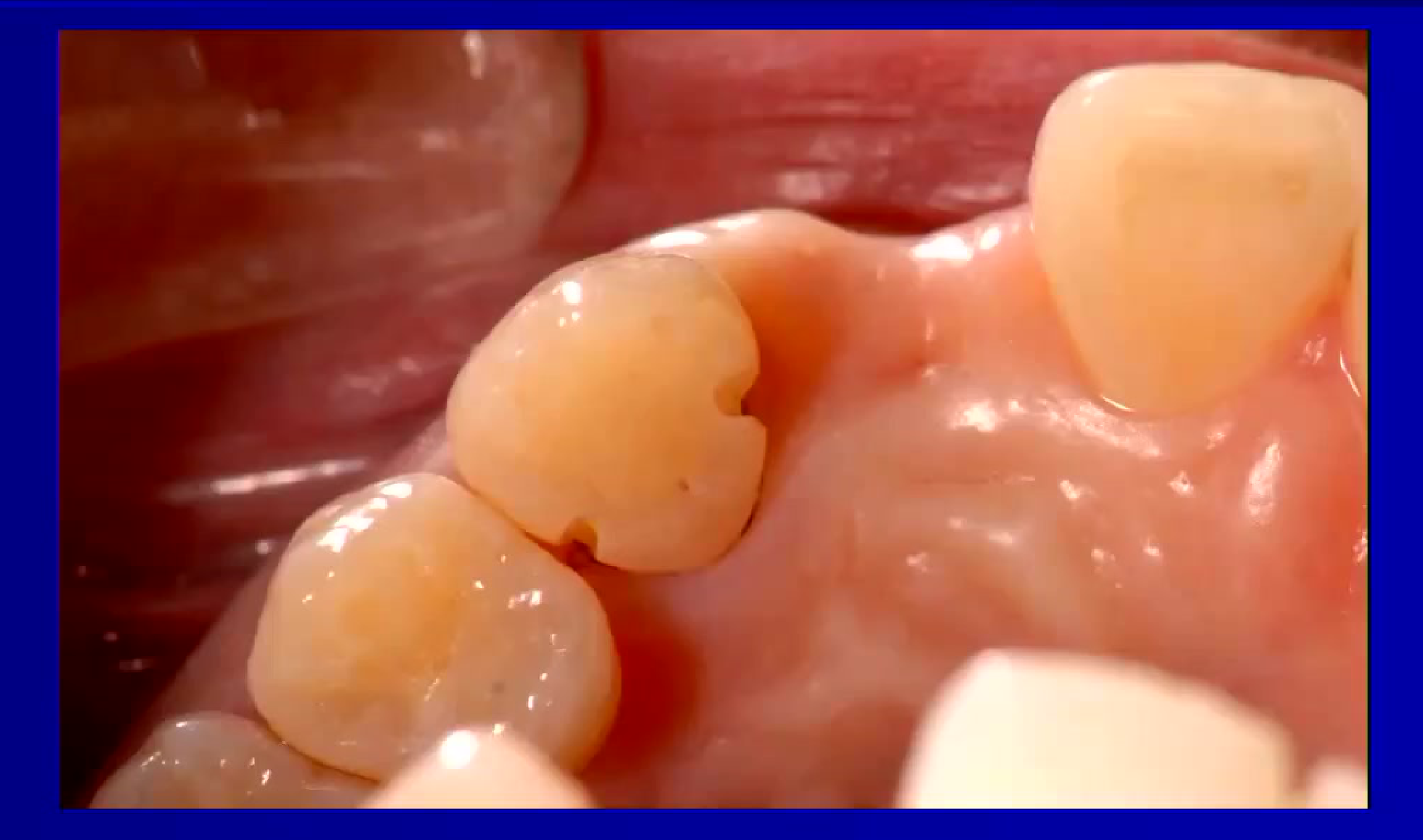
Clinical Case Images40414243
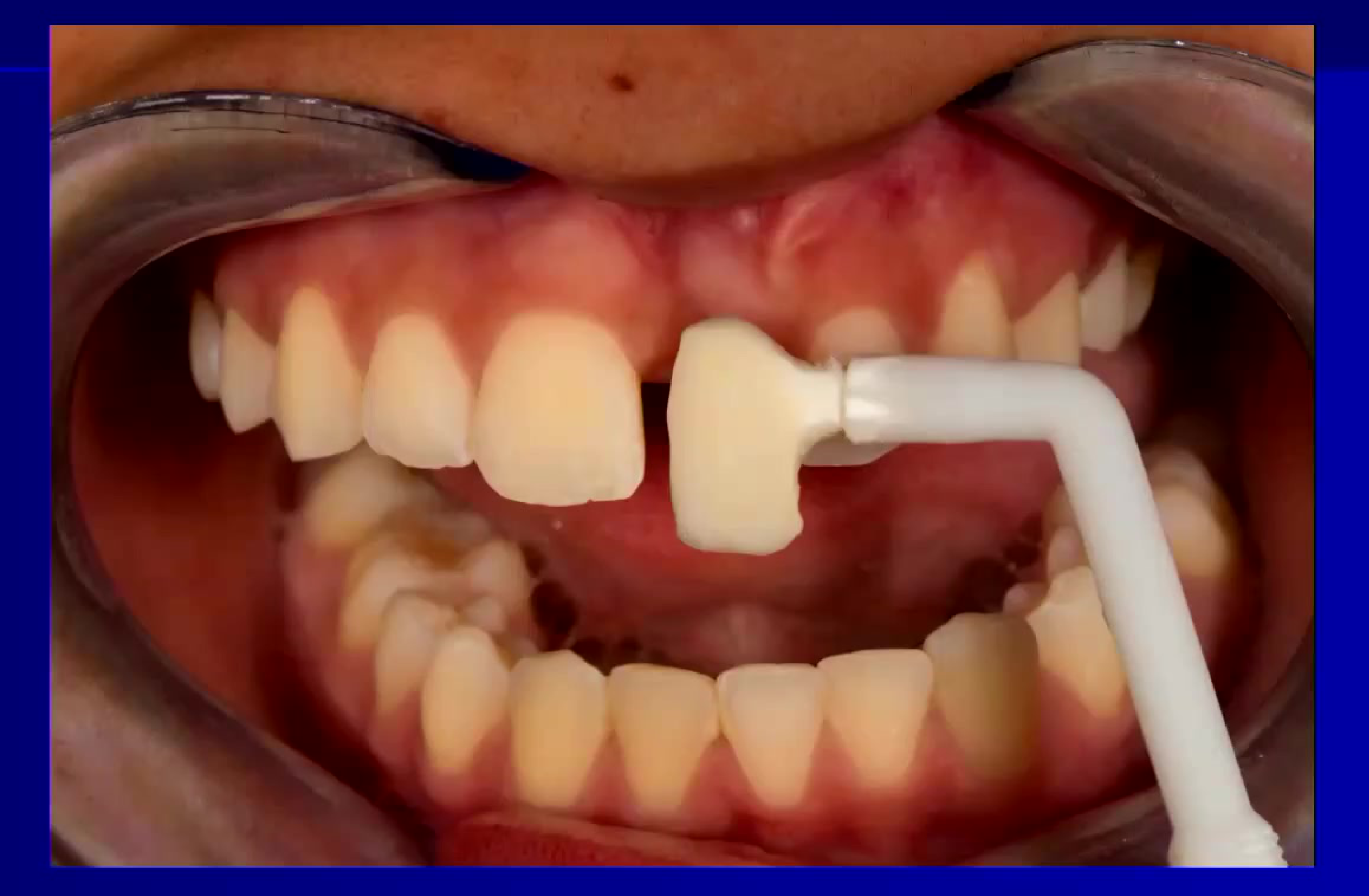
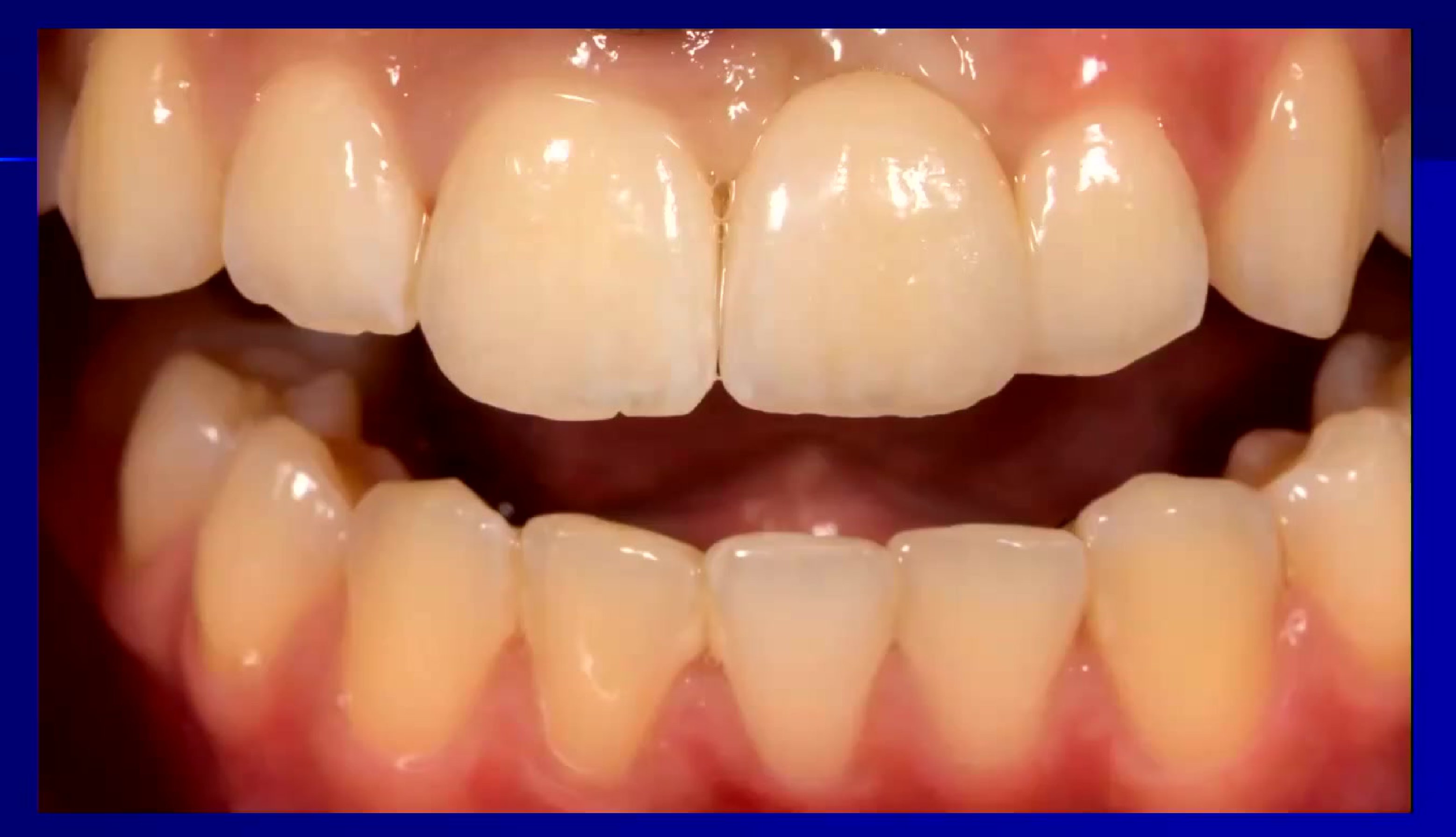
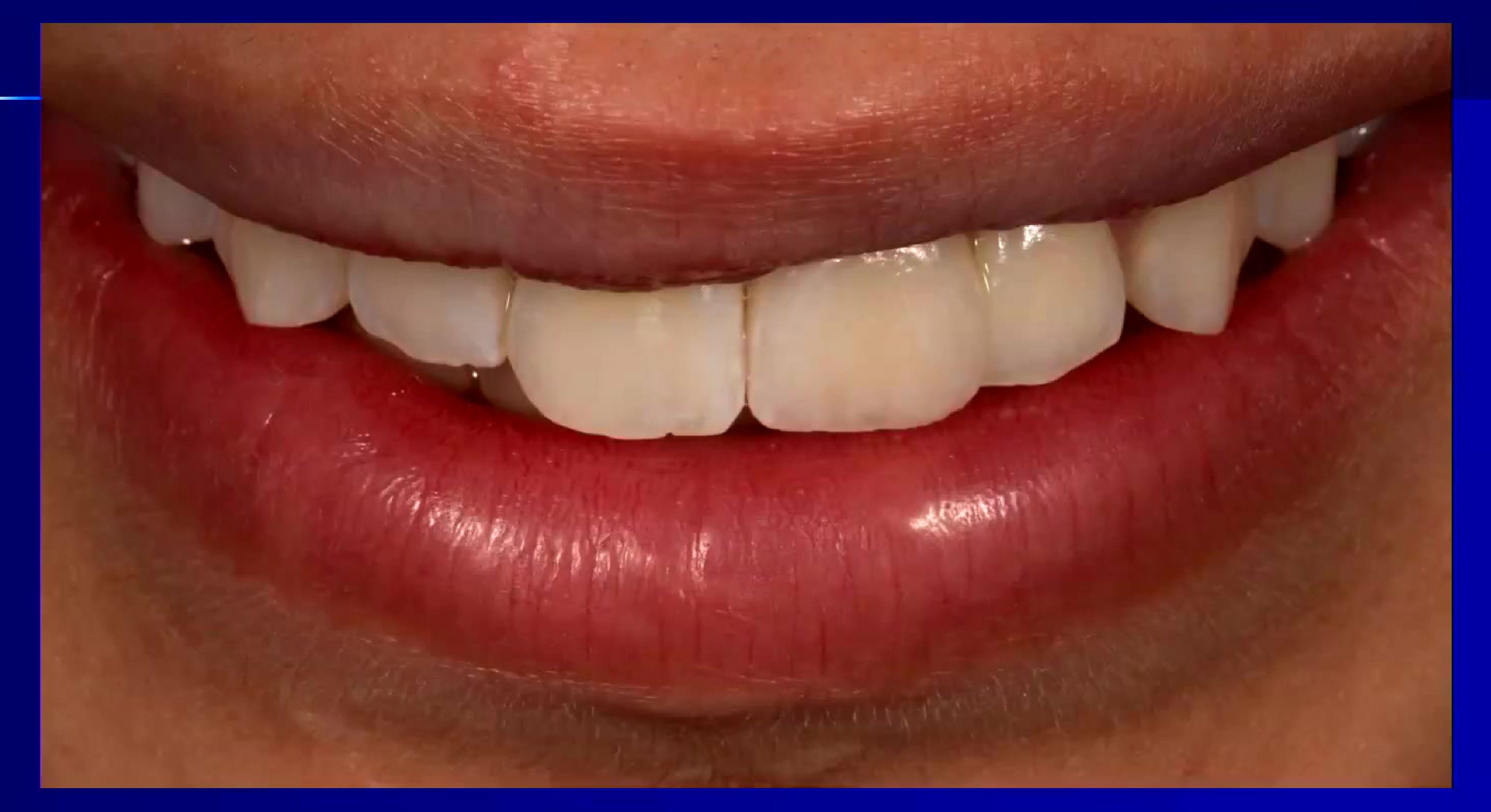
Close-up intraoral images showing two adjacent maxillary posterior teeth with endodontically treated roots and bonded ceramic or composite restorations over the coronal aspects. The restorations cover the incisal edges and include visible composite buildups at the incisal edges, likely for structural reinforcement. The surrounding gingival tissue appears healthy. One image shows a front view of the teeth while the other shows a side or angled perspective.
Dental crown fitting on molar and premolar teeth
Dental implant fixture: Left micro-CT image showing internal threaded implants; Right clinical view of dental alveolus with bone defect location.
 |  |
 |
Bur Selection and Provisional Restorations
Bur44
- Thin tapered fissure TC
- Sharp = NEW
(Halas p 82 Section 7 Fig. H23L)
- TH 23L 314 010
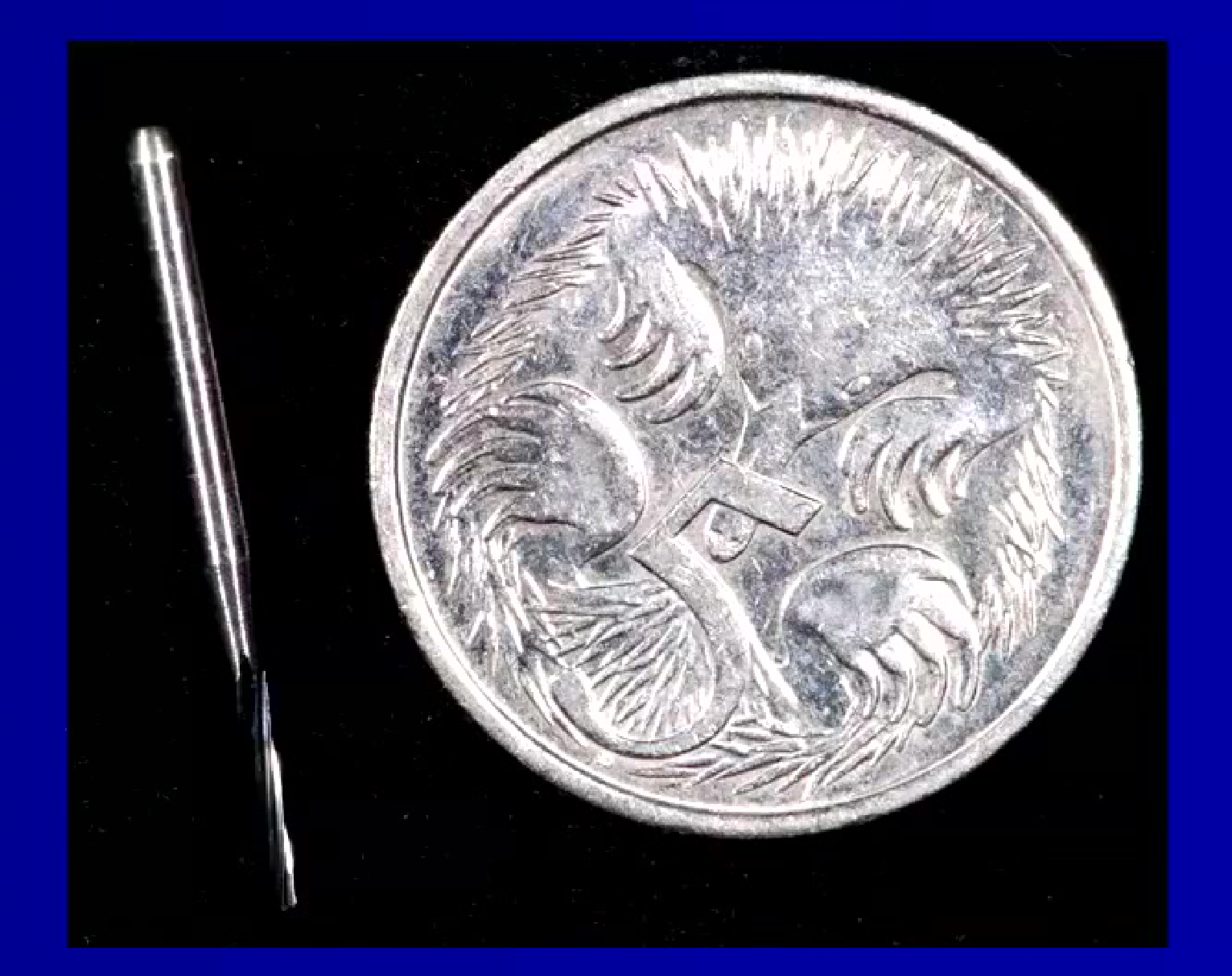
Provisional45464748495051
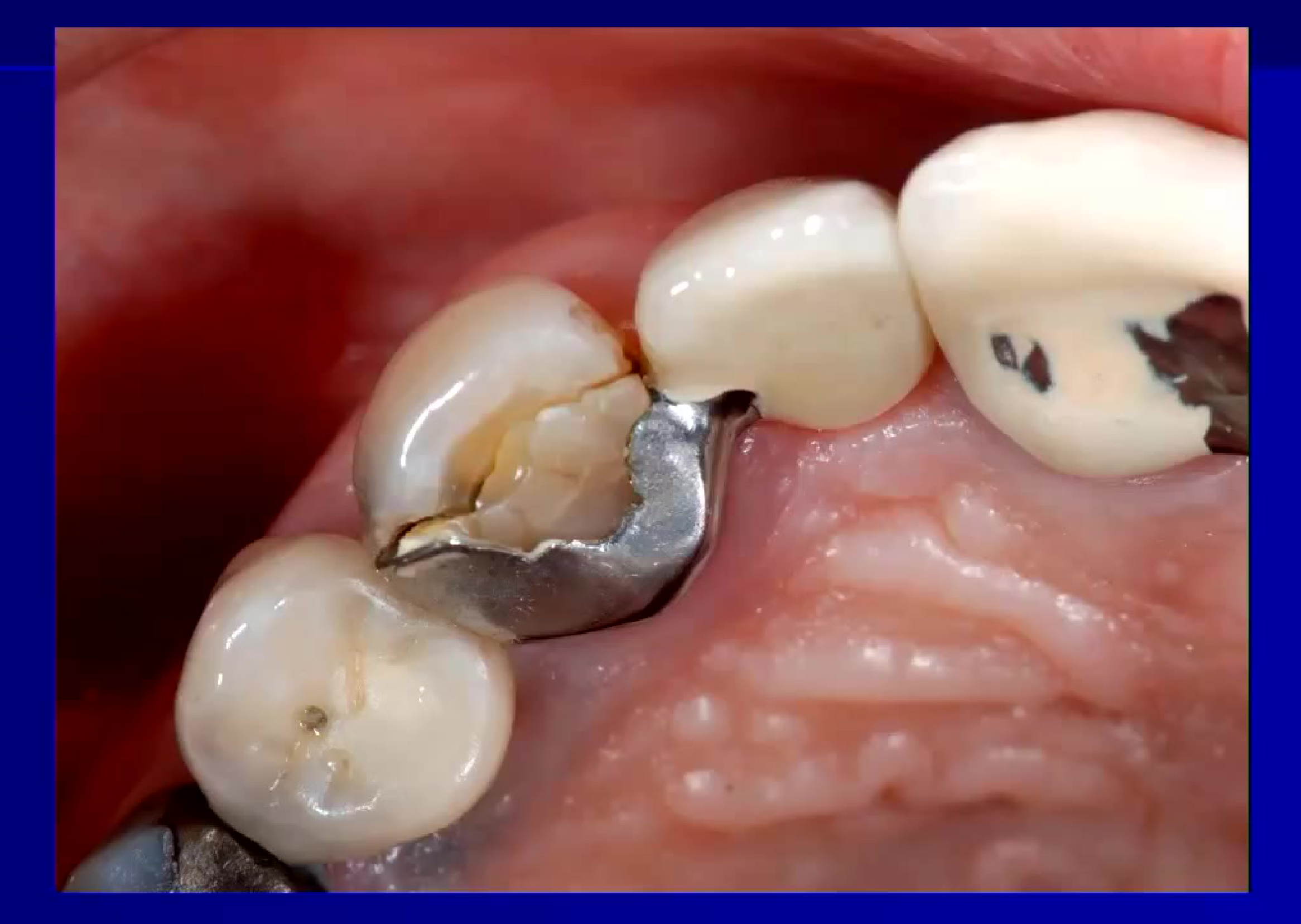
- Cavit grooves
- RPD / Suspension bridge
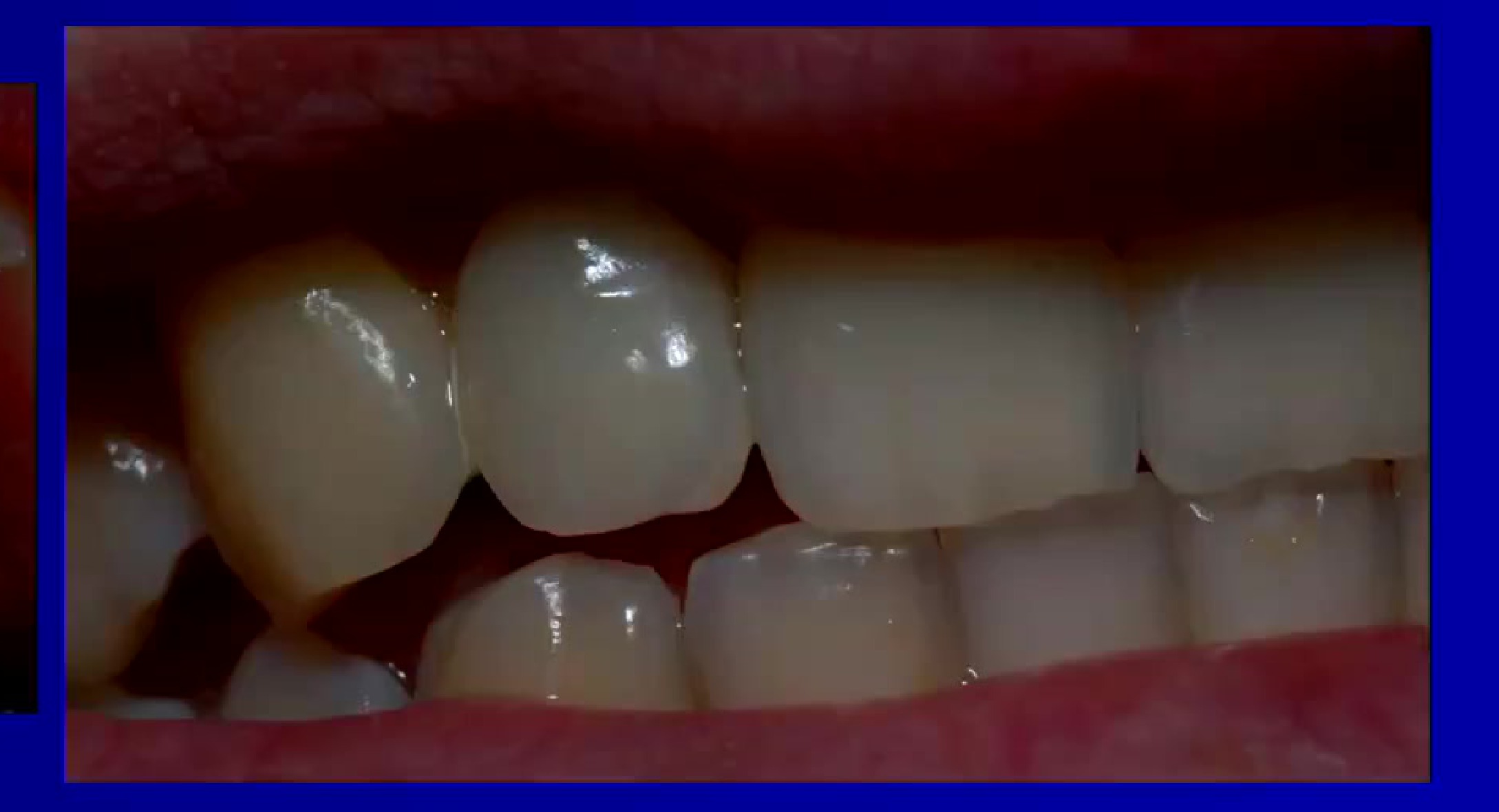
Cases:
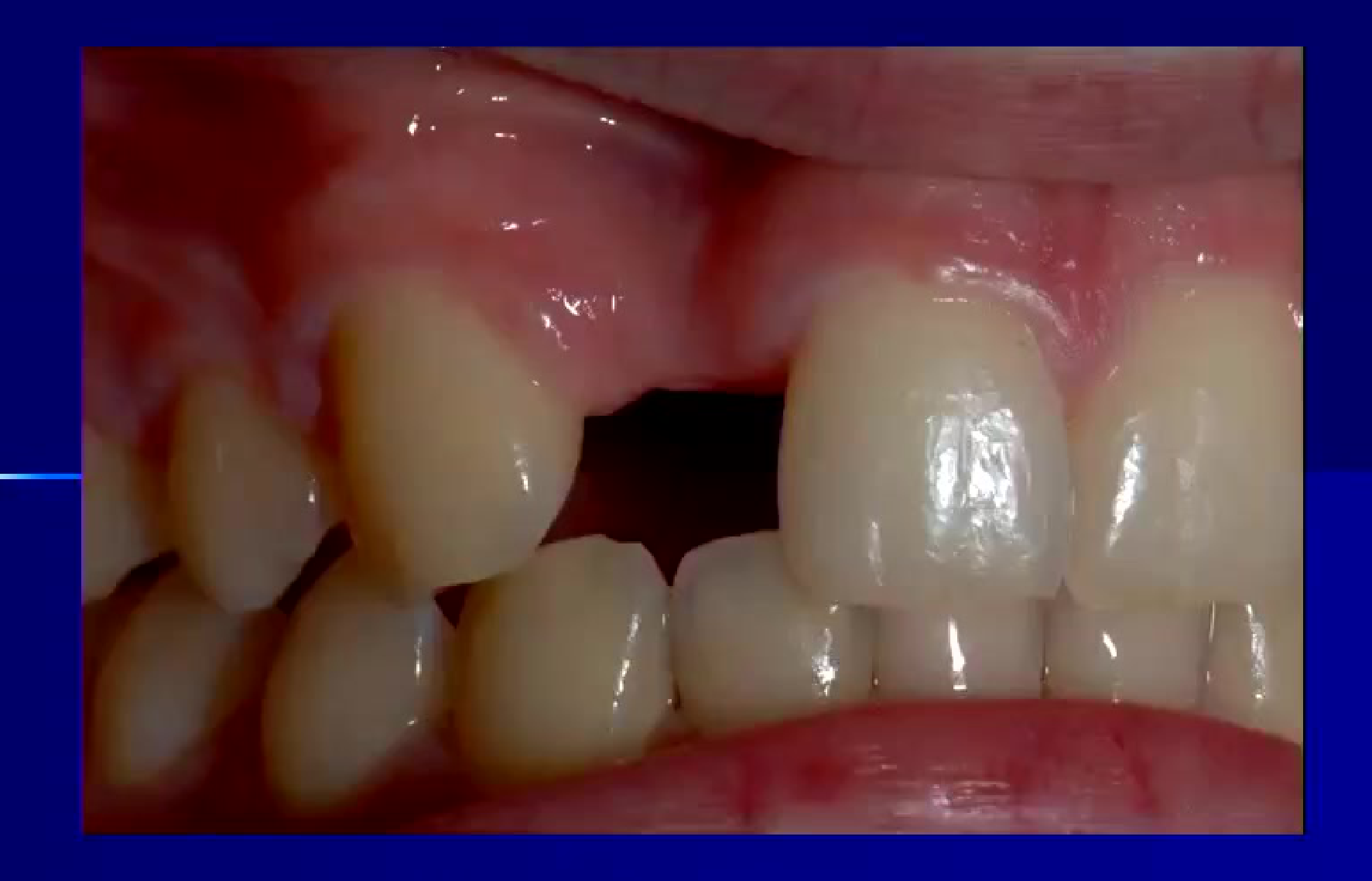
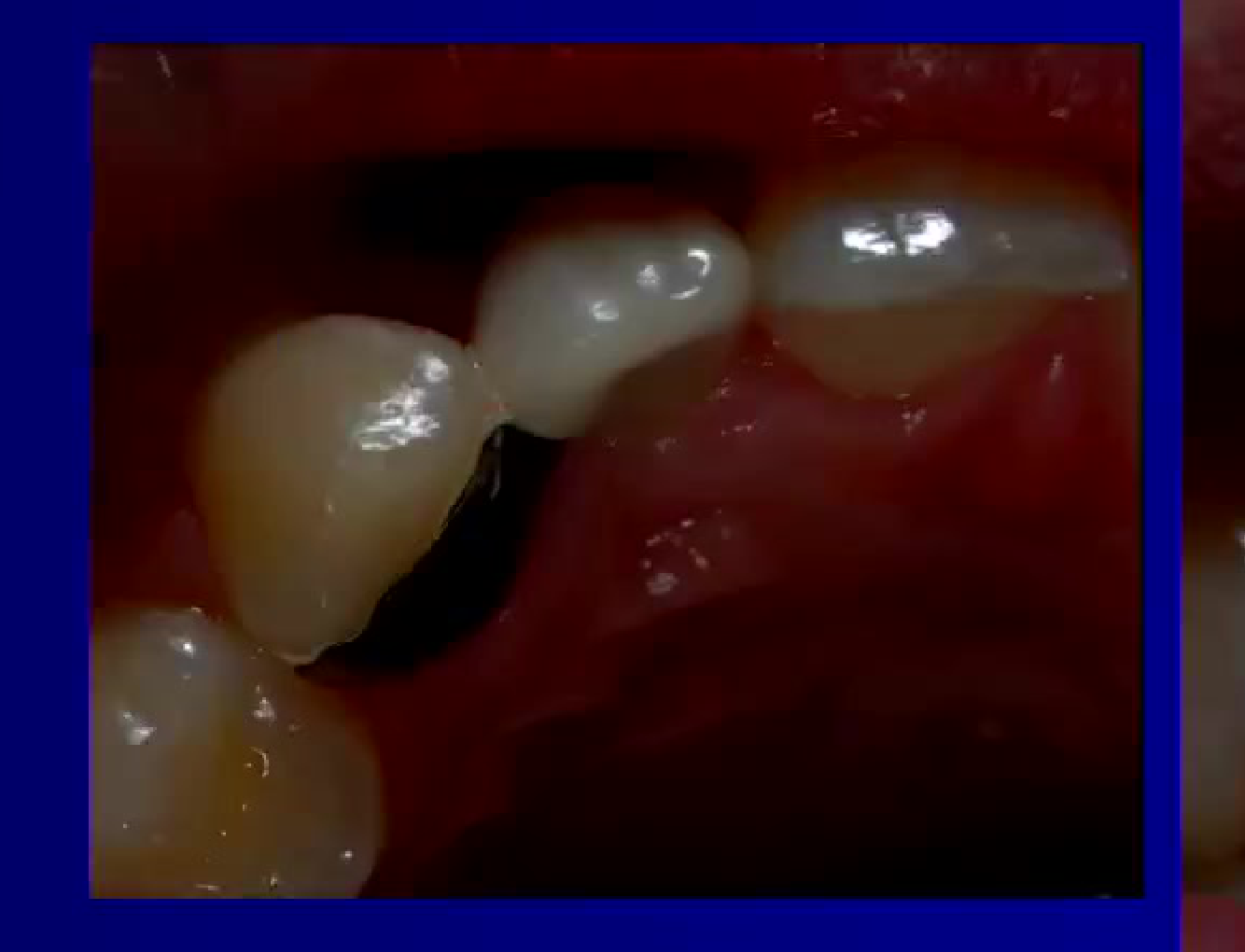
- Maxillary laterals
- Mandibular incisors
- Occasionally other teeth (with risk)
- Mandibular incisors
- Diastemas?
- Enamel
- Occlusion on pontic to be avoided
- Space for retainer
- Cantilever
- may reduce stress on cement
- certainly avoids caries when one side debonds
- Prepare tooth – low TS of cement
- Sand-blasted non-precious alloy
- Opaque Panavia
 |  |
 |  |
Ceramic Materials and Crown Techniques
Crown Impression Techniques Overview52
- Metal-ceramic (PFM)
- Etchable ceramic
- Non-etchable ceramic
Glass Ceramics and Etching53
- Silica based
- HF selectively dissolves glass
- Silane
- etc
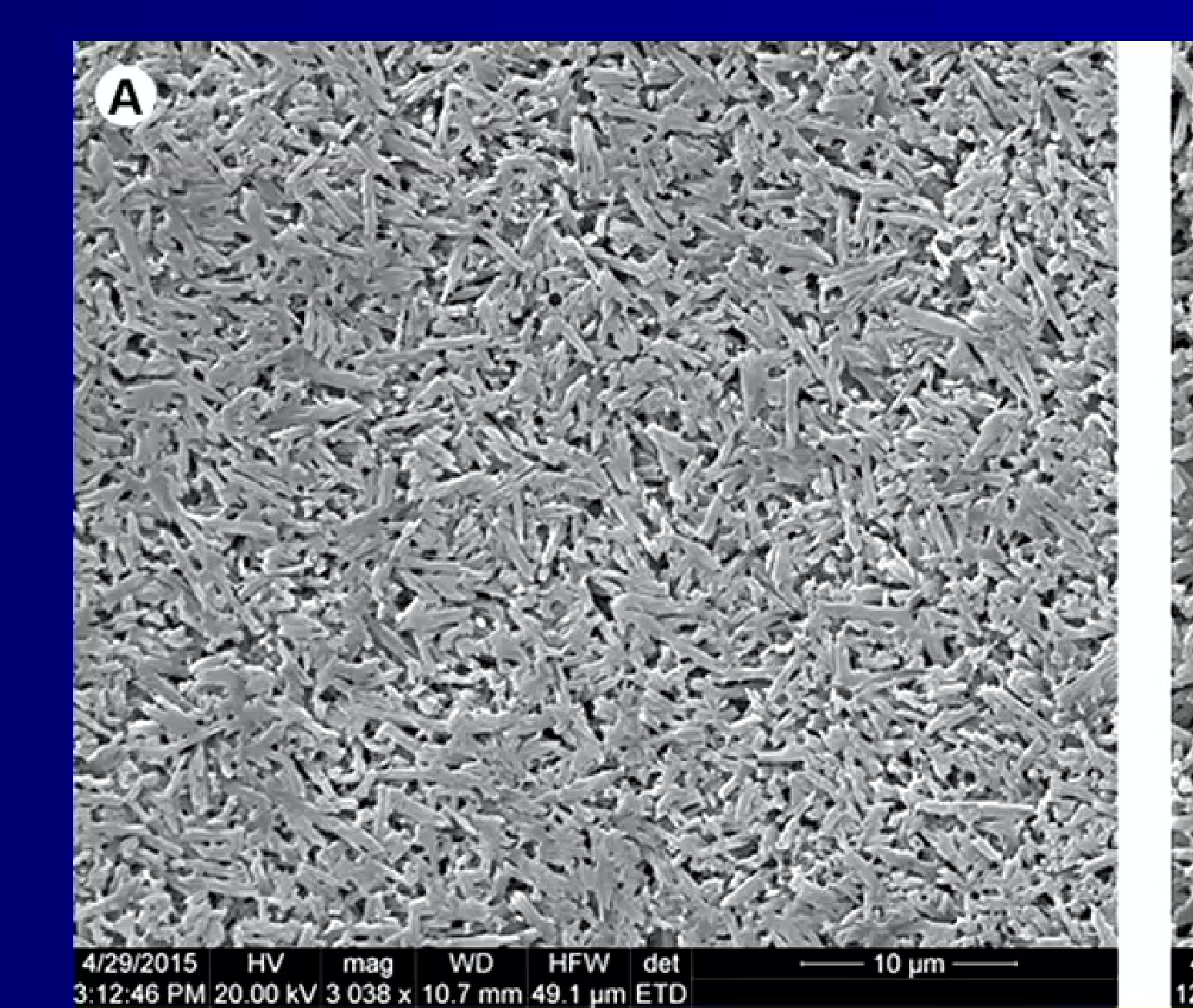
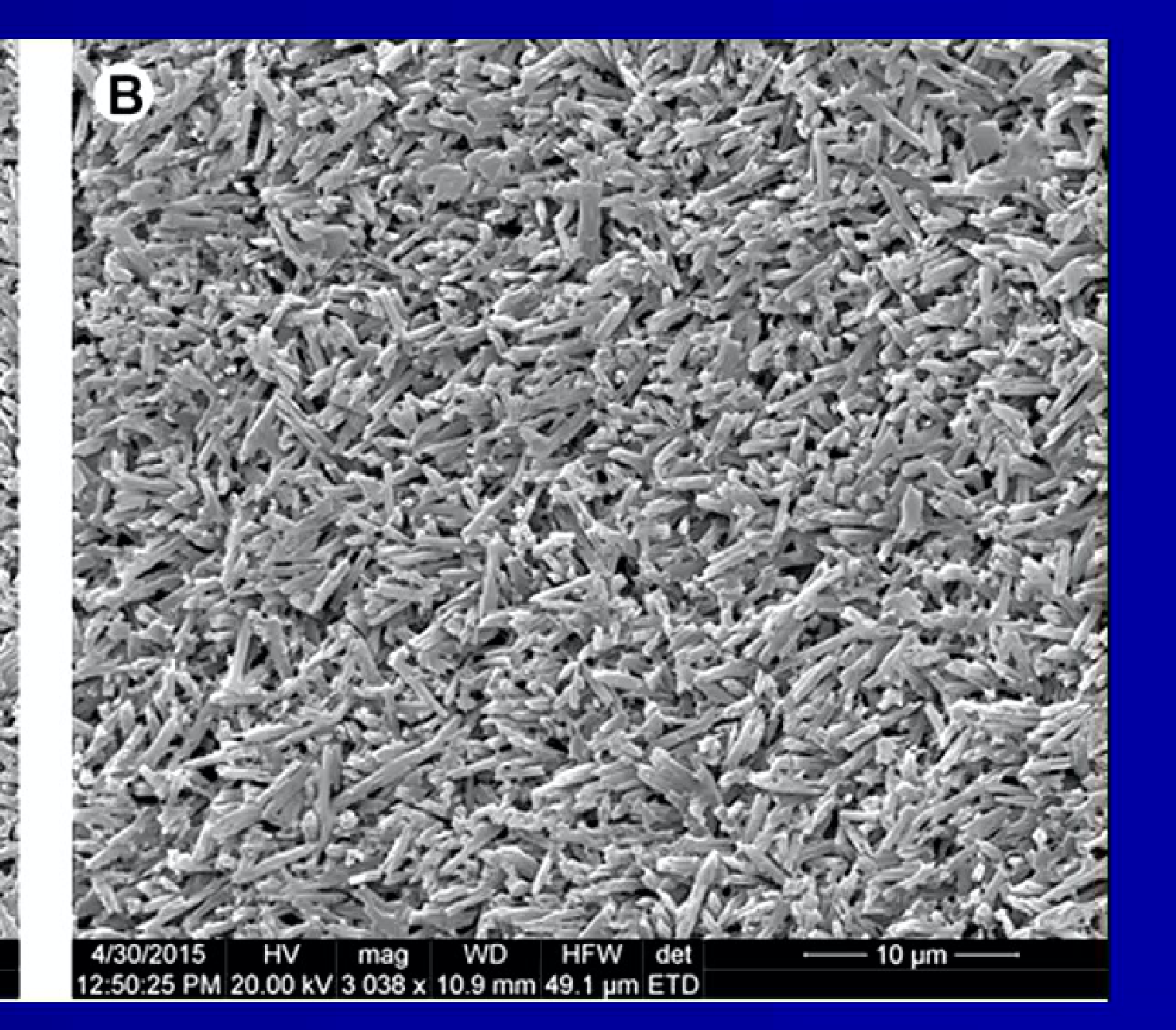
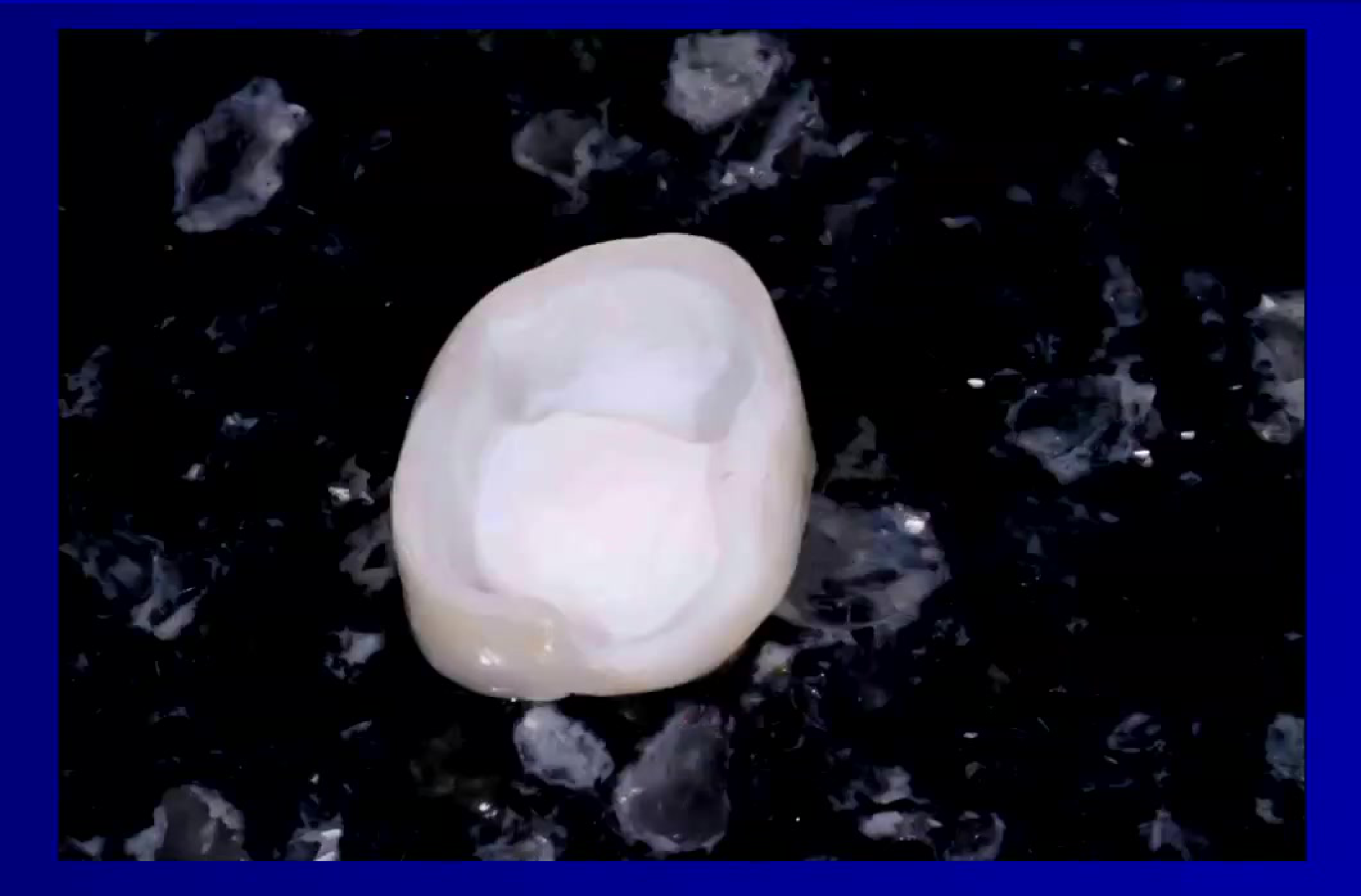
Lithium Disilicate Ceramic
Pre-etch54555657585960
[img]Lithium disilicate ceramic surface before etching[/img]
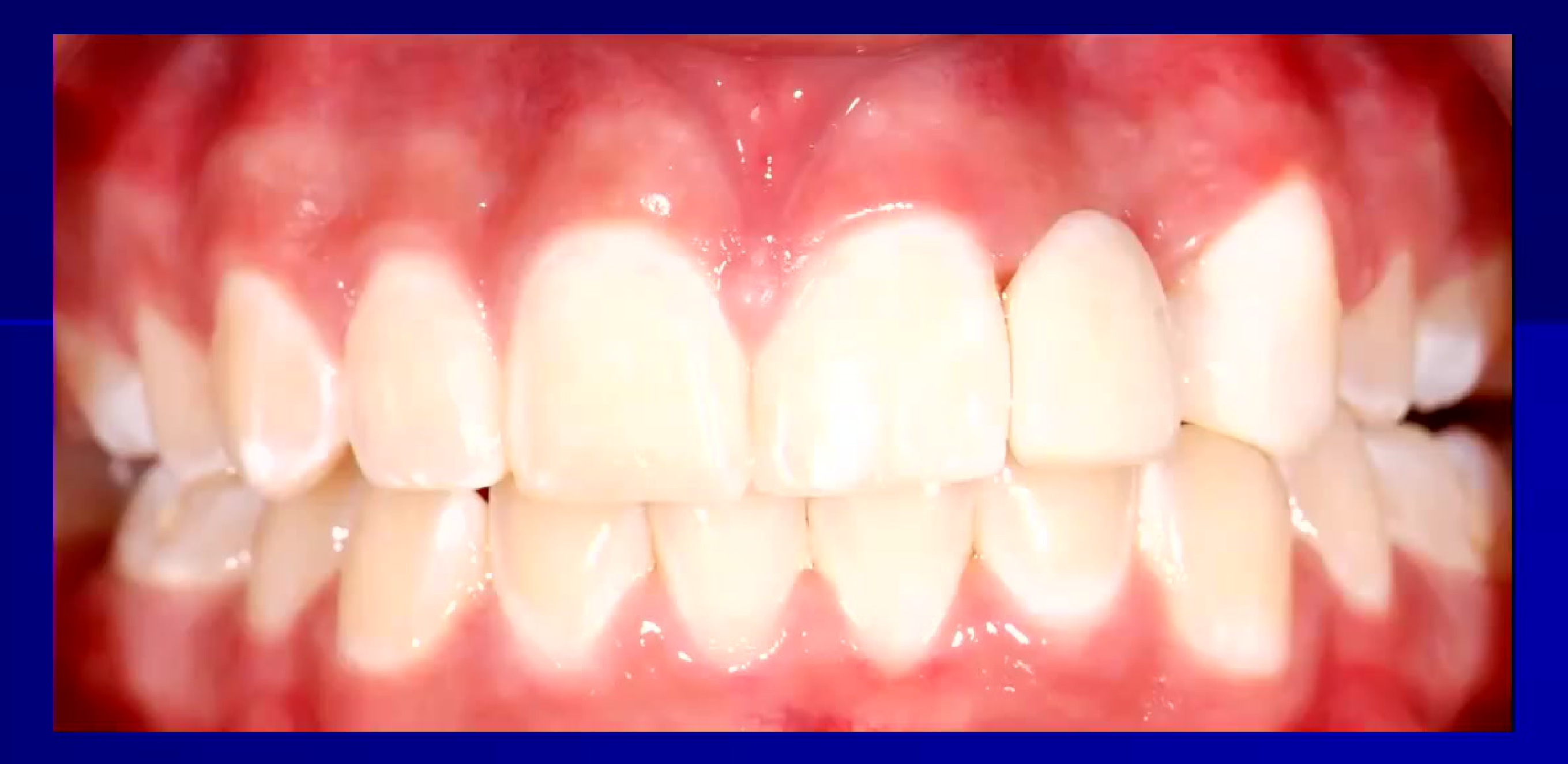
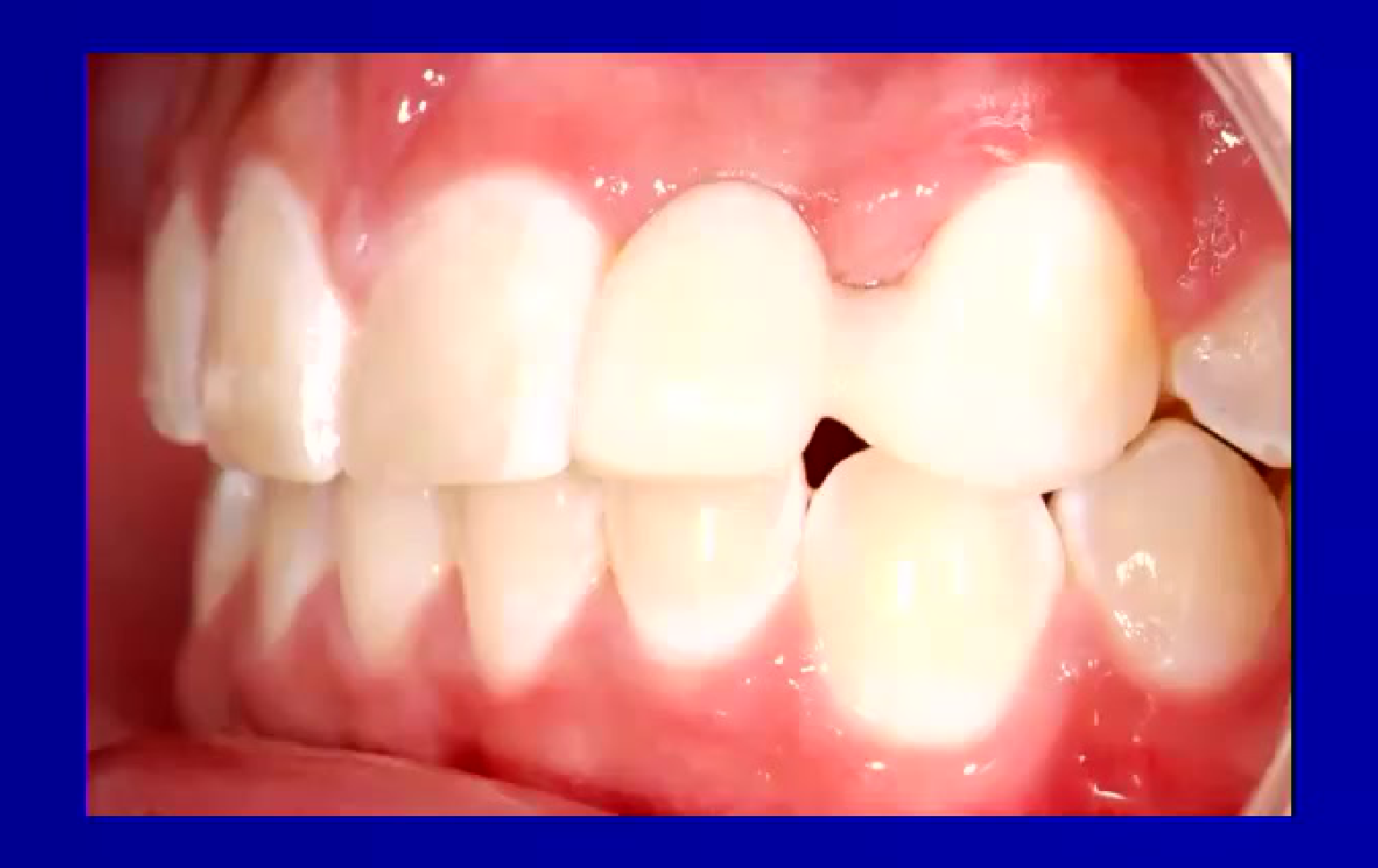
Lithium Disilicate Indications616263
- Veneers (≥ 0.3 mm)
- Inlays and onlays
- Occlusal veneers, partial crowns
- Minimally invasive crowns (≥ 1 mm)
- Implant superstructures
- Hybrid abutment solutions
- Three-unit bridges up to the second premolar as the terminal abutment
https://www.ivoclar.com/en_us/products/metal-free-ceramics/ips-e.max-lithium-disilicate
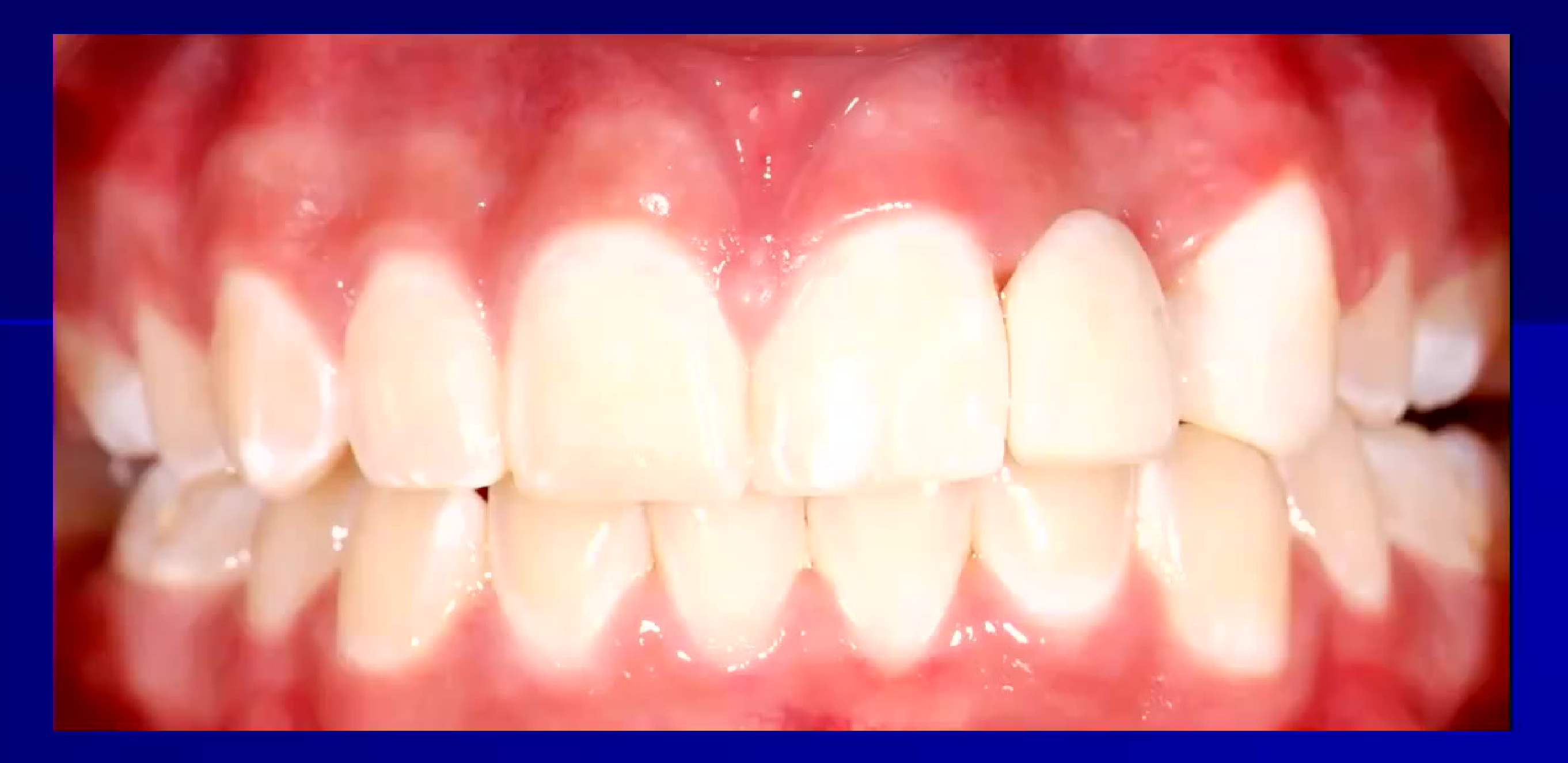 | 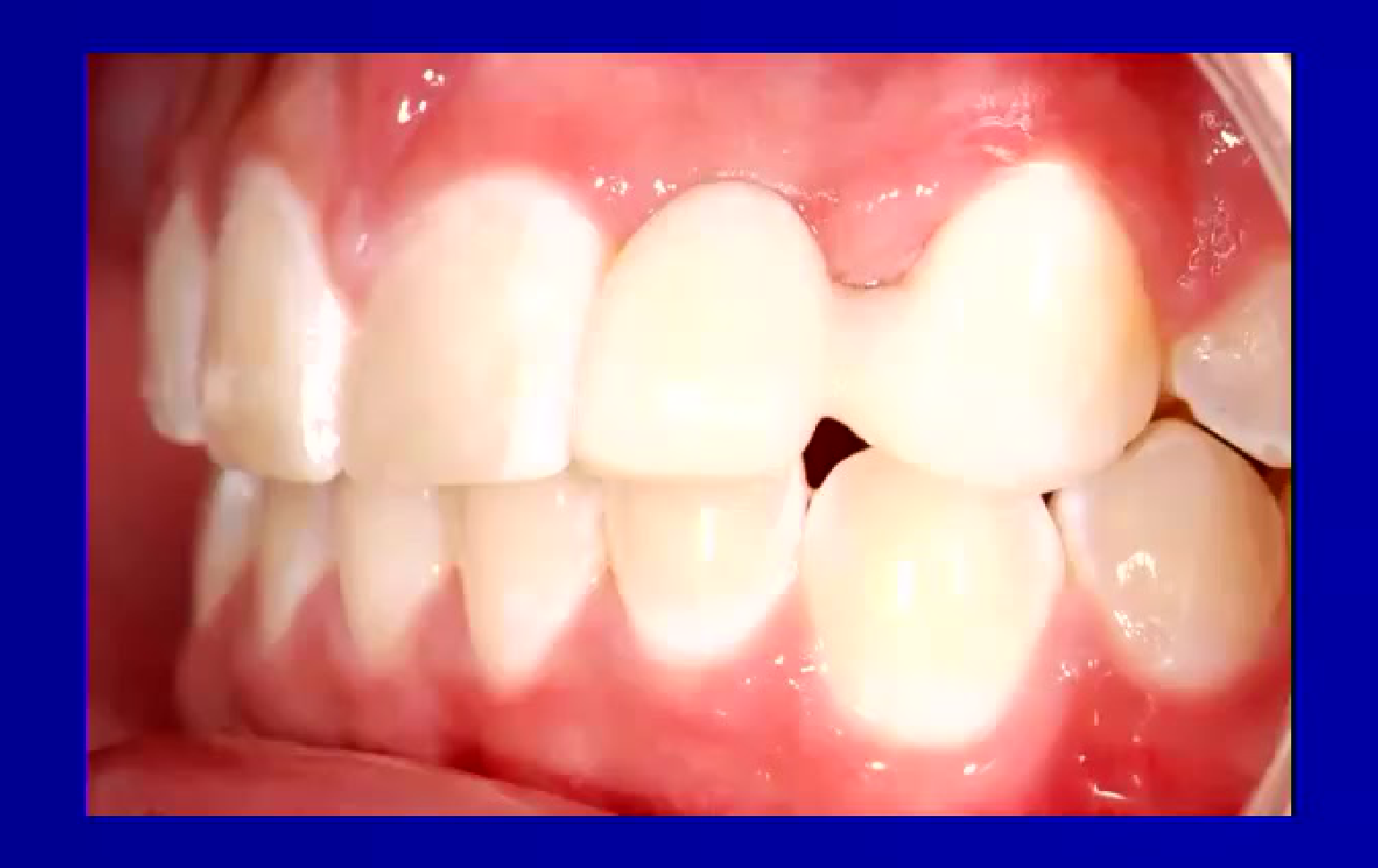 |
Lithium Disilicate Limitations for RBBs6465
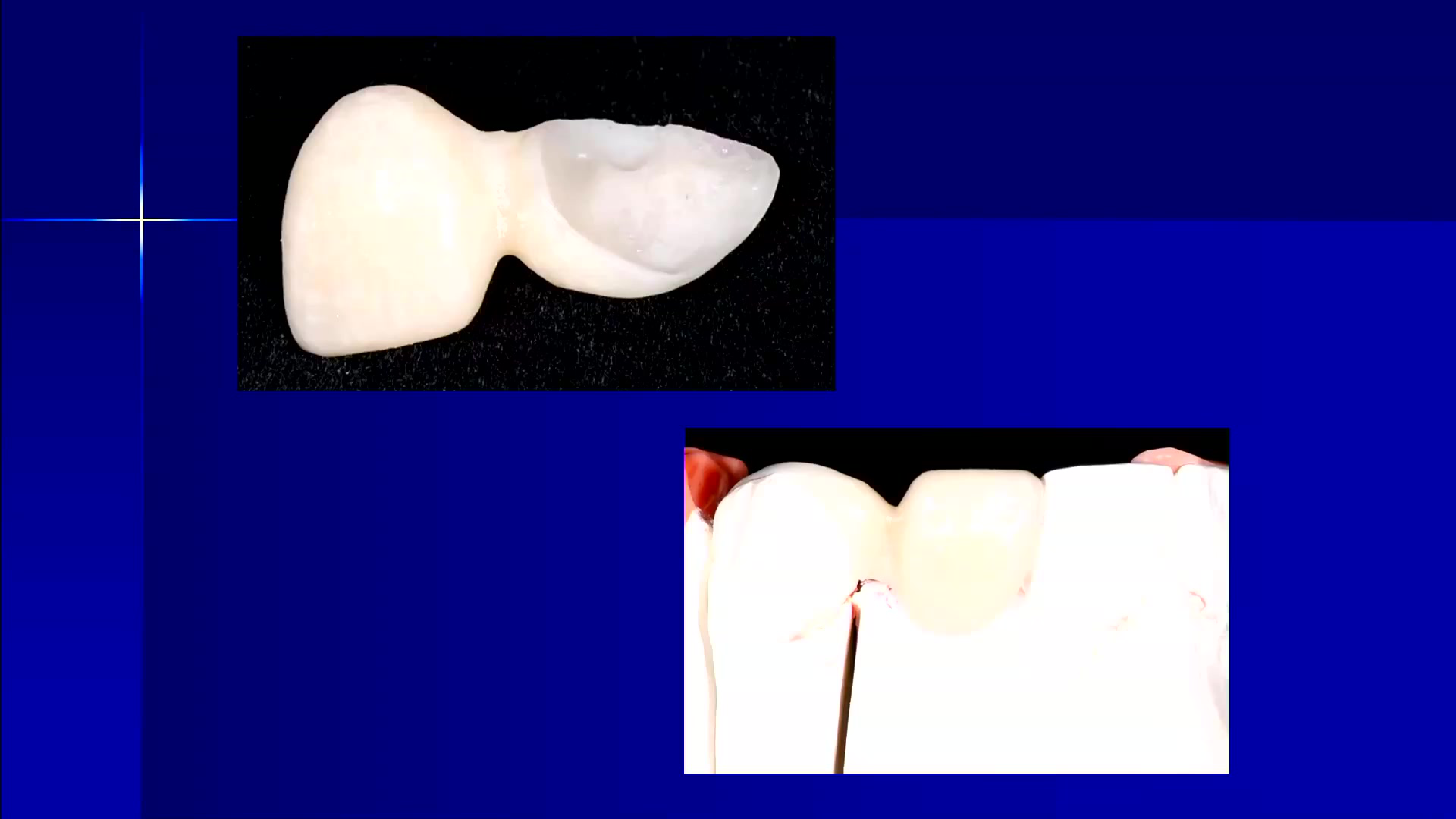
- Not indicated for RBB due to connector fracture risk
- But if connector size…bulky
- 3 mm vertical
- 2 mm horizontal
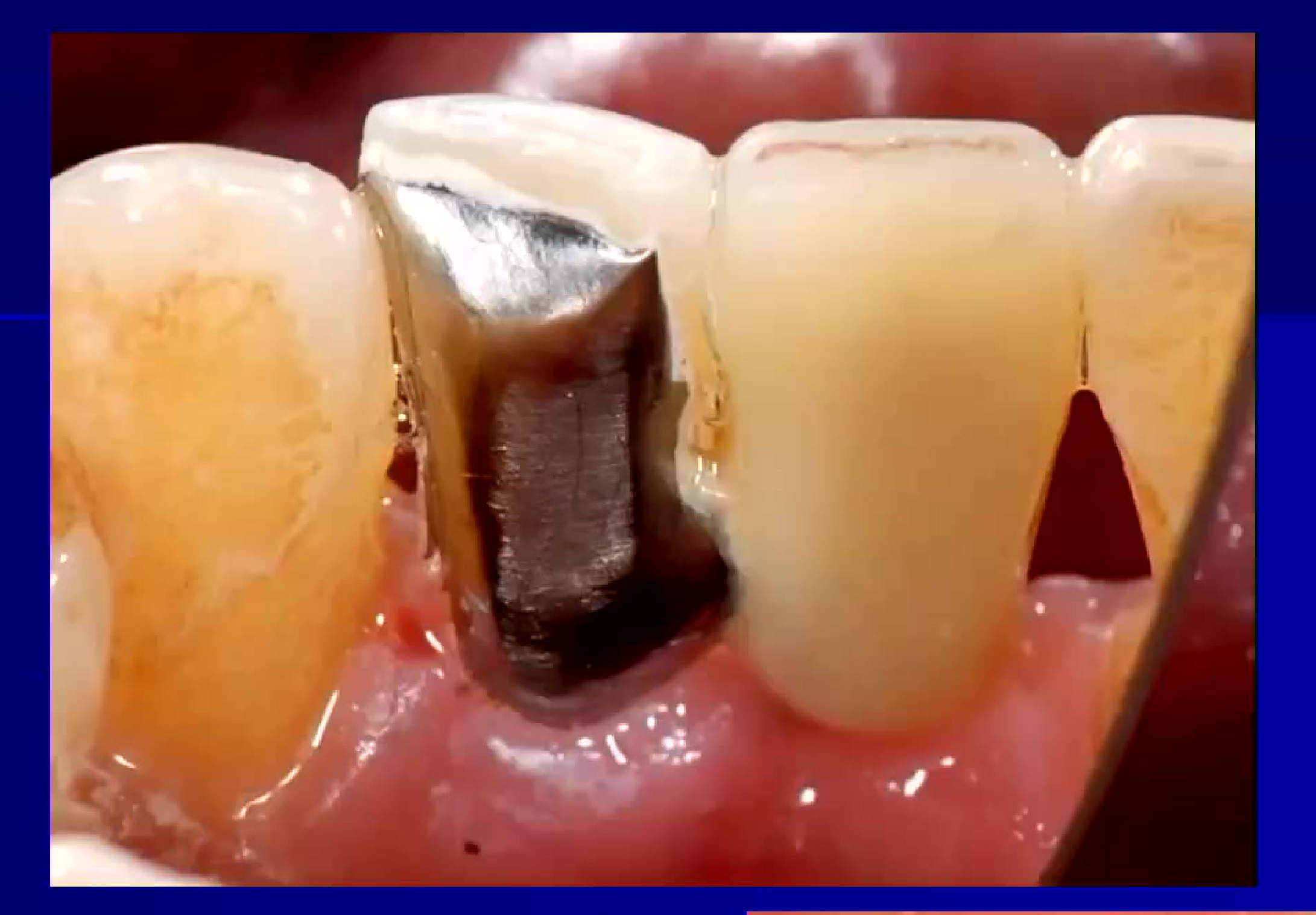 | 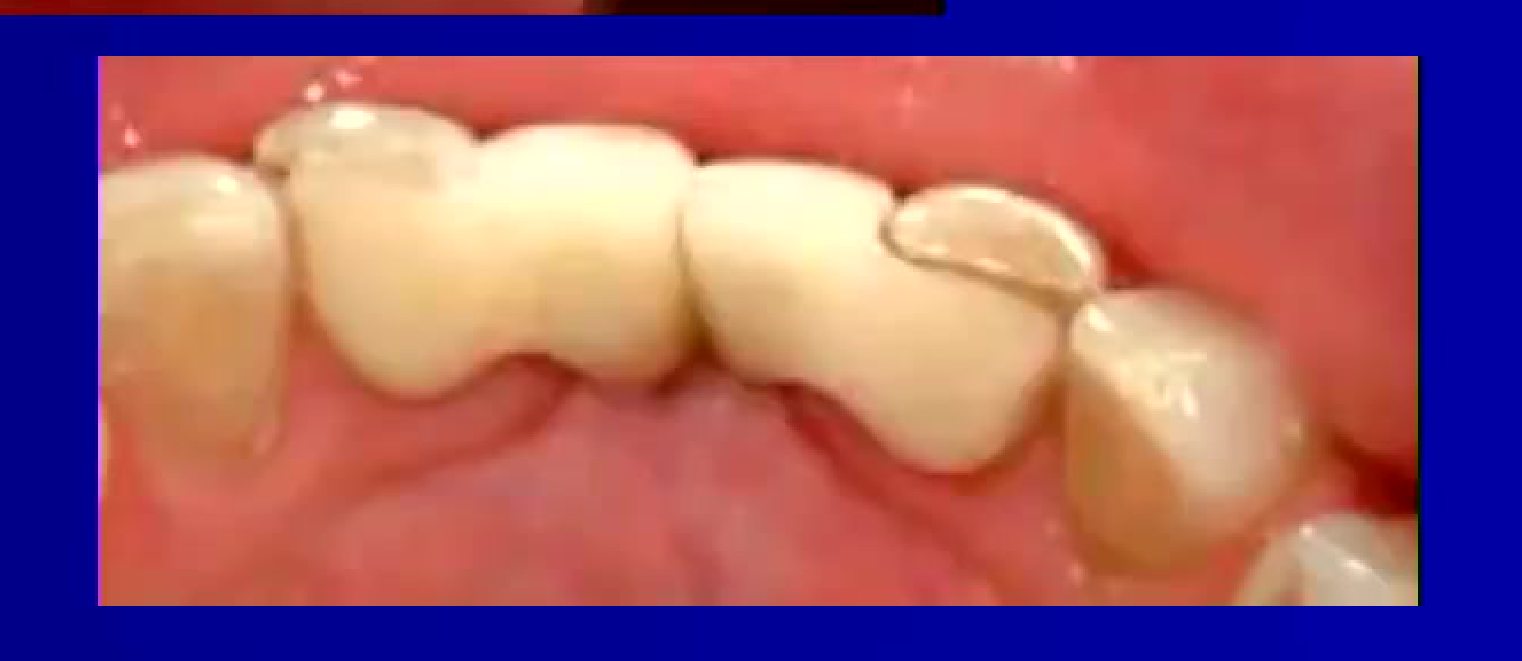 |
Zirconia Bonding and Clinical Outcomes
Bonding to Zirconium Oxide6667
- Metal-ceramic (PFM)
- Etchable ceramic
- Non-etchable ceramic
Zirconium oxide
- Can’t etch non-silica based ceramic
- No glass! (HF dissolves glass)
- Try:
- Silica coat
- “Hot bond” etchable glass
- APC
APC Concept for Zirconia68697071
Zirconium oxide (Y-TZP)
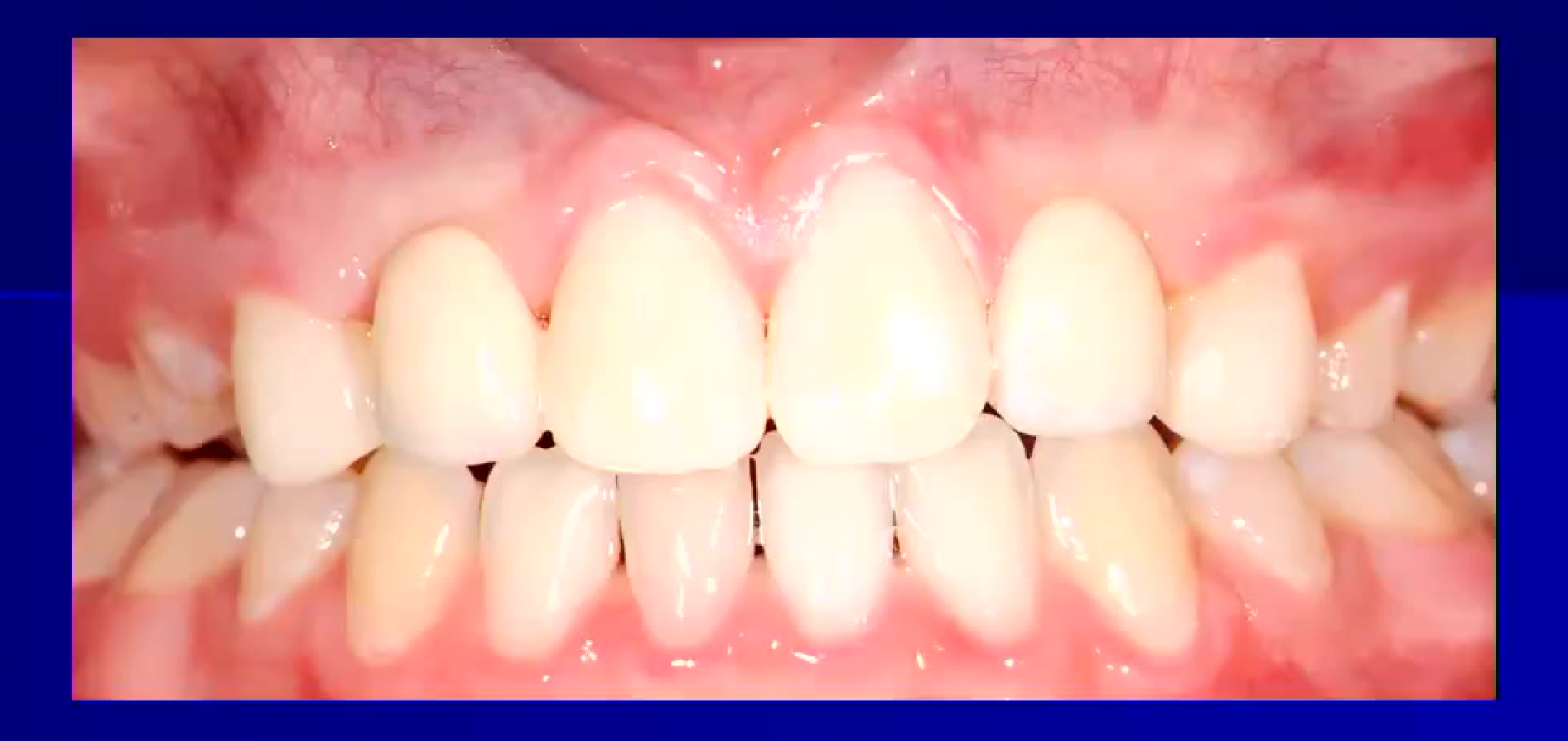 | 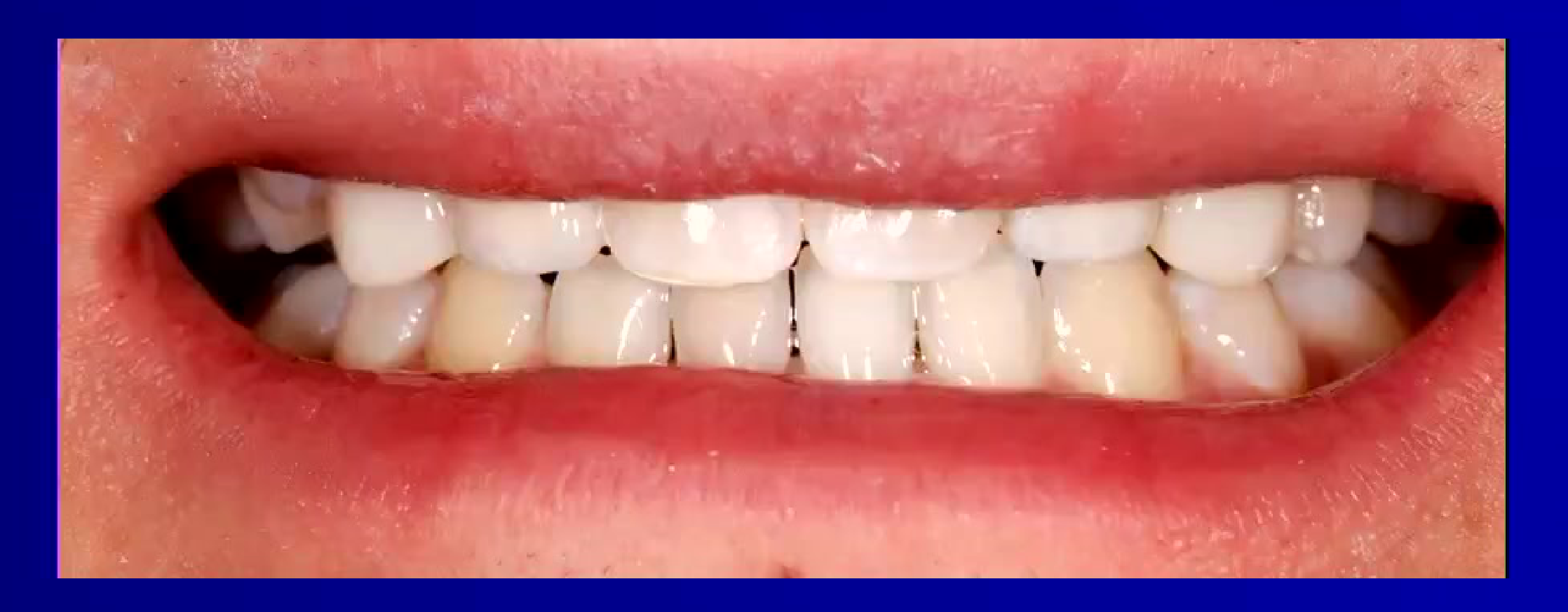 |
APC Concept72
Blatz et al., Compendium 37 (2016):9:611-
-
A = Air-particle abrasion aluminum oxide (50 µm, 1–2 bar)
-
P = Zirconia primer (MDP)
-
C = Composite resin
-
Adhesive phosphate monomer = MDP can be in the primer or adhesive
-
Eg. Panavia 21 (MDP)
-
Rocatec Plus 50 micron particles (silica-coated alumina) under pressure of 2 bar
-
Use of phosphate-containing primer, ideally Clearfil Ceramic Primer (higher MDP content compared to the rest of the products); if not, Monobond Plus
-
Panavia
Long-Term Outcomes of Zirconia Cantilever RBBs
Zirconium oxide (Y-TZP)
Kern et al., J of Dent 65 (2017):51-
- Ten-year outcome of zirconia ceramic cantilever RBBs
- 108 bridges in 87 pts
- Mean observation 92 mo = 7.6 yrs
- 8 bridges lost to follow up
- 6 debonded (but were recemented)
- No connector failures
- Conclude “10 year survival rate of 98.2%“
Key Technical Points73
- Attention to:
- 30 mm² SA, sound enamel
- 0.7 mm retainer (occlusion needs to allow)
- 3 mm high × 2 mm wide minimum connector
- Air abraded with alumina → cleaned with alcohol
- Panavia 21, etc.
Cantilever Design and Occlusal Assessment74
Cantilevered75
Mesial cantilever → tip out of occlusion
- Assessment of occlusion
- Contact in MIP but no excursive contacts
- Retainer space to be gained (cut teeth) or is available
- Engineer to situation:
- Bruxers also need tooth replacements!
- Class II div II also need tooth replacements!
- Research often challenges dogma
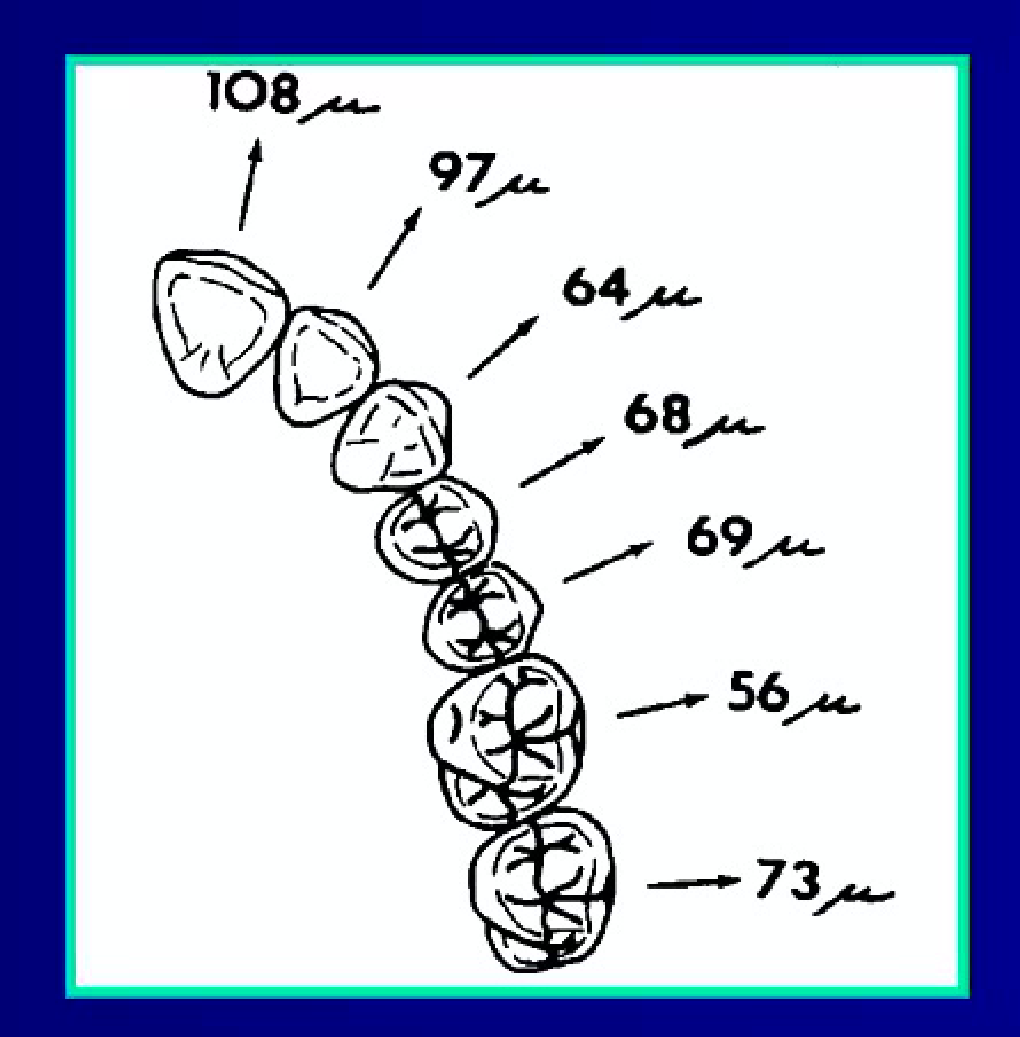
Historical Outcomes of Two-Abutment RBBs76777879
- Berekally 1993, ADJ, Adelaide, Australia
- 2 abutments +/- prep
- Extremely high failure rates implies technique sensitive — NOT that they do not work
- Survival ~60% at 5 years, many debonded VERY early
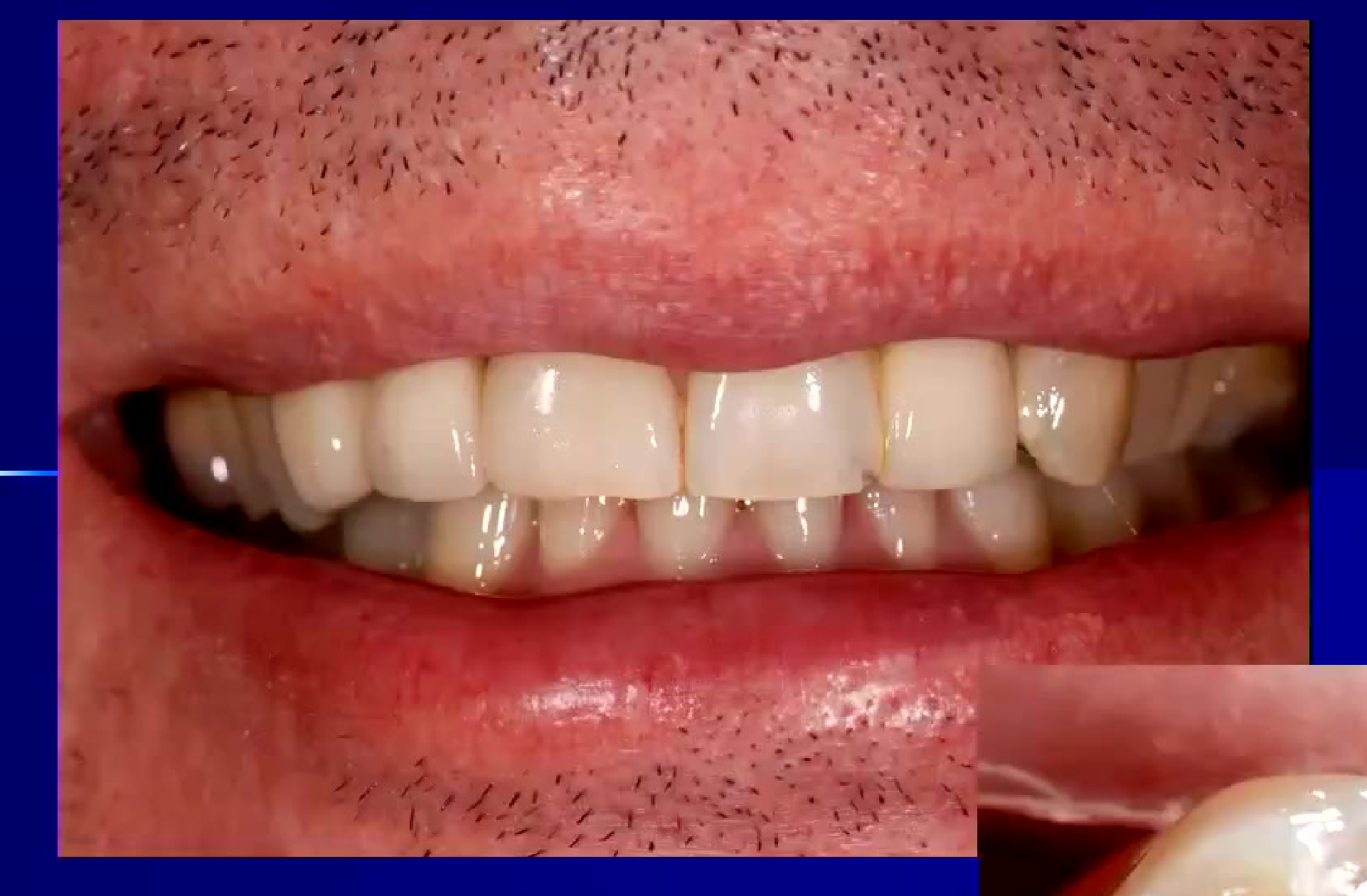
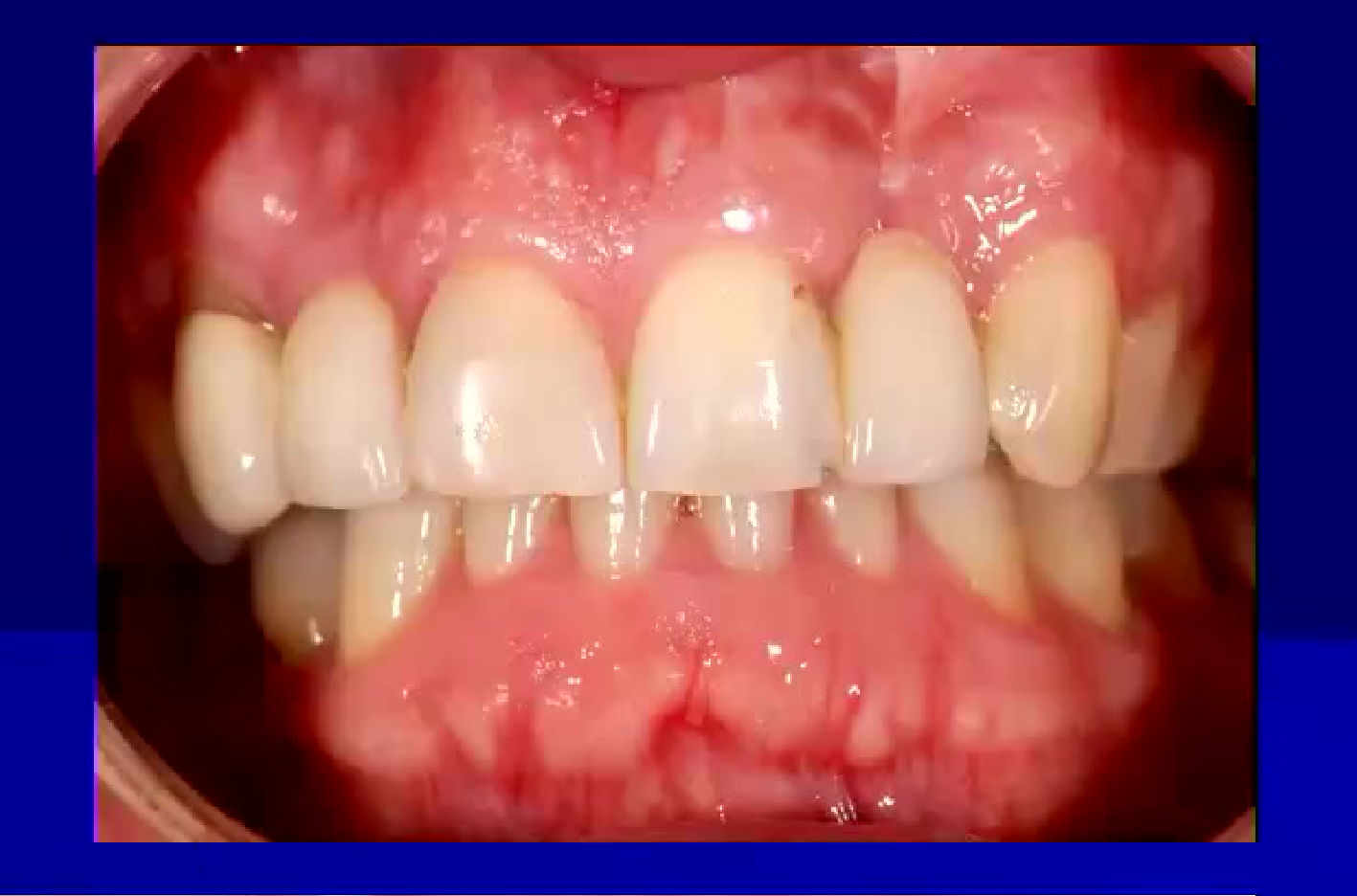
27 yo, RBB placed at 29 yo
-
Probster 1997, IJP, Mainz, Germany
-
2 abutments +/- prep
-
Survival: 76% at 5 years, 60% at 10 years
-
Gerry Barrack 1993, IJP, NYU, USA
-
Authors resin-bonded cast restorations from private practice
-
11 year prospective
-
127 restorations, 455 units (ranging 1–10 units)
-
Success = no debond
-
92.9% over 11 years, but 100% in the latter 9 years (since 1983)
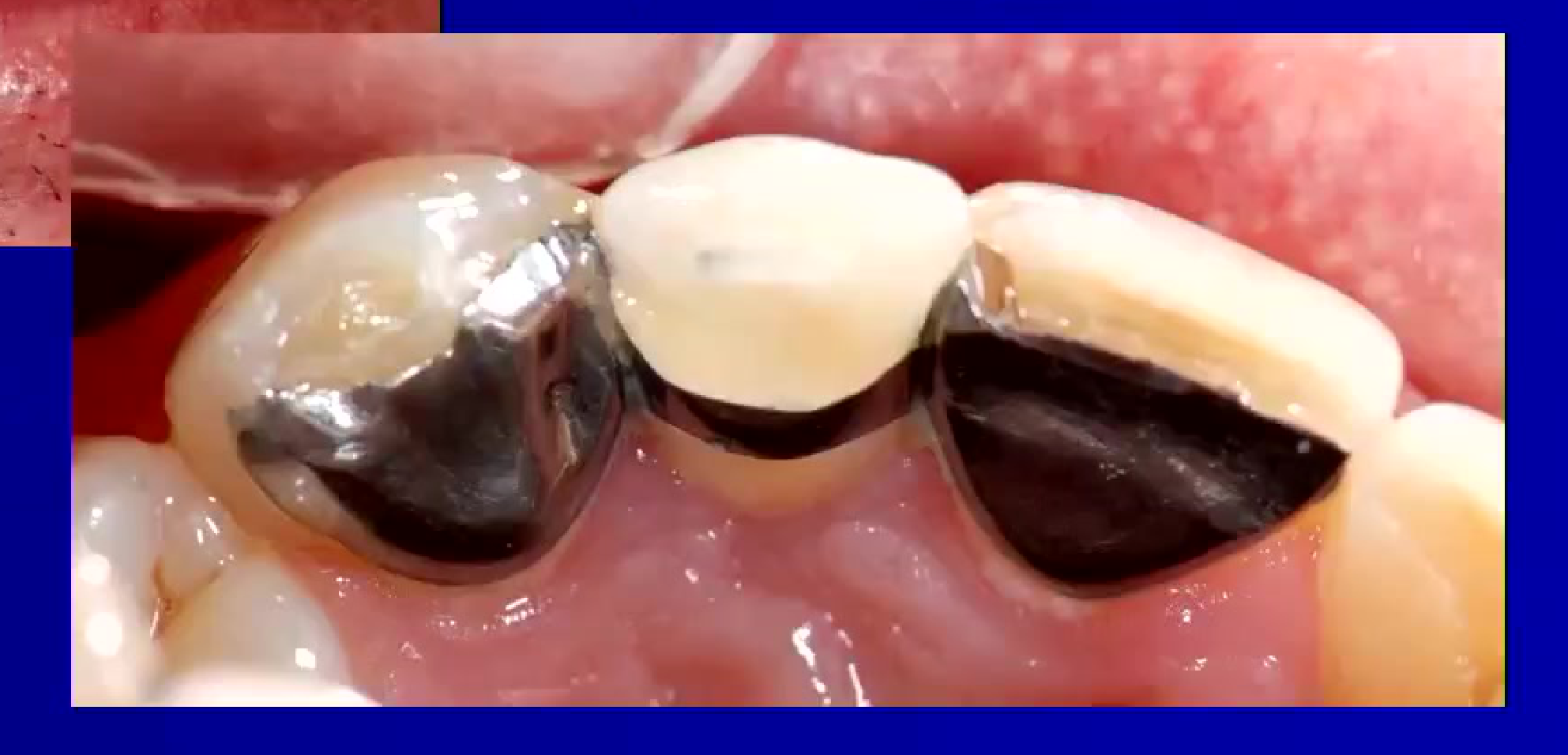
No failures since 1983 when adopted:
- Grooves + rests + incorporating existing restorations
- Panavia
- Non-precious alloy sandblasted
Barrack, Bretz, IJP 1993;6(5):428-
 |  |
 |
Footnotes
-
Original PDF page 1: L8 Resin Bonded Bridges slides, p.1 ↩
-
Original PDF page 3: L8 Resin Bonded Bridges slides, p.3 ↩
-
Original PDF page 4: L8 Resin Bonded Bridges slides, p.4 ↩
-
Original PDF page 5: L8 Resin Bonded Bridges slides, p.5 ↩
-
Original PDF page 2: L8 Resin Bonded Bridges slides, p.2 ↩
-
Original PDF page 6: L8 Resin Bonded Bridges slides, p.6 ↩
-
Original PDF page 7: L8 Resin Bonded Bridges slides, p.7 ↩
-
Original PDF page 8: L8 Resin Bonded Bridges slides, p.8 ↩
-
Original PDF page 9: L8 Resin Bonded Bridges slides, p.9 ↩
-
Original PDF page 10: L8 Resin Bonded Bridges slides, p.10 ↩
-
Original PDF page 11: L8 Resin Bonded Bridges slides, p.11 ↩
-
Original PDF page 12: L8 Resin Bonded Bridges slides, p.12 ↩
-
Original PDF page 13: L8 Resin Bonded Bridges slides, p.13 ↩
-
Original PDF page 14: L8 Resin Bonded Bridges slides, p.14 ↩
-
Original PDF page 15: L8 Resin Bonded Bridges slides, p.15 ↩
-
Original PDF page 16: L8 Resin Bonded Bridges slides, p.16 ↩
-
Original PDF page 17: L8 Resin Bonded Bridges slides, p.17 ↩
-
Original PDF page 18: L8 Resin Bonded Bridges slides, p.18 ↩
-
Original PDF page 19: L8 Resin Bonded Bridges slides, p.19 ↩
-
Original PDF page 20: L8 Resin Bonded Bridges slides, p.20 ↩
-
Original PDF page 21: L8 Resin Bonded Bridges slides, p.21 ↩
-
Original PDF page 22: L8 Resin Bonded Bridges slides, p.22 ↩
-
Original PDF page 23: L8 Resin Bonded Bridges slides, p.23 ↩
-
Original PDF page 24: L8 Resin Bonded Bridges slides, p.24 ↩
-
Original PDF page 25: L8 Resin Bonded Bridges slides, p.25 ↩
-
Original PDF page 27: L8 Resin Bonded Bridges slides, p.27 ↩
-
Original PDF page 28: L8 Resin Bonded Bridges slides, p.28 ↩
-
Original PDF page 29: L8 Resin Bonded Bridges slides, p.29 ↩
-
Original PDF page 30: L8 Resin Bonded Bridges slides, p.30 ↩
-
Original PDF page 26: L8 Resin Bonded Bridges slides, p.26 ↩
-
Original PDF page 32: L8 Resin Bonded Bridges slides, p.32 ↩
-
Original PDF page 33: L8 Resin Bonded Bridges slides, p.33 ↩
-
Original PDF page 31: L8 Resin Bonded Bridges slides, p.31 ↩
-
Original PDF page 34: L8 Resin Bonded Bridges slides, p.34 ↩
-
Original PDF page 36: L8 Resin Bonded Bridges slides, p.36 ↩
-
Original PDF page 37: L8 Resin Bonded Bridges slides, p.37 ↩
-
Original PDF page 38: L8 Resin Bonded Bridges slides, p.38 ↩
-
Original PDF page 35: L8 Resin Bonded Bridges slides, p.35 ↩
-
Original PDF page 39: L8 Resin Bonded Bridges slides, p.39 ↩
-
Original PDF page 40: L8 Resin Bonded Bridges slides, p.40 ↩
-
Original PDF page 41: L8 Resin Bonded Bridges slides, p.41 ↩
-
Original PDF page 42: L8 Resin Bonded Bridges slides, p.42 ↩
-
Original PDF page 43: L8 Resin Bonded Bridges slides, p.43 ↩
-
Original PDF page 44: L8 Resin Bonded Bridges slides, p.44 ↩
-
Original PDF page 45: L8 Resin Bonded Bridges slides, p.45 ↩
-
Original PDF page 46: L8 Resin Bonded Bridges slides, p.46 ↩
-
Original PDF page 47: L8 Resin Bonded Bridges slides, p.47 ↩
-
Original PDF page 48: L8 Resin Bonded Bridges slides, p.48 ↩
-
Original PDF page 49: L8 Resin Bonded Bridges slides, p.49 ↩
-
Original PDF page 50: L8 Resin Bonded Bridges slides, p.50 ↩
-
Original PDF page 51: L8 Resin Bonded Bridges slides, p.51 ↩
-
Original PDF page 52: L8 Resin Bonded Bridges slides, p.52 ↩
-
Original PDF page 53: L8 Resin Bonded Bridges slides, p.53 ↩
-
Original PDF page 54: L8 Resin Bonded Bridges slides, p.54 ↩
-
Original PDF page 55: L8 Resin Bonded Bridges slides, p.55 ↩
-
Original PDF page 56: L8 Resin Bonded Bridges slides, p.56 ↩
-
Original PDF page 57: L8 Resin Bonded Bridges slides, p.57 ↩
-
Original PDF page 58: L8 Resin Bonded Bridges slides, p.58 ↩
-
Original PDF page 59: L8 Resin Bonded Bridges slides, p.59 ↩
-
Original PDF page 60: L8 Resin Bonded Bridges slides, p.60 ↩
-
Original PDF page 61: L8 Resin Bonded Bridges slides, p.61 ↩
-
Original PDF page 62: L8 Resin Bonded Bridges slides, p.62 ↩
-
Original PDF page 63: L8 Resin Bonded Bridges slides, p.63 ↩
-
Original PDF page 64: L8 Resin Bonded Bridges slides, p.64 ↩
-
Original PDF page 65: L8 Resin Bonded Bridges slides, p.65 ↩
-
Original PDF page 66: L8 Resin Bonded Bridges slides, p.66 ↩
-
Original PDF page 67: L8 Resin Bonded Bridges slides, p.67 ↩
-
Original PDF page 69: L8 Resin Bonded Bridges slides, p.69 ↩
-
Original PDF page 70: L8 Resin Bonded Bridges slides, p.70 ↩
-
Original PDF page 71: L8 Resin Bonded Bridges slides, p.71 ↩
-
Original PDF page 72: L8 Resin Bonded Bridges slides, p.72 ↩
-
Original PDF page 68: L8 Resin Bonded Bridges slides, p.68 ↩
-
Original PDF page 73: L8 Resin Bonded Bridges slides, p.73 ↩
-
Original PDF page 75: L8 Resin Bonded Bridges slides, p.75 ↩
-
Original PDF page 74: L8 Resin Bonded Bridges slides, p.74 ↩
-
Original PDF page 76: L8 Resin Bonded Bridges slides, p.76 ↩
-
Original PDF page 77: L8 Resin Bonded Bridges slides, p.77 ↩
-
Original PDF page 78: L8 Resin Bonded Bridges slides, p.78 ↩
-
Original PDF page 79: L8 Resin Bonded Bridges slides, p.79 ↩