The Medically Compromised Patient
Front Matter12
We are learning on Noongar land
The University of Western Australia
Material used in this recording may have been reproduced and communicated to you by or on behalf of The University of Western Australia in accordance with section 113P of the Copyright Act 1968.
Unless stated otherwise, all teaching and learning materials provided to you by the University are protected under the Copyright Act and is for your personal use only. This material must not be shared or distributed without the permission of the University and the copyright owner/s.
Lecture Overview and Learning Objectives345
Module coordinator: Dr Laura Dalton-Ecker
Facilitator/Lecturer: Dr Manori ka Ratnaweera
Lecture by Dr David Lim
BDS (SQ), MSc Spec C D (UCL), PG Dip Con Sed D (KCL), WSQ DipACEdu, AdCert ACLP, FIADH, GCert Geront, MFDS MFTD RCSEd
22 Jun 2026 (Monday) 1-4pm VLC Room 211
Module coordinator: Dr Laura Dalton-Ecker
Facilitator/Lecturer: Dr Manorika Ratnaweera
Lecture by Dr David Lim
BDS (SG), MSc Spec C D (UCL), PG Dip Con Sed D (KCL), WSQ DipACEdu, AdCert ACLP, FIADH, GCert Geront, MFDS MFTD RCS
DENT5311
22 Jun 2026 (Monday) 1-4pm VLC Room 211
DMD3 Tutorial on Monday, June 22 at 1:00-4:00 PM in the VLC (Room 211) covering the topic of The Medically Compromised Patient.
What students need to bring and use: papers/pens (brain storm), laptops.
Learning Objective6
- Formulate a medical category - risk assessment - modification table for medically compromised patien
Lecturer — Assessment Framework
The framework comprises three columns: medical category, risk assessment, and dental treatment modifications.
- Students considered medically compromised patients encountered in clinic, including heart attack, epilepsy, vasovagal syncope, asthma, and hypoglycaemia.
- Medical, social, and treatment-related factors can affect dental care.
- Hypoglycaemia may initially present without loss of consciousness; early signs include agitation, rigidity, hand tremors, and incoherence in more severe cases.
- Management discussed included providing glucose, taking a break, lying the patient flat when appropriate, encouraging at-risk patients to eat light food before attending, and ensuring diabetic medications are not forgotten.
- Medical emergencies were described as the extreme consequence of medical management going wrong, while most clinical issues are less urgent but still require systematic assessment.
Lesson Plan (Gagne 9)
- Gain Attention, Inform Obj, Prior Knowledge (10min, 1300pm)
- Present information, provide guidance (10min)
- Elicit performance (30min)
- Form up in 6 groups (5-6pax), 25 min to prep 1 question.
- Use paper/chat GPT/google. create a 8min ppt with 2-3min Q&A
- All 6 grps present (60min), assess performance
- Remind to use during Clinics. enhance retention (end ~1500+pm)
Lecturer — Systemic Phase
The systemic phase is important in case presentations, examinations, OSCEs, and written assessments.
- It should include consideration of the patient’s medical conditions, risks, possible emergencies, and required modifications.
The Medical History Framework
Key Assessment Considerations7
When reviewing the medical history:
- Look at the systems that are compromised – stable vs unstable
- Look at the medications – dosages, frequency and conditions it’s used for
- Look at the dental treatment modifications that are required
- Prioritize the medical history in relation to its impact on dental procedure
- Any medical consult requirements?
From Dr Lydia See
Lecturer — Medical History Review
A stable condition generally indicates that the patient is receiving medication or treatment, but the medication list must still be reviewed carefully.
- Assess cardiovascular, respiratory, bone, renal, and liver systems.
- Clarify the degree of disease control, recent exacerbations, hospital admissions, and relevant consultations.
- Missing information is especially important when treatment is urgent or invasive.
- Consider medical consultation after a recent heart attack, when the patient appears unwell, when urgent invasive treatment is required, when a blood thinner has no clear indication, when the history is incomplete, or when the risks and benefits of immediate treatment are unclear.
- Weigh the risks of dental treatment against delaying treatment: anxiety and treatment after a recent heart attack may raise concern about recurrence, while untreated dental pain may increase blood pressure and contribute to myocardial infarction risk.
Dentistry Considerations
Key concerns to consider:
- Bacteraemia
- Bleeding
- Healing
- Anxiety
- Positioning
- Consent
The Dentistry8
Lecturer — Wider Dental Factors
Medical risk assessment also includes social circumstances, financial constraints, disability, dental anxiety, falls risk, appointment attendance, postoperative instructions, and the availability of carer or family support. Consent may need to be considered under the Mental Capacity Act.
- What is it about the dentistry that is going to impact the overall systemic health of the patient?
- What is it about the overall systemic health that is going to impact on the dentistry?
- Are we doing invasive vs. non-invasive procedures?
Lecturer — Treatment Planning
Routine dental findings such as caries, poor oral hygiene, and periodontal disease should remain in the normal dental treatment plan. They do not need to dominate the medical risk table.
From Dr Lydia See
Risk Assessment Table9
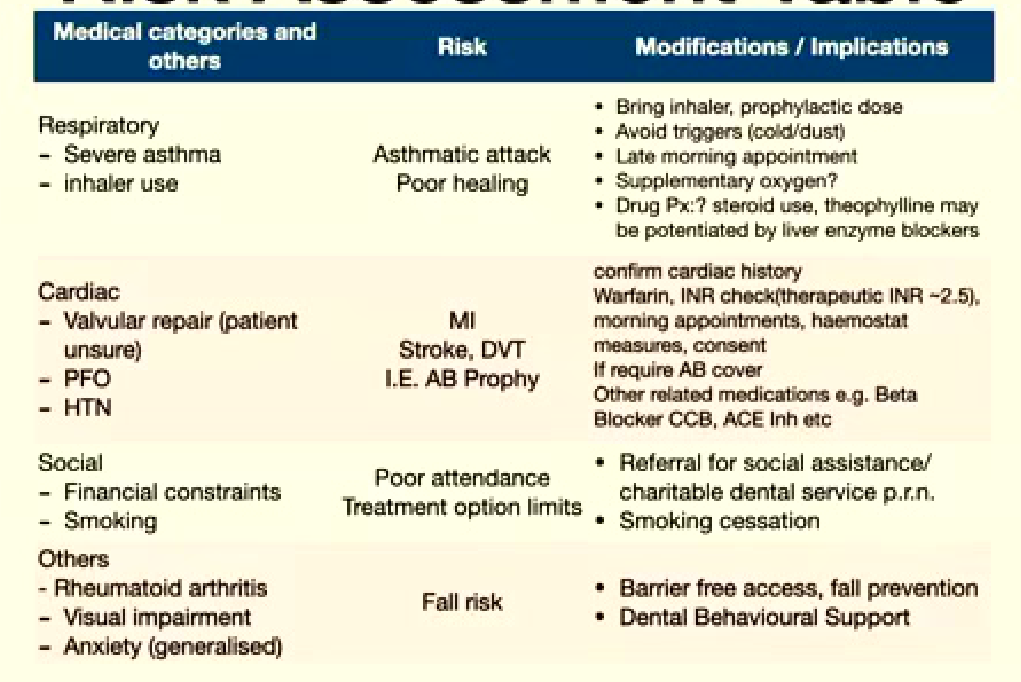
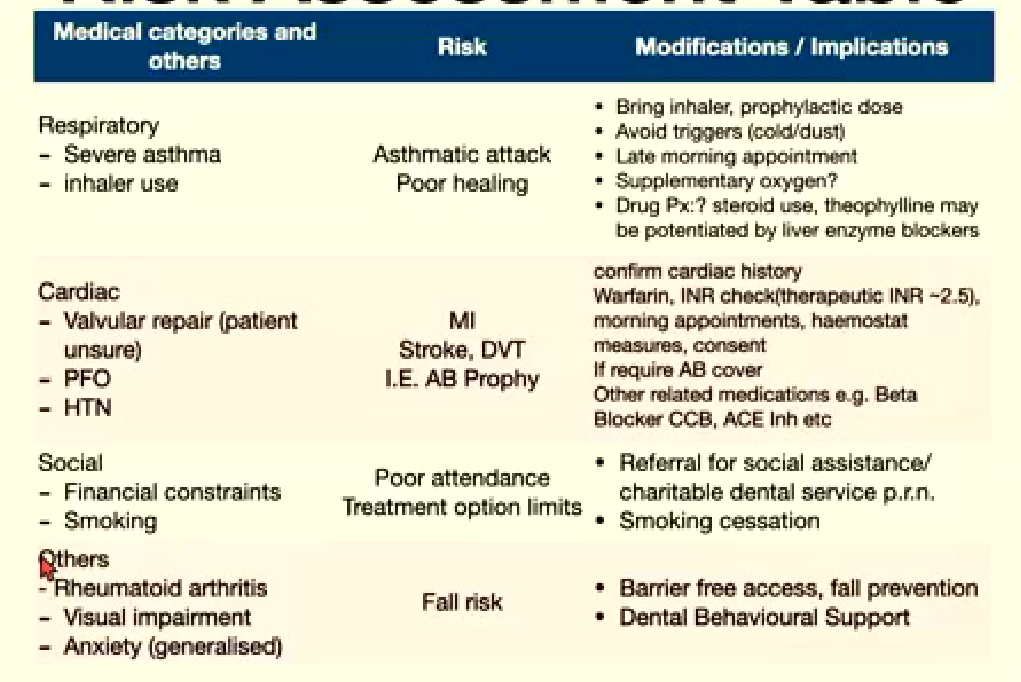
| Medical categories and others | Risk | Modifications / Implications |
|---|---|---|
| Respiratory – severe asthma, inhaler use | Asthmatic attack; poor healing | - Bring inhaler, prophylactic dose - Avoid triggers (cold/dust) - Late morning appointment - Supplementary oxygen? - Drug Rx: steroid use; theophylline may be potentiated by liver enzyme blockers |
| Cardiac – valvular repair (patient unsure), PFO, HTN | MI; stroke, DVT; I.E. AB prophylaxis | Warfarin, INR check (therapeutic INR ~2.5), morning appointments, haemostatic measures, consent. If require AB cover. Other related medications e.g. beta blocker, CCB, ACE inhibitor etc. |
| Social – financial constraints, smoking | Poor attendance; treatment option limits | - Referral for social assistance / charitable dental service p.r.n. - Smoking cessation |
| Others – rheumatoid arthritis, visual impairment, anxiety (generalised) | Fall risk | - Barrier-free access, fall prevention - Dental Behavioural Support |
Lecturer — Additional Risk Categories
The risk table can also include medication-related risks and consent or capacity issues.
- Medication-related risks include drug interactions, bleeding, xerostomia, gingival enlargement, and candidiasis; review drug type, dosage, frequency, interactions, and prescribing implications.
- Consent and capacity issues may make it difficult to obtain valid consent, requiring assessment of capacity and identification of the appropriate decision-maker or best-interest process.
- Childhood asthma may also reduce tolerance of supine positioning, while steroid therapy may impair healing.
- Mild, metformin-treated diabetes may involve hypoglycaemia, increased infection risk, and poor wound healing, especially with periodontal disease.
- Osteoporosis and bisphosphonate use raise concern about medication-related osteonecrosis of the jaw and delayed healing after extractions or other bone-manipulating procedures.
- Neurological and behavioural factors may include variable cooperation, challenging behaviour, seizures, head instability, longer and more difficult procedures, and communication or capacity limitations.
Clinical Scenarios
Asthma Patient Scenario10
 |  |
 |
Clinical Scenario11
A 63 year old man came into the clinic with a painful upper right wisdom tooth. It affects his eating and sleeping. He has not seen the dentist for around 10 years due to dental anxiety.
 |  |
Medical History
- Asthma. Poorly controlled with exacerbations almost every 2 weeks, and admission to hospital 1-3 times annually. Not all attacks are subdued with salbutamol inhaler. No known triggers, although cold air and dust are reported to possibly worsen it. Does not regularly follow up with physician.
- Mild dental anxiety - mainly to sound of ultrasonic and handpieces.
- Rheumatoid arthritis with left knee swollen
- Reduced BMI
- Smokes - 5 cigarettes a day now, cut down from 20 sticks a day 20 years ago.
- History of cataract surgery on right eye, with some residual visual impairment.
Medications
- Salbutamol 200mcg inhaler
- Fluticasone 500mcg with Salmeterol 50mcg inhaler
- Lignosum rhinocerus (traditional Chinese tonic, 虎乳芝)
Dental History
- Uses an acrylic partial upper denture fabricated over 10 years ago that overlays retaining
- Brushes once a day only
- Does not clean/brush denture
Social History
- Low socio-economic status
- Works as a security officer with varying shifts in the morning and overnight
- Divorced, lives alone
Oral Examination
- Upper left wisdom tooth with caries into pulp
- Poor oral hygiene
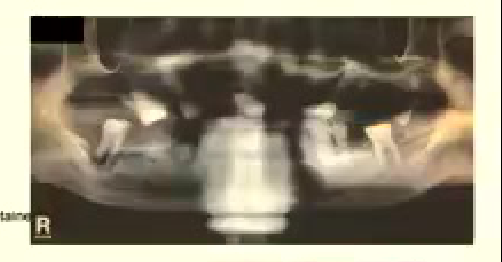
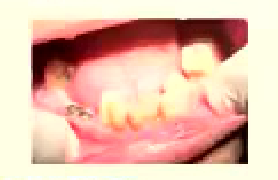
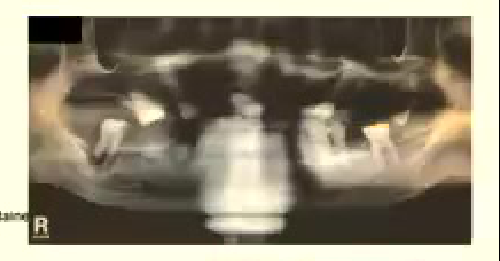
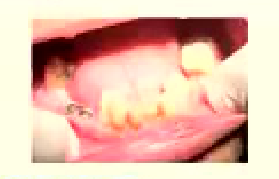
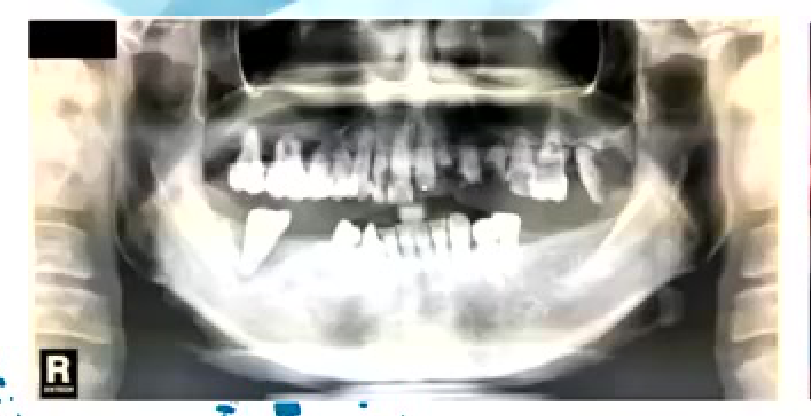
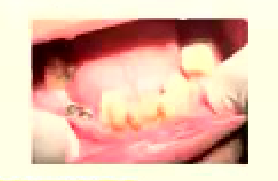
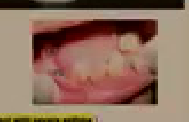
- Rampant caries with other retained roots (see Figure 1.27.1 - Picture of caries / retained roots in a patient with severe asthma)
- Oral candidiasis on upper palate
- Upper denture with dried debris on fitting and smooth surfaces.
Treatment Considerations121314
What are your treatment considerations briefly? Can you treat the pain today?

Medical Categories, Risks and Modifications15
| Medical categories and others | Risk | Modifications / Implications |
|---|---|---|
| Respiratory — Severe asthma, inhaler use | Asthmatic attack | Bring inhaler, prophylactic dose; avoid triggers (cold/dust); late morning appointment; supplementary oxygen? Drug Rx: steroid use, theophylline may be potentiated by liver enzyme blockers |
| Poor healing | ||
| Cardiac — Valvular repair (patient unsure), PFO, HTN | MI | Confirm cardiac history |
| Stroke, DVT | Warfarin, INR check (therapeutic INR ~2.5), morning appointments, haemostat measures, consent | |
| I.E. AB prophylaxis | If require AB cover; other related medications e.g. Beta Blocker, CCB, ACE Inh etc | |
| Social — Financial constraints, smoking | Poor attendance | Referral for social assistance / charitable dental service p.r.n. |
| Treatment option limits | Smoking cessation | |
| Others — Rheumatoid arthritis, visual impairment, anxiety (generalised) | Fall risk | Barrier free access, fall prevention; Dental Behavioural Support |
A 63 year old man came into the clinic with a painful upper right wisdom tooth. It affects his eating and sleeping. He has not seen the dentist for around 10 years due to dental anxiety.
-
Asthma. Poorly controlled with exacerbations almost every 2 weeks, and admission to hospital 1-3 times annually. Not all attacks are subdued with salbutamol inhaler. No known triggers, although cold air and dust are reported to possibly worsen it. Does not regularly follow up with physician.
-
Mild dental anxiety - mainly to sound of ultrasonic and handpieces.
-
Rheumatoid arthritis with left knee swollen.
-
Reduced BMI
-
Smokes - 5 cigarettes a day now, cut down from 20 sticks a day 20 years ago.
-
History of cataract surgery on right eye, with some residual visual impairment.
-
Salbutamol 200mcg inhaler
-
Fluticasone 500mcg with Salmeterol 50mcg inhaler
-
Lignosus rhinocerus (traditional Chinese tonic, 虎乳芝)
-
Uses an acrylic partial upper denture fabricated over 10 years ago that overlays retained
-
Brushes once a day only
-
Does not clean/brush denture
-
Low socio-economic status
-
Works as a security officer with varying shifts in the morning and overnight
-
Divorced, lives alone
-
Upper left wisdom tooth with caries into pulp
-
Poor oral hygiene
-
Rampant caries with other retained roots (see Figure 1.27.1 - Picture of caries / retained roots in a patient with severe asthma)
-
Oral candidiasis on upper palate
-
Upper denture with dried debris on fitting and smooth surfaces.
What are your treatment considerations briefly? Can you treat the pain today?
-
The tooth extraction should be completed today. Despear assessed to be moderate to high risk, attenuating the specific risks and possessing emergency preparedness are key.
-
He will require further fillings, extractions and partial dentures in the future. Dental health education is also important.
-
Raised BMI of 46.9 kg/m² (174cm, 142kg)
-
Major Depressive Disorder
-
Dental anxiety
-
Asthma, well controlled and on follow-up
-
Hypertension
-
Diabetes mellitus
-
Hypercholesterolaemia
-
Ischaemic heart disease – controlled angina
-
Sleep apnoea: Continuous Positive Airway Pressure (CPAP) device used at night
-
GORD
-
Osteoarthritis
-
Generalised musculoskeletal pain
-
Irregular attender; previous visit over 5 years ago
-
Snacks on cakes and biscuits between meals with 10 sweetened beverages daily
-
Brushes twice a day with fluoridated toothpaste but unable to reach upper posterior teeth
-
Dental anxiety associated with injections and drilling sensation / sounds; avoids fillings and prefers dental extractions
-
No history of dental sedation or GA for dental treatment
-
Divorced and lives alone
-
Has two sons who are married and live separately
-
Rarely leaves her home
-
No consumption of tobacco, alcohol or recreational drugs
-
Requires hospital transport to attend appointments
-
Mobility: although able to stand for short periods, using a bariatric wheelchair to attend hospital appointments
-
Poor visualisation of the mouth due to extensive adipose tissue intra-orally limiting visual access to the posterior teeth
-
Generalised soft deposits and food debris
-
Generalised gingival inflammation
-
Partially edentate
-
Food packing between the UL6 and UL7
-
Caries: UL6 distal; tender on palpation, grade 1 mobile
-
Generalised tooth surface loss (erosion)
-
Aspirin
-
Glyceryl Trinitrate (GTN) inhaler
-
Amlodipine
-
Atorcolol
-
Atorvastatin
-
Lansoprazole
-
Metformin
-
Corticosteroid inhaler
-
Salbutamol inhaler
Questions16
- Create a Medical Category – Risk Assessment – Modifications table.
- What additional factors do you have to consider when undertaking a risk assessment of this patient?
- The patient consents to extraction of the carious upper left first molar. How would you modify the delivery of dental treatment?
- Criteria for referring the bariatric patients. How is ASA grading for them like?
Geriatric Patient Scenario
An 80 year old lady was admitted via a trolley bed from the wards. She was assessed by a physician and has a mobile lower incisor indicated for removal in view of aspiration risk.
Medical History17
- Severe Multi-infarct (vascular) dementia - fluctuating consciousness between stupor and hypersomnia. Bedridden. Double incontinence.
- Aspiration pneumonia, hospitalised over 2 incidents over the past 2 months.
- Thromboembolic stroke. Right Middle Cerebral Artery stroke 3 years ago.
- Ischaemic heart disease
- Severe dysphagia - nasogastric tube fed, nil-by-mouth
- History of laryngeal carcinoma in 1984 treated with conventional radiotherapy (70 Gys, 33 Fractions)
- Methicillin-resistant Staphylococcus aureus (MRSA) positive
- Hypertension

Medications
- Omeprazole
- Plavix (clopidogral)
- Timolol
- Neurobion
- Vitamin D and calcium supplements
Dental History
- Has not received oral hygiene assistance at the long-term care facility over the past year
- Nasogastric tube fed for 2 years (nil-by-mouth)
- Constantly grinds and mouth breathes almost entirely
Social History
- Chinese ethnicity
- Stays in a hospice and is bedridden
- Arrived by arranged transport from hospice
- Husband is the main caregiver and next-of-kin
Oral Examination
- Challenging behaviour during examination
- Trismus affecting ability to visualise palatal and lingual surfaces
- Mobile lower right central incisor
- Uncontrolled bruxism and clenching
- Dry secretions on tooth surfaces and palate (Figure 16.6.1 and Figure 16.6.2)
Lecturer — Palliative Dental Care
In palliative care, treatment should prioritise comfort, pain management, elimination of acute infection, reduction of trauma, and prevention while minimising treatment burden.
- An asymptomatic tooth with no immediate risk generally favours prevention and avoidance of unnecessary treatment.
- A very mobile tooth may require removal because aspiration can cause pneumonia through infection and a foreign-body reaction.
- For extraction, assess capacity, identify the appropriate substitute decision-maker where necessary, liaise with the oncology team, confirm the radiation dose and treatment field, use an atraumatic technique, smooth sharp bony edges, aim for primary closure, and arrange bedside follow-up.
Discussion Questions
- Create a Medical Category - Risk Assessment - Modifications table.
- What medical disorders/conditions are associated with end-of-life care?
- The patient consents to extraction of the carious upper left first molar. How would you modify the delivery of dental treatment?
- Criteria for referring the geriatric patients. How is ASA grading for them like?
- What other issues and concerns is end of life care often associated with?
COPD Patient Scenario
A 67 year old man turned up at the charity clinic that you volunteer at. He complains of “weakening” and “crumbling” teeth.
Medical History18
- Chronic Obstructive Pulmonary Disease - irregular in medical follow-up
- FEV1, or forced expiratory volume in 1 sec, was 38% of normal predicted. Recent chest x-rays showed flattened diaphragm.
- SpO2 is 93% on room air, heart rate 84/min
- Respiratory rate is 24 per minute and shallow
- Dry hacking non-productive cough, pitting oedema
- Hypertension – 152/85
- Hyperlipidaemia
- Asthma
- Others: ex-smoker with 70 pack-year cigarette history, reduced BMI
Lecturer — COPD Severity
The patient was considered ASA 3 because his COPD was severe and an acute exacerbation could potentially result in hospitalisation.
- Use an upright position, short morning appointments, cautious use of or avoidance of rubber dam if it compromises breathing, and emergency equipment.
- Long-term prednisolone raises concerns about oral candidiasis, staining, additional steroid exposure, and possible adrenal-related effects; check therapeutic guidance and consult the physician if the combined steroid exposure is unclear.
 |  |
Medications
- Prednisolone 10mg
- Ipratropium bromide + albuterol sulfate combination inhaler
- Salbutamol inhaler
- Simvastatin
- Enalapril
Dental History
- Brushes once a day with manual toothbrush
- Irregular dental attender
- Does not use interdental brushing aid
Social History
- Works at the local hawker centre for almost 50 years, exposure to long-term inhalation of smoke (see Figure 1.26.1)
- Hokkien-speaking (a type of Mandarin dialect)
- Smoked for 50 years, around 1.5 pack a day. Quit smoking 2 years ago, reportedly due to rising tobacco tax and physician advice
- Receiving social assistance
- Stays with wife, has two married children who visit infrequently
Oral Examination
- Prolonged oral health neglect
- Multiple interproximal caries
- Erosion lesions and root caries
Discussion Questions
- Create a Medical Category · Risk Assessment · Modifications table.
- How do you assess the severity of the patient’s COPD?
- What are the treatment options for managing multiple caries & high caries risk?
- What other factors do you need to consider that can affect treatment success?
Homelessness Patient Scenario
You received a referral letter from the local prison service regarding a 64 year old man emancipated on a “Mandatory Aftercare Scheme” for ex-offenders. He has multiple medical conditions, is unemployed, and is currently homeless. He is referred to exclude dental causes of recurrent sinusitis.
Medical History19
- Hepatitis C on half yearly follow-up
- Latent tuberculosis
- Chronic obstructive pulmonary disease
- Mild asthma
- Chronic sinusitis and allergic rhinitis
- Gastric reflux - undergoing medical follow-up
- Others: renal cyst, benign prostate hypertrophy
- H/O: four surgical repairs of oral antral fistula
- Previous injecting drug user, ex-smoker, heavy alcohol use
Medications
- Omeprazole
- Salbutamol inhaler (200mcg)
- Fluticasone inhaler twice daily
- Array of traditional Chinese tonics and herbs
Dental History
- Brushes once a day with hard toothbrush
- No comprehensive dental treatment for over a decade
- Irregular dental attender, visits only when symptoms arise
- Prison dental service provided extractions only
- Mouth breather, daily regurgitation of gastric contents
Social History
- Ex-offender, released from prison 1 month ago
- Staying at the void deck of an estate, and moving to a “Halfway Home” after being picked up by community services
- Unemployed due to medical conditions
- Separated from wife for 20 years; have not contacted daughter over 10 years
- Distant relationship with siblings
Oral Examination
- Edentulous upper jaw with frictional keratosis and traumatised ridge from lower teeth
- Lower teeth with very poor periodontal health
- No obvious sinus tract was seen
Lecturer — Hepatitis and Tuberculosis
Hepatitis C raises concerns about blood-borne infection, reduced hepatic drug metabolism, and coagulation problems.
- Latent tuberculosis is not considered infectious, but the reported status should be confirmed with the general practitioner; active tuberculosis would require higher infection-control precautions.
- Confirm renal function, including estimated glomerular filtration rate, because of the renal cyst.
- If liver impairment is possible, avoid non-steroidal anti-inflammatory and hepatotoxic drugs, consider paracetamol first, avoid metronidazole, complete appropriate blood work, and liaise with the general practitioner.
Discussion Questions
- Create a Medical Category - Risk Assessment - Modifications table.
- What cross-infectivity steps would you take?
- What other (non-medical) factors do you need to consider that can affect treatment success?
Bariatric Patient Scenario
A 55 year old female presents to you complaining of pain in an upper left first molar tooth.
Medical History20
- Raised BMI of 46.9 kg/m² (174 cm, 142 kg)
- Major Depressive Disorder
- Dental anxiety
- Asthma, well controlled and on follow-up
- Hypertension
- Diabetes mellitus
- Hypercholesterolaemia
- Ischaemic heart disease - controlled angina
- Sleep apnoea: Continuous Positive Airway Pressure (CPAP) device used at night
- GORD
- Osteoarthritis
- Generalised musculoskeletal pain
Medications
- Aspirin
- Glyceryl Trinitrate (GTN) inhaler
- Amlodipine
- Atenolol
- Atorvastatin
- Lansoprazole
- Metformin
- Corticosteroid inhaler
- Salbutamol inhaler
Dental History
- Irregular attender, previous visit over 5 years ago
- Snacks on cakes and biscuits between meals with 10 sweetened beverages daily
- Brushes twice a day with fluoridated toothpaste but unable to reach upper posterior teeth
- Dental anxiety associated with injections and drilling sensation/sounds; avoids fillings and prefers dental extractions
- No history of dental sedation or GA for dental treatment
Social History
- Divorced and lives alone
- Has two sons who are married and live separately
- Rarely leaves her home
- No consumption of tobacco, alcohol or recreational drugs
- Requires hospital transport to attend appointments
- Mobility: although able to stand for short periods, using a bariatric wheelchair to attend hospital appointments
Lecturer — Bariatric Treatment
Before treatment, confirm the dental chair’s weight limit, use bariatric equipment where necessary, and assess whether the patient can tolerate the proposed chair position.
- Avoid prolonged or fully supine positioning because tissue around the neck and chest may worsen airway obstruction.
- Consider the risks of sedation and opioids in obstructive sleep apnoea, keep appointments short, and arrange transport and postoperative review.
- Have glycaemic treatment available in case of hypoglycaemia and use local haemostatic measures for aspirin-associated bleeding.
- The patient was considered ASA 3, primarily because of the high BMI and associated medical conditions.
Oral Examination
- Poor visualisation of the mouth due to extensive adipose tissue intra-orally limiting visual access to the posterior teeth
- Generalised soft deposits and food debris
- Generalised gingival inflammation
- Partially edentate
- Food packing between the UL6 and UL7
- Caries: UL6 distal; tender on palpation; grade 1 mobile
- Generalised tooth surface loss (erosion)
Discussion Questions
- Create a Medical Category – Risk Assessment – Modifications table.
- What additional factors do you have to consider when undertaking a risk assessment of this patient?
- The patient consents to extraction of the carious upper left first molar. How would you modify the delivery of dental treatment?
- Criteria for referring the bariatric patients. How is ASA grading for them like?
Asthma Patient Scenario Variations
A 63 year old man came into the clinic with a painful upper right wisdom tooth. It affects his eating and sleeping. He has not seen the dentist for around 10 years due to dental anxiety.
Medical History21
- Asthma: poorly controlled with exacerbations almost every 2 weeks, and admission to hospital 1-3 times annually. Not all attacks are subdued with salbutamol inhaler. No known triggers, although cold air and dust are reported to possibly worsen it. Does not regularly follow up with physician.
- Mild dental anxiety - mainly to sound of ultrasonic and handpieces
- Rheumatoid arthritis with left knee swollen
- Reduced BMI
- Smokes - 5 cigarettes a day now, cut down from ~20 sticks a day 20 years ago
- History of cataract surgery on right eye, with some residual visual impairment
 |  |
Medications
- Salbutamol 200mcg inhaler
- Fluticasone 500mcg with Salmeterol 50mcg inhaler
- Lignosus rhinocerus (traditional Chinese tonic, 虎乳芝)
Dental History
- Uses an acrylic partial upper denture fabricated over 10 years ago that overlays retained roots
- Brushes once a day only
- Does not clean/brush denture
Social History
- Low socio-economic status
- Works as a security officer with varying shifts in the morning and overnight
- Divorced, lives alone
Oral Examination
- Upper left wisdom tooth with caries into pulp
- Poor oral hygiene
- Rampant caries with other retained roots (see Figure 1.27.1 - Picture of caries / retained roots in a patient with severe asthma)
- Oral candidiasis on upper palate
- Upper denture with dried debris on fitting and smooth surfaces
Discussion Question
What are your treatment considerations briefly? Can you treat the pain today?
Respiratory22
- Severe asthma, inhaler use
Risk: asthmatic attack, poor healing
Modifications / Implications:
- Bring inhaler, prophylactic dose
- Avoid triggers (cold/dust)
- Late morning appointment
- Supplementary oxygen?
- Drug Px: ? steroid use, theophylline may be potentiated by liver enzyme blockers
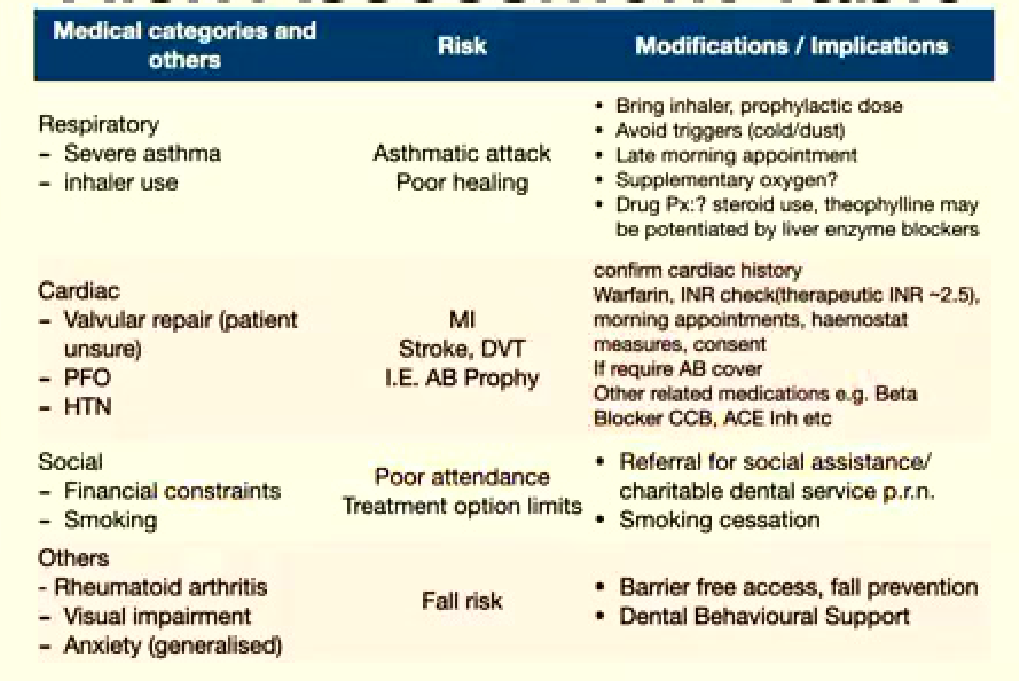
Cardiac
- Valvular repair (patient unsure)
- PFO
- HTN
Risk: MI, stroke, DVT, I.E. — AB prophylaxis
Modifications / Implications:
- Confirm cardiac history
- Warfarin, INR check (therapeutic INR ~2.5), morning appointments, haemostasis measures, consent
- If require AB cover
- Other related medications e.g. beta blocker, CCB, ACE inhibitors etc
Social
- Financial constraints
- Smoking
Risk: poor attendance, treatment option limits
Modifications / Implications:
- Referral for social assistance / charitable dental service p.r.n.
- Smoking cessation
Others
- Rheumatoid arthritis
- Visual impairment
- Anxiety (generalised)
Risk: fall risk
Modifications / Implications:
- Barrier-free access, fall prevention
- Dental Behavioural Support
A 63 year old man came into the clinic with a painful upper right wisdom tooth. It affects his eating and sleeping. He has not seen the dentist for around 10 years due to dental anxiety.
-
Asthma: poorly controlled with exacerbations almost every 2 weeks, and admission to hospital 1-3 times annually. Not all attacks are subdued with salbutamol inhaler. No known triggers, although cold air and dust are reported to possibly worsen it. Does not regularly follow up with physician.
-
Mild dental anxiety - mainly to sound of ultrasonic and handpieces
-
Rheumatoid arthritis with left knee swollen
-
Reduced BMI
-
Smokes - 5 cigarettes a day now, cut down from ~20 sticks a day 20 years ago
-
History of cataract surgery on right eye, with some residual visual impairment
-
Salbutamol 200mcg inhaler
-
Fluticasone 500mcg with Salmeterol 50mcg inhaler
-
Lignosus rhinocerus (traditional Chinese tonic, 虎乳芝)
-
Uses an acrylic partial upper denture fabricated over 10 years ago that overlays retained roots
-
Brushes once a day only
-
Does not clean/brush denture
-
Low socio-economic status
-
Works as a security officer with varying shifts in the morning and overnight
-
Divorced, lives alone
-
Upper left wisdom tooth with caries into pulp
-
Poor oral hygiene
-
Rampant caries with other retained roots (see Figure 1.27.1 - Picture of caries / retained roots in a patient with severe asthma)
-
Oral candidiasis on upper palate
-
Upper denture with dried debris on fitting and smooth surfaces
Treatment Considerations
What are your treatment considerations briefly? Can you treat the pain today?
- The tooth extraction should be completed today. Despite being assessed to be moderate to high risk, attenuating the specific risks and possessing emergency preparedness are key.
- He will require further fillings, extractions and partial dentures in the future. Dental health education is also important.
A 60 year old man came into the clinic with a painful upper right wisdom tooth. It affects his eating and sleeping. He has not seen the dentist for around 10 years due to dental anxiety.
-
Asthma: poorly controlled with exacerbations almost every 4 weeks, and admission to hospital 1-2 times annually. Not all attacks are relieved with salbutamol inhaler. No known triggers, although cold air and dust are reported to possibly worsen it. Does not regularly follow up with physician.
-
Mild dental anxiety - mainly to sound of ultrasonic and handpieces
-
Rheumatoid arthritis with left knee swollen
-
Reduced BMI
-
Smoker - 5 cigarettes a day now, cut down from ~20 sticks a day 20 years ago
-
History of cataract surgery on right eye, with some residual visual impairment
-
Salbutamol 200mcg inhaler
-
Fluticasone 500mcg with Salmeterol 50mcg inhaler
-
Lignosus rhinocerus (traditional Chinese herb, 虎乳芝)
-
Uses an acrylic partial upper denture fabricated over 10 years ago that overlays retained roots
-
Brushes once a day only
-
Does not clean/brush denture
-
Low socio-economic status
-
Works as a security officer with varying shifts in the evening and overnight
-
Divorced, lives alone
-
Upper left wisdom tooth with caries into pulp
-
Poor oral hygiene
-
Rampant caries with other retained roots (see Figure 1.25.1: Picture of caries / retained roots in a patient with severe asthma)
-
Oral candidiasis on upper palate
-
Upper denture with dried debris on fitting and smooth surfaces
What are your treatment considerations briefly? Can you treat the pain today?
Lecturer — Asthma Treatment
Invasive treatment should be undertaken only when the asthma is stable on the day, with emergency equipment available and treatment time minimised.
- Confirm the date of the last exacerbation and current asthma control.
- Consider a semi-sitting position if breathing is difficult and monitor breathing throughout treatment.
- Advise rinsing the mouth after steroid inhaler use and avoiding smoking for at least 24 to 46 hours after extraction.
- Provide verbal and accessible written instructions because visual impairment may limit the usefulness of standard written advice.
- The tooth extraction should be completed today. Despite being assessed to be moderate to high risk, attenuating the specific risks and possessing emergency preparedness are key.
- He will require further fillings, extractions and partial dentures in the future. Dental health education is also important.
Nutcracker Syndrome23
Nutcracker syndrome is a rare condition in which the left renal vein is trapped between two arteries, which impairs blood flow. Women are particularly frequently affected, but children and adolescents can also fall ill.
The main symptom of the disease is frequent and sometimes severe lower abdominal pain — caused by the circulatory disorder in the affected vein. The pain can be acute or chronic and varies in intensity. In some cases, there are also other symptoms, such as:
- Blood in the urine
- Discomfort when urinating

Chronic Renal Insufficiency (Kidney Weakness, Kidney Failure)242526272829303132
In the case of renal insufficiency, the kidneys only work to a limited extent and can no longer filter the blood sufficiently to excrete metabolic waste products. Doctors distinguish between an acute and a chronic form. While acute kidney failure occurs suddenly, kidney function deteriorates gradually over a longer period of time in chronic kidney disease (CKD). In Switzerland, an estimated 10% of the adult population is affected.
- Chronic kidney failure treatment
- Treatment for acute renal insufficiency


Diagnosis and Causes
It is often diagnosed by chance. The main causes of chronic kidney disease include high blood pressure and diabetes. Although a complete cure is not possible, the progression of the disease can be slowed down with targeted measures. This includes:
- An adapted diet
- Blood pressure-lowering medication
- Good blood sugar control
At an advanced stage, dialysis or a kidney transplant may be necessary.
Overview Topics
- Anatomy
- Role & function
- Diseases and infections
- Prevention
- Precaution
- Responsible departments
Adrenal Hypofunction (Addison’s Disease)
No transcribable text or figures on this page (screenshot of a computer desktop).
Blue background image of office chairs featuring the logo “Extron”.
Page is completely black; no visible text or content.
Clinical Case: 10-Year-Old Male with Multiple Medical Issues3334353637
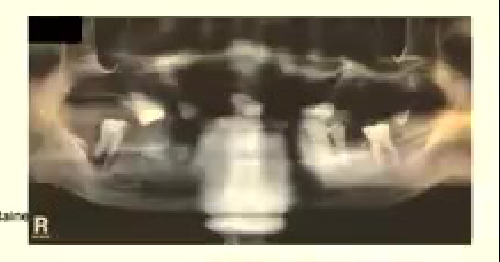
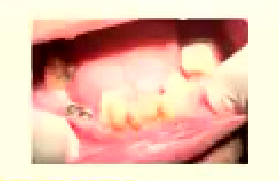
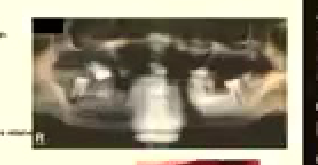
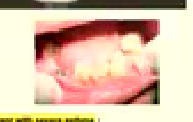
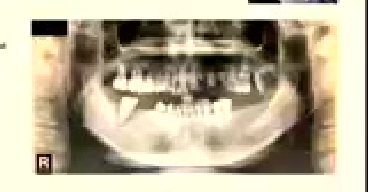
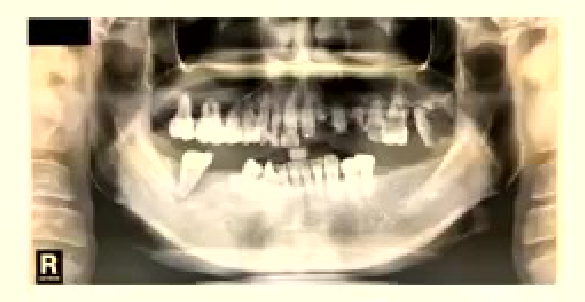
The X-ray image shows severe root decay (labeled Figure 1.17.1), and there is a photo of the patient’s mouth showing swollen gums.
Medical history:
- The patient has been diagnosed with periodontitis, which has led to worsening bone loss over time.
- He also suffers from atopic dermatitis, making him prone to infections in his eyes and ears.
- Family history notes include a brother who died young — suggesting possible genetic factors.
- He is currently undergoing treatment with floxacillin, aspirin, and prednisolone.
Imaging findings:
- X-ray: Shows severe root cavities, often called “tooth stubs.”
- Photo: Depicts the patient’s mouth, with visibly swollen and inflamed gums.
- Caption under X-ray: Figure 1.17.1 – Picture of teeth showing retained pulp in a patient with severe recession.
The images illustrate advanced periodontal disease progression and associated systemic conditions.
No text or figures detected on this page.
14.1
 |  |
 |
Risk Assessment Tables and Modifications
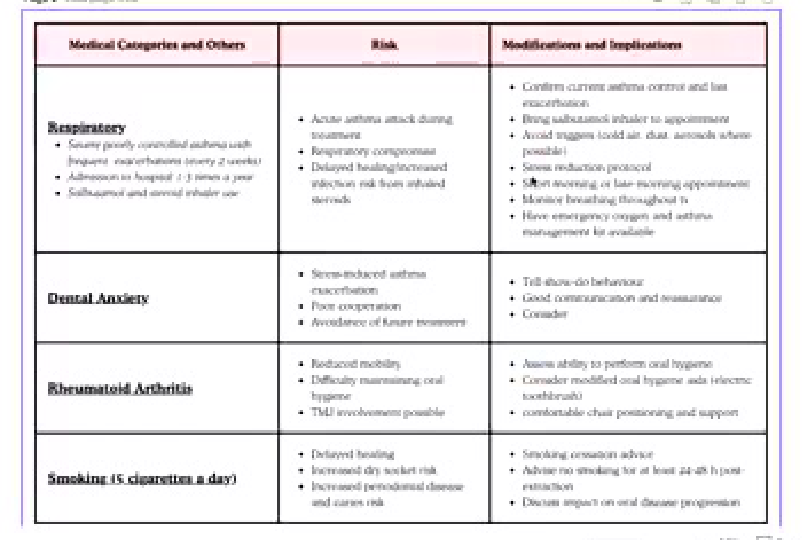
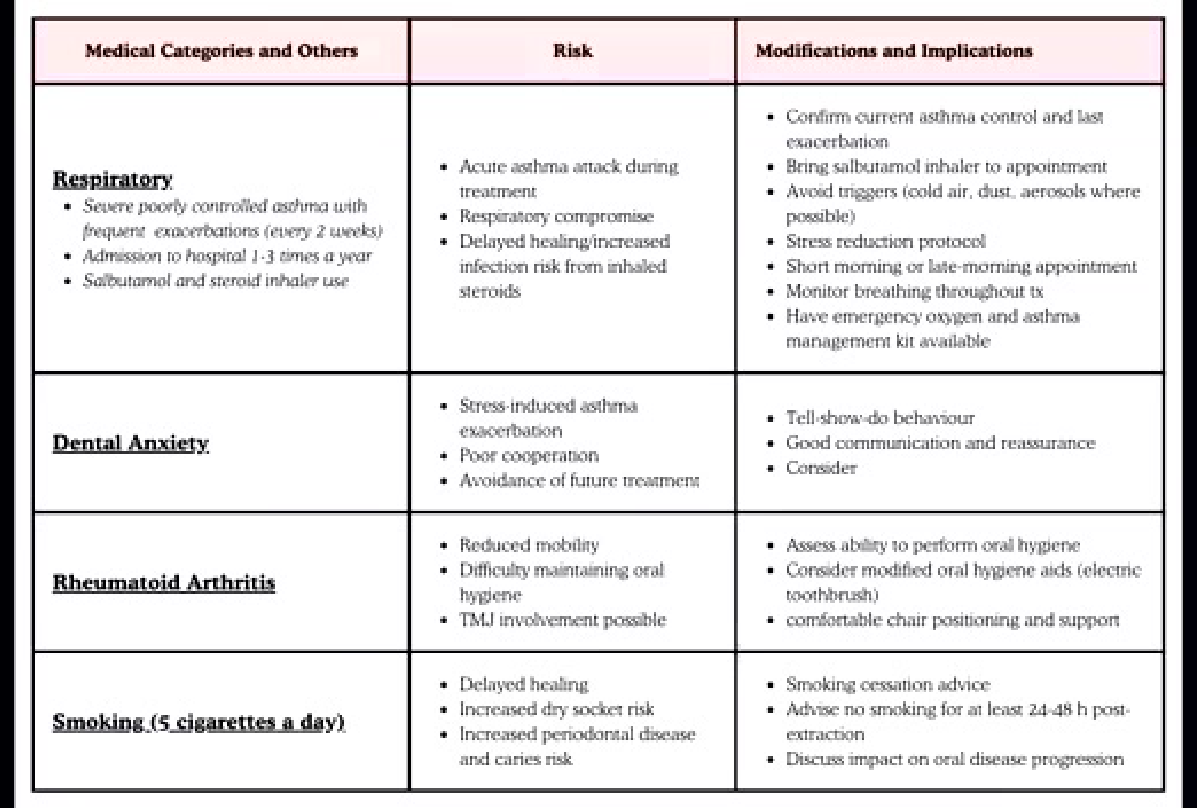
Respiratory Risk Tables383940
| Medical Categories and Others | Risk | Modifications and Implications |
|---|---|---|
| Respiratory | Acute asthma attack during treatment; Respiratory compromise; Delayed healing/increased infection risk from inhaled steroids | Confirm current asthma control and list exacerbation; Bring salbutamol inhaler to appointment; Avoid triggers (cold air, dust, mustard when possible); Stress reduction protocol; Short morning or late-morning appointments; Monitor breathing throughout tx; Have emergency oxygen and asthma management kit available |
| Dental Anxiety | Stress-induced asthma exacerbation; Poor cooperation; Avoidance of future treatment | Tell-show-do behaviour; Good communication and reassurance; Consider |
| Rheumatoid Arthritis | Restricted mobility; Difficulty maintaining oral hygiene; TMJ involvement possible | Assess ability to perform oral hygiene; Consider modified oral hygiene aids (electric toothbrush); Comfortable chair positioning and support |
| Smoking (15 cigarettes a day) | Delayed healing; Increased dry socket risk; Increased periodontal disease and cancer risk | Smoking cessation advice; Advise no smoking for at least 24-48 h post-extraction; Discuss impact on oral disease progression |
| Medical Categories and Others | Risk | Modifications and Implications |
|---|---|---|
| Respiratory — Acute poorly controlled asthma with frequent exacerbations every 3 mths; Admission to hospital > 1 times a year; Subcutaneous and visceral inhaler use | Acute asthma attack during treatment; Respiratory compromise; Delayed healing/increased infection risk from inhaled steroids | Confirm current asthma control and last exacerbation; Bring salbutamol inhaler to appointment; Avoid triggers (cold air, dust, aerosols where possible); Stress reduction protocol; Short morning or late-morning appointments; Monitor breathing throughout tx; Have emergency oxygen and asthma management kit available |
| Dental Anxiety | Stress-induced asthma exacerbation; Poor cooperation; Avoidance of future treatment | Tell-show-do behaviour; Good communication and reassurance; Consider |
| Rheumatoid Arthritis | Reduced mobility; Difficulty maintaining oral hygiene; TMJ involvement possible | Assess ability to perform oral hygiene; Consider modified oral hygiene aids (electric toothbrush); Comfortable chair positioning and support |
| Smoking (5 cigarettes a day) | Delayed healing; Increased dry socket risk; Increased periodontal disease and caries risk | Smoking cessation advice; Advise no smoking for at least 24-48 h post-extraction; Discuss impact on oral disease progression |
| Medical Categories and Others | Risk | Modifications and Implications |
|---|---|---|
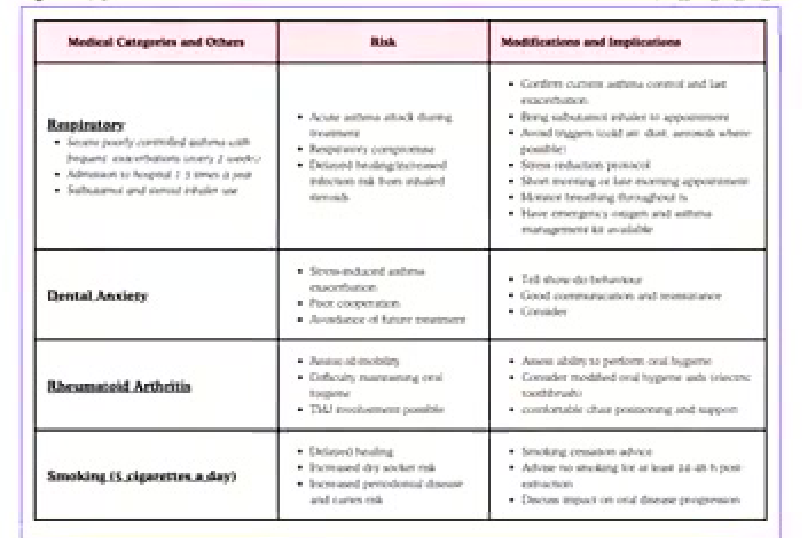
| Respiratory — Severe poorly controlled asthma with frequent exacerbations (every 2 weeks); Admission to hospital 1-3 times a year; Salbutamol and steroid inhaler use | Acute asthma attack during treatment; Respiratory compromise; Delayed healing/increased infection risk from inhaled steroids | Confirm current asthma control and last exacerbation; Bring salbutamol inhaler to appointment; Avoid triggers (cold air, dust, aerosols where possible); Stress reduction protocol; Short morning or late-morning appointment; Monitor breathing throughout tx; Have emergency oxygen and asthma management kit available |
| Dental Anxiety | Stress-induced asthma exacerbation; Poor cooperation; Avoidance of future treatment | Tell-show-do behaviour; Good communication and reassurance; Consider |
| Rheumatoid Arthritis | Reduced mobility; Difficulty maintaining oral hygiene; TMJ involvement possible | Assess ability to perform oral hygiene; Consider modified oral hygiene aids (electric toothbrush); Comfortable chair positioning and support |
| Smoking (5 cigarettes a day) | Delayed healing; Increased dry socket risk; Increased periodontal disease and caries risk | Smoking cessation advice; Advise no smoking for at least 24-48 h post-extraction; Discuss impact on oral disease progression |
Lecturer — Respiratory Assessment
Respiratory assessment should also consider factors that may affect treatment tolerance and airway management.
- Assess ability to tolerate supine positioning, oxygen saturation, and respiratory rate.
- Consider the risk of anxiety-induced exacerbation and potential interference from a rubber dam.
- Use a more upright position, avoid or use rubber dam cautiously, and consider supplementary oxygen when appropriate.
- Consider the effects of inhaled steroids on candidiasis and healing.
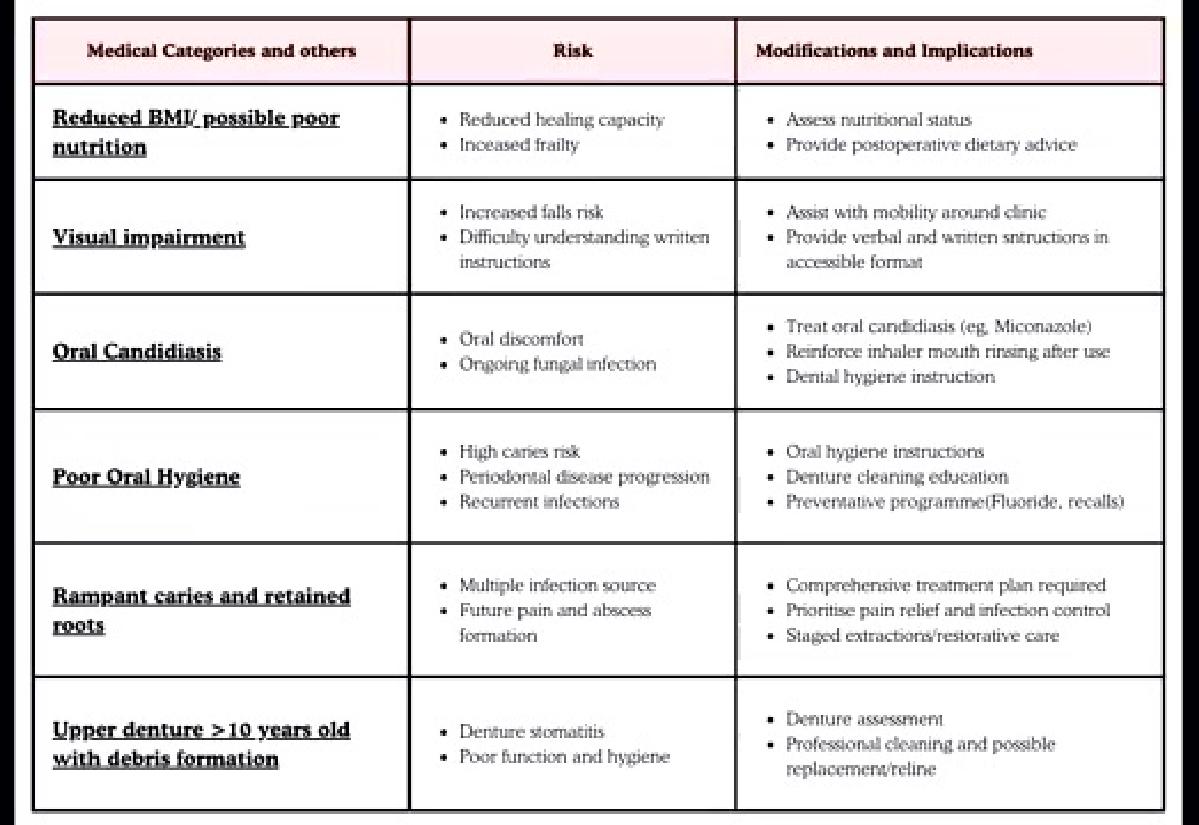
Geriatric and Social Factor Tables414243444546
| Medical Categories and Others | Risk | Modifications and Implications |
|---|---|---|
| Reduced BMI / possible poor nutrition | Reduced healing capacity; Increased frailty | Assess nutritional status; Provide postoperative dietary advice |
| Visual impairment | Increased falls risk; Difficulty understanding written instructions | Assist with mobility around clinic; Provide verbal and written instructions in accessible format |
| Oral Candidiasis | Oral discomfort; Ongoing fungal infection | Treat oral candidiasis (e.g., Miconazole); Reinforce inhaler mouth rinsing after use; Dental hygiene instruction |
| Poor Oral Hygiene | High caries risk; Periodontal disease progression; Recurrent infections | Oral hygiene instructions; Denture cleaning education; Preventative programme (Fluoride, recalls) |
| Rampant caries and retained roots | Multiple infection source; Future pain and abscess formation | Comprehensive treatment plan required; Prioritise pain relief and infection control; Staged extractions/restorative care |
| Upper denture > 10 years old with debris formation | Denture stomatitis; Poor function and hygiene | Denture assessment; Professional cleaning and possible replacement/reline |
| Medical Categories and Others | Risk | Modifications and Implications |
|---|---|---|
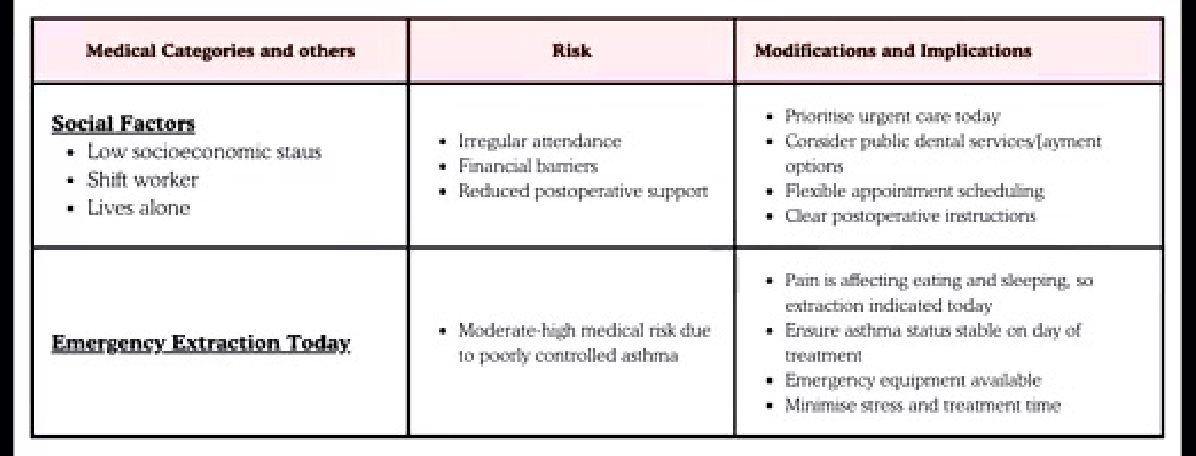
| Social Factors — Low socioeconomic status; Shift worker; Lives alone | Irregular attendance; Financial barriers; Reduced postoperative support | Prioritise urgent care today; Consider public dental services/payment options; Flexible appointment scheduling; Clear postoperative instructions |
| Emergency Extraction Today | Moderate-high medical risk due to poorly controlled asthma | Pain is affecting eating and sleeping, so extraction indicated today; Ensure asthma status stable on day of treatment; Emergency equipment available; Minimise stress and treatment time |
Lecturer — Geriatric and Social Factors
Geriatric and social assessment should account for the patient’s circumstances and ability to benefit from treatment.
- Consider frailty, dementia, fluctuating consciousness, capacity concerns, and dependence on caregivers.
- Assess poor attendance, financial constraints, homelessness, lack of transport, and lack of postoperative support.
- Consider difficulty following written instructions, social isolation, and language barriers.
- Treatment should be proportionate to the patient’s capacity, prognosis, circumstances, and ability to benefit.
- Referral may also be needed when sedation or general anaesthesia is being considered, or when transport and postoperative monitoring cannot be safely arranged.
 |  |
Complex Geriatric and Palliative Care Dentistry47
Strategic Risk Assessment and Palliative Modifications
Clinical Case Review
Respiratory and Neurological Risk
Respiratory48
-
Risks: Recurrent aspiration pneumonia, severe dysphagia, nil by mouth (NG tube), reduced reserve.
-
Modifications: Semi-upright positioning, high-volume suction, gauze airway protection, avoid sedation.
-
Aspiration risks also include dental materials, debris, excess saliva, and mobile teeth.
-
Use suction toothbrushes, moisturising gels, and a structured mouth-care plan while minimising debris and excess fluid.
Neuro-Cognitive
-
Risks: Severe dementia, fluctuating consciousness, challenging behaviour, capacity issues.
-
Modifications: Consent from substitute decision maker, keep treatment short/simple, mouth props (cautious), nursing support.
-
Assess decision-making capacity and use best-interest decisions when necessary, limiting treatment to what is necessary and proportionate.
Cardiovascular and Bleeding Management
Cardiac49
-
Risk: MI/Stroke.
-
Modification: Use stress-reduction, limit adrenaline, and confirm medical stability with physician.
-
The patient’s ischaemic heart disease and hypertension increased the stress-related risk of myocardial infarction or stroke.
Antiplatelet
-
Clopidogrel (Plavix): Do not stop for simple extraction.
-
Modification: Use local haemostatic measures (sutures, TXA).
-
Prioritise pressure, sutures, and tranexamic acid gauze rather than altering effective clopidogrel therapy.
Infectious
-
MRSA Positive
- Risk: Cross infection, possible wound infection.
- Modification: Strict contact precautions, treat at end of list, coordinate with ward infection control.
-
Coordinate with the infection team to determine whether antibiotics are required.
Radiation History and ORN Risk50
- History: 70 Gy for Laryngeal Carcinoma
- Osteoradionecrosis (ORN): Life-long risk in irradiated bone field.
- Liaison Required: Consult Oncology to map radiation field/maxilla dose.
- Extraction Protocol: Atraumatic, smooth bone edges, primary closure, close post-op review.
- Supportive Care: High fluoride and dry-mouth lubricants for radiation caries.
Lecturer — Extraction Risk Balance
The extraction decision must balance osteoradionecrosis risk against the risk of leaving an infected tooth or infected dead bone.
Frailty and Dependency Factors
Hospice / End-of-Life51
Focus on comfort and dignity. Avoid elective complex care. Bedside treatment on trolley if safest.
- Prioritise pain control, management of acute infection, reduction of trauma, and prevention of avoidable complications.
Nutrition Dependence
Nasogastric tube fed.
- Risk: Aspiration of debris, candida.
- Modifications: Assisted toothbrushing, moisturizing gels, avoiding rinses if swallowing is unsafe.
Palliative Care Dentistry5253
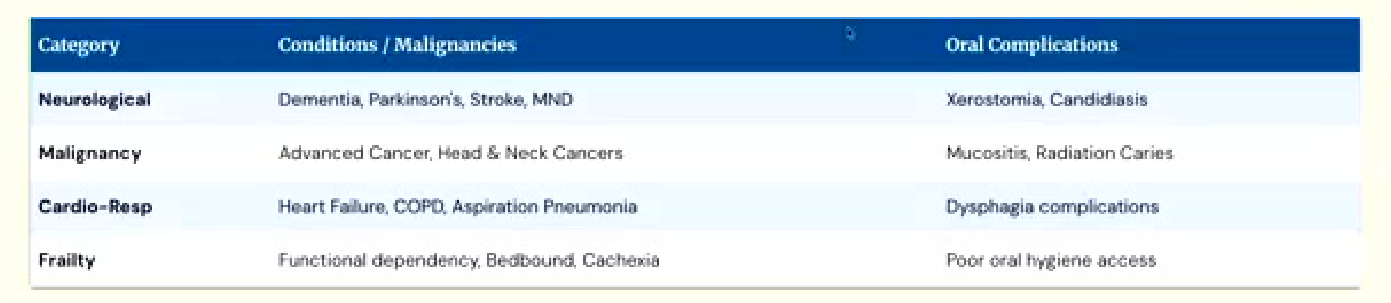
1. Common End-of-Life Medical Profiles54
| Category | Conditions / Malignancies | Oral Complications |
|---|---|---|
| Neurological | Dementia, Parkinson’s, Stroke, MND | Xerostomia, Candidiasis |
| Malignancy | Advanced Cancer, Head & Neck Cancers | Mucositis, Radiation Caries |
| Cardio-Resp | Heart Failure, COPD, Aspiration Pneumonia | Dysphagia complications |
| Frailty | Functional dependency, Bedbound, Cachexia | Poor oral hygiene access |
Strategic Decision: UL6 Extraction? Clinical Rationale for Palliation
Lecturer — Palliative Extraction
An extraction may be justified when a tooth causes pain, infection, trauma, or an important aspiration risk.
- It may not be justified when the tooth is asymptomatic and poses no immediate risk.
Procedural Modifications55
- Capacity — Consent from husband/Next-of-Kin
- Oncology — Confirm radiation dose to maxilla
- Delivery — Atraumatic, sutures, TXA gauze
- Post-Op — Bedside follow-up, carer instructions
 |  |
 |  |
Bariatric Management Criteria
When to Refer?56
- Weight Limit: Patient exceeds standard dental chair safety load.
- Transfer: Requires hoist or multi-staff hospital transfer.
- Airway: Obstructive Sleep Apnoea (OSA) or inability to lie supine.
- Comorbidities: ASA III or IV status requiring specialist monitoring.

ASA Grading for Obesity57585960
| ASA Grade | Obesity-Related Definition | Functional Status |
|---|---|---|
| ASA II | BMI 30–39.9 (Class I/II) | Well-controlled, no functional limits |
| ASA III | BMI ≥ 40 (Morbid Obesity)* | Functional limitations from systemic disease |
| ASA IV | Severe Obesity with life-threatening disease | Constant threat to life (e.g., severe OSA, sepsis) |
*Note: Obesity alone is rarely ASA IV without secondary unstable systemic failure.
Lecturer — Bariatric ASA Assessment
Obesity alone does not automatically make a patient ASA 4.
- The bariatric patient discussed was considered ASA 3 because of high BMI, obstructive sleep apnoea, cardiovascular disease, asthma, diabetes, and other comorbidities.
Why this patient is ASA IV
Life-Threatening Risks:
- Recurrent Aspiration Pneumonia (2 hosp. in 2 mos)
- Fluctuating consciousness & vascular dementia
- Nil-by-mouth with severe dysphagia
- Advanced hospice frailty

Clinical Scenario - 80-Year-Old Lady
Medical History61
- No serious medical history / (vascular) dementia - fluctuating consciousness between when she was growing and hyperactive
- Type 2 diabetes
- Myocardial infarction. Right femoral. Careful in early 2010
- Chronic heart failure
- Severe dysphagia - esophageal tube fed - nil-by-mouth
- History of laryngeal carcinoma in 1986 treated with “conventional radiotherapy” (70 Gy in 30 fractions)
- Metronidazole-resistant Staphylococcus aureus (MRSA) positive
- Sleepwalking

Medications
- Ciprofloxacin
- Fentanyl (tadiostat)
- Neuromin
- Vitamin D and calcium supplements
Dental History
- Has not received oral hygiene assessment at the long-term care facility over the past year
- Nasogastric tube fed for 2 years (nil-by-mouth)
- Constantly grinds and mouth breathes almost entirely
Social History
- Chinese ethnicity
- Works in a hospice and is disabled
- Arrived by emergency transport from hospice
- Husband is the main carer
Oral Examination
- Abnormal oral hygiene
- Tongue atrophy - loss of ability to visualize palatal and lingual surfaces
- Robust linear right central incisors
- Uncontrolled extrusion and denitrayling
- Dry habitats on tooth surfaces and palate
An 80 year old lady was admitted via a trolley bed from the wards. She was assessed by a physician and has a mobile lower incisor indicated for removal in view of aspiration risk.
-
Severe Multi-infarct (vascular) dementia - fluctuating consciousness between stupor and hyperarousal. Bedridden. Double incontinence.
-
Aspiration pneumonia, hospitalised over 2 incidents over the past 2 months.
-
Thromboembolic stroke, Right Middle Cerebral Artery stroke 3 years ago
-
Ischaemic heart disease
-
Severe dysphagia - nasogastric tube fed, nil-by-mouth
-
History of laryngeal carcinoma in 1994 treated with Conventional radiotherapy (70 Gys 33 Fractions)
-
Methicillin-resistant Staphylococcus aureus (MRSA) positive
-
Hypertension
-
Omeprazole
-
Plavix (clopidogrel)
-
Tenolol
-
Neurobion
-
Vitamin D and calcium supplements
-
Has not received oral hygiene assistance at the long-term care facility over the past year
-
Nasogastric tube fed for 2 years (nil-by-mouth)
-
Constantly grinds and mouth breathes almost entirely
-
Chinese ethnicity
-
Stays in a hospice and is bedridden
-
Arrived by arranged transport from hospice
-
Husband is the main caregiver and next-of-kin
-
Challenging behaviour during examination
-
Trismus affecting ability to visualise palatal and lingual surfaces
-
Mobile lower right central incisor
-
Uncontrolled bruxism and clenching
-
Dry secretions on tooth surfaces and palate (Figure 16.6.1 and Figure 16.6.2)
Questions626364656667
- Create a Medical Category - Risk Assessment - Modifications table.
- What medical disorders/conditions are associated with end of life care?
- The patient consent to extraction of the carious upper left first molar. How would you modify the delivery of dental treatment?
- Criteria for referring the Geriatric patients. How is ASA grading for them like?
- What other issues and concerns is end of life care often associated with?
 |  |
Homelessness Chapter - Medically Complex Patient6869
Managing a medically complex, socially vulnerable patient: risk assessment, cross-infection control & treatment-planning factors
| Category | Details |
|---|---|
| 64-yr-old man | ex-offender, recently released |
| Homeless | void deck → Halfway Home |
| Medically complex | HCV, latent TB, COPD, GORD |
| Referred | exclude dental cause of sinusitis |
| Medical history | Medications | Social & dental |
|---|---|---|
| Hepatitis C (<6-monthly follow-up) | Omeprazole (PPI) | Released from prison 1 month ago |
| Latent tuberculosis | Salbutamol inhaler 200 mcg | Unemployed; no income; no fixed address |
| COPD + mild asthma (mouth breather) | Fluticasone inhaler (ICS) BD | Socially isolated — no family contact |
| Chronic sinusitis / allergic rhinitis | Array of Chinese herbs & tonics | Brushes once daily, hard brush |
| GORD with daily regurgitation | Irregular, symptom-driven attender | |
| Renal cyst, benign prostate hypertrophy | Edentulous upper jaw; poor lower perio | |
| x4 repairs of oral-antral fistula | ||
| Ex-IVDU, ex-smoker, heavy alcohol use |
Medical Risk Assessment
Infective & Respiratory
| Medical factor | Risk assessment | Modifications |
|---|---|---|
| Hepatitis C | Bloodborne virus; cross-infection via aerosol/sharps (needlestick — 1–10%). Chronic fibrosis → impaired drug metabolism & bleeding risk; lifelong HCC monitoring. | Standard precautions for ALL patients; rigorous sharps/PPE. Avoid NSAIDs, cap paracetamol. Liaise GP/hepatologist re LFTs & bleeding before surgery. |
| Latent tuberculosis | Latent TB is non-infectious — risk is reactivation, not chair-side spread. Airborne droplet nuclei matter only in active disease. | Standard precautions only. Confirm status with GP; defer elective care & refer if reactivation signs. Watch isoniazid/rifampicin hepatotoxicity. |
| COPD / mild asthma (mouth breather) | Reduced respiratory reserve: supine position & rubber dam may compromise breathing. Bronchospasm if anxious. Mouth-breathing → xerostomia → caries. | Treat upright/semi-supine; patient brings salbutamol every visit. Short appointments; minimise aerosols. Avoid NSAIDs; have acute-attack first aid handy. |
Lecturer — Confirming Latent TB
A patient’s statement that they have latent tuberculosis should be confirmed with the general practitioner.
- The clinician may not know whether the infection is truly latent or active.
GI, Renal, Liver & Bleeding
| Medical factor | Risk assessment | Modifications |
|---|---|---|
| GORD + daily regurgitation | Gastric acid (pH < 1) → dental erosion (palatal/occlusal); ongoing acid challenge; supine reflux during treatment. | Fluoride & sensitivity control; raise chair head. Do NOT brush immediately after reflux. Avoid NSAIDs. Reinforce reflux control with GP. |
| Renal cyst / BPH | Cyst usually benign → confirm function. Many drugs renally cleared, nephrotoxic if impaired function. BPH: anticholinergics → urinary retention. | Confirm eGFR with GP. Avoid NSAIDs/nephrotoxins & dose-adjust renally-cleared drugs. Avoid anticholinergic load. |
| Heavy alcohol / liver | Limited hepatic reserve: impaired metabolism, prolonged bleeding (↓ clotting factors), DILI & disulfiram-reaction risk. | Avoid all NSAIDs; paracetamol ≤2–3 g/day. Avoid metronidazole. Check FBC/coag before surgery; use opioids sparingly. |
| Bleeding risk (liver + renal) | Liver → ↓ clotting factors; renal/uraemia → platelet dysfunction. Combined → prolonged, unpredictable bleeding. | Recent FBC/platelets + INR before surgery. Local haemostasis (sutures, Surgicel, pressure). Stage extensive surgery. |
Lecturer — Additional Medical Risks
The patient was considered ASA 3, with severe COPD and asthma creating risks of acute exacerbation and respiratory compromise.
- Other respiratory concerns included previous smoking, poor healing, candidiasis, dry mouth, periodontal disease and caries.
- Cardiovascular risks included hypertension and hyperlipidaemia, with possible hypertensive crisis, stroke or heart attack.
Cross-Cutting Prescribing Rule70
⚠️ Avoid ALL NSAIDs in this patient. Triply contraindicated by liver disease (GI/variceal bleeding, hepatorenal risk), GORD (mucosal ulceration) and asthma (NERD/bronchospasm) — and nephrotoxic given the renal cyst.
| Topic | Guidance |
|---|---|
| Analgesia | Paracetamol is first choice — but cap at ~2–3 g/day (cirrhosis, alcohol, likely malnutrition). |
| Antibiotics | Avoid metronidazole — disulfiram-like reaction + hepatotoxicity. |
| Bleeding work-up | Screen herbal bleeding risk (ginkgo/garlic/ginger); check FBC + coagulation before any surgery. |
| Always liaise | Consult GP/specialist before prescribing any hepatically- or renally-cleared drug; plan local haemostasis. |
Cross-Infection Control
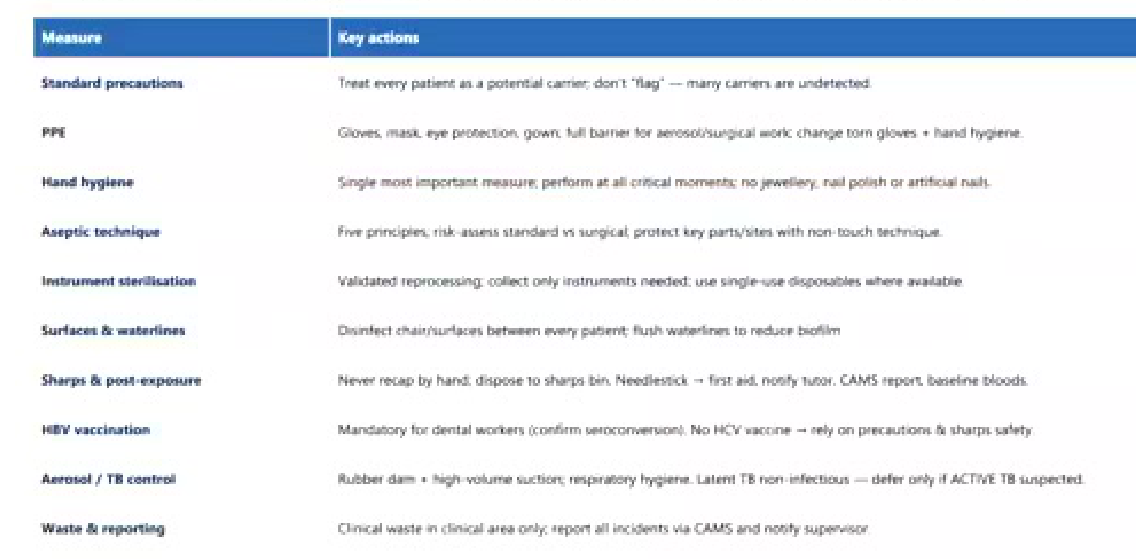
Cross-Infection Control Steps71
Standard precautions are the baseline for EVERY patient — HIV, latent TB and IVDU history reinforce, but do not change, routine practice.
| Measure | Key actions |
|---|---|
| Standard precautions | Treat every patient as a potential carrier; don’t “flag” — many carriers are undetected. |
| PPE | Gloves, mask, eye protection, gown: full barrier for aerosol/surgical work; change torn gloves + hand hygiene. |
| Hand hygiene | Single most important measure: perform at all critical moments; no jewellery, nail polish or artificial nails. |
| Aseptic technique | Five principles: risk-assess, standard in surgical, protect key parts/sites with non-touch technique. |
| Instrument sterilisation | Validated reprocessing: collect only instruments needed; use single-use disposables where available. |
| Surfaces & waterlines | Disinfect chair/surfaces between every patient; flush waterlines to reduce biofilm. |
| Sharps & post-exposure | Never recap by hand; dispose to sharps bin. Needlestick — first aid, notify tutor, CAMS report, baseline bloods. |
| HBV vaccination | Mandatory for dental workers (confirm seroconversion). No HCV vaccine — rely on precautions & sharps safety. |
| Aerosol / TB control | Rubber dam + high-volume suction; respiratory hygiene. Latent TB non-infectious — defer only if ACTIVE TB suspected. |
| Waste & reporting | Clinical waste in clinical area only; report all incidents via CAMS and notify supervisor. |
Lecturer — Hypoglycaemia Response
If hypoglycaemia develops, give a sugary drink or food if the patient is conscious and able to swallow. If the patient cannot swallow, intravenous treatment may be required.
- If active tuberculosis is suspected, confirm the patient’s status and use droplet and airborne precautions with enhanced infection-control procedures. Table 3.1 Standard precautions
Key Distinctions to Flag: Latent TB ≠ Active TB72
Latent infection is non-infectious — no airborne spread.
Airborne isolation and deferral of aerosol-generating care are not required for this patient…
…unless reactivation to active disease is suspected (chronic cough, weight loss, night sweats) — defer & refer.
Non-Medical Factors and Treatment Planning
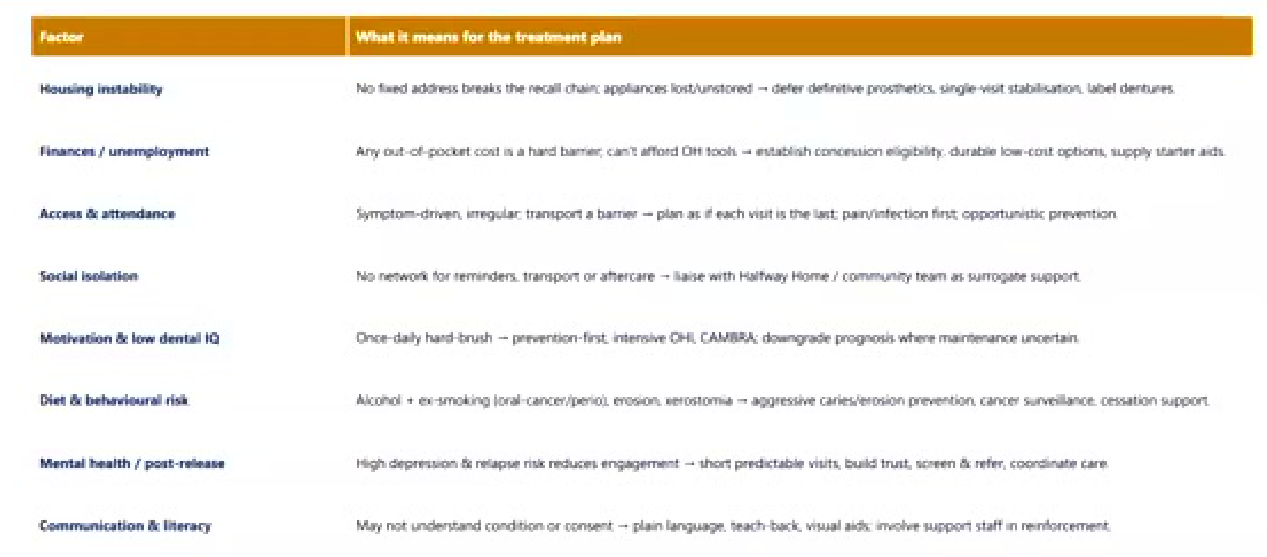
Non-Medical Factors Affecting Success73
| Factor | What it means for the treatment plan |
|---|---|
| Housing instability | No fixed address breaks the recall chain; appliances lost/unstored — defer definitive prosthetics, single-visit stabilisation, label dentures. |
| Finances / unemployment | Any out-of-pocket cost is a hard barrier; can’t afford DHI tools — establish concession eligibility; durable low-cost options, supply starter aids. |
| Access & attendance | Symptom-driven, irregular: transport a barrier — plan as if each visit is the last; pain/infection first; opportunistic prevention. |
| Social isolation | No network for reminders, transport or aftercare — liaise with Halfway Home / community team as surrogate support. |
| Motivation & low dental IQ | Once-daily hard-brush — prevention-first; intensive OHI, CAMBRA; downgrade prognosis where maintenance uncertain. |
| Diet & behavioural risk | Alcohol + ex-smoking (oral-cancer/period), erosion, xerostomia — aggressive caries/erosion prevention, cancer surveillance, cessation support. |
| Mental health / post-release | High depression & relapse risk reduces engagement — short predictable visits, build trust, screen & refer, coordinate care. |
| Communication & literacy | May not understand condition or consent — plain language, teach-back, visual aids; involve support staff in reinforcement. |
Lecturer — Social Constraints
Mandatory prison aftercare requirements may further restrict the patient’s ability to engage with treatment.
- Sleeping rough and limited ability to maintain oral hygiene make complex prosthodontic treatment difficult.
A realistic, phased, prevention-first plan747576777879
Social reality → guarded prognosis. Match the achievable plan to the patient, not the ideal textbook plan.
- Relieve — Pain & acute infection control first
- Stabilise — Arrest caries & periodontal disease
- Prevent — Intensive OHI, fluoride, CAMBRA
- Reassess — Review engagement before definitive care
Defer definitive prosthetics until he is housed, stable and demonstrating maintenance — sequence: relieve → stabilise → prevent → reassess.
Social reality → guarded prognosis. Match the achievable plan to the patient, not the ideal textbook plan.
- Relieve — Pain & acute infection control first
- Stabilise — Arrest caries & periodontal disease
- Prevent — Intensive OHI, fluoride, CAMBRA
- Reassess — Review engagement before definitive care
Defer definitive prosthetics until he is housed, stable and demonstrating maintenance — sequence: relieve → stabilise → prevent → reassess.
A split-screen image showing a Google Calendar schedule on the left and a National Library of Medicine webpage on the right. The calendar displays various events on June 22. The webpage is viewing a bookshelf entry for “StatPearls [Internet]” and displays an article titled “Amitriptyline”.

COPD Patient Case
Patient Background
Dental History8081828384
- Brushes once a day with manual toothbrush
- Irregular dental attender
- Does not use interdental brushing aid
 |  |
Oral Examination
- Prolonged oral health neglect
- Multiple interproximal caries
- Erosion lesions and root caries
Social History
- Works at the local hawker centre for almost 50 years, exposure to long-term inhalation of smoke
- Hokkien-speaking (a type of Mandarin dialect)
- Smoked for 50 years, around 1.5 pack a day. Quit smoking 2 years ago, reportedly due to rising tobacco tax and physician advice
- Receiving social assistance
- Stays with wife, has two married children who visit infrequently
Medically compromised
67 year old patient, complaining of weakening and crumbling teeth
-
Brushes once a day with manual toothbrush
-
Irregular dental attender
-
Does not use interdental brushing aid
-
Prolonged oral health neglect
-
Multiple interproximal caries
-
Erosion lesions and root caries
-
Works at the local hawker centre for almost 50 years, exposure to long-term inhalation of smoke
-
Hokkien-speaking (a type of Mandarin dialect)
-
Smoked for 50 years, around 1.5 pack a day. Quit smoking 2 years ago, reportedly due to rising tobacco tax and physician advice
-
Receiving social assistance
-
Stays with wife, has two married children who visit infrequently
Medical Risk Assessment8586
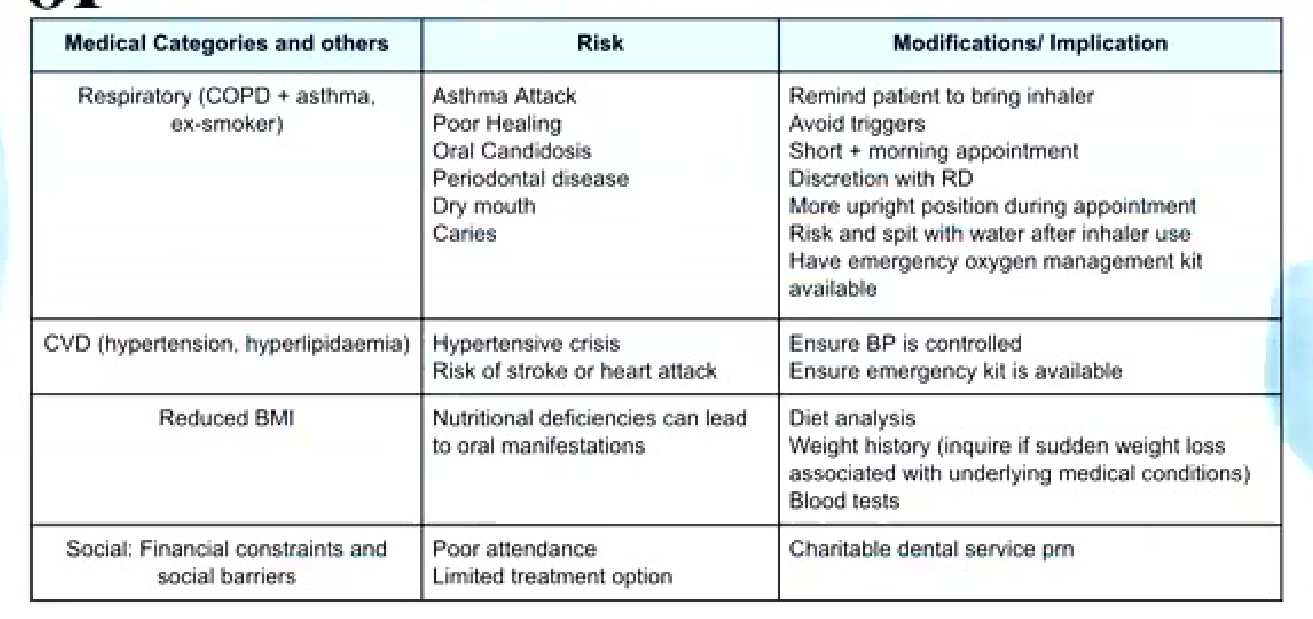
| Medical Categories and others | Risk | Modifications/ Implication |
|---|---|---|
| Respiratory (COPD + asthma, ex-smoker) | Asthma Attack Poor Healing Oral Candidosis Periodontal disease Dry mouth Caries | Remind patient to bring inhaler Avoid triggers Short + morning appointment Discretion with RD More upright position during appointment Risk and spit with water after inhaler use Have emergency oxygen management kit available |
| CVD (hypertension, hyperlipidaemia) | Hypertensive crisis Risk of stroke or heart attack | Ensure BP is controlled Ensure emergency kit is available |
| Reduced BMI | Nutritional deficiencies can lead to oral manifestations | Diet analysis Weight history (inquire if sudden weight loss associated with underlying medical conditions) Blood tests |
| Social: Financial constraints and social barriers | Poor attendance Limited treatment option | Charitable dental service pm |
How are we assessing the COPD risk?
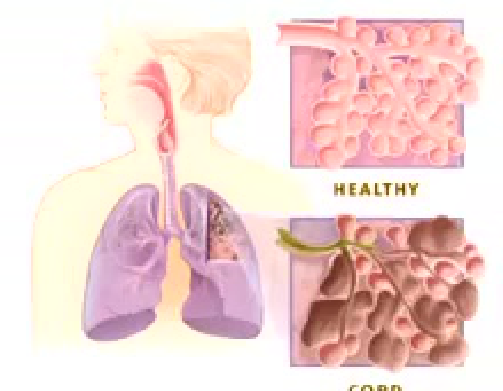
a. Spirometry test (FEV1) patient 38% of normal predicted b. Chest X-ray (flattened diaphragm) c. Oxygen saturation (<91% unstable, >95% stable) patient has 93% d. Respiratory rate (depth and rate/min)
 |  |
Treatment Considerations8788
- What are the treatment options for managing multiple caries and high caries risk?
- Fillings (direct vs indirect)
- Neutrafluor 5000ppm
- Diet modification (erosion lesions)
- Saliva analysis
- Oral Hygiene Instruction (increasing to brushing 2/day)
- Chlorhexidine mouthrinse (intermittent use to avoid staining)
What other factors do you need to consider that can affect treatment success?
- Patient motivation and oral hygiene maintenance
- Language barrier: potentially having a translator
- Financial barriers: requires social assistance
- Previous smoker: Encourage continuation of smoking cessation → can impact periodontal treatment success
No visible content on this page.
 |  |  |
 |  |
Clinical Scenario8990919293
A 67-year-old man turned up at the charity clinic that you volunteer at. He complains of ‘weakening’ and ‘crumbling’ teeth.
 |  |  |
 |  |  |
 |  |
Medical History
- Chronic Obstructive Pulmonary Disease - irregular in medical follow-up
- FEV1, or forced expiratory volume in 1 sec, was 70% of normal predicted. Recent chest x-rays showed flattened diaphragm.
- SpO2 is 92% on room air, heart rate 94/min
- Respiratory rate is 24 per minute and shallow
- Dry hacking non-productive cough, pitting oedema
- Hypertension - 142/85
- Hyperlipidaemia
- Asthma
- Others: Ex-smoker with 70 pack-year cigarette history, reduces BMI
Medication
-
Prednisolone 10mg
-
Ipratropium bromide + albuterol sulfate combination inhaler
-
Salbutamol inhaler
-
Simvastatin
-
Lisinopril
-
Brushes once a day with manual toothbrush
-
Irregular dental attendee
-
Does not use interdental brushing aid
-
Works at the local hawker centre for almost 50 years; exposure to long-term inhalation of smoke (see Figure 1.20.1)
-
Kok-kok operating (a type of Mandarin Opera)
-
Smoked for 50 years, around 1.5 pack a day. Quit smoking 2 years ago, reportedly due to rising tobacco tax and physician advice
-
Receiving social assistance
-
Stays with wife, has two married children who visit infrequently
-
Prolonged oral health neglect
-
Multiple interproximal caries
-
Frequent crowns and root caries
Questions
- Create a Medical Category - Risk Assessment - Modifications table.
- How do you assess the severity of the patient’s COPD?
- What are the treatment options for managing multiple caries & high caries risk?
- What other factors do you need to consider that can affect treatment outcome?
A 67-year-old man turned up at the charity clinic that you volunteer at. He complains of “weakening” and “crumbling” teeth.
Chronic Obstructive Pulmonary Disease - irregular in medical follow-up
- FEV1, or forced expiratory volume in 1 sec, was 38% of normal predicted. Recent chest x-rays showed flattened diaphragm.
- SpO2 is 93% on room air, heart rate 84/min
- Respiratory rate is 24 per minute and shallow
- Dry hacking non-productive cough, pitting oedema
- Hypertension - 152/85
- Hyperlipidaemia
- Asthma
- Others: Ex-smoker with 70 pack-year cigarette history, reduced BMI
Lecturer — Additional Patient History
The lecturer also described a 45-year-old patient presenting for dental care after one year.
- Medical conditions included Down syndrome, moderate intellectual disability, autism spectrum disorder, epilepsy, mild hypertension, diabetes, osteoporosis, allergic rhinitis, eczema, and childhood asthma.
- The main caregiver was the patient’s 80-year-old mother; his 82-year-old father worked as a taxi driver.
- The caregivers’ age could contribute to poor attendance, limited daily oral-care support, and limited support at home.
- Prednisolone 10mg
- Ipratropium bromide + salbutamol sulfate combination inhaler
- Salbutamol inhaler
- Simvastatin
- Enalapril
Lecturer — Medication and Allergy
The patient had a penicillin allergy presenting as a rash, so penicillin should be avoided.
- Medications included metformin, bisphosphonates for osteoporosis, and sodium valproate for epilepsy.
- Medication and allergy details affect prescribing, infection management, bleeding and healing considerations, and potential drug interactions.
-
Brushes once a day with manual toothbrush
-
Irregular dental attender
-
Does not use interdental brushing aid
-
Works at the local hawker centre for almost 50 years, exposure to long-term inhalation of smoke (see Figure 1.26.1)
-
Hokkien-speaking (a type of Mandarin dialect)
-
Smoked for 50 years, around 1.5 pack a day. Quit smoking 2 years ago, reportedly due to rising tobacco tax and physician advice
-
Receiving social assistance
-
Stays with wife, has two married children who visit infrequently
-
Prolonged oral health neglect
-
Multiple interproximal caries
-
Erosion lesions and root caries
- Create a Medical Category - Risk Assessment - Modifications table.
- How do you assess the severity of the patient’s COPD?
- What are the treatment options for managing multiple caries & high caries risk?
- What other factors do you need to consider that can affect treatment success?
Lecturer — OSCE Emergency Risks
Medical emergencies and steroid-related risks may appear in OSCE questions.
- Students should know how to manage hypoglycaemia, asthma exacerbation, cardiac symptoms, and possible adrenal crisis.
Extron
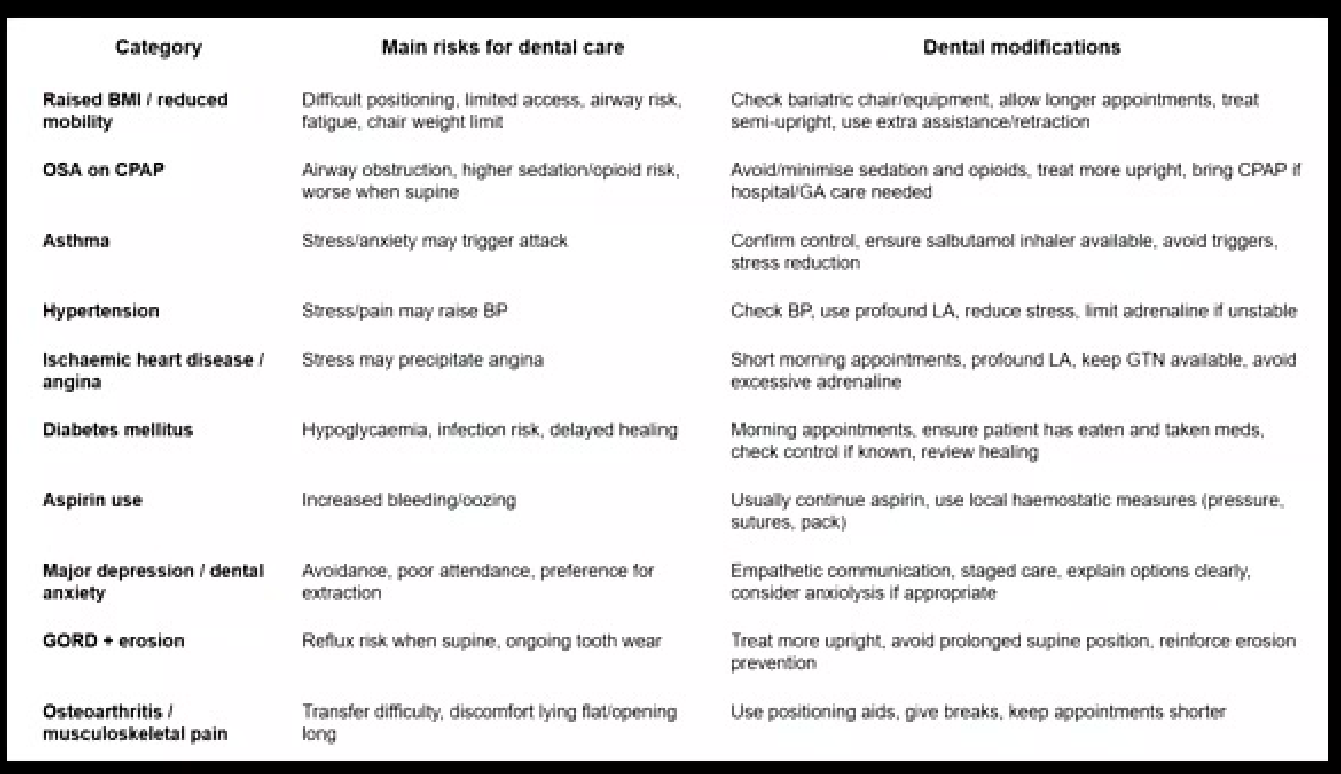
Bariatric Patient Management9495
| Category | Main risks for dental care | Dental modifications |
|---|---|---|
| Increased BMI / reduced mobility | Difficult positioning, limited access, airway risk, fatigue, chair weight limit | Check bariatric chair/equipment, allow longer appointments, treat semi-upright, use extra assistance/retraction |
| OSA on CPAP | Airway obstruction, higher sedation/opioid risk, worse when supine | Avoid/minimise sedation and opioids, treat more upright, bring CPAP if hospital/GA care needed |
| Asthma | Stress/anxiety may trigger attack | Confirm control, ensure salbutamol inhaler available, avoid triggers, stress reduction |
| Hypertension | Stress/pain may raise BP | Check BP, use profound LA, reduce stress, limit adrenaline if unstable |
| Ischaemic heart disease / angina | Stress may precipitate angina | Short morning appointments, profound LA, keep GTN available, avoid excessive adrenaline |
| Diabetes mellitus | Hypoglycaemia, infection risk, delayed healing | Morning appointments, ensure patient has eaten and taken meds, check control if known, review healing |
| Aspirin use | Increased bleeding/oozing | Usually continue aspirin, use local haemostatic measures (pressure, sutures, pack) |
| Major depression / dental anxiety | Avoidance, poor attendance, preference for extraction | Empathetic communication, staged care, explain options clearly, consider anxiolysis if appropriate |
| GORD + erosion | Reflux risk when supine, ongoing tooth wear | Treat more upright, avoid prolonged supine position, reinforce erosion prevention |
| Osteoarthritis / musculoskeletal pain | Transfer difficulty, discomfort lying flat/opening long | Use positioning aids, give breaks, keep appointments shorter |
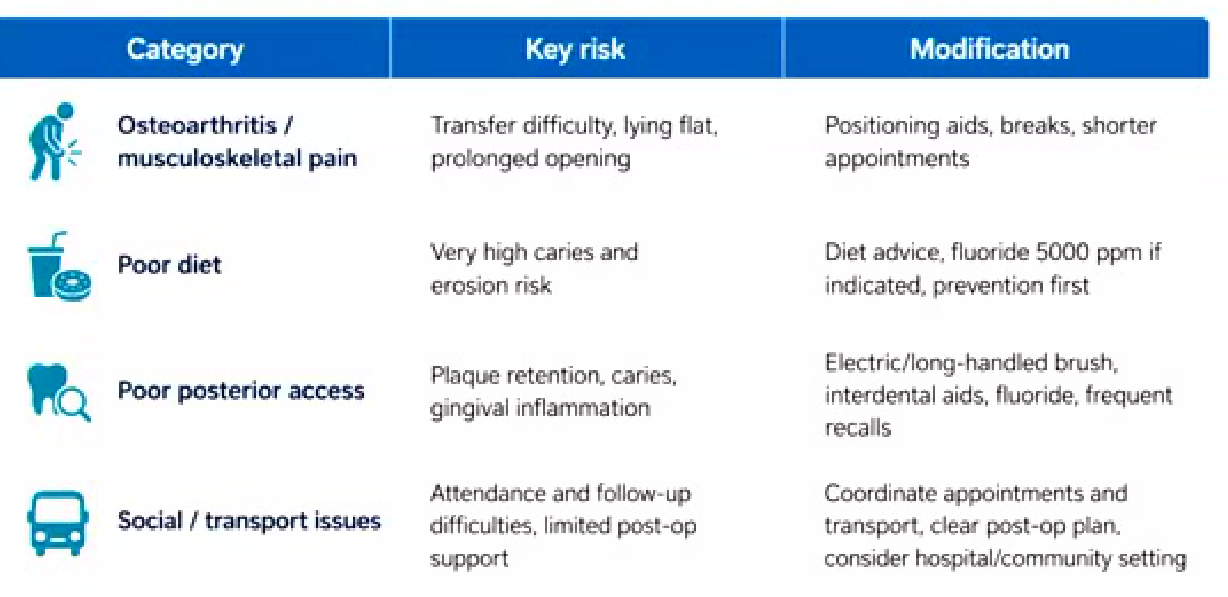
| Category | Key risk | Modification |
|---|---|---|
| Osteoarthritis / musculoskeletal pain | Transfer difficulty, lying flat, prolonged opening | Positioning aids, breaks, shorter appointments |
| Poor diet | Very high caries and erosion risk | Diet advice, fluoride 5000 ppm if indicated, prevention first |
| Poor posterior access | Plaque retention, caries, gingival inflammation | Electric/long-handled brush, interdental aids, fluoride, frequent recalls |
| Social / transport issues | Attendance and follow-up difficulties, limited post-op support | Coordinate appointments and transport, clear post-op plan, consider hospital/community setting |
What additional factors do you have to consider when undertaking a risk assessment of this patient?
 |  |  |
 |  |  |
Chair and Access Safety96
- Patient weighs 542 kg
- Confirm dental chair weight limit
- Ensure safe transfer from balance wheelchair
- Consider whether clinic has enough space and staff support
Lecturer — Chair Capacity
Dental chairs commonly support less than 150 kg, whereas a bariatric chair may support approximately 500 kg. The patient’s weight must be checked against the chair and equipment limits.
- Assess limited mouth access, soft-tissue obstruction, reduced mobility, and difficulty reaching posterior areas
Airway and Positioning
Because of obesity + sleep apnoea + asthma + GERD, avoid fully supine positioning if uncomfortable or unsafe. Risks:
- Airway obstruction
- Breathlessness
- Reflux
- Reduced tolerance of long procedures
Lecturer — Upright Positioning
Supine positioning may worsen breathing because tissues around the neck and chest press downward. Obstructive sleep apnoea may worsen as tissues around the tongue and throat obstruct the airway; fluid control may also become more difficult, and holding the tongue up can cause the palate to fall backwards and obstruct nasal breathing. A slightly more upright position may improve breathing.
Sedation Risk
She has dental anxiety, but sedation is not straightforward. Obesity and OSA increase risk of:
- Airway obstruction
- Hypoventilation
- Respiratory depression
- Opioid/sedative complications
So avoid casual oral benzodiazepines or opioid-heavy analgesia. If sedation/OSA is required, this is likely a hospital/specialist setting decision.
Lecturer — Anaesthetic Referral
High BMI and airway concerns may require referral for appropriate anaesthetic assessment. Obstructive sleep apnoea and CPAP use require particular caution with sedation, opioids, and general anaesthesia.
Cardiovascular Risk
She has:
- Hypertension
- Ischaemic heart disease
- Angina
- Aspirin
- Beta-blocker/amlodipine
You need:
- BP check
- GTN available
- Stress reduction
- Profound LA
- Avoid excessive adrenaline
- Monitor symptoms
Lecturer — Adrenaline and Pain
The use of local anaesthetic with adrenaline should be discussed with the clinical tutor. Effective pain control may reduce anxiety-related complications.
Diabetes and Infection/Healing
Diabetes increases risk of:
- Infection
- Delayed healing
- Periodontal disease
- Post-op complications
Check control if possible, ensure she has eaten, and arrange review.
Social Risk
She lives alone, rarely leaves home and requires hospital transport. So:
- Make sure she can attend review. Give very clear written post-op instructions.
- Consider whether she needs someone at home after extraction
- Avoid treatment plans that depend on frequent attendance unless realistic
The patient consents to extraction of the carious upper left first molar. How would you modify the delivery of dental treatment?
Evaluating Suitability as a Bariatric Patient979899100101102
- Ability to maintain airway during procedure
- Ability to access intraoral site
- Bariatric dental chair, positioning, and short appointment length
- Evaluate BP, HR and RR
- Patient is not suitable for day surgery under GA due to BMI>40, and OSA.
- First line would be extraction under LA and can do oral sedation.
- Can treatment be delayed until risk factors mitigated?
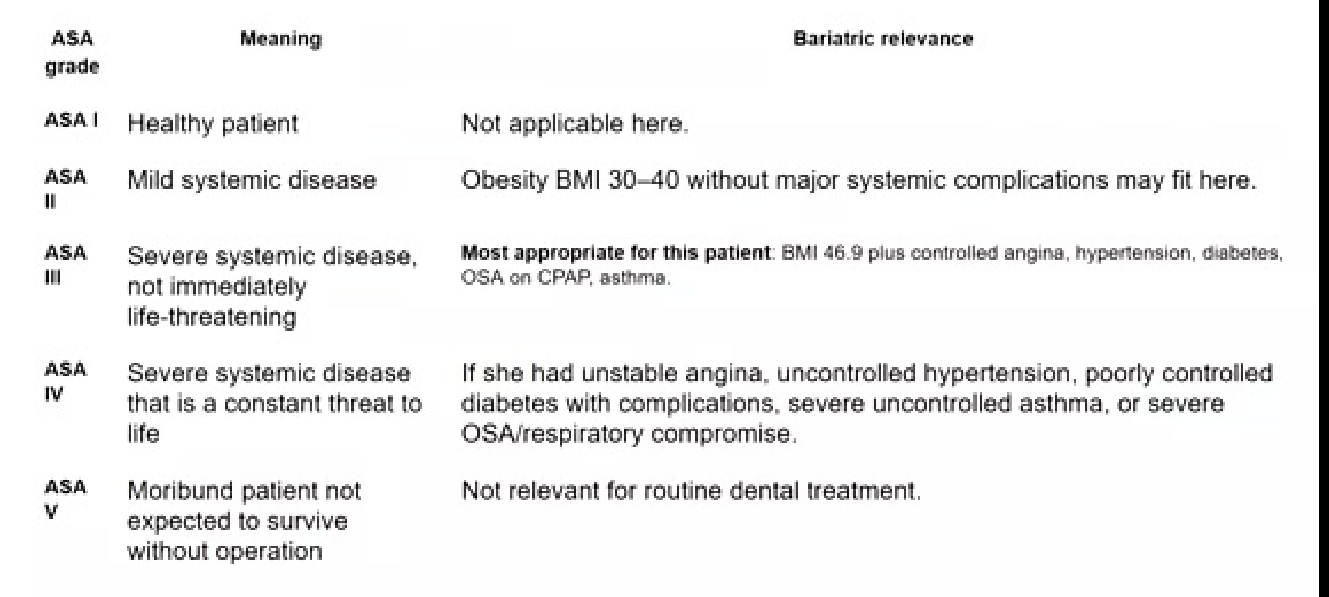
Risk of Delayed Haemostasis from Warfarin Use
Lecturer — Warfarin and INR
When a patient takes warfarin, check the INR and contact the doctor when appropriate. Local haemostatic measures should be considered rather than altering medication without appropriate consultation.
Local Anaesthetic Considerations
- Ability to achieve profound anaesthesia
- Use of vasoconstrictor
- Adrenaline can cause excitatory CNS effects and worsen dental anxiety
- Caution for use in patients with uncontrolled angina
Local Aerosol Control
-
Manage triggers for asthma, consider additional HVAC ventilation
- Prepare emergency oxygen and asthma inhaler
-
Use rubber dam with discretion if it compromises breathing or increases difficulty with airway control
Glycaemic Control
- Assess BG before procedure and monitor patient vital signs during
Transport and Carer Support
- Confirm carer/hospital transport availability after procedure
Post-Extraction Review
-
High risk of delayed/impaired healing
-
Reinforce positive OH behaviours at home, use modified techniques to improve access when brushing and cleaning interproximally
-
Weight/BMI exceeds dental chair or equipment limits or hoisting required
-
Immobility / cannot transfer to or be safely positioned in a standard chair
-
ASA III–IV or unstable/complex medical history
-
Sedation or GA indicated but high-risk (e.g. OSA) → needs anaesthetist/hospital
-
Difficult airway, severe anxiety needing advanced behavioural/pharmacological management
-
Surgery environment can’t accommodate access, manual handling, or emergency response
ASA grading criteria — patient falling under ASA III:
| ASA grade | Meaning | Bariatric relevance |
|---|---|---|
| ASA I | Healthy patient | Not applicable here. |
| ASA II | Mild systemic disease | Obesity BMI 30–40 without major systemic complications may fit here. |
| ASA III | Severe systemic disease, not immediately life-threatening | Most appropriate for this patient: BMI 46.9 plus controlled angina, hypertension, diabetes, OSA on CPAP, asthma. |
| ASA IV | Severe systemic disease that is a constant threat to life | If she had unstable angina, uncontrolled hypertension, poorly controlled diabetes with complications, severe uncontrolled asthma, or severe OSA/respiratory compromise. |
| ASA V | Moribund patient not expected to survive without operation | Not relevant for routine dental treatment. |
Extron
The image provided is completely black with no visible text, labels, or data.
Special Care Dentistry - Down Syndrome Patient
Patient Background
Patient presenting for dental care, last seen 2 years ago
Medical History103
- Down syndrome with moderate intellectual disability
- Autism spectrum disorder
- Epilepsy
- Mild hypertension (baseline 115/80)
- Diabetes mellitus (mild)
- Osteoporosis (very low BMI)
- Allergic rhinitis, eczema, childhood asthma
Medication & Allergy
- Epitil (calcium supplement) – amino
- Calciphosphate – for osteoporosis
- Metformin – for diabetes
- ALLERGY: Peanuts (inhalation)
Dental & Social History
- Washes occasionally, once a week, last year ago
- Max: caregiver 80-year-old mother
- Father (R5) is a cab driver – transport
45 year old male – presenting for dental care, last seen 2 year ago
- Down syndrome with moderate intellectual disability
- Autism spectrum disorder
- Epilepsy
- Mild hypertension (baseline 135/80)
- Diabetes mellitus (mild)
- Osteoporosis (very low BMD)
- Allergic rhinitis, eczema, childhood asthma
Medications & Allergy104
-
Epilim (sodium valproate) – antiepileptic
-
Bisphosphonates – for osteoporosis
-
Metformin – for diabetes
-
ALLERGY: Penicillin (rashes)
-
Brushes occasionally, once a day, last visit 2 yr ago
-
Main caregiver: 80-year-old mother
-
Father (82) is a cab driver – transport
45 year-old male — presenting for dental care, last seen 1 year ago
- Down syndrome with moderate intellectual disability
- Autism spectrum disorder
- Epilepsy
- Mild hypertension (baseline 130/80)
- Diabetes mellitus (mild)
- Osteoporosis (very low BMD)
- Allergic rhinitis, eczema, childhood asthma
Medications & Allergies105106107108109
-
Epilim (sodium valproate) — antiepileptic
-
Bisphosphonates — for osteoporosis
-
Metformin — for diabetes
-
ALLERGY: Penicillin (rash)
-
Brushes occasionally, once a day, last visit 5 yr ago
-
Main caregiver: 80 year-old mother
-
Father (82) is a cab driver — transport
Case Presentation: The Medically Compromised Patient
45-year-old male with Down syndrome — risk assessment, treatment modifications & behavioural support
45-year-old male — presenting for dental care, last seen 1 year ago
-
Down syndrome with moderate intellectual disability
-
Autism spectrum disorder
-
Epilepsy
-
Mild hypertension (baseline 139/80)
-
Diabetes mellitus (mild)
-
Osteoporosis (very low BMD)
-
Allergic rhinitis, eczema, childhood asthma
-
Epilim (sodium valproate) — antiepileptic
-
Bisphosphonates — for osteoporosis
-
Metformin — for diabetes
-
ALLERGY: Penicillin (rashes)
-
Brushes occasionally, once a day; last visit 1 yr ago
-
Main caregiver: 80-year-old mother
-
Father (82) is a cab driver — transport
Lecturer — Wider Support Needs
The patient’s multiple conditions and the age of his caregivers suggest that broader social and medical support may be needed alongside dental treatment.
- Several non-dental issues may limit the care the patient and family can receive.
Risk Assessment Table110
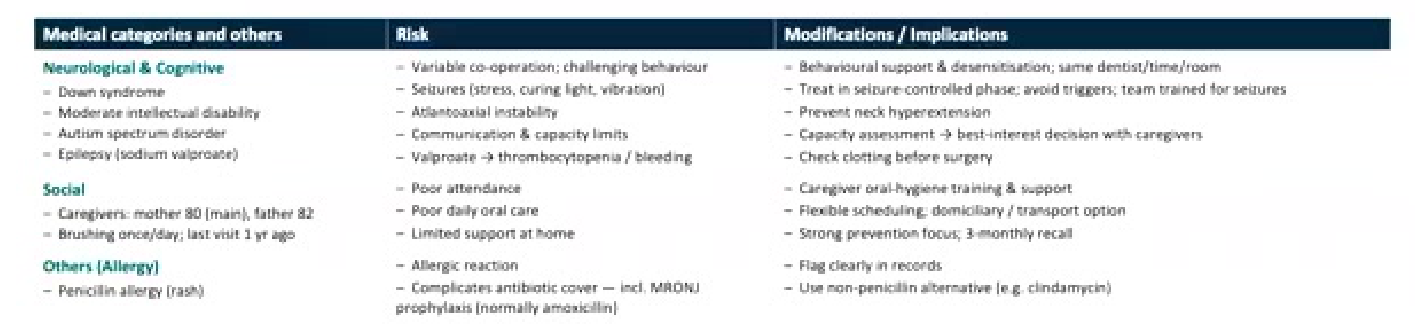
Respiratory111
- Childhood asthma; allergic rhinitis / eczema (atopy)
- Risks: asthmatic attack; poor healing if on steroids; reduced supine tolerance
- Modifications: ask patient to bring inhaler; prophylactic dose pre-op; avoid triggers (cold air, dust); late-morning appointments; semi-reclined if needed
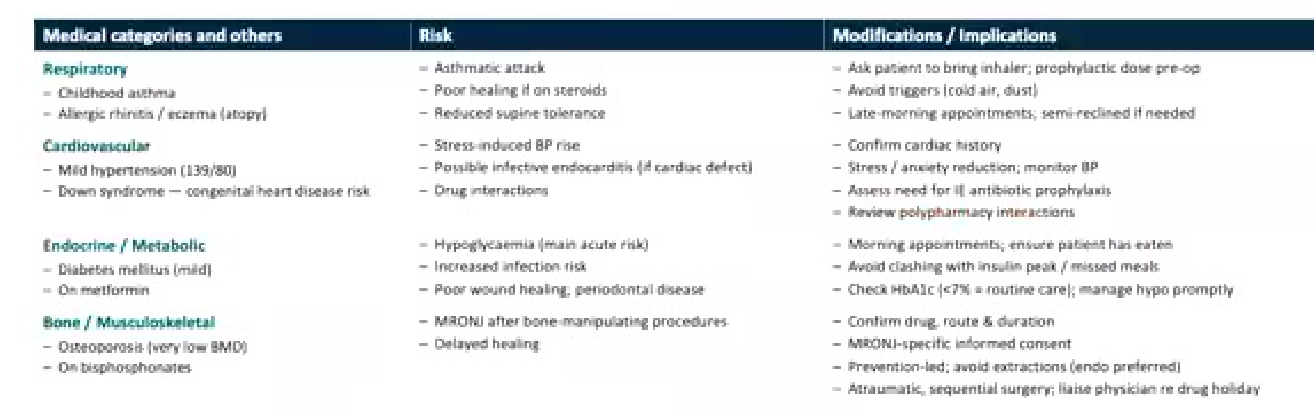
Cardiovascular
- Mild hypertension (139/80); Down syndrome – congenital heart disease risk
- Risks: stress-induced BP rise; possible infective endocarditis (if cardiac defect); drug interactions
- Modifications: confirm cardiac history; stress / anxiety reduction; monitor BP; assess need for antibiotic prophylaxis; review polypharmacy interactions
Endocrine / Metabolic
- Diabetes mellitus (mild); on metformin
- Risks: hypoglycaemia (main acute risk); increased infection risk; poor wound healing, periodontal disease
- Modifications: morning appointments; ensure patient has eaten; avoid clashing with insulin peak / missed meals; check HbA1c (<7% = routine care); manage hypo promptly
Bone / Musculoskeletal
- Osteoporosis (very low BMD); on bisphosphonates
- Risks: MRONJ after bone-manipulating procedures; delayed healing
- Modifications: confirm drug, route & duration; MRONJ-specific informed consent; prevention-led; avoid extractions (endo preferred); atraumatic, sequential surgery; liaise physician re drug holiday
| Medical categories and others | Risk | Modifications / Implications |
|---|---|---|
| Neurological & Cognitive | ||
| – Down syndrome | – Variable co-operation; challenging behaviour | – Behavioural support & desensitisation; same dentist/time/room |
| – Moderate intellectual disability | – Seizures (stress, curing light, vibration) | – Treat in seizure-controlled phase; avoid triggers; team trained for seizures |
| – Autism spectrum disorder | – Atlantocoaxial instability | – Prevent neck hyperextension |
| – Epilepsy (sodium valproate) | – Communication & capacity limits | – Capacity assessment → best-interest decision with caregivers |
| – Valproate → thrombocytopenia / bleeding | – Check clotting before surgery | |
| Social | ||
| – Caregivers: mother 80 (main), father 82 | – Poor attendance | – Caregiver oral-hygiene training & support |
| – Brushing once/day; last visit 1 yr ago | – Poor daily oral care | – Flexible scheduling; domiciliary / transport option |
| – Limited support at home | – Strong prevention focus; 3-monthly recall | |
| Others (Allergy) | ||
| – Penicillin allergy (rash) | – Allergic reaction | – Flag clearly in records |
| – Complicates antibiotic cover – incl. MRONJ prophylaxis (normally amoxicillin) | – Use non-penicillin alternative (e.g. clindamycin) |
Bisphosphonate Route and Incidental Findings112
Most likely ORAL (per os) for osteoporosis
| Category | Details |
|---|---|
| ORAL (PO) | Osteoporosis is treated with low-potency oral bisphosphonates. |
| Typical agents: alendronate (e.g. 70 mg weekly), risedronate, ibandronate. | |
| Taken as a daily, weekly or monthly tablet. | |
| Low MRONJ risk: ~0.001–0.01% in osteoporosis patients. | |
| Risk rises after ≥5 years of use or with extra risk factors. | |
| Compare: IV route | Intravenous bisphosphonates (zoledronate, pamidronate, IV ibandronate) are used mainly in cancer / bone metastases — and sometimes annually for osteoporosis. |
| High-potency / IV use carries a much higher MRONJ risk in oncology patients. | |
| MRONJ risk depends on drug type & potency, ROUTE, duration and the underlying disease. |
An incidental finding that flags whole-patient risks for dental care
Sign of Overall Self-Care / Neglect113
Thickened, discoloured, overgrown nails suggest limited daily personal care — consistent with brushing only once a day and reliance on elderly caregivers. Predicts poor oral hygiene → reinforces prevention and caregiver training.
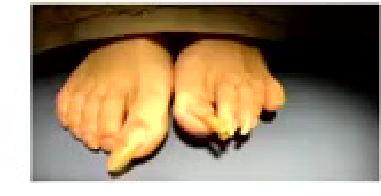 | 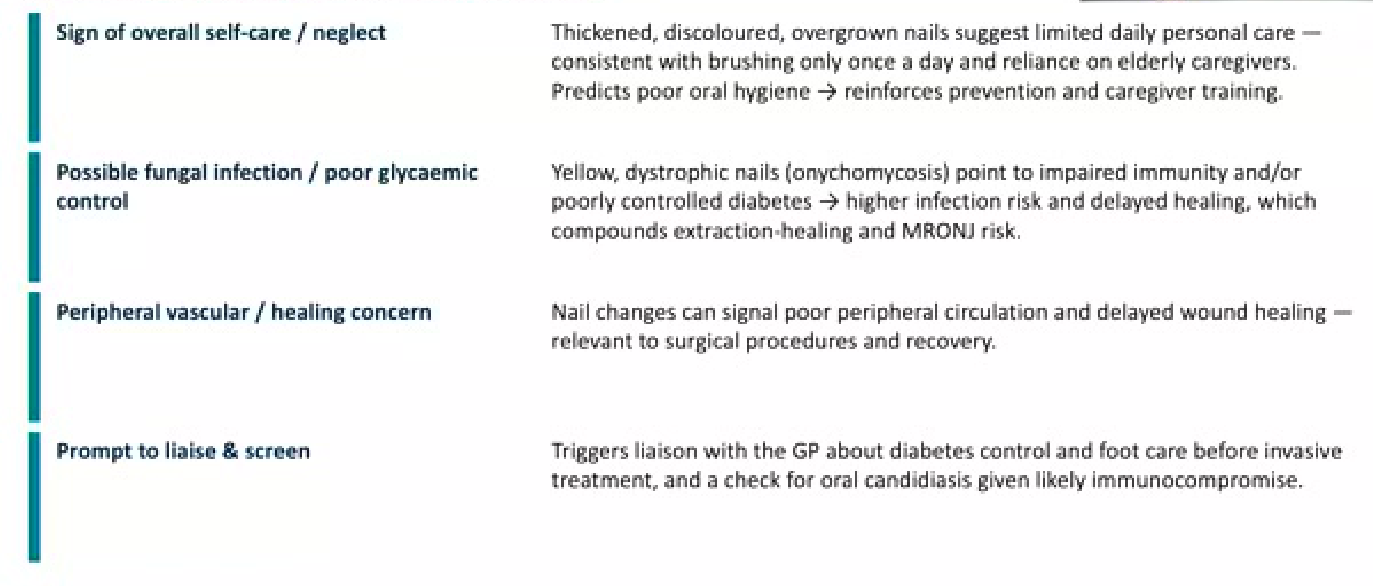 |
Possible Fungal Infection / Poor Glycaemic Control
Yellow, dystrophic nails (onychomycosis) point to impaired immunity and/or poorly controlled diabetes → higher infection risk and delayed healing, which compounds extraction-healing and MRONJ risk.
Peripheral Vascular / Healing Concern
Nail changes can signal poor peripheral circulation and delayed wound healing — relevant to surgical procedures and recovery.
Prompt to Liaise & Screen
Triggers liaison with the GP about diabetes control and foot care before invasive treatment, and a check for oral candidiasis given likely immunocompromise.
Behavioural Supports114115116117118
From least to most restrictive — tailored to this patient
| Behavioural support | Risks / limitations for THIS patient |
|---|---|
| Communication, acclimatisation & desensitisation (tell–show–do, social stories, pictograms, visual timer) | Least restrictive and first-line — but time-consuming and needs multiple visits; autism brings resistance to change; depends heavily on elderly caregivers; possible pain insensitivity can mask problems; may not achieve cooperation for invasive treatment. |
| Inhalation sedation (nitrous oxide / oxygen) | Nasal hood often fits poorly due to mid-face hypoplasia in Down syndrome; may be rejected by an autistic patient (facial contact); textbook advises caution/avoidance of nitrous oxide in epilepsy; still requires nasal breathing and some cooperation. |
| Conscious / IV sedation | Response is unpredictable — a paradoxical reaction can occur in autism/intellectual disability; must assess cardiac disease, respiratory function, hypotonia and OSA risk; cannulation needs cooperation; capacity / best-interests required. |
| Behavioural support | Risks / limitations for THIS patient |
|---|---|
| Clinical holding | Only with consent or a best-interests decision (patient lacks capacity); must be least-restrictive, by trained staff and documented; can escalate distress/trauma; must avoid neck hyperextension (atlantoaxial instability); suitable only for short, safe procedures. |
| General anaesthesia | Highest-risk option: difficult intubation (mid-face hypoplasia), atlantoaxial instability on positioning, cardiac & respiratory comorbidity, diabetes/fasting management and epilepsy anaesthetic-agent cautions; needs a hospital setting and a best-interests decision — but allows comprehensive treatment in one visit, reducing repeat exposure. |
- Atraumatic restorative techniques and silver diamine fluoride where appropriate Extron
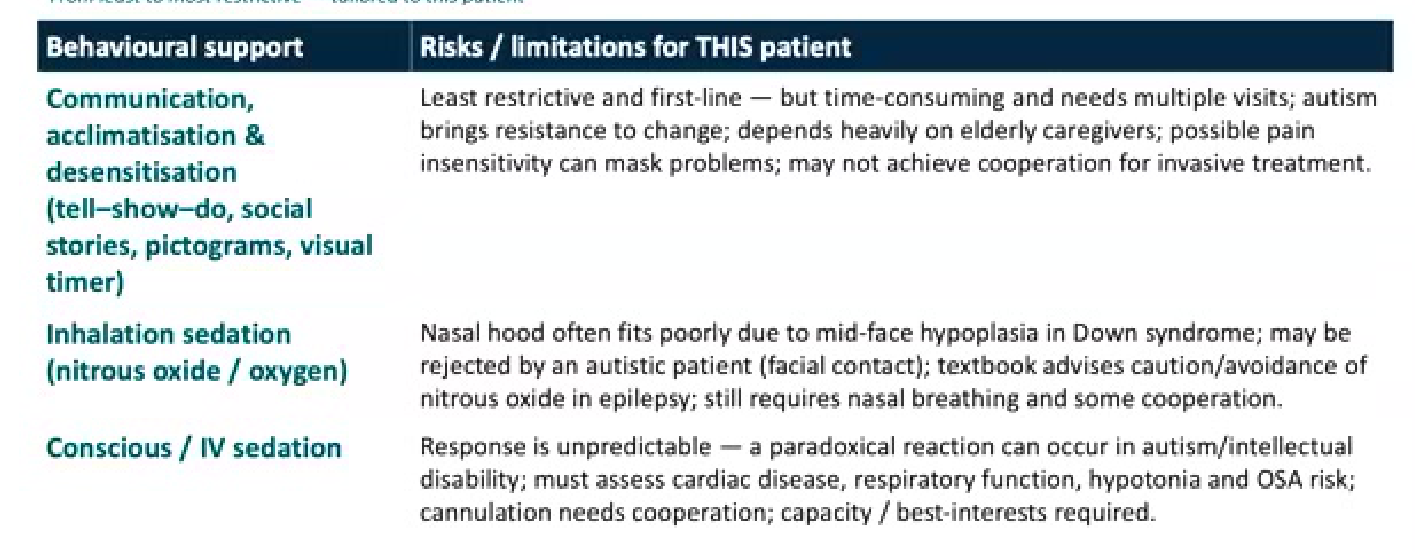 | 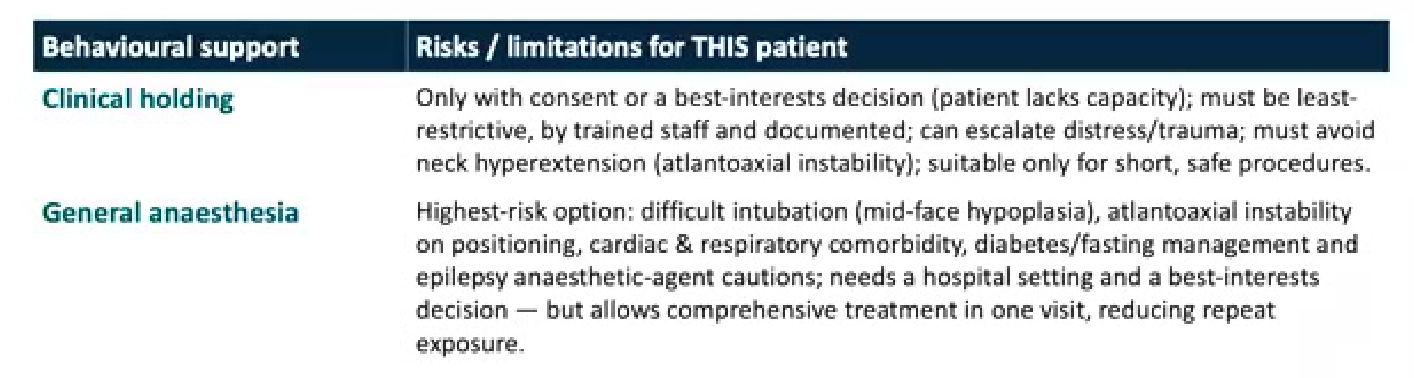 |
Case Presentation: 45 y.o. Male119120121122123124125126127128129130131132
Medical History:
- Down’s syndrome
- Moderate intellectual disability
- Autism spectrum disorder
- Epilepsy
- Allergic rhinitis
- Eczema
- Childhood asthma
- Mild HTN (baseline 139/80)
- Diabetes mellitus, mild
- Osteoporosis (very low BMD)
Medications: Epilin, bisphosphonates, metformin
Drug Allergy: Penicillin (rashes)
Dental History:
- Occasional toothbrushing, once a day
- Last visit 1 year ago
Social History:
- 80-year-old mum is main caregiver
- 82-year-old dad, cab driver
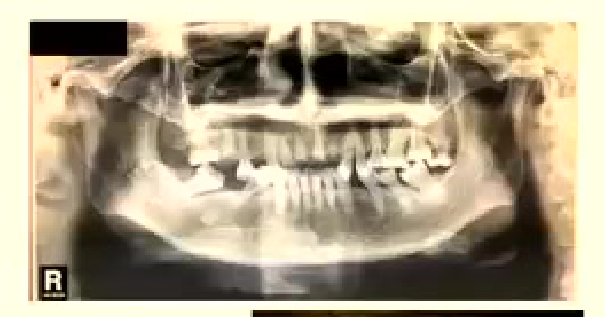
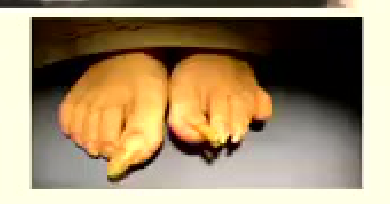




Discussion Questions
- Create a Medical Category – Risk Assessment – Modifications table.
- What type of drug route would bisphosphonates likely be?
- You saw the patient’s toenail whilst having dental treatment — how do you think this can affect our dental treatment delivery?
- Consider different types of behavioural supports — could you list the risk/limitations of each based on pat
Lecturer — Anaesthetic Referral
General anaesthesia may still be possible for medically complex patients, but referral depends on the patient’s overall risk and available facilities.
- Relevant considerations include ASA status, airway risk, medical comorbidities, an appropriate anaesthetist, hospital facilities, blood tests and medical clearance.
- High-risk patients may require an intensivist anaesthetist and a hospital setting.
- The anaesthetist may assess the airway, full blood count, liver function, renal function and overall medical status.
- If the risk is too high, the anaesthetist may decline the procedure.
Lecturer — Slide Planning
The presentation should contain approximately 24 to 30 slides; more than 30 slides may prevent completion within the allocated time.
- Include a title page, medication details, dental implications, oral history, treatment options, a management plan, reflection, and references.
Lecturer — Examination Documentation
The medical history should be presented in a table containing the medical condition, medication, dosage, frequency, mechanism of action, and dental implication.
- A missing dosage or frequency was considered an incomplete medical history.
- Include straight-on facial and right and left profile photographs, intraoral straight-on and occlusal views, soft-tissue photographs, and radiographs with dates.
- If there is no prosthesis, state that it is not applicable; if one is present, include photographs.
Lecturer — Examiner Questions
Examiners may ask questions beyond the exact material shown in the presentation, so students should understand the medical implications of their patient’s conditions rather than simply reading the slides.
- The presentation should be condensed without omitting key information.
- Treatment options and management should be organised clearly, while unnecessary detail should be removed.
Summative Case Presentation Format and Assessment
Presentation Format133134135136137138139140141142143144145146147148149150151152153154155156157
SUMMATIVE CASE PRESENTATION FORMAT OCTOBER 2026
- Presenting Complaint
- History of Presenting Complaint
- Medical History
- Dental History
- Oral Hygiene
- Social History
- Extra-Oral Exam
BR 2026
RETURN TO OSCOP
HDMI 4K
DENT5311 — SUMMATIVE CASE PRESENTATION
Student5311 — PRESENTATION FORMAT OCTOBER 2026
- Type of Complaint
- Examination
- Examination
- Presenting Complaint
- History of Presenting Complaint
- Medical History
- Dental History
- Oral Hygiene
- Social History
- Extra-Oral Examination
- Intra-Oral Examination
- Occlusion
- Dental Prosthesis
- Tooth Charting
- Periodontal Charting
- Radiographs
- Caries Risk Assessment
- Diet Assessment
- Plaque Score
- Saliva Assessment
- Periodontal Risk Assessment
DENTS311 — SUMMATIVE CASE PRESENTATION FORMAT OCTOBER 2025
- Presenting Complaint
- History of Presenting Complaint
- Medical History
- Dental History
- Oral Hygiene
- Social History
- Extra-Oral Examination
- Intra-Oral Examination
SUMMATIVE CASE PRESENTATION FORMAT OCTOBER 2025
- Presenting Complaint
- History of Presenting Complaint
- Medical History
- Dental History
- Oral Hygiene
- Social History
- Extra-Oral Examination
- Intra-Oral Examination
- Occlusion
- Dental Prosthesis
- Tooth Charting
Summative case presentation
- Presenting Complaint
- History of Presenting Complaint
- Medical History
- Dental History
- Oral Hygiene
- Social History
- Extra-Oral Examination
- Intra-Oral Examination
- Occlusion
- Dental Prosthesis
- Tooth Charting
- Periodontal Charting
- Radiographs
- Caries Risk Assessment
- Diet Assessment
- Plaque Score
- Saliva Assessment
- Periodontal Risk Assessment
- Prognosis
Person cleaning printer with black brush over paperwork labeled “Sinus Health”
SUMMATIVE
Zoom Out
SUMMATIVE CASE
-
Presenting
-
History of P
-
Medical H
-
Dental His
-
Oral H
-
S
-
History of Presenting Complaint
-
Medical History
-
Dental History
-
Oral Hygiene
-
Social History
-
Extra-Oral Examination
-
Intra-Oral Examination
-
Occlusion
-
Dental Prosthesis
-
Tooth Charting
-
Periodontal Charting
| 2. History of Present... |
| 3. Medical History |
| 4. Dental History |
| 5. Oral Hygiene |
| 6. Social History |
| 7. Extra-Oral Examination |
| 8. Intra-Oral Examination |
| 9. Occlusion |
| 10. Dental Prosthesis |
| 11. Tooth Charting |
| 12. Periodontal Charting |
| 13. Radiographs |
| 14. Caries Risk Assessment |
| -Diet Assessment |
| -Plaque Score |
| -Saliva Assessment |
| 15. Periodontal Risk Assessment |
| 16. Prognosis |
| 17. Problem List |
| -Aesthetics |
| -Host-related |
| -Pathology |
| -Morphology |
| 18. Diagnoses |
DENT5311
| 1. Presenting Complaint |
| 2. History of Presenting Complaint |
| 3. Medical History |
| 4. Dental History |
| 5. Oral Hygiene |
| 6. Social History |
| 7. Extra-Oral Examination |
DENT5311
SUMMATIVE CASE PRESENTATION FORMAT OCTO…
| 1. Presenting Complaint |
| 2. History of Presenting Complaint |
| 3. Medical History |
| 4. Dental History |
| 5. Oral Hygiene |
| 6. Social History |
| 7. Extra-Oral Examination |
| 8. Intra-Oral Examination |
| 9. Occlusion |
| 10. Dental Prosthesis |
| 11. Tooth Charting |
| 12. Periodontal Charting |
| 13. Radiographs |
| 14. Caries Risk Assessment |
| -Diet Assessment |
| -Plaque Score |
| -Saliva Assessment |
| 15. Periodontal Risk Assessme... |
| 16. Prognosis |
| 17. Problem List |
| -Aesthetics |
| -Host-related |
| -Pathology |
| -Morphology |
| 18. Diagnoses |
| 19. Treatment Options |
| 20. Management Plans (T... |
| 21. Reflection |
DENT5311
Summative Case Presentation Format
DENT 5311


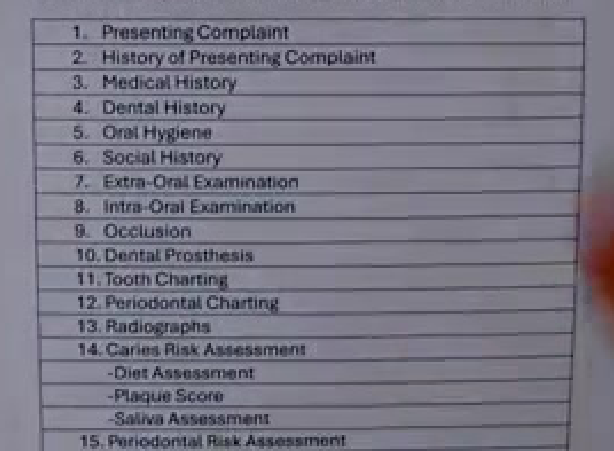


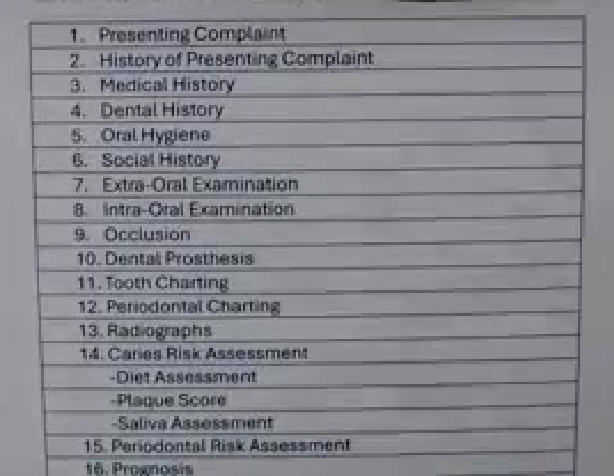
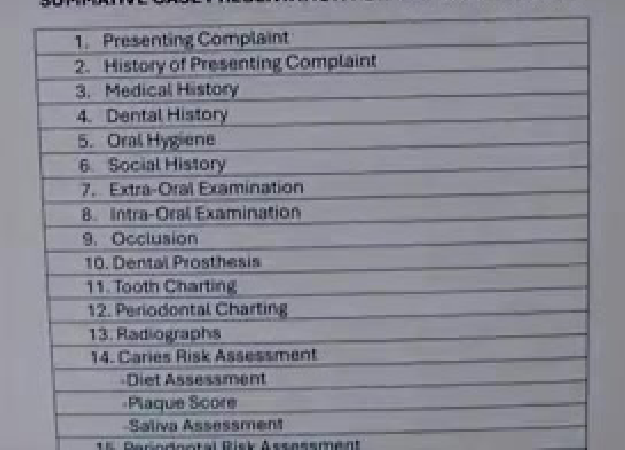
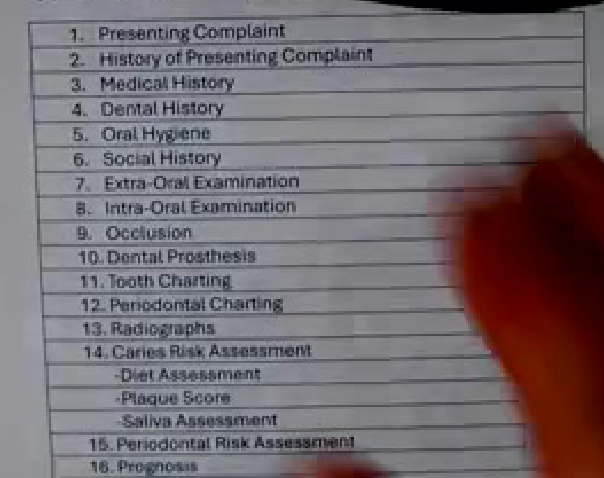
October 2026
Blurry grayscale image with undefined shapes and tear痕迹.
Assessment Overview158
Pass mark of 50%.
Handwritten annotations:
- 30%. Clinic-Pebblepad
- 70%. Summative Case Presentation
ive assessments. The assessments will be delayed until […] ssion, course completion, and/or graduation.
Assessment overview
verall unit and each module individually must be passed at a pass mark of 50%. If a Module is not passed, the of Examiners will assess the individual assessments and determine eligibility for supplementary or remedial ssments.
| Module | Unit Weighting |
|---|---|
| Clinical Dental Practice (CDP4) | 40% |
| Dento-alveolar and Maxillofacial Trauma (TRAUMA) | 10% |
| Public Health Dentistry 1 (PHD1) | 10% |
[Handwritten annotation beside “Clinical Dental Practice (CDP4) 40%”:]
[Bottom URL footer:] … blackboard.com/bbcswebdav/institution/Unit_Outlines_2026/DENT5311_TS-B-3_2026/DENT5311_TS-B-3_2026_Unit… 6/20
[Yellow sticky note text:] Portfolio is Formative P/F
ment Overview
all unit and each module individually must be passed at a pass mark of 50%. If a Module is not passed, the Examiners will assess the individual assessments and determine eligibility for supplementary or remedial ents.
Unit Weighting
- Dental Practice (CDP4) 40%
- alveolar and Maxillofacial Trauma (TRAUMA) 10%
- Health Dentistry 1 (PHD1) 10%
[Post-it note] Portfolio is Formative P/F
-
Dentoalveolar and Maxillofacial Trauma (Trauma) 15%
-
Public Health Dentistry 1 (PHD1) 15%
-
Dento-alveolar and Maxillofacial Trauma (TRAUMA) 10%
-
Public Health Dentistry 1 (PHD1) 10% www.cse…
- Assessment overview
The overall unit and each module individually must be passed at a pass mark of 50%. If a Module is not passed, the Board of Examiners will assess the individual assessments and determine eligibility for supplementary or remedial assessments.
Module Unit Weighting
- Clinical Dental Practice (CDP4) 40%
- Dento-alveolar and Maxillofacial Trauma (TRAUMA) 10%
- Public Health Dentistry 1 (PHD1) 10%
- Clinic - Pebblepad
- Summative Case Presentation
- Assessment overview
Portfolio is Formative P/F
Hand with yellow sticky note in right corner
complete formative assessments, clinical sessions, activities and/or any other in the assessment, they will be ineligible to sit the final assessment. It is make-up all missed clinical, pre-clinical sessions and any other activities assessments will be delayed until the student has completed them as ion, and/or graduation.
nt overview
and each module includes
[Sticky note text:] Efolin IS Formative P/F
* Cases of unsatisfactory results in failed component... decide if the student can be granted a Supplementary assessment.
Students who fail one or more Modules in DENTS311 will need to defer Semester 1 of the following year and repeat all Modules in DENTS311 if they wish to continue in the DMD program (a remediation plan must be arranged for students before students can attend clinical sessions after an extended approved leave).
If a student has been unable to complete formative assessments, clinical sessions, activities and/or any other associated preparation in the module prior to the assessment, they will be ineligible to sit the final assessment. It is the student's responsibility to complete, and make-up all missed clinical, pre-clinical sessions and any other activities to be eligible to sit summative assessments. The assessments will be delayed until the student has completed them and therefore it may delay progression, course completion, and/or graduation.
1. Assessment overview
The overall unit and each module individually must be passed at a one-time... Board of Examiners...
Lecturer — Anaesthetic Choice
Adrenaline-containing local anaesthetic provides deeper and longer pain control than 3% lidocaine without adrenaline. Inadequate pain control may increase anxiety and contribute to medical complications.
Lecturer — Presentation Conduct
Students were advised to present in an organised manner and include references.
- Dress appropriately.
- Avoid identifying patients in the presentation.
- Limit patient identification to sex and age; photographs must have the eyes blocked out, and patient numbers or other identifying details must not be included.
summative assessments. The assessments will be delayed until the student has completed them, which may delay progression, course completion, and/or graduation.
1. Assessment overview
The overall unit and each module individually must be passed at a pass mark of 50%. If a Module is not passed, the Board of Examiners will assess the individual assessments and determine eligibility for supplementary or remedial assessments.
| Module | Unit Weighting |
|---|---|
| Clinical Dental Practice (CDP4) | 40% |
| Dento-alveolar and Maxillofacial Trauma (DAMAT) | 10% |
| Public Health Dentistry |
(Handwritten note next to CDP4 40%):
progression, course completion, and/or graduation.
- Assessment overview
The overall unit and each module individually must be passed at a pass mark of 50%. If a Module is not passed, the Board of Examiners will assess the individual assessments and determine eligibility for supplementary or remedial assessments.
| Module | Unit Weighting | |
|---|---|---|
| - Clinical Dental Practice (CDP4) | 40% | |
| - Dento-alveolar and Maxillofacial Trauma (TRAUMA) | 10% | |
| - Public Health Dentistry 1 (PHD1) | 10% |
*8. Clinic-Rubblepad 101. The summative case presentation must be passed at a pass mark of 50%. If a Module is not passed, the Board of Examiners shall determine eligibility for supplementary or remedial examinations.
progression, course completion, and/or graduation.
- Assessment overview
progression, course completion, and/or graduation.
- Assessment overview
(2)
Dental X-ray showing faint root canal anatomy with artifact, grayscaleAssesssment overview
Phonological assessment
Word level
Syllables
Syllable division
Stress
Rhythm
Sentences
Intonation
Pausing and length
Production of difficult sounds
Production of difficult sounds: phonological analysis
Consonant cluster
Fricativisation
Elision
Contraction
Pressure changes
The instruction two critical rules dictate that when text is sparse or only exists in the context of a figure, the whole page should be treated as a figure with a brief description wrapped in tags, and nothing else should be output.
A blank sheet of paper in shadow with the top of a paper visible in the bottom right.
Based on the image provided and the strict output rules (image with only sparse/no readable text), here is the output:
Case Record Structure159160161162163164165166167168169170171172173174175176177178179180181
| Item | |
|---|---|
| SUMMATIVE CASE | |
| 1. | Presenting |
| 2. | History of |
| 3. | Medical |
| 4. | Dental |
| 5. | Oral Hygiene |
| 6. | Social |
| 7. | Extra-Oral |
| 8. | Intra-Oral |
| 9. | Occlusion |
| 10. | Dentist |
| 11. | Tooth Charting |
| 12. | Periodontal |
| 13. | Radiographs |
| 14. | Caries Risk Assessment |
| - Diet Assessment | |
| - Plaque Score | |
| - Saliva Assessment | |
| 15. | Periodontal Risk Assessment |
| 16. | Prognosis |
| 17. | Problem List |
| - Aesthetics | |
| - Host-related | |
| - Pathology | |
| - Morphology | |
| 18. | Diagnoses |
| 19. | Treatment Options |
| 20. | Management / Plan |
| 21. | Reflection |
SUMMATIVE CASE RECORD (ADVANCED)
| 1. | Presenting Complaint | |
| 2. | History of Presenting Complaint | |
| 3. | Medical History | |
| 4. | Dental History | |
| 5. | Oral Hygiene | |
| 6. | Social History | |
| 7. | Extra-Oral Excerpts/Notes | |
| 8. | Intra-Oral Excerpts/Notes | |
| 9. | Occlusion | |
| 10. | Dental Prosthetics | |
| 11. | Tooth Charting | |
| 12. | Periodontal Charting | |
| 13. | Radiographs | |
| 14. | Caries Risk Assessment | |
| -Diet Assessment | ||
| -Plaque Score | ||
| -Saliva Assessment | ||
| 15. | Periodontal Risk Assessment | |
| 16. | Prognosis | |
| 17. | Problem List | |
| -Host-related | ||
| -Pathology | ||
| -Morphology | ||
| 18. | Diagnoses | |
| 19. | Treatment Options | |
| 20. | Management Plans | |
| 21. | Reflection |
SUMMATIVE CASE
- Presenting
- History of P
- Medical Hist
- Dental Hist<<
- Oral Hygiene
- Social History
- Extra-Oral Exa
- Intra-Oral Exa
- Occlusion
- Dental Prosth [11. Tooth Charting
- Periodontal Cha
- Radiographs
- Caries Risk Assess
- Diet Assessment
- Plaque Score
- Saliva Assessment
- Periodontal Risk A
- Prognosis
- Problem List
- Aesthetics
- Host-related
- Pathology
- Morphology
- Diagnoses
- Treatment Options
- Management Plans (TD
- Reflection
Table of Contents (Partial)
- Oral Hygiene
- Social History
- Extra-Oral Examination
- Intra-Oral Examination
- Occlusion
- Dentition
- Tooth Charting
- Periodontal Charting
- Radiographs
- Caries Risk Assessment
- Diet Assessment
- Plaque Score
- Saliva Assessment
- Periodontal Risk Assessment
- Prognosis
- Problem List
- Aesthetics
- Treatment Options
- Biologic
- Psychologic
- Morphologic
- Diagnoses
- Management Plans (Financial)
- Referral
- References
SUMMATIVE CASE PRESENTATION FORMAT OCTOBER 2020
| 1. Presenting Complaint |
SUMMATIVE CASE PRESENTATION FORMAT OCTOBER 2026
| 1. Presenting Complaint |
| 2. History of Presenting Complaint |
| 1. Presenting Complaint |
| 2. History of Presenting Complaint |
| 3. Medical History |
| 4. Dental History |
- Presenting Complaint
- History of Presenting Complaint
- Medical History
DENT5311
| 1. | Presenting Complaint |
| 2. | History of Presenting Complaint |
| 3. | Medical History |
| 4. | Dental History |
| 5. | Diet History |
| 1. Presenting Complaint |
| 2. History of Presenting Complaint |
| 3. Medical History |
| 4. Dental History |
| 5. Oral Hygiene |
| 6. Social History |
- Presenting Complaint
- History of Presenting Complaint
- Medical History
- Dental History
- Oral Hygiene
- Social History
| 1. | Presenting Complaint |
| 2. | History of Presenting Complaint |
| 3. | Medical History |
| 4. | Dental History |
| 5. | Oral Hygiene |
| 6. | Social History |
| 7. | Extra-Oral Examination |
| 8. | Intra-Oral Examination |
-
Presenting Complaint
-
History of Presenting Complaint
-
Medical History
-
Dental History
-
Oral Hygiene
-
Social History
-
Extra-Oral Examination
-
Intra-Oral Examination
-
Occlusion
-
Dental Prosthesis
-
Occlusion
-
Dental Prosthesis
-
Tooth Charting
-
Periodontal Charting
-
Extra-Oral Examination
-
Intra-Oral Examination
-
Occlusion
-
Dental Prosthesis
-
Tooth Charting
-
Periodontal Charting
| 7. Extra-Oral Examination | |
| 8. Intra-Oral Examination | |
| 9. Occlusion | |
| 10. Dental Prosthesis | |
| 11. Tooth Charting | |
| 12. Periodontal Charting |
| 7. Extra-Oral Examination |
| 8. Intra-Oral Examination |
| 9. Occlusion |
| 10. Dental Prosthesis |
| 11. Tooth Charting |
| 12. Periodontal Charting |
| 13. Radiographs |
- Extra-Oral Examination
- Intra-Oral Examination
- Occlusion.
- Dental Prosthesis
- Tooth Charting
- Periodontal Charting
- Radiographs
- Caries Risk Assessment
- Diet Assessment
- Plaque Score
- Saliva Assessment
-
Periodontal Risk Assessment
-
-
Extra-Oral Examination
-
Intra-Oral Examination
-
Occlusion
-
Dental Prosthesis
-
Tooth Charting
-
Periodontal Charting
-
Radiographs
-
Caries Risk Assessment
- Diet Assessment
- Plaque Score
- Saliva Assessment
- Periodontal Risk Assessment
- Prognosis
- Problem List
- Aesthetics
- Host-related
- Pathology
- Morphology
- Diagnosis
- Treatment Plan





Presentation Notes182183184185186187188
SUMMATIVE CASE PRESENTATION NOTES:
-
Your SUMMATIVE Case Presentations will last 45 minutes: 20 Minutes for you to Present 25 Minutes for Examiners’ Questions They will run from Monday October 12- Friday October 16 -schedules will be provided in late September or early October.
-
Arrange your presentation as per the HEADINGS in my HO and the Ucl sessions: The Examiners will expect it to be in this order.
Lecturer — Patient Selection
Students were encouraged to treat each patient as a potential case-presentation patient and work each one up systematically, even if it was ultimately not used.
- Suitable patients might have periodontal disease, restorative needs, endodontic treatment, or other substantial treatment needs.
- Study models may be taken when relevant, especially for prosthodontic cases, and should be brought in and photographed.
(Handwritten red notes:)
- 25/30 check marks - will be calibrated so everyone can see. To help you passing a sample- 14.
Overhead view showing a stack of white papers or documents on a flat surface.



Clinical Cases
Case: Complex respiratory and systemic history patient
Question
Scenario: A patient with severe poorly controlled asthma requiring hospital admissions, rheumatoid arthritis, a smoking habit, reduced BMI, visual impairment, and social barriers including financial constraints and irregular attendance.
What’s shown: A comprehensive medical and social history detailing respiratory, musculoskeletal, and systemic risks, alongside dental findings of oral candidiasis, rampant caries, retained roots, and an old upper denture.
Consider: How to categorize the medical history, assess the associated risks, and determine the necessary modifications for dental treatment and behavior management.
Answer
Observations:
- Respiratory risk of acute asthma attacks and delayed healing from steroid inhalers.
- Musculoskeletal limitations from rheumatoid arthritis affecting oral hygiene and chair positioning.
- Systemic risks from smoking, reduced BMI (malnutrition), and visual impairment (fall risk, instruction comprehension).
- Dental risks including candidiasis, high caries risk, and denture stomatitis.
- Social barriers affecting attendance and post-operative support.
Reasoning: The lecturer and students break down the patient’s complex profile into medical categories (respiratory, musculoskeletal, social) to identify specific risks. Modifications include stress reduction protocols, bringing inhalers, adjusting chair positions for arthritis, providing accessible instructions for visual impairment, and prioritizing urgent care while considering financial barriers.
Takeaway: Medically compromised patients require a structured approach to categorize their conditions, assess specific risks, and implement tailored modifications to ensure safe and effective dental care.
Case: Geriatric patient in palliative care
Question
Scenario: An 80-year-old female in palliative care with severe dysphagia, recurrent aspiration pneumonia, severe dementia, ischemic heart disease, and a history of 70 Grays radiation for laryngeal carcinoma.
What’s shown: A clinical scenario involving a bedridden patient with high aspiration risk, capacity issues, bleeding risk on antiplatelets, and a specific question regarding the extraction of an upper left first molar.
Consider: Whether the extraction is justified, how to manage the risks of aspiration, bleeding, and osteoradionecrosis, and how to navigate consent and capacity in an end-of-life care setting.
Answer
Observations:
- High risk of life-threatening aspiration from dental materials or mobile teeth.
- Risk of osteoradionecrosis (ORN) from previous radiotherapy.
- Bleeding risk managed locally rather than altering antiplatelet medications.
- Shift in treatment philosophy towards comfort, pain management, and eliminating acute infection rather than comprehensive restoration.
- Need to assess mental capacity and involve legal substitute decision-makers.
Reasoning: The decision to extract a tooth in a palliative, irradiated patient weighs the risks of ORN against the risks of leaving an infected or mobile tooth that could be aspirated or cause osteomyelitis. If the tooth is asymptomatic, prevention and ORN risk take priority. Consent requires following the legal hierarchy for decision-making when the patient lacks capacity.
Takeaway: In end-of-life and palliative care, the treatment philosophy must shift towards comfort and risk mitigation, carefully weighing the burdens of treatment against the benefits, and strictly adhering to legal frameworks for consent.
Case: Homeless ex-offender with multiple systemic conditions
Question
Scenario: A 64-year-old homeless ex-offender with Hepatitis C, latent TB, COPD, GORD, a history of IV drug use, and heavy alcohol consumption, presenting with poor oral hygiene.
What’s shown: A detailed medical and social history, including current medications (PPI, inhalers, TCM), lack of fixed address, and financial constraints.
Consider: The infection control implications, medication interactions affecting bleeding and liver function, and the social barriers to treatment success and adherence.
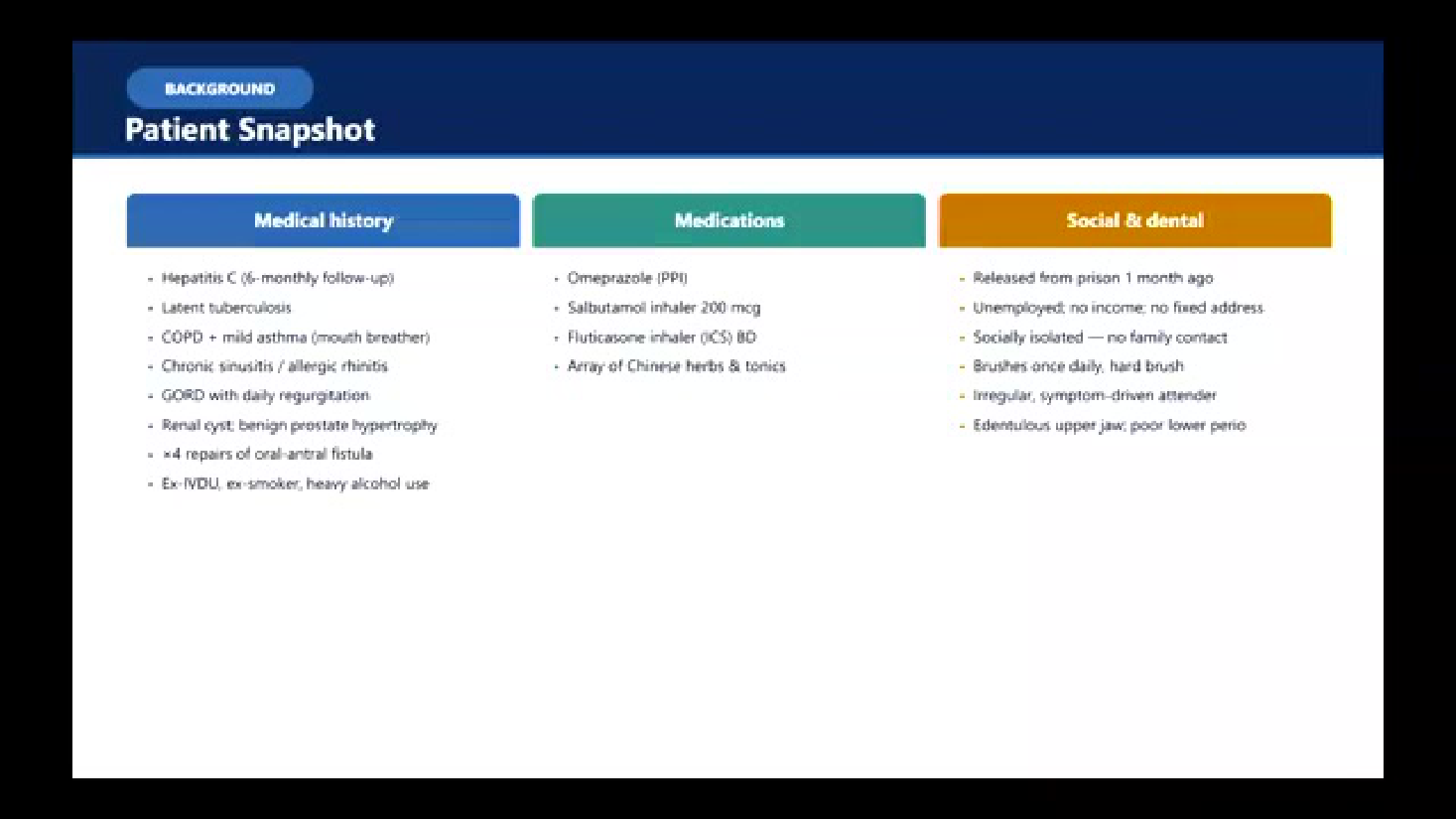
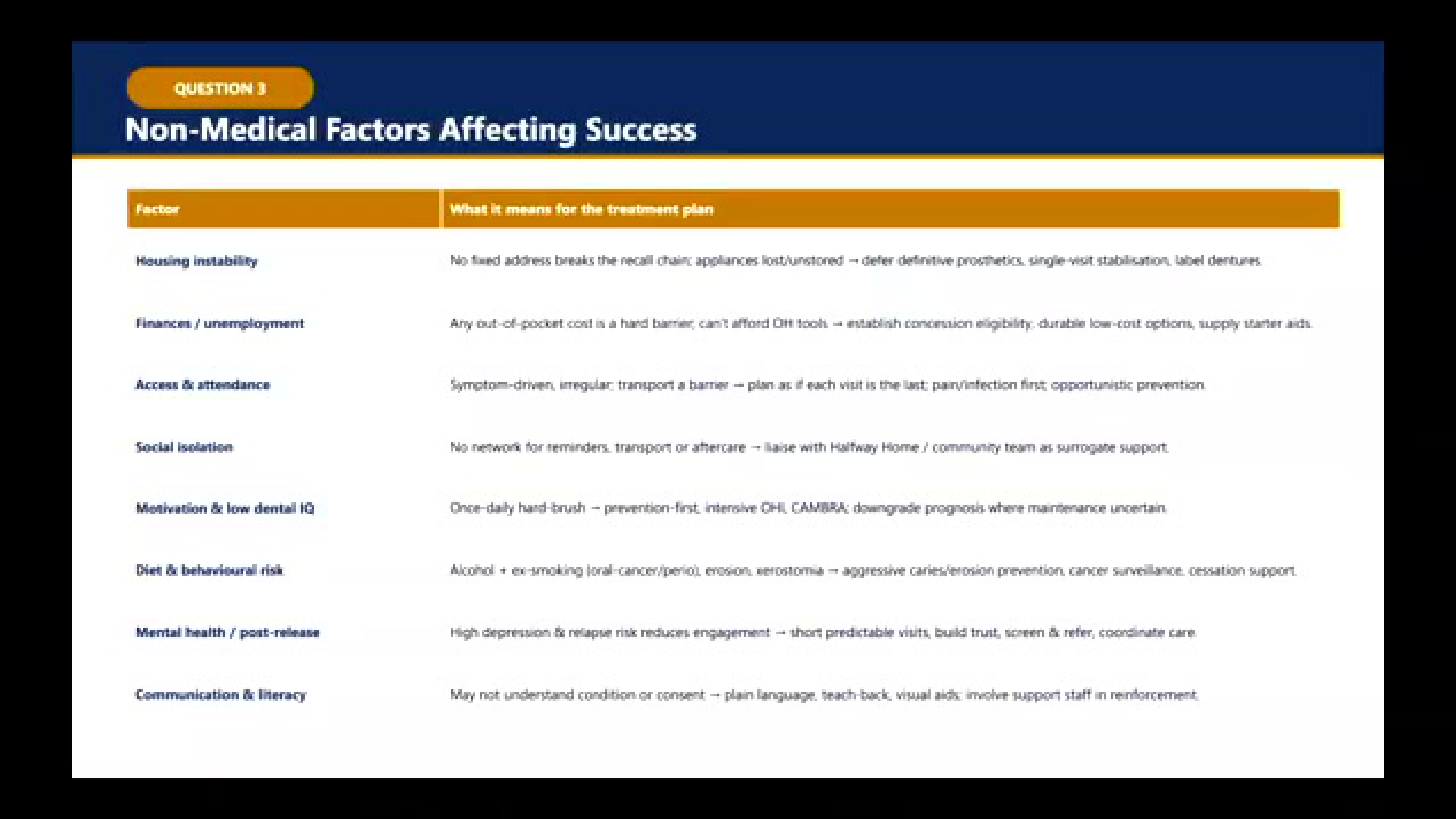
Answer
Observations:
- Hepatitis C and latent TB pose significant cross-infection risks, requiring strict precautions and potential airborne/droplet protocols.
- Liver impairment from Hepatitis C and alcohol affects drug metabolism and increases bleeding risk.
- TCM (e.g., ginkgo, ginger) may further increase bleeding time.
- COPD and asthma require careful positioning and avoidance of rubber dam if it compromises breathing.
- Social factors (homelessness, unemployment) severely limit treatment adherence and complex prosthodontic options.
Reasoning: The case highlights the intersection of medical complexity and social vulnerability. Medical modifications focus on avoiding hepatotoxic drugs (like NSAIDs), managing bleeding risks, and ensuring respiratory safety. Social modifications involve understanding the limitations of the mandatory aftercare scheme and prioritizing pain and infection control over comprehensive care.
Takeaway: Treating patients with complex medical and social histories requires strict infection control, careful medication management to avoid systemic complications, and realistic treatment planning that accounts for significant social barriers.
Case: Severe COPD and asthma patient at a charity clinic
Question
Scenario: A 67-year-old male ex-smoker with severe COPD (FEV1 38%), asthma, hypertension, and reduced BMI, presenting with crumbling teeth and prolonged oral neglect.
What’s shown: Spirometry results, chest X-ray findings (flattened diaphragm), mild hypoxemia, and a medical history including current use of 10mg prednisolone.
Consider: The respiratory and cardiovascular risk modifications, the implications of long-term steroid use, and managing social and financial barriers in a charity clinic setting.
Answer
Observations:
- Severe COPD and asthma pose a high risk of acute exacerbations, requiring stress reduction, short morning appointments, and inhaler availability.
- Cardiovascular risks from uncontrolled hypertension require monitoring and emergency kit availability.
- Long-term steroid use (prednisolone) raises the risk of adrenal crisis and oral candidiasis.
- Reduced BMI may indicate nutritional deficiencies affecting oral health.
- Financial and language barriers (speaks Hokkien) affect attendance and treatment options.
Reasoning: The lecturer guides the students to consider the additive effects of inhaled and oral steroids on adrenal suppression. Modifications include upright positioning, avoiding triggers, and using translators. Treatment is constrained by financial limitations, favoring direct restorations and preventive measures like high-fluoride toothpaste over indirect treatments.
Takeaway: Patients with severe respiratory and cardiovascular conditions require careful appointment scheduling, stress reduction, and awareness of medication side effects like adrenal suppression, while social barriers must dictate realistic, conservative treatment plans.
Case: Bariatric patient with multiple comorbidities
Question
Scenario: A female patient with a BMI >40, obstructive sleep apnea (OSA), asthma, hypertension, ischemic heart disease, diabetes, and reflux.
What’s shown: A list of systemic conditions, medications (including aspirin and CPAP use), and logistical challenges such as requiring special transport and having difficulty accessing posterior teeth.
Consider: Chair weight limits, positioning and airway management, medication modifications, and coordinating care for a patient with severe obesity and multiple comorbidities.
Answer
Observations:
- High BMI (>40) requires a bariatric chair (e.g., 500kg limit) and careful positioning to prevent airway obstruction, especially with OSA and reflux.
- OSA and obesity make supine positioning difficult and increase risks with sedation and opioids.
- Multiple comorbidities (diabetes, IHD, asthma) require monitoring of blood glucose, availability of GTN spray, and asthma triggers avoidance.
- Aspirin use increases bleeding risk, manageable with local hemostatic measures.
- Logistical issues like special transport and physical difficulty in oral hygiene require tailored advice and coordinated follow-up.
Reasoning: The physical constraints of obesity affect both the equipment needed (bariatric chair) and the clinical approach (upright positioning to maintain airway and prevent reflux). The combination of OSA, diabetes, and IHD necessitates careful monitoring and avoidance of certain medications. Behavioral and physical barriers to oral hygiene require practical adaptations.
Takeaway: Managing bariatric patients requires specific equipment, careful attention to airway and positioning, and a holistic approach that addresses both their multiple medical comorbidities and significant logistical challenges.
Case: Patient with Down syndrome and multiple medical/behavioral conditions
Question
Scenario: A 45-year-old male with Down syndrome, moderate intellectual disability, autism, epilepsy, diabetes, osteoporosis, and an atopic profile (asthma, eczema, allergic rhinitis, penicillin allergy).
What’s shown: A medical history including bisphosphonate use, elderly caregivers (80s), and clinical signs such as toenail changes indicating potential neglect or systemic issues.
Consider: Assessing MRONJ risk, managing behavioral challenges and consent, recognizing signs of systemic disease, and selecting appropriate behavioral and pharmacological supports.
Answer
Observations:
- Bisphosphonate use for osteoporosis carries a risk of MRONJ, likely oral route given the patient’s profile.
- Neurological and behavioral challenges (autism, epilepsy, head instability) affect cooperation, consent, and clinical handling.
- Atopic profile and penicillin allergy require careful drug selection and awareness of potential autoimmune overlaps.
- Toenail changes prompt investigation into diabetic control, peripheral vascular disease, and oral candidiasis.
- Elderly caregivers may struggle with attendance and daily oral care.
Reasoning: The lecturer and students discuss a stepped approach to behavioral management, from tell-show-do to inhalation/IV sedation, clinical holding, or GA. The physical signs (toenails) serve as a marker for systemic health (diabetes/peripheral circulation). The complexity of the patient’s medical and behavioral needs, combined with aging caregivers, suggests a need for multidisciplinary referral and simplified, acceptable dental care.
Takeaway: Patients with intellectual disabilities and complex medical histories require a stepped approach to behavioral management, careful attention to medication risks like MRONJ, and recognition that physical signs can indicate broader systemic health issues requiring medical liaison.
Footnotes
-
Original PDF page 1: W1 Case Scenarios of Me-s1-low slides, p.1 ↩
-
Original PDF page 2: W1 Case Scenarios of Me-s1-low slides, p.2 ↩
-
Original PDF page 3: W1 Case Scenarios of Me-s1-low slides, p.3 ↩
-
Original PDF page 4: W1 Case Scenarios of Me-s1-low slides, p.4 ↩
-
Original PDF page 5: W1 Case Scenarios of Me-s1-low slides, p.5 ↩
-
Original PDF page 6: W1 Case Scenarios of Me-s1-low slides, p.6 ↩
-
Original PDF page 7: W1 Case Scenarios of Me-s1-low slides, p.7 ↩
-
Original PDF page 8: W1 Case Scenarios of Me-s1-low slides, p.8 ↩
-
Original PDF page 9: W1 Case Scenarios of Me-s1-low slides, p.9 ↩
-
Original PDF page 12: W1 Case Scenarios of Me-s1-low slides, p.12 ↩
-
Original PDF page 10: W1 Case Scenarios of Me-s1-low slides, p.10 ↩
-
Original PDF page 86: W1 Case Scenarios of Me-s1-low slides, p.86 ↩
-
Original PDF page 87: W1 Case Scenarios of Me-s1-low slides, p.87 ↩
-
Original PDF page 88: W1 Case Scenarios of Me-s1-low slides, p.88 ↩
-
Original PDF page 11: W1 Case Scenarios of Me-s1-low slides, p.11 ↩
-
Original PDF page 13: W1 Case Scenarios of Me-s1-low slides, p.13 ↩
-
Original PDF page 14: W1 Case Scenarios of Me-s1-low slides, p.14 ↩
-
Original PDF page 15: W1 Case Scenarios of Me-s1-low slides, p.15 ↩
-
Original PDF page 16: W1 Case Scenarios of Me-s1-low slides, p.16 ↩
-
Original PDF page 17: W1 Case Scenarios of Me-s1-low slides, p.17 ↩
-
Original PDF page 18: W1 Case Scenarios of Me-s1-low slides, p.18 ↩
-
Original PDF page 19: W1 Case Scenarios of Me-s1-low slides, p.19 ↩
-
Original PDF page 22: W1 Case Scenarios of Me-s1-low slides, p.22 ↩
-
Original PDF page 23: W1 Case Scenarios of Me-s1-low slides, p.23 ↩
-
Original PDF page 24: W1 Case Scenarios of Me-s1-low slides, p.24 ↩
-
Original PDF page 25: W1 Case Scenarios of Me-s1-low slides, p.25 ↩
-
Original PDF page 26: W1 Case Scenarios of Me-s1-low slides, p.26 ↩
-
Original PDF page 27: W1 Case Scenarios of Me-s1-low slides, p.27 ↩
-
Original PDF page 28: W1 Case Scenarios of Me-s1-low slides, p.28 ↩
-
Original PDF page 29: W1 Case Scenarios of Me-s1-low slides, p.29 ↩
-
Original PDF page 30: W1 Case Scenarios of Me-s1-low slides, p.30 ↩
-
Original PDF page 31: W1 Case Scenarios of Me-s1-low slides, p.31 ↩
-
Original PDF page 32: W1 Case Scenarios of Me-s1-low slides, p.32 ↩
-
Original PDF page 33: W1 Case Scenarios of Me-s1-low slides, p.33 ↩
-
Original PDF page 34: W1 Case Scenarios of Me-s1-low slides, p.34 ↩
-
Original PDF page 35: W1 Case Scenarios of Me-s1-low slides, p.35 ↩
-
Original PDF page 36: W1 Case Scenarios of Me-s1-low slides, p.36 ↩
-
Original PDF page 37: W1 Case Scenarios of Me-s1-low slides, p.37 ↩
-
Original PDF page 38: W1 Case Scenarios of Me-s1-low slides, p.38 ↩
-
Original PDF page 39: W1 Case Scenarios of Me-s1-low slides, p.39 ↩
-
Original PDF page 40: W1 Case Scenarios of Me-s1-low slides, p.40 ↩
-
Original PDF page 41: W1 Case Scenarios of Me-s1-low slides, p.41 ↩
-
Original PDF page 42: W1 Case Scenarios of Me-s1-low slides, p.42 ↩
-
Original PDF page 43: W1 Case Scenarios of Me-s1-low slides, p.43 ↩
-
Original PDF page 44: W1 Case Scenarios of Me-s1-low slides, p.44 ↩
-
Original PDF page 45: W1 Case Scenarios of Me-s1-low slides, p.45 ↩
-
Original PDF page 46: W1 Case Scenarios of Me-s1-low slides, p.46 ↩
-
Original PDF page 47: W1 Case Scenarios of Me-s1-low slides, p.47 ↩
-
Original PDF page 48: W1 Case Scenarios of Me-s1-low slides, p.48 ↩
-
Original PDF page 49: W1 Case Scenarios of Me-s1-low slides, p.49 ↩
-
Original PDF page 50: W1 Case Scenarios of Me-s1-low slides, p.50 ↩
-
Original PDF page 51: W1 Case Scenarios of Me-s1-low slides, p.51 ↩
-
Original PDF page 53: W1 Case Scenarios of Me-s1-low slides, p.53 ↩
-
Original PDF page 52: W1 Case Scenarios of Me-s1-low slides, p.52 ↩
-
Original PDF page 54: W1 Case Scenarios of Me-s1-low slides, p.54 ↩
-
Original PDF page 55: W1 Case Scenarios of Me-s1-low slides, p.55 ↩
-
Original PDF page 56: W1 Case Scenarios of Me-s1-low slides, p.56 ↩
-
Original PDF page 57: W1 Case Scenarios of Me-s1-low slides, p.57 ↩
-
Original PDF page 58: W1 Case Scenarios of Me-s1-low slides, p.58 ↩
-
Original PDF page 59: W1 Case Scenarios of Me-s1-low slides, p.59 ↩
-
Original PDF page 60: W1 Case Scenarios of Me-s1-low slides, p.60 ↩
-
Original PDF page 61: W1 Case Scenarios of Me-s1-low slides, p.61 ↩
-
Original PDF page 62: W1 Case Scenarios of Me-s1-low slides, p.62 ↩
-
Original PDF page 63: W1 Case Scenarios of Me-s1-low slides, p.63 ↩
-
Original PDF page 64: W1 Case Scenarios of Me-s1-low slides, p.64 ↩
-
Original PDF page 65: W1 Case Scenarios of Me-s1-low slides, p.65 ↩
-
Original PDF page 66: W1 Case Scenarios of Me-s1-low slides, p.66 ↩
-
Original PDF page 67: W1 Case Scenarios of Me-s1-low slides, p.67 ↩
-
Original PDF page 68: W1 Case Scenarios of Me-s1-low slides, p.68 ↩
-
Original PDF page 71: W1 Case Scenarios of Me-s1-low slides, p.71 ↩
-
Original PDF page 72: W1 Case Scenarios of Me-s1-low slides, p.72 ↩
-
Original PDF page 73: W1 Case Scenarios of Me-s1-low slides, p.73 ↩
-
Original PDF page 74: W1 Case Scenarios of Me-s1-low slides, p.74 ↩
-
Original PDF page 75: W1 Case Scenarios of Me-s1-low slides, p.75 ↩
-
Original PDF page 76: W1 Case Scenarios of Me-s1-low slides, p.76 ↩
-
Original PDF page 77: W1 Case Scenarios of Me-s1-low slides, p.77 ↩
-
Original PDF page 78: W1 Case Scenarios of Me-s1-low slides, p.78 ↩
-
Original PDF page 79: W1 Case Scenarios of Me-s1-low slides, p.79 ↩
-
Original PDF page 80: W1 Case Scenarios of Me-s1-low slides, p.80 ↩
-
Original PDF page 81: W1 Case Scenarios of Me-s1-low slides, p.81 ↩
-
Original PDF page 82: W1 Case Scenarios of Me-s1-low slides, p.82 ↩
-
Original PDF page 83: W1 Case Scenarios of Me-s1-low slides, p.83 ↩
-
Original PDF page 89: W1 Case Scenarios of Me-s1-low slides, p.89 ↩
-
Original PDF page 90: W1 Case Scenarios of Me-s1-low slides, p.90 ↩
-
Original PDF page 84: W1 Case Scenarios of Me-s1-low slides, p.84 ↩
-
Original PDF page 85: W1 Case Scenarios of Me-s1-low slides, p.85 ↩
-
Original PDF page 20: W1 Case Scenarios of Me-s1-low slides, p.20 ↩
-
Original PDF page 21: W1 Case Scenarios of Me-s1-low slides, p.21 ↩
-
Original PDF page 91: W1 Case Scenarios of Me-s1-low slides, p.91 ↩
-
Original PDF page 92: W1 Case Scenarios of Me-s1-low slides, p.92 ↩
-
Original PDF page 93: W1 Case Scenarios of Me-s1-low slides, p.93 ↩
-
Original PDF page 94: W1 Case Scenarios of Me-s1-low slides, p.94 ↩
-
Original PDF page 95: W1 Case Scenarios of Me-s1-low slides, p.95 ↩
-
Original PDF page 96: W1 Case Scenarios of Me-s1-low slides, p.96 ↩
-
Original PDF page 97: W1 Case Scenarios of Me-s1-low slides, p.97 ↩
-
Original PDF page 98: W1 Case Scenarios of Me-s1-low slides, p.98 ↩
-
Original PDF page 99: W1 Case Scenarios of Me-s1-low slides, p.99 ↩
-
Original PDF page 100: W1 Case Scenarios of Me-s1-low slides, p.100 ↩
-
Original PDF page 101: W1 Case Scenarios of Me-s1-low slides, p.101 ↩
-
Original PDF page 102: W1 Case Scenarios of Me-s1-low slides, p.102 ↩
-
Original PDF page 103: W1 Case Scenarios of Me-s1-low slides, p.103 ↩
-
Original PDF page 104: W1 Case Scenarios of Me-s1-low slides, p.104 ↩
-
Original PDF page 105: W1 Case Scenarios of Me-s1-low slides, p.105 ↩
-
Original PDF page 106: W1 Case Scenarios of Me-s1-low slides, p.106 ↩
-
Original PDF page 107: W1 Case Scenarios of Me-s1-low slides, p.107 ↩
-
Original PDF page 108: W1 Case Scenarios of Me-s1-low slides, p.108 ↩
-
Original PDF page 109: W1 Case Scenarios of Me-s1-low slides, p.109 ↩
-
Original PDF page 110: W1 Case Scenarios of Me-s1-low slides, p.110 ↩
-
Original PDF page 111: W1 Case Scenarios of Me-s1-low slides, p.111 ↩
-
Original PDF page 113: W1 Case Scenarios of Me-s1-low slides, p.113 ↩
-
Original PDF page 112: W1 Case Scenarios of Me-s1-low slides, p.112 ↩
-
Original PDF page 114: W1 Case Scenarios of Me-s1-low slides, p.114 ↩
-
Original PDF page 115: W1 Case Scenarios of Me-s1-low slides, p.115 ↩
-
Original PDF page 116: W1 Case Scenarios of Me-s1-low slides, p.116 ↩
-
Original PDF page 117: W1 Case Scenarios of Me-s1-low slides, p.117 ↩
-
Original PDF page 118: W1 Case Scenarios of Me-s1-low slides, p.118 ↩
-
Original PDF page 119: W1 Case Scenarios of Me-s1-low slides, p.119 ↩
-
Original PDF page 120: W1 Case Scenarios of Me-s1-low slides, p.120 ↩
-
Original PDF page 121: W1 Case Scenarios of Me-s1-low slides, p.121 ↩
-
Original PDF page 122: W1 Case Scenarios of Me-s1-low slides, p.122 ↩
-
Original PDF page 123: W1 Case Scenarios of Me-s1-low slides, p.123 ↩
-
Original PDF page 124: W1 Case Scenarios of Me-s1-low slides, p.124 ↩
-
Original PDF page 125: W1 Case Scenarios of Me-s1-low slides, p.125 ↩
-
Original PDF page 126: W1 Case Scenarios of Me-s1-low slides, p.126 ↩
-
Original PDF page 127: W1 Case Scenarios of Me-s1-low slides, p.127 ↩
-
Original PDF page 128: W1 Case Scenarios of Me-s1-low slides, p.128 ↩
-
Original PDF page 129: W1 Case Scenarios of Me-s1-low slides, p.129 ↩
-
Original PDF page 130: W1 Case Scenarios of Me-s1-low slides, p.130 ↩
-
Original PDF page 131: W1 Case Scenarios of Me-s1-low slides, p.131 ↩
-
Original PDF page 132: W1 Case Scenarios of Me-s1-low slides, p.132 ↩
-
Original PDF page 133: W1 Case Scenarios of Me-s1-low slides, p.133 ↩
-
Original PDF page 134: W1 Case Scenarios of Me-s1-low slides, p.134 ↩
-
Original PDF page 135: W1 Case Scenarios of Me-s1-low slides, p.135 ↩
-
Original PDF page 136: W1 Case Scenarios of Me-s1-low slides, p.136 ↩
-
Original PDF page 137: W1 Case Scenarios of Me-s1-low slides, p.137 ↩
-
Original PDF page 138: W1 Case Scenarios of Me-s1-low slides, p.138 ↩
-
Original PDF page 139: W1 Case Scenarios of Me-s1-low slides, p.139 ↩
-
Original PDF page 140: W1 Case Scenarios of Me-s1-low slides, p.140 ↩
-
Original PDF page 141: W1 Case Scenarios of Me-s1-low slides, p.141 ↩
-
Original PDF page 142: W1 Case Scenarios of Me-s1-low slides, p.142 ↩
-
Original PDF page 143: W1 Case Scenarios of Me-s1-low slides, p.143 ↩
-
Original PDF page 144: W1 Case Scenarios of Me-s1-low slides, p.144 ↩
-
Original PDF page 145: W1 Case Scenarios of Me-s1-low slides, p.145 ↩
-
Original PDF page 146: W1 Case Scenarios of Me-s1-low slides, p.146 ↩
-
Original PDF page 147: W1 Case Scenarios of Me-s1-low slides, p.147 ↩
-
Original PDF page 148: W1 Case Scenarios of Me-s1-low slides, p.148 ↩
-
Original PDF page 149: W1 Case Scenarios of Me-s1-low slides, p.149 ↩
-
Original PDF page 150: W1 Case Scenarios of Me-s1-low slides, p.150 ↩
-
Original PDF page 151: W1 Case Scenarios of Me-s1-low slides, p.151 ↩
-
Original PDF page 152: W1 Case Scenarios of Me-s1-low slides, p.152 ↩
-
Original PDF page 153: W1 Case Scenarios of Me-s1-low slides, p.153 ↩
-
Original PDF page 154: W1 Case Scenarios of Me-s1-low slides, p.154 ↩
-
Original PDF page 155: W1 Case Scenarios of Me-s1-low slides, p.155 ↩
-
Original PDF page 156: W1 Case Scenarios of Me-s1-low slides, p.156 ↩
-
Original PDF page 157: W1 Case Scenarios of Me-s1-low slides, p.157 ↩
-
Original PDF page 158: W1 Case Scenarios of Me-s1-low slides, p.158 ↩
-
Original PDF page 159: W1 Case Scenarios of Me-s1-low slides, p.159 ↩
-
Original PDF page 171: W1 Case Scenarios of Me-s1-low slides, p.171 ↩
-
Original PDF page 217: W1 Case Scenarios of Me-s1-low slides, p.217 ↩
-
Original PDF page 218: W1 Case Scenarios of Me-s1-low slides, p.218 ↩
-
Original PDF page 219: W1 Case Scenarios of Me-s1-low slides, p.219 ↩
-
Original PDF page 220: W1 Case Scenarios of Me-s1-low slides, p.220 ↩
-
Original PDF page 221: W1 Case Scenarios of Me-s1-low slides, p.221 ↩
-
Original PDF page 222: W1 Case Scenarios of Me-s1-low slides, p.222 ↩
-
Original PDF page 223: W1 Case Scenarios of Me-s1-low slides, p.223 ↩
-
Original PDF page 224: W1 Case Scenarios of Me-s1-low slides, p.224 ↩
-
Original PDF page 225: W1 Case Scenarios of Me-s1-low slides, p.225 ↩
-
Original PDF page 226: W1 Case Scenarios of Me-s1-low slides, p.226 ↩
-
Original PDF page 227: W1 Case Scenarios of Me-s1-low slides, p.227 ↩
-
Original PDF page 228: W1 Case Scenarios of Me-s1-low slides, p.228 ↩
-
Original PDF page 229: W1 Case Scenarios of Me-s1-low slides, p.229 ↩
-
Original PDF page 230: W1 Case Scenarios of Me-s1-low slides, p.230 ↩
-
Original PDF page 231: W1 Case Scenarios of Me-s1-low slides, p.231 ↩
-
Original PDF page 232: W1 Case Scenarios of Me-s1-low slides, p.232 ↩
-
Original PDF page 233: W1 Case Scenarios of Me-s1-low slides, p.233 ↩
-
Original PDF page 234: W1 Case Scenarios of Me-s1-low slides, p.234 ↩
-
Original PDF page 235: W1 Case Scenarios of Me-s1-low slides, p.235 ↩
-
Original PDF page 236: W1 Case Scenarios of Me-s1-low slides, p.236 ↩
-
Original PDF page 237: W1 Case Scenarios of Me-s1-low slides, p.237 ↩
-
Original PDF page 238: W1 Case Scenarios of Me-s1-low slides, p.238 ↩
-
Original PDF page 239: W1 Case Scenarios of Me-s1-low slides, p.239 ↩
-
Original PDF page 240: W1 Case Scenarios of Me-s1-low slides, p.240 ↩
-
Original PDF page 241: W1 Case Scenarios of Me-s1-low slides, p.241 ↩
-
Original PDF page 242: W1 Case Scenarios of Me-s1-low slides, p.242 ↩
-
Original PDF page 243: W1 Case Scenarios of Me-s1-low slides, p.243 ↩
-
Original PDF page 244: W1 Case Scenarios of Me-s1-low slides, p.244 ↩
-
Original PDF page 245: W1 Case Scenarios of Me-s1-low slides, p.245 ↩
-
Original PDF page 246: W1 Case Scenarios of Me-s1-low slides, p.246 ↩