The Special Needs Patient in Orthodontics1
Dr Daniel Fernandes - Orthodontics University of Western Australia School of Dentistry
FACULTY OF Medicine and Dentistry

Course Overview2
- Rationale for treating disabled patients
- Who is prepared to treat them?
- Preparing the child for treatment
- Drawing up a general treatment direction
- Choosing the suitable management modality
- Adapting traditional orthodontics to the Special Needs Patient
- The ethical dilemma revisited
- The lecture was one of several given in a row; the presenter noted the timetable was demanding and said the session would finish earlier than the planned time
- The presentation focused heavily on the special challenges of managing orthodontic patients with special needs
- Many special-needs patients are eligible for treatment because they have a health card
- The key issue is balancing the expectations of parents
- Parents are often very motivated and want to provide every possible treatment, including orthodontics
- The orthodontist should try to keep expectations as realistic as possible
- Not everything that could be achieved in a non-special-needs patient can be achieved here
- The general approach is to get in and get out as fast as possible because the procedures are complicated and demanding for the patient
- Cooperation is an extra layer of limitation, so treatment must be delivered differently from conventional orthodontics
Becker, A. and Chaushu, S. (2004) Australian Society of Orthodontics Meeting
Rationale and Clinical Definitions
Rationale for Treating Disabled Patients3
- Dental disability
- Medically necessary care
- Persons with special care needs
- Dental disability extends beyond orthodontic treatment.
- It involves any untreated dental disease, including pain, canals, periodontitis, and other conditions that can limit a child’s development.
- These limitations add extra challenges to orthodontics:
- A patient may not be able to perform good oral hygiene, making it difficult to sustain long-term orthodontic treatment.
- Brackets, archwires, and other appliances make cleaning harder.
- Patients may not be able to cooperate with instructions or maintain stable muscle activity.
- Dental disability can restrict quality of life, participation in life activities, nutrition, and development.
- In the lecturer’s experience:
- The patient is not always the main challenge.
- The parents are often the challenge because they have very high, sometimes unrealistic, expectations.
- Parents may give up when they see limitations: “the kid cannot do this.”
- A major part of treatment is keeping parents on board and helping them understand what is realistic.
Definition of Dental Disability45
Dental caries, periodontal disease, and other oral conditions if left untreated can limit substantially a child’s development and an individual’s participation in life activities.
A person should be considered to have a dental disability if they have pain, infection, or a lack of a functional dentition:
- Restricts nutritional intake adequate for growth and energy needs.
- Delays or otherwise alters growth and development; or
- Inhibits participation in life activities.
- Dental disability is not only about orthodontics.
- It includes caries, gum/periodontal disease, and other conditions.
- If left untreated, these conditions can substantially limit the child’s development.
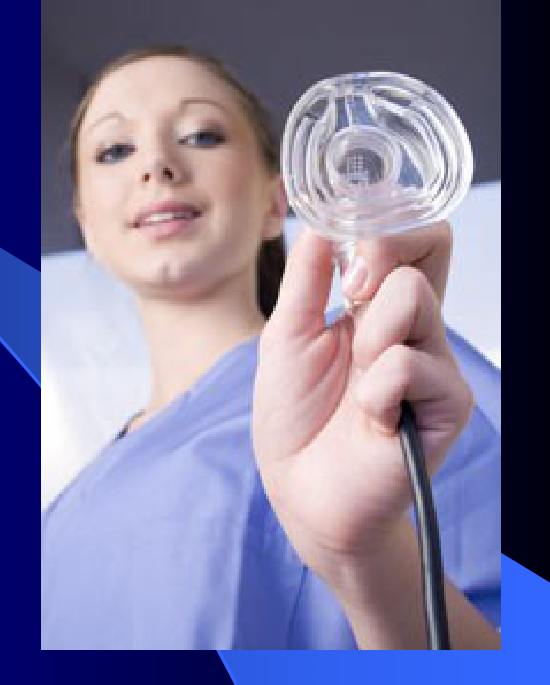
- Because of this, special-needs patients may need sedation, general anesthesia, or surgical facilities if the patient cannot cooperate.
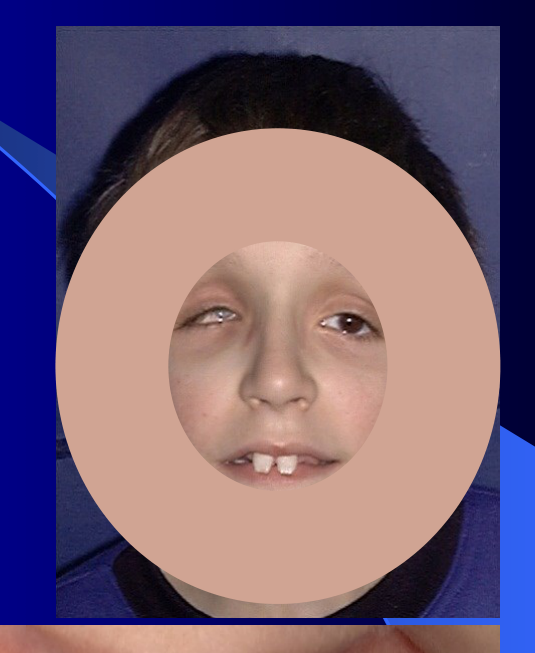 | 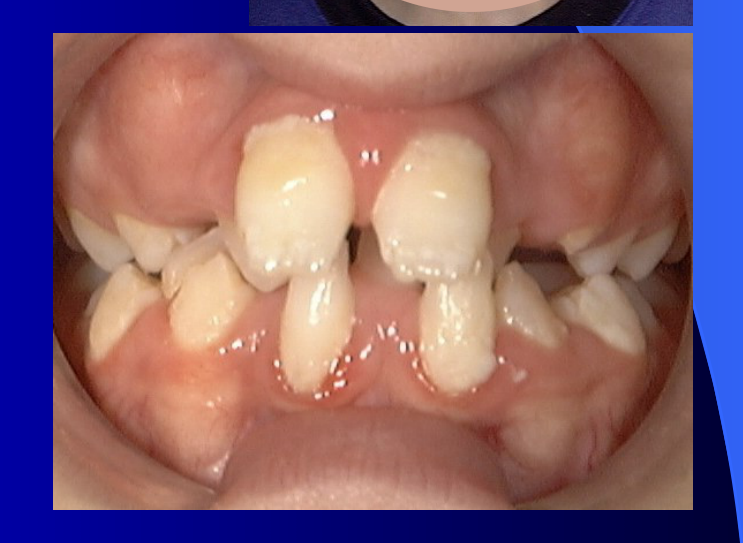 |
Definition of Medically Necessary Care6789
Medically necessary care is the reasonable and appropriate diagnostic, preventive and treatment services and follow-up care (including supplies, appliances and devices) as determined by qualified, appropriate health care providers in treating any condition, disease, injury or congenital or developmental malformation.
Medically necessary care includes all health care services that directly support the delivery of dental/oral health care that in the judgment of the attending dentist, are necessary for the provision of optimal quality therapeutic and preventive oral care to the patients with medical, physical or behavioral conditions.
Services Included (but not limited to):
- Sedation
- General anesthesia
- Utilization of surgical facilities
Dental care is medically necessary for the purpose of preventing, controlling and eliminating orofacial infection, pain and disease and correcting facial disfiguration or dysfunction.
Definition of Persons with Special Health Care Needs101112
Persons are considered to have special care needs if they have a physical, developmental, mental, sensory, behavioral, cognitive, or emotional impairment or limiting condition that requires medical management, health care intervention, and/or use of specialized services or programs.
The condition may be developmental or acquired and may cause limitations in performing daily self-maintenance activities or substantial limitations in a major life activity.
Health care for special needs patients is beyond that considered routine and requires specialized knowledge, increased awareness and attention and accommodation.
Provider Availability and Literature Review
Healthcare Provider Options13
Who is Prepared to Treat Them?
Australian Dental Association
- Ask for a dentist skilled/experienced in treating disabled patients
Pediatric Dentist or General Dentist or Special Needs Dentist (Specialist) (Daniel Sundaresan in WA)
Usually within a Public Institution/Facility
Advice Disability Services
Early Studies on Orthodontic Treatment1415
Orthodontics for Special Needs Patients
Jackson, E. F. (1967)
Orthodontics and the retarded child, American Journal of Orthodontics, 53, 596-605.
Orthodontics for the handicapped child
As early as 1967 Jackson suggested methods for orthodontic treatment for patients with learning disabilities
- There is a long-standing dilemma about how far orthodontic treatment should be taken in patients with disabilities.
- A study from 94 showed that 70% of patients usually require treatment.
- However, a much smaller percentage of those patients actually achieve treatment because limitations are very high.
- Most of these discussions focus on intervention within the limits of disability.
Jackson, E. F. (1967) Orthodontics and the retarded child, American Journal of Orthodontics, 53, 596-605.
Occlusal Status in Disabled Children161718
Orthodontics for Special Needs Patients
Ackerman, A. and Wiltshire W. A. (1994)
The occlusal status of disabled children, Journal of the Dental Association of South Africa, 49, 447-51.
The occlusal status of disabled children
The occlusal status of children of six schools for the handicapped was determined using the occlusal index (O.I.) of Summers. The study showed 75% required treatment 10.5% had good occlusions and 15% had slight malocclusions where treatment was not considered essential
- The literature attempts to develop an occlusion index and to adjust it.
- These indexes are combined with the special-needs limitations.
- The idea is to work out how much treatment is possible.
Ackerman, A. and Wiltshire W. A. (1994) The occlusal status of disabled children, Journal of the Dental Association of South Africa, 49, 447-51.
The occlusal status of disabled children
The study indicated that 40.6% of children were interested in receiving orthodontic treatment, but only 0.5% were planning to seek it.
Ackerman, A. and Wiltshire W. A. (1994) The occlusal status of disabled children, Journal of the Dental Association of South Africa, 49, 447-51.
Guidelines and Treatment Requirements19202122232425262728
Orthodontics for Special Needs Patients
Becker, A., and Shapira, J. (1996)
Orthodontics for the handicapped child, European Journal of Orthodontics, 18, 55-67.
In 1996 Becker and Shapira presented guidelines for the orthodontic treatment of the handicapped child. They discussed therapeutic modalities new and old that could be utilized in the treatment of the malocclusion of handicapped children.
Becker, A., and Shapira, J. (1996) Orthodontics for the handicapped child, European Journal of Orthodontics, 18, 55-67.
Orthodontics for the handicapped child
Four basic requirements an orthodontic patient must demonstrate:
- Motivation
- Oral hygiene
- Behaviour management
- Manual dexterity
*In the context of these patients the parents or carers can supplement the requirements
- The parents need to be involved, particularly in managing behavior.
- Oral hygiene is a huge issue, especially with braces and wires in place.
- Parents must collaborate with and support treatment.*
Becker, A., and Shapira, J. (1996) Orthodontics for the handicapped child, European Journal of Orthodontics, 18, 55-67.
Orthodontics for the handicapped child
General treatment principles still apply:
- Clinical examination
- Diagnostic records
- Prioritized problem list
- Treatment objectives
- Treatment Plan
Becker, A., and Shapira, J. (1996) Orthodontics for the handicapped child, European Journal of Orthodontics, 18, 55-67.
The Role of the Parent or Carer:
- Oral Hygiene
- Caries prevention prophylaxis (diet control, fluoride application, etc.)
- Appliance care
Becker, A., and Shapira, J. (1996) Orthodontics for the handicapped child, European Journal of Orthodontics, 18, 55-67.
Orthodontics for the handicapped child
The role of the orthodontist:
- There is the need to aim for realistic treatment goals, which must be adapted to the individual patient’s needs and capabilities (Willard and Nowak, 1981)
Becker, A., and Shapira, J. (1996) Orthodontics for the handicapped child, European Journal of Orthodontics, 18, 55-67.
Orthodontics for the handicapped child
The role of the orthodontist:
- It is advisable to use a bold simplified appliance design to make activation bold independent of the patient (Becker 1993)
Becker, A., and Shapira, J. (1996) Orthodontics for the handicapped child, European Journal of Orthodontics, 18, 55-67.
The role of the orthodontist:
- Conscious sedation is a pharmacologically induced state of relaxation in which the patient remains conscious, but with significant alteration of mood and co-operativeness throughout the dental treatment. This has played an increasingly important part in the orthodontic treatment of handicapped children.
Becker, A., and Shapira, J. (1996) Orthodontics for the handicapped child, European Journal of Orthodontics, 18, 55-67.
Orthodontics for the handicapped child
The role of the orthodontist:
- Strategic extractions that will allow spontaneous corrective movements of adjacent teeth. This will often minimize the need for and extent of mechanotherapy.
Becker, A., and Shapira, J. (1996) Orthodontics for the handicapped child, European Journal of Orthodontics, 18, 55-67.
Orthodontics for the handicapped child
The role of the orthodontist:
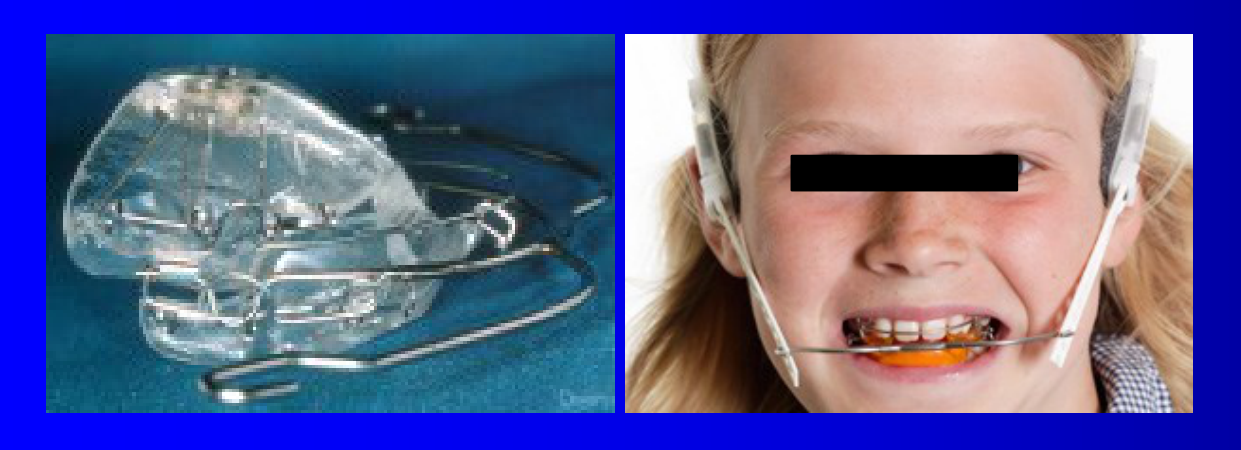
- The use of en bloc (all of the teeth moved as a unit) extra-oral removable appliances for growth modification (full-time). Where the parents cooperate with this appliance, the results may be truly dramatic.
Becker, A., and Shapira, J. (1996) Orthodontics for the handicapped child, European Journal of Orthodontics, 18, 55-67.
 |  |
 |
Management of Profound Learning Disabilities29303132333435
Orthodontics for Special Needs Patients
S. M. Chadwick and C. Asher-McDade (1997) The orthodontic management of patients with profound learning disability, British Journal of Orthodontics, 24, 117-125.
The orthodontic management of patients with profound learning disability
- Patient selection
- Treatment planning
- Clinical management
S. M. Chadwick and C. Asher-McDade (1997) The orthodontic management of patients with profound learning disability, British Journal of Orthodontics, 24, 117–125.
The orthodontic management of patients with profound learning disability
Due the need to provide routine dental care of many of these patients under general anesthetic (GA). Close coordination of these procedures with orthodontic treatment is recommended. Increases the GA time, but otherwise would not place the patient under any additional risk.
- A specific index for special needs has been discussed in the literature, which quantifies gag reflex, drooling, uncontrollable movements, and inability to remain still.
- The index is tested across different orthodontic cases to help decide how far to intervene.
- The lecturer did not emphasise the numerical value, but the main point is how these patients are assessed for treatment.
- Even the smallest procedure may require special facilities.
- Very often the treatment is limited to follow-up of transition to permanent dentition, maxillary expansion, and minimum alignment.
S. M. Chadwick and C. Asher-McDade (1997) The orthodontic management of patients with profound learning disability, British Journal of Orthodontics, 24, 117-125.
The orthodontic management of patients with profound learning disability
Elective procedures on patients with a learning disability raise bold moral and ethical questions.
S. M. Chadwick and C. Asher-McDade (1997) The orthodontic management of patients with profound learning disability, British Journal of Orthodontics, 24, 117-125.
The orthodontic management of patients with profound learning disability
There may be considerable pressure from parents/carers for some form of treatment to improve the patient’s “quality of life.” The risks of orthodontic treatment must be carefully explained to allow the parents/carers to provide informed consent.
S. M. Chadwick and C. Asher-McDade (1997) The orthodontic management of patients with profound learning disability, British Journal of Orthodontics, 24, 117-125.
The orthodontic management of patients with profound learning disability
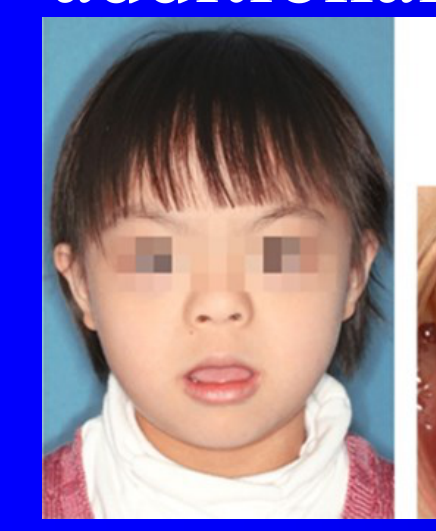
Elective procedures for patients with learning disability are not limited to dental treatment. Similar ethical and moral questions have been raised concerning elective surgery for patients with Downs Syndrome in order to improve their speech and appearance.
S. M. Chadwick and C. Asher-McDade (1997) The orthodontic management of patients with profound learning disability, British Journal of Orthodontics, 24, 117-125.
The orthodontic management of patients with profound learning disability
Following orthodontic treatment for patients with learning disabilities an improvement in the parent-child relationship has been reported, but an improvement in “quality of life” or social acceptability is difficult to quantify, particularly if the patients themselves are not able to express their feelings.
S. M. Chadwick and C. Asher-McDade (1997) The orthodontic management of patients with profound learning disability, British Journal of Orthodontics, 24, 117-125.
 |  |
Behavior Management and Treatment Modalities
Assessment of Behavior Management Needs36373839
Chaushu, S. and Becker A. (2000)
Behaviour management needs for the children with disabilities, European Journal of Orthodontics, 22, 143-149.
Behaviour management needs for the children with disabilities
This investigation studied the modes of behaviour management used in the orthodontic treatment of disabled children, and the preferred criteria.
Chaushu, S. and Becker A. (2000)
Behaviour management needs for the children with disabilities, European Journal of Orthodontics, 22, 143-149.
Five specific factors, frequently seen in disabled children, gag reflex, drooling, uncontrollable movements, inability to remain still, and the need for additional procedures, were graded and a scoring system was devised to include these factors within the assessment.
Chaushu, S. and Becker A. (2000) Behaviour management needs for the children with disabilities European Journal of Orthodontics, 22, 143–149.
The scoring system may be used to evaluate new patients and to assist in a choice of the **selection of an appropriate behavioral management mode
- The patient’s ability to remain still, cooperate, and tolerate dental objects is assessed.
- A special-needs index can include behavior factors such as drooling, gag reflex and uncontrollable movements.**
Chaushu, S. and Becker A. (2000) Behaviour management needs for the children with disabilities, European Journal of Orthodontics, 22, 143-149.
Patient Motivation, Expectations, and Satisfaction40414243444546
Orthodontics for Special Needs Patients
Becker A., Shapira J. and Chaushu, S. (2000) Orthodontic treatment for disabled children: motivation, expectation, and satisfaction. European Journal of Orthodontics, 22, 225-8.
Orthodontics for Special Needs Patients
Becker A., Shapira J. and Chaushu, S. (2000) Orthodontic treatment for disabled children: motivation, expectation, and satisfaction. European Journal of Orthodontics, 22, 225-8.
Orthodontic treatment for disabled children: motivation, expectation, and satisfaction.
Orthodontic treatment for disabled children: motivation, expectation, and satisfaction.
The parents expected improvement in the child’s appearance with a concomitant improvement in his/her social acceptance.
Becker A., Shapira J. and Chaushu, S. (2000) Orthodontic treatment for disabled children: motivation, expectation, and satisfaction. European Journal of Orthodontics, 22, 151-158.
Orthodontic treatment for disabled children: motivation, expectation, and satisfaction.
These expectations from the treatment were found to be exaggerated, with only a minority of the parents claiming a marked improvement in their child’s everyday functioning, or a significant social improvement.
Becker A., Shapira J. and Chaushu, S. (2000) Orthodontic treatment for disabled children: motivation, expectation, and satisfaction. European Journal of Orthodontics, 22, 151-158.
Orthodontic treatment for disabled children: motivation, expectation, and satisfaction.
Nevertheless most of the parents were satisfied with treatment, and reported that 17 of the children themselves, who were aware of a change, considered it an improvement. A majority of the children understood the reasons for treatment, in the most general of terms.
Becker A., Shapira J. and Chaushu, S. (2000) Orthodontic treatment for disabled children: motivation, expectation, and satisfaction. European Journal of Orthodontics, 22, 151-158.
Orthodontic treatment for disabled children: motivation, expectation, and satisfaction.
With only one exception, the parents stated that they would repeat the procedure, given the same set of circumstances, and all of them would recommend it for other disabled children.
Becker A., Shapira J. and Chaushu, S. (2000) Orthodontic treatment for disabled children: motivation, expectation, and satisfaction. European Journal of Orthodontics, 22, 151-158.
Orthodontic treatment for disabled children: motivation, expectation, and satisfaction.
It may be concluded that even though orthodontic treatment in this group of patients does not yield the desired social influence, the individual benefits from the treatment are worthwhile.
Becker A., Shapira J. and Chaushu, S. (2000) Orthodontic treatment for disabled children: motivation, expectation, and satisfaction. European Journal of Orthodontics, 22, 151-158.
Banding Procedures Under General Anesthesia47484950
Orthodontics for Special Needs Patients
Chaushu, S., Zeltser R. and Becker A. (2000) Safe orthodontic banding for children with disabilities during general anesthesia, European Journal of Orthodontics, 22, 225-8.
Safe orthodontic banding for children with disabilities during general anesthesia
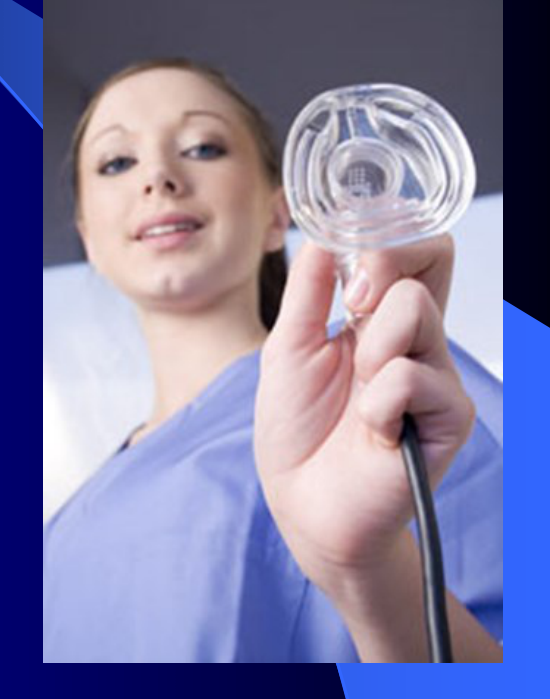
General anesthesia (GA) may be employed to overcome management difficulties in the orthodontic treatment of disabled children. This report introduces the application of rubber dam as a useful aid for a high quality bonding and as an effective safeguard in bonding of brackets
Chaushu, S., Zeltser R. and Becker A. (2000) Safe orthodontic banding for children with disabilities during general anesthesia, European Journal of Orthodontics, 22, 225-8.
Safe orthodontic banding for children with disabilities during general anesthesia
This report introduces the application of rubber dam as a useful aid for a high quality bonding and as an effective safeguard in bonding of brackets in (GA), in the handicapped in particular.
Chaushu, S., Zeltser R. and Becker A. (2000) Safe orthodontic banding for children with disabilities during general anesthesia, European Journal of Orthodontics, 22, 225-8.
Safe orthodontic banding for children with disabilities during general anesthesia
Additional procedures, such as extractions or exposure of impacted teeth may be carried out only after removal of the rubber dam, but before archwire placement, wherever possible.
Chaushu, S., Zeltser R. and Becker A. (2000) Safe orthodontic banding for children with disabilities during general anesthesia, European Journal of Orthodontics, 22, 225-8.
Intravenous Sedation Applications515253545556
Orthodontics for Special Needs Patients
Chaushu, S., Gozal, D. and Becker A. (2002) Intravenous sedation: an adjunct to enable orthodontic treatment for children with disabilities.
European Journal of Orthodontics, 24, 81-89.
Intravenous sedation: an adjunct to enable orthodontic treatment for children with disabilities
**Intravenous (IV) sedation has become established as an important and preferred alternative to general anesthesia (GA), in order to overcome difficulties in patient management encountered in the delivery of routine dental treatment of the disabled.
- Sedation can be:
- regular sedation
- general anesthesia
- IV sedation
- Depending on the case, sedation cannot be avoided.
- Parents are usually aware of this and accept the procedures.**
Chaushu, S., Gozal, D. and Becker A. (2002) Intravenous sedation: an adjunct to enable orthodontic treatment for children with disabilities. European Journal of Orthodontics, 24, 81-89.
Intravenous sedation: an adjunct to enable orthodontic treatment for children with disabilities
The study describes the use of IV sedation to enable the performance of certain complex orthodontic and surgical procedures, which require strict control of the oral environment for prolonged periods.
Chaushu, S., Gozal, D. and Becker A. (2002) Intravenous sedation: an adjunct to enable orthodontic treatment for children with disabilities. European Journal of Orthodontics, 24, 81-89.
Intravenous sedation: an adjunct to enable orthodontic treatment for children with disabilities
The use of IV sedation provided a satisfactory management modality in these patients, who had previously been referred for GA.
Chaushu, S., Gozal, D. and Becker A. (2002) Intravenous sedation: an adjunct to enable orthodontic treatment for children with disabilities. European Journal of Orthodontics, 24, 81-89.
Intravenous sedation: an adjunct to enable orthodontic treatment for children with disabilities
The parents reported complete satisfaction and general agreement that the same modality would again be welcomed.
Chaushu, S., Gozal, D. and Becker A. (2002) Intravenous sedation: an adjunct to enable orthodontic treatment for children with disabilities. European Journal of Orthodontics, 24, 81-89.
Intravenous sedation: an adjunct to enable orthodontic treatment for children with disabilities
IV sedation significantly reduces the use of GA and makes treatment more readily available to a larger number of disabled patients.
Chaushu, S., Gozal, D. and Becker A. (2002) Intravenous sedation: an adjunct to enable orthodontic treatment for children with disabilities. European Journal of Orthodontics, 24, 81-89.
Ethical Dilemmas and Case Presentations
Ethical Considerations in Treatment
- Treating special-needs patients creates an ethical conflict.
- We have to provide treatment, but the orthodontist knows that most achievements may not be maintained/retained.
- The central question is: how far can we go?
- The doctor usually tries to:
- achieve maxillary expansion,
- align and make the teeth as simply as possible,
- follow the transition from primary to permanent teeth,
- provide space for permanent teeth to erupt,
- and only place braces if the patient can tolerate them.
The Ethical Dilemma57
- The parents demand maximum possible care, but many occlusal results may not be stable.
- There is an obligation to treat the patient, but also a responsibility not to impose on the patient.
- Therefore, in most cases the orthodontist works with the family’s support to accept a simpler, realistic result.
First Do No Harm
Medically Necessary Treatment
Medically necessary care is the reasonable and appropriate diagnostic, preventive and treatment services (including supplies, appliances and devices) and follow-up care as determined by qualified, appropriate health care providers in treating any condition, disease, injury or congenital or developmental malformation.
- These patients are eligible for treatment because they have a health care card, and this makes the treatment accessible.
- However, the lecturer noted that the real challenge is not necessarily to know if treatment is needed, but to decide what can be done realistically for each patient.
Dentally
The Ethical Dilemma Revisited58
Dental care is medically necessary for the purpose of preventing, controlling and eliminating orofacial infection, pain and disease and correcting facial disfiguration or dysfunction.
- The ethical dilemma must be revisited in every special-needs case.
- The doctor “must provide treatment”, but orthodontic treatment means that “most of the achievements cannot be retained”.
- Therefore, the question remains: how much can we do?
- In conclusion, the realistic boundaries are usually:
- maxillary expansion
- minimum alignment and leveling
- removal of impediments to eruption
- follow-up throughout transitioning occlusion
Clinical Case Presentation: Phoebe5960616263
-
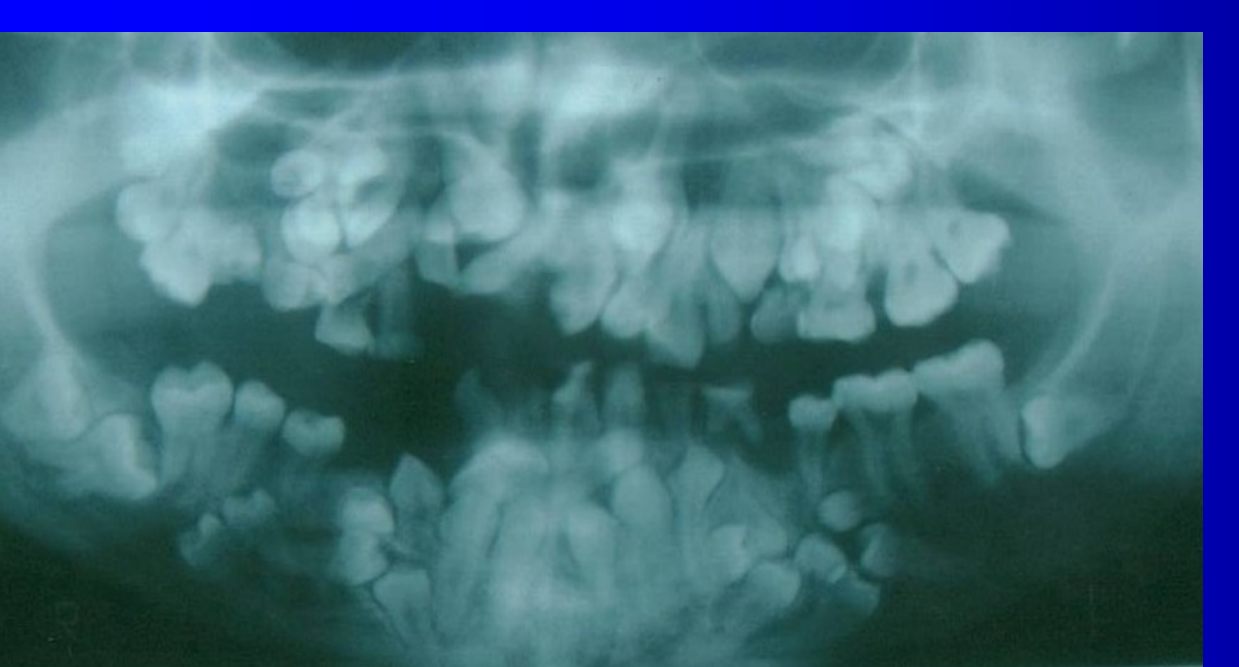
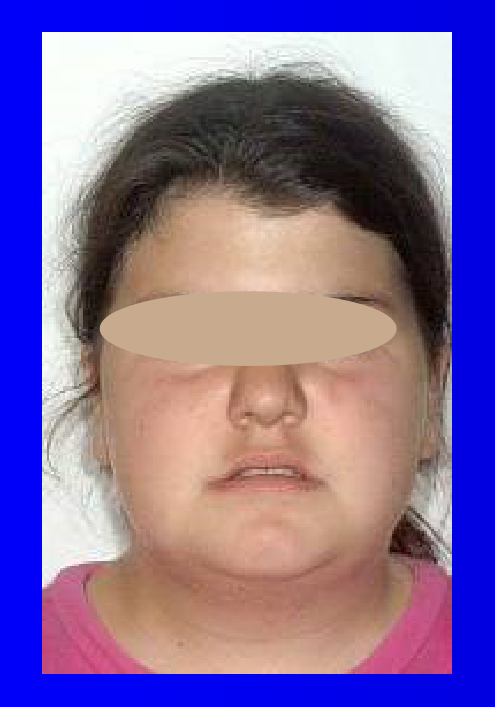
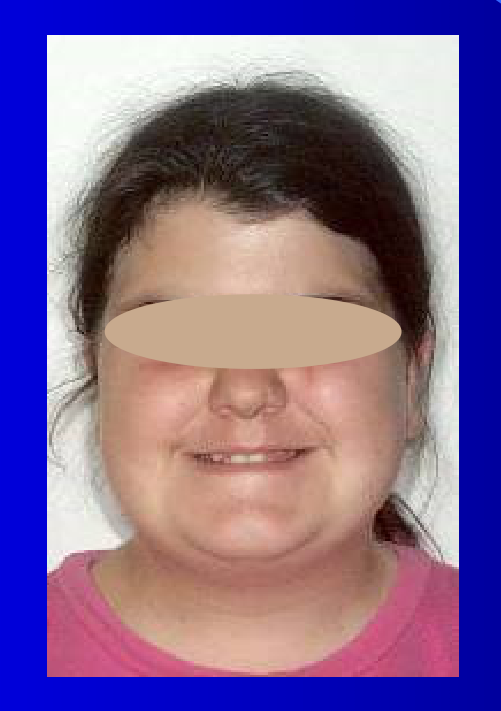
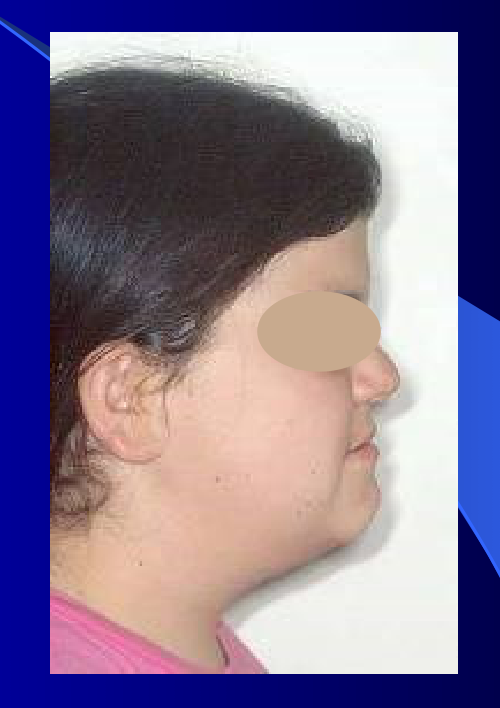
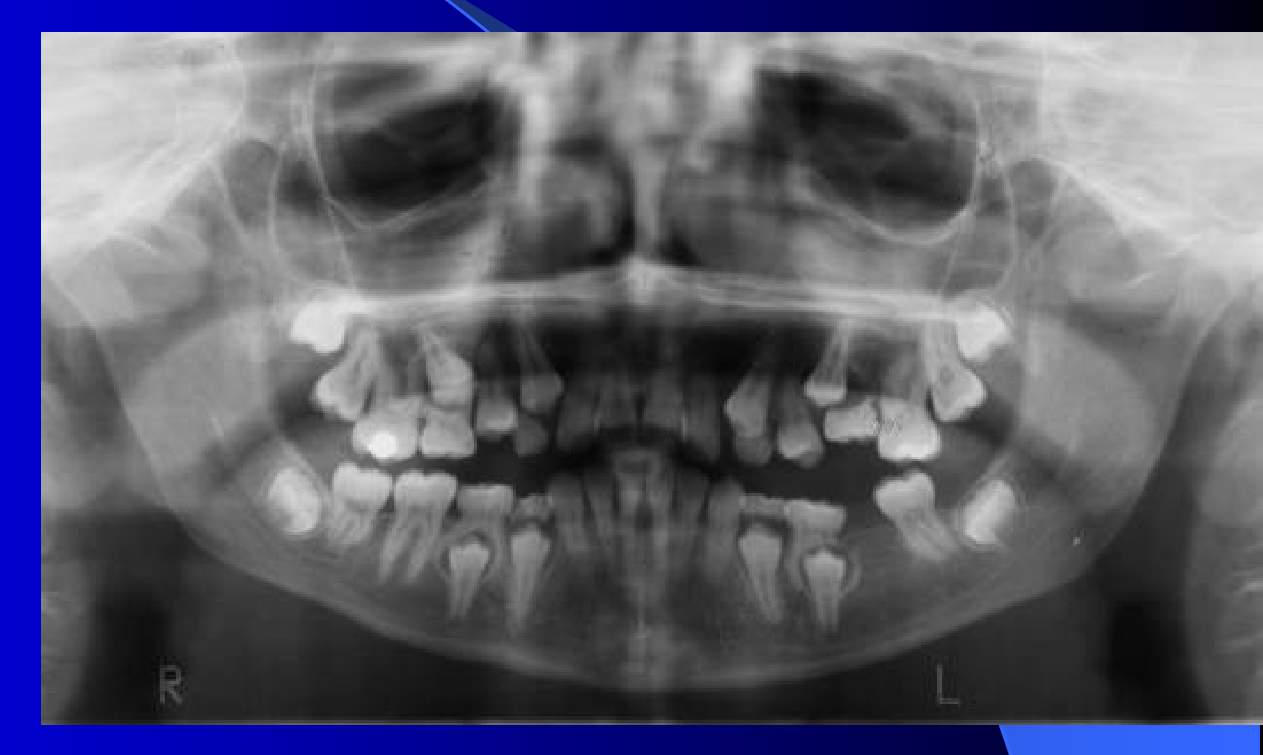
Phoebe is presented with a development learning disorder and moderate-to-severe skeletal malocclusion.
-
Profile:
- concave profile
- very flat midface
-
Intraoral findings:
- posterior crossbite on both sides
- posterior open bite
- not enough space for permanent canines to erupt properly
- many retained primary teeth in the lower arch
-
Management:
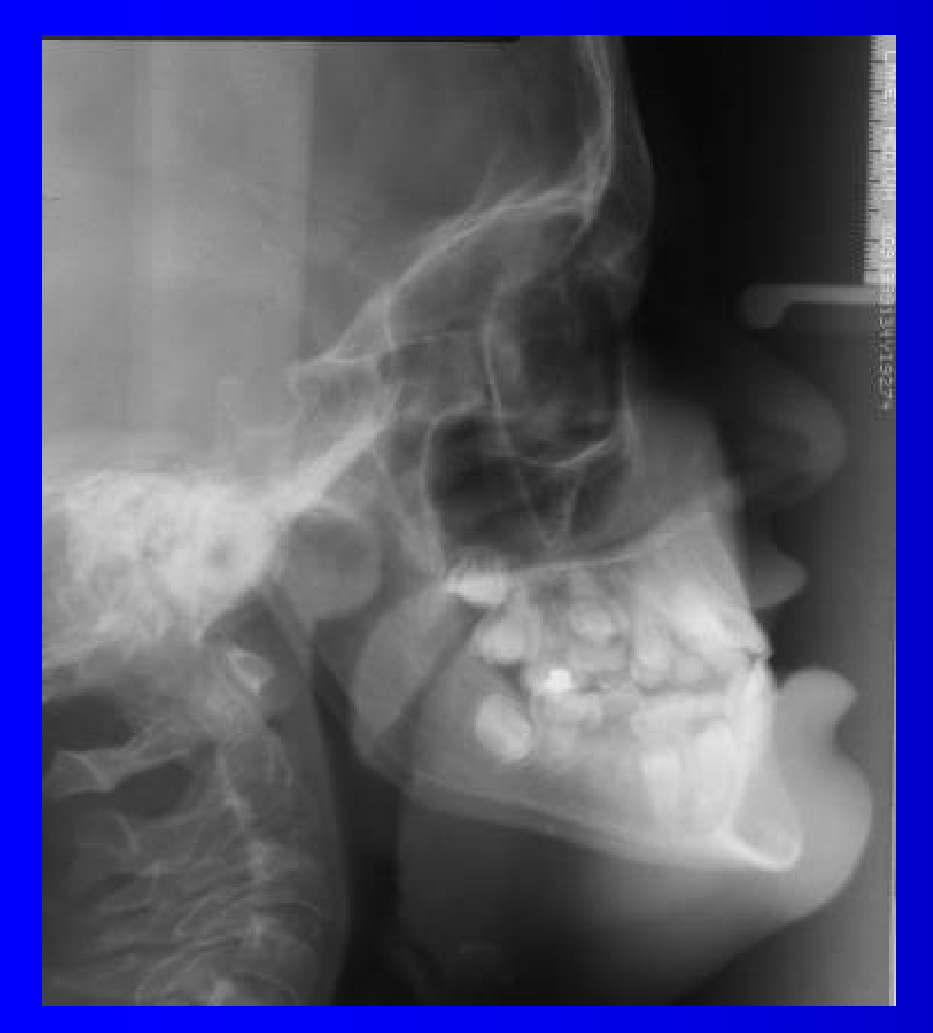
- Check whether the active roots are developed enough: two-thirds or more root development is expected.
- If that is the case, remove the retained primary teeth and follow eruption.
- Many of these cases need posterior maxillary expansion.
- Phoebe was referred to a specialist paediatric dentist.
- Under sedation, the pediatric team treated the caries and took jaw impressions for study models, and impressions for the maxillary expander.
- A rapid maxillary expander (RME) was used.
- The expander was kept six months, which is longer than average (usually three months).
- The parents helped with hygiene to keep the expander clean.
-
After expansion and initial follow-up, no sedation was needed at regular appointments in the private practice.
-
With time and patience, her behavior improved.
-
The treatment was limited to RME and follow-up of the transition from primary to permanent dentition.
-
This was considered as what was possible for Phoebe.
-
Female
-
Developmental learning disorder
-
Moderate to severe skeletal malocclusion
PR DR PETER READMAN BDSc (Hons), MDS, FRCDS Paediatric Dentist
353 Canning Highway Bicton WA 6157 Tel (08) 9139 8200 Fax (08) 9139 8211
Unit 2, 187 Scarborough Beach Road Mount Hawthorn WA 6016 Tel (08) 9441 3922 Fax (08) 9443 6199
2 November 2004 MOBILE: 0417 910 122
Dr Mike Razza Booragoon Orthodontics Suite 4 Gateways Building BOORAGOON 6154
Dear Mike,
RE: Phoebe [REDACTED] DOB: 21 MAR 1992 Our ref: [REDACTED] PO Box [REDACTED] BROOME 6725
I would like to update your records in regards to Phoebe’s recent dental treatment while visiting Perth in the past few days. As you are aware, Phoebe is one of your Broome patients who was referred for extraction of her retained and partially ankylosed primary molars. During this opportunity under general anaesthesia, impressions were taken for a rapid maxillary expansion appliance (RME) which was fitted on Monday 1 November 2004.
The dental treatment provided under general anaesthesia included: 20th October 2004
- EUA
- Intraoral Radiographic examination
- Scale, prophylaxis and fluoride treatment
- 7 x Dental extractions of retained primary teeth (teeth 55, 53, 63, 65, 75, 84, 85)
- 5 x Fissure sealants (teeth 16, 26, 37, 46, 47)
- Impressions for study models
- Impressions for RME
The RME was then inserted on Monday 1 November 2004 at Southbank Clinic under sedation. Post insert instructions where also give with the RME key and further discussed with Phoebe’s father (REDACTED).
Mike, the fees which I charged in regards to her Orthodontic treatment so far are:
- Study Models ($90)
- Impressions/cementation/insert of RME ($280),
I would therefore be grateful if you could charge Phoebe independently in regards to the fabrication of the RME and other Orthodontic costs. I have tried to keep this quite reasonable on my behalf so as not to complicate the cost of Orthodontic treatment. Please find enclosed in this correspondence study models and Lab fee document.
Mike, should you require any further information please contact the Bicton Rooms in regards the Phoebe’s management.
Kind regards,
Dr Peter Readman
- GA - Diagnostic records, restorations, fit bands for rapid maxillary expansion appliance and impression for appliance fabrication.
- GA - insertion of RME
- Maintained expansion longer than average
- No sedation required to remove appliance
 |  |  |
 |  |  |
Clinical Case Presentation: Nicholas646566676869
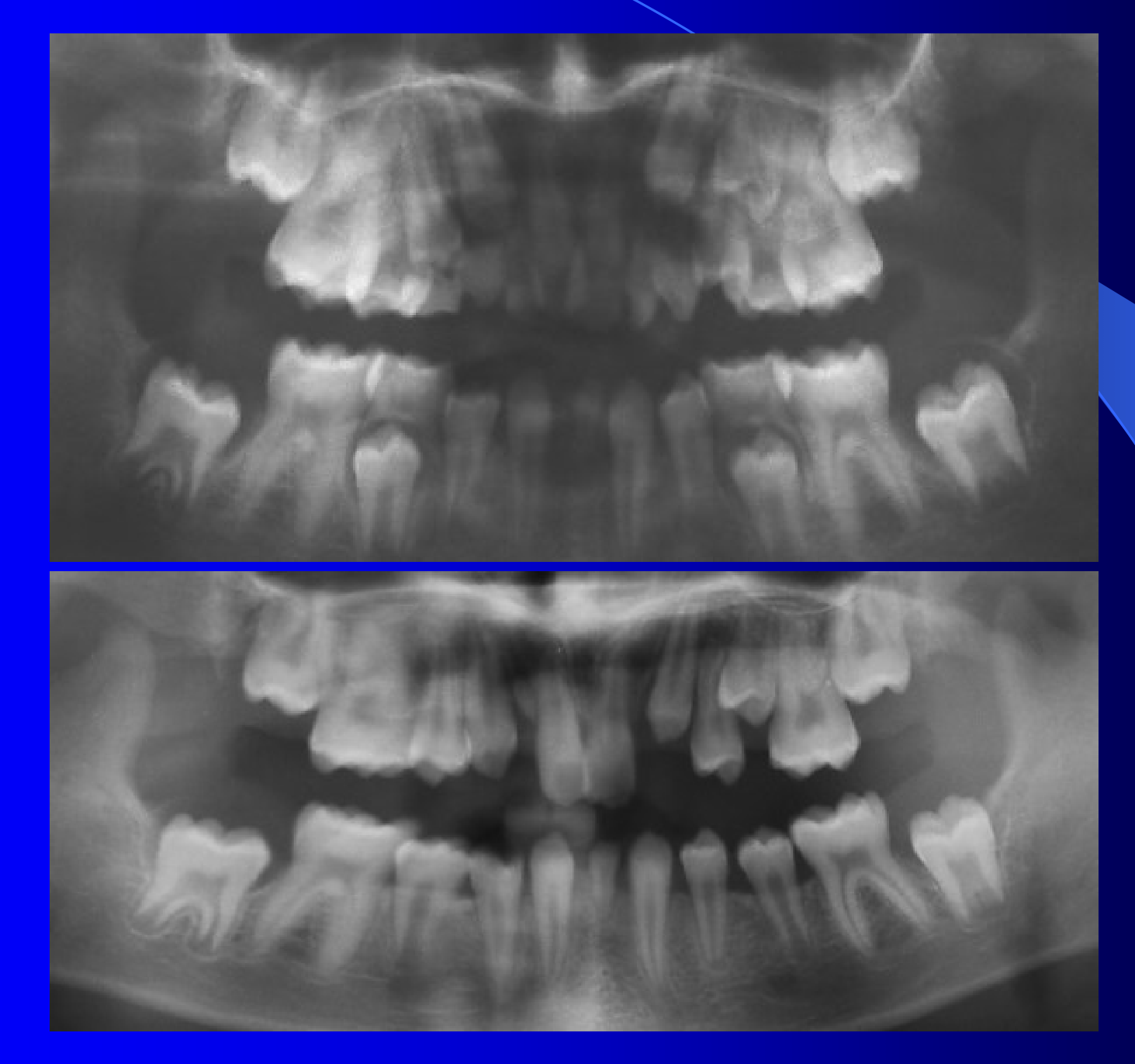
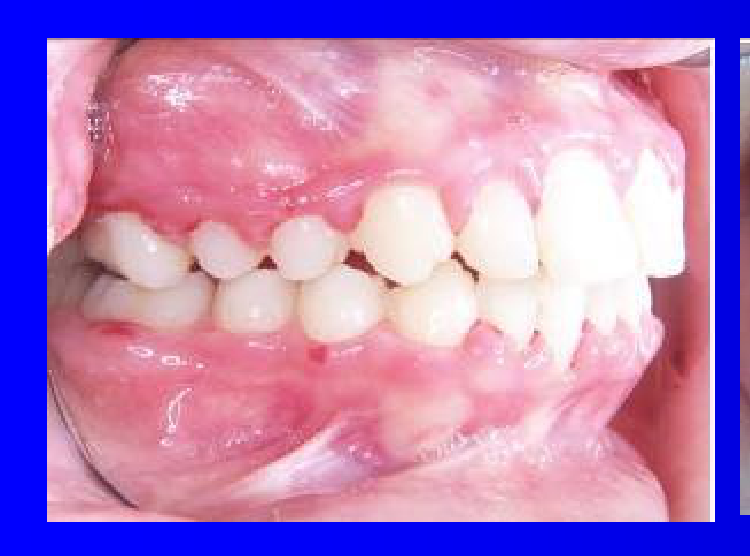
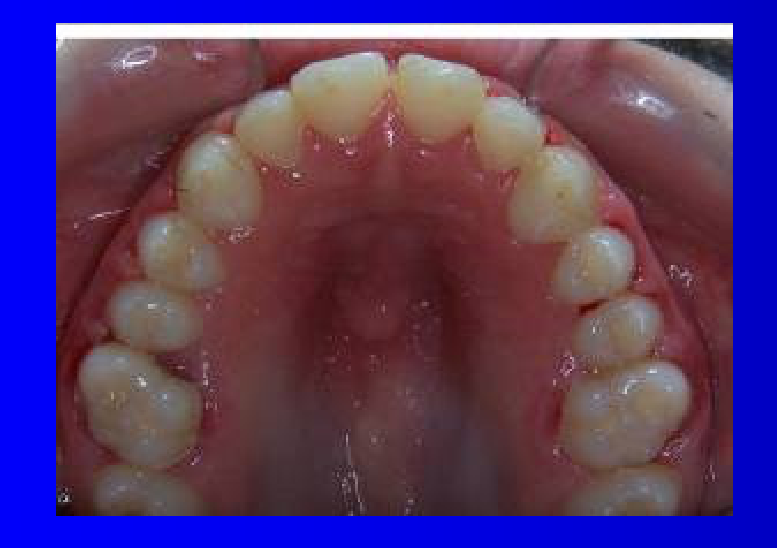
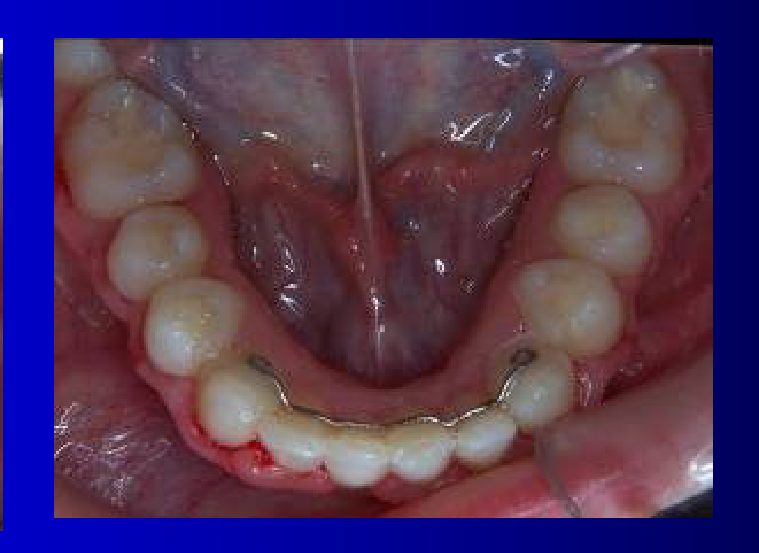
- Nicholas has Down syndrome.
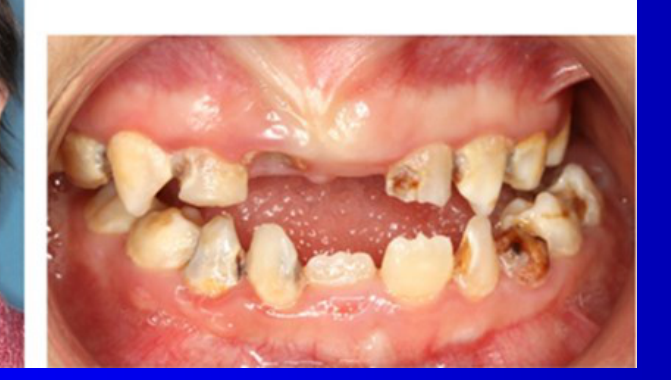
- In individuals with Down syndrome there is often a absence of lower incisors.
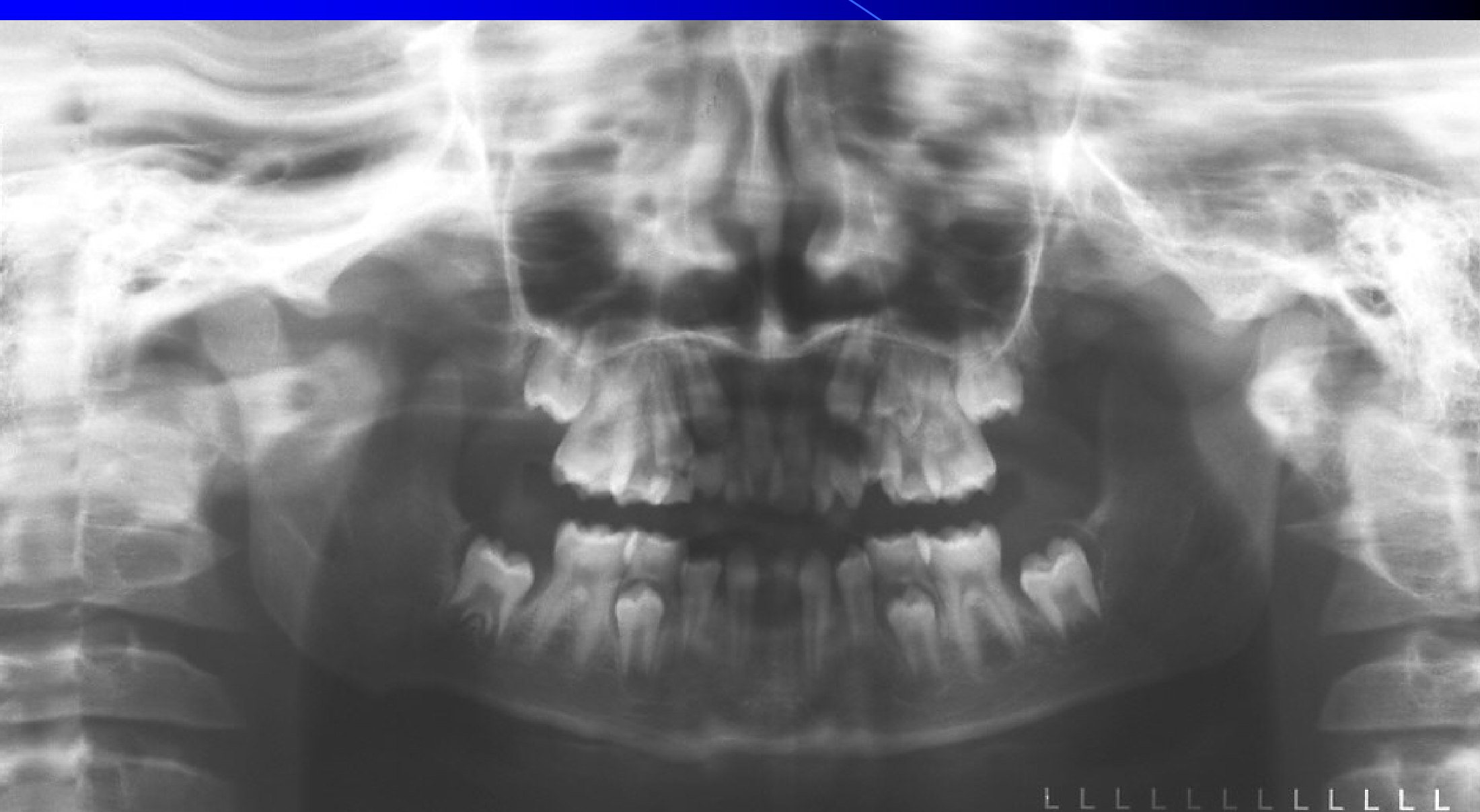
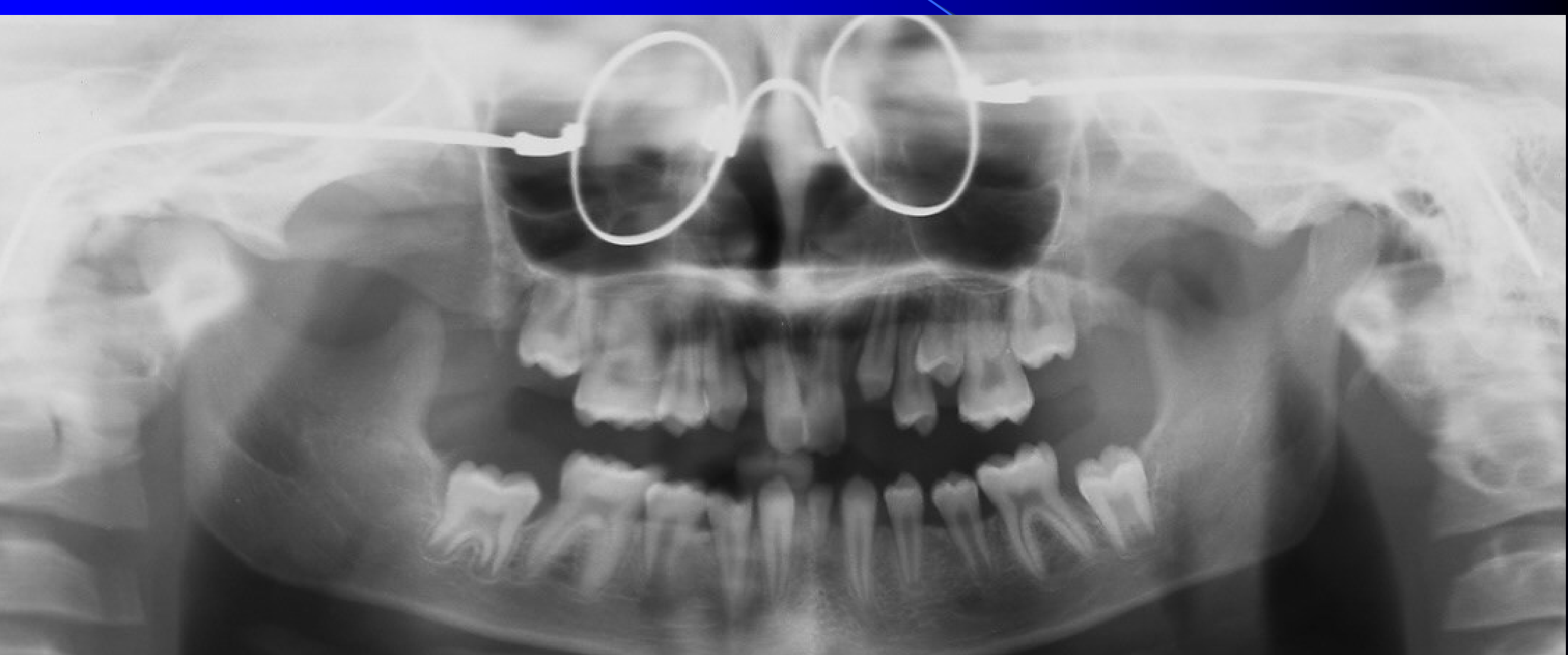
- Nicholas presented multiple missing teeth, which is a expected feature with Down syndrome.
- Signs:
- Many primary teeth were retained.
- Upper canines were supposed to come later.
- Lower incisors were absent.
- Treatment:
- Sedation was needed for extraction of primary teeth.
- Dental restoration was always involved, and the patient reassessed.
- Orthodontic treatment was limited to following the transition from primary to permanent.
- Primary teeth were extracted when enough root/crown development was present.
- It was important to check the relationship between the upper and lower first molars.
- In the absence of lower incisors, the canines can function together and finish in a Class III molar relationship if the molar relationship is acceptable.
- Upper lateral incisors also absent, so canine can be restored/shaped later if needed.
- Most of the orthodontic “treatment” actually becomes restorative reshaping / build-ups rather than tooth movement.
Nicholas is a patient with Downs Syndrome. He has moderate to severe dental malocclusion and multiple missing teeth.
-
Downs Syndrome
-
Moderate to severe dental malocclusion
-
Multiple missing teeth
-
Nicholas
-
GA sedation
-
Deciduous teeth extraction
-
Required dental restorations
-
Reassess
Nicholas
 |  |
 |
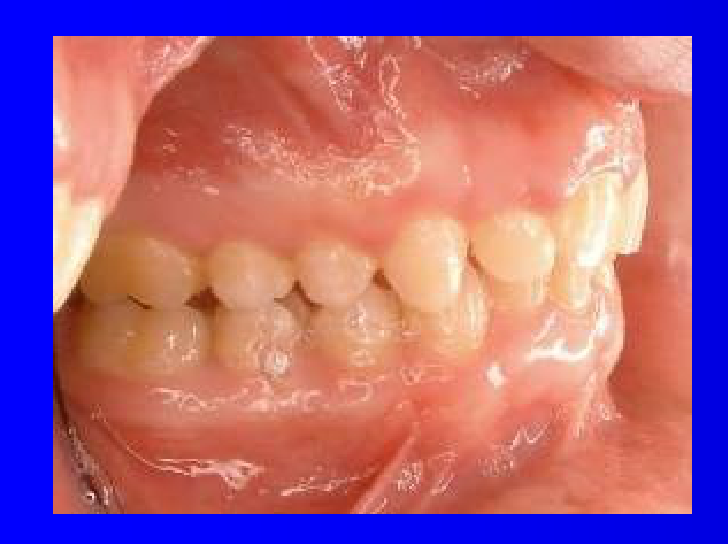
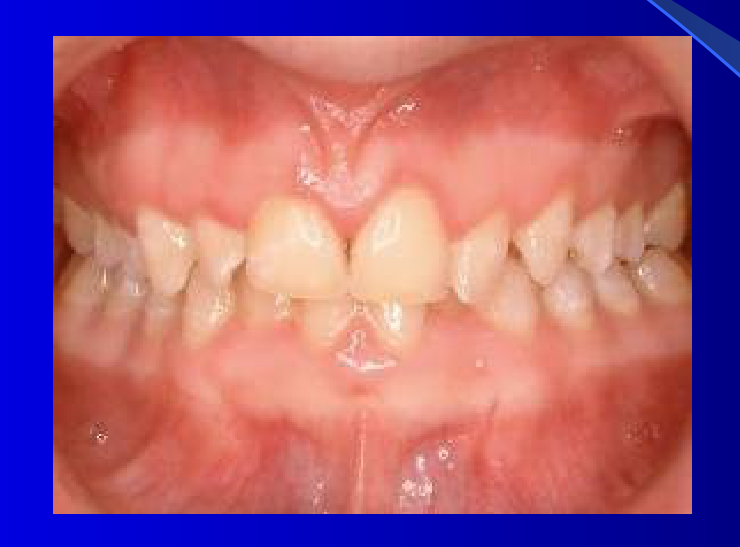
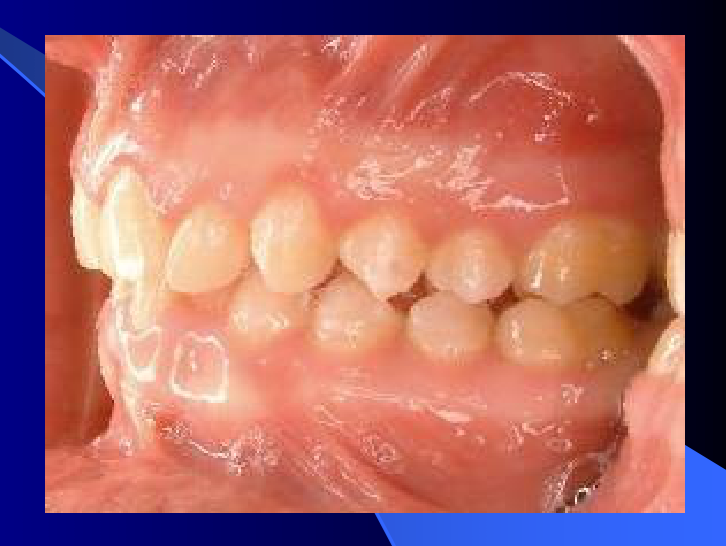
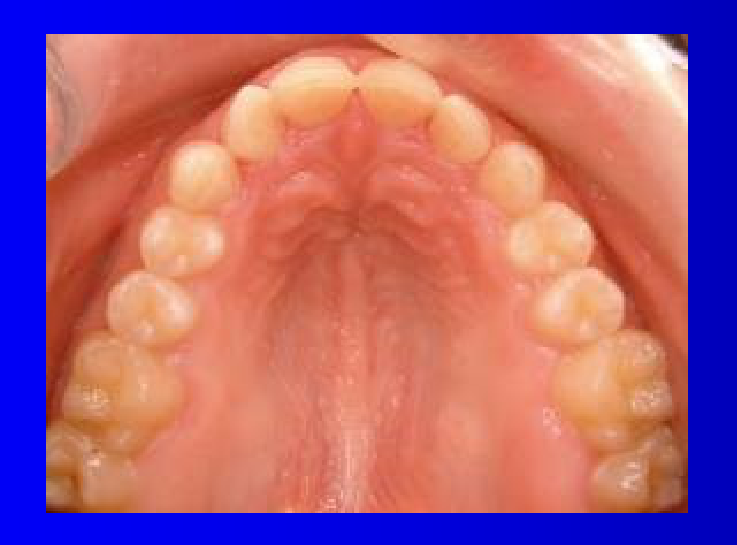
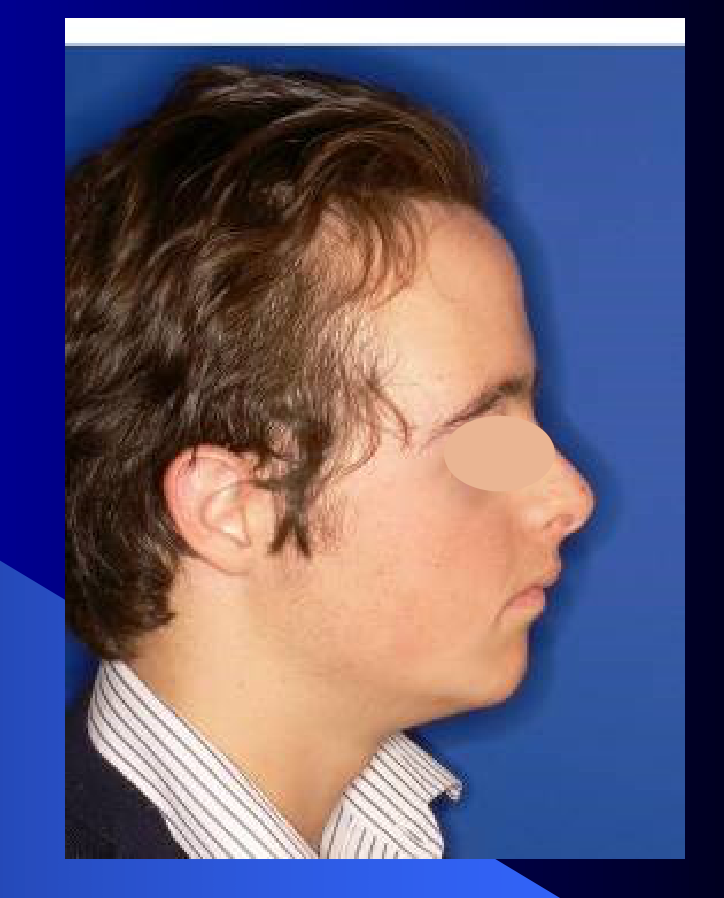
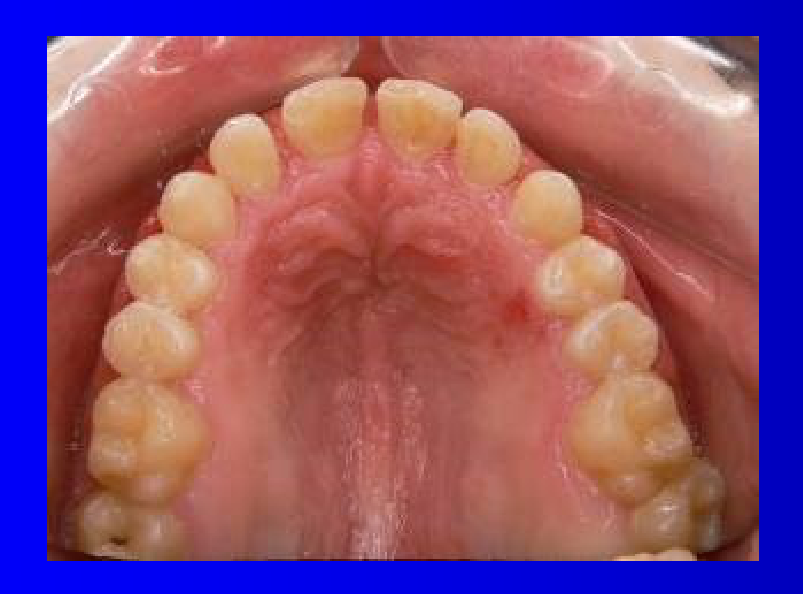
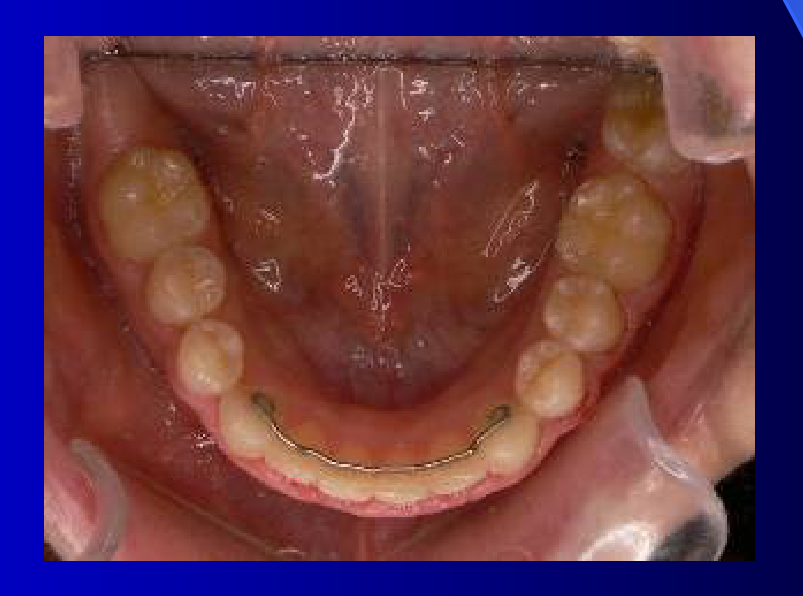
Clinical Case Presentation: Patrick7071727374757677
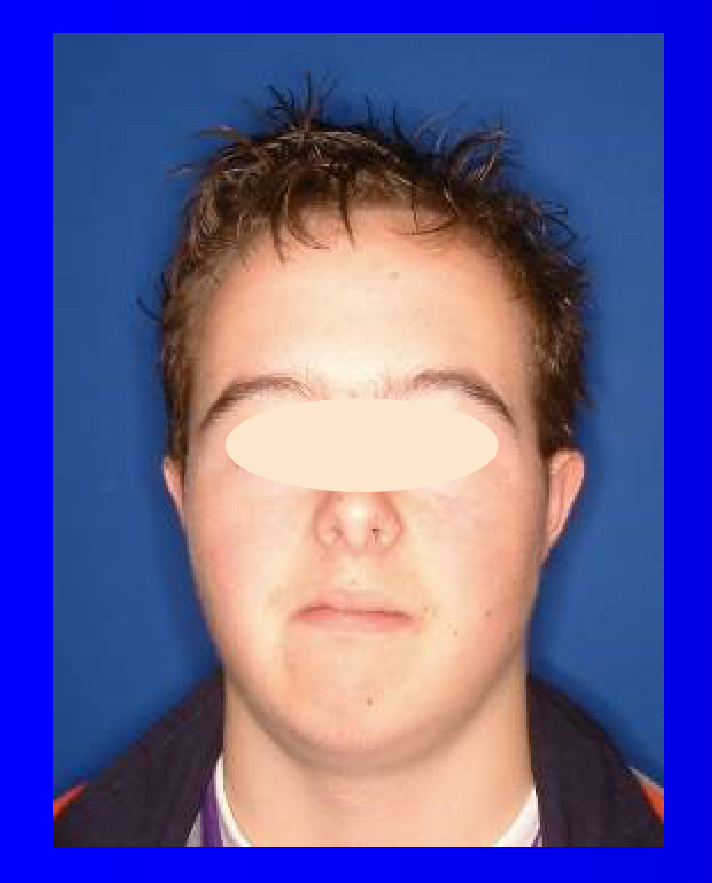
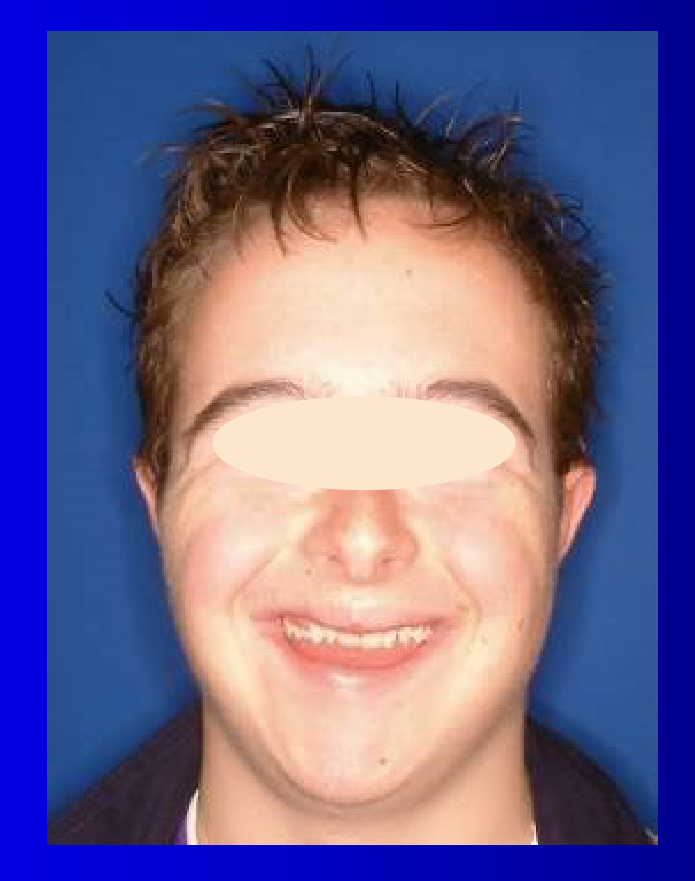
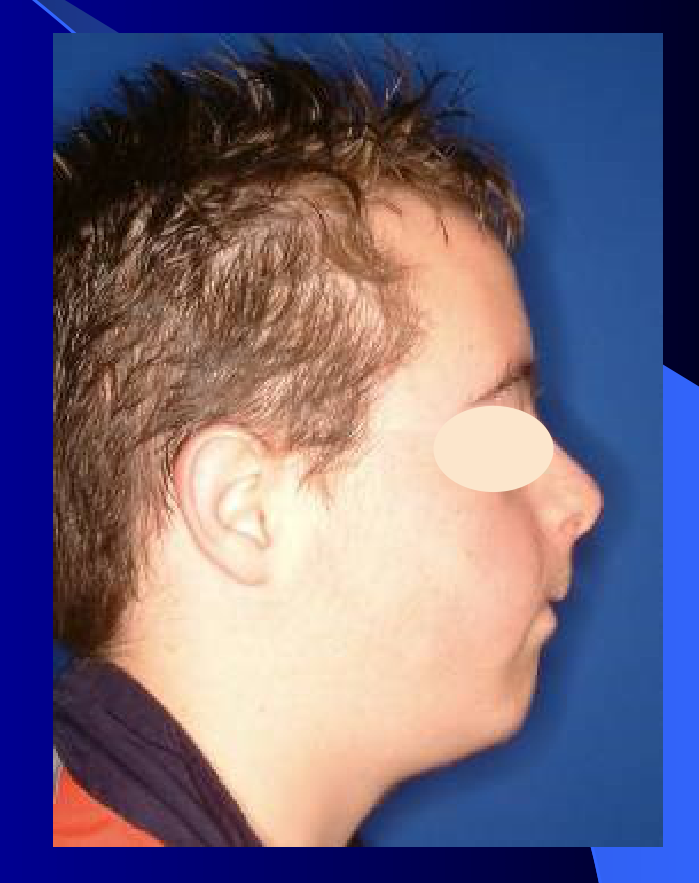
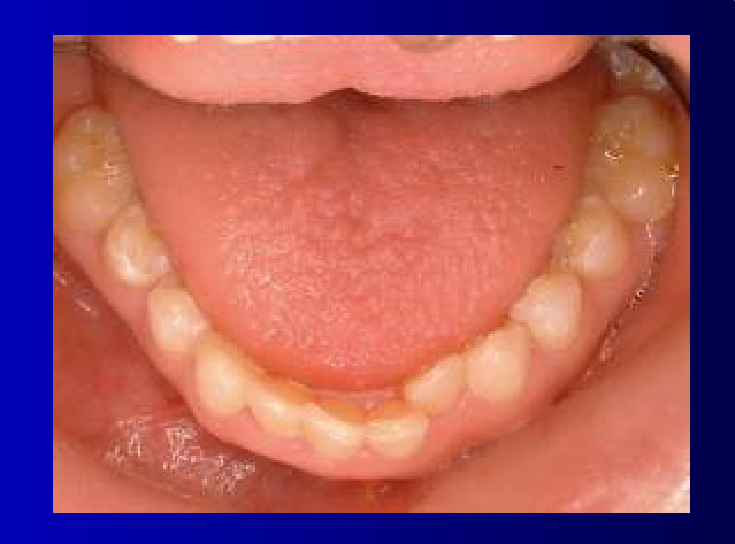
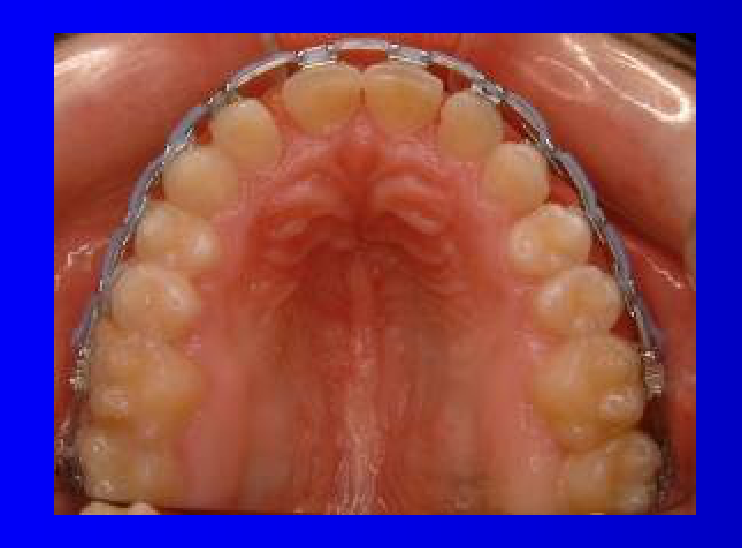
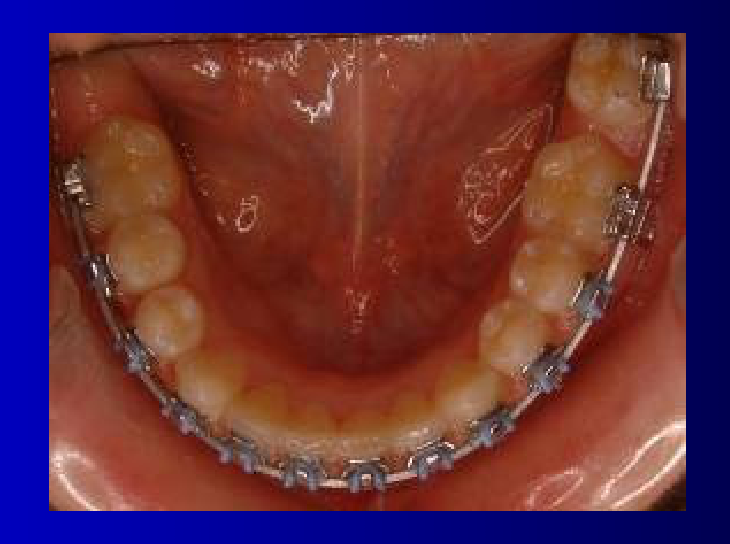
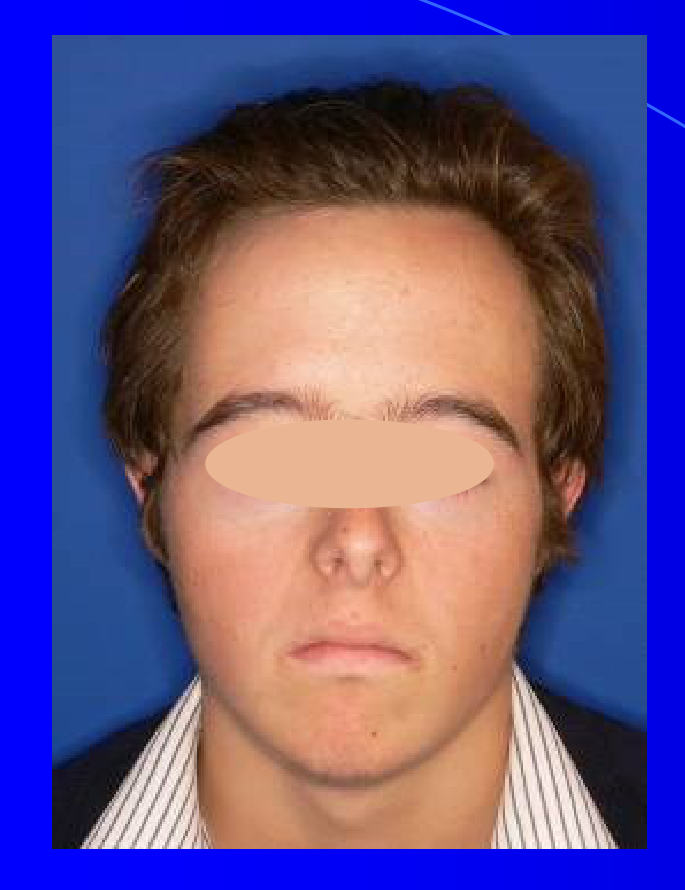
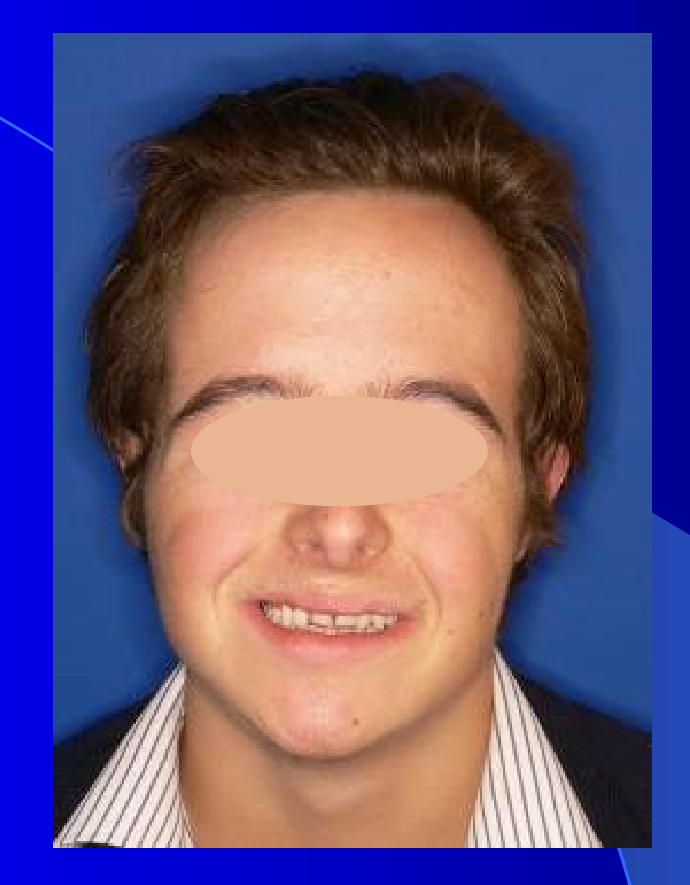
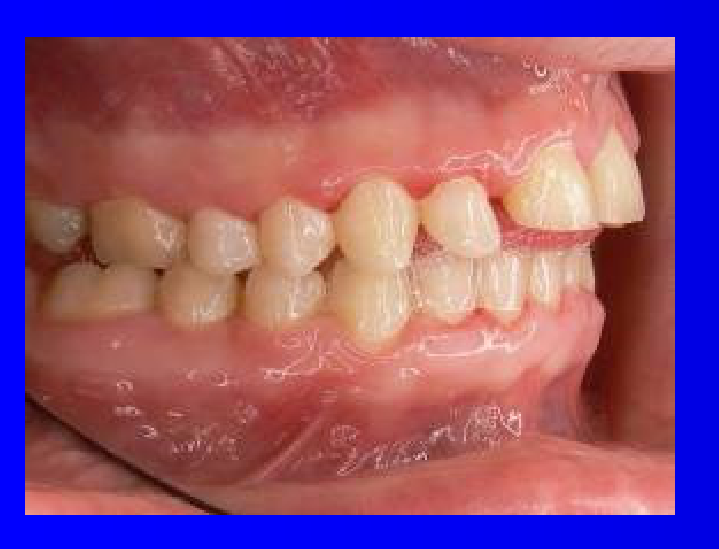
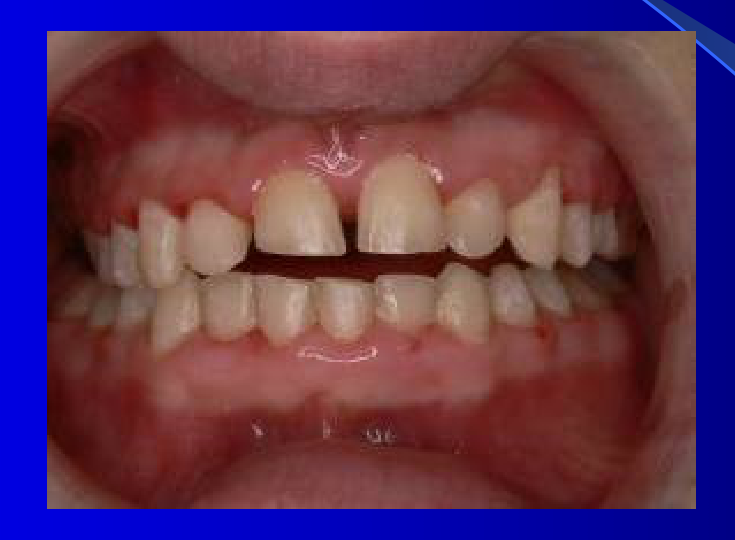
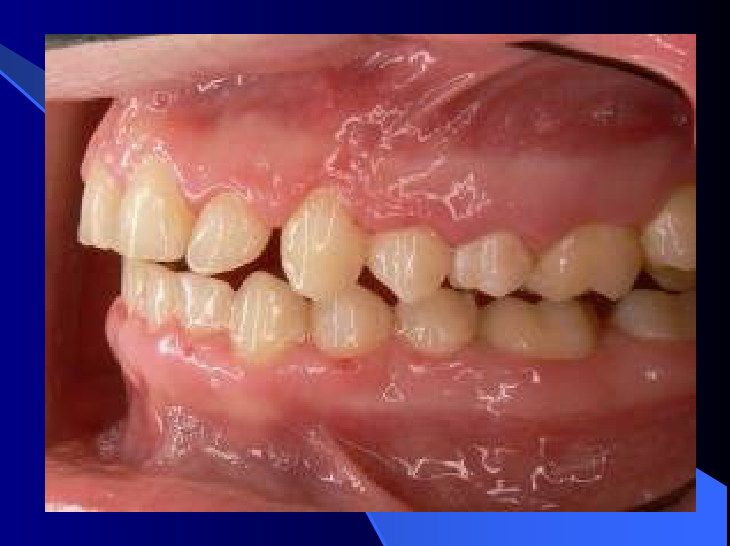
- Patrick also has Down syndrome.
- Features include:
- maxillary constriction
- crowding
- microdontia (small teeth)
- skeletal Class II relationship
- significant tongue interposition
- The Class II relationship was not necessarily a priority; many cases can finish in a mild Class II if the transition from mixed dentition is controlled.
- There was lots of retention of primary teeth.
Treatment:
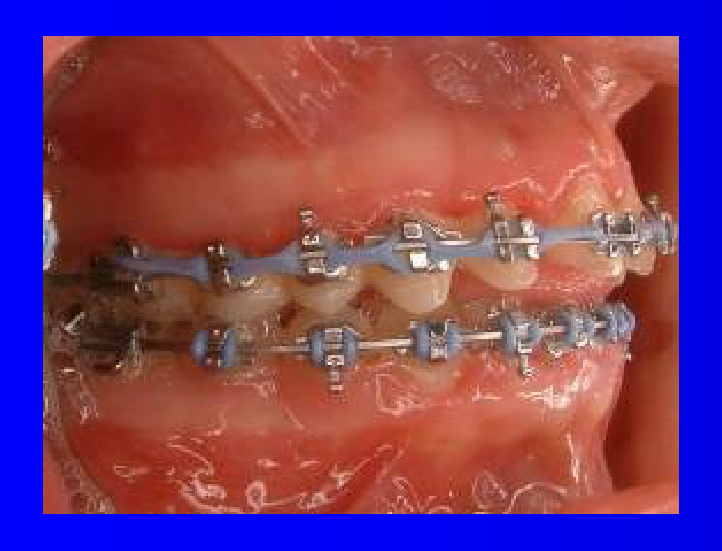
- Maxillary expansion was performed.
- He then had a very flat profile with a deficient chin.
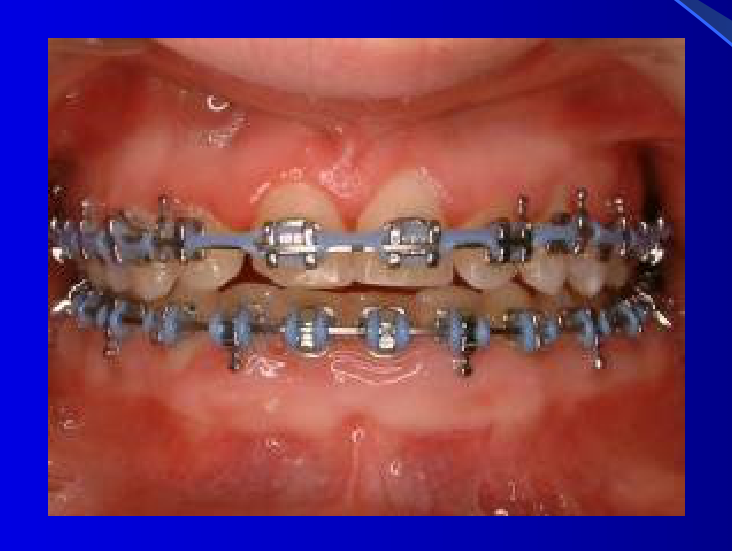
- Because of tongue position, significant relapse and anterior open bite were expected.
- After expansion the posterior crossbite was eliminated.
- The amount of intercuspidation was not ideal, but it was not the main goal.
- The crowding was managed by following up the transition from primary to permanent teeth.
- Some vertical growth of the mandible occurred; this was favorable compared to the initial finding.
- Minor only alignment and space closure were possible.
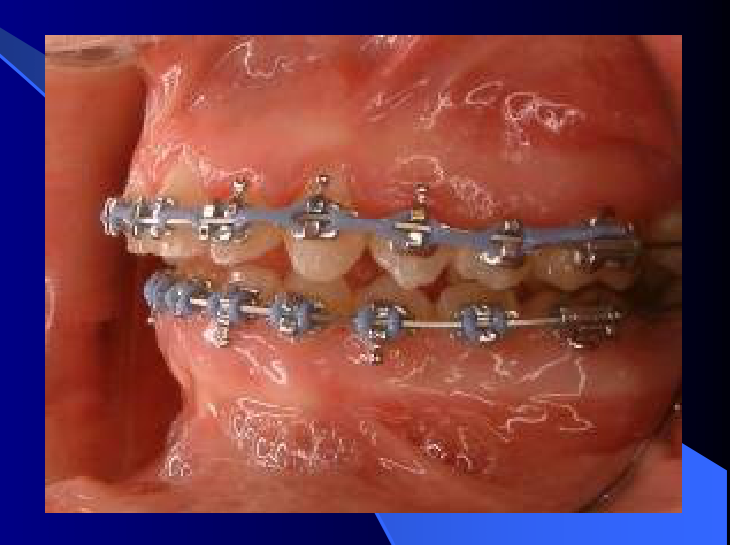
- Patrick tolerated the full fixed appliance, which was already a victory.
- He achieved some alignment and leveling, but finishing was severely compromised.
- No sedation was required.
- Heavily dependent on support from parents and family for hygiene and general care.
- After deband, the profile improved and the chin was more prominent.
- However, the patient could not tolerate maintaining all the posterior/upper results after the appliance was removed, and the tongue/lip imbalance caused relapse of anterior open bite and recurrent maxillary spacing.
Patrick post RME
Patrick
-
BOX_A: Pre-treatment
-
BOX_B: Progress
-
BOX_C: Occlusion
-
BOX_D: Maxillary arch
-
BOX_E: Mandibular arch
-
Rapid maxillary expansion
-
Full-fixed appliances
-
Force modules and/or elastics for Class II correction
-
No sedation
-
Significant parental and family support and involvement
Patrick
“Hello, this is Brian Allen. I’m going to describe the patient Patrick’s current orthodontic status. Her age is 14 years and 4 months.
We have what I call a very modest or mild midline discrepancy. The lower midline was shifted to the right maybe 2 millimeters at presentation. It’s now centered.
We have a very conservative non-technique or soft-tissue treatment approach. She wore a 0.018 inch lingual holding arch, which is visible in the intraoral images posted here.
The clinician noted that the alveolar bone has been addressed in the maxillary left second premolar and first molar area, where the alveolar bone has been very thin and labially resorbed from the previous orthodontic treatment and potential overinflated labial appliance, which has contributed to this general bone resorption.
Her treatment was straightforward, meaning she had a lot of anterior crossbite, with Class III malocclusion and no skeletal or environmental factor. Therefore, her treatment was really simplified, an orthognathic surgery was not required.
Hopefully, this is informative!”
 |  |  |
 |  |  |
 |  |  |
 |  |  |
 |  |  |
 |  |  |
 |  |  |
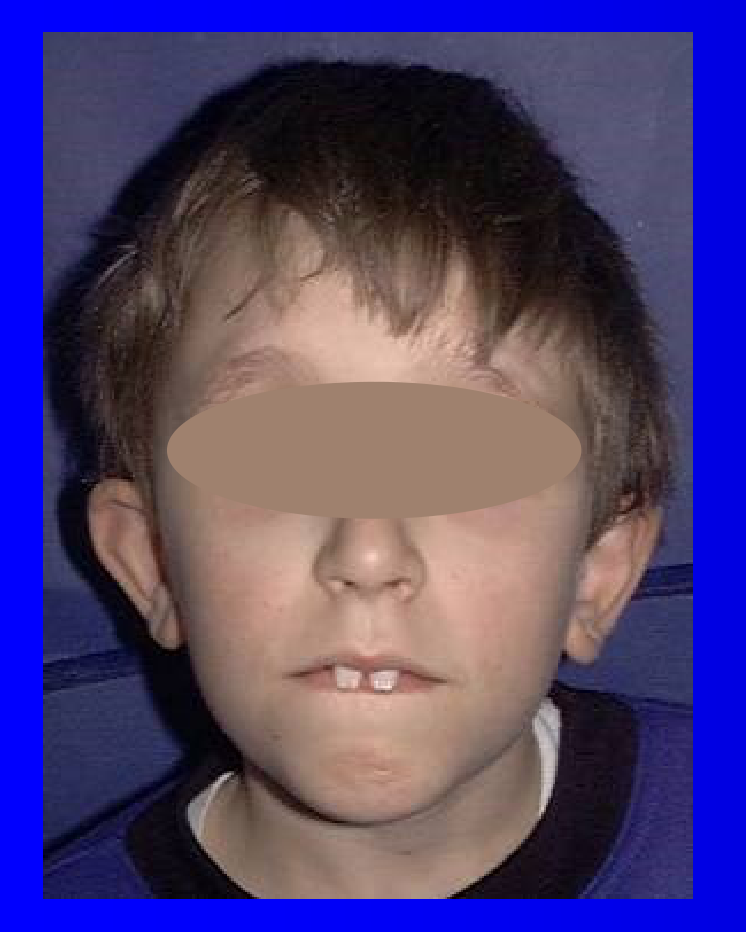
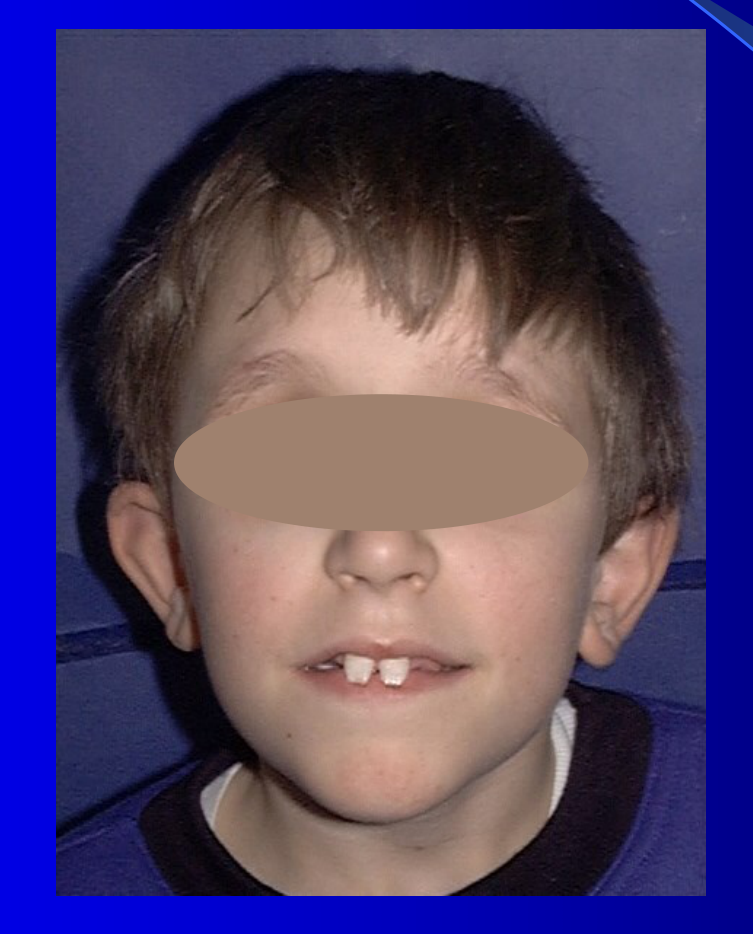
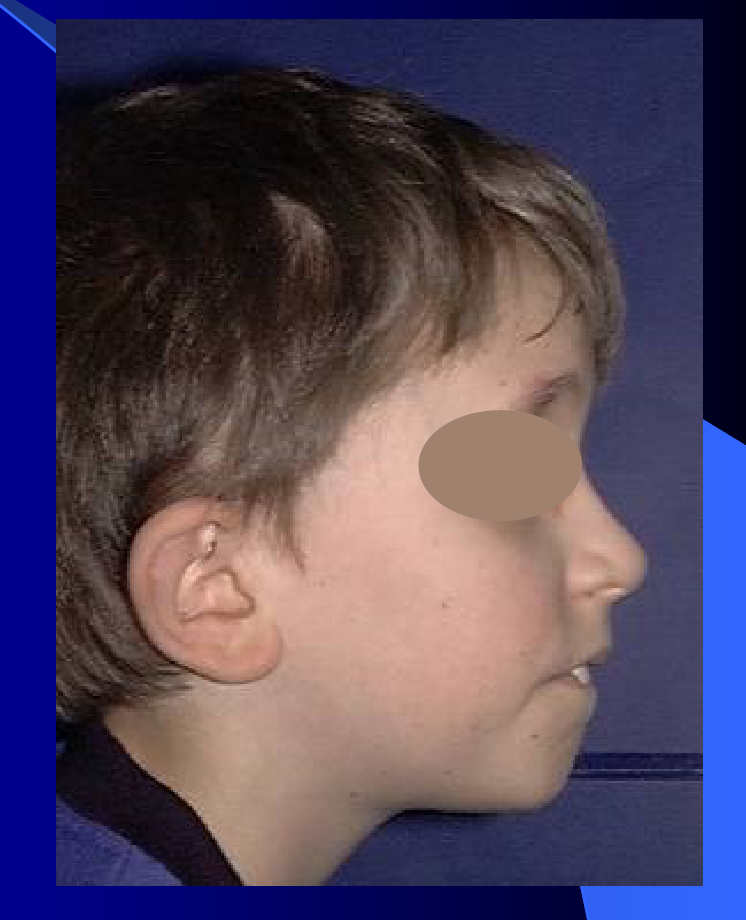
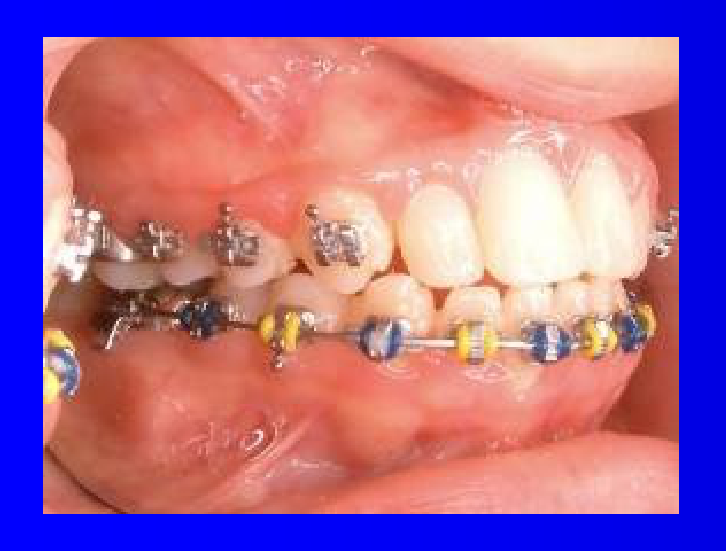
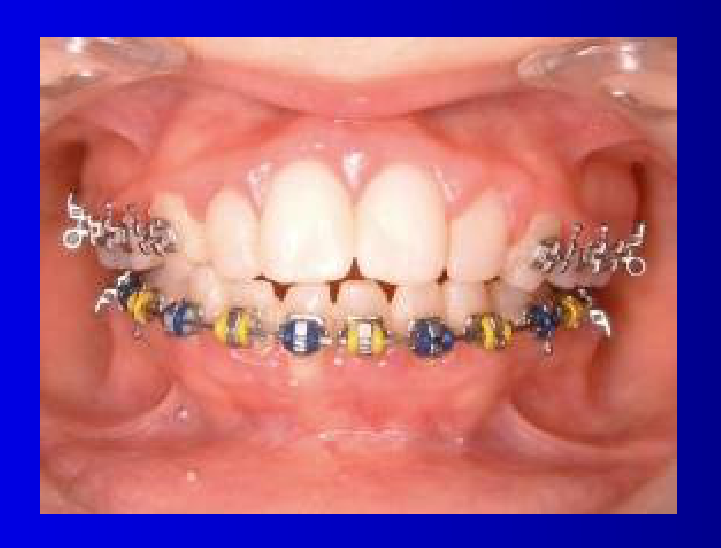
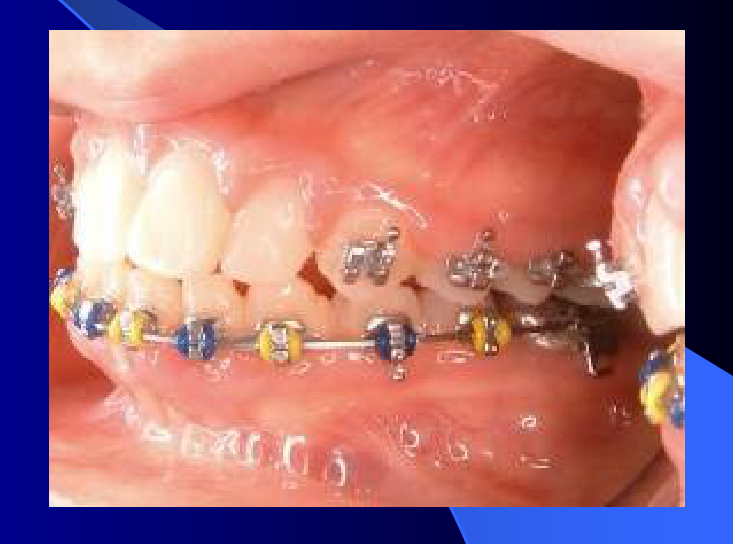
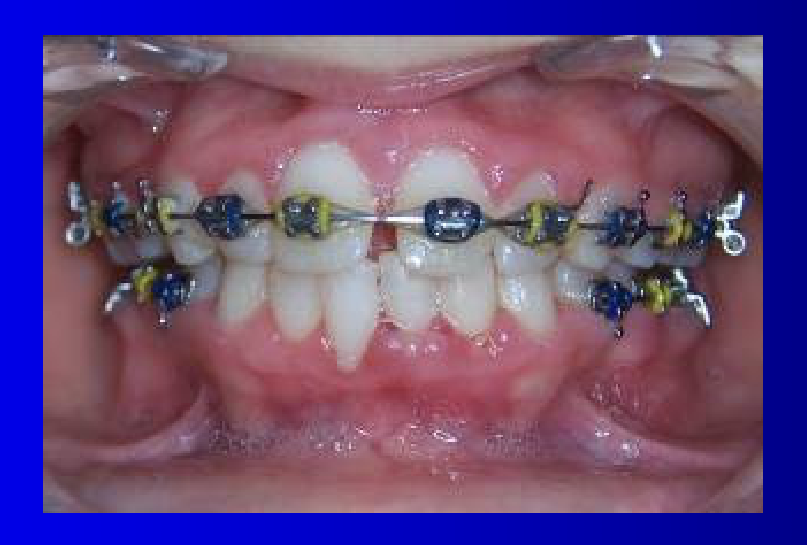
Clinical Case Presentation: Nathan7879808182838485
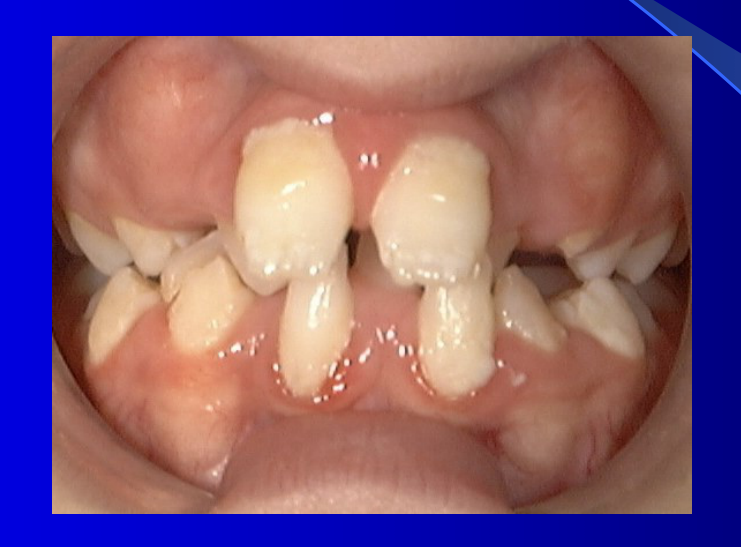
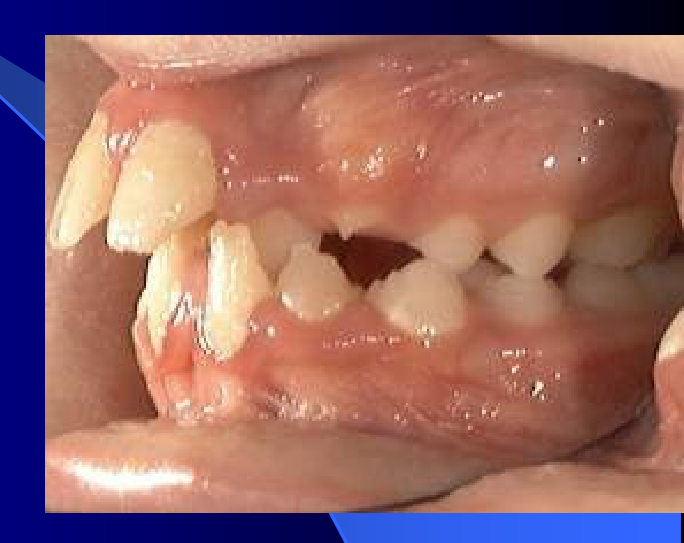
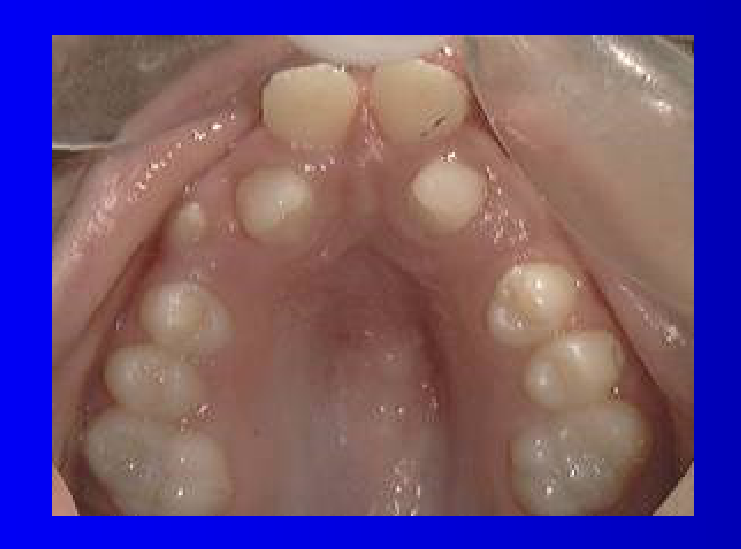
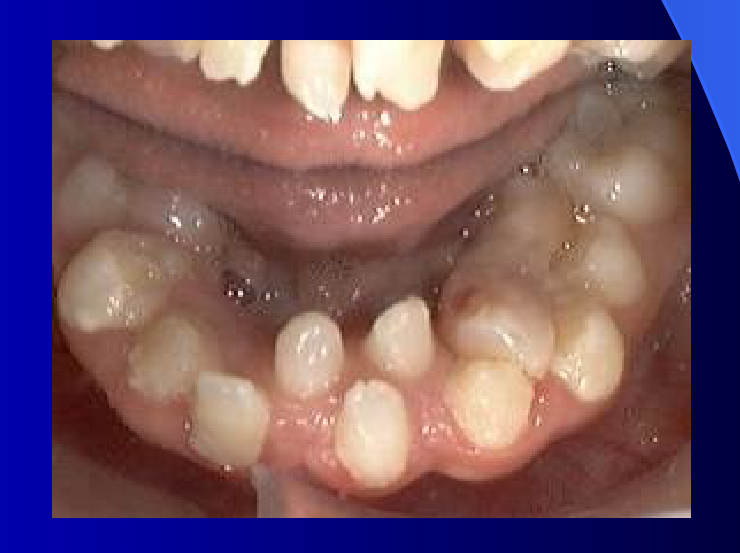
- Nathan has a developmental disorder, with significant visual impairment and a moderate skeletal Class II malocclusion.
- Presentation included:
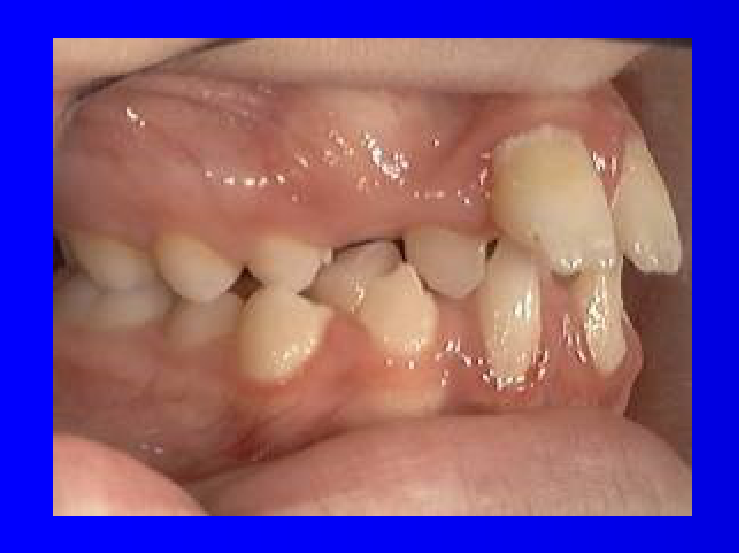
- maxillary constriction
- misalignment with a lot of crowding
- irregular tooth form
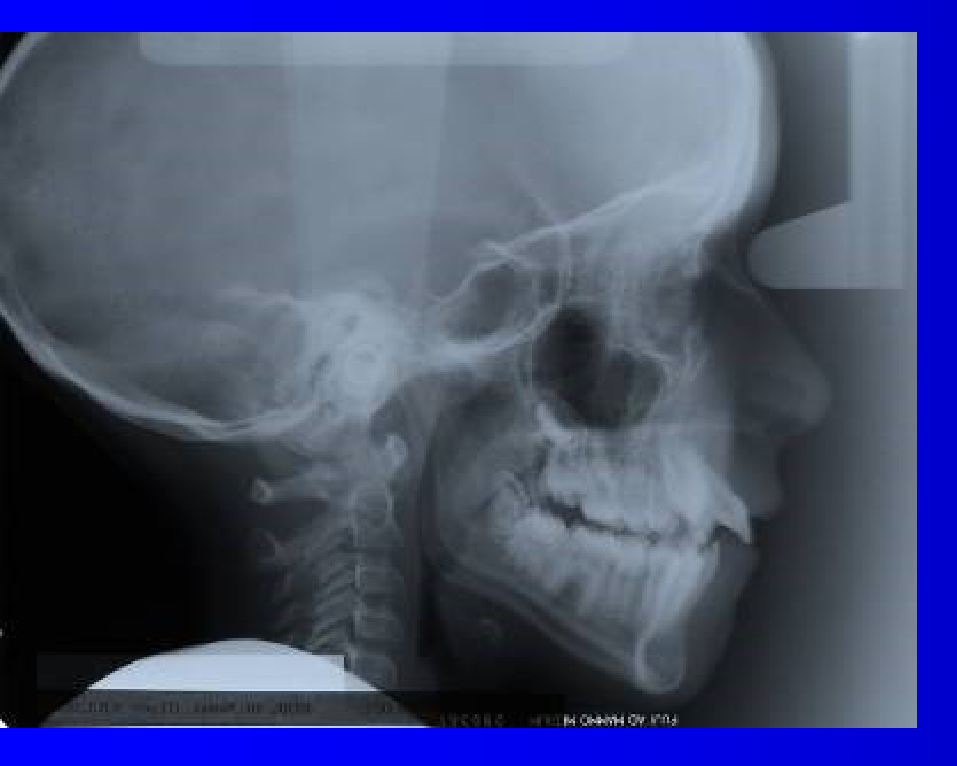
- extremely proclined upper incisors, reportedly around 35 degrees
- lower lip interposition contributing to upper incisor proclination
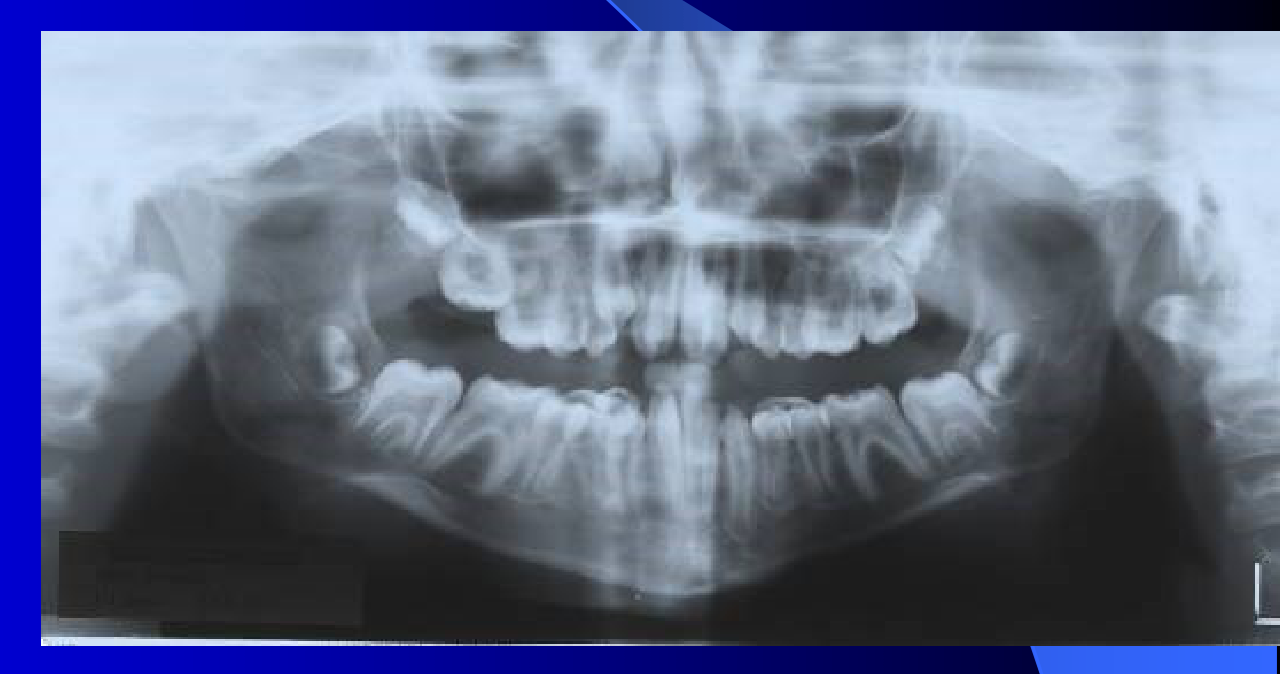
- The panoramic radiograph showed severe anterior misalignment:
- two lines of upper incisors: central incisors forward and laterals backward
- lower incisors grouped together and badly aligned
- plaques to molar crowns incompletely formed
- General condition:
- poor oral hygiene/biofilm because the patient could not brush well
- inflammation/recession around the upper arch
- Treatment:
- Oral hygiene control
- Maxillary expansion to correct the posterior crossbite and gain space
- In normal cases, extracting primary teeth allows the tongue to move the permanent teeth forward; but with Nathan this did not happen because muscle/tongue posture.
- Place braces only if alignment tolerates them, not for full correction.
- The primary teeth were extracted to open space.
- Braces were bonded only after the upper arch, then the lower arch, step by step.
- Surprisingly, no sedation was required.
- Treatment: Rapid maxillary expansion → upper fixed appliance → full fixed appliances later.
- Only minimal alignment was possible.
- Alignment started with a nickel-titanium rectangular wire (16×22).
- A modest result was achieved: some alignment, some torque correction, posterior crossbite corrected, and minimal intercuspidation.
- Large spaces could not be closed.
- The severe inflammation and oral trauma disappeared.
- He still may need any future gum procedure, but the improvement was significant.
- A small level of relapse was accepted, but compared to the starting condition it was a big success.
Nathan
- Nathan
- Dummy
- Side X-Ray
- X-Ray
- NB: Doping 2019
- 15-MONTH 2016
- Rapid maxillary expansion
- Upper fixed appliances
- Full-fixed appliances
- Force modules to protract the mandible
- Restoration or the dentition as required
- No sedation required
- Considerable parental involvement in home care needs
 |  |  |
 |  |  |
 |  |  |
 |  |  |
 |  |  |
 |  |
Summary and Course Disclaimer
Presentation Summary86
- Rationale for treating disabled patients
- Who is prepared to treat them?
- Preparing the child for treatment
- Drawing up a general treatment direction
- Choosing the suitable management modality
- Adapting traditional orthodontics to the Special Needs Patient
- Special-needs treatment must be realistic.
- It is important to ask: who is prepared to treat these patients? Are the parents ready to collaborate? Can the parents maintain realistic expectations?
- There is an obligation to provide treatment, but most orthodontic results cannot be guaranteed to be retained for these patients.
- So, how far should treatment go?
- The usual limit: maxillary expansion, minimum alignment and leveling, follow-up of the dental transition, provide space for permanent teeth to erupt, and choose the achievable amount, not ideal intercuspidation.
- If 50% of relapse is expected, even that becomes a great achievement for these patients.
- The ethical dilemma revisited
Becker, A. and Chaushu, S. (2004) Australian Society of Orthodontics Meeting
Course Scope Disclaimer87
**At the end of this course you DO NOT have the didactic knowledge or clinical skills to treat comprehensive orthodontic cases
The lecture was part of a larger orthodontic patient course. The next scheduled session was a wire-bending workshop in the prosthetic lab, supported by the lecturer and four postgraduates. Two sessions were to be held for wire-bending, to be followed by two or three more lectures during the semester. .**
Audio Appendix
Additional Audio Content
The following sections from the lecture audio did not correspond to any heading in the main document.
Realistic Treatment Planning and Objectives
- The treatment plan must be kept on track with realistic treatment goals.
- The objectives for special-needs patients are completely different from those with no special needs.
- The case plan must be 100% simplified.
- At least 50% relapse should be anticipated.
- Because patients often cannot cooperate, sedation, general anesthesia or intravenous sedation must be considered.
- In many cases, strategic extractions are plan.
Student-Reported Difficulties
The group was asked what problems they had experienced with Class II composites in clinic. Problems reported were:
- Subgingival margins: How to seal and manage a deep proximal box?
- Anatomy: How to restore / rebuild the missing anatomy?
- Bleeding at the margin.
- Contact: After adjusting the occlusion, the contact area was sometimes open or flat.
- Finishing/polishing also was mentioned, although that was addressed separately.
Parental Motivation, Expectations, and Satisfaction
- Parents always expect an improvement in their child’s appearance.
- Parents must be told clearly:
- the costs involved,
- the amount of collaboration required,
- what is possible and what is not possible.
- Parents often stay happy even with a high chance of relapse.
- Parents are often willing to repeat complex procedures such as orthodontic re-bonding if needed.
- Even when the appointment is frustrating, because behavior cannot be well controlled, parents are usually aware of the challenge and know it takes a long time.
Clinical Discussion: Class II Composite Restorations
Note: This section of the recording was a separate interactive lecture on practical restorative dentistry.
Bleeding and Moisture Control
- Exposel was recommended for gingival bleeding:
- Exposel is a hemostatic agent.
- It works as it sets: pushes the gums away by about one millimeter.
- After applying it, wait for a couple of minutes.
- Use a micro brush or a ball-burnisher to apply it to the bleeding area.
- Then wash it off and gently air dry.
- Check that the bleeding has fully stopped.
- Then place the matrix band.
- If bleeding suddenly starts again:
- Retraction cord is useful.
- Tuck the cord into the gingival margin, like that in a crown prep.
- Dip the cord in astringent if needed.
- Other options:
- Gingivectomy
- Laser gingivectomy
- Slow-speed bur to remove interfering tissue.
- A simple microbrush dipped in astringent can be tried, but it may not hold because the area keeps oozing.
Banding and Bonding Procedures Under General Anesthesia
- Bonding braces under general anesthesia is considered a last option, not the first choice.
- The literature recommends using rubber dam isolation during bonding under general anesthesia, but the lecturer preferred to avoid this approach if at all possible.
- Sometimes it cannot be avoided because the patient cannot cooperate.
- For such procedures, multiple costs and difficult appointments are needed.
Bulk Fill Composite
- Bulk fill is a body of composite placed at once, saving layering time.
- Major issue: depth of cure.
- Light is needed to penetrate the composite.
- Bulk fill composites are made translucent to help light reach depth.
- This translucency can look gray or too transparent.
- Bulk fill composite should have a strength equal to or greater than dentine.
- The elastic modulus/speed of dentin was discussed (transcript cites about 15–25 GPa).
- If a bulk fill is weaker than dentin, it may transfer all occlusal load to the remaining tooth structure, defeating the purpose.
- Therefore, when choosing a bulk fill:
- Ask the company representative:
- Is it translucent?
- What is the elastic modulus / MPa / strength?
- Is it as strong as dentine?
- Ask the company representative:
- Newer bulk fills may be stronger and can be more opaque.
- If using a bulk fill, ideally cover it with a normal body-shade composite (e.g. Filtek-type) on the enamel surface to get better color and wear.
- Normal hybrid composites are stronger, around the approximate strength range of enamel.
Treatment Approach: Simplicity and Stability Over Perfection
- The orthodontic approach used in most cases resembles serial extraction planning.
- The objective is not necessarily perfect intercuspidation.
- Often there is unbalanced muscle activity and function.
- The priorities are:
- stop any blockage for eruption.
- remove primary teeth as much as possible.
- avoid late retention of permanent teeth.
- If spaces remain, close them as much as possible.
- This does not always meet the usual criteria for stability discussed in other lectures.
- When skeletal growth control is needed, a Monobloc functional appliance can help control the interrelation of the joints as a block.
- It is often impossible for the patient to wear headgear or other extraoral devices; collaboration is a challenge.
- The procedures need close coordination with the pediatric dentistry team.
- Caries and cavities must be addressed, usually deep under General anesthesia.
Provider Options
- In practice, the orthodontist usually has to work with a pediatric dentist with experience with special-needs patients.
- Without the pediatric dentist, the orthodontist cannot do anything, even the impression to be done.
- Cases are planned and managed in a multidisciplinary team.
- The team is needed when the patient cannot cooperate or requires specialized management.
Objectives and Background
- The speaker has a series of three lectures to deliver for the semester.
- The aim was to make the lecture interactive, applicable and useful rather than just theory.
- It was acknowledged that every cohort is at a different level, so the speaker asked the students for feedback.
- The main subject was Class II composite resin restorations.
Citing on Future Sessions
- The next lecture was expected to cover finishing and polishing.
- Other topics mentioned for futures included:
- moisture control,
- composite contamination,
- the clinical indication for choosing composite vs GIC / RMGIC,
- bulk fill versus normal composite use.
Matrix Band, Wedge, and Band Placement
- Wooden wedges were originally introduced for amalgam, not composites.
- For composite, wedges with anatomical shape are better because they respect the embrasure curve.
- A standard wooden wedge is triangular and may flatten the band, which creates an open contact.
- Wooden wedges have an advantage because they can absorb some crevicular fluid, so they can help in a slightly oozing situation.
- If a wooden wedge is used, it should be modified with a flame-shaped burr so that it fits the embrasure shape.
- Burnishing the band must be avoided unless there is a special situation.
- If the band is placed at the correct height of contour, burnishing is not necessary.
- If burnishing is needed frequently, the band placement is probably wrong.
- Only in cases with rotated adjacent teeth or canine / premolar contact situations may slight burnishing be considered.
Protecting Adjacent Teeth
- When preparing a box, before starting, check the adjacent tooth:
- composite restorations
- amalgam restorations
- crowns
- natural tooth
- Matrix band helps protect the adjacent natural tooth from being nicked.
- If the bur cuts through the band, the band tends to chip or move, so proper band placement is important.
- Proper band placement gives correct height of contour and reduces need for finishing.
Clinical Cases
Case: Orthodontic management of a patient with developmental learning disorders and skeletal malocclusion
Question
Scenario: Phoebe, a patient with developmental learning disorders and moderate to severe skeletal malocclusion, is presented for orthodontic evaluation. What’s shown: Profile and intraoral photographs showing a concave profile, flat mid face, bilateral posterior crossbite, posterior open bite, lack of space for canine eruption, and late retention of lower primary teeth. A radiograph is also provided showing the developing premolars. Consider: How to manage the eruption and transverse discrepancy given her special needs and cooperation limitations.
Answer
Observations:
- Concave profile with a very flat mid face.
- Bilateral posterior crossbite and posterior open bite.
- Lack of space for canine eruption and late retention of lower primary teeth.
- Radiograph confirms premolars have approximately two-thirds of their root formation. Reasoning:
- Due to her special needs, treatment objectives must be realistic and simplified.
- Initial management involved sedation to address caries, take impressions, and place a rapid maxillary expander (RME).
- The RME was kept in place longer than average (six months) with parental assistance for hygiene.
- Following expansion, she adapted to the treatment without further sedation.
- Deciduous teeth were extracted to allow eruption of the permanent premolars, focusing on resolving the crossbite and managing the dentition transition rather than achieving perfect intercuspidation. Takeaway:
- In special needs patients, treatment should focus on resolving functional blockages (like crossbites) and managing dentition transition, often requiring initial sedation and strong parental collaboration to maintain realistic expectations.
Case: Managing hypodontia and dentition transition in a patient with Down syndrome
Question
Scenario: Nicholas, a patient with Down syndrome, presents with multiple missing teeth and requires management of his dentition transition. What’s shown: The clinical scenario of a patient with Down syndrome lacking lower incisors and upper lateral incisors, with late retention of primary teeth. Consider: How to establish a functional occlusion and manage the transition from primary to permanent dentition with significant hypodontia.
Answer
Observations:
- Multiple missing teeth, specifically lower incisors and upper laterals.
- Late retention of primary teeth. Reasoning:
- Initial treatment required sedation for deciduous tooth extractions and restorations.
- Orthodontic treatment was limited to following the transition from primary to permanent dentition and monitoring the transverse relationship.
- With missing lower incisors and upper laterals, the canines are allowed to erupt and are reshaped or built up restoratively to function as lateral incisors.
- The goal is to achieve a functional relationship between the upper and lower first molars, accepting a modified occlusion rather than forcing ideal intercuspidation. Takeaway:
- For patients with Down syndrome and hypodontia, treatment focuses on guiding eruption, extracting retained primary teeth, and using restorative techniques to reshape canines into missing lateral incisors to achieve a functional occlusion.
Case: Full fixed appliance therapy in a Down syndrome patient with soft tissue imbalances
Question
Scenario: Patrick, a patient with Down syndrome, presents with maxillary constriction, crowding, microdontia, and a skeletal Class II relationship. He undergoes maxillary expansion and full fixed appliance therapy. What’s shown: Post-expansion profile and intraoral views showing a very flat profile, deficient chin, and tongue interposition. Consider: What are the limitations and expected outcomes of full fixed appliance therapy in this patient given his soft tissue and functional characteristics?
Answer
Observations:
- Maxillary constriction, crowding, and microdontia.
- Skeletal Class II relationship with a flat profile and deficient chin.
- Persistent tongue interposition. Reasoning:
- Patrick was able to tolerate a full fixed appliance, which is a significant achievement.
- Maxillary expansion was performed to correct the posterior crossbite.
- However, finishing and intercuspidation were highly compromised due to the tongue interposition and inability to cooperate with elastics.
- Significant relapse in the anterior open bite was expected and occurred because the muscular and functional imbalances could not be fully corrected.
- The patient could not tolerate the upper bar, limiting the final alignment. Takeaway:
- Even when a special needs patient can tolerate full fixed appliances, achieving stable intercuspidation is often impossible due to soft tissue and muscular imbalances, leading to expected relapse and compromised finishing.
Case: Step-by-step orthodontic intervention for a patient with severe misalignment and visual impairment
Question
Scenario: Nadel, a patient with a developmental disorder, visual impairment, moderate skeletal Class II malocclusion, maxillary constriction, and irregular tooth form, is presented for treatment. What’s shown: Intraoral and radiographic views showing extremely proclined upper incisors, severe anterior misalignment with two lines of lower incisors, incomplete molar crown formation, and trauma with gingival inflammation. Consider: How to approach the treatment step-by-step for a patient with severe misalignment, trauma, and special needs without using sedation.
Answer
Observations:
- Extremely proclined upper incisors due to lower lip interposition.
- Severe anterior misalignment with two lines of lower incisors.
- Incomplete crown formation of molars and significant trauma/biofilm due to poor oral hygiene. Reasoning:
- Treatment was broken down into manageable, step-by-step phases without the need for sedation.
- First, oral hygiene was controlled and caries treated.
- Rapid maxillary expansion (RME) was used to correct the posterior crossbite and create space.
- Partial fixed appliances with NiTi wires were used for minimal alignment and torque correction.
- Primary teeth were extracted to provide space for permanent teeth, acknowledging that tongue/muscle imbalance would prevent spontaneous alignment.
- The lower arch received minimal alignment, focusing on maintaining the corrected crossbite and resolving trauma, accepting that spaces could not be fully closed. Takeaway:
- Complex cases in special needs patients can be managed successfully without sedation by breaking treatment into small, tolerable steps (e.g., RME, partial braces, selective extractions) focusing on hygiene, space creation, and minimal alignment rather than ideal occlusion.
Footnotes
-
Original PDF page 1: 12 - The Special Needs Patient in Orthodontics, p.1 ↩
-
Original PDF page 2: 12 - The Special Needs Patient in Orthodontics, p.2 ↩
-
Original PDF page 3: 12 - The Special Needs Patient in Orthodontics, p.3 ↩
-
Original PDF page 4: 12 - The Special Needs Patient in Orthodontics, p.4 ↩
-
Original PDF page 5: 12 - The Special Needs Patient in Orthodontics, p.5 ↩
-
Original PDF page 6: 12 - The Special Needs Patient in Orthodontics, p.6 ↩
-
Original PDF page 7: 12 - The Special Needs Patient in Orthodontics, p.7 ↩
-
Original PDF page 8: 12 - The Special Needs Patient in Orthodontics, p.8 ↩
-
Original PDF page 9: 12 - The Special Needs Patient in Orthodontics, p.9 ↩
-
Original PDF page 10: 12 - The Special Needs Patient in Orthodontics, p.10 ↩
-
Original PDF page 11: 12 - The Special Needs Patient in Orthodontics, p.11 ↩
-
Original PDF page 12: 12 - The Special Needs Patient in Orthodontics, p.12 ↩
-
Original PDF page 13: 12 - The Special Needs Patient in Orthodontics, p.13 ↩
-
Original PDF page 14: 12 - The Special Needs Patient in Orthodontics, p.14 ↩
-
Original PDF page 15: 12 - The Special Needs Patient in Orthodontics, p.15 ↩
-
Original PDF page 16: 12 - The Special Needs Patient in Orthodontics, p.16 ↩
-
Original PDF page 17: 12 - The Special Needs Patient in Orthodontics, p.17 ↩
-
Original PDF page 18: 12 - The Special Needs Patient in Orthodontics, p.18 ↩
-
Original PDF page 19: 12 - The Special Needs Patient in Orthodontics, p.19 ↩
-
Original PDF page 20: 12 - The Special Needs Patient in Orthodontics, p.20 ↩
-
Original PDF page 21: 12 - The Special Needs Patient in Orthodontics, p.21 ↩
-
Original PDF page 22: 12 - The Special Needs Patient in Orthodontics, p.22 ↩
-
Original PDF page 23: 12 - The Special Needs Patient in Orthodontics, p.23 ↩
-
Original PDF page 24: 12 - The Special Needs Patient in Orthodontics, p.24 ↩
-
Original PDF page 25: 12 - The Special Needs Patient in Orthodontics, p.25 ↩
-
Original PDF page 26: 12 - The Special Needs Patient in Orthodontics, p.26 ↩
-
Original PDF page 27: 12 - The Special Needs Patient in Orthodontics, p.27 ↩
-
Original PDF page 28: 12 - The Special Needs Patient in Orthodontics, p.28 ↩
-
Original PDF page 29: 12 - The Special Needs Patient in Orthodontics, p.29 ↩
-
Original PDF page 30: 12 - The Special Needs Patient in Orthodontics, p.30 ↩
-
Original PDF page 31: 12 - The Special Needs Patient in Orthodontics, p.31 ↩
-
Original PDF page 32: 12 - The Special Needs Patient in Orthodontics, p.32 ↩
-
Original PDF page 33: 12 - The Special Needs Patient in Orthodontics, p.33 ↩
-
Original PDF page 34: 12 - The Special Needs Patient in Orthodontics, p.34 ↩
-
Original PDF page 35: 12 - The Special Needs Patient in Orthodontics, p.35 ↩
-
Original PDF page 36: 12 - The Special Needs Patient in Orthodontics, p.36 ↩
-
Original PDF page 37: 12 - The Special Needs Patient in Orthodontics, p.37 ↩
-
Original PDF page 38: 12 - The Special Needs Patient in Orthodontics, p.38 ↩
-
Original PDF page 39: 12 - The Special Needs Patient in Orthodontics, p.39 ↩
-
Original PDF page 40: 12 - The Special Needs Patient in Orthodontics, p.40 ↩
-
Original PDF page 41: 12 - The Special Needs Patient in Orthodontics, p.41 ↩
-
Original PDF page 42: 12 - The Special Needs Patient in Orthodontics, p.42 ↩
-
Original PDF page 43: 12 - The Special Needs Patient in Orthodontics, p.43 ↩
-
Original PDF page 44: 12 - The Special Needs Patient in Orthodontics, p.44 ↩
-
Original PDF page 45: 12 - The Special Needs Patient in Orthodontics, p.45 ↩
-
Original PDF page 46: 12 - The Special Needs Patient in Orthodontics, p.46 ↩
-
Original PDF page 47: 12 - The Special Needs Patient in Orthodontics, p.47 ↩
-
Original PDF page 48: 12 - The Special Needs Patient in Orthodontics, p.48 ↩
-
Original PDF page 49: 12 - The Special Needs Patient in Orthodontics, p.49 ↩
-
Original PDF page 50: 12 - The Special Needs Patient in Orthodontics, p.50 ↩
-
Original PDF page 51: 12 - The Special Needs Patient in Orthodontics, p.51 ↩
-
Original PDF page 52: 12 - The Special Needs Patient in Orthodontics, p.52 ↩
-
Original PDF page 53: 12 - The Special Needs Patient in Orthodontics, p.53 ↩
-
Original PDF page 54: 12 - The Special Needs Patient in Orthodontics, p.54 ↩
-
Original PDF page 55: 12 - The Special Needs Patient in Orthodontics, p.55 ↩
-
Original PDF page 56: 12 - The Special Needs Patient in Orthodontics, p.56 ↩
-
Original PDF page 57: 12 - The Special Needs Patient in Orthodontics, p.57 ↩
-
Original PDF page 58: 12 - The Special Needs Patient in Orthodontics, p.58 ↩
-
Original PDF page 59: 12 - The Special Needs Patient in Orthodontics, p.59 ↩
-
Original PDF page 60: 12 - The Special Needs Patient in Orthodontics, p.60 ↩
-
Original PDF page 61: 12 - The Special Needs Patient in Orthodontics, p.61 ↩
-
Original PDF page 62: 12 - The Special Needs Patient in Orthodontics, p.62 ↩
-
Original PDF page 63: 12 - The Special Needs Patient in Orthodontics, p.63 ↩
-
Original PDF page 64: 12 - The Special Needs Patient in Orthodontics, p.64 ↩
-
Original PDF page 65: 12 - The Special Needs Patient in Orthodontics, p.65 ↩
-
Original PDF page 66: 12 - The Special Needs Patient in Orthodontics, p.66 ↩
-
Original PDF page 67: 12 - The Special Needs Patient in Orthodontics, p.67 ↩
-
Original PDF page 68: 12 - The Special Needs Patient in Orthodontics, p.68 ↩
-
Original PDF page 69: 12 - The Special Needs Patient in Orthodontics, p.69 ↩
-
Original PDF page 70: 12 - The Special Needs Patient in Orthodontics, p.70 ↩
-
Original PDF page 71: 12 - The Special Needs Patient in Orthodontics, p.71 ↩
-
Original PDF page 72: 12 - The Special Needs Patient in Orthodontics, p.72 ↩
-
Original PDF page 73: 12 - The Special Needs Patient in Orthodontics, p.73 ↩
-
Original PDF page 74: 12 - The Special Needs Patient in Orthodontics, p.74 ↩
-
Original PDF page 75: 12 - The Special Needs Patient in Orthodontics, p.75 ↩
-
Original PDF page 76: 12 - The Special Needs Patient in Orthodontics, p.76 ↩
-
Original PDF page 77: 12 - The Special Needs Patient in Orthodontics, p.77 ↩
-
Original PDF page 78: 12 - The Special Needs Patient in Orthodontics, p.78 ↩
-
Original PDF page 79: 12 - The Special Needs Patient in Orthodontics, p.79 ↩
-
Original PDF page 80: 12 - The Special Needs Patient in Orthodontics, p.80 ↩
-
Original PDF page 81: 12 - The Special Needs Patient in Orthodontics, p.81 ↩
-
Original PDF page 82: 12 - The Special Needs Patient in Orthodontics, p.82 ↩
-
Original PDF page 83: 12 - The Special Needs Patient in Orthodontics, p.83 ↩
-
Original PDF page 84: 12 - The Special Needs Patient in Orthodontics, p.84 ↩
-
Original PDF page 85: 12 - The Special Needs Patient in Orthodontics, p.85 ↩
-
Original PDF page 86: 12 - The Special Needs Patient in Orthodontics, p.86 ↩
-
Original PDF page 87: 12 - The Special Needs Patient in Orthodontics, p.87 ↩