Retention in Contemporary Orthodontics1
RETENTION
J. Mike Razza, BS, DDS, Cert Orthod
Associate Professor - Orthodontics
University of Western Australia
School of Dentistry
Contemporary Orthodontics - Chapter 18
Level IV Advanced Orthodontics
Unit B Complex Orthodontics Retention
Overview
Retention is the final stage of orthodontic treatment, typically involving a follow-up period of two to three years. It is described as a “long-term commitment” and a significant challenge because orthodontists cannot control all biological variables, such as aging and dynamic occlusal changes.
Historical Perspectives and Schools of Thought2
RETENTION - Historical Perspective
- The Occlusion School
- Emphasizes that the quality of intercuspidation at the end of treatment determines the level of stability.
- The Apical Base School
- Focuses on the inclination of lower incisors; greater proclination is associated with less stability.
- The Mandibular Incisor School
- Evaluates methods to prevent the return of crowding in the lower arch.
- The Musculature School
- Evaluates functional influences, including muscles and joints, on occlusal stability.
Literature Review of Richard Riedel
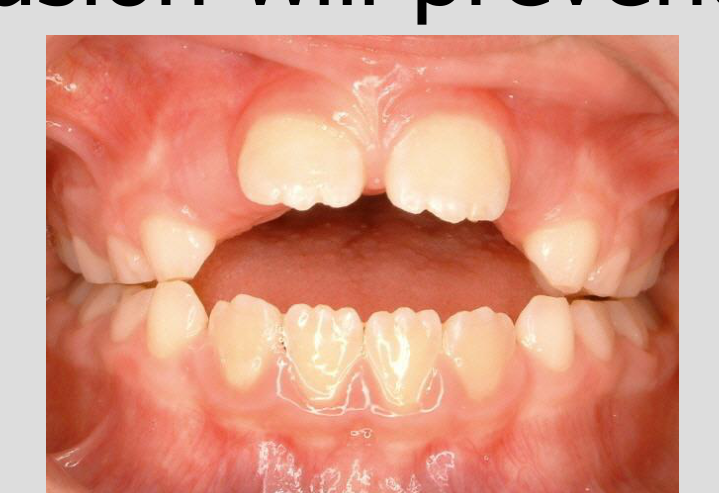
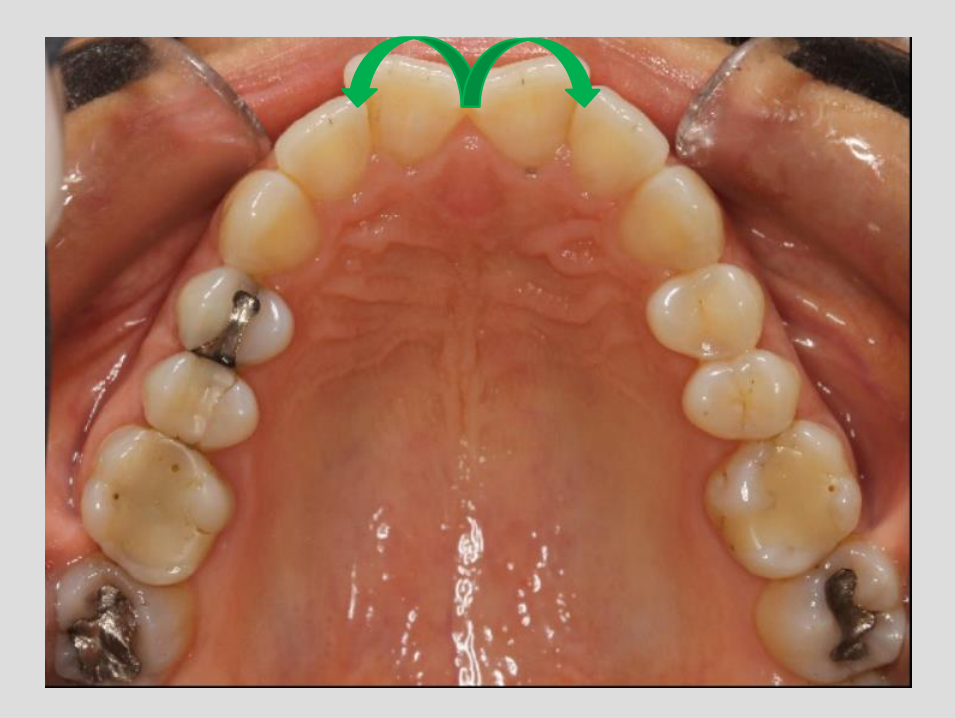
- Theorem 1: Teeth which have been moved in or through bone by orthodontic appliances often have a tendency to return to their former positions
- Theorem 2: The elimination of the causes of a malocclusion will prevent recurrence
Theorems of Orthodontic Stability3456789
-
Theorem 3: Overcorrection of a malocclusion is a safety factor in retention
-
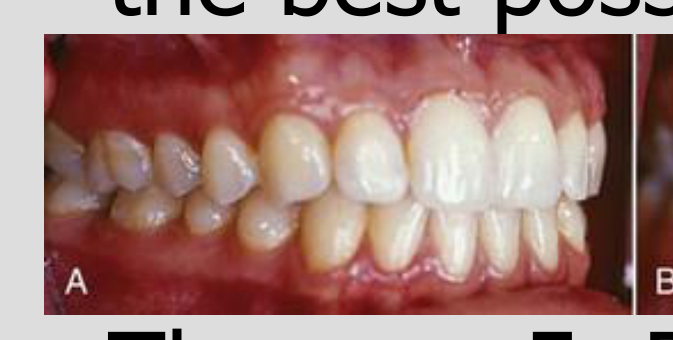
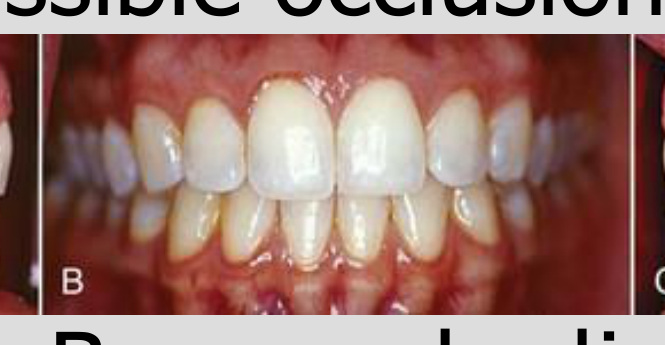
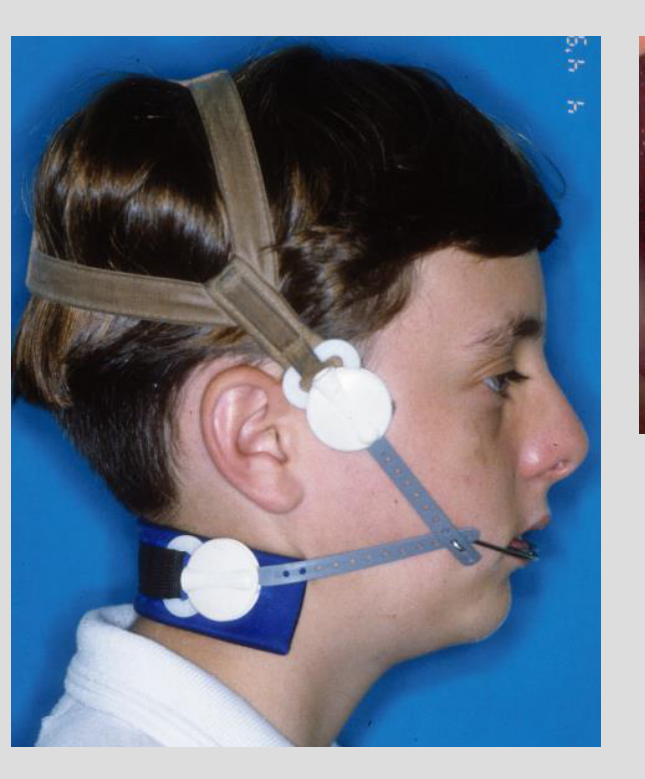
Theorem 4: Occlusion is an important factor in retention; therefore, an orthodontist should attempt to produce the best possible occlusion of the teeth
-
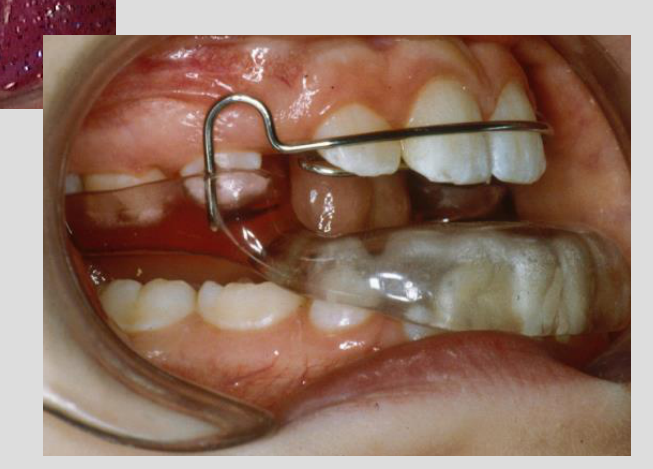
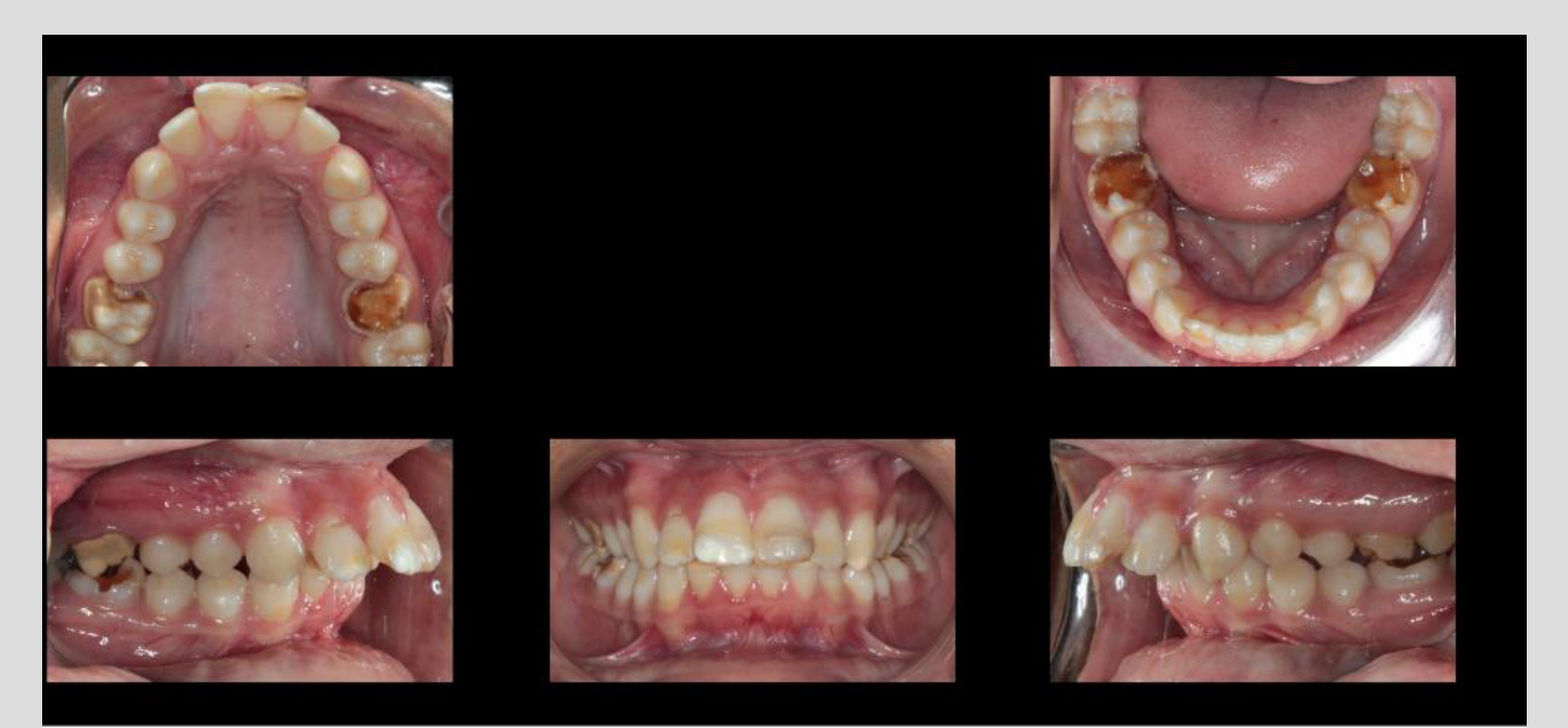
Theorem 5: Bone and adjacent tissues must be allowed to reorganize around the newly positioned teeth for some length of time
 |  |  |
 |  |  |
 |  |  |
 |  |  |
Tissue Reorganization and Periodontal Fibers
Theorem 5: Bone and adjacent tissues must be allowed to reorganize around the newly positioned teeth for some length of time
Fiber Reorganization Dynamics
Collagen fibers (specifically Type 2) act like elastomeric material or “power chains.” It takes time for these structures to sediment and accept the new tooth position.
- Periodontal Ligament (PDL): Reorganization takes approximately four to six months.
- Supra-crestal/Transeptal Fibers: These fibers can take up to one year (or approximately 230–280 days) to accommodate the new position.
Periodontal Fiber Groups
-
Free gingival fibres
-
Transseptal fibres
-
Dentogingival and Interdental Fibres
-
Alveolar Bone
-
Principal Fiber Groups
- Interradicular Group
- Apical Group
- Oblique Group
- Horizontal Group
- Alveolar Crest Group
-
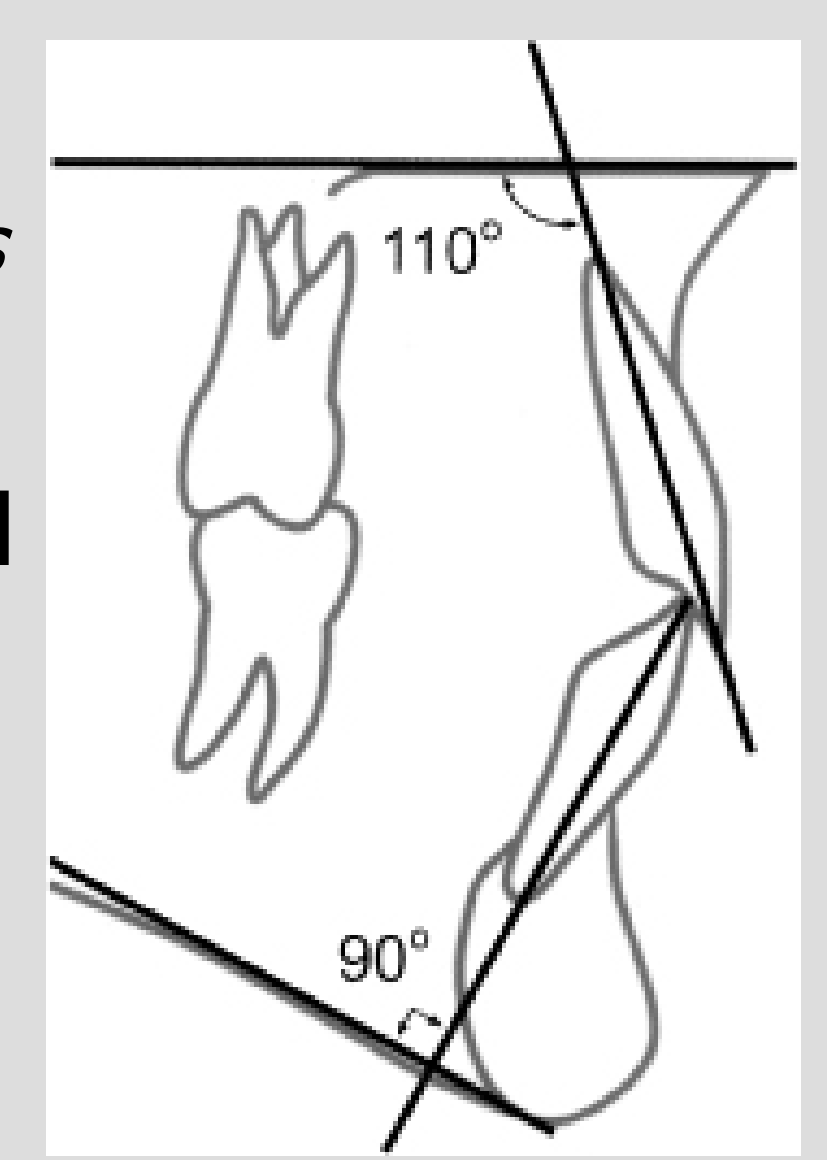
Theorem 6: Placing the lower incisors upright (plus or minus 5 degrees from perpendicular to the Mandibular plane) over basal bone will result in a more stable correction of a malocclusion and they are more likely to remain in good alignment
-
Theorem 7: Corrections carried out during periods when the patients are growing are less likely to relapse
-
Theorem 8: The farther teeth have been moved, the less the likelihood of relapse similar to over-correction
Mandibular Arch Form and Growth Factors1011
-
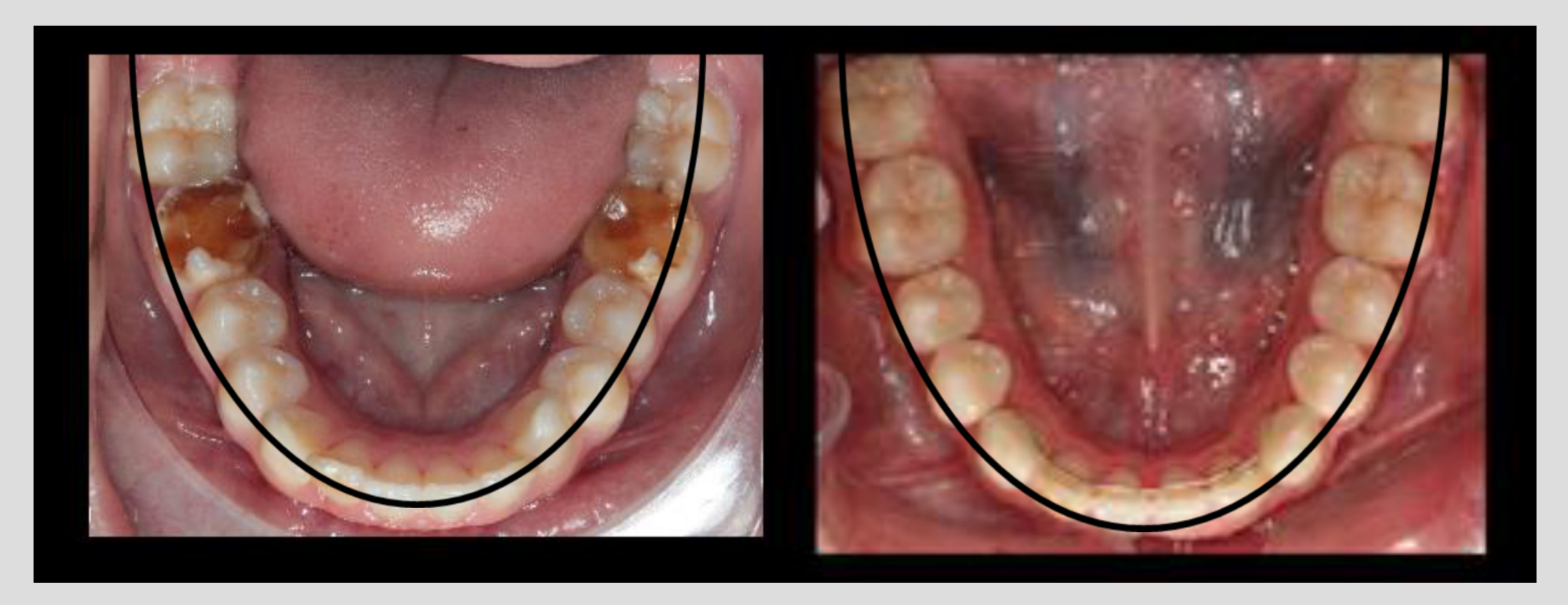
Theorem 9: The arch form particularly in the mandibular arch, cannot be altered permanently by appliance therapy.
- Treatment should be directed toward maintaining the arch form presented by the original malocclusion
- The original arch form presented by the patient is considered the most stable.
- Orthodontists are advised to keep the treatment arch form as close to the original as possible, regardless of whether extractions are performed.
- Treatment should be directed toward maintaining the arch form presented by the original malocclusion
-
Theorem 9: arch form
Riedel considers the following three rules to be the most important:
- Teeth tend to move back toward their former position
- The arch form of the mandibular arch cannot, in the majority of cases, be permanently altered by appliance therapy
- Bone and adjacent tissues should be allowed time to reorganize around newly positioned teeth
Factors Influencing Relapse12
Other factors influencing the retention of treated malocclusions include:
- Tooth-size Discrepancies
- Axial Inclinations
- Growth
- Root Paralleling in Extraction Cases
- Equilibration
- Musculature
- Duration of Retention
Tooth-size discrepancies13
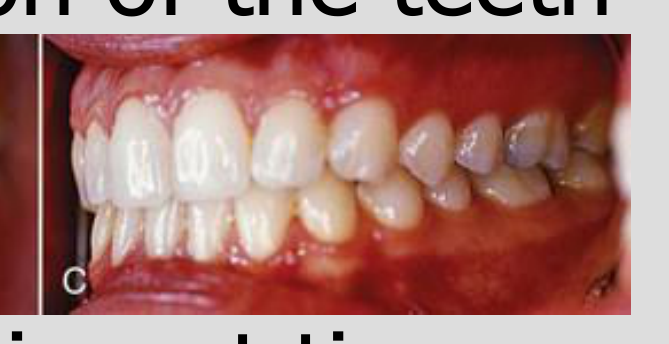
If the maxillary anterior teeth are too large for the mandibular, the maxillary teeth must be placed in one of several positions: deep overbite, greater overjet, combination of greater overbite and overjet, or the maxillary posterior teeth fitting into a more or less distal relationship to the mandible.
Review “Bolton Discrepancy”
Axial Inclinations14
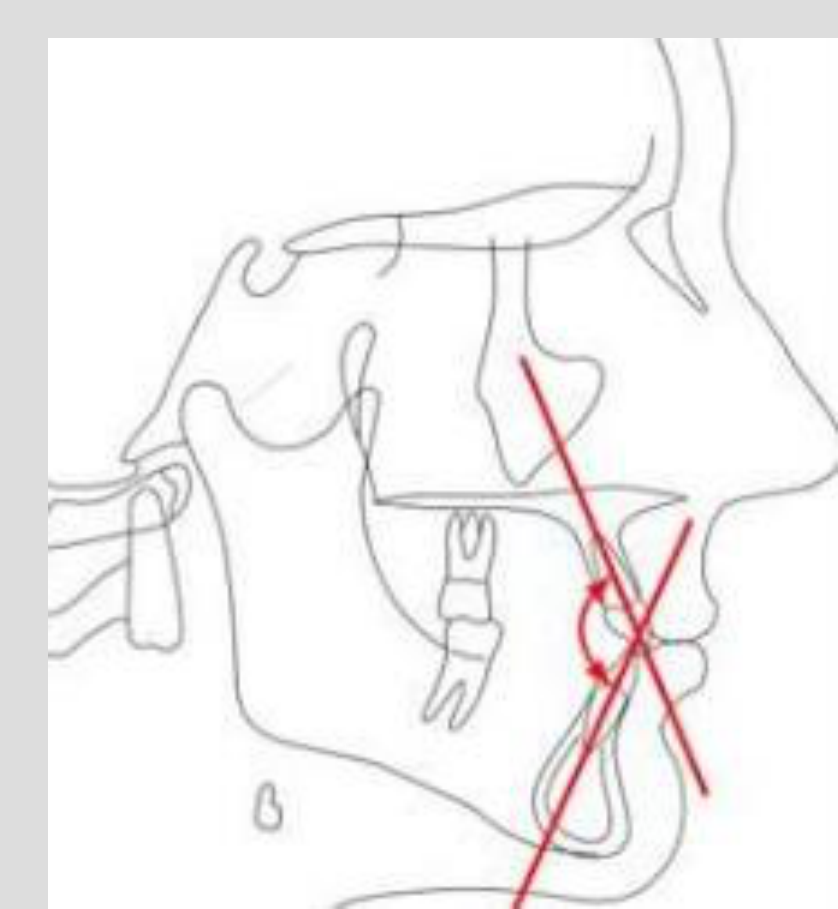
Axial inclination of maxillary and mandibular incisors influences the retention of correction of a deep overbite. Tipping incisors into too upright of a relationship usually results in a deep anterior overbite.
Growth and Sex Differences15
Growth is an aid in the correction of many types of orthodontic problems and it may also be of such character as to cause relapse of treated orthodontic cases. There is a marked difference between the maturation of skeletal and dental patterns of male and female.
- Growth Benefits: Corrections made during active growth periods are less likely to relapse because teeth become anchored in new bone formed during growth.
- Mandibular Growth: In males, the mandible can grow until age 21 or 22. While favorable for Class II correction, it makes Class III cases unpredictable and prone to relapse if the mandible continues to grow after treatment.
Root Paralleling in Extraction Cases16
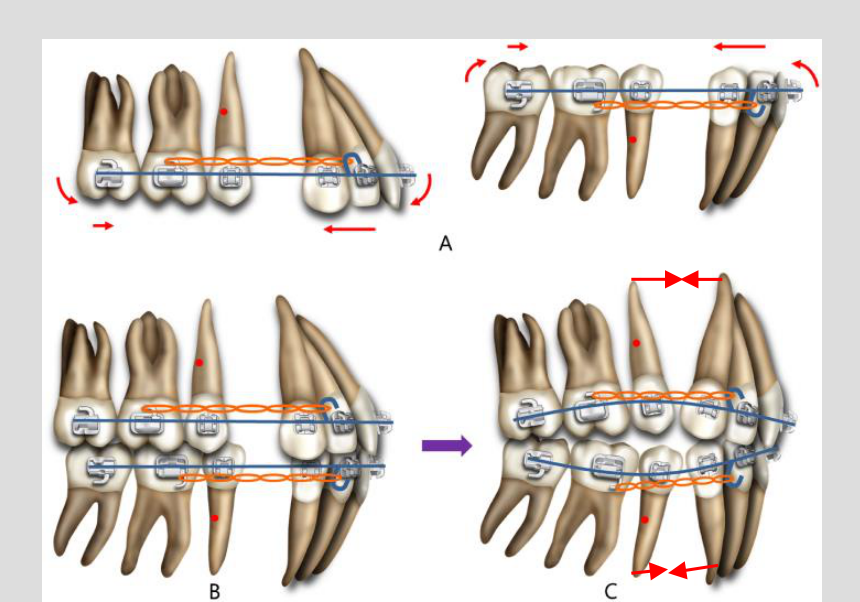
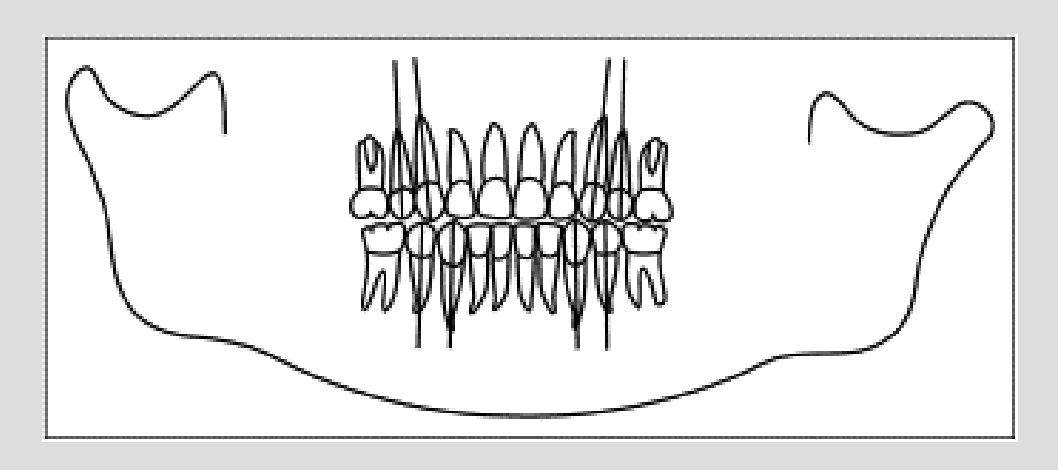
Unless the roots of teeth on either side of the extraction sites are made parallel, spaces may open or teeth rotate due to load distribution on the teeth.
- If roots are divergent, occlusal loads will naturally attempt to parallel them, causing spaces to reopen.
 |  |
Equilibration17
Riedel is of the opinion that functional interferences as a cause of relapse in treated orthodontic cases has been over-emphasized.
- Achieving a good intercuspidation where forces are directed along the long axis of the teeth acts as a natural retainer.
Musculature18
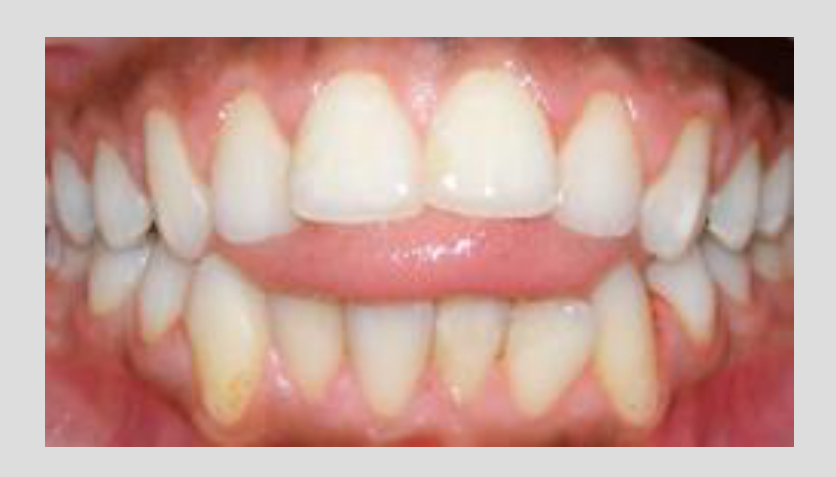
We cannot predict accurately a stable position of the teeth with respect to equilibrium of muscle forces.
- Muscle imbalance is a major factor in relapse.
- Example: An anterior open bite caused by tongue interposition is difficult to treat; if the tongue does not find a new position, the open bite will return.
Duration of Retention19
The debate concerning the length of use of retention devices has simply not been resolved. It is not known whether prolonged retention provides for greater stability or even if prolonged mechanical restraint is biologically desirable.
- While some suggest one year, others note that relapse can occur even after 10 years of fixed retention.
Riedel Retention Categories20
Riedel divided retention requirement into 3 categories:
- Group I: no retention
- Group II: permanent or semi-permanent retention in one or both arches
- Group III: cases requiring varying lengths of retention
Group I: No Retention (Limited Treatment)21
- Anterior crossbite
- Correction is naturally stable if there is sufficient overbite to hold the teeth in position.
- Posterior crossbite after good interdigitation
- High cuspid extraction cases (extraction only)
- Cases in which maxillary or mandibular molars have been tipped distally or premolars tipped mesially to provide space for the eruption of second premolars
- Class II cases treated with headgear, once growth period has passed
Group II: Permanent or Semi-Permanent Retention in One or Both Arches22
- Expansion cases
- Class II or Class III relationship, e.g., strong Class II elastic therapy
- Severe rotations
- Spacing
Group III: Cases Requiring Varying Lengths of Retention or Greater Lengths of Retention23
- Class II cases (extraction or non-extraction): If good muscle balance has been achieved and no severe rotations, long-term retention is not necessary.
- Deep overbite: Retention is directly dependent on growth.
- Class II division 2 cases.
- Relapse risk is due to the trend of incisors to retrocline.
- Class III corrections with surgery require varying length of retention.
- Cases involving the ectopic eruption of teeth or supernumeraries that have been present require varying lengths of retention period.
Perspectives in Orthodontic Stability by Charles Burstone24
- What is a stable dentition? Teeth after orthodontic treatment are not ankylosed to the bone and the supporting tissue allows teeth to migrate under changing conditions
- Burstone views stability as a dynamic state involving the relationship between teeth, soft tissues, and muscles.
- A relationship between functional occlusion and the pattern of tooth migration
Growth and Mandibular Rotation252627
-
Normal growth, orthopedic changes, and relapse
- The mandible grows and displaces forward at a faster rate than the maxilla
- The typical growth helps treatment in Class II, but not in Class III malocclusions
-
Stability and mandibular rotation during treatment
-
High incidence of relapse in patients with deep overbite
-
In growing patients, the mandible grows vertically more than the maxilla to have enough room for the eruption of posterior teeth
-
Excessive vertical growth of the mandible can lead to clockwise rotation and the development of an anterior open bite.
-
Arch width and stability
- Depends on equilibrium of many factors
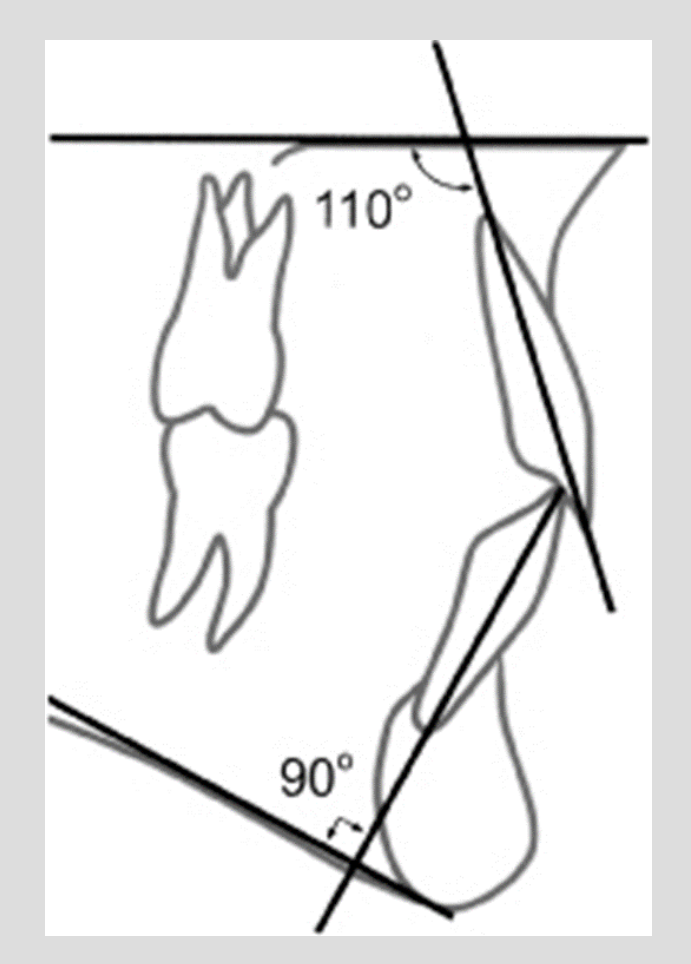
Incisor Position Dogmas282930
Incisor position and stability: three dogmas
The most stable position for a lower incisors is a cephalometric mean: the lower incisor to mandibular plane is about 90° with a standard deviation of 5°
The best position for the lower incisors is its original position
There is only one stable position of the lower incisor. In fact, the original malocclusion may be the most stable position
-
Incisor position and stability: three dogmas
-
The most stable position for a lower incisors is a cephalometric mean: the lower incisor to mandibular plane is about 90° with a standard deviation of 5°
-
Incisor position and stability: three dogmas
-
The best position for the lower incisors is its original position
-
There is only one stable position of the lower incisor. In fact, the original malocclusion may be the most stable position
Intra-arch and Functional Factors31
- Intra-arch factors and stability
- Reorganization of periodontal fibers
- Functional occlusion and stability
- A long centric of 0.5-1.0 mm from the CR is acceptable
- Multidirectional chewing had minimal migration of teeth
Maintenance Systems and Occlusal Dynamics by Ronald Roth32
- Functional vs. Anatomical occlusion One of the aims of orthodontic therapy is to establish a good functional occlusion that is in harmony with the TMJs and mandibular musculature, along with an efficient masticatory apparatus and health periodontium
Roth's Approach
Roth’s approach is centered on anatomical occlusion and functional relationships.
Criteria for Ideal Functional Occlusion33
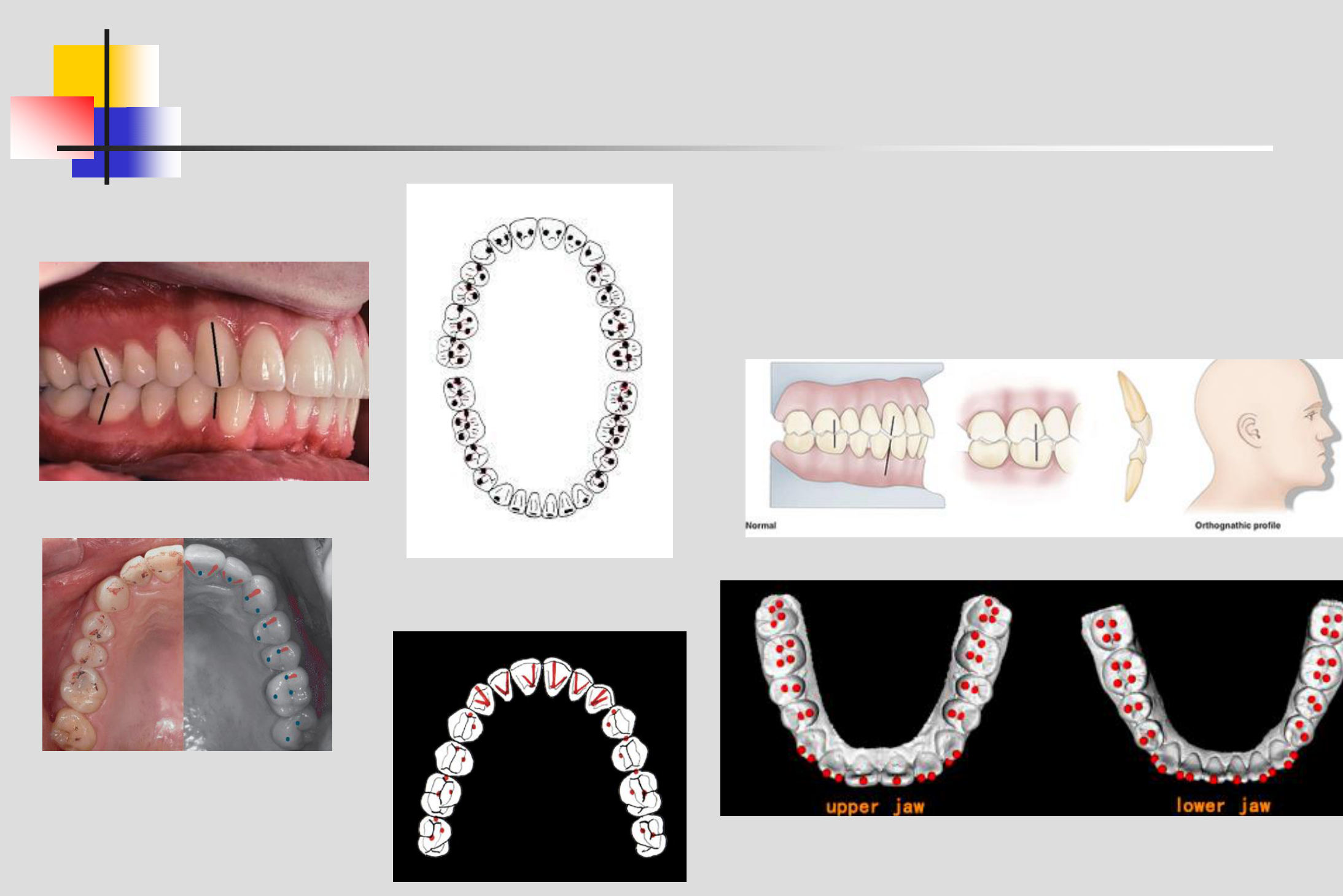
Criteria for an ideal functional occlusion34
- Maximal intercuspation
- Stress should be directed down along the long axis
- The posterior teeth should contact equally and evenly
- Minimal OJ and OB, but sufficient overbite
- Sufficient overbite to keep incisors in place
- Minimal interference
- Minimal interference between the upper and lower arches
Signs and symptoms of occlusal disharmony35
Occlusal disharmonies can result in the following symptoms:
- TMD
- Occlusal wear and bruxism
- Disharmony can manifest as Temporomandibular Disorder (TMD) problems
- Excessive tooth mobility and/or periodontal disease (from lateral stress)
- Movement or relapse of tooth positions
Normal
Orthognathic profile upper jaw lower jaw
Centric Discrepancies and Mandibular Movement
Occlusal relationships and post-treatment tooth movement36
- Should have maximum intercuspation
- 4 types of centric discrepancy
- The tooth or inclined plane interference deflects the mandible off the terminal hinge arc of closure
- Due to failure to correct the jaw relationship anteroposteriorly
- Due to insufficient ramus height or short posterior face height / skeletal openbite pattern
- Asymmetry of the mandible
Articulation of teeth and mandibular movement37
- Straight protrusive movement
- Canine guidance when lateral movement
Post-Treatment Relapse and Equilibrium
Post-treatment relapse38
Lack of equilibrium
Equilibrium
- Reorganization: PDL - 3-4 mos, collagen fiber - 4-6 mos
- Elastic supracrestal fiber - 232 days
 |  |
 |  |
Post-treatment growth & development
- Response, dentoalveolar adaptation
- Continued mandibular growth, especially in Class III cases, can undermine treatment results.
Orofacial soft tissue (muscle activity)
- lower labial segment
- arch width
- arch length
- a well-interdigitating occlusion
Muscle Imbalance in Special Needs Patients
Achieving balance in muscle activity is particularly challenging in special needs patients, where half of the treatment gains can be lost in a few months due to muscle imbalance.
Toward a perspective on orthodontic retention, AJODO, May 1998
Retention Planning and Appliance Selection39
Planning the retention phase - 6 factors
- Obtaining informed consent: no guarantee
- Original malocclusion and patient’s growth pattern: retention device, long-term stability (Cl II, mild Cl III, openbite, rotated teeth)
- Type of treatment performed: removable (6 months), or fixed (1 year)
- Soft and hard tissue adjunctive procedures to enhance stability: fiberotomy, surgical gingivoplasty, frenectomy, interproximal stripping
- Type of retention: removable, fixed, passive or active
- Duration of retention: no clear indication
Toward a perspective on orthodontic retention, AJODO, May 1998
Fixed Versus Removable Retainers40
Recommendation
A combination of both fixed and removable retainers is often recommended for optimal stability.
Fixed retainers41
Advantages:
- Retain corrections of incisor irregularity
- Compliance free
Disadvantages:
- Less effective with inherently unstable
- Patients are often dismissed
- Plaque accumulation
- Technique sensitive (bond failure, stress of wire)
Removable retainers
Advantages:
- Cleanness – flossing
- Inherently unstable procedure
- Capability of correcting minor tooth discrepancies
- Less time-consuming
- Patient can easily be weaned from the appliance
- Requires total patient collaboration for success
Disadvantage:
- Essix retainers – anterior openbite
A rationale for removable retainers, JCO 1998, Vol XXXII, No 2 Comparison of Essix and Hawley retainers, JCO 1998, Vol XXXII, No 2 A 3 year follow-up study of 3-3 retainers, EJO, 1997
A 3 year follow-up study of various types of orthodontic 3-3 retainers
- No difference in the stability of incisor alignment of 4 types of retainers
- Thick plain wire bonded
- Thick spiral wire bonded
- Flexible spiral wire bonded
- Removable retainer
- 20% failure rate: technique sensitive
- Tendency for plaque and calculus build-up along the wire – no significant difference between baseline and follow-up examination
Clinical Requirements for Removable Appliances42
The ideal removable retainers should be:
- Able to allow for functional occlusion
- Sturdy enough to withstand long-term use
- Flexible enough to allow normal physiological movement of teeth
- Convenient for orthodontist to provide and maintain
- Patient-friendly in both comfort and wear routine
- Thermoplastic retainers (clear aligners) typically need replacement once a year due to crack propagation or discoloration.
A rationale for removable retainers, JCO 1998, Vol XXXII, No 2
Clinical Applications of Retention Categories4344
Clinical Applications
Can be divided into three categories:
- No Retention Required
- Limited Retention
- Permanent or semi-permanent retention
Cases Requiring No Retention45
No Retention Required
- Corrected anterior crossbites when adequate overbite has been established
- Posterior crossbites if axial inclination is acceptable
- Malocclusions treated by serial extraction only
- Corrections achieved by retardation of maxillary or acceleration of mandibular growth once the patient has passed the growth period
- Achieved when intercuspidation is “fantastic” enough to maintain the position.
Cases Requiring Limited Retention46
Most typical orthodontic cases fall into this category. Time required to allow muscular adaptation and tissue reorganization. However, ideally retention is life-long in treated orthodontic cases.
Cases Requiring Permanent Retention47
Permanent or Semi-permanent Retention
- Cases of considerable or generalized spacing
- Instances of severe rotation or severe labio-lingual malposition
- Labio-lingual malpositions of lower incisors.
- Spacing between maxillary central incisors
- Severe overbite in Class II Div. 2
- Cleft palate lateral expansion
Retention Mechanics and Modalities48
Retention Mechanics – Three Classes
- Fixed Retention
- Removable Retention
- Functional Elastic Retainers
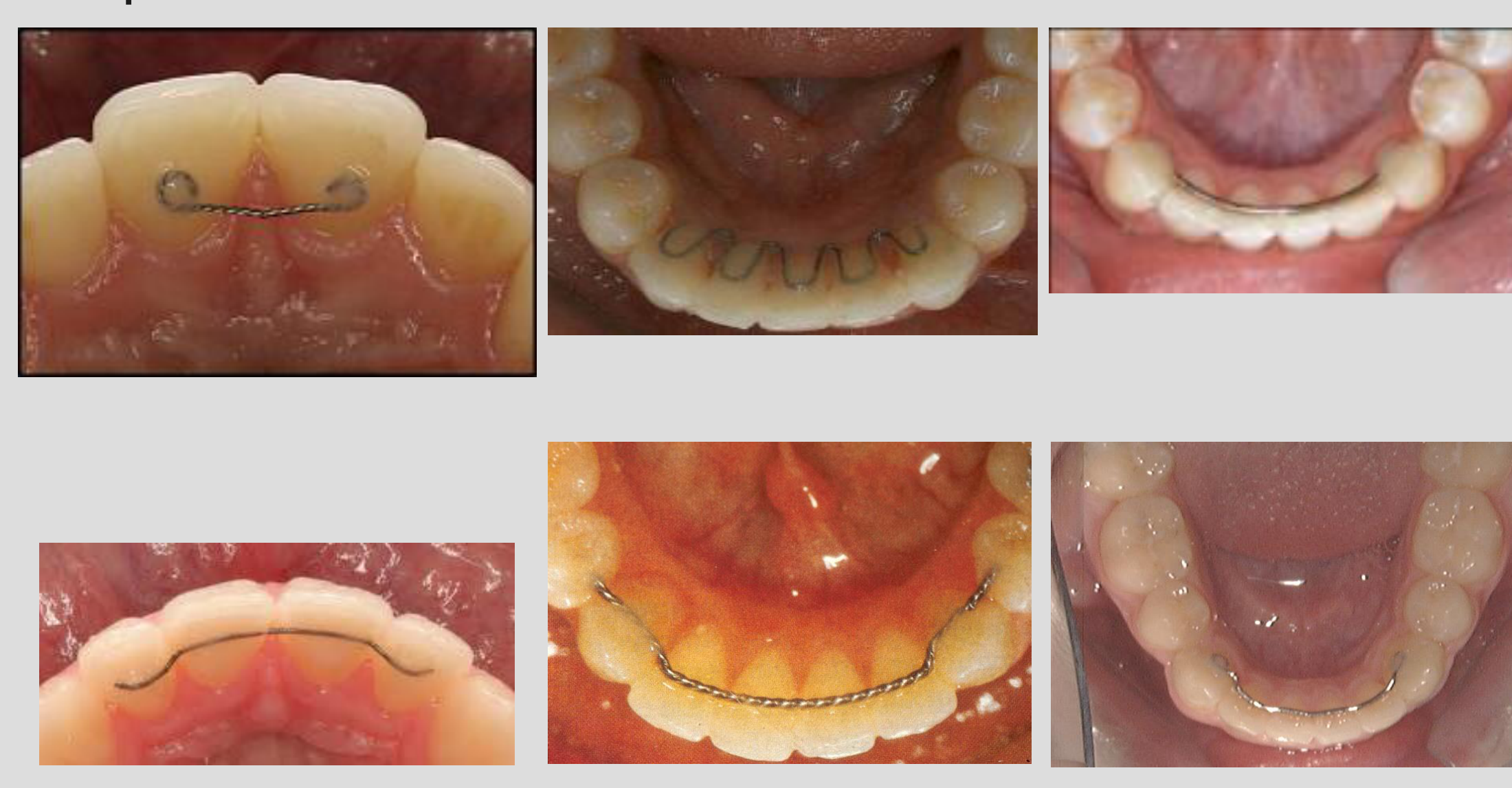
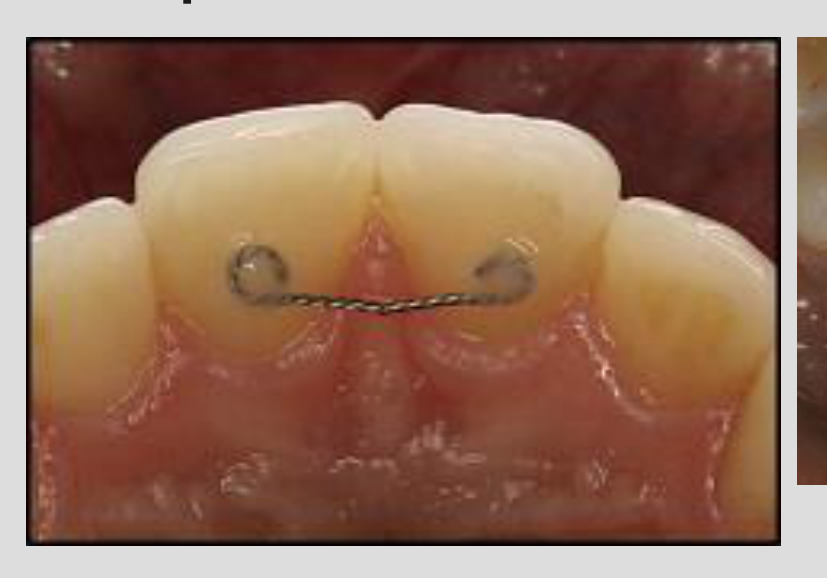
Fixed Retention Mechanics4950
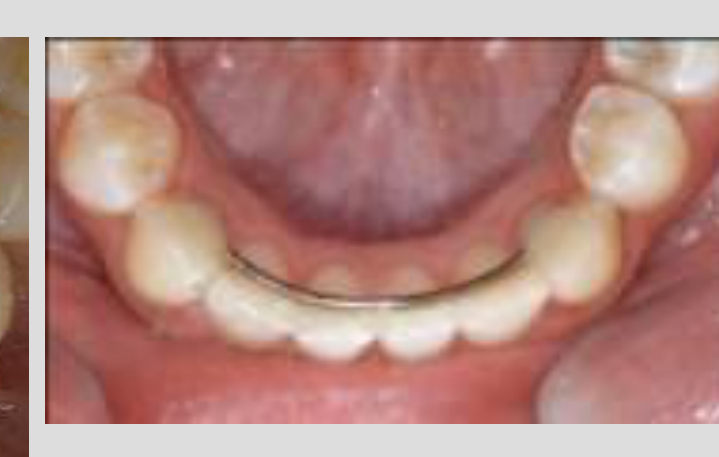
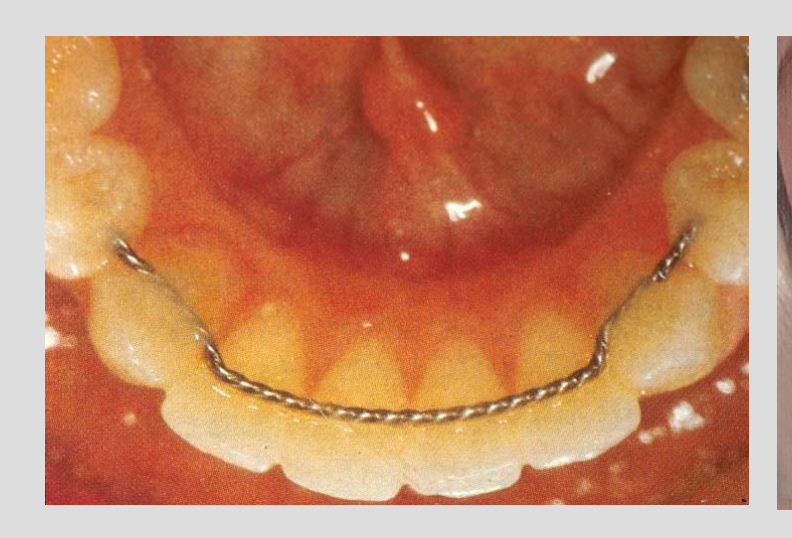
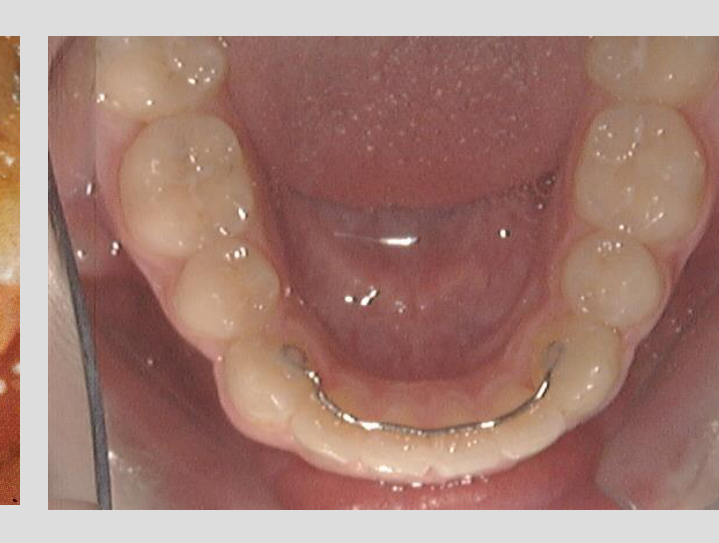
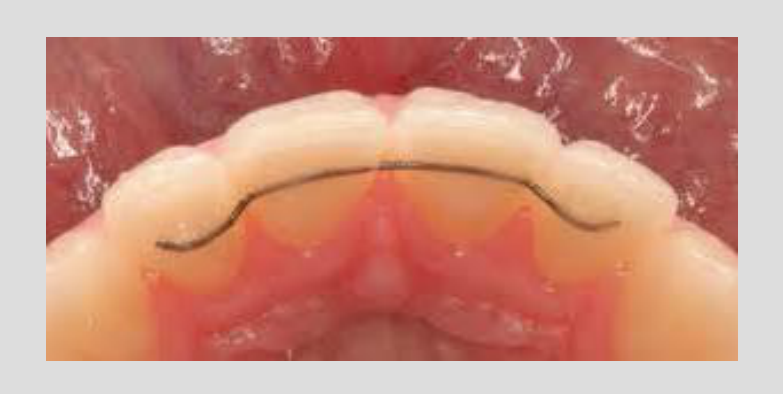
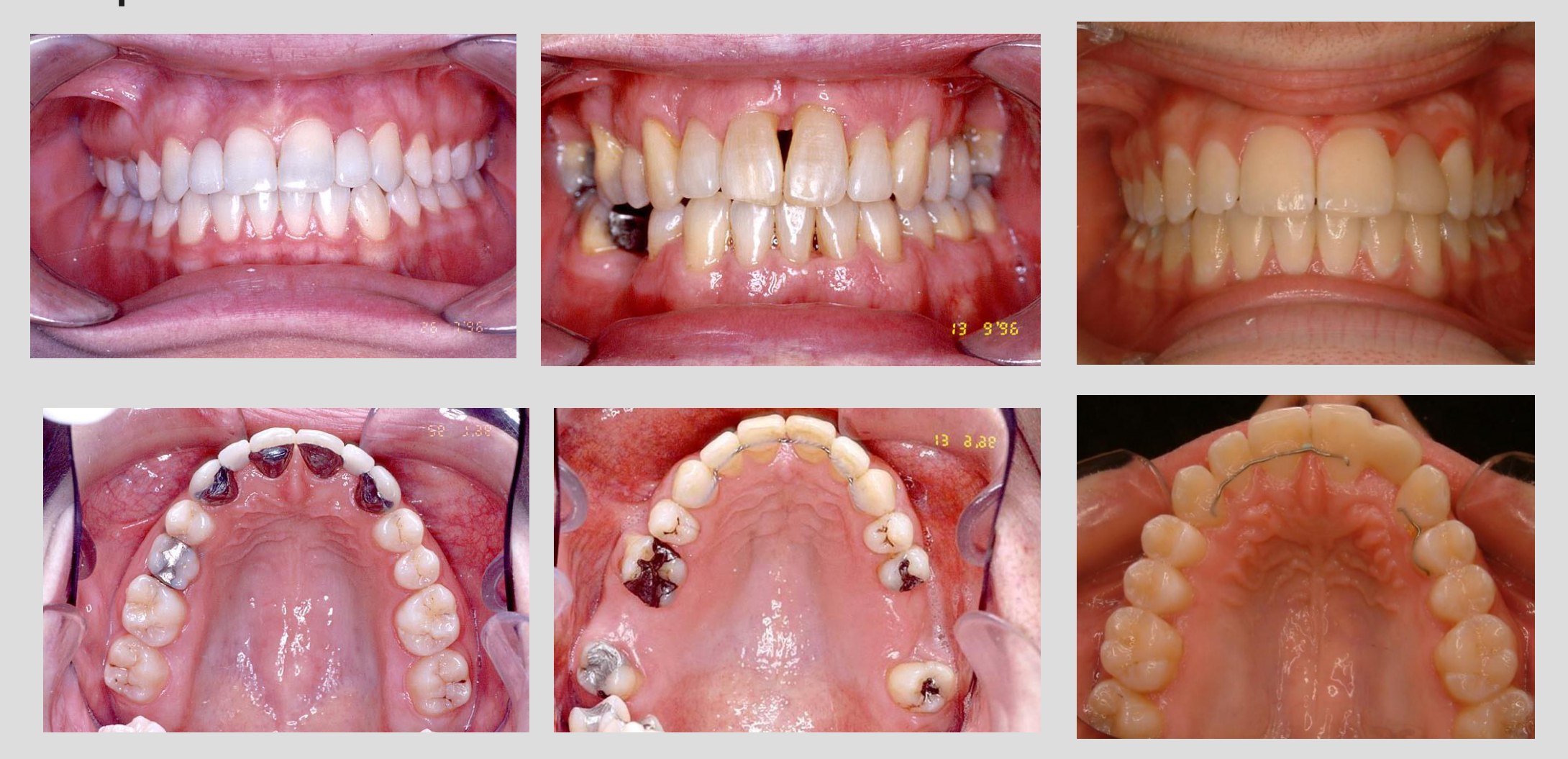
- Bonded Bars: Typically canine-to-canine.
- Vertical Control: For overbite or open bite cases, a top bar may be bonded from lateral to lateral to treat the incisors as a single unit.
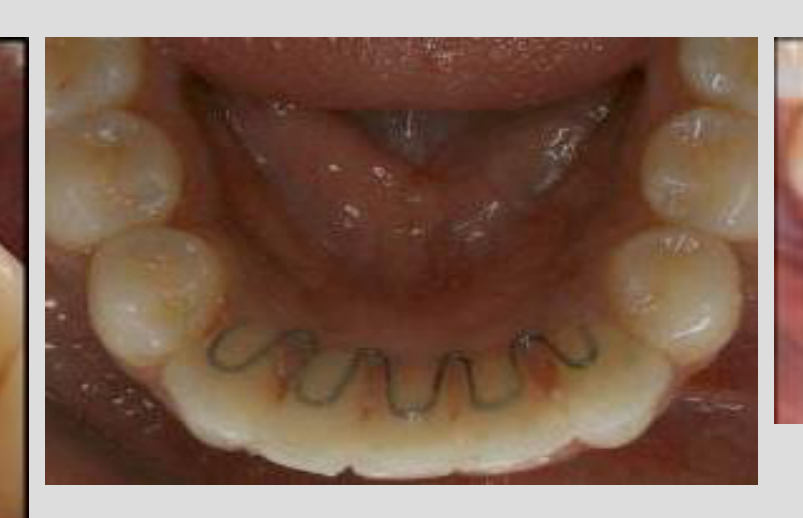
- Wire Types: Can include thick plain wire, flexible spiral wire, or multi-strand wire. A “zigzag” design may be used for periodontal patients to facilitate flossing.
 |  |  |
 |  |  |
 |  |
Removable and Functional Elastic Retainers5152
Removable Retention
Functional Elastic Retainers
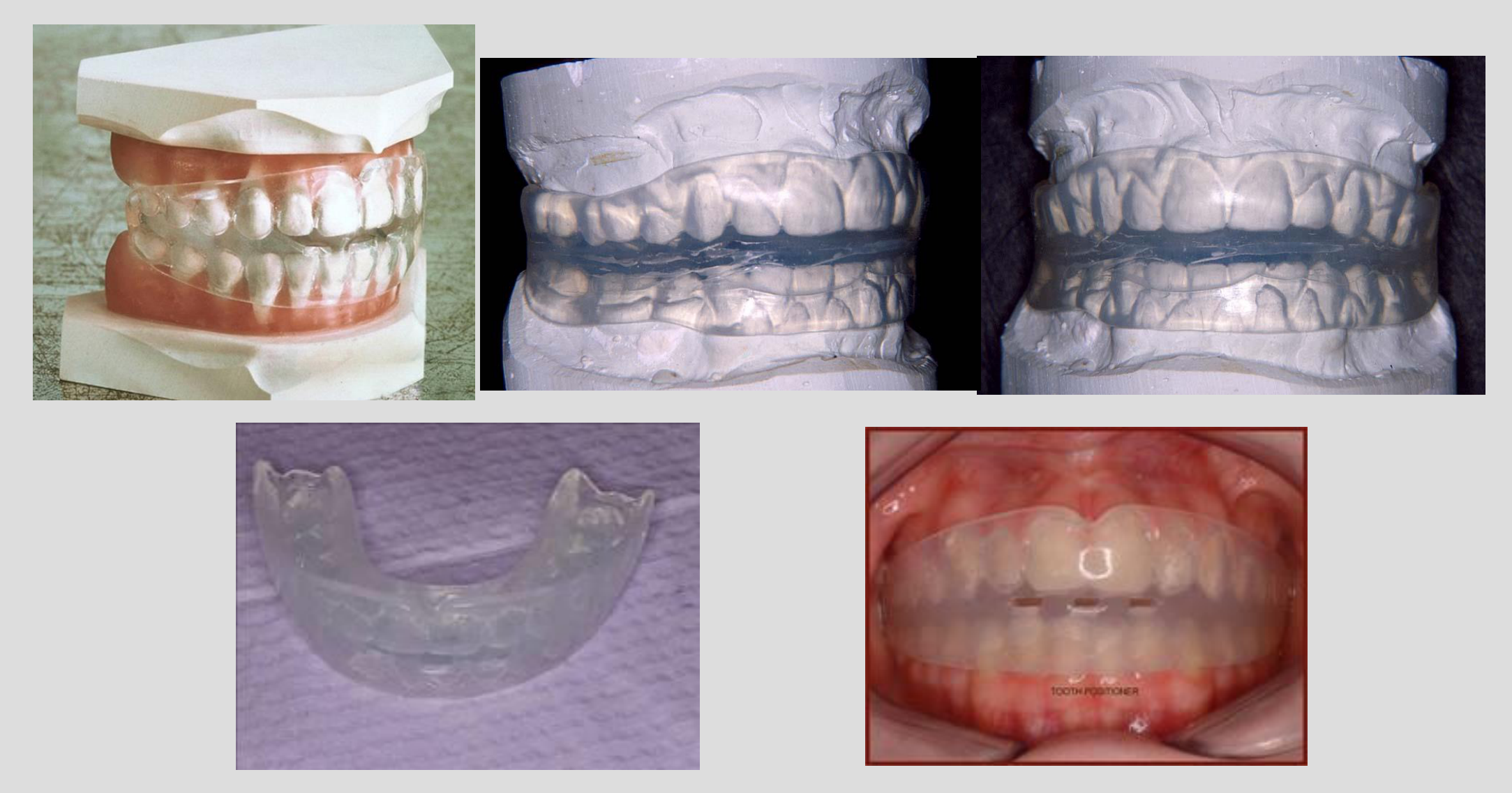
TOOTH POSITIONER
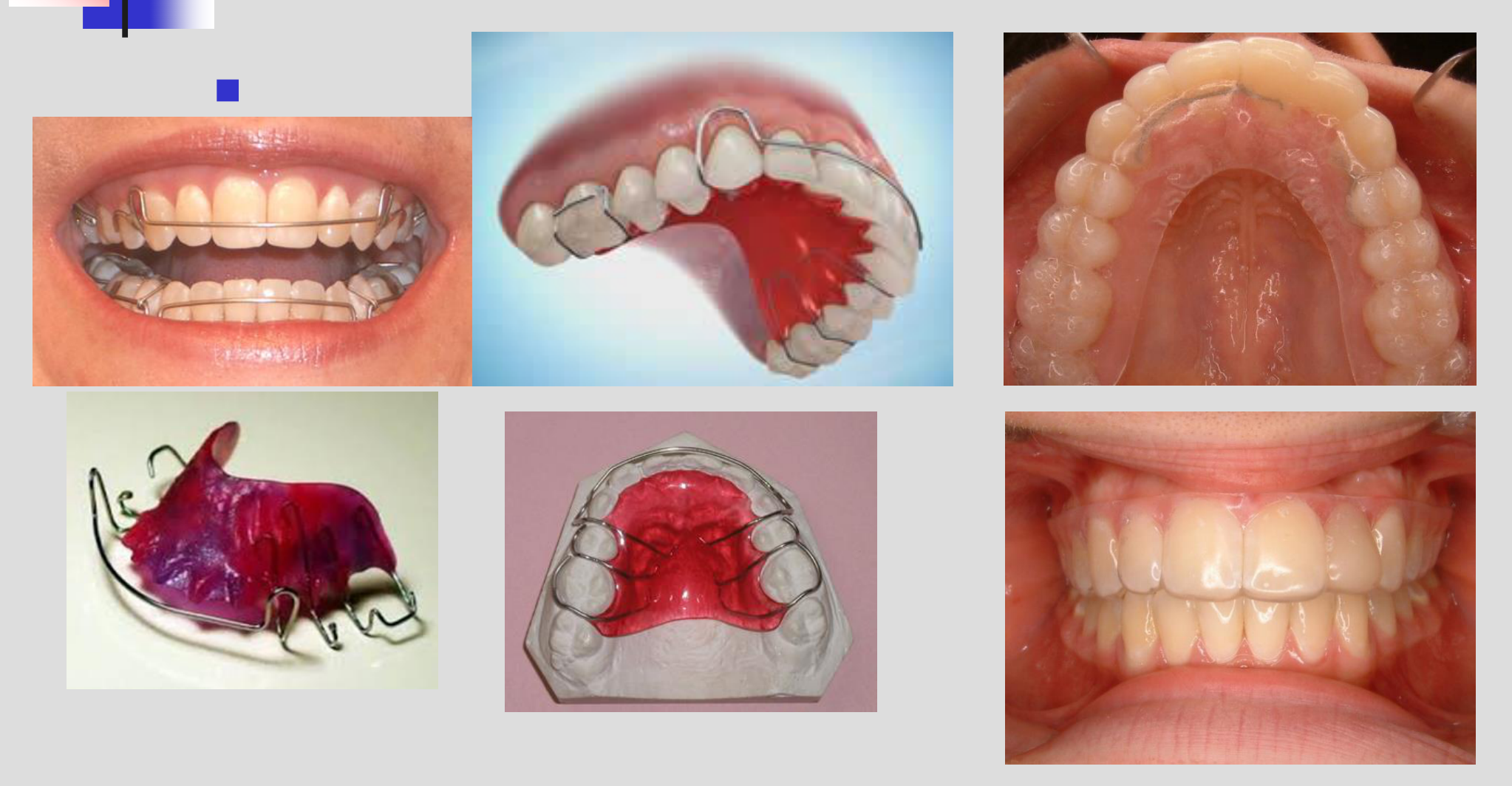
- Thermoplastic (Truthanes): Used 24/7 for the first three months, then nighttime only.
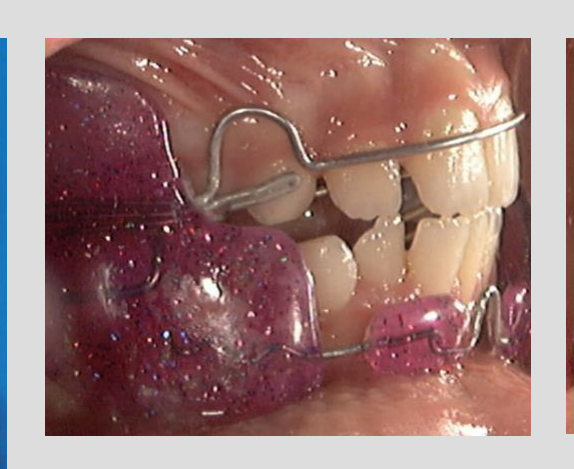
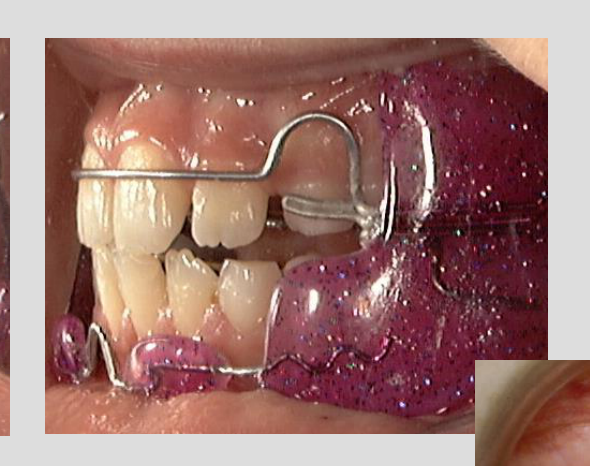
- Acrylic Plates: Used for transverse stability following expansion.
- Bite Plates: Used to control deep overbite by preventing the extrusion of incisors.
 |  |
Conclusions and Professional Guidance5354
An interesting and informative method of reviewing the retention problem is to look at some quotes by eminent orthodontists.
Historical Quotes on Retention5556
Retention Conclusion
- “We are in almost complete ignorance of the specific factors causing relapse and failures.” Hellman
- “… . That for girls they wear it (retainer) until they get married.” Ottolengui
Retention Conclusion
-
“Retention is not a separate problem in orthodontia, but a continuance of what we are doing in treatment.” Hellman
-
“If anyone would take my cases when they are finished, retain them and be responsible for them afterwards, I would gladly give them half the fee.” Hawley
Retention Conclusion
- It is now generally recognized that retention must be appreciated as one aspect of the overall orthodontic treatment. Relapse of orthodontically treated teeth should be viewed not as a pathological or abnormal phenomenon, but as an unwanted or undesirable symptom of normal oral physiology.
Direct to Consumer Orthodontics and Scope of Practice575859
Retention Direct to Consumer Orthodontics
- It is important to make it very clear to your patients that you as a practitioner do not accept any responsibility for retention for their direct to consumer orthodontic treatment
It is recommended, appropriate and expected in most circumstances to refer a patient back to their orthodontist if there are retention issues.
Relapse Management
The lecturer emphasizes that any relapse should ideally be managed by the original orthodontist, as they are responsible for the long-term commitment of the case.
At the end of the Orthodontic course, you have neither the didactic or clinical knowledge to include comprehensive orthodontic treatment in your Scope of Clinical Practice.
Clinical Cases
Case: Misalignment and Relapse Tendency
Question
Have a look at this condition here [referring to a clinical image of dental misalignment]. How do we manage the correction of this misalignment considering the high risk of relapse?

Findings and Reasoning
- Relapse Trend: There is a strong trend for teeth to return to their former position due to collagen fibers in the gingiva acting like elastomeric material. Even after correction, there is a risk of the teeth moving back toward the original position (e.g., a 50% relapse).
- Retention Strategy: To prevent this, a bonded bar from canine to canine is often necessary, especially in the early stages post-treatment. This can be reviewed and potentially removed after two or three years once the fibers have reorganized.
Case: Anterior Crossbite Correction
Question
Let’s look at the retention requirements for a corrected anterior crossbite. Is a permanent retainer always necessary?
Findings and Reasoning
- Self-Retention: This falls into “Group 1” (no retention or minimal retention).
- Mechanism: Once a crossbite is corrected, if you achieve a normal and sufficient overbite, the occlusion itself acts as a retainer. The physical position of the upper incisors over the lower incisors keeps them in their new position, making the result stable without long-term mechanical retainers.
Case: Root Parallelism in Extraction Cases
Question
Look at this OPG showing the roots of teeth adjacent to an extraction site. What is the clinical significance of the root positioning seen here?
Findings and Reasoning
- Observation: In this case, the roots are not parallel; they are divergent.
- Clinical Significance: If roots are not parallel, occlusal loads will affect the long axis of the teeth, creating a tendency for the roots to tip to become parallel. This often results in the reopening of the extraction space.
- Management: It is critical to request an OPG during the finishing stage of treatment to ensure roots are parallel before removing appliances.
Case: Tongue Interposition and Open Bite
Question
Consider this case of tongue interposition. How does this affect the stability of an open bite correction?
Findings and Reasoning
- Observation: The patient presents with an anterior open bite caused by the tongue fitting into the space between the arches.
- Management: While orthodontic mechanics can close the bite, the tongue must accommodate a new position. If even a small space remains, the tongue will continue to interpose, causing the open bite to recur after treatment.
- Retention: A bonded bar is often used on both the upper and lower anterior segments to stabilize the teeth while the tongue behavior hopefully adapts over time.
Case: Transverse Discrepancy and Expansion
Question
In cases where we have corrected a posterior crossbite through expansion, what type of retainer is shown here to maintain the result?
Findings and Reasoning
- Observation: An upper acrylic plate (removable retainer) is used.
- Mechanism: The acrylic base provides the necessary rigidity to stabilize the transverse relationship and prevent the arch from collapsing back into a crossbite.
Case: Diastema and Frenectomy
Question
Look at this case involving a large midline diastema. What procedures are shown to ensure this space does not reopen?
Findings and Reasoning
- Observation: The image shows a multi-strand wire bonded to the incisors following a surgical procedure.
- Reasoning: For spaces up to 2mm, a fixed retainer is usually required. If the labial frenum has a low insertion, a surgical frenectomy is performed before placing the fixed retainer to remove the fibrous tissue that would otherwise force the teeth apart.
Case: Vertical Relapse Prevention
Question
In cases of deep overbite or open bite (vertical plane problems), how is the fixed retainer modified?
Findings and Reasoning
- Observation: A “top bar” is bonded from lateral incisor to lateral incisor.
- Reasoning: This treats the incisors as a single unit to resist vertical movement (intrusion or extrusion) that leads to relapse of the overbite or open bite.
Case: Periodontal Compromise and Hygiene
Question
Look at this “zigzag” or looped retainer design. Why would this be selected over a straight round wire?
Findings and Reasoning
- Observation: The wire has loops between the teeth rather than a straight path.
- Reasoning: This design is recommended for periodontally compromised patients or those with hygiene difficulties. The loops make it easier for the patient to use floss to clean the interproximal areas, reducing plaque retention compared to some other fixed designs.
Footnotes
-
Original PDF page 1: 5 - Retention, p.1 ↩
-
Original PDF page 2: 5 - Retention, p.2 ↩
-
Original PDF page 3: 5 - Retention, p.3 ↩
-
Original PDF page 4: 5 - Retention, p.4 ↩
-
Original PDF page 5: 5 - Retention, p.5 ↩
-
Original PDF page 7: 5 - Retention, p.7 ↩
-
Original PDF page 8: 5 - Retention, p.8 ↩
-
Original PDF page 9: 5 - Retention, p.9 ↩
-
Original PDF page 12: 5 - Retention, p.12 ↩
-
Original PDF page 10: 5 - Retention, p.10 ↩
-
Original PDF page 11: 5 - Retention, p.11 ↩
-
Original PDF page 13: 5 - Retention, p.13 ↩
-
Original PDF page 14: 5 - Retention, p.14 ↩
-
Original PDF page 15: 5 - Retention, p.15 ↩
-
Original PDF page 16: 5 - Retention, p.16 ↩
-
Original PDF page 17: 5 - Retention, p.17 ↩
-
Original PDF page 18: 5 - Retention, p.18 ↩
-
Original PDF page 19: 5 - Retention, p.19 ↩
-
Original PDF page 20: 5 - Retention, p.20 ↩
-
Original PDF page 21: 5 - Retention, p.21 ↩
-
Original PDF page 22: 5 - Retention, p.22 ↩
-
Original PDF page 23: 5 - Retention, p.23 ↩
-
Original PDF page 24: 5 - Retention, p.24 ↩
-
Original PDF page 25: 5 - Retention, p.25 ↩
-
Original PDF page 26: 5 - Retention, p.26 ↩
-
Original PDF page 27: 5 - Retention, p.27 ↩
-
Original PDF page 28: 5 - Retention, p.28 ↩
-
Original PDF page 29: 5 - Retention, p.29 ↩
-
Original PDF page 30: 5 - Retention, p.30 ↩
-
Original PDF page 31: 5 - Retention, p.31 ↩
-
Original PDF page 32: 5 - Retention, p.32 ↩
-
Original PDF page 33: 5 - Retention, p.33 ↩
-
Original PDF page 36: 5 - Retention, p.36 ↩
-
Original PDF page 34: 5 - Retention, p.34 ↩
-
Original PDF page 35: 5 - Retention, p.35 ↩
-
Original PDF page 37: 5 - Retention, p.37 ↩
-
Original PDF page 38: 5 - Retention, p.38 ↩
-
Original PDF page 39: 5 - Retention, p.39 ↩
-
Original PDF page 40: 5 - Retention, p.40 ↩
-
Original PDF page 42: 5 - Retention, p.42 ↩
-
Original PDF page 41: 5 - Retention, p.41 ↩
-
Original PDF page 43: 5 - Retention, p.43 ↩
-
Original PDF page 44: 5 - Retention, p.44 ↩
-
Original PDF page 45: 5 - Retention, p.45 ↩
-
Original PDF page 46: 5 - Retention, p.46 ↩
-
Original PDF page 47: 5 - Retention, p.47 ↩
-
Original PDF page 48: 5 - Retention, p.48 ↩
-
Original PDF page 49: 5 - Retention, p.49 ↩
-
Original PDF page 50: 5 - Retention, p.50 ↩
-
Original PDF page 51: 5 - Retention, p.51 ↩
-
Original PDF page 52: 5 - Retention, p.52 ↩
-
Original PDF page 53: 5 - Retention, p.53 ↩
-
Original PDF page 54: 5 - Retention, p.54 ↩
-
Original PDF page 57: 5 - Retention, p.57 ↩
-
Original PDF page 55: 5 - Retention, p.55 ↩
-
Original PDF page 56: 5 - Retention, p.56 ↩
-
Original PDF page 58: 5 - Retention, p.58 ↩
-
Original PDF page 59: 5 - Retention, p.59 ↩
-
Original PDF page 60: 5 - Retention, p.60 ↩