Space Management1
J. Mike Razza, BS, DDS, Cert Orthod — Associate Professor, Orthodontics, Dental School, University of Western Australia
Space Maintenance or Space Regaining2
Construction3
-
Space for unerupted teeth is adequate. However, space will be eventually lost if not maintained.
-
Space for unerupted teeth is inadequate. Thus, these teeth will erupt into an unsatisfactory alignment if treatment is not initiated.
-
The first decision is whether space maintenance or space regaining is required.
-
Space maintenance preserves existing space during the transition from mixed to permanent dentition.
-
Space regaining reopens or recreates space that has already been lost.
-
Approximately 3–4 mm of space can generally be regained clinically.
-
The lower-arch leeway space is approximately 3.5 mm when both sides are considered.
-
Much of the leeway space comes from the primary molars, especially the E-space.
-
The E-space is important for preserving space after early tooth loss and for managing anterior crowding.
Space Maintenance
Preservation of leeway space
Preservation of space after loss of deciduous teeth
Lecturer — Leeway Space
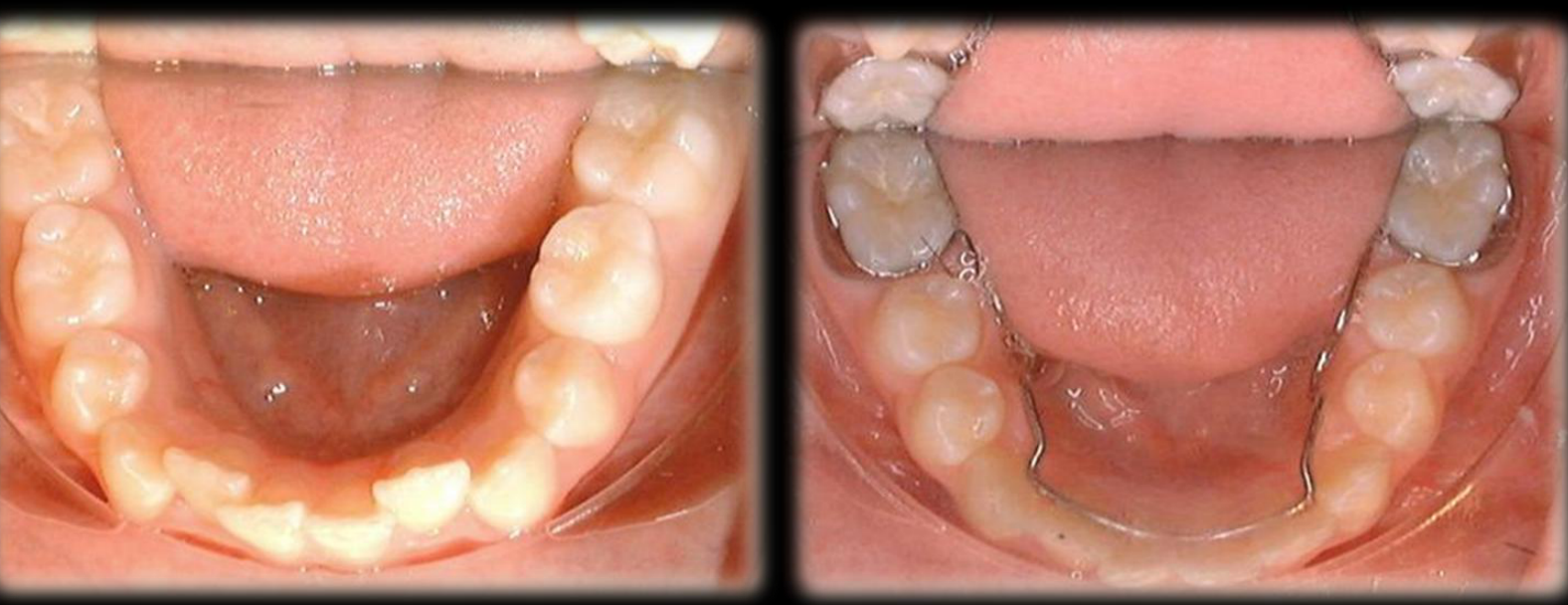
Approximately 3.5 mm of leeway space is available in the lower arch when both sides are considered.
- Preventing physiological mesial drift of the first permanent molars preserves this space for premolar eruption and improvement of anterior crowding.
- This approach may be useful even without early primary-tooth loss and may help prevent future impaction or extraction of lower premolars.
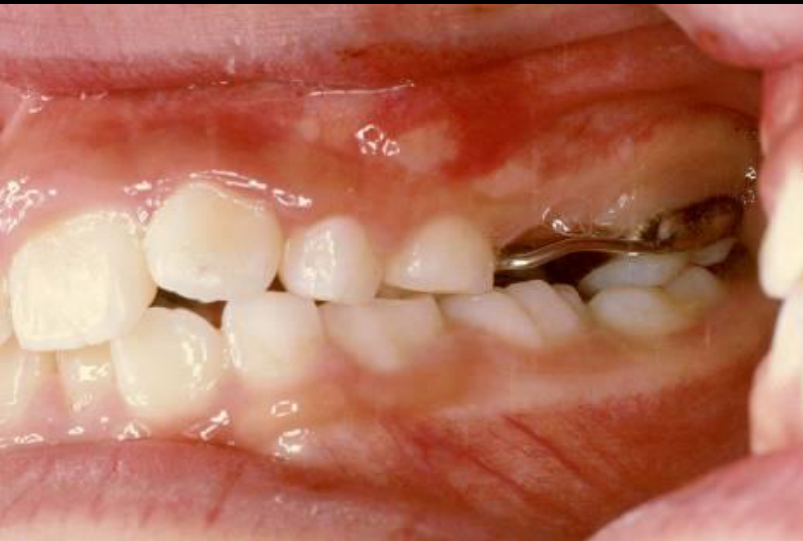
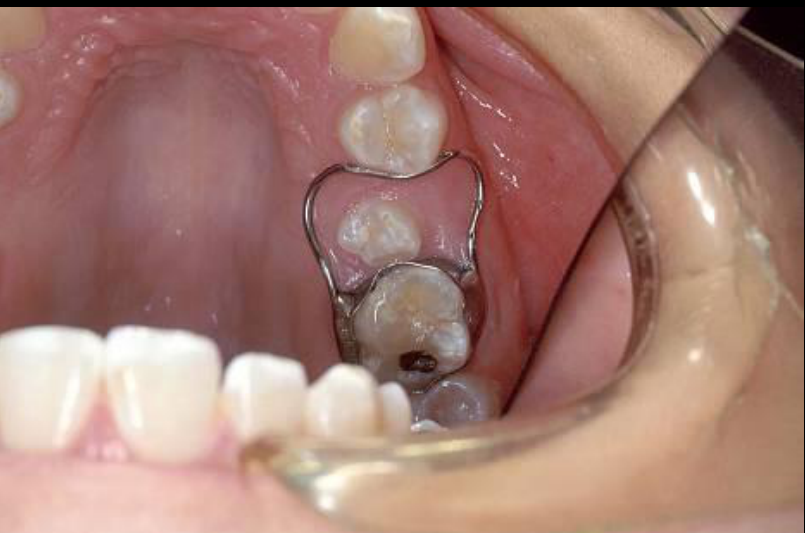
Leeway Space Preservation456
 |  |
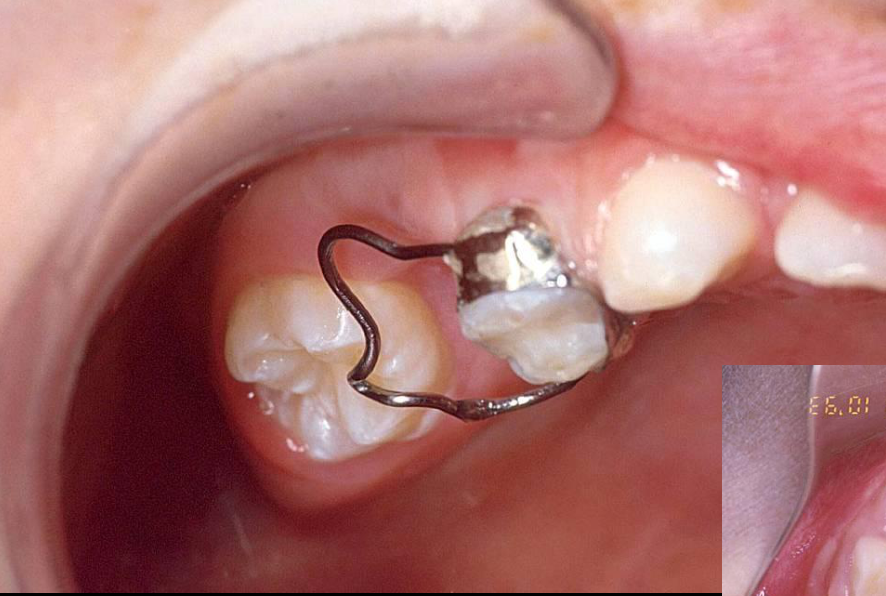 | 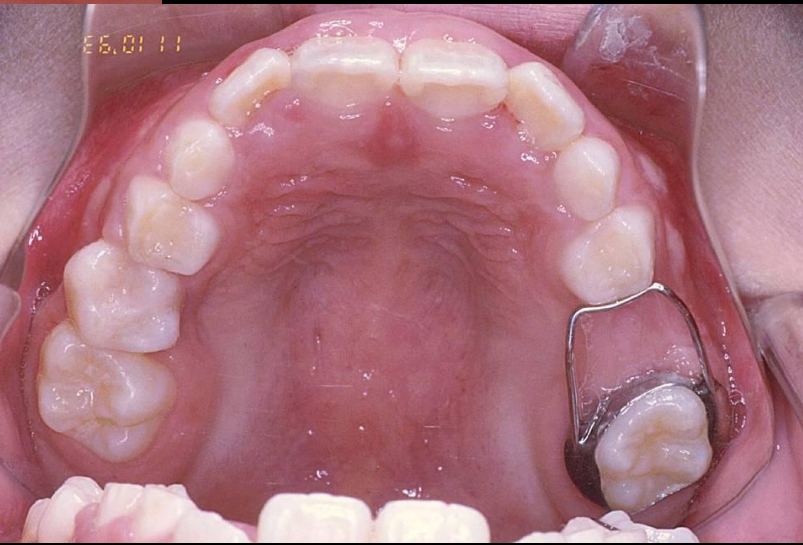 |
Residual Space After Loss of Deciduous Molars7
Residual space remaining following loss of mandibular second deciduous molars
Lecturer — Residual Space
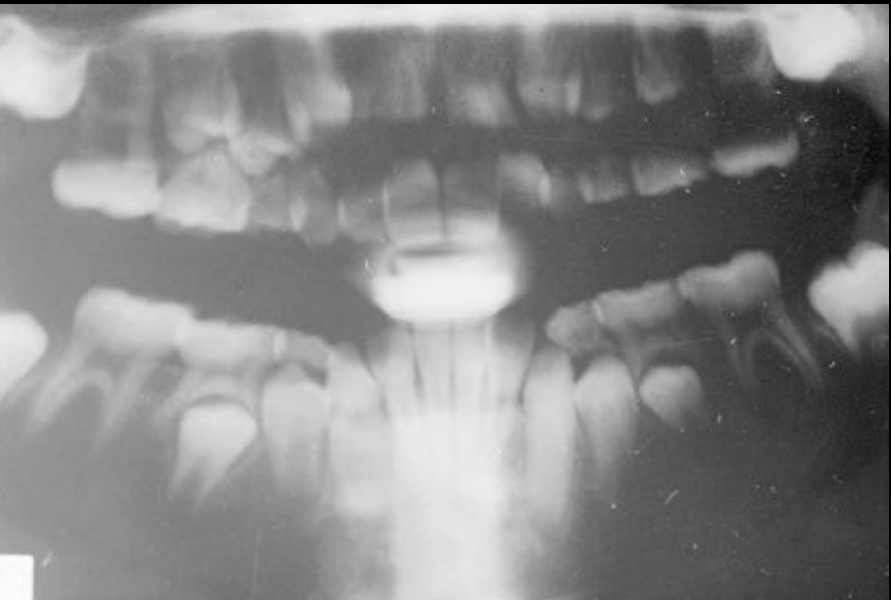
After early loss of primary molars, the developing premolars should be assessed radiographically before deciding whether space maintenance is needed.
- If root development is insufficient and substantial bone remains, eruption is not imminent, so an unerupted premolar may require space preservation.
- A band and loop is generally used for unilateral loss, whereas a lingual arch may be used for bilateral lower-arch space loss.
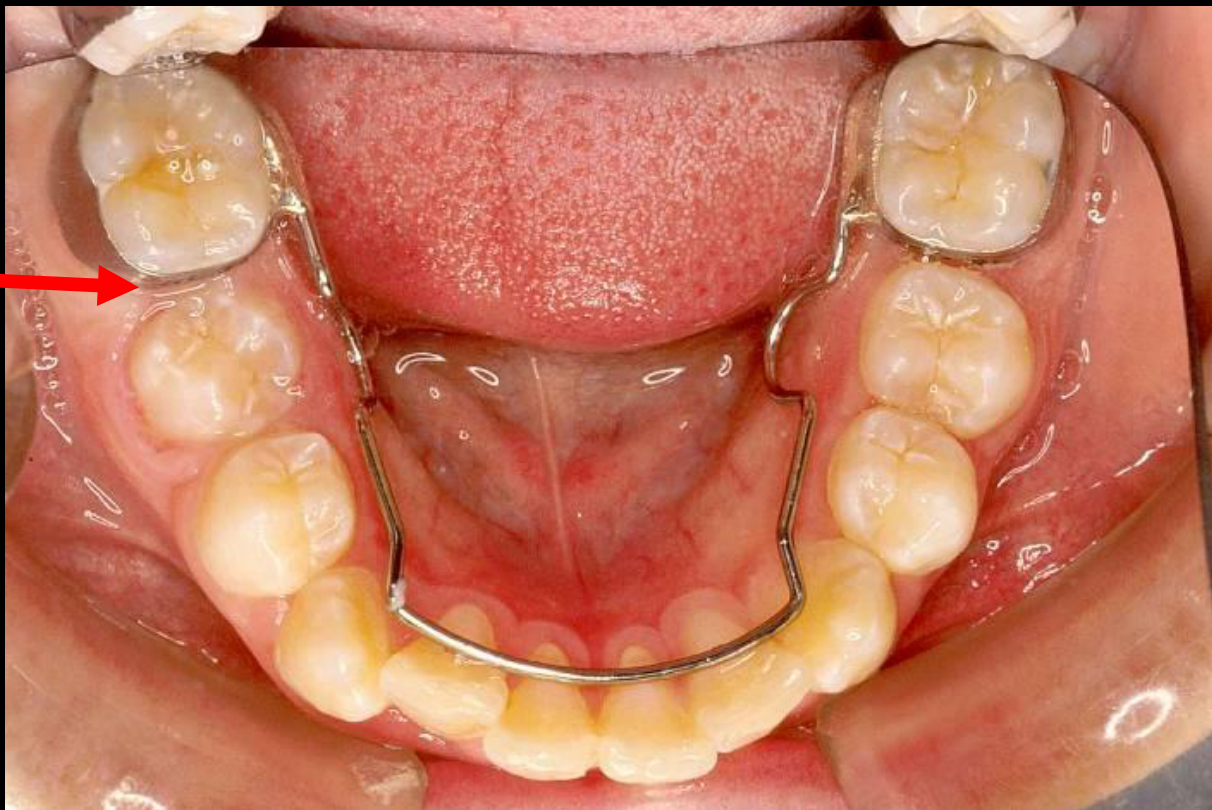
Lingual Arch Construction8
Under construction.
Wire Bending and Adjustment Loops910
You have to bend the wire as if it were to be soldered to bands.
Use 0.9 mm wire with two U-loops for adjustment — these can be opened to advance lower incisors, which will put a distal force on the molar(s).
Lecturer — Lingual Arch Design
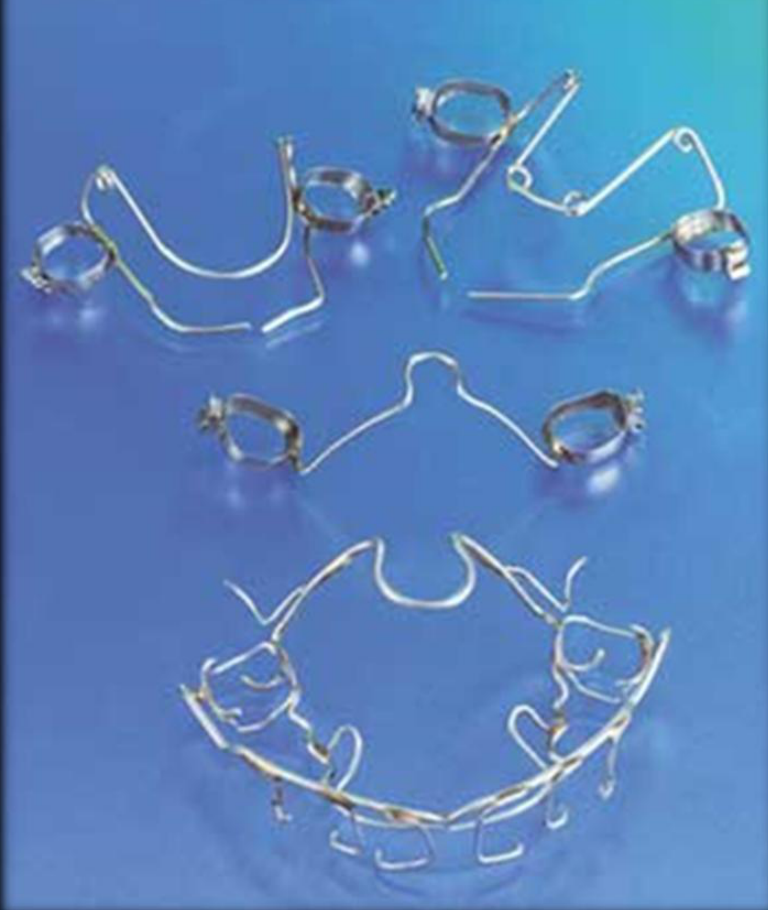
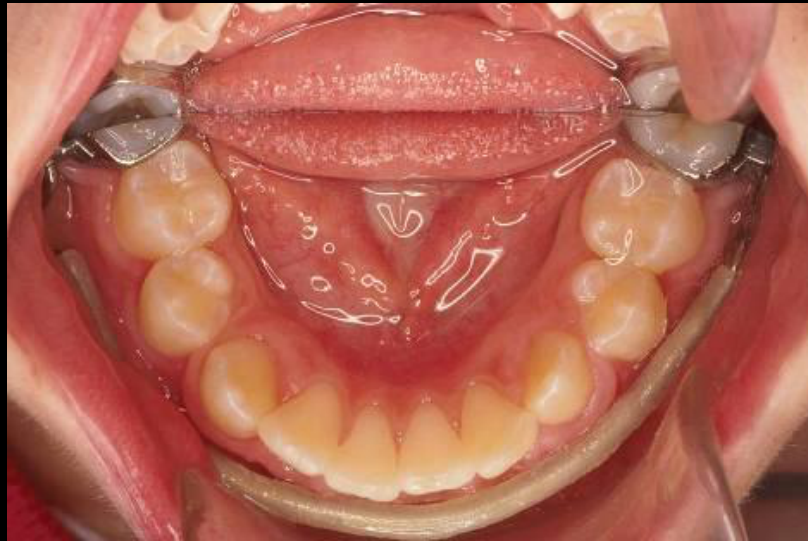
The lingual arch is a fixed appliance made from stainless-steel wire and soldered to bands on the permanent molars.
- U-loops can provide limited incisor protrusion and some uprighting of the first permanent molars.
- They are not intended to produce substantial molar distalization.
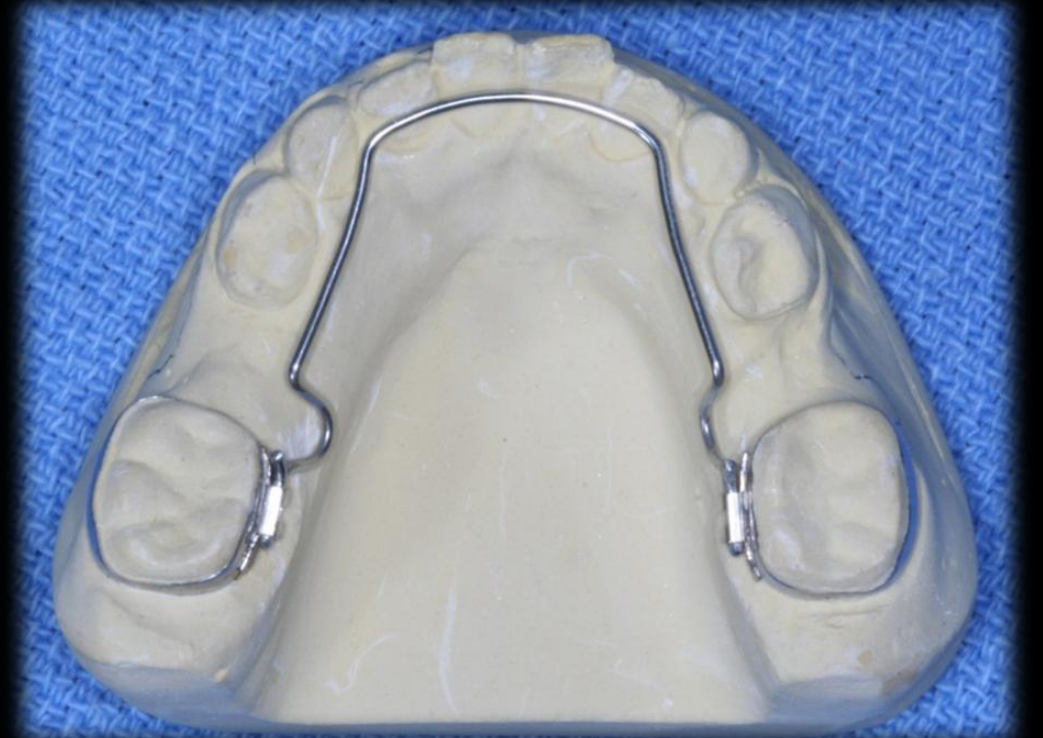 | 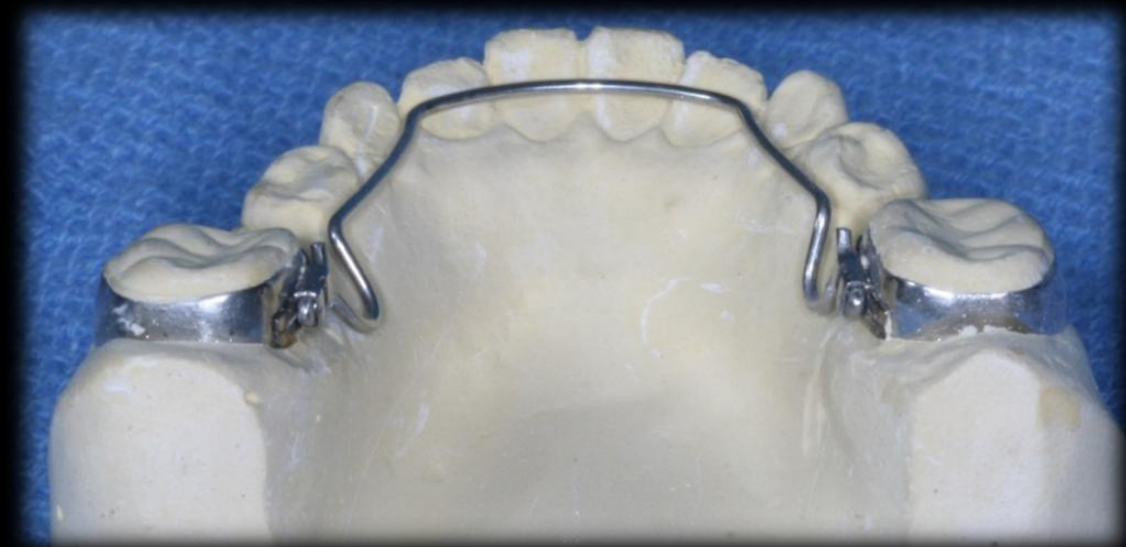 |
Wire Adaptation to the Dental Arches11
- Follow the curvature of the incisors, and as you pass back in the premolar region, leave a bit of space between wire and teeth.
- U-loops flared in so they don’t impinge on the soft tissue.
Lecturer — Loop Activation
Loop activation requires checking the relationship between the wire and the soft tissues.
- The wire must be positioned so that activation does not create trauma.
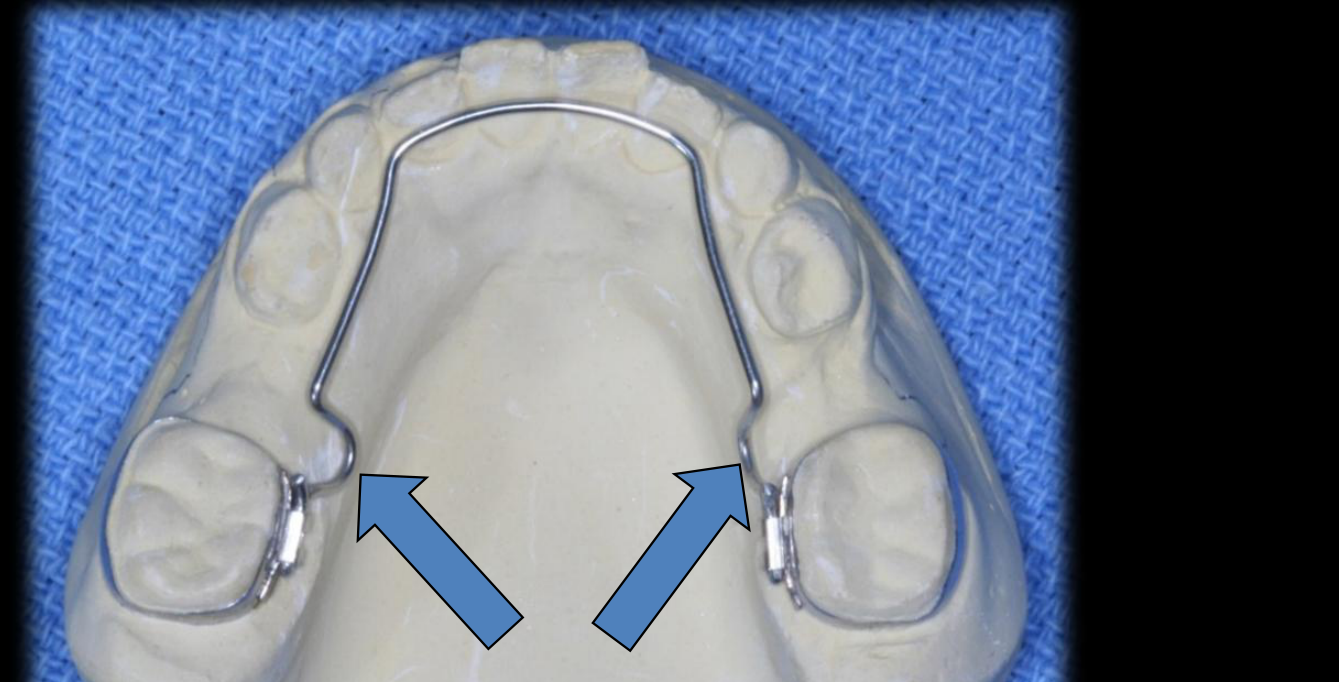
Uses of Lingual Arch
- Space Maintenance
- Holding “E” space for crowding tooth
- Increase Anchorage for tooth movement
- Retention
- May be used as a frame to solder springs
- Arch Development
Lecturer — Space Maintainer
The lingual arch is used after bilateral early loss of primary molars.
- It prevents the first permanent molars from moving forward.
- It can preserve E-space even without early loss, allowing the space to be used for anterior crowding.
- It is particularly useful during the transition from mixed to permanent dentition.
Space Maintainer12
Space Maintenance and E-Space Holding1314
Missing primary teeth.
- Space Maintenance
- Holding E space for crowding
- Increase Anchorage for tooth movement
- Retention
- May be used as a frame to solder springs
- Arch Development
Lecturer — E-Space Holding
The lingual arch maintains permanent molar position and preserves space associated with the primary molars.
- Preventing mesial drift can preserve space for premolars, prevent premolar impaction, and provide space for anterior alignment.
- Holding the molars in position redirects leeway space toward the anterior part of the arch.
- In a bilateral case, the lingual arch connects the two molars as a single anchorage unit.
Anchorage and Retention15161718
- Space Maintenance
- Holding E space for crowding
- Increase Anchorage for tooth movement
- Retention
- May be used as a frame to solder springs
- Arch Development
Lecturer — Anchorage and Retention
Anchorage was described as the prevention of unwanted movement.
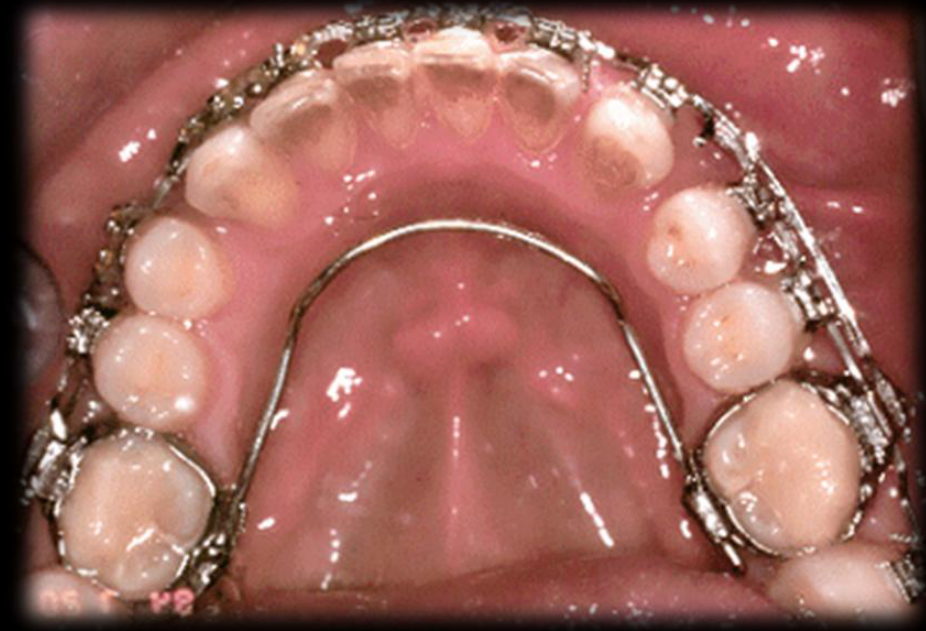
- When anterior or premolar tooth movement is planned, the lingual arch prevents the permanent molars from moving forward.
- When a canine or premolar must be moved backward, it helps maintain molar position.
- A shorter canine-to-canine bar may retain incisor position and maintain the distance between the canines.
- The lingual arch can remain in place after partial treatment until the primary dentition has fully transitioned.
Spring Frame and Arch Development19202122
- Space Maintenance
- Holding E space for crowding
- Increase Anchorage for tooth movement
- Retention
- May be used as a frame to solder springs
- Arch Development
Lecturer — Spring Frame
The lingual arch or a palatal arch can act as a framework for springs and other activations.
- A soldered Z-spring may provide limited correction of anterior crossbite, posterior crossbite, or individual tooth-position problems.
- Activated U-loops can produce limited incisor protrusion and increase arch length, assisting with some crowding in addition to preserving leeway space.
- The appliance is intended for small movements rather than large-scale tooth movement, and appropriate early intervention may prevent later extraction of lower premolars.
 |  |
Space Regaining23
- Limited to cases where 3-4 mm space has been lost
- Easier in the upper arch than in the lower arch
Lecturer — Space Regaining Strategy
Space is usually lost when a permanent molar drifts or tips forward after early loss of a primary molar. The aim is to upright the molar and reopen approximately 3–4 mm so the premolar can erupt.
- If the molar continues to tip forward, the premolar may become blocked and the second permanent molar may occupy additional space.
- The case may eventually become an extraction case.
- The strategy is more important than the specific appliance: move the first permanent molar backward sufficiently to release the premolar.
- Complex cases involving strong distalizing forces, or an accompanying Class II or Class III problem, should generally be referred to a specialist.
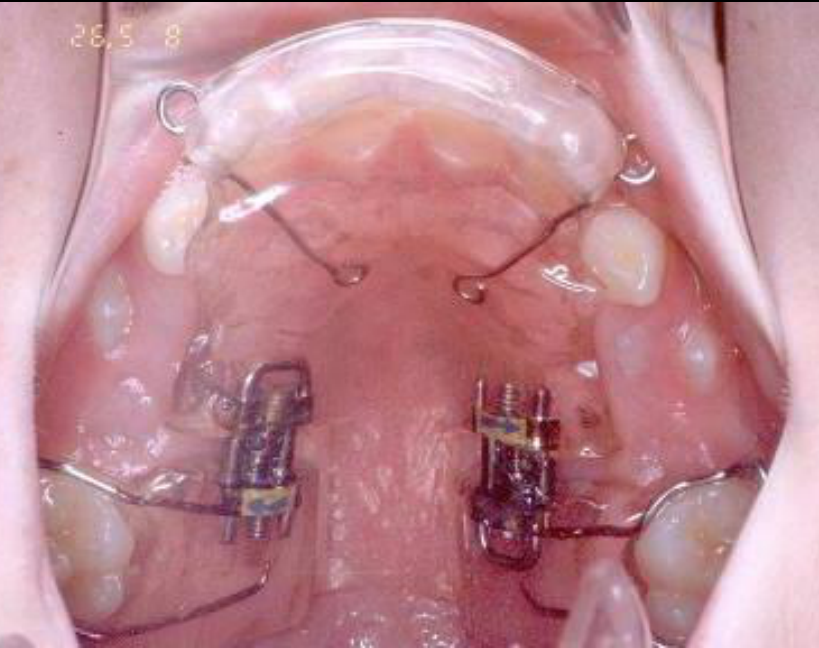
Upper Removable Appliance With or Without Headgear24
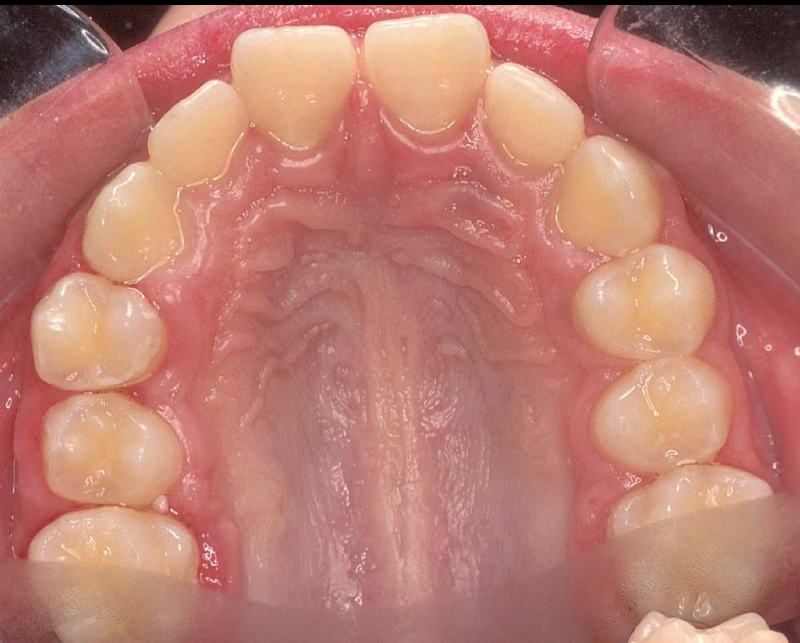
Construction25
Space regaining — upper removable appliance with or without headgear.
Adequate space for alignment.
Lecturer — Appliance Construction
A removable appliance may use a jack screw, a Z-spring, or another design intended to upright the molars. It must provide an appropriate anchorage unit while directing force toward the molars, with activation determined by the amount of space lost.
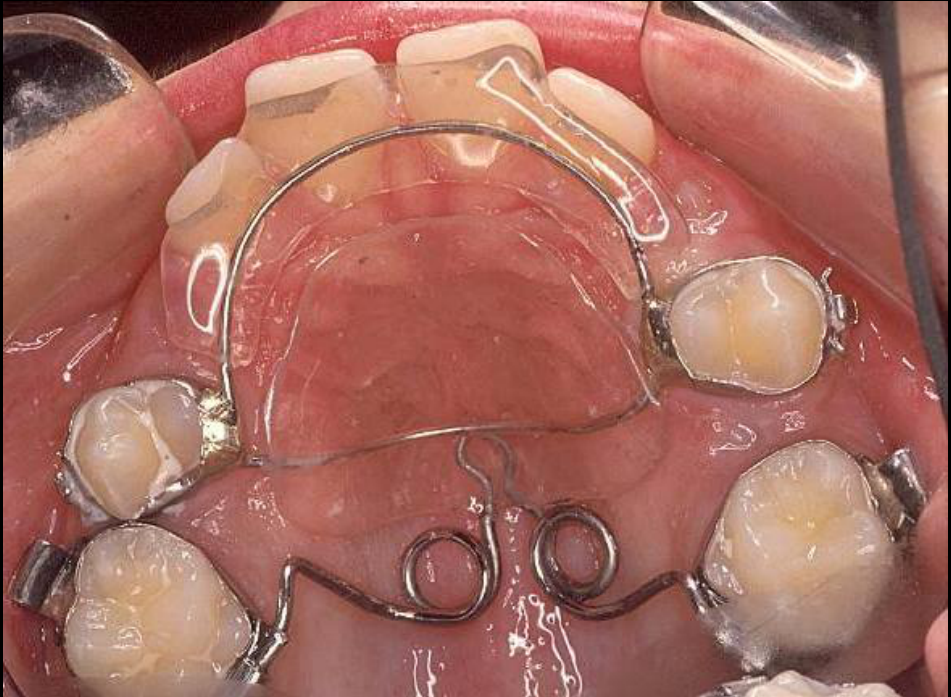
Upper Fixed Appliance26
Lecturer — Pendulum Appliance
A pendulum-type appliance incorporates the anterior teeth into an acrylic plate for anchorage while springs apply backward force to the first permanent molars. Depending on its design and force, it may upright or distalize the molars.
- It is particularly suitable when the second molar roots are not fully developed and the second molars have not fully erupted.
- It can reopen a substantial amount of space, but because it may produce distalization and considerable force, it is generally more appropriate for specialist management.
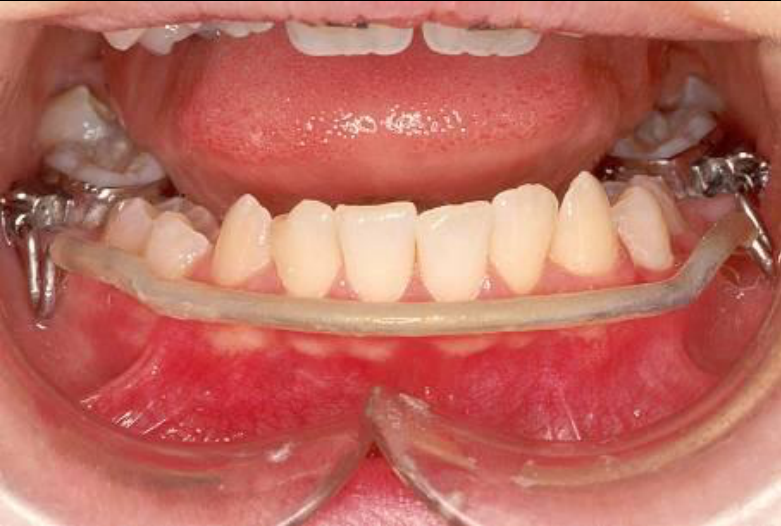
Lip Bumper272829
Lecturer — Lip Bumper Mechanics
A lip bumper redirects pressure from the anterior lip and orbicularis muscles toward the molars. The anterior wire is covered with tubing for patient comfort.
- It generally cannot distalize lower molars.
- It can upright the lower first permanent molars sufficiently to create space for premolar eruption.
Space Loss With Ectopic Eruption3031
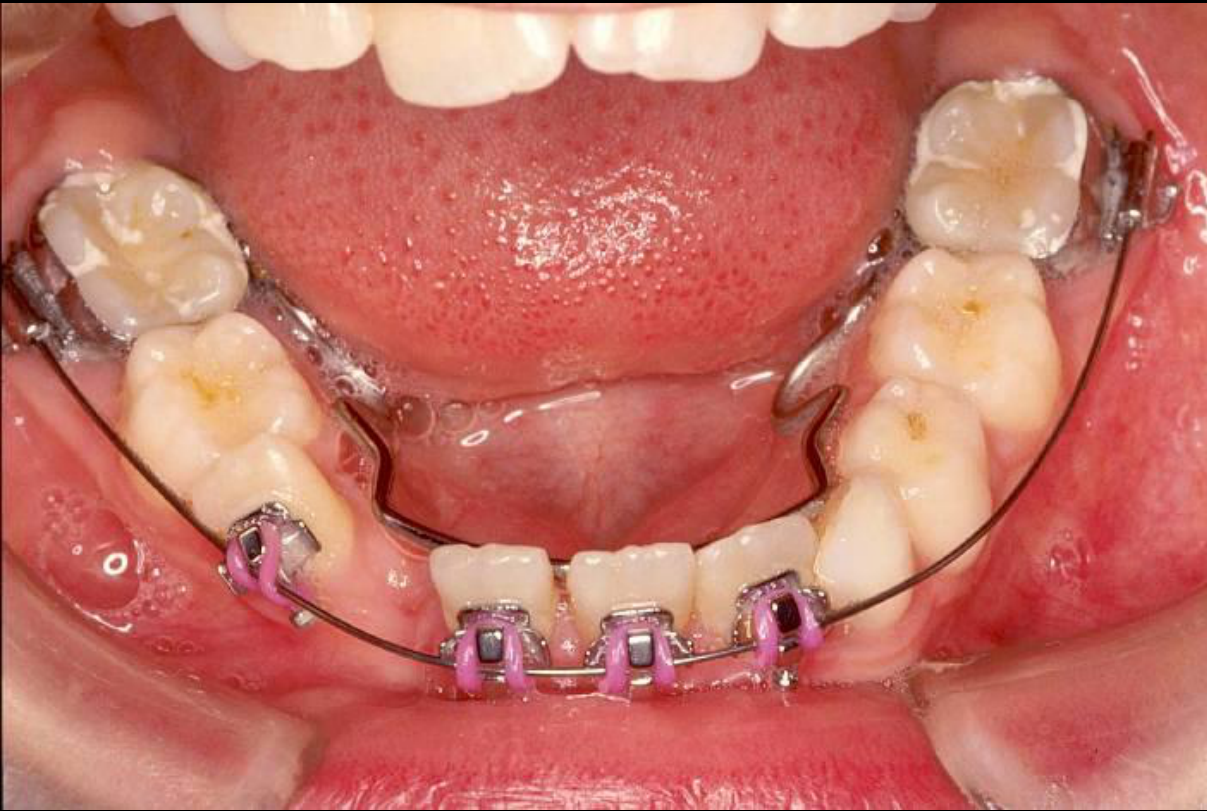
Partial fixed appliances to correct ectopic eruption.
Lecturer — Partial Fixed Appliance
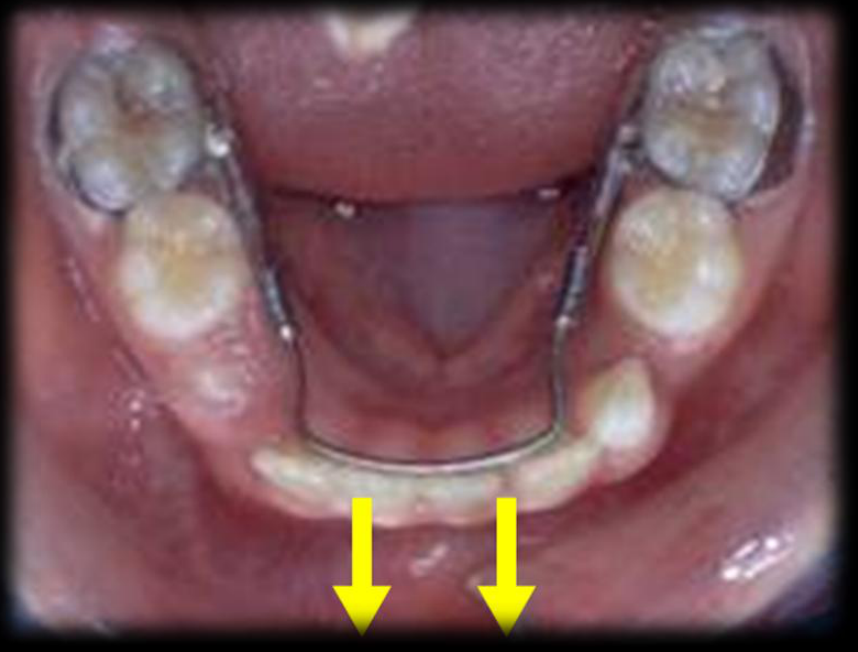
The ectopically positioned tooth can be incorporated into a partial fixed appliance and connected to the first permanent molars. In a two-by-four arrangement, the two first permanent molars provide posterior anchorage and the four incisors are incorporated into the appliance.
- A lingual arch can maintain molar anchorage during treatment.
- Elastic chain can bring an incisor forward along the wire.
- After the incisors are positioned, the partial braces can be removed while the lingual arch is retained temporarily during the transition from primary to permanent teeth.
- The appliance may also be used for anterior alignment, limited incisor protrusion, or space closure.
 |  |
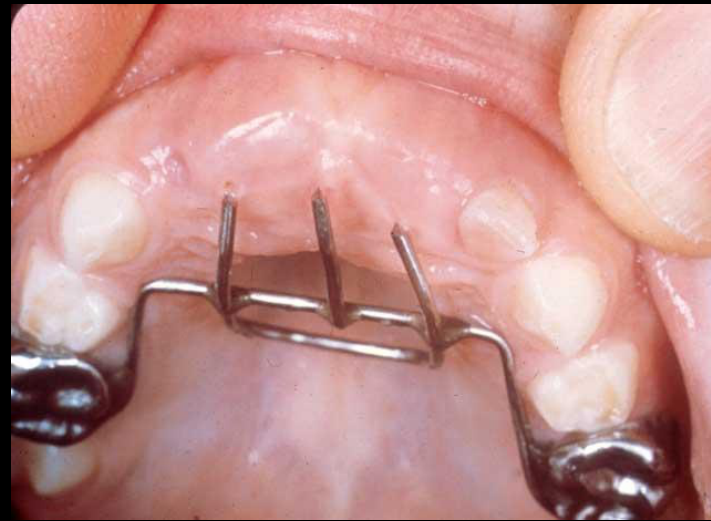
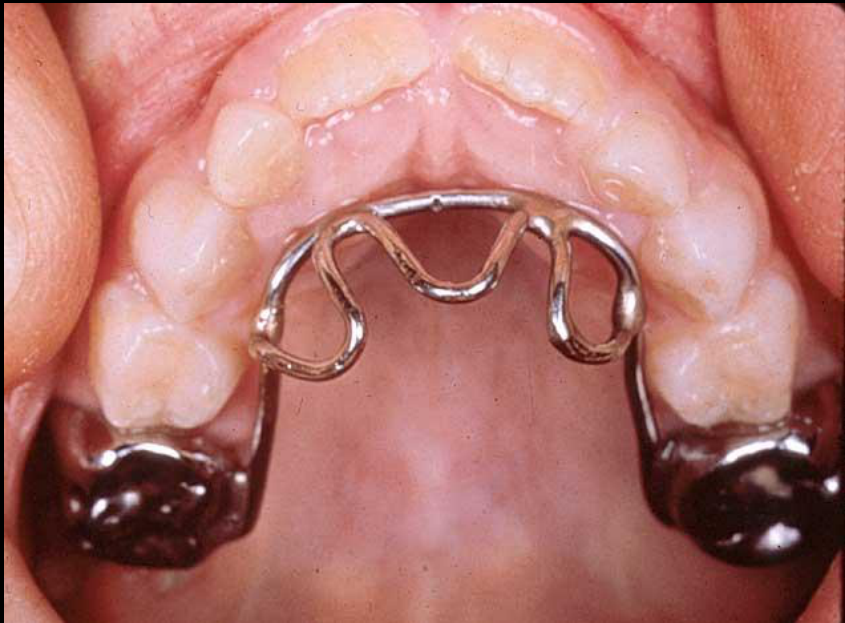
Anti-Habit Appliance32

Anti-Habit Appliance Construction33
J. Mike Razza, BS, DDS, Cert Orthod Associate Professor - Orthodontics University of Western Australia, Dental School
Clinical Case Scenarios343536
Case moved — see Case: Child with lips retracted, anterior teeth (What would you do)
Case moved — see Case: Retardation of eruption with crossbite and shift
Lecturer — Appliance Purpose
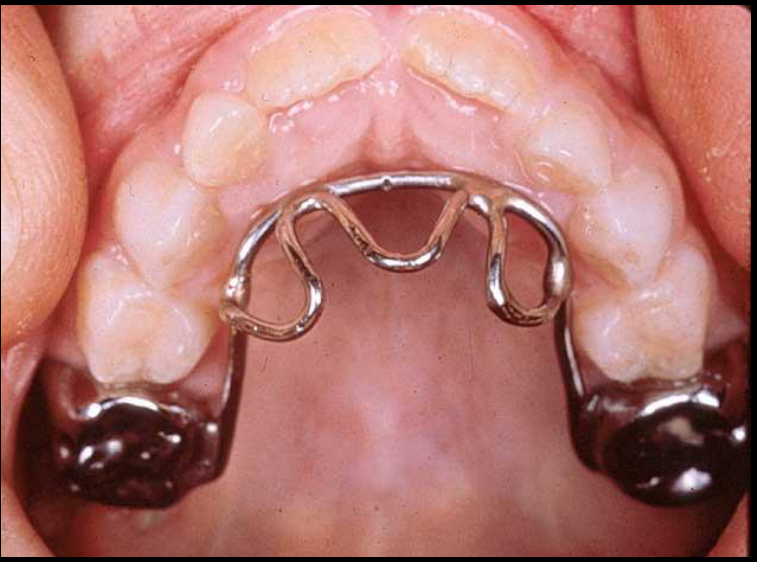
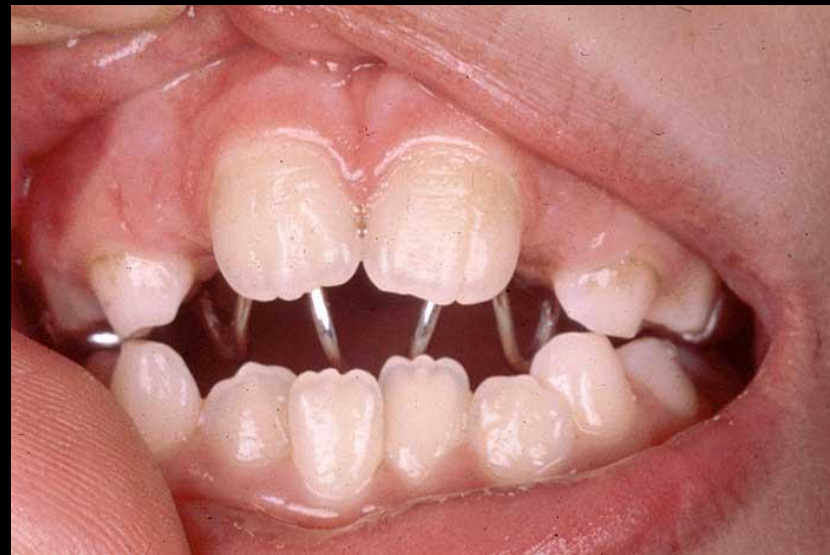
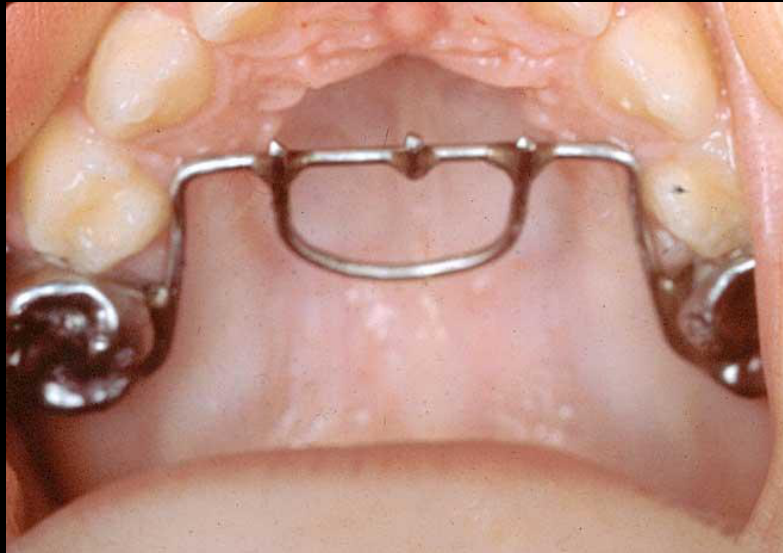
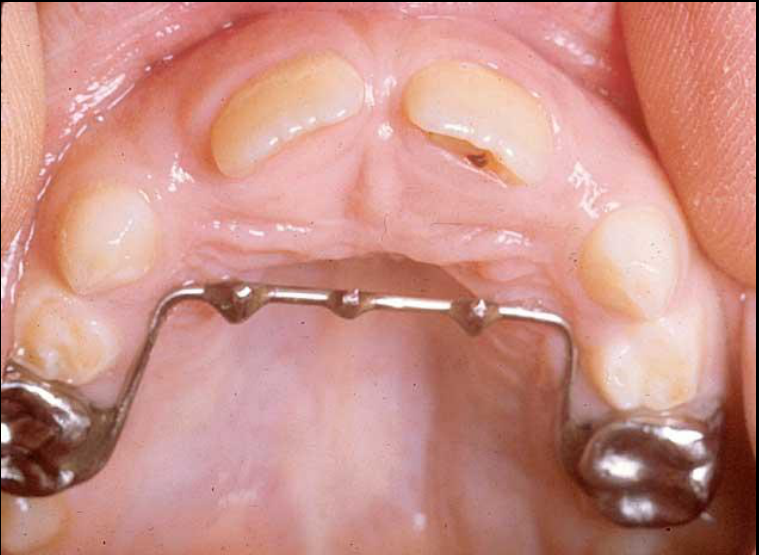
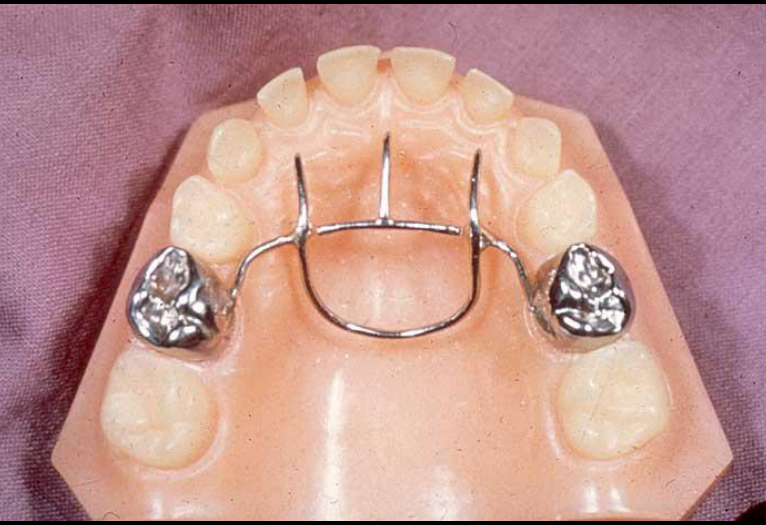
An anti-habit appliance blocks the oral habit and helps reposition the tongue.
- A crib may be soldered to a fixed appliance or incorporated into an upper removable appliance.
- Its main purpose is to prevent the habit and keep the tongue in a more posterior position.
Habits and Resting Postures37
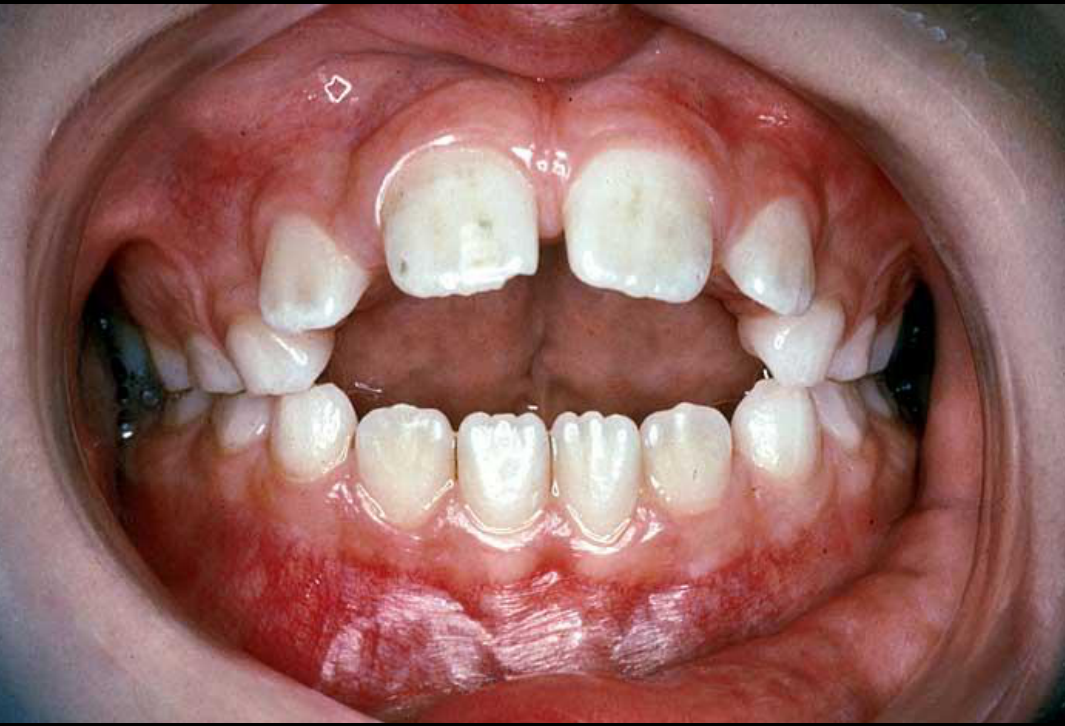
Habits — thumb, finger or tongue
Resting posture or tongue thrusting
- Thumb sucking changes the resting position of the tongue and the balance between the tongue and cheek muscles.
- The resulting effects may include an anterior open bite, upper-arch constriction, posterior crossbite, and a mandibular shift.
- The longer the habit continues, the greater the possibility that the occlusal problem will become more established.
Appliance Design and Construction38394041
-
Gradually reduce the size of the crib
-
More aggressive approach
-
Alginate pick-up impression bands or Stainless steel crowns - stone cast with bands/SSC’s
-
Bend 0.8-1.0mm wire to desired shape and form
-
Solder two portions of wire together with silver-solder
-
Solder framework to bands or Stainless Steel Crowns
-
The crib is commonly soldered to bands on the first permanent molars and then cemented.
-
Approximately 0.831 mm to 0.9 mm stainless-steel wire may be used.
-
The wire must be sufficiently strong to oppose the thumb-sucking habit.
-
The appliance should be checked approximately every second month for stability, tissue safety, and passage of the finger or tongue underneath.
-
Patients should contact the clinician if the appliance becomes loose or another problem develops.
-
The appliance is generally maintained for approximately six months.
Lecturer — Crib Design
The crib must be long enough to block the tongue or finger but not so long that it interferes with closure or irritates soft tissue.
- Impressions of both arches determine the appropriate extent of the crib.
- If the crib is too short, the tongue may pass underneath it.
- If it is too long, it may contact the lower soft tissues and prevent comfortable mouth closure.
- A fixed appliance is preferred when cooperation is a concern because it reduces reliance on patient compliance.
- Older, more aggressive designs involving spurs were mentioned but are no longer used.
Course Conclusion42
At the end of this course you DO NOT have the didactic knowledge or clinical skills to treat comprehensive orthodontic cases.
Lecturer — Case Presentation
Case presentations should include a diagnosis, profile analysis, radiographs, and other findings supporting the diagnosis.
- The treatment proposal should match the diagnosis; an anterior open bite caused by thumb sucking should lead to an anti-habit approach rather than an unrelated appliance.
- Space-management questions include whether space is present and needs maintenance or has been lost and needs to be regained.
- Approximately 3–4 mm of space can generally be regained or physiologically managed.
- An OPG should assess developing teeth and help avoid overlooking missing or unerupted incisors; the number of incisors should be counted carefully.
- Common case-presentation problems include space problems, anterior crossbites, and impacted teeth.
Clinical Cases
Case: Anterior crowding with available leeway space, before and after treatment
Question
Scenario: A patient presents to the clinic with significant anterior crowding and a negative discrepancy based on mixed dentition prediction, but with approximately 3.5 mm of leeway space available and no history of early tooth loss.
What’s shown: A side-by-side comparison of two intraoral clinical photographs showing the patient’s condition before and after treatment.
Consider: How to utilize the available leeway space to resolve the anterior crowding.
Answer
Observations:
- Significant anterior crowding and a negative space discrepancy.
- Approximately 3.5 mm of leeway space is present.
- No early tooth loss has occurred.
Reasoning: By using a lingual arch, the molars are prevented from physiologically drifting forward. This preserves the leeway space, which can then be utilized to resolve the anterior crowding problem.
Outcome: The anterior crowding is resolved by maintaining the leeway space and preventing molar drift using a lingual arch.
Takeaway: A lingual arch can be used to preserve leeway space and prevent molar drift, allowing the space to be utilized to resolve anterior crowding even in the absence of early tooth loss.
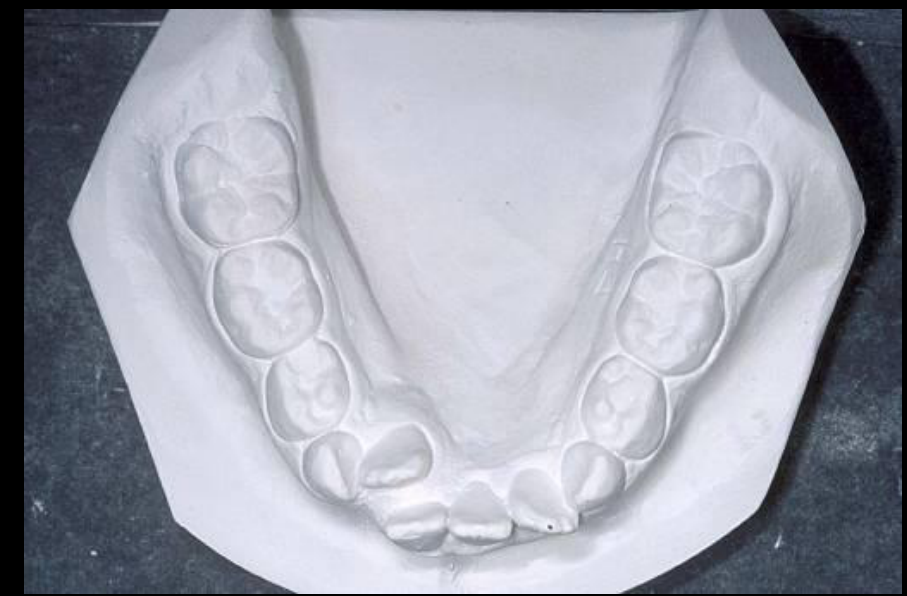
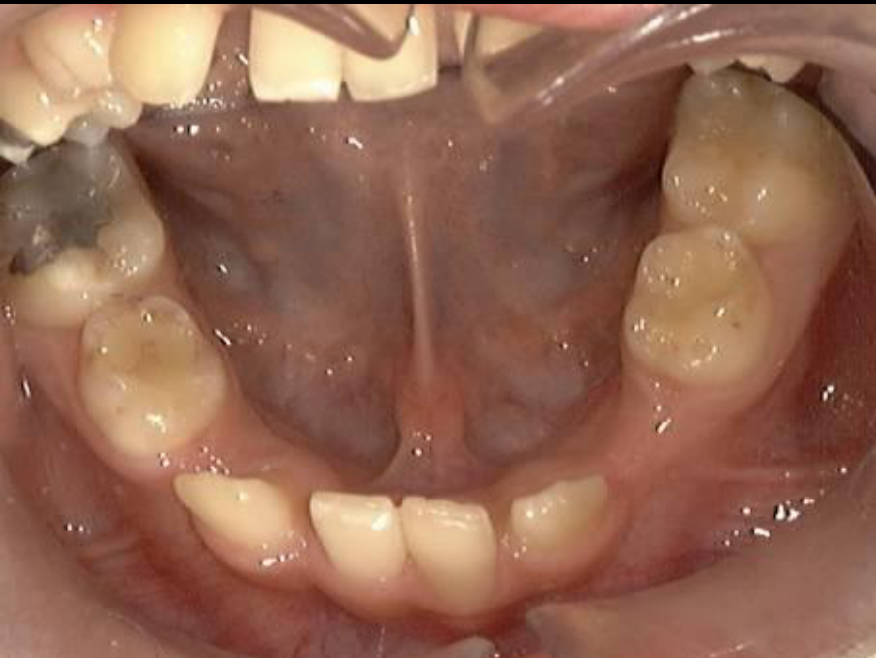
Case: Mandibular arch showing leeway space
Question
Scenario: Evaluation of a mandibular arch for space management.
What’s shown: An occlusal clinical photograph of the mandibular arch.
Consider: How to utilize the available space to address anterior crowding.
Answer
Observations:
- The leeway space is visible.
- There is more than 1 mm of space on each side.
Reasoning:
- The leeway space can be preserved to prevent the lower first permanent molars from drifting mesially.
- By blocking this mesial drift, the preserved space can be redirected to resolve anterior crowding.
Outcome:
- A lingual arch is considered to maintain the space and prevent the mesial drift of the lower sixes.
Takeaway:
- Preserving leeway space by preventing mesial drift of the lower first permanent molars can provide the necessary space to resolve anterior crowding.
Case: Midline correction requiring canine movement
Question
Scenario: A patient requires movement of the canine to correct a midline discrepancy in the anterior part of the dental arch.
What’s shown: The clinical scenario and the design of the appliance used to manage the case, accompanied by an occlusal clinical photograph of a lingual arch in place.
Consider: How to prevent unwanted movement of the posterior teeth during the anterior tooth movement.
Answer
Observations:
- The canine needs to be moved to correct the midline.
- There is a risk of unwanted forward movement of the first molars and premolars.
Reasoning: A lingual arch is used to connect both first molars as a single unit. This increases anchorage and prevents the loss of anchorage (unwanted forward movement of the molars) when forces are applied to move the anterior teeth.
Outcome: The lingual arch successfully maintains anchorage during the anterior tooth movement.
Takeaway: A lingual arch connecting the first molars can be used to increase anchorage and prevent unwanted mesial drift during anterior tooth movements, such as canine retraction for midline correction.
Case: Removable appliance with jack screws for space regaining
Question
Scenario: A clinical scenario of space regaining following the early loss of a primary second molar, where the first molar has tipped forward.
What’s shown: A removable orthodontic appliance equipped with expansion screws.
Consider: How this appliance is used to address the tipped molar and what the clinical goal is.
Answer
Observations:
- The appliance uses jack screws.
- It is designed to apply a backward tipping force to the first molar.
Reasoning: Following the early loss of a primary second molar, the first molar typically tips forward rather than moving forward. The jack screws are activated to upright the first molar, which prevents the second premolar from becoming impacted.
Outcome: Regains 3-4 mm of space to allow the second premolar to erupt, preventing the case from becoming an extraction case.
Takeaway: Removable appliances with jack screws can upright tipped first molars to regain space and prevent premolar impaction.
Case: Pendulum appliance for maxillary space regaining
Question
Scenario: A patient presenting later who requires significant space regaining in the maxillary arch to upright or distalize the first molar.
What’s shown: An intraoral occlusal view of an appliance with an acrylic plate covering the anterior teeth and metal springs extending posteriorly.
Consider: The mechanism of action and anchorage strategy of this appliance.
Answer
Observations:
- The anterior teeth are covered with an acrylic plate.
- The anterior teeth act together as a block for anchorage.
- Springs are directed backwards to apply force to the first molar.
Reasoning: The anterior anchorage block allows the backward-directed springs to move the first molar backwards, either uprighting or distalizing it. This is particularly useful when the patient presents later and a lot of space needs to be reopened, especially since the second molar roots may not be fully developed or erupted yet.
Outcome: Reopens a significant amount of space for the premolar to erupt.
Takeaway: The pendulum appliance uses anterior anchorage and backward-directed springs to distalize or upright molars and regain space when patients present late.
Case: Lip bumper for mandibular space regaining
Question
Scenario: A patient needing space regaining in the mandibular arch to upright a tipped lower first molar.
What’s shown: An intraoral photograph of an appliance with an anterior wire featuring tubing and posterior extensions.
Consider: How the lip bumper utilizes soft tissue forces to achieve its mechanical effect.
Answer
Observations:
- The anterior part of the wire has tubing for patient comfort.
- It utilizes the anterior muscles of the lip (orbicularis oris).
Reasoning: The lip muscles exert pressure on the appliance, which redirects the force backwards onto the first molar. While it cannot distalize the lower molars, it can effectively upright them, which is sometimes all that is needed for the premolars to erupt.
Outcome: Uprights the lower first molars to regain 3-4 mm of space for the premolars to erupt.
Takeaway: A lip bumper can harness lip muscle pressure to upright lower first molars and regain space.
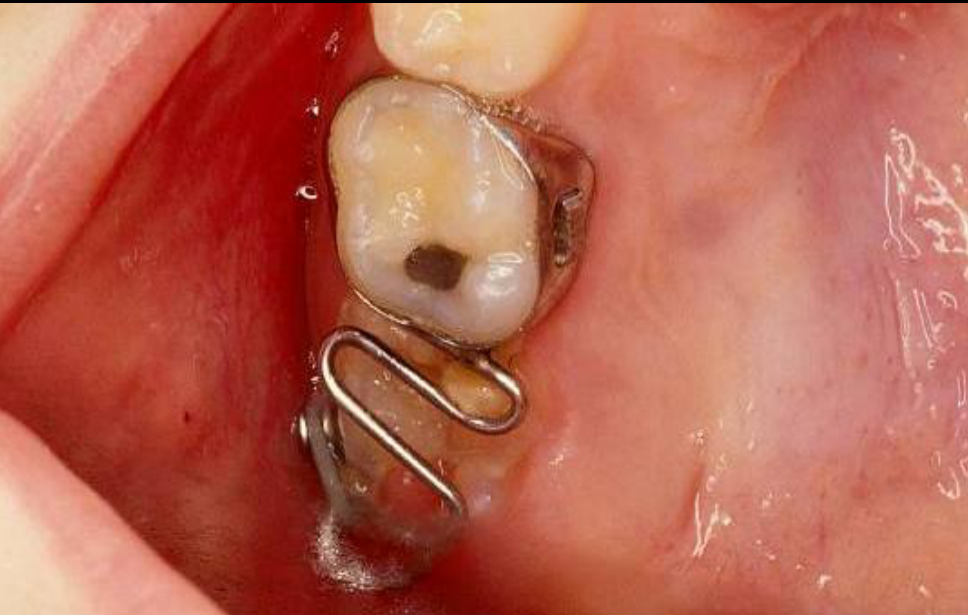
Case: Z spring variant for first molar disimpaction
Question
Scenario: A clinical situation requiring the disimpaction or uprighting of a first molar.
What’s shown: An intraoral photograph showing an orthodontic appliance attached to the teeth, featuring a modified spring design.
Consider: The specific application of this appliance design.
Answer
Observations:
- It is a modified Z spring design.
- It is applied to the first molar.
Reasoning: Disimpaction in this context functions similarly to uprighting the molar. Different designs and variations of the Z spring can be used to achieve the same strategic goal of space regaining.
Outcome: Uprights or disimpacts the first molar to release the premolar.
Takeaway: Various Z spring variants can be designed specifically to disimpact or upright first molars using the same underlying space regaining strategy.
Case: Mandibular ectopic eruption, 2x4 partial fixed appliance
Question
Scenario: A patient presents with an ectopic eruption requiring space regaining and alignment of the anterior teeth.
What’s shown: An intraoral clinical photograph of the mandibular arch fitted with a partial fixed orthodontic appliance.
Consider: What appliance design is being used, how does it achieve the treatment objectives, and what is the retention plan?
Answer
Observations:
- A lingual arch is used to hold the anchorage of the first molars (sixes).
- The incisors are incorporated into the appliance.
- An elastic chain is used to move the tooth forward, utilizing the wire as a sliding point.
Reasoning: The mechanic is a “two by four” partial fixed appliance, which utilizes two molars and four incisors. It can be used to achieve anterior alignment, protrusion of the incisors, or space closure. In this specific case, it is used to bring the ectopically erupted tooth 42 forward into the correct position.
Outcome: Once tooth 42 is in position, the partial braces are removed. The lingual arch is kept in place for a longer period until the complete transition of all primary teeth.
Takeaway: A 2x4 partial fixed appliance with a lingual arch is an effective method to correct ectopic eruption and align incisors, with the lingual arch serving as a retainer during the transition to the permanent dentition.
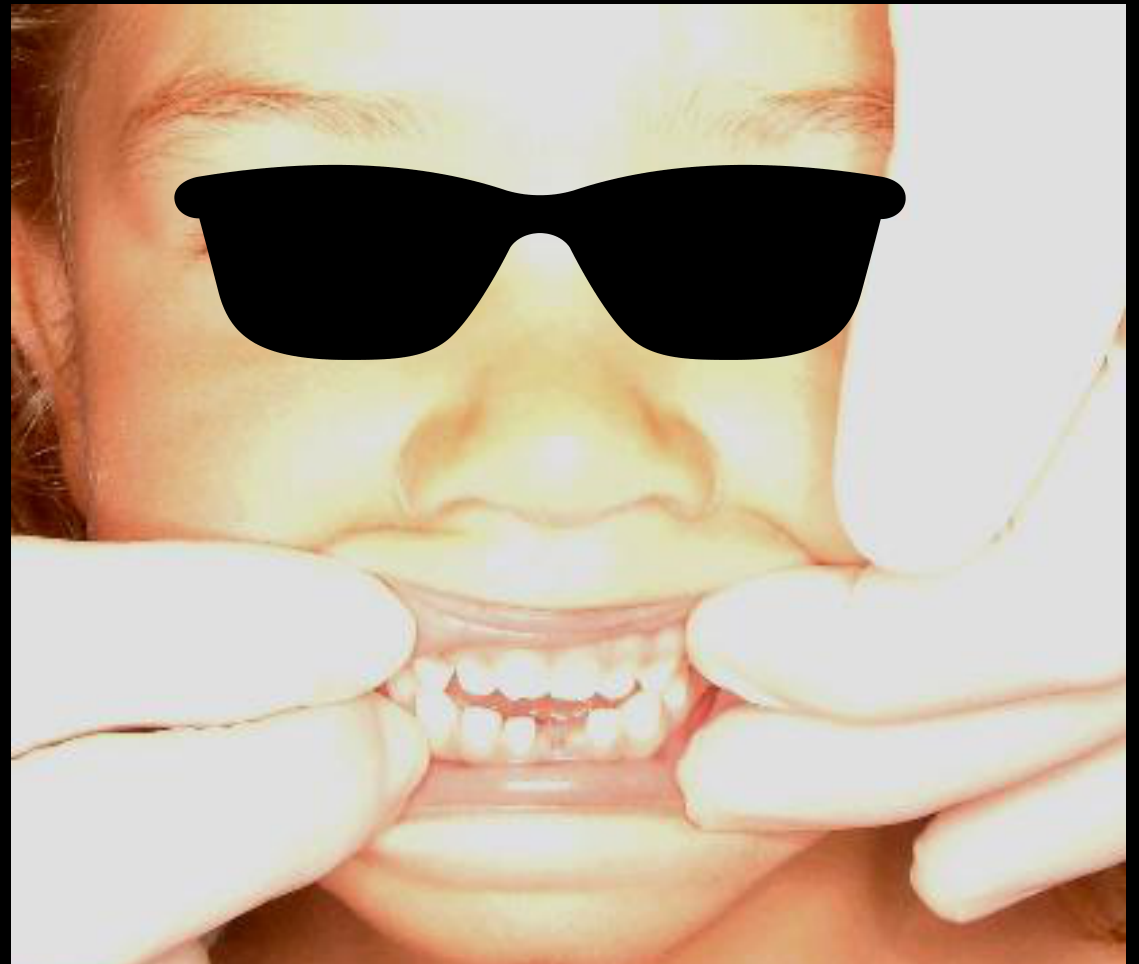
Case: Child with lips retracted, anterior teeth (What would you do)
Question
What would you do?
Answer
Not stated in the lecture.
From the lecture slides
What would you do?
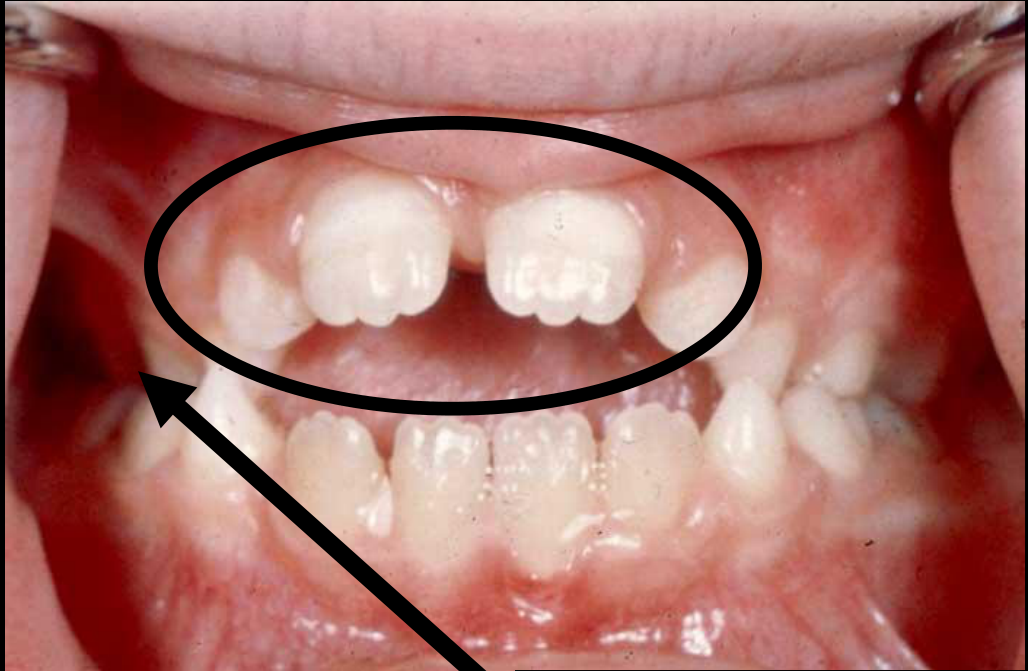
Case: Retardation of eruption with crossbite and shift
Question
Retardation of eruption — what would you do?
Answer
The slide poses the question without giving an answer. The lecturer’s commentary on these slides (see the Thumb Sucking and Crossbite callout under Case: 2–3-year-old thumbsucker, crossbite still present 6 months after ceasing) says that a posterior crossbite from upper-arch constriction may remain after the habit is blocked and require separate upper-arch expansion, and that a mandibular shift should also be assessed.
From the lecture slides
Retardation of eruption — what would you do?
Crossbite with shift
Case: 2–3-year-old thumbsucker, crossbite still present 6 months after ceasing
Question
A 2–3-year-old stopped thumbsucking 6 months ago, but the crossbite is still present. What would you do?
Answer
Not stated directly for this patient. The lecturer said that if the habit stops after approximately six months, vertical growth may allow spontaneous correction of the anterior crossbite; that blocking the habit may correct the anterior open bite while a posterior crossbite may remain and require separate upper-arch expansion; and that if the habit continues during growth, a simple dental anterior crossbite may develop into a skeletal problem.
From the lecture slides
2–3 year old — thumbsucking, 6 months after ceasing; crossbite still present
Thumb Sucking and Crossbite
A patient with thumb sucking may present with an anterior open bite because the thumb places anterior pressure on the incisors and can block their eruption.
- The habit can alter the balance between the tongue, cheek muscles, and surrounding oral musculature.
- An altered tongue-resting position may constrict the upper arch and produce a posterior crossbite, so assessment must include the posterior occlusion.
- Blocking the habit may correct the anterior open bite, but a posterior crossbite may remain and require separate upper-arch expansion.
- A mandibular shift should also be assessed.
- If the habit stops after approximately six months, vertical growth may allow spontaneous correction of the anterior crossbite.
- If the habit continues during growth, a simple dental anterior crossbite may develop into a skeletal problem because the thumb restricts normal growth between the arches.
Footnotes
-
Original PDF page 1: L8 Fixed Space Management, p.1 ↩
-
Original PDF page 3: L8 Fixed Space Management, p.3 ↩
-
Original PDF page 2: L8 Fixed Space Management, p.2 ↩
-
Original PDF page 4: L8 Fixed Space Management, p.4 ↩
-
Original PDF page 5: L8 Fixed Space Management, p.5 ↩
-
Original PDF page 6: L8 Fixed Space Management, p.6 ↩
-
Original PDF page 7: L8 Fixed Space Management, p.7 ↩
-
Original PDF page 8: L8 Fixed Space Management, p.8 ↩
-
Original PDF page 9: L8 Fixed Space Management, p.9 ↩
-
Original PDF page 10: L8 Fixed Space Management, p.10 ↩
-
Original PDF page 11: L8 Fixed Space Management, p.11 ↩
-
Original PDF page 12: L8 Fixed Space Management, p.12 ↩
-
Original PDF page 13: L8 Fixed Space Management, p.13 ↩
-
Original PDF page 14: L8 Fixed Space Management, p.14 ↩
-
Original PDF page 15: L8 Fixed Space Management, p.15 ↩
-
Original PDF page 16: L8 Fixed Space Management, p.16 ↩
-
Original PDF page 17: L8 Fixed Space Management, p.17 ↩
-
Original PDF page 18: L8 Fixed Space Management, p.18 ↩
-
Original PDF page 19: L8 Fixed Space Management, p.19 ↩
-
Original PDF page 20: L8 Fixed Space Management, p.20 ↩
-
Original PDF page 21: L8 Fixed Space Management, p.21 ↩
-
Original PDF page 22: L8 Fixed Space Management, p.22 ↩
-
Original PDF page 23: L8 Fixed Space Management, p.23 ↩
-
Original PDF page 25: L8 Fixed Space Management, p.25 ↩
-
Original PDF page 24: L8 Fixed Space Management, p.24 ↩
-
Original PDF page 26: L8 Fixed Space Management, p.26 ↩
-
Original PDF page 27: L8 Fixed Space Management, p.27 ↩
-
Original PDF page 28: L8 Fixed Space Management, p.28 ↩
-
Original PDF page 29: L8 Fixed Space Management, p.29 ↩
-
Original PDF page 30: L8 Fixed Space Management, p.30 ↩
-
Original PDF page 31: L8 Fixed Space Management, p.31 ↩
-
Original PDF page 33: L8 Fixed Space Management, p.33 ↩
-
Original PDF page 32: L8 Fixed Space Management, p.32 ↩
-
Original PDF page 34: L8 Fixed Space Management, p.34 ↩
-
Original PDF page 35: L8 Fixed Space Management, p.35 ↩
-
Original PDF page 36: L8 Fixed Space Management, p.36 ↩
-
Original PDF page 37: L8 Fixed Space Management, p.37 ↩
-
Original PDF page 38: L8 Fixed Space Management, p.38 ↩
-
Original PDF page 39: L8 Fixed Space Management, p.39 ↩
-
Original PDF page 40: L8 Fixed Space Management, p.40 ↩
-
Original PDF page 41: L8 Fixed Space Management, p.41 ↩
-
Original PDF page 42: L8 Fixed Space Management, p.42 ↩