Oral Health Care Delivery System in Australia
Presenter1
Dr Mohammad Junaid BDS, MDS (Public Health Dentistry), MFDS RCPS (Glasg.), DDPH RCS (Eng.), MDentPH (USyd), SFHEA, PhD (UWA) Senior Lecturer – Dental Public Health
- Australian Government Services Australia
- Oral Health Centre of Western Australia
Lecturer — Lecture Structure
This lecture is part of the Dent 5311 Public Health Dentistry 1 module and is titled Oral Healthcare Delivery System in Australia.
- The first recording addresses the elements that make up an oral healthcare delivery system.
- The second recording focuses on the Australian context.
Acknowledgement of Country2
Lecturer — Health System Context
Health systems are complex and continually evolving, rather than being limited to clinical settings or individual healthcare encounters.
- They are influenced by social, political, economic and workforce factors.
- Policy and funding are especially important because they shape how services are delivered.
Learning Outcomes3
- Understand the basic oral health care delivery framework.
- Oral health care delivery models followed globally and in Australia.
- Describe the current dental public system in Australia and Western Australia (specifically).
- Improve understanding and appreciate relevance of current public dental schemes in Australia.
Lecturer — Lecture Scope
The lecture also considers how public dental services are funded and delivered.
- Public dental schemes support access to care and improved oral health outcomes for different population groups.
Overview of the Oral Health System4
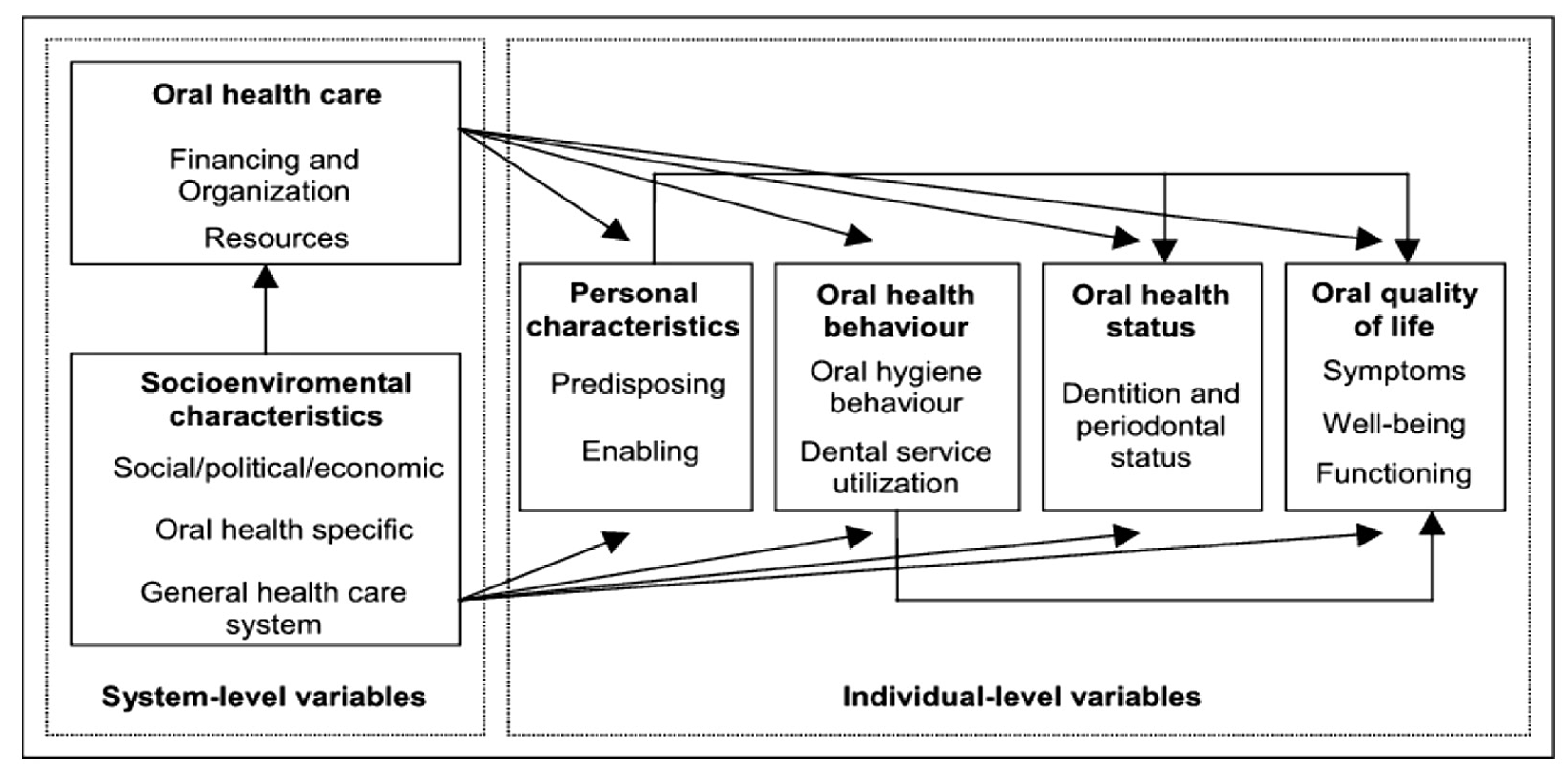
System-Level Variables
- Oral health care
- Financing and organization
- Resources
- Socioenvironmental characteristics
- Social/political/economic
- Oral health specific
- General health care system
Individual-Level Variables
- Personal characteristics
- Predisposing
- Enabling
- Oral health behaviour
- Oral hygiene behaviour
- Dental service utilization
- Oral health status
- Dentition and periodontal status
- Oral quality of life
- Symptoms
- Well-being
- Functioning
Klingenberger, D. (2008). Health System in Dentistry. In: Kirch, W. (eds) Encyclopedia of Public Health. Springer, Dordrecht. https://doi.org/10.1007/978-1-4020-5614-7_1481
Lecturer — System Interactions
The oral healthcare delivery system, the broader social, political and economic environment, and the individual are interconnected.
- Policies and funding shape service delivery.
- Services influence people’s oral health behaviours.
- Individuals determine whether and how they engage with the health system.
- Understanding these interactions helps future practitioners recognise barriers, provide more person-centred and equitable services, navigate referral pathways, and advocate for patients when required.
Global Context Of Health Care Systems
1. Demographic Change5
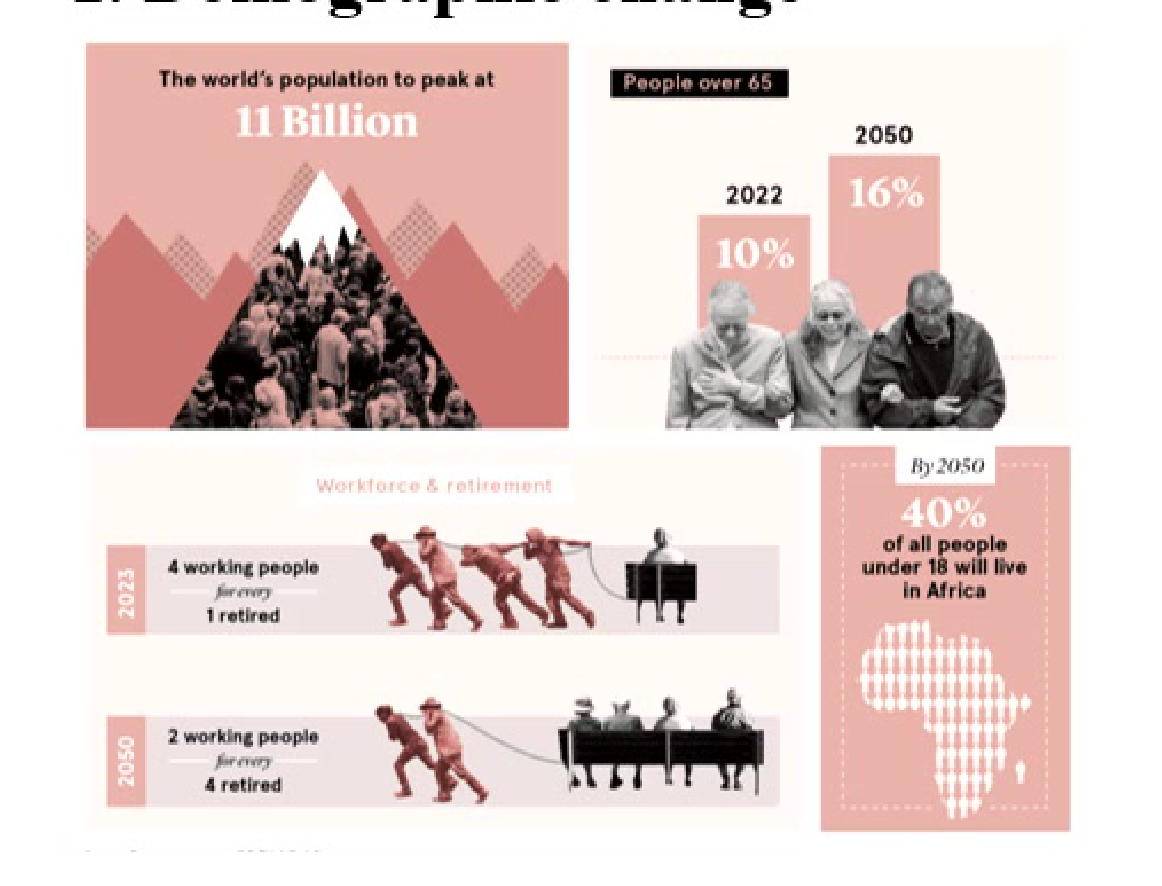
- The world’s population is projected to peak at 11 billion.
- Proportion of people aged over 65:
- 2022: 10%
- 2050: 16%
- By 2050, 40% of all people under 18 will reside in Africa.
Lecturer — Demographic Change
Health systems are dynamic rather than static and must evolve as populations change.
- Older populations and longer life expectancy increase demand for services associated with chronic diseases.
- People are living longer and retaining their teeth for longer, while the geriatric population has a greater chronic disease burden.
- Many existing health systems were developed for particular population demographics, raising the question of whether they can adequately respond to current needs.
 |  |  |
 |  |  |
2. Evolving Patterns of Disease and Their Impacts
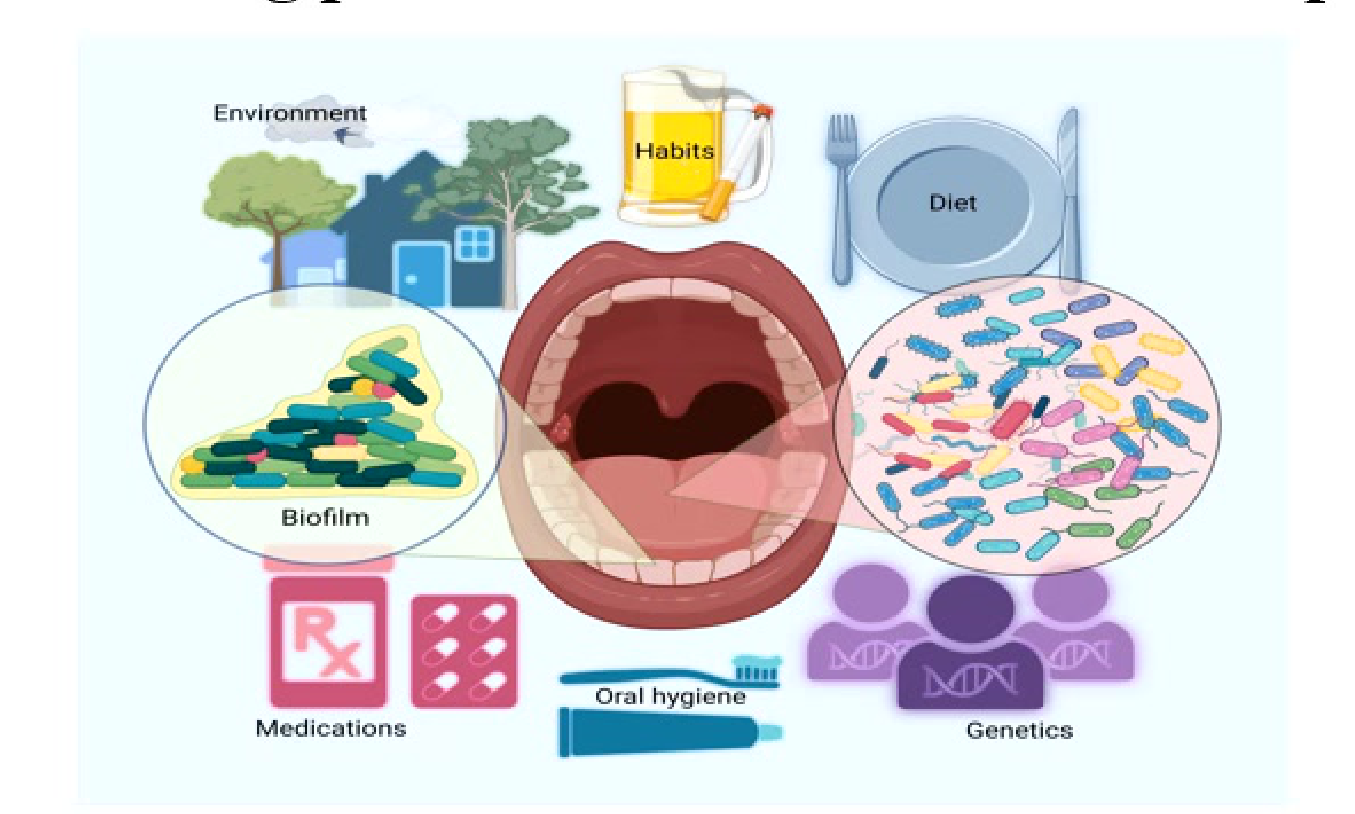
Interacting factors influencing disease patterns include:
- Environment
- Habits and lifestyle
- Diet
- Biofilm
- Treatments (Rx) and medications
- Oral hygiene
- Genetics
Lecturer — Disease Patterns
Many countries have shifted from focusing mainly on acute infectious diseases towards chronic, long-term conditions such as dental caries and periodontal disease.
- People are retaining their teeth for longer and edentulism is declining.
- Periodontal disease is increasing, so health systems must respond to people retaining teeth into older age.
- Changes in disease patterns influence how health systems are organised and delivered.
3. Public Demand for Healthcare
Lecturer — Public Expectations
As populations become more informed, expectations for access, quality and equity of healthcare continue to increase.
- Dental implants illustrate this change: they are now a major treatment option, whereas dentures and bridges were more commonly considered around twenty years earlier.
- Patients may ask about implants even when the dentist does not initially raise the option, although the clinician may need to explain why an implant is not appropriate.
Factors Influencing Development Of Health Care Systems
4. Technology
Lecturer — Dental Technology
Contemporary dental practice is substantially different from dental practice at the time the presenter graduated.
- Amalgam has more or less disappeared from practice, while laser dentistry, scans and cosmetic dentistry are now more common.
- Technology can improve care but also increase its cost and create access inequities.
- Health systems designed to deliver older forms of dentistry must adapt, while increasing costs may leave behind people who need but cannot afford modern dental treatment.
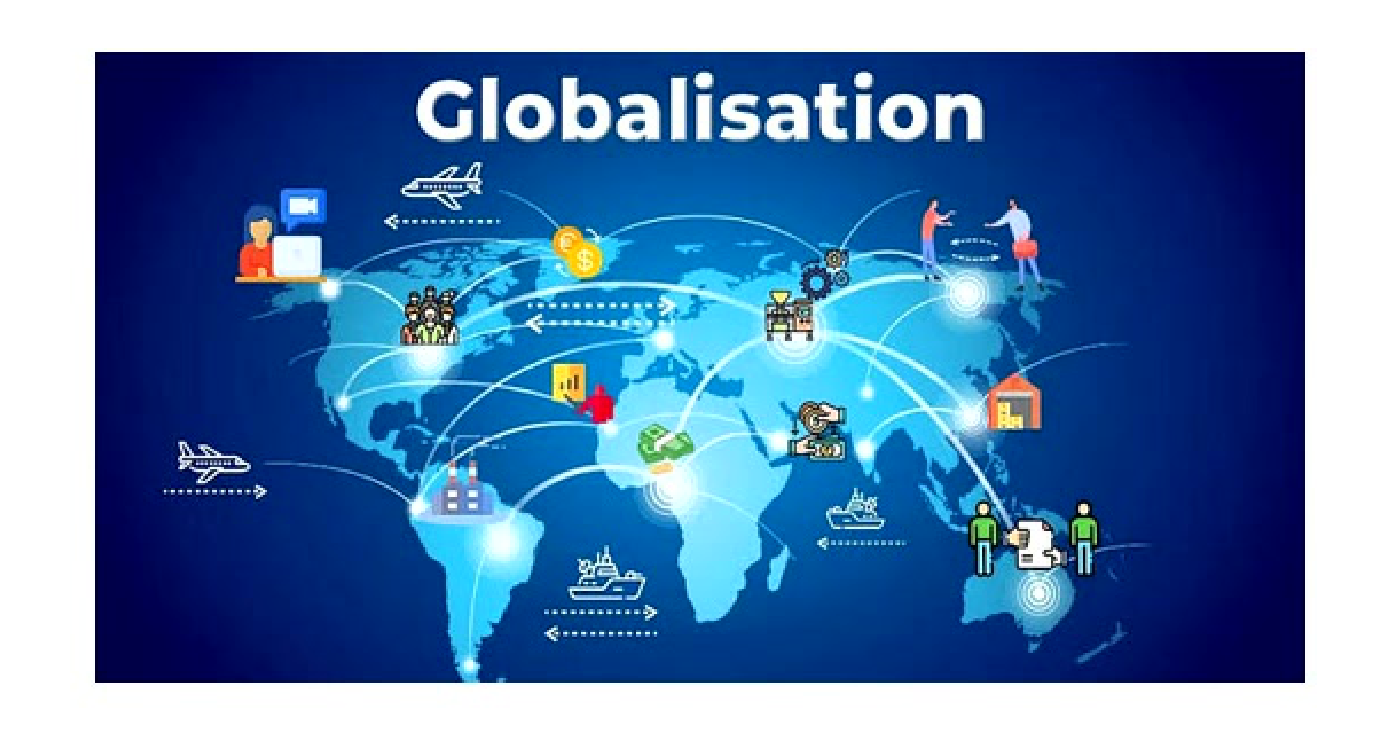
5. Globalisation
- Globalisation influences workforce movements, knowledge exchange and policy trends across countries.
6. Economy
Lecturer — Economy and Policy
The economy strongly influences available funding, service prioritisation and whether health systems can function effectively.
- Economic decisions are also influenced by politicians who develop policies that fund health systems.
- Although “economy” describes this factor, policy is fundamental and may be influenced by populism, which could endanger the health system itself.
Lecturer — Changing Delivery Models
The order of discussion of the six oral healthcare delivery models did not indicate that one model was better than another.
- The models reflect different historical, political and economic decisions.
- Many systems emerged or were consolidated in the late nineteenth century and particularly after the Second World War, in response to industrialisation, population growth and increasing demand for equitable access.
- Most systems are now hybrid systems, with one model dominant while other funding sources also support oral health services.
Daly, B., et al. (2013). ‘Overview of health care systems’, Essential Dental Public Health (Oxford; online edn, Oxford Academic, 12 Nov. 2020), https://doi.org/10.1093/oso/9780199679379.003.0024.
Shanmugasundaram, S., Nayak, N., Karmakar, S., et al. (2024). Evolutionary History of Periodontitis and the Oral Microbiota—Lessons for the Future. Curr Oral Health Rep 11, 105–116. https://doi.org/10.1007/s40496-024-00370-7.
Components Of Health Care Systems6
Gift and Andersen (2007) suggest that health care systems can be divided into several core dimensions:
- Structure: How the system is structured.
- Functions: What the system sets out to achieve.
- Personnel: Who delivers the care.
- Funding: Where the financial resources are derived from.
- Reimbursement: How healthcare workers are paid.
- Target population: Which demographic groups are prioritized.
Daly, B., et al. (2013). ‘Overview of health care systems’, Essential Dental Public Health (Oxford; online edn, Oxford Academic, 12 Nov. 2020), https://doi.org/10.1093/oso/9780199679379.003.0024.

Taxonomy for Systematic Cross-National Comparative Analysis of Oral Health Care Systems7
| Personnel | Structure / Location | Financing |
|---|---|---|
| - Dentist - Dental hygienist - Dental therapist - Expanded-duty assistant - Dental assistant - Oral health community worker - Community worker - Other healthcare and social work professionals (e.g., physicians, nurses) | - Government facilities - Universities - Worksites - Hospitals, institutions - Schools - Health/dental clinics - Mobile units - Individual dental offices - General community facilities | - General government revenue - Specific taxation - Compulsory insurance - Insurance or prepayment supported by employer or individual - Direct payment, private income |
| Target Population | Functions | Reimbursement |
|---|---|---|
| - Infants - Preschool children - School-age children - Young adults - Adults - Older adults - Special care populations (e.g., nursing home residents) - Identified occupational groups (e.g., military) - Identified racial or income groups (e.g., Native Americans in the USA) | - Policy development and implementation - Administration - Quality control - Research - Professional education - Public oral health education - Preventive services - Emergency services - Treatment services | - Fee-for-service - Capitation - Contract - Salary |
Expected Effects and Outcomes
- Appropriate dental care
- Improved knowledge, values, opinions, and behaviors regarding oral health
- Less dental caries among adults
- Reduced tooth loss
- Improved oral health
A comprehensive assessment of a national oral health care system minimally requires description of who provides what services/functions for whom in what locations with what resources by what payment mechanisms with what effect.
Pine, C., and Harris, R. (2007). ‘The Principles of Organisation and Models of Delivery of Oral Health Care’, Community Oral Health, Quintessence books, p. 426.
Global Oral Health Care Delivery Models8
| Health Care Models | Key Features | Countries |
|---|---|---|
| Bismarck Model (Government-regulated social insurance system) | - Oral care mainly financed through compulsory social insurance - Contributions from employees and employers as a fixed percentage of income - Provision relies on private dental practitioners - Benefits cover restorative care | Austria, Belgium, France, Germany, Luxembourg, Netherlands, Switzerland, Japan |
| Beveridge Model (Government-organised and tax-financed national health system) | - Financing through general taxation - Oral health services provided by publicly owned and managed institutions - Universal access to oral care | Denmark, Finland, Sweden, United Kingdom, Norway, Portugal, Spain, Italy, Greece, Ireland, Iceland, New Zealand, Cuba |
| Semashko Model (Mixed system: Bismarck financing and Beveridge provision) | - Oral care mainly financed through compulsory social insurance - Dentists are salaried public employees - Oral health facilities are publicly owned | Central and Eastern European countries (CEE) |
| National Health Insurance Model | - Government-run insurance program funded by citizens - Dental services historically not covered adequately (expanding to uninsured Canadian families with annual income under CA$ 90,000 from 2025) | Canada, Taiwan, South Korea |
| Out-of-Pocket Model | - Individuals are directly responsible for the costs of dental care | Broadly applicable globally |
| Hybrid Model | - Combination of multiple delivery systems along with private insurance; dental coverage often remains inadequate | Diverse international settings |
Klingenberg, D. (2008). Health System in Dentistry. In: Kirch, W. (eds) Encyclopedia of Public Health. Springer, Dordrecht. https://doi.org/10.1007/978-1-4020-5614-7_1481.
Pine, C., and Harris, R. (2007). ‘The Principles of Organisation and Models of Delivery of Oral Health Care’, Community Oral Health, Quintessence books.
Wallace, L. S. (2013). A view of health care around the world. Ann Fam Med, 11(1), 84. doi: 10.1370/afm.1484.
Quick Revision Of Global Context9
- Factors that influence the development of health systems
- Components of a health system:
- Structure
- Target population
- Functions
- Personnel
- Funding
- Reimbursement
- Oral health delivery models globally
Lecturer — Global Health Systems
The oral health system is an interplay between the oral healthcare delivery system, external social, political and economic factors, and individual factors.
- Health systems must respond to changing demographics, disease patterns, public expectations, technologies, global conditions, and economic and policy environments.
- The next recording will focus on the structure and governance of the Australian health system, public dental schemes, and access to dental services from a public perspective.

The Australian Oral Health Care System10
Medicare Card Example:
- Card Number: 1234 56789 1
- Cardholders:
- JOHN A CITIZEN
- JANE A CITIZEN
- JAMES A CITIZEN
- JESSICA A CITIZEN
- Valid to: 08/2020
Image source: https://www.healthdirect.gov.au/what-is-medicare
Who Pays For Dental Services In Australia11
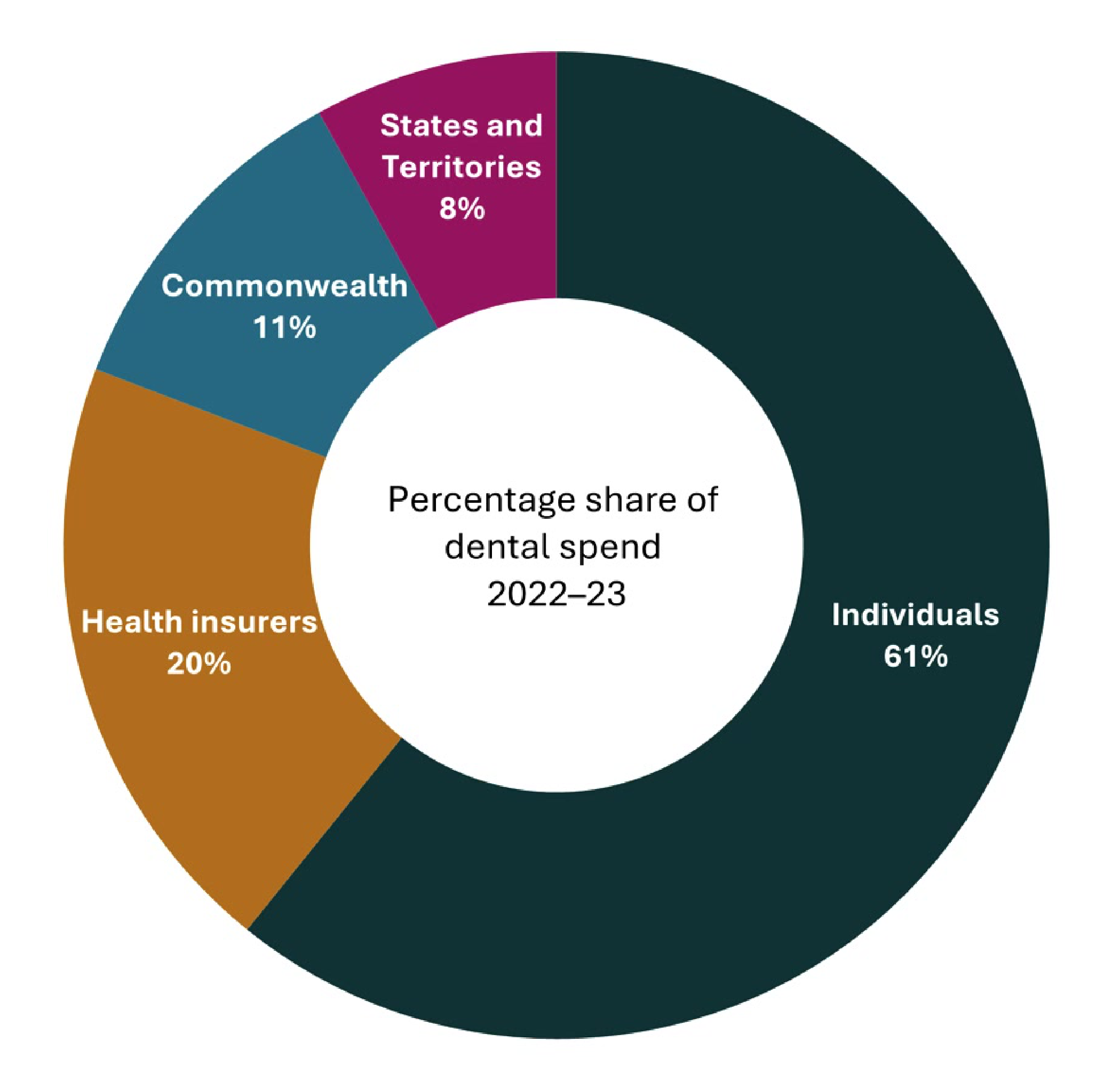
In 2022–23, $12.5 billion was spent on dental services in Australia:
- Individuals: More than $7.6 billion
- Health insurers: Close to $2.5 billion
- Commonwealth Government: Nearly $1.4 billion
- State and territory governments: Nearly $1 billion
History Of Public Dental Funding In Australia
A Shared Responsibility: State Delivery, Commonwealth Support12
- Not in Medicare: Unlike medical care, dental care has never been included in Medicare.
- State led, Commonwealth supports: States and territories have always delivered public dental services, with funding help from the Commonwealth.
- Focus on need: Programs have mainly targeted children, vulnerable people, and those with specific health conditions.
- Still evolving: Australia continues to debate how to make dental care fairer, more accessible, and affordable for all.
 |  |  |
 |  |  |
 |  |  |
 |  |  |
 |  |  |
 |  |  |
Key Milestones
| Period | Milestone | Description |
|---|---|---|
| 1900s–1970s | Early public dental services | States establish public dental services, mainly focusing on school children and people in need. |
| 1946 | Commonwealth gains power to fund dental services | A constitutional change allows the Commonwealth to fund dental services, but states remain responsible for delivery. |
| 1973–1981 | National School Dental Scheme | Commonwealth funds a national scheme to improve children’s oral health through school dental services. |
| 1973 & 1981 | Medibank (1975) and Medicare (1984) exclude dentistry | Dental care is left out of Australia’s universal health insurance and remains mostly a private expense. |
| 1994–1996 | Commonwealth Dental Health Program (CDHP) | First major program for adults. Aimed to reduce public dental waiting lists and improve access for those most in need. |
| 2000s | Targeted programs for specific groups | - Veterans’ Dental Program expands - Medicare Chronic Disease Dental Scheme (2007) provides Medicare-funded dental care for people with chronic conditions (ended in 2012). |
| 2014–present | Child Dental Benefits Schedule (CDBS) | Medicare-funded scheme for eligible children (0–17 years) for basic and preventive dental care delivered by private dentists. |
| 2014–present | Commonwealth–State agreements for adult public dental services | Ongoing funding partnerships to support public dental services for adults, especially concession card holders, and reduce waiting lists. |
| 2020s and beyond | Looking to the future | Growing calls for universal dental care and inclusion in Medicare to achieve better oral health for all Australians. |
How Funding Works Today
- Commonwealth Government: Provides targeted funding and payments (e.g., CDBS) and contributes to state programs.
- State and Territory Governments: Plan, fund, and deliver public dental services to eligible people.
- Funding agreements and payments ($)
- Australians: Most dental care is still provided by private dentists.
The Big Picture
- Australia has never had universal public dental coverage.
- Funding has focused on children, vulnerable people, and those with specific health needs.
- States deliver the services; the Commonwealth provides support.
- Better oral health improves overall health, equality, and quality of life.
The Goal
A fair and accessible dental system where every Australian can get the care they need to keep their mouth healthy and their body healthy.
Adapted from Parliament of Australia: https://www.aph.gov.au/About_Parliament/Parliamentary_departments/Parliamentary_Library/Research/Policy_Briefs/2025-26/Commonwealthfundingfordental?utm_
Funding Sources for Health Services in Australia13
| Level of Governance / Sector | Funded Services |
|---|---|
| Commonwealth Government | - Medical services through the MBS (both referred and non-referred medical services, as well as some allied health services) - Limited dental services - Pharmaceuticals through the PBS - Community-controlled Aboriginal and Torres Strait Islander primary healthcare - Aged care services (including residential aged care and home care) through the AN-ACC residential aged care funding model, as well as capital grants and programs - Contributions to support access to private health insurance, such as the private health insurance rebate - Health and medical research through the National Health and Medical Research Council - 45% of public hospital activity service delivery (under the National Health Reform Agreement 2020–2025) |
| State and Territory Governments | - 55% of public hospital activity service delivery (under the National Health Reform Agreement 2020–2025) - Ambulance services - Limited dental services - Some community and public health services - Some medical research |
| Local Governments | - Public health promotion - Community health services |
| Non-Government Organisations | - Charitable healthcare services, such as medical clinics - Health promotion initiatives and educational programs |
| Private Health Insurers | - Private health services delivered in public hospitals - Services delivered in private hospitals - Some community services - Some dental services - Medicines - Some referred medical services - Some allied health services - Some medical research |
| Patients | - Out-of-pocket expenses (medical, dental, diagnostic investigation, and allied health services) - Private health insurance premiums, excess payments - Medicine costs - Medicare levy and Medicare levy surcharge |
Australian Medical Association, https://www.ama.com.au/sites/default/files/2023-12/Discussion%20paper_Rethinking%20funding%20models%20to%20%20align%20with%20population%20health%20goals_0.pdf
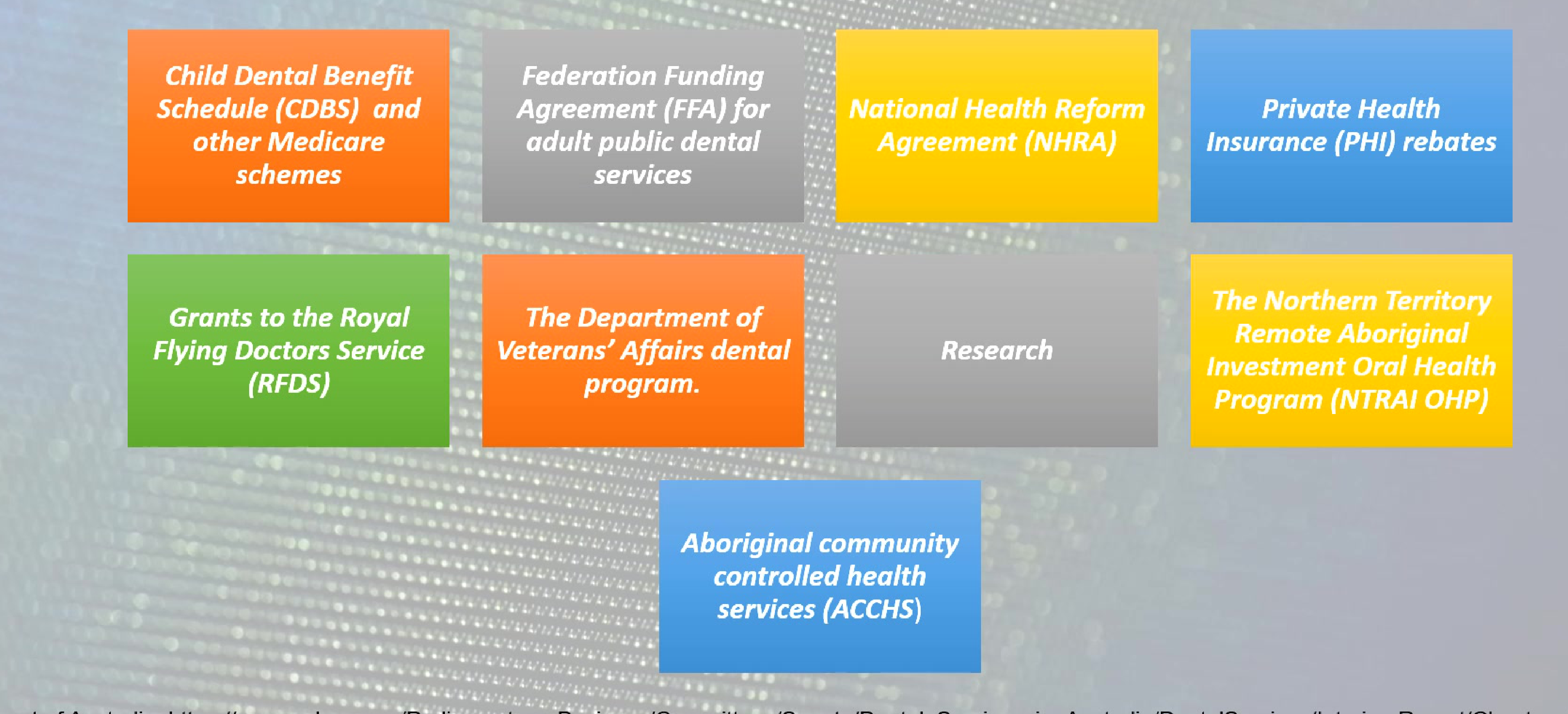
Commonwealth Government Based Dental Services14
- Child Dental Benefit Schedule (CDBS) and other Medicare schemes
- Federation Funding Agreement (FFA) for adult public dental services
- National Health Reform Agreement (NHRA)
- Private Health Insurance (PHI) rebates
- Grants to the Royal Flying Doctor Service (RFDS)
- The Department of Veterans’ Affairs dental program
- Research
- The Northern Territory Remote Aboriginal Investment Oral Health Program (NTRAI OHP)
- Aboriginal community controlled health services (ACCHS)
Parliament of Australia https://www.aph.gov.au/Parliamentary_Business/Committees/Senate/Dental_Services_in_Australia/DentalServices/Interim_Report/Chapter_1 – Introduction and background
State Government Based Dental Services
Western Australian Context15
-
Dental Health Services
- School Dental Service
- General Dental Service
- Special Dental Service
- Aged care facility (visiting program)
- Special Needs Clinic
- Prison dental service
- Disability Service Commission clients
- Visiting services to Royal Perth Hospital and Graylands Hospital
- Specialist services at Fiona Stanley Hospital
- Dental Subsidy Schemes
- Country Patients Dental Subsidy Scheme (CPDSS)
- Metropolitan Patients Dental Subsidy Scheme (MPDSS)
- Private Orthodontic Subsidy Scheme (POSS)
-
Aboriginal Medical Services
-
Oral Health Centre of Western Australia
- Only tertiary teaching specialist dental hospital in WA.
WA Department of Health, Dental Health Services: https://www.health.wa.gov.au/en/Articles/A_EDental-Health-Services
Medicare And Dental Care16
How much of dental care is covered by Medicare?
Australian Government Services Australia – Medicare
Image source: https://www.healthdirect.gov.au/partners/medicare
How Medicare Works
- Funded by Australian taxpayers (2% of their taxable income).
- Service offered to ANZ citizens, permanent residents, those who have applied for permanent residency, temporary residents covered by a Ministerial order, permanent residents of Australian overseas territories, and individuals under reciprocal healthcare arrangements with other countries.
- In parallel, costs for most medicines under the Pharmaceutical Benefits Scheme (PBS) are covered, and the cost of many prescribed medicines is subsidised by the government.
Payment Structure17
- Full schedule fee for GPs
- 85% of scheduled fee for specialists
- 75% of scheduled fee for in-hospital services
In addition, a Medicare Safety Net and PBS Safety Net are provided to individuals with extensive healthcare needs.
Medicare: https://www.healthdirect.gov.au/what-is-medicare Pharmaceutical Benefits Scheme: https://www.healthdirect.gov.au/pharmaceutical-benefits-scheme-pbs
Child Dental Benefits Schedule
Helping eligible Australian children access dental care, providing up to $1,158 over two consecutive calendar years.
Eligibility Criteria18
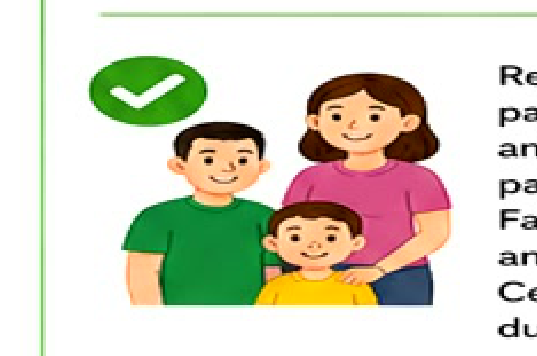
A child may be eligible if they:
- Are aged 0–17 years for at least one day during the calendar year
- Have a Medicare card
- Receive, or have a parent/carer receiving, an eligible government payment (such as Family Tax Benefit Part A and other eligible Centrelink payments) during the year
- Are assessed as eligible by Services Australia each year
 |  |  |
 |  |  |
 |  |  |
 |  |  |
 |  |  |
 |  |  |
 |  |  |
 |  |  |
 |  |  |
 |  |
Covered Services
Basic dental care includes:
- Dental check-ups
- Dental X-rays
- Teeth cleaning
- Fissure sealants
- Fillings
- Root canal treatment
- Partial dentures (when clinically required)
Excluded Services
- Braces and orthodontics
- Cosmetic dental treatment (e.g., teeth whitening)
- Dental treatment provided in hospital operating theatres
- Other services outside the CDBS schedule
Ask your dentist if you are unsure about a treatment.
How the Scheme Works
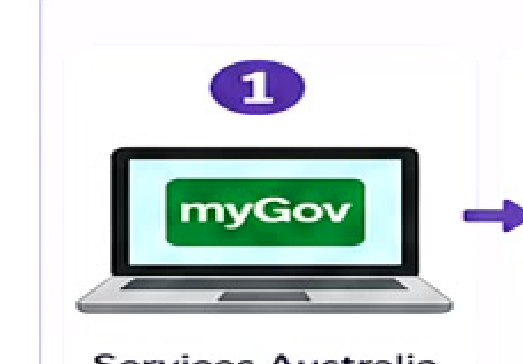
- Services Australia checks eligibility each year.
- Check eligibility through Medicare on myGov or consult your dental clinic.
- Book an appointment with a participating dentist.
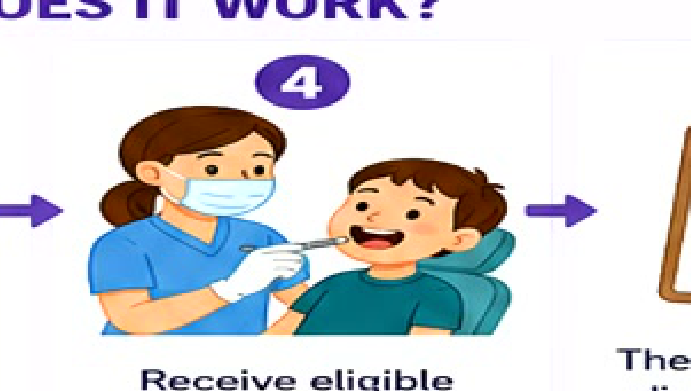
- Receive eligible dental treatment.
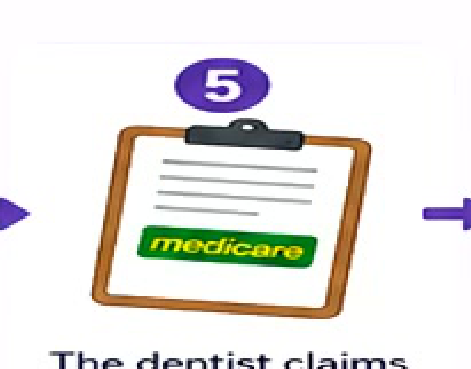
- The dentist claims directly through Medicare (many clinics bulk bill eligible services).
- The available balance reduces as services are used until the 2-year cap is reached.
Source: https://www.servicesaustralia.gov.au/whats-covered-child-dental-benefits-schedule?context=22426
Cleft And Craniofacial Medicare Services
Medicare-funded dental and surgical treatment for eligible patients with cleft and craniofacial conditions.
Eligibility Criteria19
- People with an eligible cleft lip and/or palate
- People with eligible craniofacial conditions
- Must be enrolled in Medicare
- No age limit (since November 2023, eligible patients of any age can access treatment according to clinical need)
Diagnosis must be made by an eligible health professional.
 |  |  |
 |  |  |
 |  |  |
 |  |  |
 |  |  |
 |  |  |
 |  |  |
 |  |  |
 |  |  |
 |  |
Covered Services
Dental Care
- Dental examinations
- Preventive care
- Fillings and restorations
- Tooth extractions
Specialist Dental Care
- Orthodontic treatment
- Paediatric dentistry
- Prosthodontic treatment (including select prostheses)
Surgical Care
- Oral and maxillofacial surgery
- Surgical dental procedures
- Simple and surgical tooth extractions
Eligible Providers
- Dentists
- Paediatric Dentists
- Orthodontists
- Prosthodontists
- Oral & Maxillofacial Surgeons
Note: Not all providers are registered or familiar with Category 7 claiming—inquire before treatment begins.
How It Works
- Diagnosis: Eligible cleft or craniofacial condition is identified by an eligible health professional.
- Referral: Referral to an eligible dental specialist or provider (if required).
- Treatment: Care provided using Medicare Category 7 MBS item numbers.
- Medicare Benefit: Medicare contributes to the cost of eligible treatment.
Key Considerations
- No age restrictions for eligible patients.
- Some services require a referral.
- Patients may still incur out-of-pocket costs if provider fees exceed the Medicare rebate.
- Providers must use the relevant Category 7 MBS item numbers.
- Not all services or items may be covered in every situation.
Conditions Covered
In addition to cleft lip and palate, a range of eligible craniofacial anomalies and certain rare developmental conditions are included under Medicare Category 7.
Clinical and System Significance
- Improves access to specialised oral healthcare
- Reduces financial barriers to treatment
- Supports individuals with complex congenital conditions
- Integrates dental and medical care across the lifespan
Visit servicesaustralia.gov.au/cleft-and-craniofacial-conditions or call Services Australia on 132 011.
Current as at May 2024. Source: https://www.servicesaustralia.gov.au/cleft-and-craniofacial-conditions
Dental Workforce And Funding Summary
Dental Workforce Data
Dentists Data as of 202320
- The number of full-time dentists in Australia was 61.1 per 100,000 population.
- The number of full-time equivalent oral health therapists was 9 per 100,000 population.
- 84% of dentists work in the private sector and 4.6% in public clinics. Victoria has the lowest proportion of dentists in public dental services, while NT has the highest.
- Five in 10 dentists work part-time (50%).
- The largest group of specialists in Australia are Orthodontists (34% of all dental specialists), with nearly 68% of them being male.
Parliament of Australia. Chapter 5: Maldistribution and capacity training and workforce matters. Senate Committees, Dental Services in Australia. https://www.aph.gov.au/Parliamentary_Business/Committees/Senate/Dental_Services_in_Australia/DentalServices/Final_report/Chapter_5_-_Maldistribution_and_capacity_training_and_workforce_matters
AIHW (Australian Institute of Health and Welfare) (2025). Oral health and dental care in Australia, AIHW, Australian Government, accessed 18 June 2026. https://www.aihw.gov.au/reports/dental-oral-health/oral-health-and-dental-care-in-australia/contents/dental-workforce
Public Dental Services Funding Summary21
| Public dental service | Source of funding |
|---|---|
| Child Dental Benefit Scheme | Australian Government (Federal) |
| School Dental Service | State Funded |
| Cleft lip and cleft palate services | Australian Government (Federal) |
| Oral and Maxillofacial Services | Australian Government (Federal) |
| Private Health Insurance Incentive Scheme | Australian Government (Federal) |
| Aboriginal Oral Health | Australian Government (Federal) → Community controlled Aboriginal primary dental care via National Aboriginal Community Controlled Health Organisations. State funded → Aboriginal Medical Services |
| Refugee dental care | Australian Government (Federal) |
| Prisoner dental care | State Funded |
| Aged care dental services | State (very little) – Sadly very little funding |
| Disability dental service | National Disability Insurance Scheme does not cover dental but does in exceptional circumstances. |
| Dental Teaching Hospitals | Mix of State and Federal Funding |
| Armed forces | Australian Government (Federal) via Royal Australian Army Dental Corps |
Budget Update And System Evaluation
Budget 2026 To 27 Dental Care At A Glance
What it means for you and your family:
1. Children22
Child Dental Benefits Schedule (CDBS)
- Continues for eligible children aged 0–17 years
- Up to $1,158 available over 2 years (indexed from 2026)
- Covers check-ups, cleans, X-rays, fillings, and extractions
- Does not cover orthodontics or cosmetic dentistry
 |  |  |
 |  |  |
 |  |  |
 |  |  |
 |  |  |
 |  |  |
 |  |  |
 |  |  |
2. Adults
Public Dental Services Update
- $431 million federal investment
- Permanent Commonwealth funding established
- Supports dental care for:
- Concession card holders
- Low-income adults
- Eligible public dental patients
- Services are delivered through state and territory public dental systems
3. What Did Not Change?
- No universal dental care under Medicare
- No major expansion of dental benefits for adults outside public dental schemes
- No Senior Dental Benefits Schedule announced in the Budget
Shared Responsibility
- Commonwealth Government
- Funds the Child Dental Benefits Schedule (CDBS)
- Provides ongoing funding for adult public dental services
- States and Territories
- Operate public dental clinics
- Manage eligibility and waiting lists
- Deliver treatment services
Key Message
Budget 2026–27 strengthens existing dental programs rather than introducing universal dental care.
- Ongoing support for children through CDBS
- Permanent funding certainty for public adult dental services
- States remain responsible for delivering most public dental care
https://ada.org.au/cdbs-benefits-cap-to-increase-to-1-158-for-2026-2027 https://www.abc.net.au/news/2026-05-12/what-is-in-federal-budget-to-help-cost-of-living-explainer/106671806
Is The Oral Health System Working23
“When we were diagnosed with diabetes, we weren’t even told that our teeth were an issue by the doctor”
“Honestly it is too expensive. I have got three holes in my teeth, cavities, and I cannot afford to go to the dentist. Because my money is going on things that I think are more important like my house, power, everything else, food”
“If we look at access to health care – a lot of them won’t go to the doctor until something is seriously wrong. So, if they are not going to do that in general day to day health, you’ve got Buckley’s of getting anyone going to see the dentist. ‘Oh, I need to go and see a dentist for an appointment just for my regular check-up’ – it’s not going to happen”
Durey, A., McAullay, D., Gibson, B. et al. Aboriginal Health Worker perceptions of oral health: a qualitative study in Perth, Western Australia. Int J Equity Health 15, 4 (2016). https://doi.org/10.1186/s12939-016-0299-7
Clarifying The System24
Now I am Confused…

Overall Revision And Closing
Overall Revision25
- Factors that influence development of health systems.
- Components of a health care system.
- Health care delivery models – global context.
- Structure of Health System in Australia
- Medicare and dental care.
- Funding sources of public dental schemes
 |  |
Thank You26
Image source: https://www.hcamag.com/au/specialisation/diversity-inclusion/how-to-get-cultural-diversity-right/162698
Audio Appendix
Additional Audio Content
The following sections from the lecture audio did not correspond to any heading in the main document.
Personnel
Personnel include the people who provide and support services. This includes both:
- Clinical staff.
- Administrative staff.
Target Population
The target population is the group the system is designed to serve.
Funding
Funding concerns:
- The funding model.
- Funding agreements.
- How services receive financial support.
Taxonomy for Systematic Cross-National Comparative Analysis of Oral Health Care Systems
A figure from a dental public health or community oral health textbook by Cynthia Pine and Rebecca Harris was referenced as providing further detail on the components of a healthcare system.
Students were encouraged to review the individual elements associated with the broader categories of:
- Structure.
- Function.
- Personnel.
- Funding.
- Reimbursement.
- Target population.
Hybrid Model
Hybrid models are used in several countries, particularly OECD countries.
They may combine:
- Public funding.
- Private insurance.
- Out-of-pocket payments.
Many health systems have become hybrid by incorporating elements from several of the models discussed.
Structure
Structure concerns:
- How the system is organised.
- How the system operates.
- Who drives the system.
National Health Insurance Model
The national health insurance model is a hybrid model.
It developed in countries seeking universal coverage without fully nationalising service delivery.
Countries identified as using variations of this model include:
- Taiwan.
- South Korea.
- Canada.
The model generally involves:
- A single public insurance system.
- Funding through taxes and mandatory contributions.
- Service delivery by private or mixed providers.
This combines features of:
- Public insurance.
- Private service provision.
Dental care may be:
- Partially covered.
- Excluded from coverage.
This can create gaps in access.
The presenter noted that Canada has a Canadian dental plan under which people with an annual income below 90,000 Canadian dollars may be eligible for some aspects of dental treatment. The presenter indicated that Canadian students could provide further clarification about this scheme.
Australia’s Medicare system could technically be placed under health insurance, although the presenter described it as being somewhere between the Beveridge and health insurance models.
Bismarck Model
The Bismarck model originated in Germany in the 1880s under Chancellor Otto von Bismarck.
It was designed as a social insurance model in which:
- Employers and employees contribute to health insurance funds.
- Contributions are generally based on a fixed percentage of income.
- Private providers retain an important role.
- Services can be provided by private practitioners while being funded through the social insurance system.
The model was developed to protect workers in an industrialising economy.
The presenter noted that the model was developed for a healthcare environment that differed substantially from contemporary practice. Dentistry has changed considerably since the 1880s, and contemporary dental services may have additional costs.
The system is now supported by:
- Private insurance.
- Out-of-pocket payments.
These sources help supplement the costs of providing health services.
Reimbursement
Reimbursement concerns how the workforce is paid and how providers receive payment for services.
Beveridge Model
The lecture referred to the Beveridge model as the “beverage” model.
It developed primarily in the United Kingdom after the Second World War, particularly with the establishment of the National Health Service in 1948.
The model is based on the principle that:
- Health is a universal right.
- Healthcare should be connected with justice and social justice.
The system is funded through:
- Public taxation.
- General taxation.
- Income taxes.
Services were initially provided mainly through publicly owned and managed institutions.
NHS Dentistry
NHS dentistry has evolved to include private practitioners who provide NHS services.
A dentist may:
- Solely see NHS patients.
- Run a practice that sees both NHS and private patients.
- Receive payment from the NHS for NHS patients.
The payment system uses units of dental activity. Examples described in the lecture included:
- A crown receiving a Band 3 payment.
- Scaling receiving a Band 1 payment.
- A restoration receiving a Band 2 payment.
Payment is made for the patient and not for the number of teeth treated. Therefore:
- Treating three or four teeth in one patient may result in the same patient-based remuneration as treating one tooth.
- This creates a discrepancy between the amount of treatment provided and the payment received.
The presenter stated that reforms introducing this concept occurred in 2006 and had not been revisited for approximately 20 years.
The presenter described NHS dentistry as being in crisis because:
- Private dentists are refusing to see NHS patients.
- Fewer dentists are accepting NHS patients.
- Waiting lists are becoming longer.
- Some patients have reportedly used pliers to remove their own teeth.
The United Kingdom remains primarily associated with the Beveridge model, although the system has experienced significant problems in delivering universal access to dental care.
Out-of-Pocket Model
The out-of-pocket model is followed by many low- and middle-income countries.
Out-of-pocket payments also remain relevant in countries that use other models because they fill gaps in coverage.
They may cover:
- Services not covered by the main system.
- Gap fees.
- Additional costs not met by insurance or public funding.
Semashko Model
The Semashko model was developed in the former Soviet Union after the Soviet Revolution in 1917.
It became dominant across Eastern European countries that were part of the former Soviet bloc.
The model was:
- Fully state-planned.
- Financed through an insurance system.
- Delivered through government institutions.
- A combination of elements associated with the Bismarck and Beveridge models.
Dentists were salaried, and there was substantial government control and regulation.
Example: Oral Health Centre of Western Australia
The Oral Health Centre of Western Australia was used to demonstrate how the six components operate in practice.
The Oral Health Centre of Western Australia is:
- A tertiary teaching hospital.
- Part of the Western Australian public oral health system.
- Contracted by the Western Australian Department of Health.
- A provider of dental services to eligible public patients.
- A principal clinical training facility for dental students at the University of Western Australia.
Functions
The Oral Health Centre has three major functions:
- Providing general and specialty dental services.
- Supporting education and clinical training for future oral health professionals.
- Contributing to research and workforce development.
These functions align with broader goals of:
- Improving oral health outcomes.
- Ensuring a sustainable dental workforce.
Personnel
The Oral Health Centre relies on a multidisciplinary workforce, including:
- Reception staff.
- Dental assistants.
- Oral health therapists.
- General dentists.
- Specialist dentists.
- Dental students.
- Supervisors.
- Clinical academics.
- Dental laboratory technicians.
- Other non-clinical staff.
Administrative and non-clinical staff contribute to patient experience and service delivery.
Target Population
The main target population consists of people eligible for the Western Australian Public Dental Service. Eligibility generally includes people who:
- Hold a concession card, such as a healthcare card.
- Are pensioners.
- Are clients of the Western Australian Department of Health.
The Oral Health Centre also sees other patients under different agreements, including memoranda of understanding with certain organisations.
Funding
The Oral Health Centre is mainly funded by the Western Australian Department of Health.
It:
- Has a service agreement with the Western Australian Department of Health.
- Operates under an activity-based funding model.
The lecture identified several possible public-sector funding models:
- Contracted models.
- Consolidated or block funding models.
- Activity-based funding models.
- Value-based funding models.
Under activity-based funding, the funding received is related to:
- The volume of services delivered.
- The type of services delivered.
- The amount of treatment provided.
The presenter noted that activity-based funding may create a risk of:
- Overtreatment.
- Less emphasis on prevention.
Workforce Reimbursement
Most health professionals at the Oral Health Centre are generally salaried. They may be:
- Contracted staff.
- Ongoing staff.
They are paid directly rather than receiving payment for each individual service, as may occur in private practice.
In private practice:
- Practitioners may be paid for the work they perform.
- Practitioners may later become shareholders or partners.
- Payment structures may incentivise providing more treatment rather than prevention.
Function
Function concerns what the health system does and the services it provides.
Footnotes
-
Original PDF page 1: L1 Oral health care systems development and global slides, p.1 ↩
-
Original PDF page 2: L1 Oral health care systems development and global slides, p.2 ↩
-
Original PDF page 3: L1 Oral health care systems development and global slides, p.3 ↩
-
Original PDF page 4: L1 Oral health care systems development and global slides, p.4 ↩
-
Original PDF page 5: L1 Oral health care systems development and global slides, p.5 ↩
-
Original PDF page 6: L1 Oral health care systems development and global slides, p.6 ↩
-
Original PDF page 7: L1 Oral health care systems development and global slides, p.7 ↩
-
Original PDF page 8: L1 Oral health care systems development and global slides, p.8 ↩
-
Original PDF page 9: L1 Oral health care systems development and global slides, p.9 ↩
-
Original PDF page 10: L1 Oral health care systems development and global slides, p.10 ↩
-
Original PDF page 11: L1 Oral health care systems development and global slides, p.11 ↩
-
Original PDF page 12: L1 Oral health care systems development and global slides, p.12 ↩
-
Original PDF page 13: L1 Oral health care systems development and global slides, p.13 ↩
-
Original PDF page 14: L1 Oral health care systems development and global slides, p.14 ↩
-
Original PDF page 15: L1 Oral health care systems development and global slides, p.15 ↩
-
Original PDF page 16: L1 Oral health care systems development and global slides, p.16 ↩
-
Original PDF page 17: L1 Oral health care systems development and global slides, p.17 ↩
-
Original PDF page 18: L1 Oral health care systems development and global slides, p.18 ↩
-
Original PDF page 19: L1 Oral health care systems development and global slides, p.19 ↩
-
Original PDF page 20: L1 Oral health care systems development and global slides, p.20 ↩
-
Original PDF page 21: L1 Oral health care systems development and global slides, p.21 ↩
-
Original PDF page 22: L1 Oral health care systems development and global slides, p.22 ↩
-
Original PDF page 23: L1 Oral health care systems development and global slides, p.23 ↩
-
Original PDF page 24: L1 Oral health care systems development and global slides, p.24 ↩
-
Original PDF page 25: L1 Oral health care systems development and global slides, p.25 ↩
-
Original PDF page 26: L1 Oral health care systems development and global slides, p.26 ↩