The Challenges Faced by the Australian Oral Health System
An overview of the challenges faced by the Australian oral health system.
Lecturer — Dental Service Challenges
The recording focuses on challenges affecting the provision of and access to dental services, guided by a recent Senate inquiry into dental services in Australia.
- Most dental services in Australia are provided privately.
- Public dental services involve shared responsibilities between the Commonwealth Government and state and territory governments.
- Dental care remains largely considered a state responsibility, while the Commonwealth provides several forms of funding and targeted services.
- The discussion examines Commonwealth and state-based dental services, macro- and micro-level challenges, factors influencing access to care, Senate inquiry recommendations, and patient-, dentist-, and system-level barriers.
Key Agencies and Programs1
- Medicare
- Australian Government Department of Health and Aged Care
- Australian Government Australian Institute of Health and Welfare (AIHW)
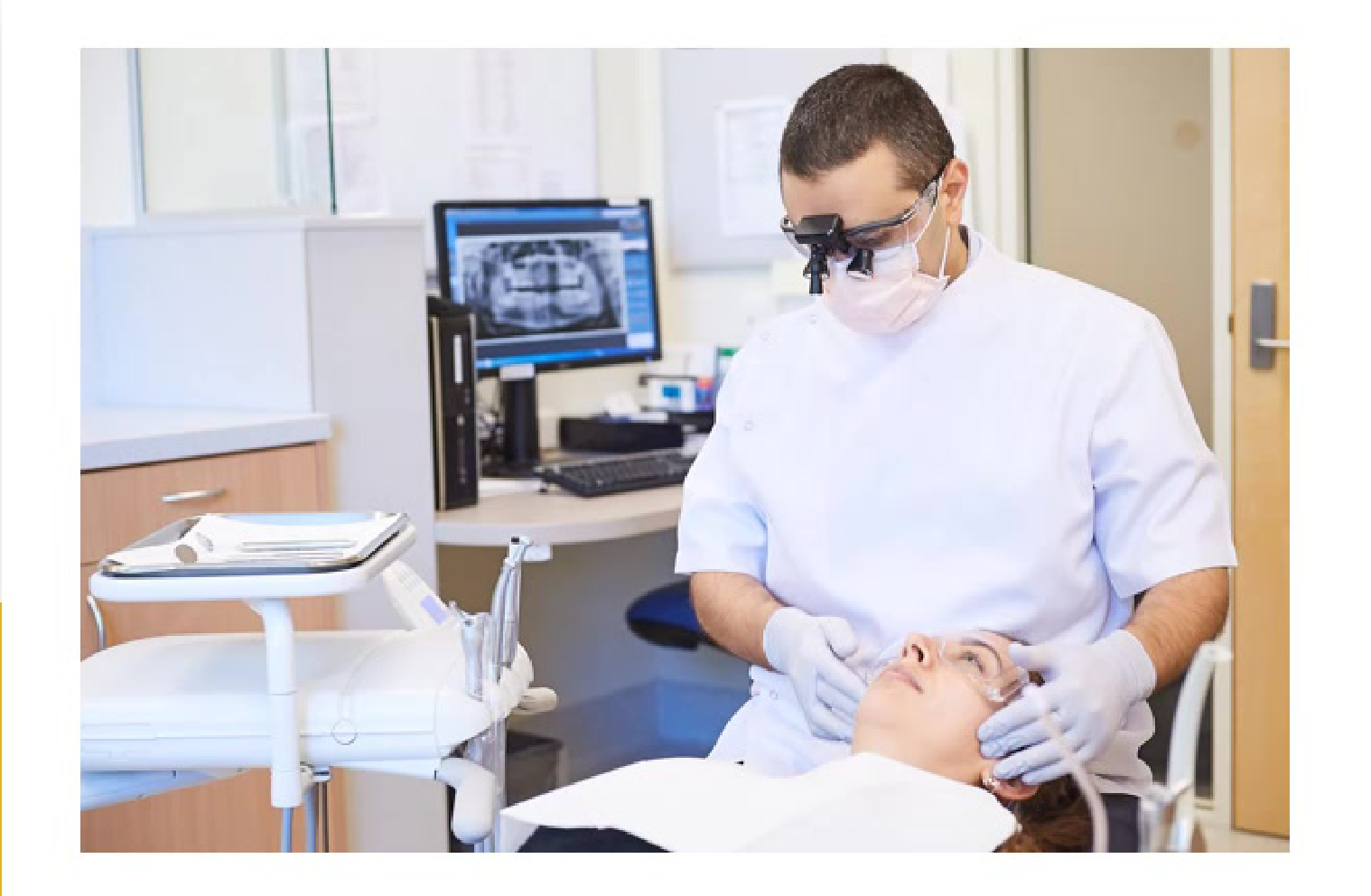
Image Sources and Acknowledgments
-
Department of Health and Aged Care: https://www.health.gov.au/about-us/the-australian-health-system
-
Photograph courtesy: Oral Health Centre of WA
-
The Commonwealth Government provides or supports several dental programs and funding arrangements.
Commonwealth Government Based Dental Services2
- Child Dental Benefit Schedule (CDBS)
- Federation Funding Agreement (FFA) for adult public dental services
- National Health Reform Agreement (NHRA)
- Private Health Insurance (PHI) rebates
- Grants to the Royal Flying Doctor Service (RFDS)
- The Department of Veterans’ Affairs dental program
- Research
- The Northern Territory Remote Aboriginal Investment Oral Health Program (NTRAI OHP)
- Aboriginal community controlled health organisations (ACCHO)
State Government Based Dental Services3
(Western Australian context)
- Dental Health Services
- School Dental Service
- General Dental Service
- Special Dental Service
- Aged care facility (visiting program)
- Prison dental service
- Disability Service Commission clients
- Visiting services to Royal Perth Hospital and Graylands Hospital
- Dental Subsidy Schemes
- Country Patients Dental Subsidy Scheme (CPDSS)
- Metropolitan Patients Dental Subsidy Scheme (MPDSS)
- Private Orthodontic Subsidy Scheme (POSS)
- Aboriginal Medical Services
- Oral Health Centre of Western Australia: Only tertiary teaching and specialist dental hospital in WA.
WA Department of Health, Dental Health Services: https://www.health.wa.gov.au/en/Articles/ADental-Health-Services
Lecturer — Public and Private Care
Although a range of public programs exists, relatively little is being done from a public-sector perspective when dental care is considered in its broader context.
- Private dentistry provides most dental services in Australia.
- This creates significant challenges for people who depend on public services.
- The availability of several programs does not eliminate broader problems with access, affordability, workforce capacity, and integration with general healthcare.
Lecturer — Macro-Level Context
The macro-level challenges are related to policy, funding, population change, system organisation, and broader assumptions about dental care.
- The population is becoming more multicultural, creating distinctive challenges for the Australian oral health system.
- Governments do not always consider dental care to be a social responsibility, which contributes to limited government involvement and investment.
- Dental care is not adequately integrated with general healthcare, influencing the way services are planned and funded.
- Providing high-quality dental care requires substantial resources, and cost considerations affect the extent to which governments and systems can provide services.
- Some population oral health research is supported through the Commonwealth, universities, and competitive funding bodies, but broader investment remains insufficient.
Challenges Facing the Australian Oral Health Care System
- A historical belief that dental care is an individual responsibility.
- Changing population demographic.
- The existing legislative and structural separation of dental and general health care.
- Reluctance of Commonwealth governments to take a national approach to oral health.
- Significant costs associated with increasing subsidisation of oral and dental health care.
- Limitations imposed by workforce size, structure and distribution.
- Lack of investment in population oral health research.
Micro Level4
- The reluctance of the dental profession to include dental services in Medicare.
- Inadequate cultural competency in our current dental workforce.
- Lack of support for dentists to work rural/remote.
 |  |
Macro Level Challenges
Adapted from Parliament of Australia, Senate enquiry 2023-24: https://www.aph.gov.au/Parliamentary_Business/Committees/Senate/Dental_Services_in_Australia/DentalServices/Final_report/Chapter_2_-_A_system_in_decay
Daly, Blánaid, and others, ‘Problems with health care delivery’, Essential Dental Public Health (Oxford, 2013; online edn, Oxford Academic, 12 Nov. 2020), https://doi.org/10.1093/oso/9780199679379.003.0030, accessed 04.08.2024
Factors Influencing Access to Services5
| Factors Influencing Access | Dimension | Australian Context |
|---|---|---|
| Predisposing factors (propensity to use) | Socio-demographic | 1. People eligible for public dental care have significantly worse outcomes than those who are not eligible. 2. People who do not have private health insurance have significantly more tooth loss than those who do. 3. Ageing population – poor oral health service at residential aged care. |
| Socio-psychological | Just under half of Australia’s adults had a dental check up in the last 12 months and only half brush twice daily. | |
| Socio-cultural | 1. Migrants/refugees and Aboriginal communities – ambivalent attitude of oral health care. 2. Aged care workers do not prioritise oral health. | |
| Enabling factors (aids and barriers to use) | Availability | Only five per cent (or around 800) of these professionals work in the public system, which delivers around 15 per cent of dental services. COVID cavities: as RFDS services were ceased during pandemic. |
| Accessibility | Only 38 per cent of those eligible for public dental care living outside of metropolitan areas are located within 5 km of a government dental clinic. | |
| Affordability | 1. One-quarter of Australians would have ‘a lot of difficulty’ paying a $200 dental bill. 2. Out of pocket expenditure in Australia is 60% vs 40% in USA/Canada vs 17% OECD average. | |
| Acceptability | Inadequate culturally competent workforce. | |
| Accommodation | Public dental services are overstretched, understaffed, and the wait times are prohibitively long. Services also impacted by COVID pandemic. |
Adapted from Parliament of Australia, Senate enquiry 2023-24: https://www.aph.gov.au/Parliamentary_Business/Committees/Senate/Dental_Services_in_Australia/DentalServices/Final_report/Chapter_2_-_A_system_in_decay
Daly, Blánáid, and others, ‘Problems with health care delivery’, Essential Dental Public Health (Oxford, 2013; online edn, Oxford Academic, 12 Nov. 2020), https://doi.org/10.1093/oso/9780199679379.003.0030, accessed 04.08.2024
Lecturer — Aged Care Support
Aged care workers have responsibility for providing oral health support to frail residents. The quality and availability of this support form part of the broader access problem.
Recommendations to Improve the Australian Oral Health System
- Biennial oral health studies to measure oral diseases, behaviours, service utilisation, and outcomes. ✓
- Need for culturally safe and effective treatment for Aboriginal and Torres Strait Islander Australians.
Doctor and Dentist Level6
-
Training GPs in oral health assessment.
-
Empowering pharmacists and non-dental workers to apply fluoride varnish in remote settings.
-
Increase role of dental hygienists and therapists in preventative and basic oral care.
-
New training and competency requirements for dentists to treat people with disability.
-
Improve remuneration and conditions for dentists and oral health practitioners practicing in the public sector.
-
Specific course places for regional and remote students to study dentistry and oral health.
-
Address the reluctance of the dental profession to accept dental services within Medicare.
-
Improve cultural competency, including its inclusion in professional accreditation and university curricula.
-
Provide greater support for dentists working in rural and remote areas.
-
Improve the availability of specialised dental services outside metropolitan locations.
System Level
Patient Level Recommendations
- Consider oral health as an essential part of general health. ✓
- Oral health and dental care within the National Health Reform Agreement.
- Seed funding for a national oral health promotion and advocacy body, similar to the Heart Foundation.
- Improving access to dental care for prisoners.
- Implement the oral health care recommendations from the Royal Commission into Aged Care Quality and Safety.
- Increase scope of NDIS for disability oral health care. ✓
- Expand access to the Child Dental Benefits Schedule to all children.
- Supporting universities in rural health training. ✓
- Expanding dental cover under Medicare gradually.
Lecturer — Inquiry Context
The Senate inquiry proposed approximately 35 to 36 recommendations for the Australian Government.
- The recommendations were organised around patient-level, dentist-level, and system-level barriers.
- Tick marks in the related material indicated recommendations supported in principle by the government, but not all recommendations had the same level of support.
- Further advocacy is required, and substantial work remains to achieve change in the oral health system.
Lecturer — System-Level Barriers
System-level improvement requires attention to the relationship between Commonwealth and state responsibilities, public dental funding, and the integration of dental care with general healthcare.
- Dental care should be treated as a social responsibility rather than solely an individual responsibility.
- Other system concerns include the cost of high-quality care, workforce distribution, access to public dental services, long waiting lists, population oral health research, demographic change, and services for older, multicultural, rural, remote, and Aboriginal populations.
Lecturer — Patient-Level Barriers
Patient-level barriers extend beyond affordability and include availability, accessibility, acceptability, and accommodation.
- They also include the patient’s perception of need, the translation of perceived need into demand, the expression of a desire for dental services, oral health behaviours, and attitudes toward oral health care.
- Particular circumstances affect migrants, refugees, Aboriginal communities, and older people.
Adapted from Parliament of Australia, Senate enquiry 2023-24: https://www.aph.gov.au/Parliamentary_Business/Committees/Senate/Dental_Services_in_Australia/DentalServices/Final_report/Chapter_2_-_A_system_in_decay
Government response to Senate enquiry: https://www.health.gov.au/sites/default/files/2024-07/australian-government-response-to-the-senate-select-committee-into-the-provision-of-and-access-to-dental-services-in-australia-report.pdf
Overall Revision
- Macro and microlevel problems in health care systems.
- Interaction between a patient/client and health service.
- Factors influencing Phase II of health service use:
- Availability
- Accessibility
- Affordability
- Acceptability
- Accommodation
- Barriers to oral health service use.
- Australian context.
Key Recommendations7
Put the mouth back into the body
- More equitable access
- Better integration
- National data and coordination
- Awareness and education
- Culturally-safe, accessible care
Adapted from Parliament of Australia, Senate enquiry 2023-24: https://www.aph.gov.au/Parliamentary_Business/Committees/Senate/Dental_Services_in_Australia/DentalServices/Final_report/Chapter_2_-_A_system_in_decay
 |  |
Thank You8
Image source: https://www.dereklegal.com.au/blogs/posts/Considerations-in-Aboriginal-Childrens-Matters-53
Lecturer — Final Lecture
The final lecture will focus on oral health inequalities, methods for addressing inequalities, and the concept of social dentistry.
- Social dentistry will form the basis of the final-year curriculum.
Audio Appendix
Additional Audio Content
The following sections from the lecture audio did not correspond to any heading in the main document.
Levels of Barriers
The lectures identified barriers at three levels:
- Patient level
- Dentist level
- System level
These barriers influence the use of oral health services and interact with the broader social, demographic, financial, and policy environment.
Rural and Remote Workforce Support
There is a lack of support for dentists to work in rural and remote areas.
- This contributes to difficulties providing dental services outside metropolitan locations.
- The problem is particularly relevant where specialised services are not readily available.
Reluctance to Include Dental Services within Medicare
There is reluctance within the dental profession to accept dental services within Medicare.
- The concern is that this could create problems similar to those faced by dentists in the United Kingdom after accepting the National Health Service.
- This reluctance represents a professional-level barrier to broader integration of dental care into the health system.
Special Dental Services
Special dental services include visiting and targeted programs for:
- Aged care facilities
- Prisons through the prison dental service
- Clients of the Disability Services Commission
- Royal Perth Hospital
- Graylands Hospital
Royal Flying Doctor Service
The Commonwealth Government funds the Royal Flying Doctor Service through grants.
- The service provides dental services to regional and remote areas of Australia.
Department of Veterans’ Affairs
The Commonwealth Government funds the Department of Veterans’ Affairs.
- Dental services are provided to veterans through this arrangement.
Case Study: Effects of the COVID-19 Pandemic
The COVID-19 pandemic and associated lockdowns had a substantial impact on oral health service use.
- Many people did not visit their dentists during the lockdowns.
- The situation was worse for people living in rural and remote areas.
- Dental services did not operate normally during the pandemic.
- Waiting lists became longer as a result.
The recording refers to the emergence of COVID cavities as a consequence of:
- Reduced dental attendance
- Disruption to dental services
- The broader effects of the COVID-19 pandemic
Northern Territory Remote Aboriginal Investment Oral Health Program
This is an exclusive program for Aboriginal children under 16 in the Northern Territory.
Dental Research Funding
The Commonwealth also supports dental research.
The recording refers to:
- The University of Adelaide’s population oral health research centre
- Australian Research Council funding
- Medical Research Future Fund funding
- National Health and Medical Research Council funding
The latter sources are competitive and are not exclusively directed toward population oral health research.
General Dental Service
The General Dental Service is primarily intended for adults.
- Children whose names are included on their parents’ healthcare cards may also receive services.
- The service therefore includes some children who meet the relevant healthcare-card eligibility requirements.
Federation Funding Agreement
Under the Federation Funding Agreement:
- The Commonwealth Government provides additional funding to states and territories.
- This funding is intended to improve access to adult public dental services.
- It operates as additional support to state-provided services.
Western Australian Dental Health Services
The major public dental service of the Western Australian Government is Dental Health Services.
Dental Health Services includes several different programs.
Australian Context
The Australian oral health system has challenges that are distinctive to the country, but they are also similar to challenges faced by other developed countries.
The recording emphasises:
- The dominance of private dental care
- The limited public-sector role in the overall provision of dental care
- The shared Commonwealth and state responsibility
- The difficulty of integrating dental care with general healthcare
- The effects of demographic change
- The effects of the COVID-19 pandemic
- The need for continued advocacy for reform
Key Recommendations
The Senate inquiry’s recommendations are intended to address barriers at:
- The patient level
- The dentist level
- The system level
Key areas requiring improvement include:
- Public access to dental services
- Support for rural and remote services
- Cultural competency
- Integration of dental care with general healthcare
- Workforce support
- Public funding and service provision
- Long waiting lists
- Population oral health research
- Services for vulnerable and underserved groups
Private Health Insurance Rebates
The Commonwealth Government provides private health insurance rebates.
- These rebates apply to general treatment, including dental care.
- Dental care may be provided through private dental practices and hospitals.
- The discussion also notes that private health insurance policies can include ambulance cover.
Cultural Competency
There is inadequate cultural competency within the current dental workforce.
- Australia’s population is becoming increasingly multicultural.
- Not all dental professionals are currently culturally competent.
- Cultural competency is being addressed through:
- Its inclusion in the Australian Dental Council accreditation framework
- Encouragement for universities to include cultural competency in their teaching curricula
National Health Reform Agreement
Through the National Health Reform Agreement:
- The Commonwealth provides funding for public hospital admitted and outpatient dental services.
- This funding supports services that are run through the states.
School Dental Service
The School Dental Service provides care to eligible public school children.
- It generally covers children aged between 5 and 16 years.
- Eligibility may extend until Year 11, whichever comes first.
- The service is run by dental therapists.
Aboriginal Community Controlled Health Organisations
The Commonwealth supports Aboriginal community controlled health organisations.
- These organisations have their own medical services.
- Some of those services provide dental care.
- The Commonwealth supports these organisations but does not control and fund all of their activities in the same way.
Dental Subsidy Schemes
Dental subsidy schemes are used in circumstances where government dental services are not readily accessible, particularly in remote areas.
The recording identifies several schemes.
Country Patients Dental Subsidy Scheme
This scheme supports patients in country areas where dental services or government dental clinics may not be accessible.
Metropolitan Patients Dental Subsidy Scheme
The Metropolitan Patients Dental Subsidy Scheme may be used when metropolitan public dental waiting lists are very long.
- Eligible patients may access private dental care.
- The scheme provides an alternative when public services cannot provide care within a suitable timeframe.
Participating Private Dental Services
Participating private dental services may provide care through government-supported arrangements.
Private Orthodontic Subsidy Schemes
Private orthodontic subsidy schemes assist with the cost of orthodontic services.
- These services can only be provided on the insistence of Dental Health Services.
- They are particularly relevant for people living in rural and remote areas.
- The schemes address situations where specialised public services are not easily available.
Aboriginal Medical Services
Aboriginal Medical Services also provide dental services.
Oral Health Centre of Western Australia
The Oral Health Centre of Western Australia provides:
- Specialised dental services
- General dental services
These services are available to eligible residents of Western Australia.
Child Dental Benefits Schedule
The Child Dental Benefits Schedule provides eligible children with up to approximately 1,095 Australian dollars over a relevant calendar-year period.
- It covers basic dental services.
- Eligibility is limited to children who meet the requirements of the schedule.
Patient Interaction with Health Services
The patient’s interaction with health services was described in phases.
Phase One: Patient Perception and Expression of Need
The first phase concerns what occurs within the patient.
- The patient perceives a need.
- That need is translated into demand.
- The patient expresses a desire for a service.
Phase Two: Use of Health Services
The second phase concerns the factors that influence whether health services are used.
These factors include:
- Availability
- Accessibility
- Affordability
- Acceptability
- Accommodation
Characteristics of an Ideal Health System
The earlier recording discussed the characteristics of an ideal health system.
The current recording connects those characteristics to:
- The organisation of dental services
- The relationship between patients and health services
- Barriers to oral health service use
- The roles of the Commonwealth, states, and territories

Footnotes
-
Original PDF page 1: L3.1The challenges faced by the Australian oral health system slides, p.1 ↩
-
Original PDF page 2: L3.1The challenges faced by the Australian oral health system slides, p.2 ↩
-
Original PDF page 3: L3.1The challenges faced by the Australian oral health system slides, p.3 ↩
-
Original PDF page 4: L3.1The challenges faced by the Australian oral health system slides, p.4 ↩
-
Original PDF page 5: L3.1The challenges faced by the Australian oral health system slides, p.5 ↩
-
Original PDF page 6: L3.1The challenges faced by the Australian oral health system slides, p.6 ↩
-
Original PDF page 7: L3.1The challenges faced by the Australian oral health system slides, p.7 ↩
-
Original PDF page 8: L3.1The challenges faced by the Australian oral health system slides, p.8 ↩