Social Dentistry: Addressing Inequities1
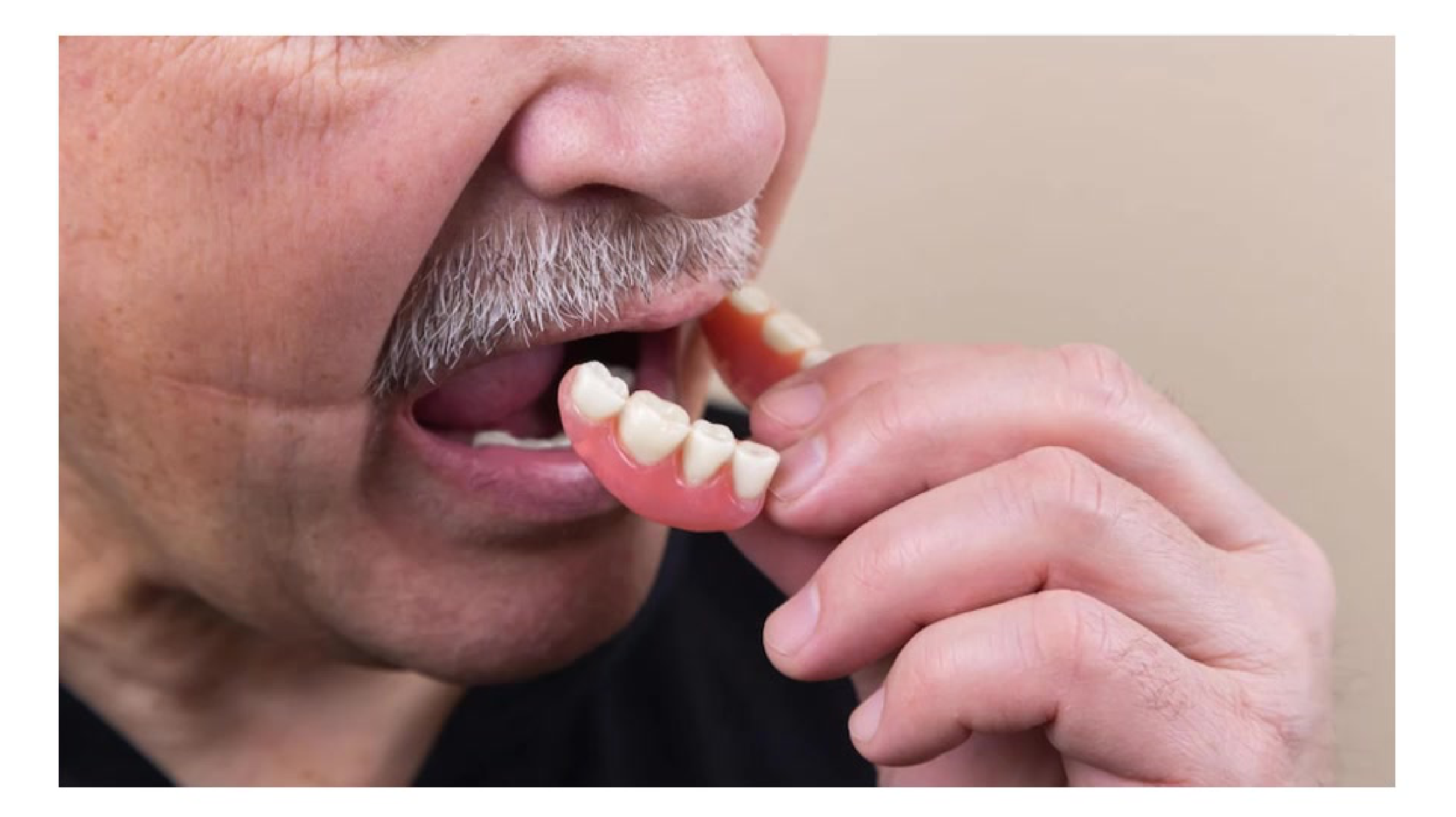
Image source: https://www.abc.net.au/news/2022-04-11/dental-care-reform-calls-for-older-people-federal-election-issue/100979420
 |  |
Understanding Social Dentistry
It is the practice of medicine that integrates:
- Understanding and applying the social determinants of health, social epidemiology, and social science approaches to patient care
- An advocacy and equity agenda that treats health as a human right
- An approach that is both interdisciplinary and multi-sectoral across the health system
- Deep understanding of local and global contexts
- Voice and vote of patient, families, and communities
Lecturer — Clinical Social Dentistry
Social dentistry addresses oral health inequities both at the individual level and within dental practice.
- Dentists should recognize social determinants contributing to oral disease and poor oral health.
- They should work with other professionals, organizations, and sectors.
- Social circumstances should be incorporated into clinical assessment and treatment planning.
- Person-centred care considers more than the mouth and can help explain why a person is experiencing a particular oral health condition.
Social Prescribing2
Social Medicine
It is a way of linking patients in primary care with sources of support within the community to help improve their health and well-being. A social prescribing scheme may include:
- A referral from a healthcare professional
- A consultation with a link worker
- An agreed referral to a local voluntary, community and social enterprise organisation
Bedos, C., Apelian, N. & Vergnes, JN. Social dentistry: an old heritage for a new professional approach. Br Dent J 225, 357–362 (2018)
Lecturer — Social Medicine
Social dentistry stems from social medicine, which applies social determinants in regular practice and recognizes that they can influence diagnosis.
- Social medicine considers both medical and social history, including a person’s demographics and where they come from.
- It treats health as a human right, encourages interdisciplinary and multisectoral participation, and advocates for change.
- Dentists may need to identify injustices such as child abuse, know the reporting processes, and advise patients to seek non-dental support when non-dental problems contribute to dental problems.
Levels Of Action In Social Dentistry
Macro Level: Society3
Stakeholders:
- Government
- Health System
- Professional bodies
- Others
Actions:
- Advocacy for healthy public policies
- Activism for inclusion and against discriminations
Lecturer — Societal-Level Advocacy
The macro level concerns advocacy at a wider societal and policy level.
- Dentists may engage with professional organizations such as the Australian Dental Association, raise concerns affecting oral health across the country, and bring them to governments and other higher authorities.
- Macro-level social dentistry aims to address structural determinants, contribute to societal change, and improve oral health.
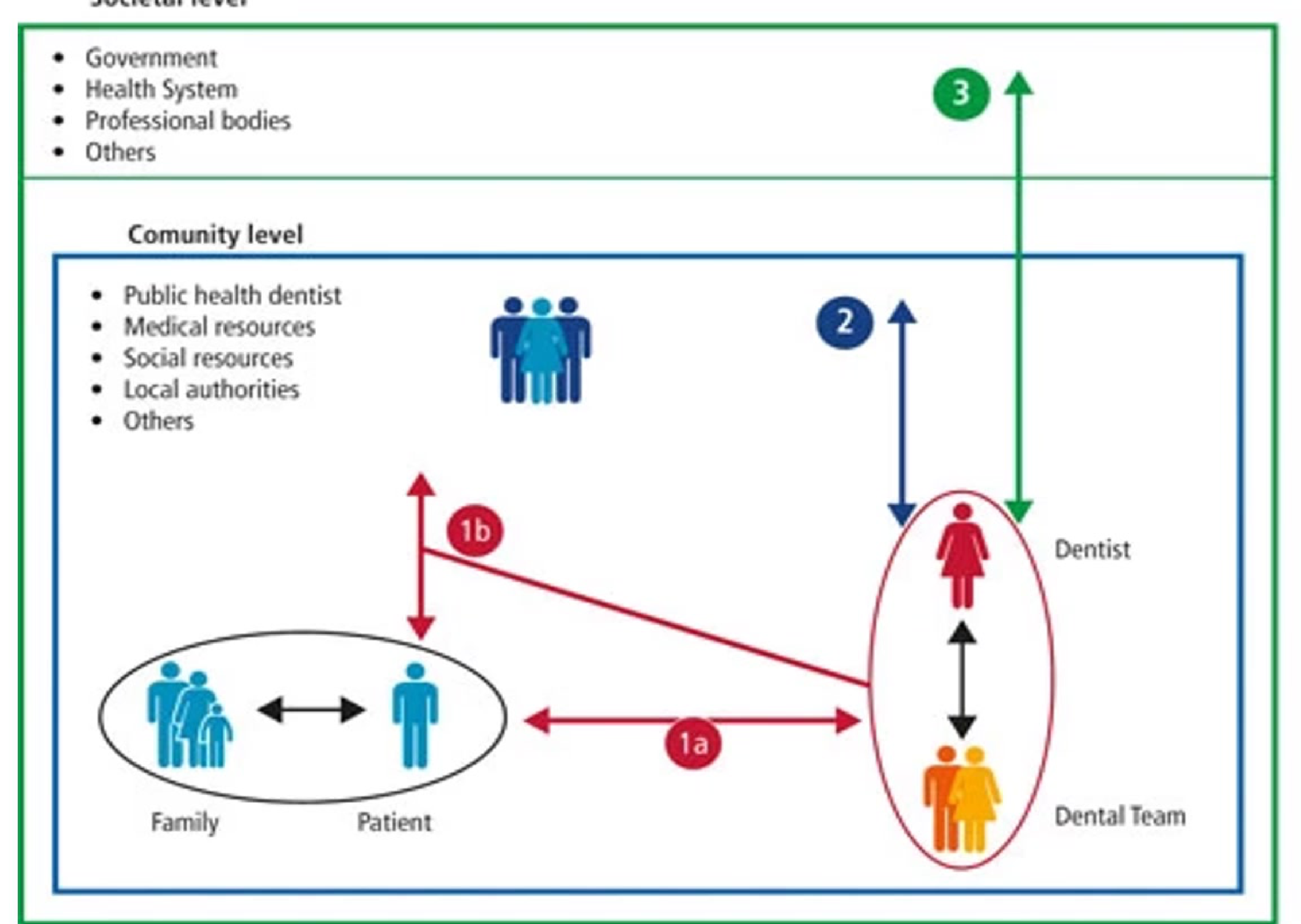 | 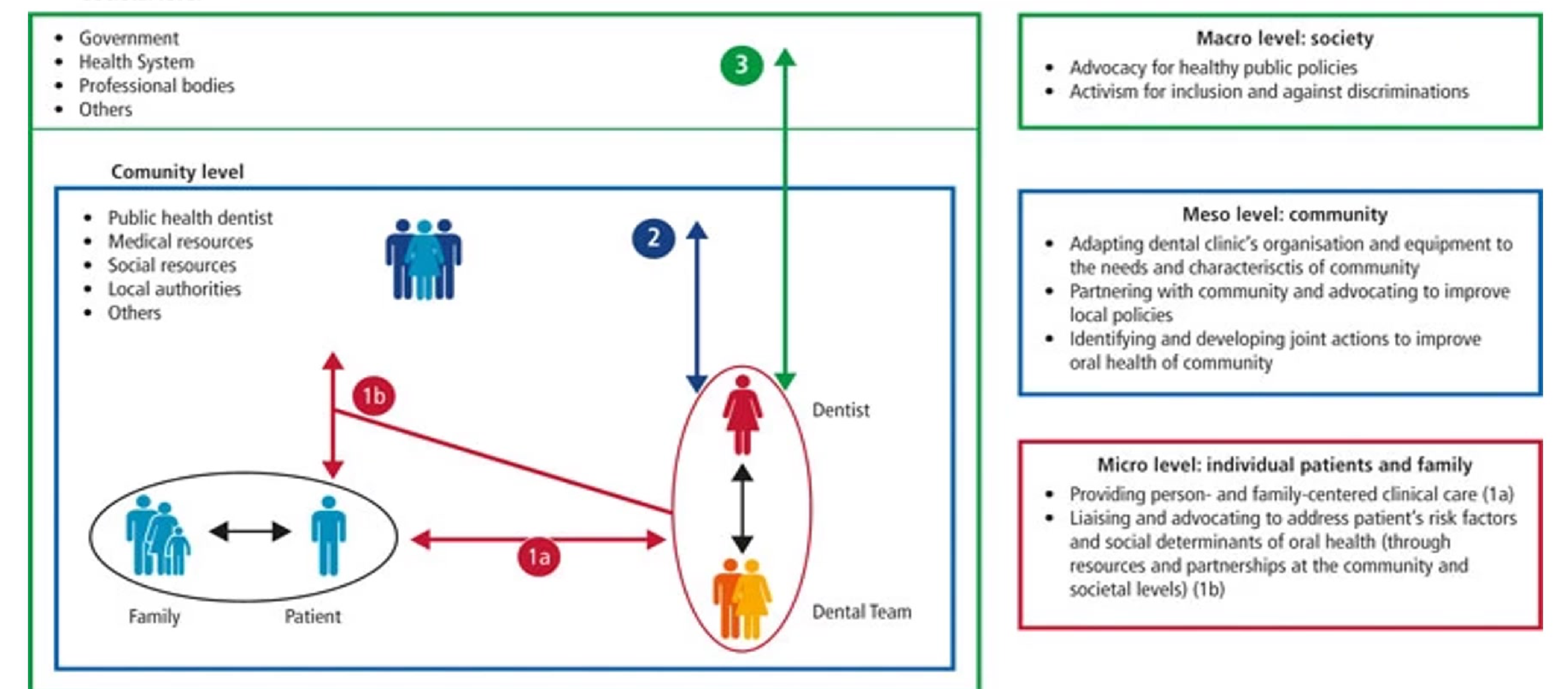 |
Meso Level: Community
Stakeholders:
- Public health dentist
- Medical resources
- Social resources
- Local authorities
- Others
Actions:
- Adapting dental clinic’s organisation and equipment to the needs and characteristics of community
- Partnering with community and advocating to improve local policies
- Identifying and developing joint actions to improve oral health of community
Lecturer — Community-Level Practice
At the meso level, the dentist engages with the community rather than acting only for one specific patient.
- Dentists can identify recurring problems affecting groups of patients, engage local authorities, and bring group-level concerns to the wider community.
- For example, dentists may identify common problems among refugee patients, such as insufficient resources, difficult living circumstances, and problems associated with being refugees, then raise these concerns with community organizations or local authorities.
Micro Level: Individual Patients and Family
Actions:
- Providing person- and family-centered clinical care (1a)
- Liaising and advocating to address patient’s risk factors and social determinants of oral health through resources and partnerships at the community and societal levels (1b)
Lecturer — Micro-Level Practice
The micro level includes the ordinary clinical obligations of assessing, diagnosing, and treating the patient, as well as engaging with the family where appropriate.
- Social dentistry extends this care by identifying social determinants, advocating for the patient’s risks and determinants, and linking the patient with appropriate resources and partnerships.
- Clinical care is distinguished from additional social support, which involves liaising with organizations to improve the individual patient’s well-being.
- For example, where child abuse contributes to a child’s oral health, the dentist may link the patient with the Department of Communities or child protection organizations.
Case Study: Biomedical Approach
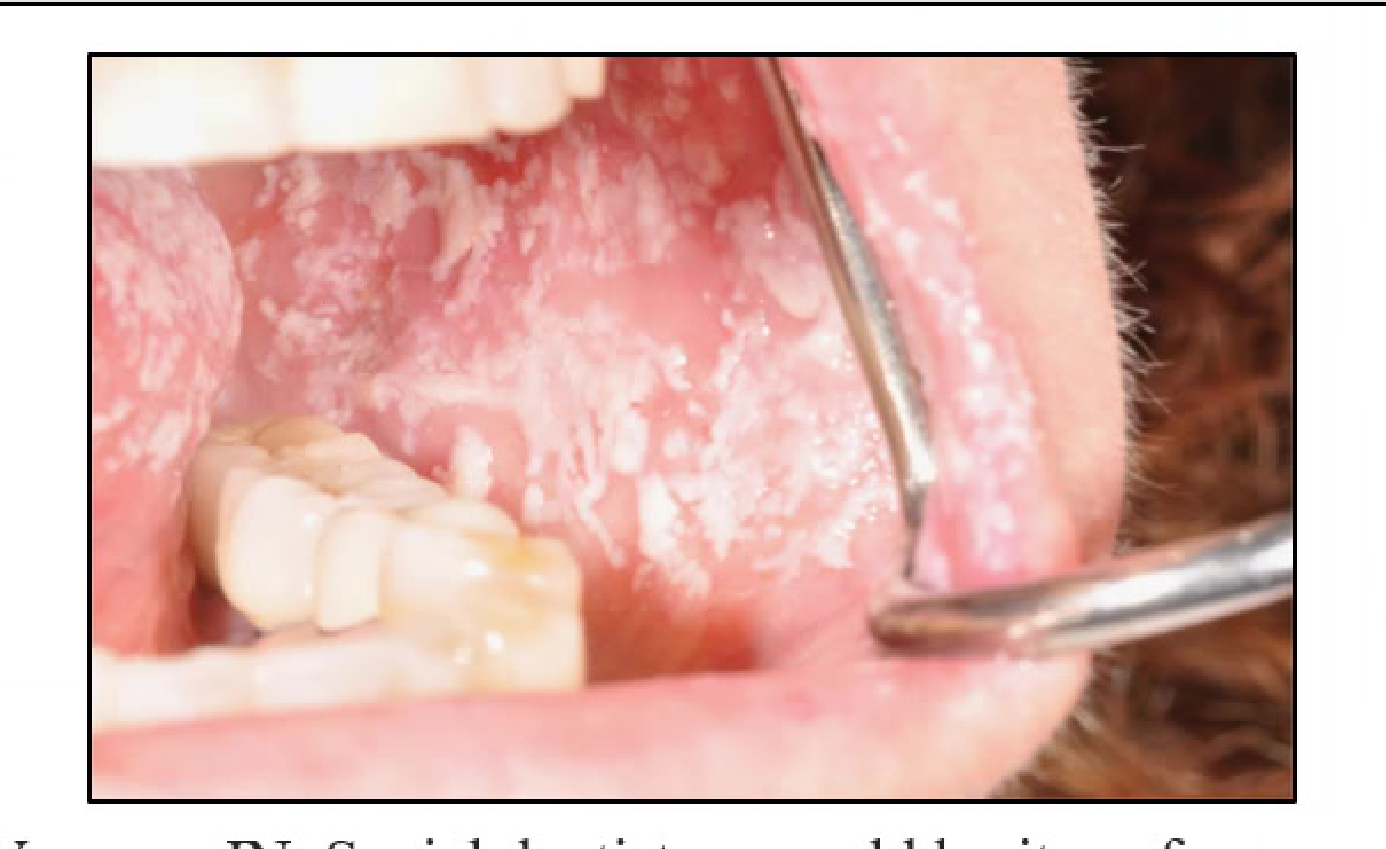
Ms Da Silva, aged 24, feels that her mouth is often dry and has a bad taste. She is also worried by white patches that appeared on her oral mucosa.
She explains that her asthma has recently worsened and that she had to increase her use of asthma medication (B2-agonists and corticosteroids).
Patient Situation4
Adapted from: Bedos, C., Apeljan, N. & Vergnes, JN. Social dentistry: an old heritage for a new professional approach. Br Dent J 225, 357–362 (2018)
- The beta-2 agonist was probably salbutamol.
Potential Aetiological Explanation5
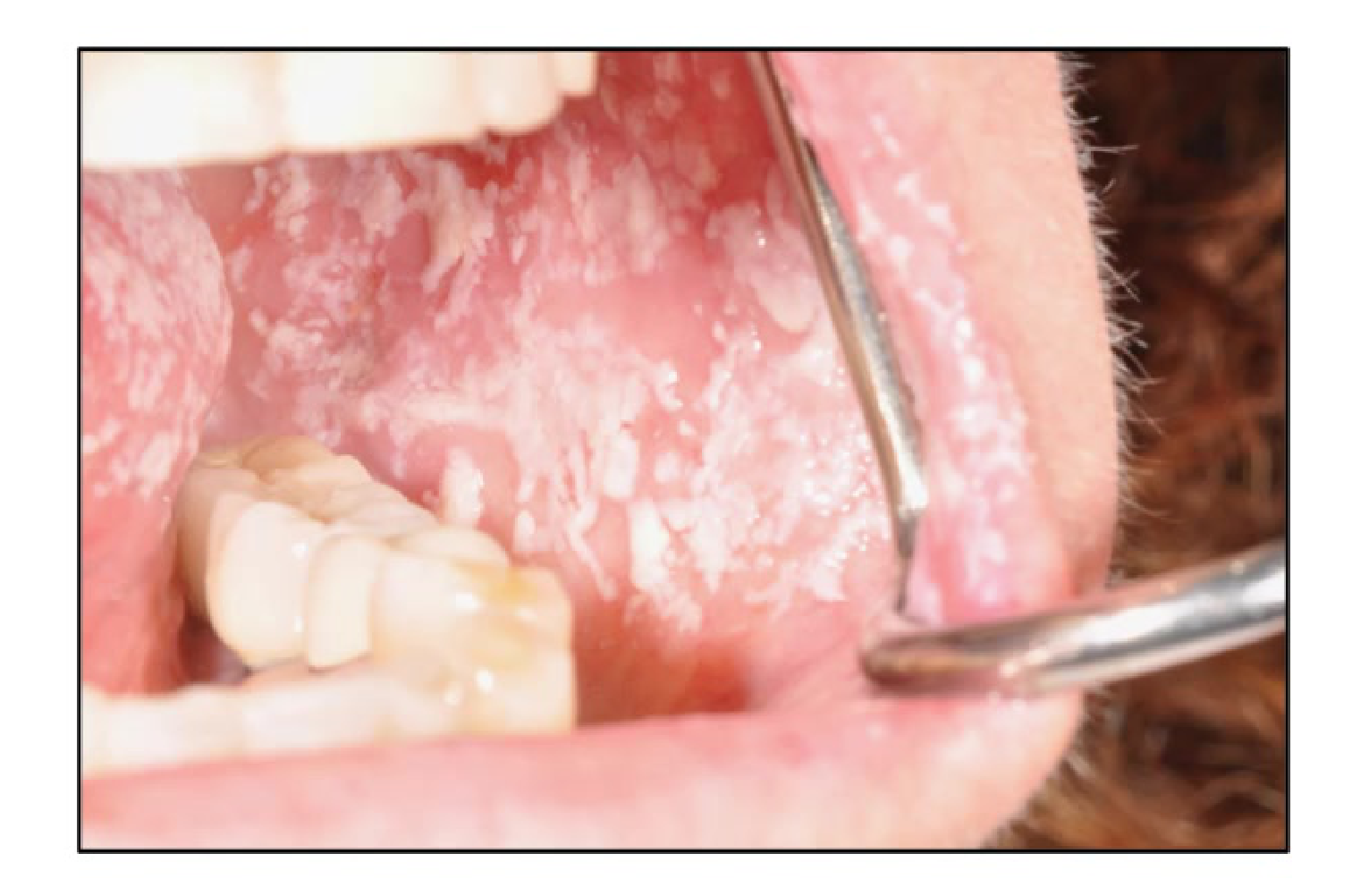
Ms Da Silva’s xerostomia, halitosis and oral candidiasis could be side effects of her asthma medication.
Adapted from: Bedos, C., Apelian, N. & Vergnes, JN. Social dentistry: an old heritage for a new professional approach. Br Dent J 225, 357–362 (2018)
Proposed Intervention6
The dentist suggests oral hydration agents and an antifungal ointment to alleviate Ms Da Silva’s symptoms in the short term. He also proposes to liaise with her physician to find a less iatrogenic asthma treatment.
Adapted from: Bedos, C., Apelian, N. & Vergnes, JN. Social dentistry: an old heritage for a new professional approach. Br Dent J 225, 357–362 (2018)
Lecturer — Medication Mechanism
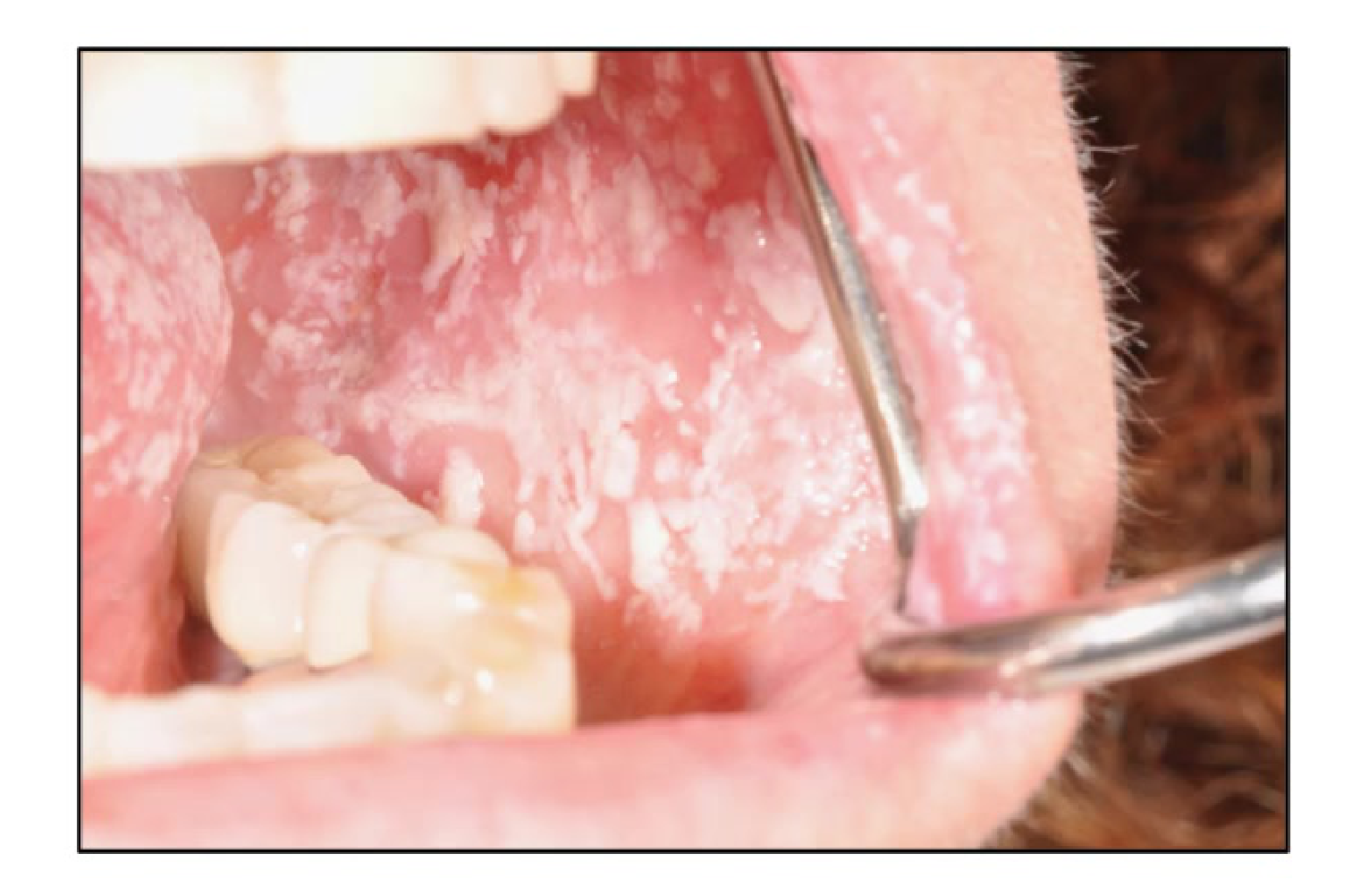
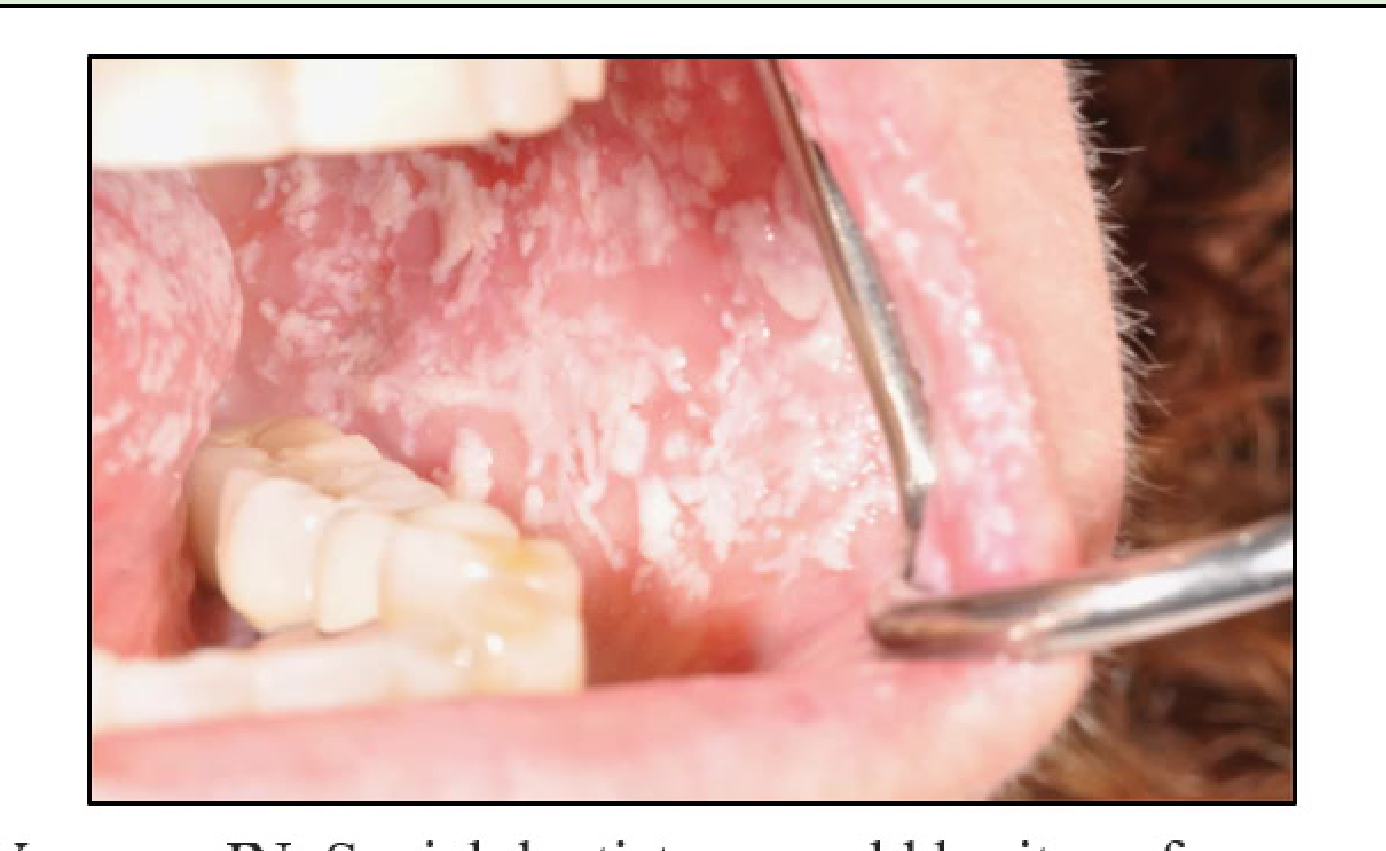
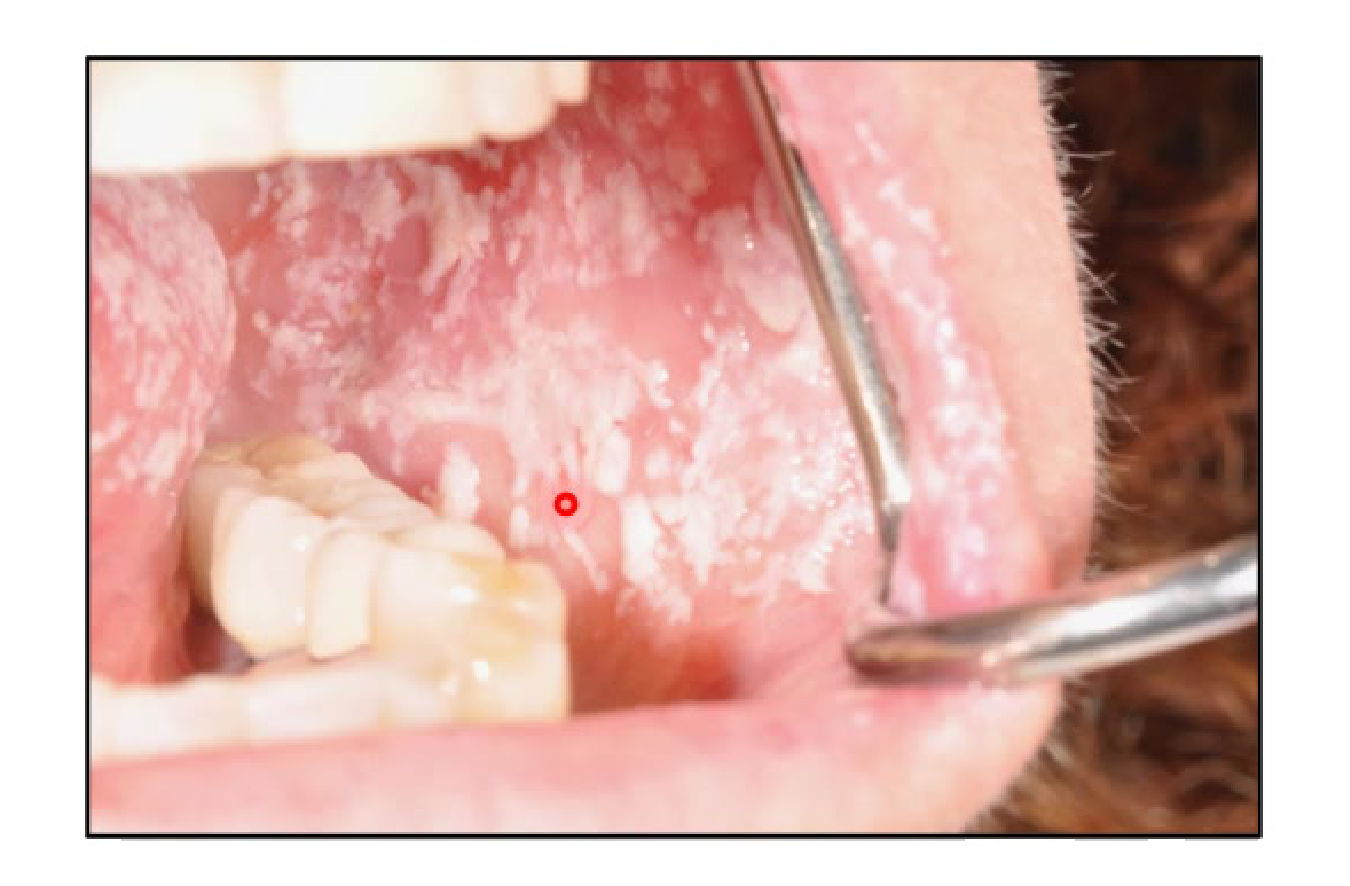
The clinician identifies extensive white patches and candidiasis during the clinical examination.
- Corticosteroids are described as immunosuppressive and may therefore have contributed to the candidiasis.
- This biomedical explanation focuses on the direct medical and medication-related causes of the oral findings.
Lecturer — Biomedical Approach
The intervention is considered reasonable because it addresses the patient’s reported symptoms, the clinical findings, and the medication considered responsible for the oral condition. However, the approach stops after considering the medical history and medication and does not investigate the patient’s wider social circumstances.
Case Study: Socially Engaged Approach
Ms Da Silva says that her apartment is old and that moulds have appeared and grown in several rooms in the last year. Her landlord refuses to fix the problem, and she does not know how to negotiate with him nor where to find help. She stopped school at age 17 and acknowledges that she lacks skills to defend her rights. She does not consider moving as an option considering her low financial resources.
Patient Situation7
Adapted from: Bedos, C., Apelian, N. & Vergnes, JN. Social dentistry: an old heritage for a new professional approach. Br Dent J 225, 357–362 (2018)
Potential Aetiological Explanation8
In addition, Ms Da Silva’s asthma has been aggravated by the apparition of moulds in her apartment, by her landlord’s lack of actions to address this issue, and, more generally, by difficulties to find safe and affordable housing.
Adapted from: Bedos, C., Apelian, N. & Vergnes, JN. Social dentistry: an old heritage for a new professional approach. Br Dent J 225, 357–362 (2018)
Proposed Intervention9
To address the environmental factors of asthma, the dentist proposes to contact a ‘free legal clinic’ to clarify Ms Da Silva’s rights as a tenant. The dentist also offers to liaise with a community social worker to identify possibilities of subsidised housing in the neighbourhood.
At the meso and macro levels, the dentist advocates for safe and affordable housing programs.
Adapted from: Bedos, C., Apelian, N. & Vergnes, JN. Social dentistry: an old heritage for a new professional approach. Br Dent J 225, 357–362 (2018)
Lecturer — Patient Details
The lecturer describes additional oral symptoms associated with Ms. Da Silva’s worsening asthma.
- Ms. Da Silva is 24 years old and reports a frequently dry mouth, a bad taste, and white patches on her oral mucosa.
- Her worsening asthma has led to increased use of beta-2 agonists, probably salbutamol, and corticosteroids.
Lecturer — Oral Aetiology
The clinician’s history and examination identify a direct medical and medication-related explanation for the oral findings.
- The findings include xerostomia, halitosis, extensive white patches, and candidiasis.
- The candidiasis is considered potentially related to the corticosteroids used for asthma, which the lecturer describes as immunosuppressive.
Lecturer — Biomedical Intervention
The lecturer describes a reasonable biomedical approach that addresses the symptoms, clinical findings, and medication considered responsible for the oral condition.
- The short-term treatment consists of oral hydration agents for dry mouth and antifungal ointment for candidiasis.
- The clinician proposes liaising with a physician to identify a less iatrogenic asthma treatment, potentially by replacing Ms. Da Silva’s current medications.
- This approach stops after considering the medical history and medication and does not investigate the patient’s wider social circumstances.
Review And Key Takeaways10
Now I am Confused..
Image source: https://tenor.com/en-GB/search/jackie-chan-confused-gifs

Revision Of Key Concepts11
- What are inequalities vs inequities.
- Determinants of oral health inequities.
- Inequitable burden of oral diseases in Australia.
- Understanding approaches to tackle oral health inequities - population level
- Adopting practice of social dentistry – dental practice level
Lecturer — Key Concepts
The lecturer distinguished inequalities from inequities and outlined the determinants and responses relevant to oral health.
- Inequalities are differences in health, whereas inequities arise from injustice or unjust systems.
- Oral health is influenced by proximal, intermediate, structural, and commercial determinants.
- The inequitable burden of oral diseases in Australia includes priority population groups.
- Population-level responses involve upstream action, integrating health promotion with service delivery, and applying the Ottawa Charter framework.
- Dentists can practice social dentistry at the micro, meso, and macro levels.
- Social dentistry requires recognizing social determinants, avoiding victim blaming, understanding patients’ medical and social histories, providing person-centred care, and using social prescribing where appropriate.
- Dentists should advocate for patients and communities, work with other organizations and sectors, and identify and respond to injustice contributing to oral health problems.
 |  |
 |
Recommended Reading12
- Daly B, Batchelor P, Treasure ET, Watt RG, Essentials in Dental Public Health, Second Edition, Oxford University Press.
- The textbook is available through UWA OneSearch and online.
-
Watt, R., Sheiham, A. Inequalities in oral health: a review of the evidence and recommendations for action. Br Dent J 187, 6–12 (1999).
-
Government of Australia. Healthy Mouths Healthy Lives - AUSTRALIA’S NATIONAL ORAL HEALTH PLAN 2015 - 2024. Adelaide; 2016.
-
Bedos, C., Apelian, N. & Vergnes, JN. Social dentistry: an old heritage for a new professional approach. Br Dent J 225, 357–362 (2018).
Lecturer — Social Dentistry
Social dentistry connects oral health with the circumstances in which people live.
- Dentists can understand social determinants and provide person-centred care.
- They can link patients with appropriate non-dental services and advocate for communities and policy change.
- What happens outside the mouth is directly connected to what happens in the mouth.
Closing13
Thank you!
Audio Appendix
Additional Audio Content
The following sections from the lecture audio did not correspond to any heading in the main document.
Avoiding Victim Blaming
- Dental professionals may blame patients for proximal determinants of oral disease, such as:
- Smoking.
- Inadequate toothbrushing.
- Plaque buildup.
- Staining of dental restorations associated with smoking.
- This is described as victim blaming.
- The lecture emphasizes that proximal determinants are influenced by wider circumstances. Patients should not simply be blamed for behaviours without considering the conditions that have contributed to those behaviours.
- Social dentistry therefore requires:
- Understanding the circumstances behind a patient’s health behaviours.
- Developing empathy for the patient’s situation.
- Appreciating the patient’s personal circumstances.
- Considering social determinants as part of diagnosis and treatment.
Future Applications in Dental Practice
- In the final year, students will examine priority populations and their needs in greater detail.
- The lecture identifies several populations and contexts that will be introduced:
- Aboriginal groups and Aboriginal oral health.
- Culturally and linguistically diverse populations.
- Refugees.
- People living in rural and remote areas.
- People experiencing family and domestic violence.
- Child abuse and neglect.
- People who consume a lot of drugs or have experienced drug misuse.
- People experiencing economic challenges, including homelessness.
- Students will also complete OSCEs assessing how being an Aboriginal person may influence:
- Diagnosis.
- Prognosis.
- Treatment planning.
Social Prescribing
- Traditional prescribing is generally associated with prescribing medicines.
- Social prescribing involves linking patients in primary care with sources of support and with the community to improve health and well-being.
- In dental practice, social prescribing involves:
- Finding ways to reduce inequalities.
- Understanding the person more fully.
- Identifying ways to improve the person’s environment.
- Recognizing that improvements in general health and circumstances can also improve oral health.
- Without social prescribing, clinicians may treat a patient’s immediate condition without addressing the problems that could contribute to future oral disease.
- Social prescribing supports holistic and person-centred care.

Clinical Cases
Case: 24-year-old woman with oral white patches and worsening asthma
Question
Scenario: A 24-year-old woman presents complaining of a dry mouth, bad taste, and white patches on her oral mucosa. She reports that her asthma has recently worsened, leading to an increased use of her asthma medications, which include beta-2 agonists and corticosteroids.
What’s shown: Clinical examination reveals extensive white patches on the oral mucosa.
Consider: What is the likely biomedical diagnosis and immediate management for her oral symptoms, and what additional social history might you explore to address the root causes of her condition?
Answer
Observations:
- The patient presents with xerostomia, halitosis, and oral candidiasis.
- The candidiasis is a side effect of her increased use of corticosteroids, which act as an immunosuppressant.
- Social history reveals she lives in an old, moldy apartment; her landlord refuses to fix it, and she is economically challenged and unaware of her tenant rights.
- The mold in her home is the underlying trigger for her worsening asthma.
Reasoning: A purely biomedical approach identifies the oral candidiasis as a side effect of her immunosuppressive asthma medication. The immediate management would be oral hydration agents and antifungal ointment for symptom relief, plus liaising with a physician to switch to a less iatrogenic asthma treatment. However, a social dentistry approach recognizes that changing the medication won’t solve the problem if the environmental trigger remains. By exploring her social history, the dentist identifies that her housing conditions are driving her asthma. The holistic management therefore includes social prescribing—linking the patient to a free legal clinic to help her navigate her tenant rights and address the mold issue, which will ultimately improve her asthma and prevent future oral health complications.
Takeaway: Practicing social dentistry means integrating social determinants of health into clinical practice by looking beyond the mouth to identify and address upstream social factors (like housing) that drive a patient’s disease, often utilizing social prescribing to connect patients with community resources.
Footnotes
-
Original PDF page 1: L4.2 Introduction to Social Dentistry slides, p.1 ↩
-
Original PDF page 2: L4.2 Introduction to Social Dentistry slides, p.2 ↩
-
Original PDF page 3: L4.2 Introduction to Social Dentistry slides, p.3 ↩
-
Original PDF page 4: L4.2 Introduction to Social Dentistry slides, p.4 ↩
-
Original PDF page 5: L4.2 Introduction to Social Dentistry slides, p.5 ↩
-
Original PDF page 6: L4.2 Introduction to Social Dentistry slides, p.6 ↩
-
Original PDF page 7: L4.2 Introduction to Social Dentistry slides, p.7 ↩
-
Original PDF page 8: L4.2 Introduction to Social Dentistry slides, p.8 ↩
-
Original PDF page 9: L4.2 Introduction to Social Dentistry slides, p.9 ↩
-
Original PDF page 10: L4.2 Introduction to Social Dentistry slides, p.10 ↩
-
Original PDF page 11: L4.2 Introduction to Social Dentistry slides, p.11 ↩
-
Original PDF page 12: L4.2 Introduction to Social Dentistry slides, p.12 ↩
-
Original PDF page 13: L4.2 Introduction to Social Dentistry slides, p.13 ↩