Geriatric Medicine and Dentistry – Parts I & II12
2026 DMD3 DENT5311
Dr Jee-Yun Leung
BDSc(Hons) MSc(SpecCareDent) DSCD(RCS Eng) DClinDent(SND) MRACDS(SND) FANZASND
- Consultant, Special Needs Dentistry | Fiona Stanley Fremantle Hospital Group
- Senior Lecturer | The University of Western Australia
Part I Lecture Outcomes and Outline34
- Understand the process of ageing, including the effects on orofacial structures
- Identify common dental conditions in the geriatric population
- Develop rationale and person-centred treatment plans appropriate for individuals at various stages of the ageing process, factoring in medical and social considerations
-
Orofacial structures and ageing
-
Dental disorders in the elderly
-
Dental treatment approaches (“Rational Dental Care” concept)
-
Shortened dental arch
-
Dementia-friendly dentistry
-
Oral health assessments and care plans in residential aged care
-
Daily oral hygiene assistance for dependent older adults
-
Domiciliary dental care and portable equipment
Demographics and Context
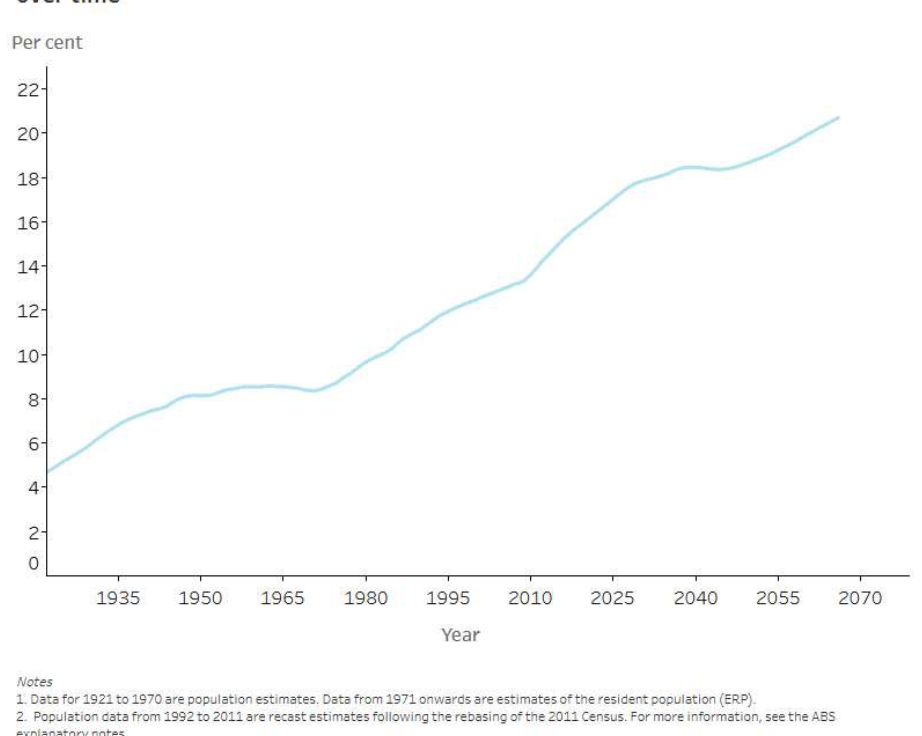
Demographics5
- 1 in 6 Australians are aged >65 yo (16%)
- The number of older Australians ↑ from 1.0 million (8.3% total pop) in 1970 → 2.1 million (12% total pop) in 1995
- Number and % expected to continue and grow. By 2066, projected that older Australians will comprise 21-23% of total population
Lecturer — Geriatric Dentistry
Older adults will be encountered in both specialist and general dental practice.
- Geriatric medicine is one of the major areas within special needs dentistry.
- Other major areas include medically complex patients and people with disability, including intellectual, neurological, physical and sensory disabilities.
→ You will be seeing these patients!!!
Notes
- Data for 1921 to 1970 are population estimates. Data from 1971 onwards are estimates of the resident population (ERP).
- Population data from 1992 to 2011 are recast estimates following the rebasing of the 2011 Census. For more information, see the ABS explanatory notes.
Sources: ABS 2018, 2019.
https://www.aihw.gov.au/reports/older-people/older-australians/contents/demographic-profile
Context67
- Healthy Mouths, Healthy Lives: Australia’s National Oral Health Plan 2015-2024
- Priority Population 4: People with additional and/or specialised health care needs – Frail older people
- Royal Commission into Aged Care Quality and Safety
- Priority Population 4: People with additional and/or specialised health care needs – Frail older people
Lecturer — Aged Care Commission
The Royal Commission into Aged Care Quality and Safety was established in October 2018.
- It examined the quality of aged care services in Australia.
- It considered whether services were meeting community needs and how they could be improved.
- The sector was found to be in crisis and to require a substantial overhaul.
- The final report is freely available online.

Orofacial Changes and Ageing
Muscular Changes
- Ageing → general progressive decline in the body’s total skeletal muscular mass and mechanical performance
Muscles of Mastication8
-
Decreased muscle tone, mass, and neuromuscular control
-
→ Decreased bite force, masticatory efficiency, dysfunction of tongue motor skills
-
→ Difficulties with mastication
-
→ Malnutrition
-
Nutritional support may eventually involve modified food textures or tube feeding, depending on the person’s needs.
NB: Masticatory performance is not necessarily associated only with age, but other factors associated with the ageing process (systemic disease, loss of dental structure, tooth loss, pathology and pain in the facial musculature).
- In Lewy body dementia, protein bodies accumulate in areas responsible for thinking, visual perception and muscle movement.
Salivary Changes and Taste9
Saliva10
- Increase in proportional volume of salivary gland fat and fibrovascular tissues
- Decrease in acinar cell secretion
- Reduction in taste and olfactory receptors → reduced neuronal saliva stimulation
- Decreased blood perfusion in salivary glands
- Polypharmacy / medication-related
- ⇒ Decreased saliva production and alteration in saliva composition (reduced calcium, mucin, lactoferrin & peroxidase)
Taste
- Decrease in number of taste buds
- Decrease in taste bud sensitivity
- Decrease in saliva
- Disorders or drugs (e.g. antihypertensives esp. captopril, statins, antidepressants) that affect ability to taste
Implications of decreased saliva and poorer taste:
-
Reduction in oral clearance (food stagnation, “pouching”)
-
Increased use of salt/sugar as food tastes bland
-
Increased risk of dental decay
-
Increased risk of opportunistic infections
-
Alterations in food intake and malnutrition
-
Xerostomia and issues with oral comfort
-
Speech
-
Reduced tolerance of dentures
-
Food stagnation or “pouching” may occur particularly in the buccal and labial sulci.
-
Reduced saliva also decreases buffering and other protective properties.
-
Opportunistic infections may particularly include thrush.
-
Reduced denture retention, particularly for upper dentures, may result from loss of salivary capillary suction. ➔ Increased risk of disease + reduced oral-health related quality of life
Bone, Mucosa and Dentition11
Mucosal12
- Thinning of oral mucosa → compromised local mucosal immunity and antimicrobial capacity
Dental
-
Dental pulp: increasing calcification and degeneration of neurons → decreased pain perception, challenges in diagnosis & treatment of dental problems
-
Dentine: increased mineral deposition, decreased fatigue strength & fracture toughness → increased susceptibility to crack propagation
-
Enamel: increased mineral density and brittleness → more susceptible to cracks
-
Increased enamel wear
-
Age-related pulpal changes can make pulp sensibility testing less reliable.
Bone
-
Reduced jaw bone density and alveolar resorption → mandibular resorption increases susceptibility to jaw fracture
-
Osteoporosis and medications used to treat it may also affect the oral and jaw structures.
-
Reduced bone density may occur even when the overall volume of bone appears to be maintained.
-
Periodontal disease remains relevant when assessing bone changes and tooth support.
Dental Disorders in the Elderly
Risk Factors for Dental Disorders13
- Physiological ageing
- Multiple chronic diseases (e.g. CVD, MSK, diabetes)
- Polypharmacy
- Loss of autonomy and dependency for ADLs
- Reduced sensory function: impaired vision, lower tactile thresholds, reduced dexterity
- Cognitive and movement disorders: dementia, Parkinson’s
- Reduced ability/compliance for oral hygiene
Lecturer — Carer Oral Hygiene
Behavioural symptoms may make toothbrushing difficult or unsafe for carers. Paid carers may be reluctant to perform oral hygiene when a person attempts to kick, punch or scratch during toothbrushing, so the oral cavity may be neglected for months or years.
Common Dental Disorders
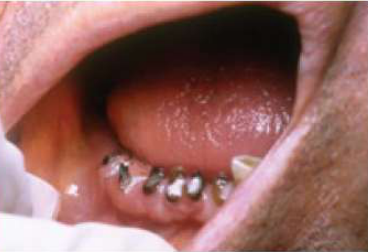
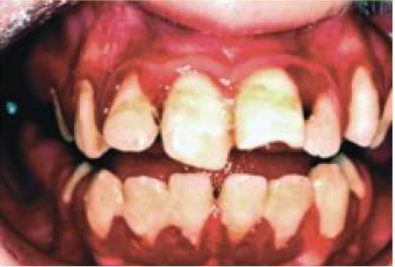
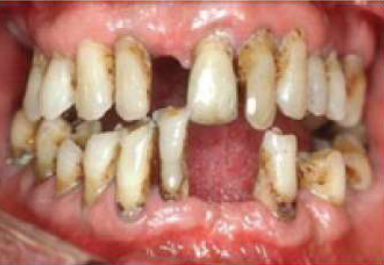
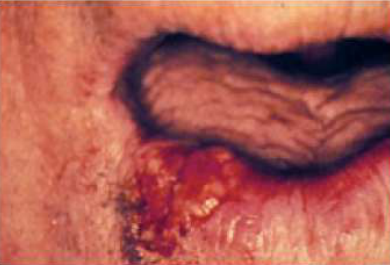
Natural Teeth14
 |  |  |
 |  |  |
Caries
Tooth decay is a diet and oral hygiene related infectious disease which affects the teeth and causes pain.
Check for:
- holes in teeth
- brown or discoloured teeth
- broken teeth
- bad breath
- oral pain and tooth sensitivity
- difficulty eating meals
- changed behaviour.
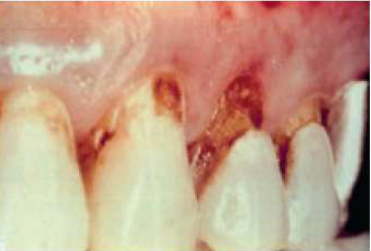
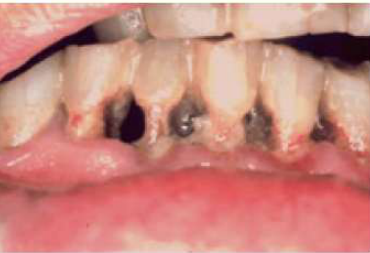
Root Caries
Gums recede and the surface of the tooth root is exposed. Decay can develop very quickly because the tooth root is not as hard as tooth enamel.
Lecturer — Root Caries Factors
Root caries is also associated with salivary changes, food pouching, increased sugar intake, poorer dexterity and reduced compliance with oral hygiene.
Check for:
- tooth sensitivity
- brown discolouration near the gum line
- bad breath
- difficulty eating meals
- changed behaviour.
Retained Roots
The crown of the tooth has broken or decayed away.
Check for:
- broken teeth
- exposed tooth roots
- oral pain
- swelling
- bad breath
- trauma to surrounding tissues from sharp tooth edges
- difficulty eating meals
- changed behaviour.
Gums and Oral Tissue
Gingivitis
This is caused by the bacteria in dental plaque accumulating on the gum line at the base of the tooth. It gets worse and more common with age.
Check for:
- swollen red gums that bleed easily when touched or brushed
- bad breath.
Periodontitis
This causes gums and bone that support the teeth to break down. This condition can impact seriously on general health and wellbeing.
Lecturer — Periodontal Progression
Prolonged plaque accumulation allows calculus to form, and inflammation and infection can progress into the supporting jawbone. Progressive periodontal disease may result in mobile teeth, with reduced brushing and dependence on carers as important contributing factors.
Check for:
- receding gums
- exposed roots of teeth
- loose teeth
- tooth sensitivity
- bad breath.
Oral Cancers
Oral cancer is a major cause of death. People who smoke and drink alcohol heavily are at higher risk.
Check for:
- ulcers that do not heal within 14 days
- a white or red patch or change in the texture of oral tissues
- swelling
- unexplained changes in speech
- difficulty in swallowing.
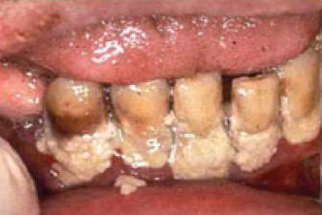
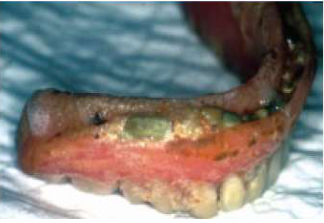
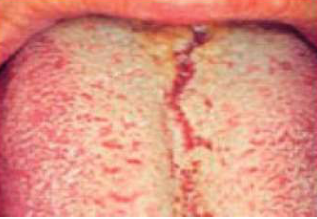
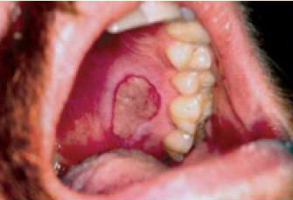
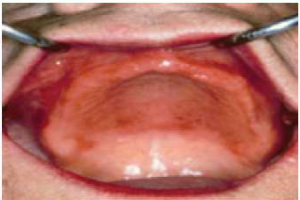
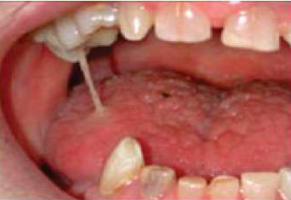
Oral Cleanliness15
 |  |  |
 |  |  |
 |  |  |
 |  |  |
Poor Oral Hygiene
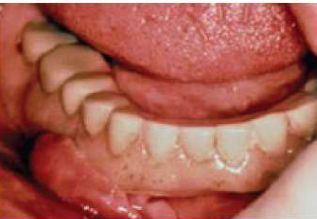
Poor oral hygiene allows the bacteria in dental plaque to produce acids and other substances that damage the teeth, gums and surrounding bone.
Dental plaque begins as an invisible film that sticks to all surfaces of the teeth, including the spaces between the teeth and gums. It forms continuously and must be removed by regular brushing. If dental plaque is not removed, it hardens into calculus (tartar).
Check for:
- build up of dental plaque on teeth, particularly at the gum line
- calculus on teeth, particularly at the gum line
- calculus on denture
- unclean denture
- bleeding gums
- bad breath
- coated tongue
- food left in the mouth.
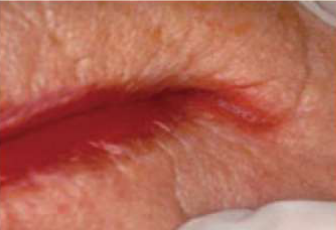
Lips
Angular Cheilitis
Bacterial or fungal infection which occurs at the corners of the mouth.
Check for:
- soreness and cracks at corners of the mouth.
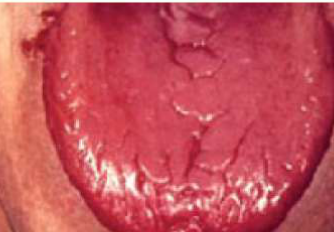
Tongue
Glossitis
This is commonly caused by a fungal infection. It may be a sign of a general health problem.
Check for:
- a reddened, smooth area of tongue
- a tongue which is generally sore and swollen.
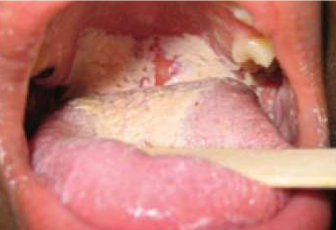
Candidiasis (Thrush)
This is a fungal infection of oral tissues.
Check for:
- patches of white film that leave a raw area when wiped away
- red inflamed areas on the tongue.
Gums and Oral Tissue (continued)
Ulcers & Sore Spots
These are caused by chronic inflammation, a poorly fitting denture or trauma. Ulcers may be a sign of a general health problem.
Check for:
- sensitive areas of raw tissue caused by rubbing of the denture (particularly under or at the edges of the denture)
- broken denture
- broken teeth
- difficulty eating meals
- changed behaviour.
Lecturer — Caries in Older Adults
Older adults in residential aged care facilities may have an annual caries increment more than double that of older adults living in the community. Admission to aged care is associated with an increased caries rate, and the rate among people with dementia was described as twice as high again.
Stomatitis
Usually, stomatitis is caused by a fungal infection. It is commonly found where oral tissue is covered by a denture. It may be a sign of a general health problem.
Check for:
- red swollen mouth usually in an area which is covered by a denture.
Saliva
Xerostomia (Dry Mouth)
This can be a very uncomfortable condition caused by medications, radiation and chemotherapy or by medical conditions such as Sjögren’s syndrome and Alzheimer’s disease.
Lecturer — Xerostomia Consequences
Xerostomia may result from ageing-related salivary changes, polypharmacy and medication-related hyposalivation. Consequences include reduced lubrication, food stagnation, increased caries and thrush risk, speech and comfort problems, reduced denture retention, and reduced food intake with malnutrition.
Check for:
- difficulty with eating and/or speaking
- dry oral tissues
- small amount of saliva in the mouth
- saliva which is thick, stringy or rope-like.
Dentures
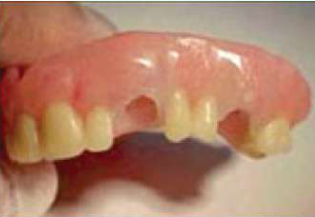
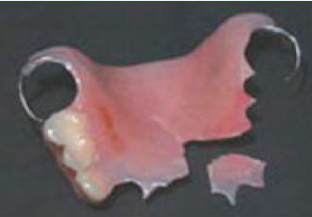
Requiring Attention
The denture is in need of repair or attention.
Check for:
- resident’s name on the denture
- chipped or missing teeth on the denture
- chipped or broken acrylic (pink) areas on the denture
- bent or broken metal wires or clips on a partial denture.
Lecturer — Denture Management
Denture-related problems may include lost dentures, dentures remaining unrepaired without being noticed, increased calculus and poor cleanliness, and dentures being placed in the wrong resident’s mouth. Dentures should ideally be made and adjusted while the person can still cooperate with treatment, and should be labelled to prevent mix-ups.
Poorly Fitting
A denture can cause irritation and trauma to gums and oral tissues.
Check for:
- denture belonging to resident
- dentures being a matching set, particularly if the resident has several sets of dentures
- denture movement when the resident is speaking or eating
- resident’s refusal to wear the denture
- overgrowth of oral tissue under the denture
- ulcers and sore spots caused by wearing the denture.
Effects on Systemic Health16
- Aspiration pneumonia***
- Diabetes mellitus, CVD
- Malnutrition
Lecturer — Aspiration Risk
Aspiration pneumonia is particularly associated with high levels of plaque and ongoing aspiration of a high bacterial burden into the airway. Risk is increased in people with dysphagia and poor lung function, and aspiration-related respiratory death was described as particularly significant among people with disability.
Impact on Quality of Life17
- Comfort vs pain
- Ability to chew and eat
- Swallowing
- Hydration
- Appearance, self-esteem and dignity
- Social interactions (avoidance of certain foods, speech, food catching in mouth, avoidance of smiling, concern about oral malodour)
- General behaviour
Lecturer — Behavioural Pain Signs
Dental pain may present as behavioural change, particularly when the person cannot communicate pain directly.
Dental Treatment Approaches (Rational Dental Care)18
Geriatric Dentistry Concepts
Ageing and Geriatric Dentistry192021
-
Chronological age: time passed from an individual’s birth to the present date
-
Biological ageing: physiological process where changes in the body’s cells, tissues, organs and systems occur as a result of a progressive accumulation of local effects at the molecular, cellular and tissue level.
- One of the most significant characteristics: failure to maintain homoeostasis under conditions of physiological stress
-
Functional/physiologic ageing: cumulative effect of medical and psychosocial stressors (e.g. caregiving or loss of independence) on the ageing process that can affect life expectancy.
- Ageing at the level of the whole person, incorporating internal factors (biologic) and external factors (diet, environment, psychologic health) and describes how that person functions in daily life.
-
The ageing population has usually been defined as persons >65 years.
-
If chronological age is the only criterion used in dentistry, it is not very useful because of the significant heterogeneity of the aged population.
-
People of a similar age may have great differences in physical health, medical problems, neuro-degenerative diseases, mental health, as well as differences in oral health.
-
Geriatric dentistry: “the provision of dental care for adult persons with one or more chronic, debilitating, physical, or mental illnesses with associated medications or psychosocial problems”; that is “the geriatric dental patient is a biologically compromised adult who may or may not be older than 65”. (Ettinger and Beck 1984)
From an oral health care provision perspective, a functional definition of ageing is more useful:
- Functionally independent older adults
- Frail older adults
- Functionally dependent older adults
Functionally Independent Older Adults22
- ~70% of the population >65yo
- Live in the community unassisted
- Can access dental care independently using their own private vehicle or public transport
- Many have chronic medical problems for which they are taking a variety of medications
- Providing their dentist understands how the patient’s medical issues and medications can influence oral health, treatment will depend on the patients’ or significant others’ perception of need and financial willingness to pay
Frail Older Adults23
- 20% of population >65yo
- Have lost some of their independence, but still live in the community with help from family/friends or professional support services
- Can no longer access general dental services without assistance
- Oral health needs require a greater understanding of medicine and pharmacology, evaluation of their ability to perform independent daily oral hygiene, and assessment of their ability to tolerate treatment
Functionally Dependent Older Adults24
- 10% of population >65yo
- Unable to survive in the community independently; are either homebound or living in institutions
- Some can access dental services if transported, and many use wheelchairs (require wheelchair accessible dental practices)
- If they cannot be transported, services need to be brought to them through mobile programs (mobile dental equipment required)
Changing Geriatric Population2526
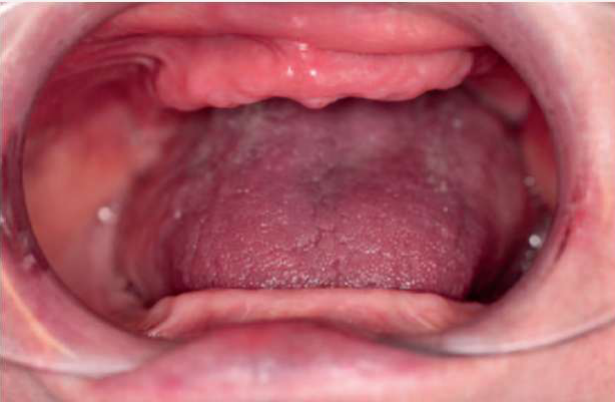
- “Old elderly”: high rates of edentulousness, rarely sought dental care.
- “New elderly”: better educated, more politically aware, healthier, more demanding of health services, higher expectations about oral health, place great value on dental care, have spent a significant amount of money to maintain their dentition, and the majority are not completely edentulous.
- By 2021, only 3% of the population will have complete tooth loss — Healthy Mouths, Healthy Lives: Australia’s National Oral Health Plan 2015-2024
Lecturer — Changing Geriatric Needs
Historical dental care may explain why some older adults have high rates of edentulousness.
- Some women were reportedly given complete tooth extraction as a supposed marriage gift so their husbands would not need to care for their teeth.
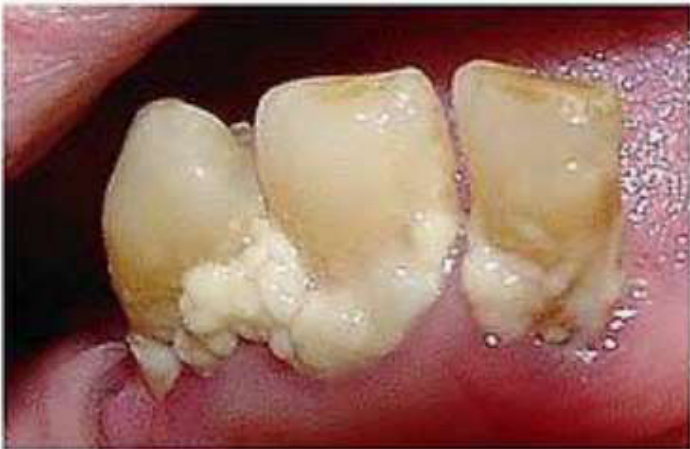
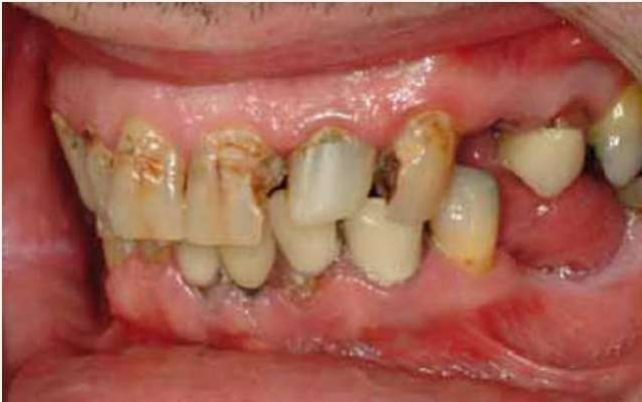
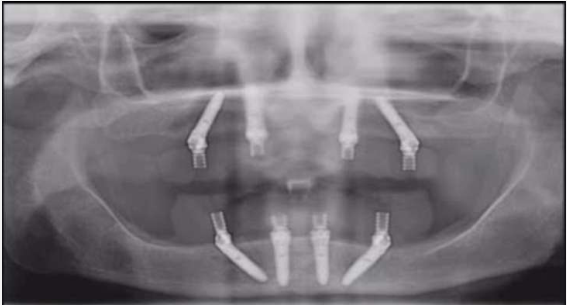
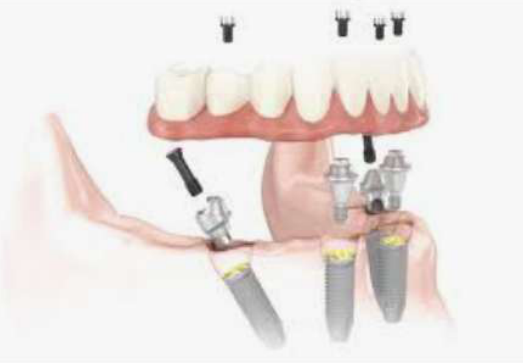
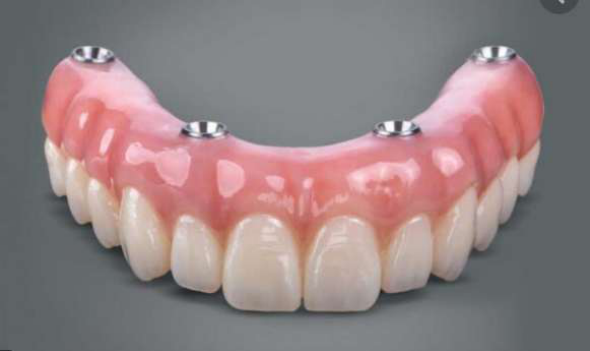
- Future older adults may present with extensive crown and bridge work, implant-retained prostheses and fixed screw-retained prostheses, which can become difficult to maintain when oral hygiene deteriorates or regular cleaning visits are not possible.
- Changing attitudes and utilisation behaviours
- The demand for dental care is increasing
- Wider range of needs than the past emphasis on dentures; geriatric dental care now also includes complex restorative procedures, aesthetic dentistry and implants
- More chronic diseases and comorbidities (resultant from surviving longer), increasing polypharmacy → extra challenges to maintain their dentition
 |  |  |
 |  |
Special Needs Considerations27
In caring for patients with Special Needs, who may be adolescents, adults or elderly, it is essential that consideration is given to not only the patient’s oral health but also potential environmental, social, medical, physical and cognitive factors which may have an impact on their oral health, oral function, ability to receive dental treatment and also their oral health related quality of life.
Lecturer — Functional Assessment
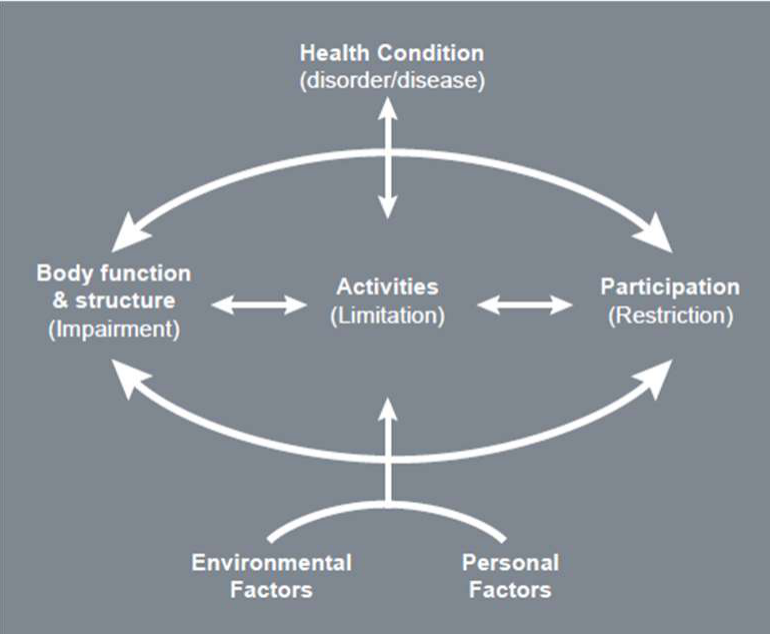
The International Classification of Functioning, Disability and Health is relevant to geriatric dentistry. Treatment planning should consider how the person functions in daily life, not only the disease that is present.
Barriers to Maintaining Oral Health
Patient Issues28
- Medical conditions
- Medical treatment(s) / medications
- Physical/fine motor limitations
- Transport/housing
- Dietary requirements
- Intellectual/cognitive/psychiatric
- Reliance on family/carer
- Prognosis/life expectancy
- Quality of life
Medico-Legal Issues
- Collation of all medical and social information
- Involvement of MDT (GP, specialists, allied health)
- Communication with patient/family/carer
- Consent (patient, NOK, guardianship board)
Lecturer — Consent and Capacity
Capacity and communication require individual assessment rather than assumptions based on diagnosis.
- Dementia alone does not establish that a person lacks capacity.
- A multidisciplinary team may include general practitioners, speech therapists, dietitians, occupational therapists, physiotherapists and behavioural specialists.
- Chemical restraint, physical restraint and clinical holding require careful consideration.
Dentist Issues
- Dentists’ diagnostic and treatment planning skills
- Dentists’ knowledge of health conditions/disorders/medical treatments/medications
- Dentists’ motivation and capacity to provide ‘simple dentistry’ under ‘complex conditions’
- Equipment available, e.g. wheelchair lift, hoist, sedation, hospital access for GA facilities, portable equipment for provision of care off-site
Lecturer — Maintainable Treatment
Geriatric dentistry may be underrepresented compared with cosmetic or aesthetic dentistry, and dentists may be less familiar with medically complex older adults after training primarily with healthy patients. Treatment must be judged for whether it is appropriate, tolerable, achievable and maintainable.
Confounding Treatment Factors29
-
When to treat and when not to
-
Use of chemical restraint – LA/N2O/IV/GA
-
Use of physical restraint/clinical holding
-
Ideal vs achievable treatment plan
-
Prognosis of dental treatment/maintenance issues
-
Consider whether treatment can be delivered in a clinic or requires domiciliary care, and whether sedation or general anaesthesia creates disproportionate risk.
-
Account for cognitive decline, behavioural symptoms, financial resources, carer availability, transport, anticipated lifespan and the ability to maintain the treatment outcome.
“Compromise” is not a dirty word
Aims of Dental Management in the Older Population
Aim: enable them to “eat and talk comfortably, to feel happy with their appearance, to stay pain free, to maintain self-esteem, and to maintain habits/standards of hygiene and care that they have had throughout their lives” (Chalmers 2003).
Domains of Dental Need30
| Domain | Description |
|---|---|
| A. Function | Ability to chew and eat an adequate diet |
| B. Symptomatology | Comfort while chewing, freedom from pain, adequate saliva for taste/swallow/speak/etc. May be influenced by medications, prosthesis fit and form, infection, nutritional changes. |
| C. Pathology | Not having any oral discomfort or lesions in the mouth. Signs and symptoms of dental caries, periodontal disease, oral cancer, and other soft- and hard-tissue pathologies |
| D. Aesthetics | Perceived need to improve their appearance or smile (satisfaction). |
When treatment planning for a patient, the intent is either (or a combination of):
- Preventive
- Curative
- Reconstructive
- Palliative

Rational Dental Care31
Ettinger, R. L., DDS, MDS, and Beck, J. D., PhD. Geriatric dental curriculum and the needs of the elderly. Special Care in Dentistry, Volume 4, Issue 5, September 1984, Pages 207-213. First published September 1984. https://doi-org.proxy.library.adelaide.edu.au/10.1111/j.1754-4505.1984.tb00189.x
Ettinger, R. L., D.D.S., M.S.D. Clinical Decision Making in the Dental Treatment of the Elderly. Gerodontology, Volume 3, Issue 2, pages 157-165, July 1984. Article first published online: 28 JUL 2006. DOI: 10.1111/j.1741-2358.1984.tb00367.x
The concept of “rational dental care” was developed 30 years ago by Ronald Ettinger when it became clear that idealized treatment plans for frail and functionally dependent older adults were often inappropriate.
Ettinger, R. L., BDS, MDS, DDSc, DABSCD. Rational Dental Care: Part 1. Has the Concept Changed in 20 Years? J Can Dent Assoc 2006; 72(5):441-5. This article has been peer reviewed.
Abstract: The concept of “rational dental care” was developed 20 years ago when it became clear that idealized treatment plans for frail and functionally dependent older adults were often inappropriate. This first in a series of 2 articles reviews the reasons for developing the concept.
MeSH Key Words: decision making; dental care for aged; geriatric assessment; patient care planning
Oral health has been defined as “a standard of health of the oral and related tissues which enables an individual to eat, speak and socialise without active disease, discomfort or embarrassment, and which contributes to general well being.” Oral health problems are among the most prevalent chronic problems that elderly people have to deal with.
 |  |
 |
Clinical Decision-Making Questions32
In clinical geriatric dentistry, decision-making and problem-solving are essential components of clinical diagnosis and treatment planning. The fundamental questions that the clinicians must answer are:
- What is the patient’s dental problem? What is his or her primary complaint?
- How and why did it occur?
- What other modifying factors influence the problem? (Box 1)
- Can I, as the clinician, help to solve this problem or do I need help from other health care professionals?
- Can I predict the outcome of the treatment that I think may help the patient?
Decision-Making in Young vs. Older Adults
In young people, factors that affect decision-making are whether the clinician has the skill and resources required to treat the patient; whether the patient has the time and desire to accept the treatment plan; and whether the patient has the financial ability to pay for the treatment.
In older adults, the problem is much more complex. The dental needs of older people are more extensive and the patient may have a medical history that modifies or limits treatment. He or she may be taking medications to treat chronic diseases, and these may affect the oral cavity directly or require modification of treatment. The patient’s physical frailty may limit travel or time of treatment. The patient may be cognitively impaired and, therefore, unable to understand a treatment plan or have the neuromuscular skills to clean his or her teeth or to wear dentures.
Lecturer — Pragmatic Treatment Planning
An idealised treatment plan may suit a young, healthy patient but be inappropriate for a frail or dependent older adult. A pragmatic plan may provide better comfort, function and maintainability, and declining extensive treatment can sometimes be the most difficult clinical decision.
In 1984, Jim Beck and I published a paper in which we defined our concept of geriatric dentistry and the treatment that some older, frail and dependent patients need; we called it rational dental care.
Ettinger, R. L., BDS, MDS, DDSc, DABSCD. Rational Dental Care: Part 2. A Case History. J Can Dent Assoc 2006; 72(5):447-52. This article has been peer reviewed.
Abstract: Treatment planning and managing the care of an elderly, frail patient can be complicated by a variety of modifying factors. To understand the patient’s needs, one must understand the environment in which the patient functions. This second in a series of 2 articles presents a case history of a frail, older adult to illustrate some of the social, medical and community problems that are involved in caring for elderly persons.
MeSH Key Words: decision making; dental care for aged; dental care/therapy; patient care planning
Demographics of the Aging Population
The number and percentage of adults over the age of 65 in Canada has grown dramatically since the middle of the last century as a result of improvements in public health, medical care and methods of birth control. In 1993, people aged 65 and older made up about 8% of the population. By 2001, this proportion had grown to 12.5% and is expected to reach 20% by 2031, at which time 45% of elderly people will be older than 83 years. The fastest growth in the aging population is occurring in the 85 years and older group.
Heterogeneity and Oral Health Status
The Canadian population is diverse, but heterogeneity is probably greater among those aged 65 and over than for any other age group. Elderly people are a complex combination and expression of their genetic predisposition, lifestyle, socialization and environment. All of these factors influence their health beliefs and, therefore, their health-related behaviour and attitudes. Dentists need to evaluate the cultural, psychological, educational, social, economic, dietary and chronologically specific cohort experiences that may have influenced a patient’s life. Determining oral health status must also include an assessment of an individual’s life experience with dental care, caries, periodontal disease and iatrogenic disease. The history of a person’s behavioural attitudes and expectations regarding their own oral health will be reflected in his or her oral health status. The skills, attitudes and philosophies of the various dentists that an older person has encountered during his or her lifespan will also affect their oral health status.
Different older adults have different needs and their functional disabilities influence their ability to accept and receive dental treatment. This paper presents a case history that illustrates some specific oral needs and problems in the clinical oral care of a frail, older adult.
Case History
Ms. HL, an 87-year-old widow, who had been moved into a long-term care facility about 12 months earlier as a result of a cerebrovascular accident (CVA), was brought to our office by her son, who thought his mother was having trouble eating solid food. The patient had been a postman before retiring about 20 years earlier.
Lecturer — Comprehensive Case History
A comprehensive case history should extend beyond the presenting complaint.
- It should include medical conditions, medications, functional and cognitive status, behavioural issues, carer support, daily oral hygiene ability, appointment access, financial and transport resources, expectations, and consent arrangements.
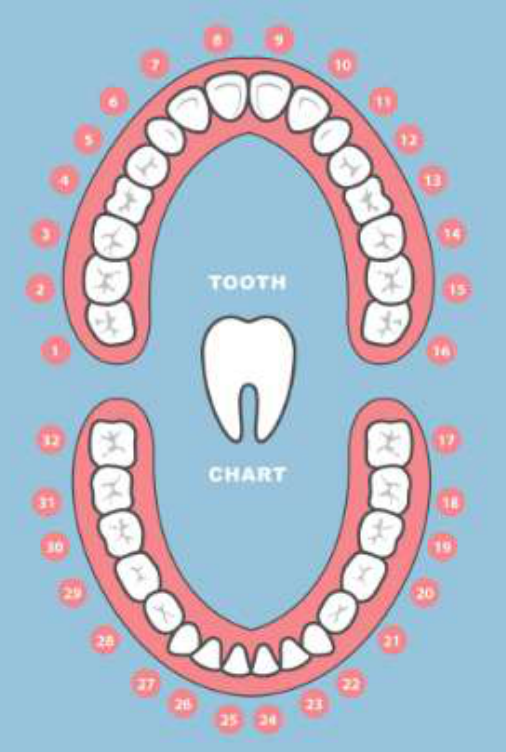
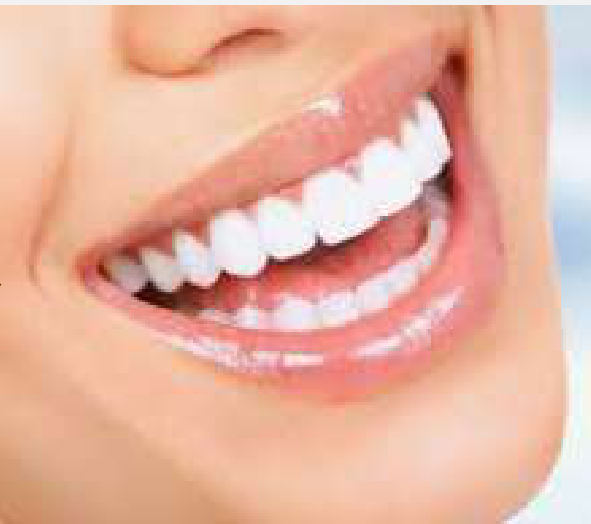
What Is the Ideal Dentition33
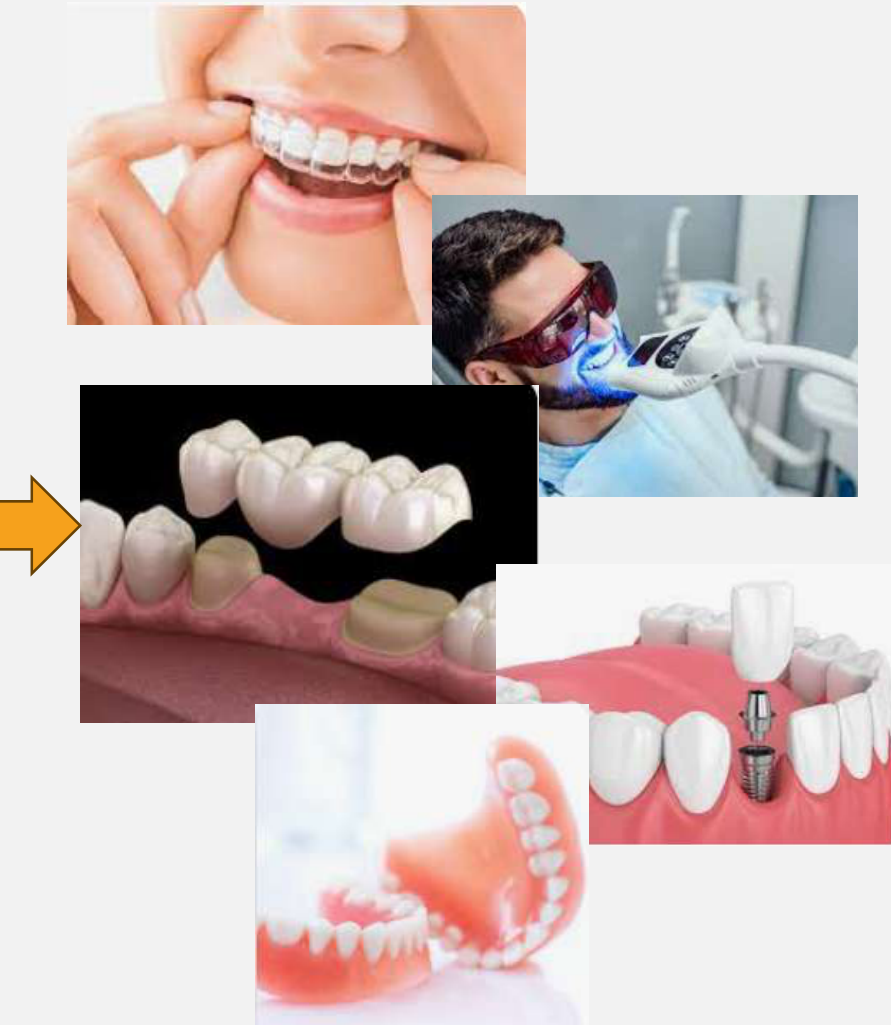
What is the ideal dentition?
Lecturer — Ideal Dentition
The ideal dentition is not necessarily one in which all 28 teeth are restored, replaced or made perfectly straight and white. The outcome should instead be functional, comfortable, aesthetically acceptable where appearance matters to the patient, and maintainable.
 |  |
 |
Determining Level of Care34
- Ideal treatment plan: “that leading to the best dental prognosis without taking modifying factors into account” (Barsh)
- Traditionally has been based on morphologic concepts, i.e. the dentist views the dentition and proceeds technically to evaluate how many teeth can be saved or replaced without evaluating any other limiting factors
Berkey DB, Berg RG, Ettinger RL, Mersel A, Mann J. The old-old dental patient: the challenge of clinical decision-making. J Am Dent Assoc. 1996 Mar;127(3):321-32.
Determining Factors35
- Patient desires and expectations
- Type and severity of dental need
- Impact on quality of life
- Probability of positive outcome
- Reasonable treatment alternatives
- Ability to tolerate stress of treatment
- Capability to maintain oral health
- Financial and other resources
- Dentist capabilities
- Other issues
↓
Care Level
- Very extensive
- Extensive
- Intermediate
- Limited
- Very limited
Assessing Treatment Needs36
Shay (1994)
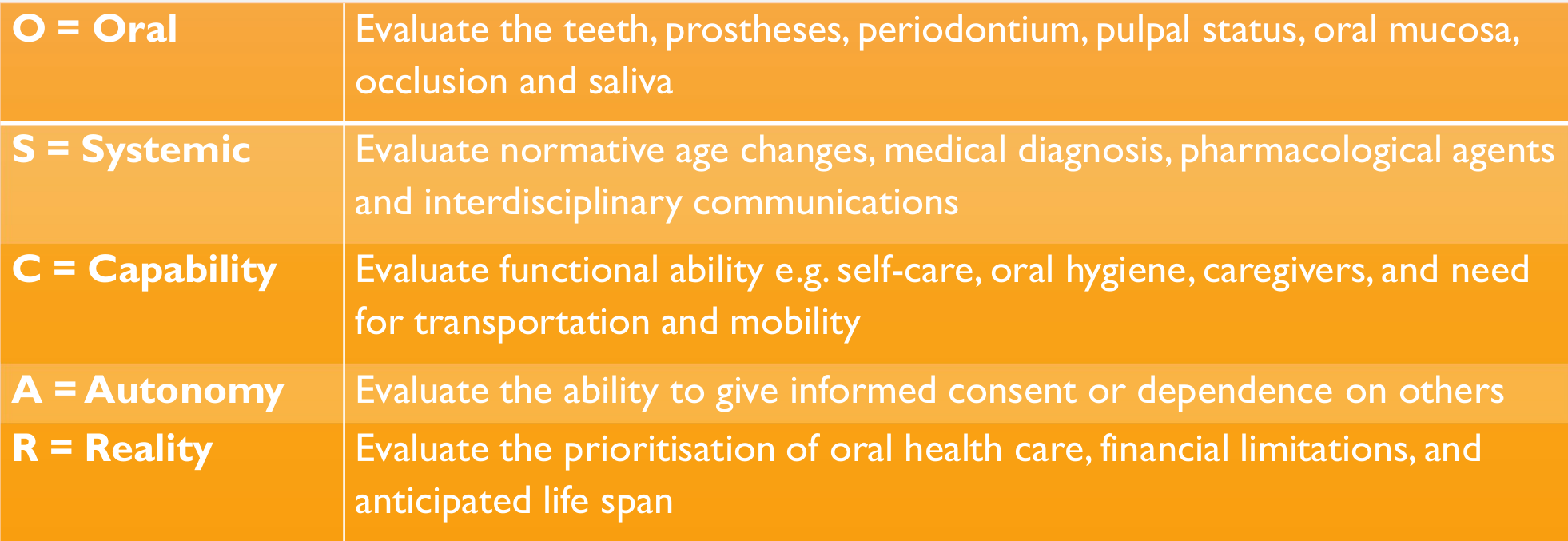
- O = Oral — Evaluate the teeth, prostheses, periodontium, pulpal status, oral mucosa, occlusion and saliva
- S = Systemic — Evaluate normative age changes, medical diagnosis, pharmacological agents and interdisciplinary communications
- C = Capability — Evaluate functional ability e.g. self-care, oral hygiene, caregivers, and need for transportation and mobility
- A = Autonomy — Evaluate the ability to give informed consent or dependence on others
- R = Reality — Evaluate the prioritisation of oral health care, financial limitations, and anticipated life span
Domains of Dental Need37
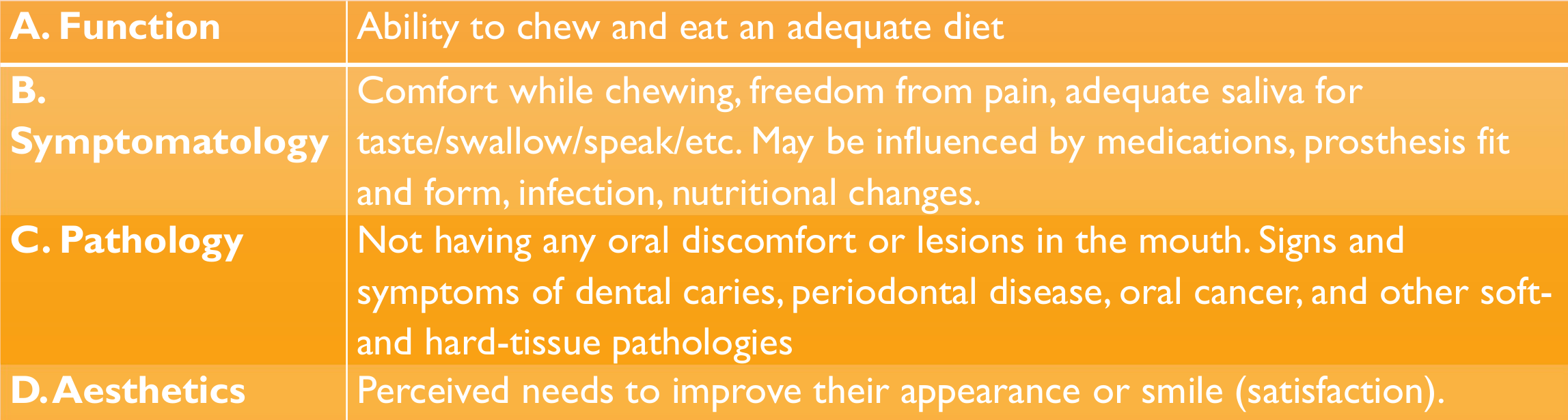
- A. Function — Ability to chew and eat an adequate diet
- B. Symptomatology — Comfort while chewing, freedom from pain, adequate saliva for taste/swallow/speak/etc. May be influenced by medications, prosthesis fit and form, infection, nutritional changes.
- C. Pathology — Not having any oral discomfort or lesions in the mouth. Signs and symptoms of dental caries, periodontal disease, oral cancer, and other soft- and hard-tissue pathologies
- D. Aesthetics — Perceived needs to improve their appearance or smile (satisfaction).
Rational Dental Care Model and Decision Tree
Ettinger (1990, 2015)
Immediate Assessment of the Patient38
- Posture
- Gait
- Facies & Complexion
- Grooming
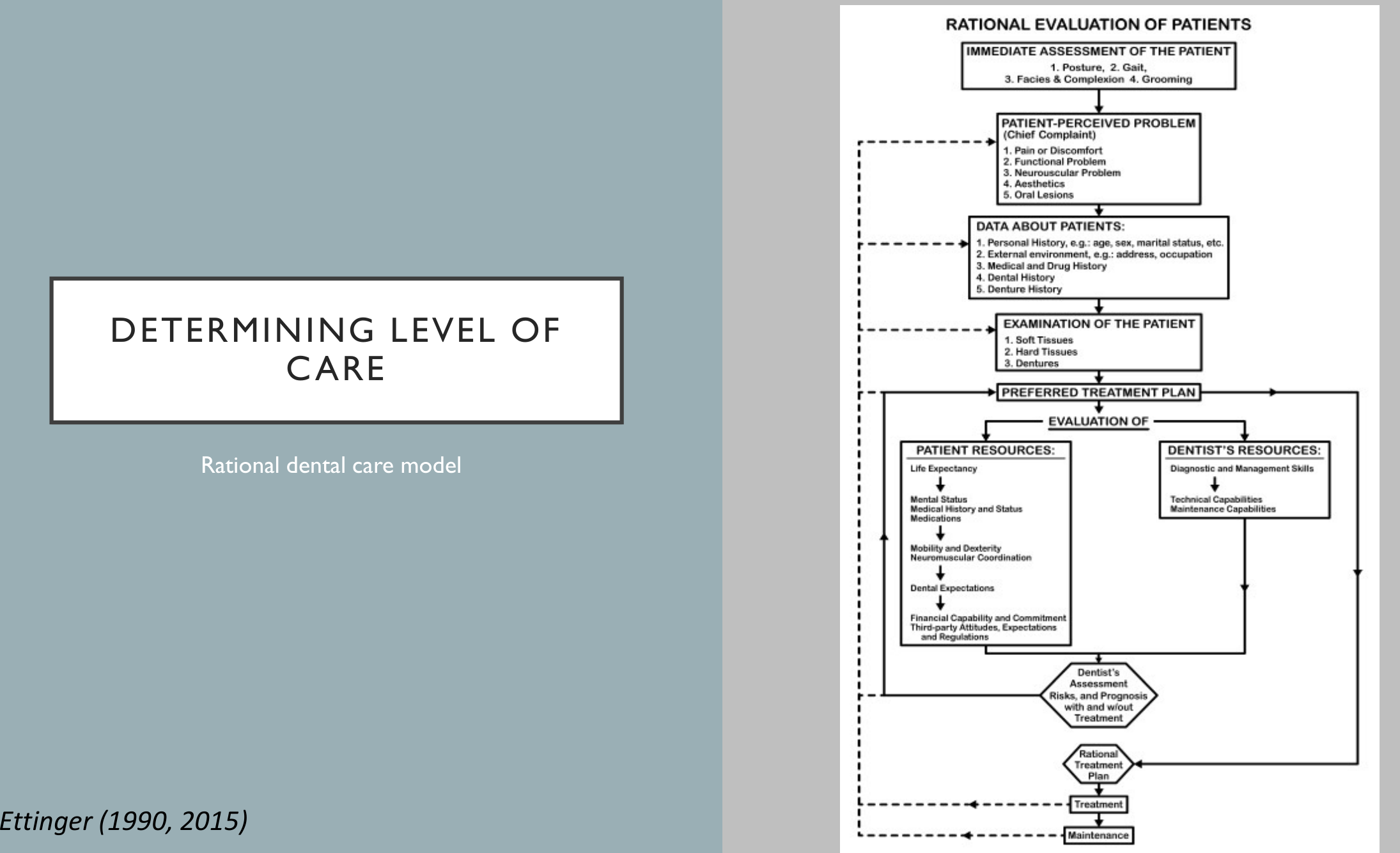
Patient-Perceived Problem (Chief Complaint)
- Pain or Discomfort
- Functional Problem
- Neuromuscular Problem
- Aesthetics
- Oral Lesions
Data About Patients
- Personal History, e.g.: age, sex, marital status, etc.
- External environment, e.g.: address, occupation
- Medical and Drug History
- Dental History
- Denture History
Examination of the Patient
- Soft Tissues
- Hard Tissues
- Dentures
Patient Resources
- Life Expectancy
- Mental Status
- Medical History and Status
- Medications
- Mobility and Dexterity
- Neuromuscular Coordination
- Dental Expectations
- Financial Capability and Commitment
- Third-party Attitudes, Expectations and Regulations
Dentist’s Resources
- Diagnostic and Management Skills
- Technical Capabilities
- Maintenance Capabilities
Dentist’s Assessment
- Risks, and Prognosis with and without Treatment
→ Preferred Treatment Plan → Rational Treatment Plan → Treatment → Maintenance
Ettinger 2006, 2015
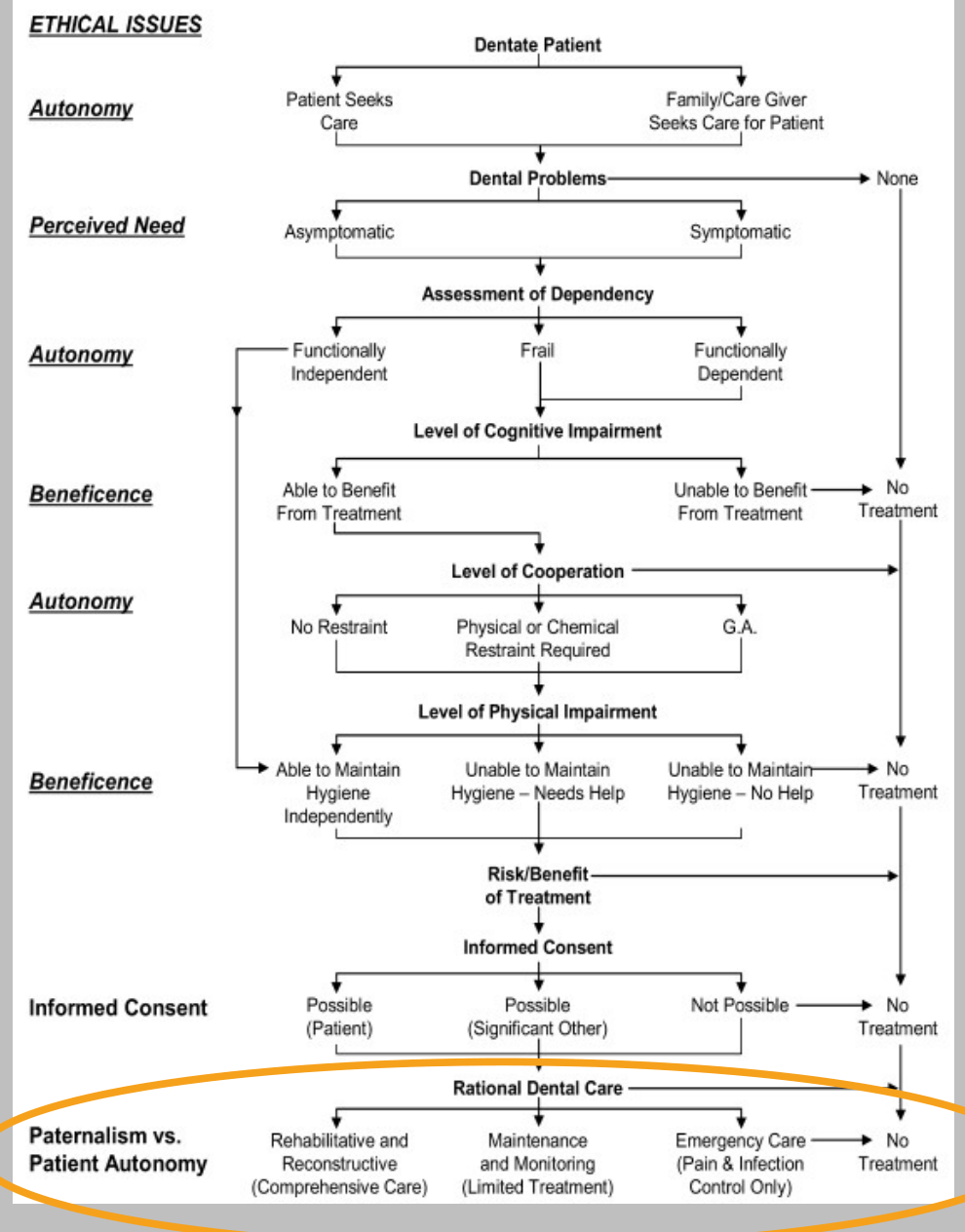
Ethical Issues39
Autonomy — Dentate Patient; Patient Seeks Care / Family or Care Giver Seeks Care for Patient
- Perceived Need: Dental Problems — Asymptomatic / Symptomatic / None
Autonomy — Assessment of Dependency
- Functionally Independent
- Frail
- Functionally Dependent
Beneficence — Level of Cognitive Impairment
- Able to Benefit From Treatment
- Unable to Benefit From Treatment
- No Treatment
Autonomy — Level of Cooperation
- No Restraint
- Physical or Chemical Restraint Required
- G.A.
Beneficence — Level of Physical Impairment
- Able to Maintain Hygiene Independently
- Unable to Maintain Hygiene – Needs Help
- Unable to Maintain Hygiene – No Help
- No Treatment
Informed Consent — Risk/Benefit of Treatment
- Informed Consent Possible (Patient)
- Possible (Significant Other)
- Not Possible → No Treatment
Paternalism vs. Patient Autonomy
- Rational Dental Care:
- Rehabilitative and Reconstructive (Comprehensive Care)
- Maintenance and Monitoring (Limited Treatment)
- Emergency Care (Pain & Infection Control Only)
- No Treatment
Levels of Care Classification40
Berkey et al (1996)
- Very extensive care — with complex needs, including rehabilitation of the dentition with fixed prosthodontics or surgical therapies. Pressing functional and/or pathological needs, have ability to accept this care, strongly positive determining factors, and favourable prognosis.
- Extensive care — with substantial physiological needs, which may be solved by a combination of fixed and removable prosthodontics and the ability to withstand the care.
- Intermediate care — which requires some alternatives to traditional therapies. Benefit is adjusted for risk, may require more basic therapies (e.g. removable and fixed prostheses, basic surgical procedures).
- Limited care — these patients cannot tolerate extensive time in the dental chair and need short appointments and a simplified treatment plan. Projected risk of care limits the potential benefit from it. Provide durable care to minimise future dental problems.
- Very limited care — these patients should be treated for pain relief and infection control only. Patients have limited resources to cope with interventions.
Shortened Dental Arch41
Healthy Occlusion (Ash & Ramfjord)42
- Absence of pathology (dental, periodontal, osseous, muscular components)
- Orthopaedically stable centric position
- Axial loading of the dentition
- Guidance from centric to eccentric positions
Ash MM, Ramfjord SP: Occlusion (ed 4). Philadelphia, PA, Saunders, 1995
Traditional Concepts (Beyron, 1969)43
- Determinants of a healthy dentition = “maximum number of bilateral centric stops”
- Replacement of all lost occlusal units, including in the molar region
Beyron H. Optimal occlusion. Dent Clin North Am 1969;13:537–554.
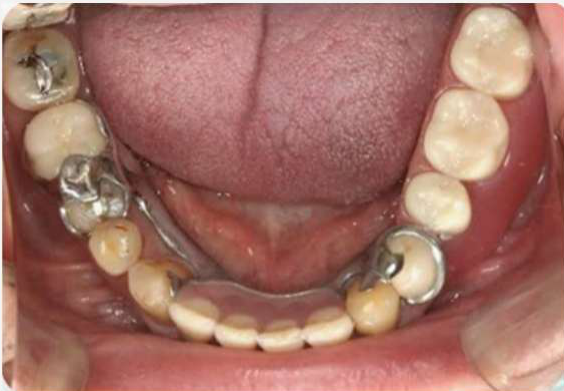 | 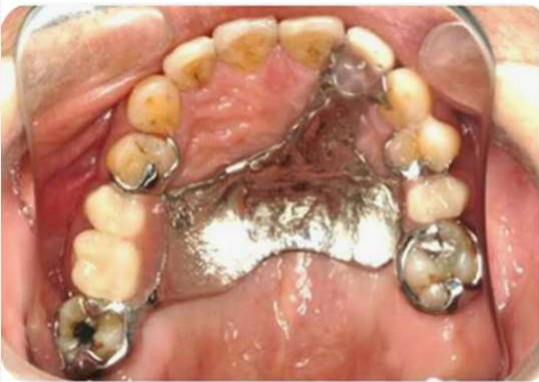 |
Shortened Dental Arch (Käyser, 1981)44
- Research related to older adults → applies to other populations too
- 118 patients
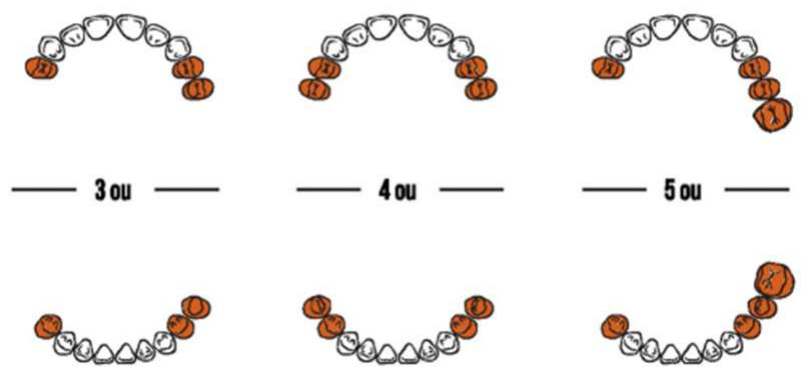
- “that there is sufficient adaptive capacity to maintain oral function in shortened dental arches when at least four occlusal units are left”
Lecturer — Occlusal Unit Thresholds
Chewing studies used tests involving the release of light-absorbing material while participants chewed raw carrots.
- Fewer occlusal units required more chewing strokes.
- Complaints generally began below four occlusal units in symmetrically shortened arches and below six occlusal units in asymmetrically shortened arches.
1 occlusal unit = 1 pair of occluding premolars 2 occlusal units = 1 pair of occluding molars
Käyser AF. Shortened dental arches and oral function. J Oral Rehabil 1981;8:457–462 Aukes JN, Kayser AF, Felling AJ: The subjective experience of mastication in subjects with shortened dental arches. J Oral Rehabil 1988;15:321-324
WHO 199245
“retention, throughout life, of a functional, esthetic, natural dentition of not less than 20 teeth and not requiring recourse to prostheses should be the treatment goal for oral health”
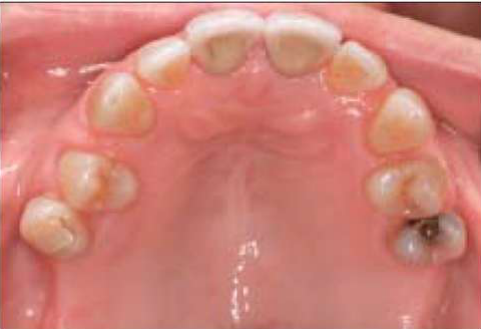 | 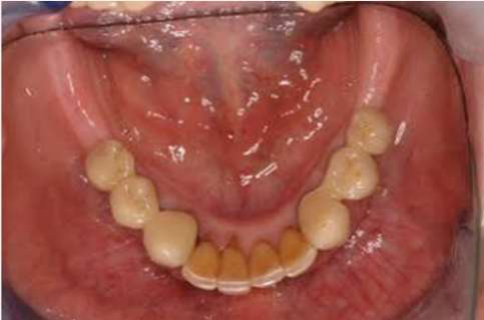 |
Features
- Chewing ability, maintenance of nutrition
- Occlusal stability
- Temporomandibular disorder problems not provoked
- Cleanliness
- Aesthetics maintained
- Need for prosthodontic intervention?
➡ PRIORITY: maintain and replace strategically important parts of the dental arch (anterior and premolar regions)
- A common shortened dental arch retains teeth from the first incisor through to the second premolar in each quadrant, although other configurations are possible.
- Anterior teeth and premolars may be easier for carers to access and clean than molars when brushing time is limited.
- A shortened dental arch may be more maintainable than extensive restorative or prosthodontic treatment.
Part II Lecture Outcomes and Outline4647
- Understand the specific characteristics and dental needs of individuals with dementia, including appropriate treatment adaptations to ensure effective dental care
- Understand the oral health assessments that are performed in residential aged care facilities, and develop an individualised oral care plan
- Facilitate oral health maintenance for geriatric patients, including teaching carers, communication strategies, behavioural considerations, and alternative products and techniques
- Appreciate the role of domiciliary care for the geriatric population
-
Dementia
-
Oral health assessments and oral care plans
-
Oral health maintenance for the dependent elderly population
-
Domiciliary care
-
Dementia-friendly dentistry
-
Stages of dementia and treatment modifications
-
Consent and communication
-
Elder abuse
-
Oral health screening and care planning in residential aged care
-
Daily oral hygiene assistance
-
Domiciliary dental care
Dementia-Friendly Dentistry48
Dementia Overview
“Dementia is a clinical syndrome that is characterised by a progressive deterioration in cognition with resulting decline in function.”
- It is not a specific disease in itself – it is a group of symptoms caused by chronic organic brain disease.
- Dementia is no longer listed under the new DSM-V categorisation system (it is incorporated under ‘major neurocognitive disorders’), though there is recognition that the term is still routinely used in a clinical setting.
DSM-V Groupings of Neurocognitive Disorders49
The DSM-V categorises neurocognitive disorders into three main groupings:
- Delirium
- Minor neurocognitive disorders
- Major neurocognitive disorders
Major and minor NCDs exist on a continuum and the distinction between them is inherently arbitrary.
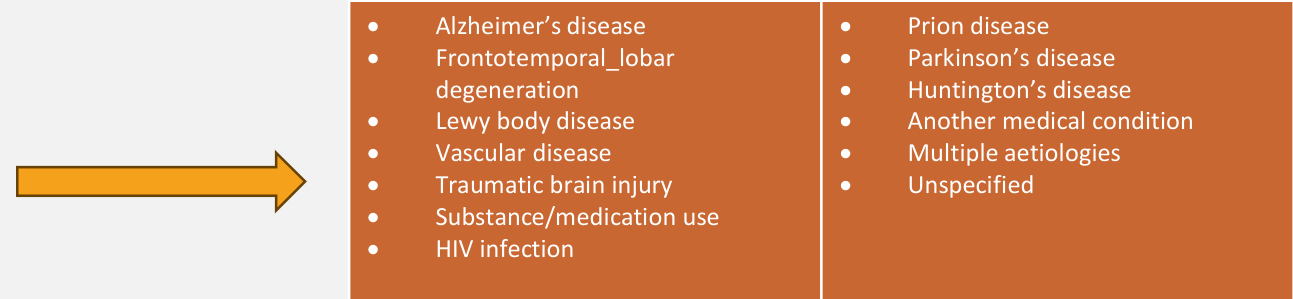
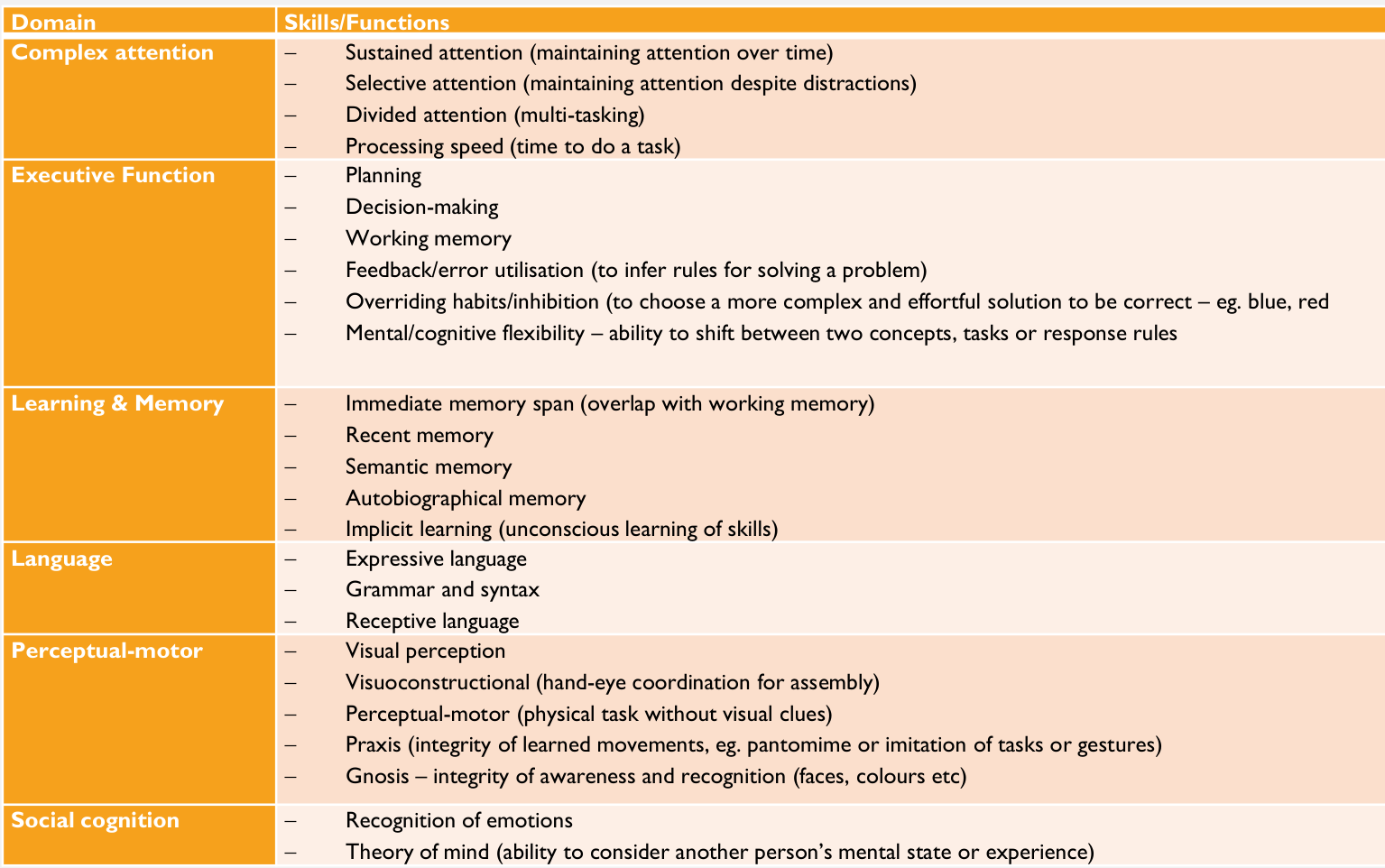
Diagnostic Criteria for Neurocognitive Disorders50
| Domain | Skills/Functions |
|---|---|
| Complex attention | – Sustained attention (maintaining attention over time) – Selective attention (maintaining attention despite distractions) – Divided attention (multi-tasking) – Processing speed (time to do a task) |
| Executive Function | – Planning – Decision-making – Working memory – Feedback/error utilisation (to infer rules for solving a problem) – Overriding habits/inhibition (to choose a more complex and effortful solution to be correct – e.g. blue, red) – Mental/cognitive flexibility – ability to shift between two concepts, tasks or response rules |
| Learning & Memory | – Immediate memory span (overlap with working memory) – Recent memory – Semantic memory – Autobiographical memory – Implicit learning (unconscious learning of skills) |
| Language | – Expressive language – Grammar and syntax – Receptive language |
| Perceptual-motor | – Visual perception – Visuoconstructional (hand-eye coordination for assembly) – Perceptual-motor (physical task without visual clues) – Praxis (integrity of learned movements, e.g. pantomime or imitation of tasks or gestures) – Gnosis – integrity of awareness and recognition (faces, colours etc.) |
| Social cognition | – Recognition of emotions – Theory of mind (ability to consider another person’s mental state or experience) |
Behavioural Features of Neurocognitive Disorders
Psychotic Features51
-
Paranoia and delusions, particularly persecutory delusions, are common; hallucinations may occur, particularly visual hallucinations
-
These symptoms may affect acceptance of oral hygiene and dental care.
Mood Disturbance
- Depression and anxiety is common early in the course of Alzheimer’s and Parkinson’s
- Elation is more common in frontotemporal lobar degeneration
Lecturer — Mood Fluctuation
Mood may fluctuate during the day.
- Some times of day may be more suitable for dental treatment or oral hygiene than others.
Agitation
- Confusion, frustration
Lecturer — Appointment Agitation
Increased agitation may make examination, treatment and oral hygiene difficult.
- Agitation may vary from one appointment or day to another.
Behavioural Symptoms
- Wide-ranging
- e.g. sleep disturbance, apathy (especially in Alzheimer’s), wandering, disinhibition, hyperphagia, and hoarding
Dementia Demographics
- Dementia is an age-related disorder, therefore the prevalence increases with age. Prevalence doubles every five years from the age of 60 to 90.
- In 2012, approximately 250,000 Australians were living with dementia. This is projected to reach almost 1,000,000 by 2050.
Incidence by Age Group52
| Age group | Incidence |
|---|---|
| 40-64 years | 1 in 1,400 |
| 65-69 years | 1 in 100 |
| 70-79 years | 1 in 25 |
| 80+ years | 1 in 6 |
NHS England. Dementia Friendly Dentistry. Cheshire and Merseyside (UK): 2016. Available from: https://gmpcb.org.uk/wp-content/uploads/Dementia_Friendly_Dentistry_advice_and_guidance_booklet.pdf
 |  |
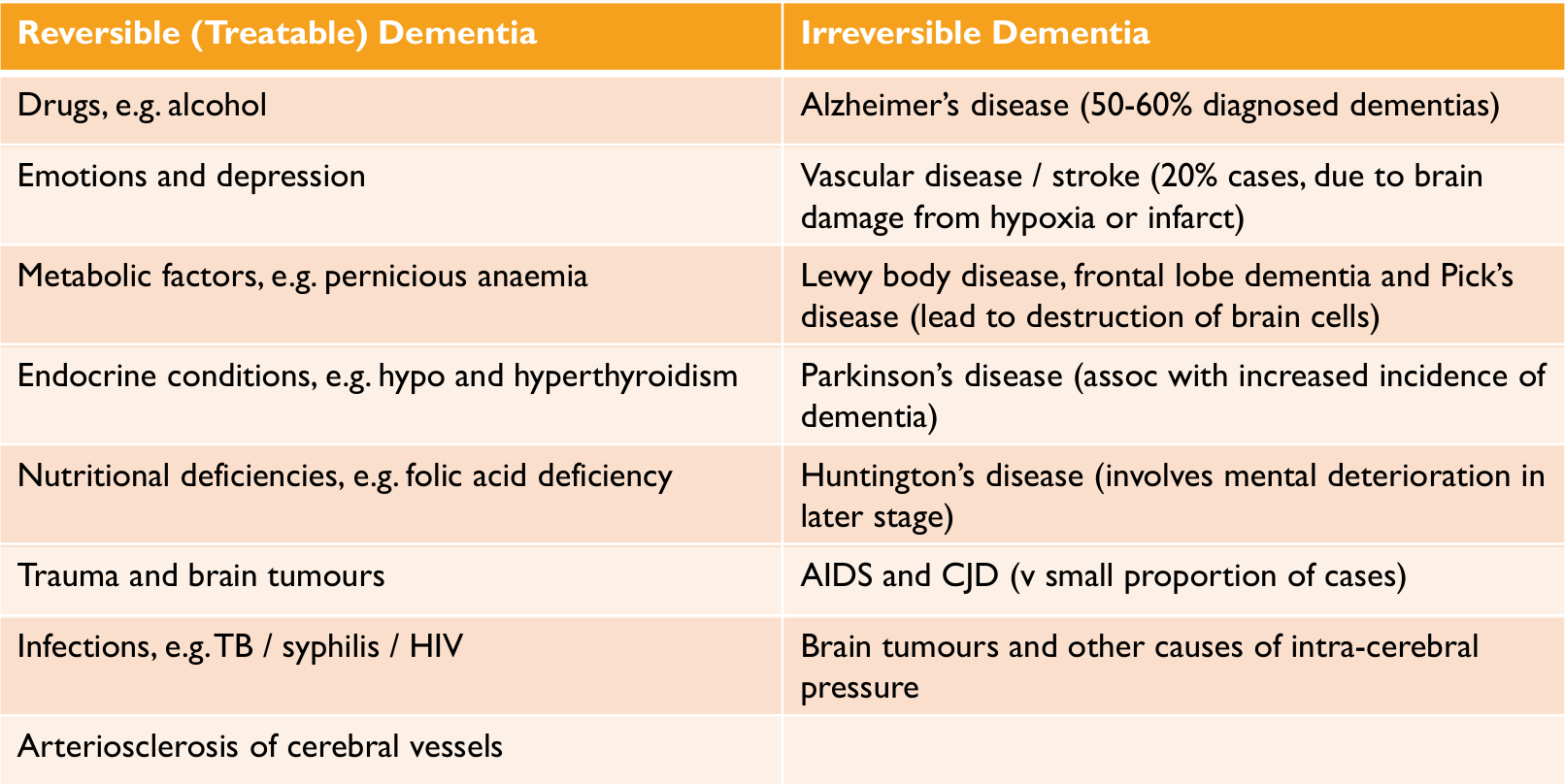
Causes of Dementia53
| Reversible (Treatable) Dementia | Irreversible Dementia |
|---|---|
| Drugs, e.g. alcohol | Alzheimer’s disease (50-60% diagnosed dementias) |
| Emotions and depression | Vascular disease / stroke (20% cases, due to brain damage from hypoxia or infarct) |
| Metabolic factors, e.g. pernicious anaemia | Lewy body disease, frontal lobe dementia and Pick’s disease (lead to destruction of brain cells) |
| Endocrine conditions, e.g. hypo and hyperthyroidism | Parkinson’s disease (assoc with increased incidence of dementia) |
| Nutritional deficiencies, e.g. folic acid deficiency | Huntington’s disease (involves mental deterioration in later stage) |
| Trauma and brain tumours | AIDS and CJD (very small proportion of cases) |
| Infections, e.g. TB / syphilis / HIV | Brain tumours and other causes of intra-cerebral pressure |
| Arteriosclerosis of cerebral vessels |
Lecturer — Alzheimer Pathology
Alzheimer’s disease involves several pathological changes.
- Brain atrophy, amyloid plaques, neurofibrillary tangles and loss of neuronal connections may occur.
- An acetylcholine imbalance is also associated with the disease.
Lecturer — Vascular Dementia
Vascular dementia may result from reduced blood flow or oxygen.
- Possible causes include small clots, strokes, transient ischaemic attacks and haemorrhage.
Dougall A, Fiske J. Access to Special Care Dentistry, Part 9: Special Care Dentistry Services for Older People. Br Dent J. 2008:205(8);421
Diagnosis
Symptoms must be present for at least 6 months to support the diagnosis.
- Cognitive testing: Mini Mental State Examination (MMSE), Abbreviated Mental Test Score (AMTS), Modified Mini Mental State Examination (3MS), Montreal Cognitive Assessment (MoCA)
- Neurological testing: check senses and movement
- Blood/urine tests: usually carried out to eliminate other causes (thyroid stimulating hormones, vit B12, folic acid, calcium, renal function, liver enzyme)
- Imaging: CT, MRI, PET
The Mini-Mental State Exam54
Patient ___________________ Examiner ___________________ Date ___________________
Orientation (max 5) — What is the (year) (season) (date) (day) (month)? Where are we (state) (country) (town) (hospital) (floor)?
Registration (max 3) — Name 3 objects: 1 second to say each. Then ask the patient all 3 after you have said them. Give 1 point for each correct answer. Then repeat them until he/she learns all 3. Count trials and record. Trials ________
Attention and Calculation (max 5) — Serial 7’s. 1 point for each correct answer. Stop after 5 answers. Alternatively spell “world” backward.
Recall (max 3) — Ask for the 3 objects repeated above. Give 1 point for each correct answer.
Language (max 8: naming 2? see original scoring — pencil/watch, repetition, 3-stage command, reading, writing, copying) —
- Name a pencil and watch.
- Repeat the following: “No ifs, ands, or buts”
- Follow a 3-stage command: “Take a paper in your hand, fold it in half, and put it on the floor.”
- Read and obey the following: CLOSE YOUR EYES
- Write a sentence.
- Copy the design shown.
Total Score ___________________
ASSESS level of consciousness along a continuum: Alert — Drowsy — Stupor — Coma
“MINI-MENTAL STATE.” A PRACTICAL METHOD FOR GRADING THE COGNITIVE STATE OF PATIENTS FOR THE CLINICIAN. Journal of Psychiatric Research, 12(3): 189-198, 1975. Used by permission.
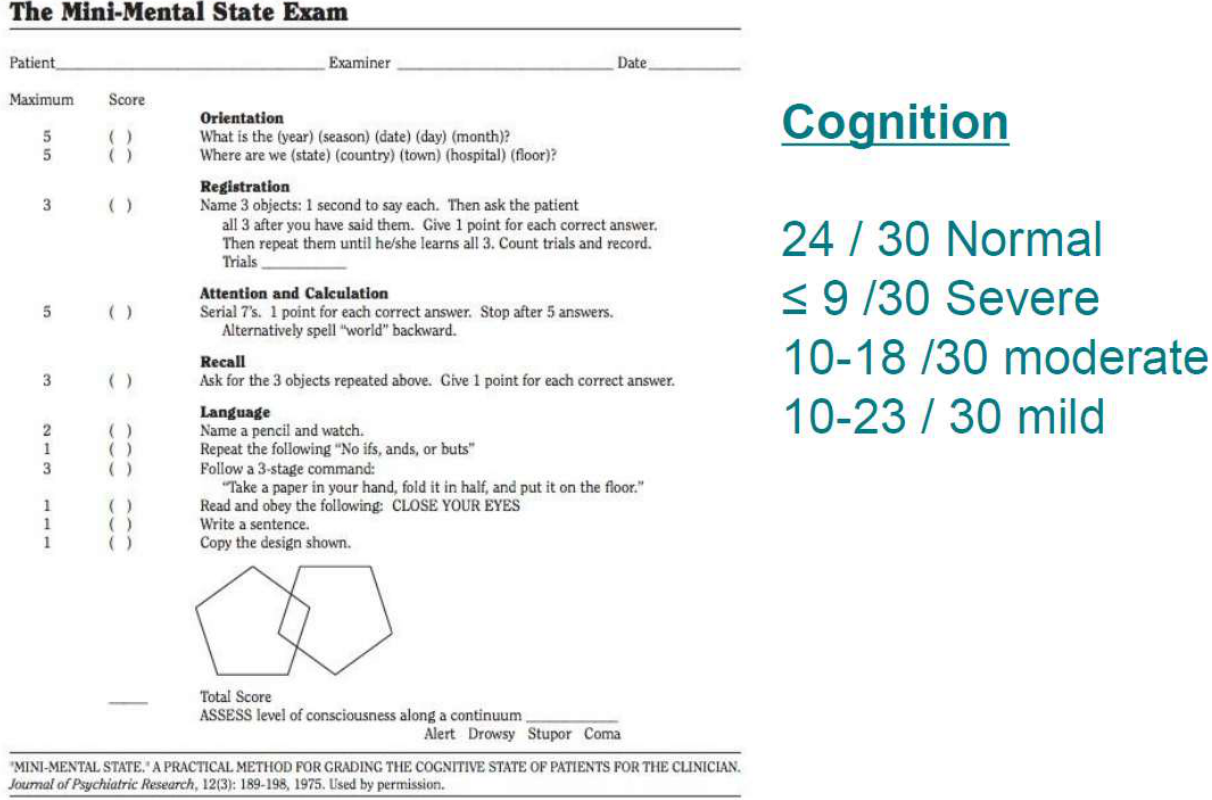
Score Interpretation (Cognition)
- 24/30 — Normal
- 10-18/30 — Moderate
- 10-23/30 — Mild
- ≤ 9/30 — Severe
General Management55
No treatment currently available to prevent/cure, but can manage symptoms.
-
Referral to neuropsychologist, neurologist and/or geriatrician
-
Medications:
- Cholinesterase inhibitors often used early in disease, e.g. rivastigmine, donepezil, galantamine → may delay onset
- Memantine (blocks the effects of glutamate)
- Antipsychotics: risperidone (Risperdal), anti-epileptics – carbamazepine (Tegretol) → improve behavioural symptoms
- Antidepressant medications
-
Educating and providing emotional support to relatives
-
Keeping the person safe and comfortable
-
Maintaining a routine to avoid confusion (e.g. regular exercise, sleep, nutritious diet)
-
Cognitive scores and cognitive tests may be recorded in the patient’s medical history to assess cognition, severity and stage.
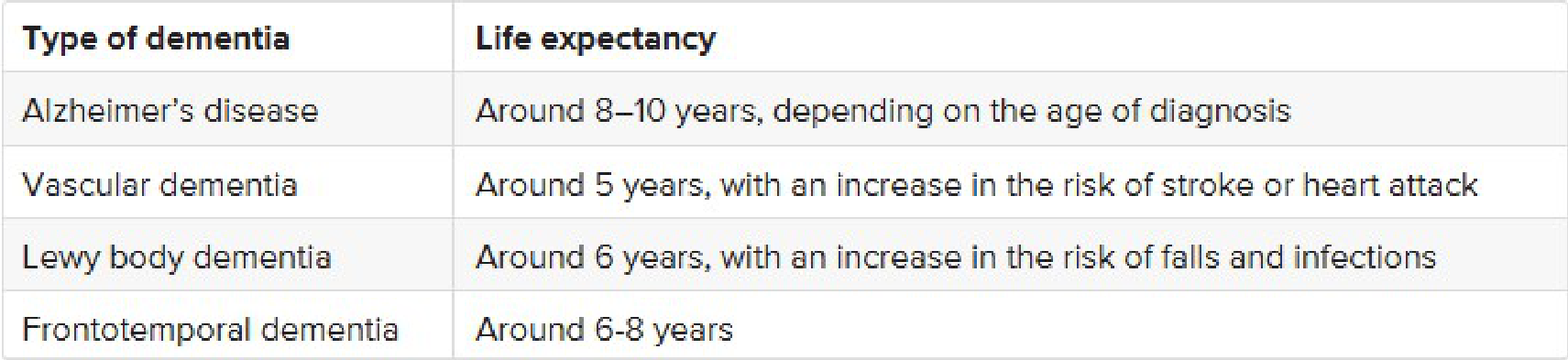
Prognosis56
| Type of dementia | Life expectancy |
|---|---|
| Alzheimer’s disease | Around 8–10 years, depending on the age of diagnosis |
| Vascular dementia | Around 5 years, with an increase in the risk of stroke or heart attack |
| Lewy body dementia | Around 6 years, with an increase in the risk of falls and infections |
| Frontotemporal dementia | Around 6-8 years |
Lecturer — Dental Prognosis
Diagnosis may occur later than disease onset. Dental treatment should therefore be planned with the patient’s expected lifespan in mind.
- The aim is for teeth and dental work to provide comfort and freedom from pain and infection during the relevant period, rather than necessarily outliving the patient.
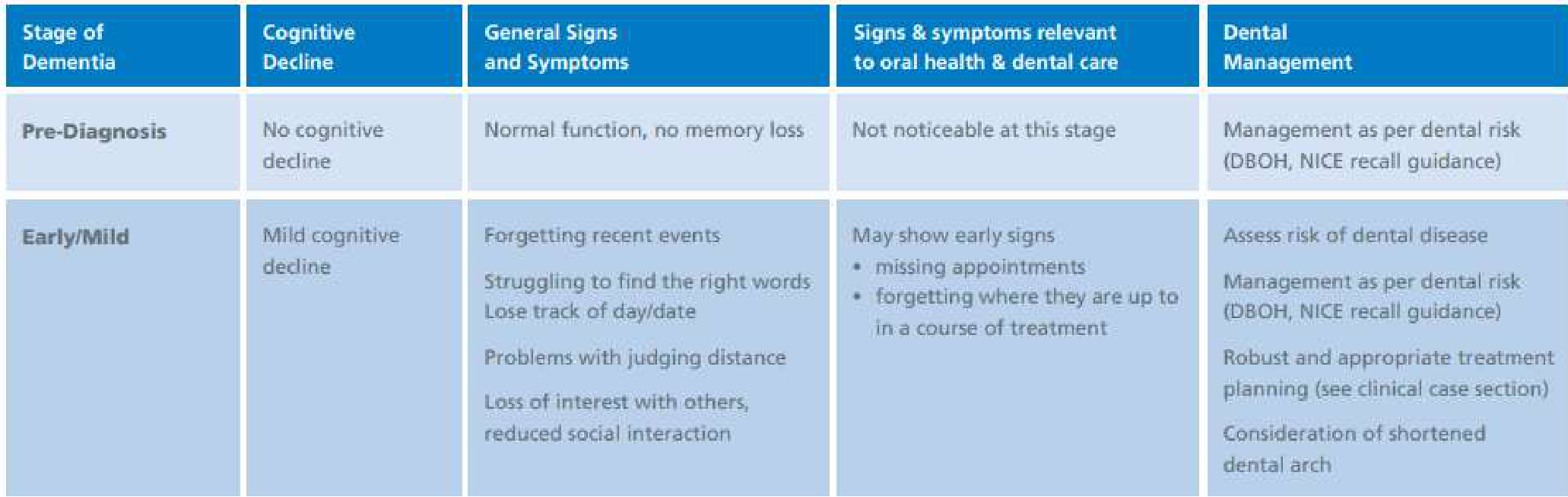
Stages of Dementia575859
| Stage of Dementia | Cognitive Decline | General Signs and Symptoms | Signs & Symptoms Relevant to Oral Health & Dental Care | Dental Management |
|---|---|---|---|---|
| Pre-Diagnosis | No cognitive decline | Normal function, no memory loss | Not noticeable at this stage | Management as per dental risk (DBOH, NICE recall guidance) |
| Early/Mild | Mild cognitive decline | Forgetting recent events; struggling to find the right words; lose track of day/date; problems with judging distance; loss of interest with others, reduced social interaction | May show early signs: missing appointments; forgetting where they are up to in a course of treatment | Assess risk of dental disease; management as per dental risk (DBOH, NICE recall guidance); robust and appropriate treatment planning (see clinical case section); consideration of shortened dental arch |
Lecturer — Early Dental Planning
Early management should include dietary advice, oral hygiene advice and a suitable fluoride regimen.
- Discuss anticipated future changes and develop an individualised long-term dental care plan.
- Consider early intervention while the patient can still cooperate, and carefully assess complex implants, crowns, bridges or endodontic treatment that may be difficult to maintain.
NHS England. Dementia Friendly Dentistry. Cheshire and Merseyside (UK): 2016. Available from: https://gmpcb.org.uk/wp-content/uploads/Dementia_Friendly_Dentistry_advice_and_guidance_booklet.pdf
| Stage of Dementia | Cognitive Decline | General Signs and Symptoms | Signs & Symptoms Relevant to Oral Health & Dental Care | Dental Management |
|---|---|---|---|---|
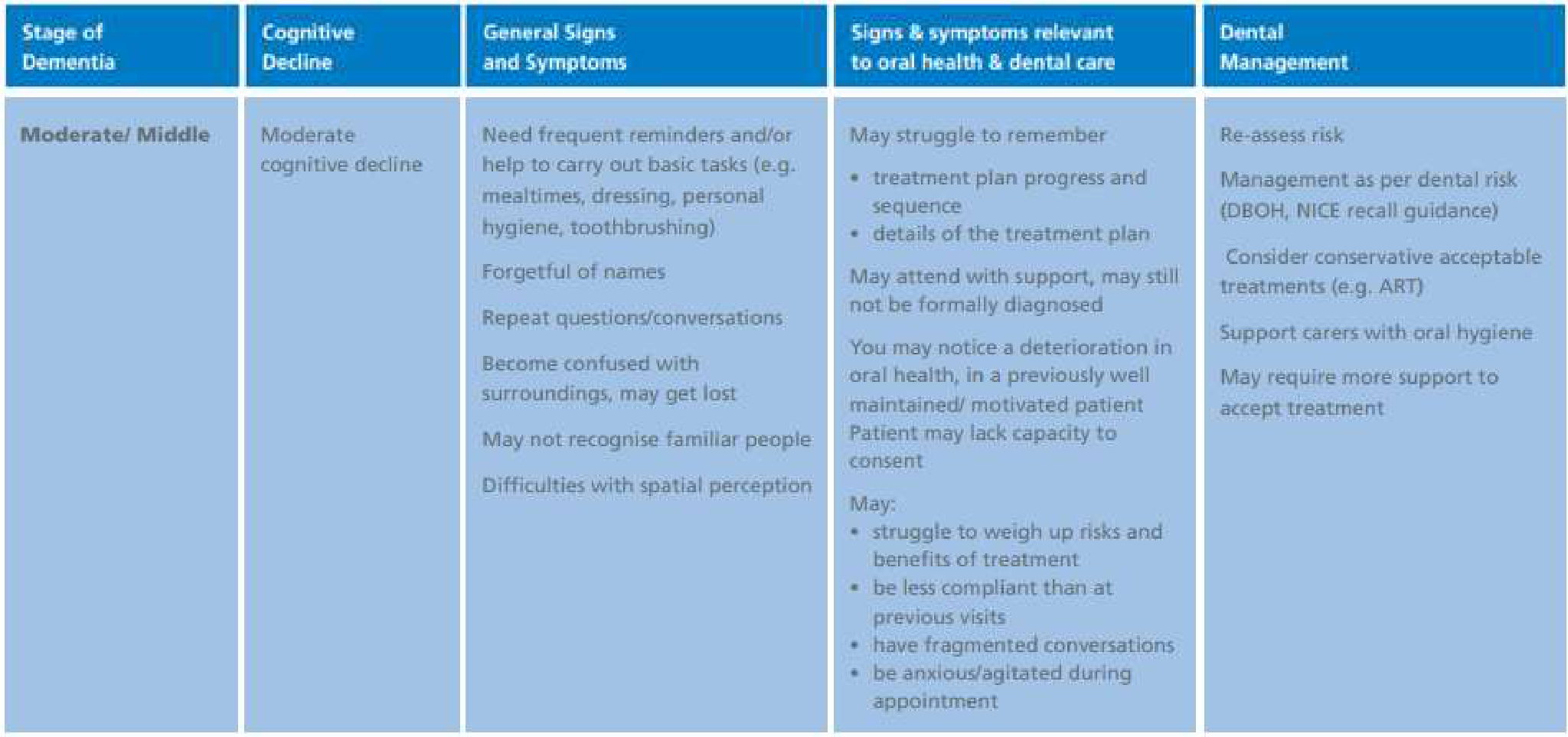
| Moderate/Middle | Moderate cognitive decline | Need frequent reminders and/or help to carry out basic tasks (e.g. mealtimes, dressing, personal hygiene, toothbrushing); forgetful of names; repeat questions/conversations; become confused with surroundings, may get lost; may not recognise familiar people; difficulties with spatial perception | May struggle to remember treatment plan progress and sequence, and details of the treatment plan. May attend with support, may still not be formally diagnosed. You may notice a deterioration in oral health in a previously well maintained/motivated patient. Patient may lack capacity to consent. May: struggle to weigh up risks and benefits of treatment; be less compliant than at previous visits; have fragmented conversations; be anxious/agitated during appointment | Re-assess risk; management as per dental risk (DBOH, NICE recall guidance); consider conservative acceptable treatments (e.g. ART); support carers with oral hygiene; may require more support to accept treatment |
Lecturer — Testing Treatment Tolerance
Assess gradually what treatment the patient can tolerate before progressing to more complex care.
- Test tolerance of sitting in the dental chair, a periodontal screen, intraoral radiographs and simple procedures.
- Capacity should be assessed at every visit because it is decision-specific and time-specific.
NHS England. Dementia Friendly Dentistry. Cheshire and Merseyside (UK): 2016. Available from: https://gmpcb.org.uk/wp-content/uploads/Dementia_Friendly_Dentistry_advice_and_guidance_booklet.pdf
| Stage of Dementia | Cognitive Decline | General Signs and Symptoms | Signs & Symptoms Relevant to Oral Health & Dental Care | Dental Management |
|---|---|---|---|---|
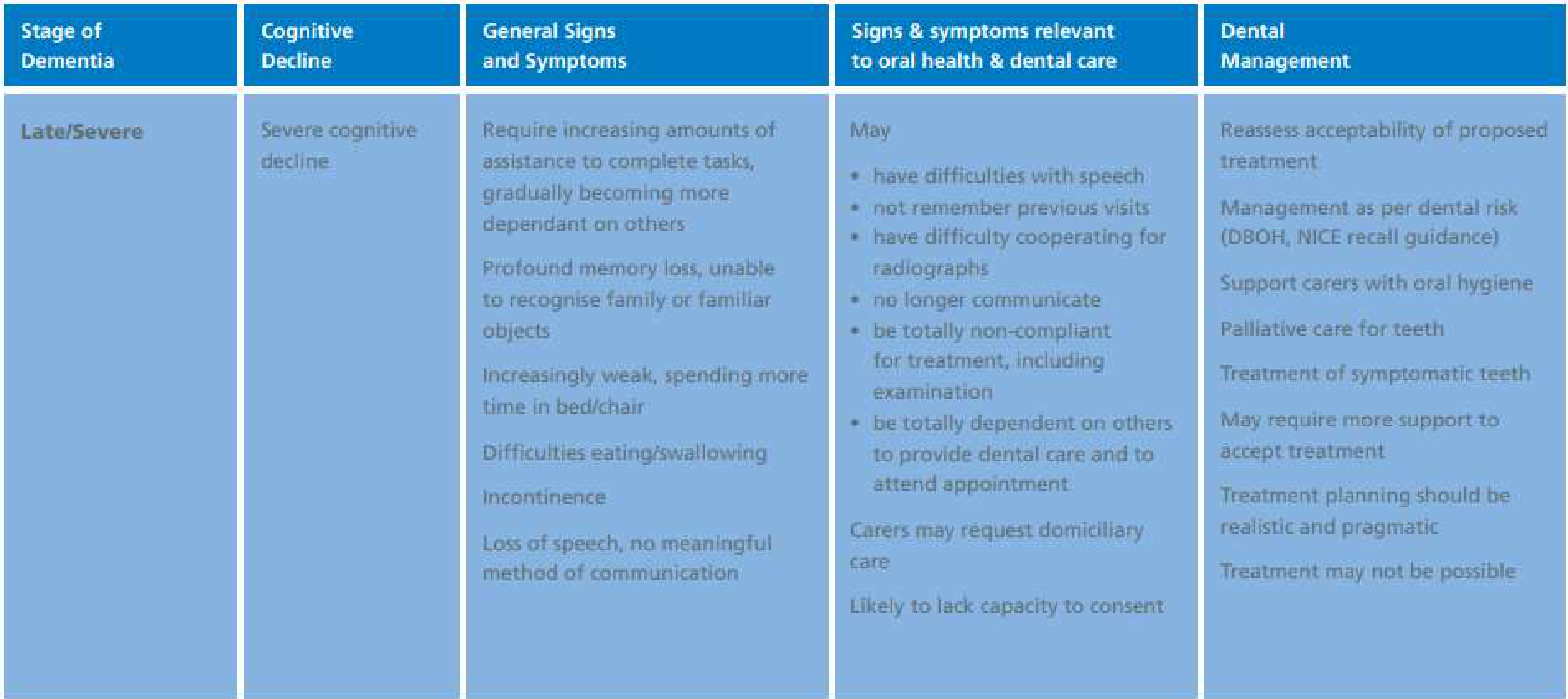
| Late/Severe | Severe cognitive decline | Require increasing amounts of assistance to complete tasks, gradually becoming more dependent on others; profound memory loss, unable to recognise family or familiar objects; increasingly weak, spending more time in bed/chair; difficulties eating/swallowing; incontinence; loss of speech, no meaningful method of communication | May: have difficulties with speech; not remember previous visits; have difficulty cooperating for radiographs; no longer communicate; be totally non-compliant for treatment, including examination; be totally dependent on others to provide dental care and to attend appointment. Carers may request domiciliary care. Likely to lack capacity to consent | Reassess acceptability of proposed treatment; management as per dental risk (DBOH, NICE recall guidance); support carers with oral hygiene; palliative care for teeth; treatment of symptomatic teeth; may require more support to accept treatment; treatment planning should be realistic and pragmatic; treatment may not be possible |
Treatment Modifications
Access60
- Timing: ideally morning, but not too early; suitable for carer
- Good days and bad days
- Appointment reminder/cards +/- involve carer
- Name badges
- Positioning: reduced mobility, wheelchair recliner, hoist, upright
- Accessible parking, clear signage, handrails, waiting room – appropriate seating, accessible toilets, matte/even flooring
- Familiar carer, routine, surroundings to reduce anxiety
Communication
- Information leaflets as reminder of the discussion / recommendations made
- May revert back to first language
- Speech, slurred, aphasia
- Be kind and reassuring, not patronising or talking down
- Maintain respect and dignity
- One question or topic at a time, allow time to process
- Avoid background noise (e.g. music)
- Patient profile, “This is Me”, disability health profiles = get to know preferences and interests of patient
Consent
- Assess capacity: understand info, retain info, weigh up info, communicate decision
- Best interest decisions, involving guardian/family
- Use least restrictive methods
- May have AHD
- If still have capacity, decide upon treatment plan and goals prior to patient losing capacity
Lecturer — Consent Communication
Capacity is not automatically absent because a person has dementia and must be reassessed at each visit.
- Communication may be verbal, written, through signs, by an augmentative and alternative communication device, or by pointing to listed treatment options.
- The dentist should document which element of capacity is absent if the person cannot consent.
Education / Prevention61
- Involve carers/relatives
- Emphasise importance of routine oral and denture hygiene
- Educate on signs of infection
- Consider toothbrush handle modifications, non-foaming TP, electric TB, high fluoride toothpaste, CHX gel
- Nutritional supplements
- Thickeners
- Availability of cordial
Lecturer — Dietary Caries Risk
Dietary supplements and thickeners may be highly cariogenic despite being important for nutrition.
- Cordial, including diet cordial, may remain acidic even when it contains no sugar.
- Education should balance respect for autonomy with limiting caries risk.
Surgical
-
Avoid long complex tx
-
Restore/extract carious teeth during early stages
-
If long-term care anticipated, full mouth diagnostic RGs taken and kept for future reference
-
Dentures: named, consider duplicating dentures/moulds, cooperation?
-
IV Sedation / GA: risks of progression dementia
-
Medications: tablet/capsule or liquid formulation
-
Radiographs may provide information about root morphology for future treatment.
Spread
-
MRSA
-
VRE
-
Infection-control planning is required when providing care outside the clinic.
Elder Abuse6263
Royal Commission into Aged Care Quality and Safety — Final Report: Care, Dignity and Respect
Lecturer — Recognising Elder Abuse
Older adults who are physically, emotionally or psychologically frail and dependent on others are at increased risk of abuse.
- Abuse may occur at home, in care homes, in nursing homes or in hospitals.
- Dental professionals may identify signs of neglect or physical abuse through examination of the mouth.
| Type of Abuse | Description | Examples |
|---|---|---|
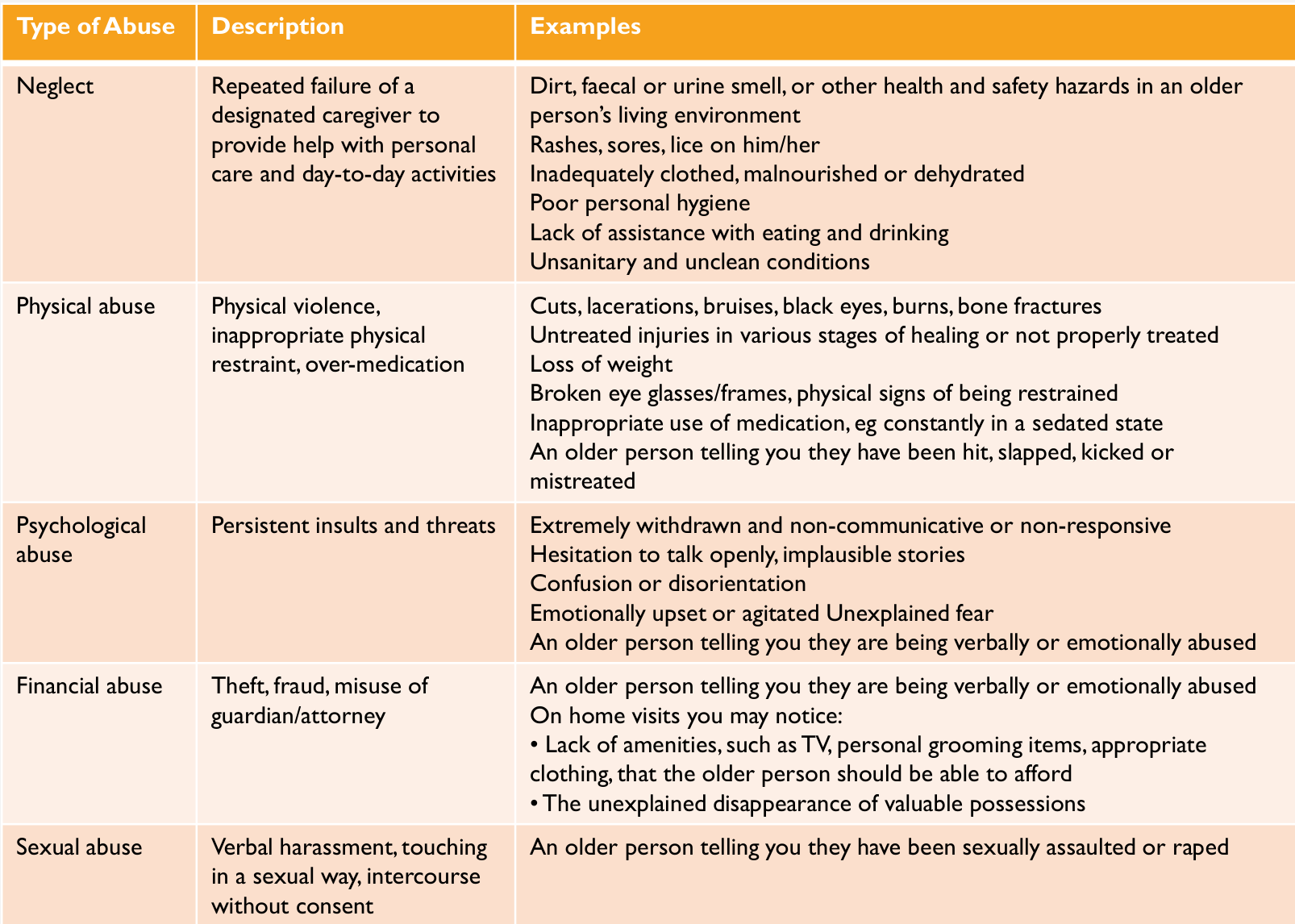
| Neglect | Repeated failure of a designated caregiver to provide help with personal care and day-to-day activities | Dirt, faecal or urine smell, or other health and safety hazards in an older person’s living environment; rashes, sores, lice on him/her; inadequately clothed, malnourished or dehydrated; poor personal hygiene; lack of assistance with eating and drinking; unsanitary and unclean conditions |
| Physical abuse | Physical violence, inappropriate physical restraint, over-medication | Cuts, lacerations, bruises, black eyes, burns, bone fractures; untreated injuries in various stages of healing or not properly treated; loss of weight; broken eye glasses/frames, physical signs of being restrained; inappropriate use of medication, e.g. constantly in a sedated state; an older person telling you they have been hit, slapped, kicked or mistreated |
| Psychological abuse | Persistent insults and threats | Extremely withdrawn and non-communicative or non-responsive; hesitation to talk openly, implausible stories; confusion or disorientation; emotionally upset or agitated, unexplained fear; an older person telling you they are being verbally or emotionally abused |
| Financial abuse | Theft, fraud, misuse of guardian/attorney | An older person telling you they are being verbally or emotionally abused. On home visits you may notice: lack of amenities, such as TV, personal grooming items, appropriate clothing, that the older person should be able to afford; the unexplained disappearance of valuable possessions |
| Sexual abuse | Verbal harassment, touching in a sexual way, intercourse without consent | An older person |
WA Elder Abuse Helpline and Information Service64
If you or someone you know is experiencing elder abuse, or has a question about elder abuse, please call the WA Elder Abuse Helpline and Information Service on 1300 724 679 for a confidential discussion.
The Helpline is funded by the Department of Communities and operated by Advocare, a not-for-profit organisation that supports older people in Western Australia through advocacy, information and education.
WA Elder Abuse Helpline and Information Service 1300 724 679 — 8:30am to 4:30pm Monday to Friday
 |  |
Support Services
If you feel that you are being mistreated or abused, you can take action through these support services.
- Seniors Peak Body WA — Advocare is WA’s Peak Body for seniors, ensuring older people are supported, connected and heard. The Seniors Peak Body provides support and information on the rights of older people, accessing services, elder abuse and overcoming social isolation. Web: www.advocare.org.au — Phone: 1800 655 566 (freecall)
- Elder Rights WA (ERWA) — provides seniors with legal advice, assistance, and representation where appropriate for certain legal matters. Social Workers are also available to support in dealing with social, physical and mental challenges which may impact their legal concerns. This service is provided by Legal Aid WA. Web: www.resources.legalaid.wa.gov.au/project/erwa — Phone: 1300 650 579
- Older People’s Rights Service — offers legal advice, advocacy, peer education sessions and social support to those at risk of or experiencing elder abuse, with a focus on positive ageing. Northern Suburbs Community Legal Centre provides this service. Web: www.nsclegal.org.au/how-we-can-help/elder-abuse-support/ — Phone: 08 9440 1663
- Office of the Public Advocate — works to promote and protect the human rights of Western Australian adults with decision-making disabilities. The Office can provide information about Enduring Power of Attorney and Enduring Power of Guardianship. Web: www.publicadvocate.wa.gov.au or call the Telephone Advisory Service — Phone: 1300 858 455
- The Public Trustee — offers independent trustee and asset management services. These include Will and Enduring Power of Attorney drafting, deceased estate administration, executor support, financial administration and trust management services. Web: www.publictrustee.wa.gov.au — Phone: 1300 746 212
Government of Western Australia, Department of Communities — Everything you’ve ever wondered (and more) about Elder Abuse and the mistreatment of older people
https://www.wa.gov.au/government/document-collections/elder-abuse-support-services-and-resources
Oral Health Assessments and Care Plans
Better Oral Health in Residential Care Model65
Professional Portfolio — Oral Health Assessment Toolkit for Older People; Oral Health Care Planning Guidelines; Dental Referral Protocol.
Prepared by the SA Dental Service and Co-production Members. Funded by the Australian Government, Department of Health and Ageing.
Staff Portfolio — Education and Training Program (Government of South Australia, SA Health).
Facilitator Portfolio — Education and Training Program: Introduction (Government of South Australia, SA Health).
Better Oral Health in Residential Care Model (2010) — oral health status may be Healthy, show Changes, or be Unhealthy.
Lecturer — Model Responsibilities
The model promotes a multidisciplinary approach involving doctors, nurses, care workers and dental professionals. Responsibility is shared across oral health assessment, dental treatment, oral health care planning and daily oral hygiene.
 |  |
 |
Oral Health Assessment (key process)66
- Performed by the GP or RN
- On admission, on regular basis and as need arises
- Refer to the Oral Health Assessment Toolkit for Older People (Professional Portfolio)
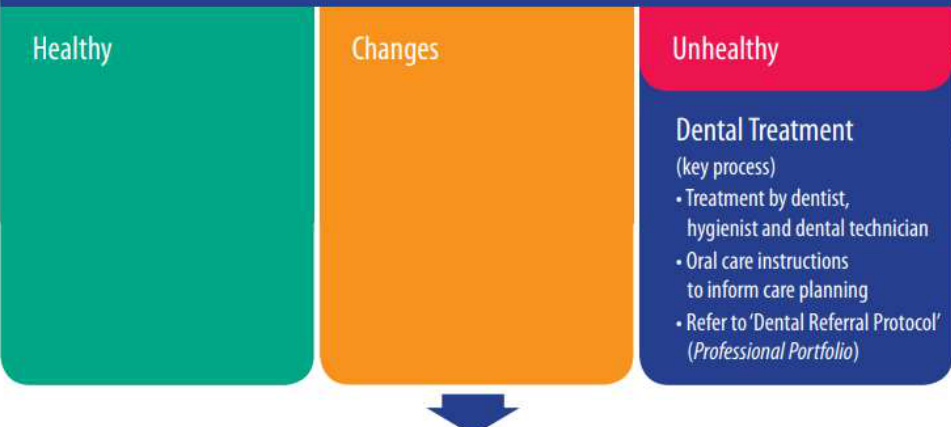
Dental Treatment (key process)
- Treatment by dentist, hygienist and dental technician
- Oral care instructions to inform care planning
- Refer to the Dental Referral Protocol (Professional Portfolio)
Oral Health Care Plan (key process)
-
RN develops care plan with GP and dental input
-
Level of assistance determined by RN
-
Refer to the Oral Health Care Planning Guidelines (Professional Portfolio)
-
Standard Protective Oral Hygiene Regimen
-
Additional Oral Care Treatments
-
Oral Care and Changed Behaviours
-
Palliative Oral Care Considerations
Daily Oral Hygiene (key process)
-
Nurses and care workers follow oral health care plan
-
Refer to the Education and Training Program (Staff Portfolio)
-
Daily check for common oral health conditions, document and report to RN
-
Repeat Oral Health Assessment by RN or GP as required
Oral Health Assessments6768
- Adults who move into a care home should have their mouth care needs assessed on admission.
- Self-care can deteriorate before a person moves into a care home, so they may be admitted with poor oral health.
- Mouth care needs may not be visible and can be missed if they are not specifically assessed.
- It is important that mouth care needs are assessed as soon as possible when someone moves into a care home, so that tailored care can start straight away.
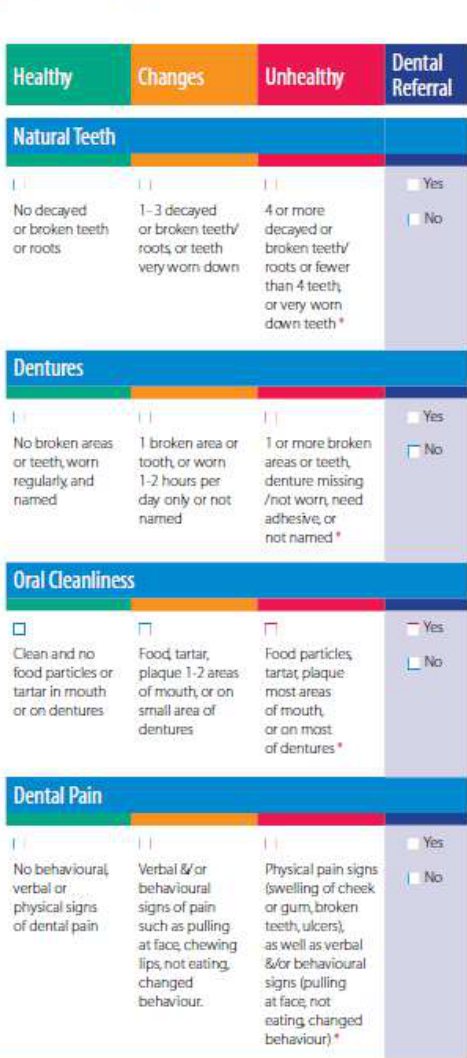
The assessment does not replace a comprehensive examination by a dentist; it is primarily a screening tool to:
- The screening tool is designed for non-dental staff, including nurses, general practitioners and care workers.
- Monitor residents’ oral health
- Inform OH care planning
- Evaluate OH interventions
- Trigger a dental referral when required
Lecturer — Dental Referral
Dental referral should occur when screening identifies unhealthy signs or symptoms. Comprehensive dental diagnosis and treatment planning remain the responsibility of dental professionals.
(Oral Health Assessment Tool — print from CD.)
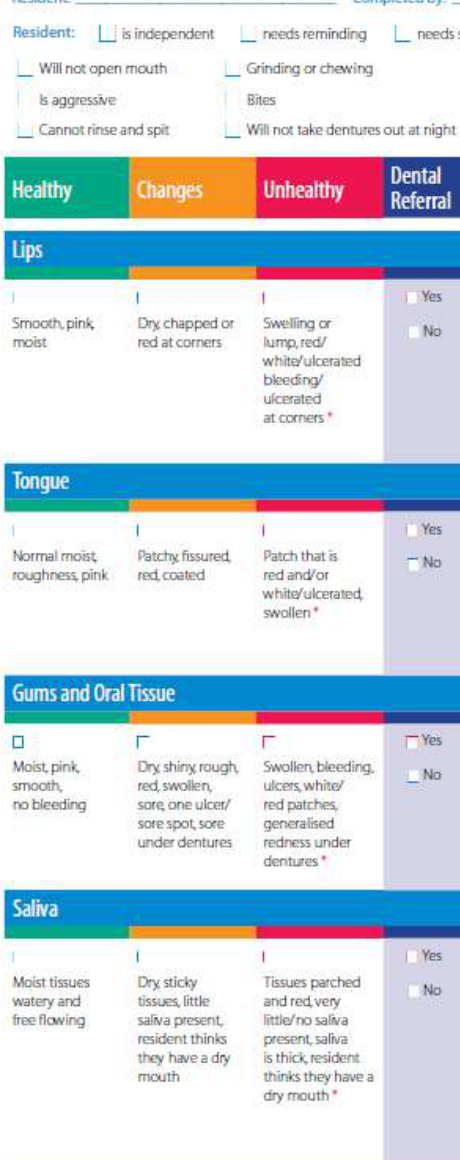
Resident: ____________________ Completed by: ____________________ Date: ____________________
Resident behaviour (tick all that apply):
- is independent [ ] needs reminding [ ] needs supervision [ ] needs full assistance
- will not open mouth [ ] grinding or chewing [ ] head faces down [ ] refuses treatment
- is aggressive [ ] bites [ ] excessive head movement [ ] cannot swallow well
- cannot rinse and spit [ ] will not take dentures out at night
Categories are rated Healthy, Changes, or Unhealthy, with a Dental Referral decision: [ ] Yes [ ] No.
| Category | Healthy | Changes | Unhealthy |
|---|---|---|---|
| Lips | Smooth, pink, moist | Dry, chapped or red at corners | Swelling or lump, red/white/ulcerated/bleeding, ulcerated at corners * |
| Natural Teeth | No decayed or broken teeth or roots | 1–3 decayed or broken teeth/roots, or teeth very worn down | 4 or more decayed or broken teeth/roots, or fewer than 4 teeth, or very worn down teeth * |
| Tongue | Normal moist, roughness, pink | Patchy, fissured, red, coated | Patch that is red and/or white/ulcerated, swollen * |
| Dentures | No broken areas or teeth, worn regularly and named | 1 broken area or tooth, or worn 1–2 hours per day only, or not named | 1 or more broken areas or teeth, denture missing/not worn, need adhesive, or not named * |
| Gums and Oral Tissue | Moist, pink, smooth, no bleeding | Dry shiny, rough, red, swollen, sore, one ulcer/sore spot, sore under dentures | Swollen, bleeding, ulcers, white/red patches, generalised redness under dentures * |
| Oral Cleanliness | Clean and no food particles or tartar in mouth or on dentures | Food, tartar, plaque in 1–2 areas of mouth, or on small area of dentures | Food particles, tartar, plaque in most areas of mouth, or on most of dentures * |
| Saliva | Moist tissues, watery and free flowing | Dry sticky tissues, little saliva present, resident thinks they have a dry mouth | Tissues parched and red, very little/no saliva present, saliva is thick, resident thinks they have a dry mouth * |
| Dental Pain | No behavioural, verbal or physical signs of dental pain | Verbal and/or behavioural signs of pain such as pulling at face, chewing lips, not eating, changed behaviour | Physical pain signs (swelling of cheek or gum, broken teeth, ulcers), as well as verbal and/or behavioural signs (pulling at face, not eating, changed behaviour) |
* Unhealthy signs usually indicate referral to a dentist is necessary.
Assessor Comments:
 |  |
Oral Health Related Quality of Life
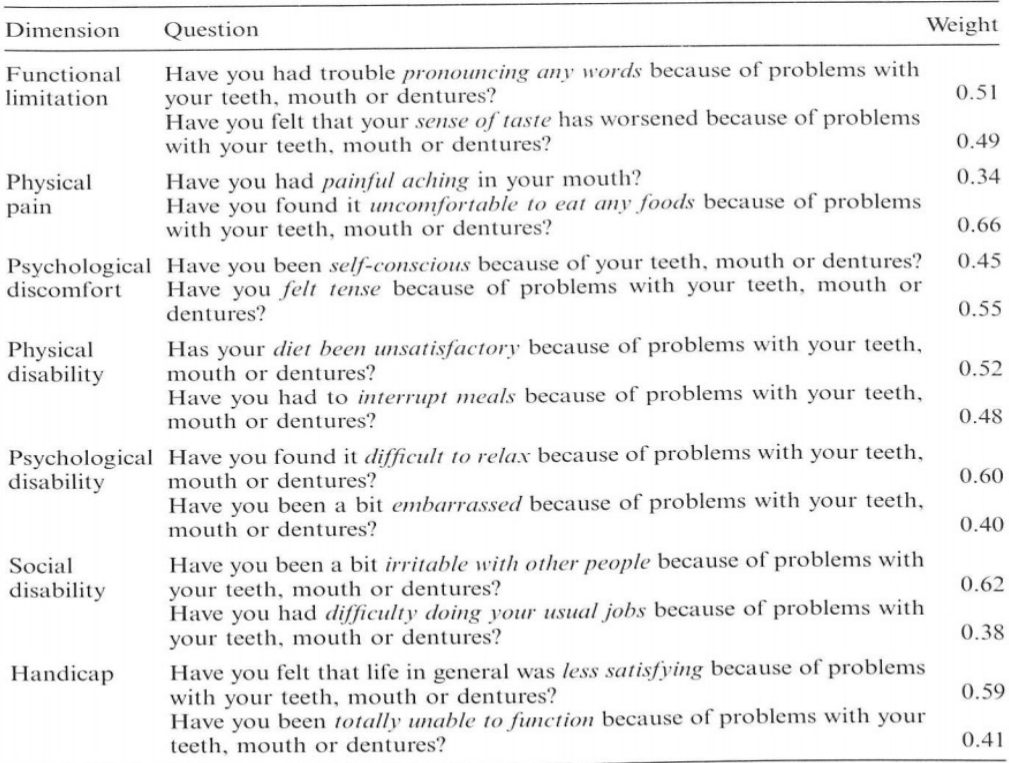
Oral Health Impact Profile (OHIP)69
- Slade 1997: 14 questions covering 7 domains
 | 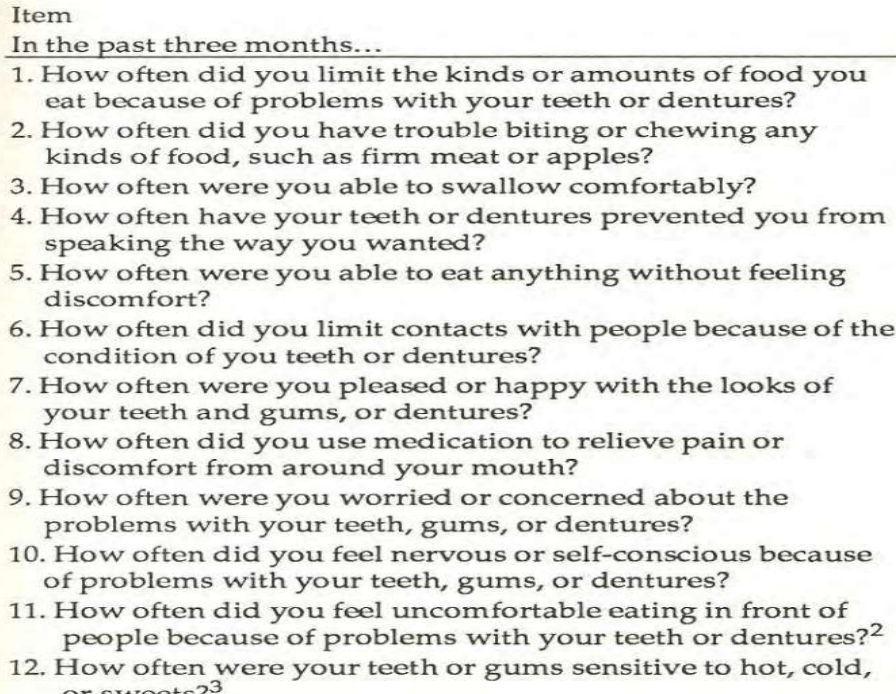 |
Geriatric Oral Health Assessment Index (GOHAI)
- 1990s: 12 items
- Physical, psychosocial and pain/discomfort domains
OHIP Dimensions, Questions and Weights
| Dimension | Question | Weight |
|---|---|---|
| Functional limitation | Have you had trouble pronouncing any words because of problems with your teeth, mouth or dentures? Have you felt that your sense of taste has worsened because of problems with your teeth, mouth or dentures? | 0.51 0.49 |
| Physical pain | Have you had painful aching in your mouth? Have you found it uncomfortable to eat any foods because of problems with your teeth, mouth or dentures? | 0.34 0.66 |
| Psychological discomfort | Have you been self-conscious because of your teeth, mouth or dentures? Have you felt tense because of problems with your teeth, mouth or dentures? | 0.45 0.55 |
| Physical disability | Has your diet been unsatisfactory because of problems with your teeth, mouth or dentures? Have you had to interrupt meals because of problems with your teeth, mouth or dentures? | 0.52 0.48 |
| Psychological disability | Have you found it difficult to relax because of problems with your teeth, mouth or dentures? Have you been a bit embarrassed because of problems with your teeth, mouth or dentures? | 0.60 0.40 |
| Social disability | Have you been a bit irritable with other people because of problems with your teeth, mouth or dentures? Have you had difficulty doing your usual jobs because of problems with your teeth, mouth or dentures? | 0.62 0.38 |
| Handicap | Have you felt that life in general was less satisfying because of problems with your teeth, mouth or dentures? Have you been totally unable to function because of problems with your teeth, mouth or dentures? | 0.59 0.41 |
Responses are made on a 5-point scale, coded 0 = never, 1 = hardly ever, 2 = occasionally, 3 = fairly often, 4 = very often. Within each dimension, coded responses can be multiplied by weights to yield a subscale score.
GOHAI Items — In the past three months…
- How often did you limit the kinds or amounts of food you eat because of problems with your teeth or dentures?
- How often did you have trouble biting or chewing any kinds of food, such as firm meat or apples?
- How often were you able to swallow comfortably?
- How often have your teeth or dentures prevented you from speaking the way you wanted?
- How often were you able to eat anything without feeling discomfort?
- How often did you limit contacts with people because of the condition of your teeth or dentures?
- How often were you pleased or happy with the looks of your teeth and gums, or dentures?
- How often did you use medication to relieve pain or discomfort from around your mouth?
- How often were you worried or concerned about the problems with your teeth, gums, or dentures?
- How often did you feel nervous or self-conscious because of problems with your teeth, gums, or dentures?
- How often did you feel uncomfortable eating in front of people because of problems with your teeth or dentures?²
- How often were your teeth or gums sensitive to hot, cold, or sweets?³
Oral Care Plans7071
- An Oral Care Plan developed by the dentist following a consult regarding the residents’ needs
- Can be used for residents able to attend a dental clinic, or residents seen on a home visit
- Assists communication with the RACF regarding oral health care planning for residents
- Provides information on a standard preventive care regimen, additional oral care treatment, oral care and changed behaviour, and palliative care considerations
- Must be followed by the RACF once incorporated into the resident’s overall care plan
Lecturer — Care Plan Communication
The dentist should document treatment findings, recommendations and preventative care. The plan may be included in the resident’s overall medical and care profile and should identify findings, areas requiring attention, toothbrushing techniques, products, positioning, modified equipment, appointments and follow-up.
(Oral Health Care Plan — print from CD.)
Oral Health Assessment (OHA) Date: _______________ OHA Review Date: _______________
Oral Health Care Considerations72
Lecturer — Realistic Care Plans
The dental team should develop a realistic plan that can be carried out by carers. The dentist should personally test the proposed method with the patient, because if the dentist cannot perform it, an untrained carer is unlikely to succeed; carers should therefore help determine whether the plan is realistic in the residential care environment.
- Problems: ☐ difficulty swallowing ☐ difficulty moving head ☐ difficulty opening mouth ☐ fear of being touched
- Interventions: ☐ bridging ☐ chaining ☐ hand over hand ☐ distraction (activity board/toy) ☐ rescue ☐ other _______________
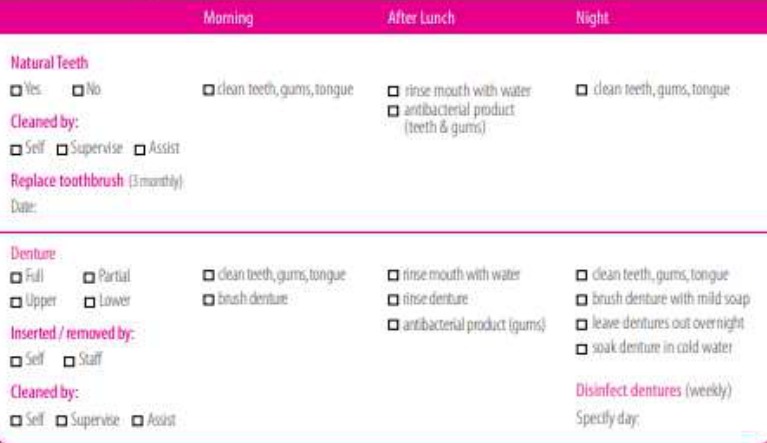
Daily Activities of Oral Hygiene
Lecturer — Daily Routine
Oral hygiene should be performed systematically and linked to the patient’s established routines. Toothbrushing may be easier during showering, in a lounge chair or at a regular time of day, and the plan should specify positioning, equipment, sequence and individual behavioural strategies.
| Morning | After Lunch | Night | |
|---|---|---|---|
| Natural Teeth | ☐ Yes ☐ No | ☐ clean teeth, gums, tongue | ☐ rinse mouth with water; ☐ antibacterial product (teeth & gums) |
| Cleaned by: | ☐ Self ☐ Supervise ☐ Assist | ||
| Replace toothbrush (3 monthly). Date: | |||
| Denture | ☐ Full ☐ Partial; Upper ☐ Lower | ☐ clean teeth, gums, tongue; ☐ brush denture | ☐ rinse mouth with water; ☐ rinse denture; ☐ antibacterial product (gums) |
| Inserted / removed by: | ☐ Self ☐ Staff | ||
| Cleaned by: | ☐ Self ☐ Supervise ☐ Assist |
Oral Hygiene Aids
☐ soft toothbrush ☐ modified toothbrush ☐ toothbrush grip ☐ denture brush ☐ spray bottle (labelled)
Oral Health Care Products
- ☐ mild soap (denture) _______________ ☐ antibacterial product _______________ ☐ saliva substitute _______________
- ☐ lip moisturiser _______________ ☐ high fluoride (5000 ppm) toothpaste _______________
Lecturer — Product Selection
Non-foaming toothpaste may be useful, and fluoride products should be selected according to the person’s ability to spit and swallow safely. High-concentration fluoride toothpaste may be inappropriate if the patient cannot reliably spit out the excess.
Additional Oral Care Instruction
☐ antifungal gel _______________ ☐ denture adhesive _______________
☐ interproximal brush ☐ tongue scraper ☐ normal saline mouth toilet
- Possible additional aids include gauze, sponge sticks and mouth props or toothbrushes modified to act as a prop.
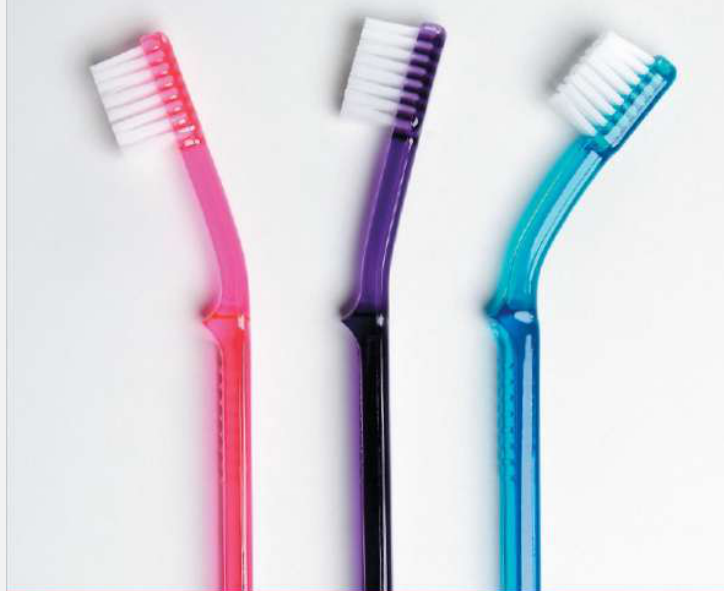
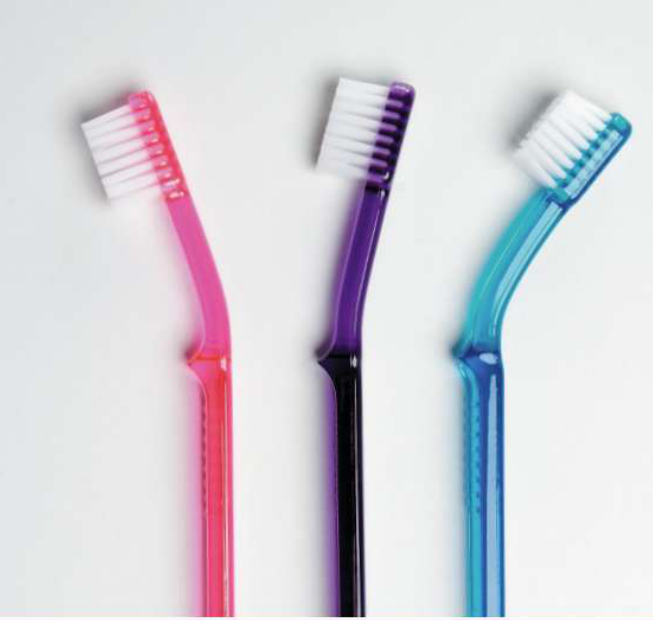
- Carers should be taught how to brush someone else’s teeth, and a modified technique is acceptable if it removes plaque without damaging teeth or gums.
- Carers should never place their fingers between the resident’s teeth.
Comments:
Check Daily, Document and Report to RN If
-
bad breath
-
bleeding gums
-
lip blisters/sores/cracks
-
tongue — any coating/change in colour
-
sore mouth or gums
-
mouth ulcer
-
swelling of face/mouth
-
broken / lost denture
-
difficulty eating
-
refusal of oral care
-
denture not named
-
excessive food left in mouth
-
broken teeth
-
Recurrent chest infections, changed behaviour suggesting pain or distress, and increasing difficulty accepting oral hygiene should also be documented and reported. Signed RN: _________________________ Date: _________________________
Daily Oral Care Techniques
Daily Check and Reporting
Lips73
- sore corners of mouth (angular cheilitis)
Tongue
- sore tongue (glossitis)
- thrush (candidiasis)
Gums and Tissues
- gum disease (gingivitis)
- severe gum disease (periodontitis)
- oral cancers
- ulcers and sore spots
- sore mouth (stomatitis)
Saliva
- dry mouth (xerostomia)
Natural Teeth
- tooth decay (caries)
- root decay (root caries)
- retained tooth roots
Dentures
- requiring attention
- poorly fitting
Oral Cleanliness
- poor oral hygiene
Changed Behaviour
Residents, especially residents suffering dementia, can behave in a way that makes it difficult to provide oral health care. They may display changed behaviour, such as the following:
- fear of being touched
- not opening the mouth
- not understanding or responding to directions
- biting the toothbrush
- grabbing or hitting out
Oral Health Care
- Establish effective verbal and non-verbal communication.
- Develop ways to improve access to the resident’s mouth.
- Develop strategies to manage changed behaviour.
- Use oral aids such as a modified toothbrush or mouth prop.
- Use modified oral care application techniques as short-term alternatives to brushing.
- Seek GP or dental referral to review oral care.
Toothbrush Alternatives
Modified Soft Toothbrush74
A soft toothbrush can be bent to give better access to the mouth.
A forward bent toothbrush can be used to brush the inner upper and lower teeth.
A backward bent toothbrush can be used to retract the cheek, while another brush is used to brush the resident’s teeth.
Lecturer — Modified Toothbrush
A toothbrush can be bent backwards using hot water and can act as a mouth prop, cheek retractor or familiar object that may be less frightening than a formal bite block. The toothbrush should not be bent while cold because it may break.
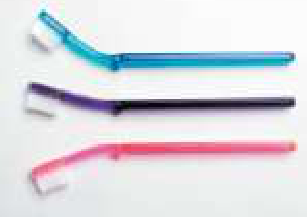 | 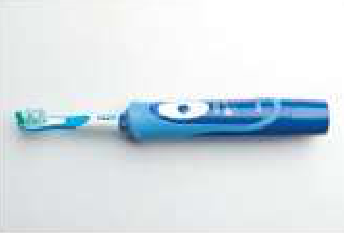 |  |
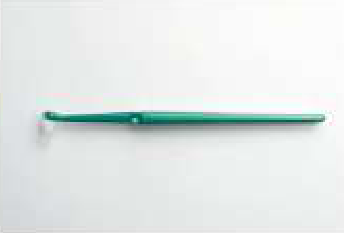 | 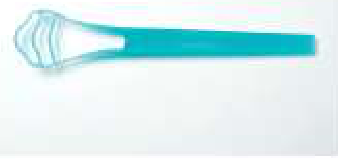 | 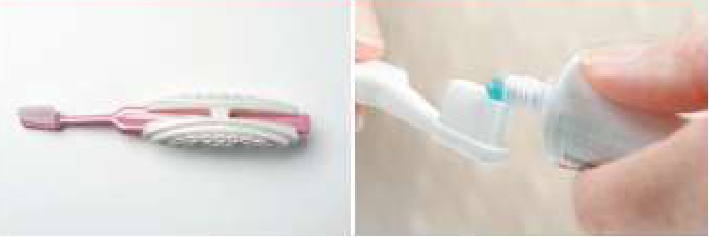 |
Electric Toothbrush
- May help residents with limited manual dexterity, due to stroke or arthritis for example, to manage brushing by themselves.
- Vibration can be a problem for some residents.
- Cost and maintenance can be a barrier.
- This type of brush is recommended if the resident is currently using one.
Lecturer — Electric Toothbrushes
Some patients may dislike the noise or vibration. The patient should first hold the toothbrush while it is switched off, then become familiar with its sound and vibration before it is placed in the mouth.
Interproximal Brush
- Ideal for cleaning the larger spaces between teeth, underneath bridges, around crowns and between tooth roots where gum recession has occurred.
- The brush can also be used to apply antibacterial gels between the teeth.
- Interproximal brushing does not replace normal toothbrushing. The brushing of teeth, gums and tongue must still take place with a soft toothbrush.
Additional Oral Hygiene Aids
Tongue scraper: can be used as an alternative when a toothbrush is not able to clean the surface of the tongue sufficiently; for example, when thrush is present.
Hand grip: useful for residents with reduced grip strength.
Toothpaste application: use high fluoride toothpaste (5000 ppm) morning and night. Only a small pea-sized amount of toothpaste is required.
Cleaning Someone Else’s Teeth
Positioning75
When the resident requires assistance, try different positions to suit the situation.
Standing in front position
- Sit the resident in a chair facing you. If the resident is in bed you will need to support the resident’s head with pillows.
- Support the resident’s chin with your index finger and thumb, being careful not to place pressure on the resident’s throat with your remaining fingers. This is sometimes referred to as a ‘pistol grip’.
- The thumb holding the chin can be used to roll down and hold the lower lip for better vision and access.
- Good eye contact between you and the resident is maintained with this position.
Cuddle position
- Stand behind and to the side of the resident.
- Rest the resident’s head against the side of your body and arm.
- Support the resident’s chin with your index finger and thumb, being careful not to place pressure on the resident’s throat with your remaining fingers. This is sometimes referred to as a ‘pistol grip’.
- The thumb holding the chin can be used to roll down and hold the lower lip for better vision and access.
- Greater head control is achieved by using this position.
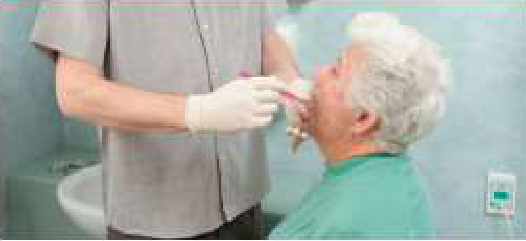 | 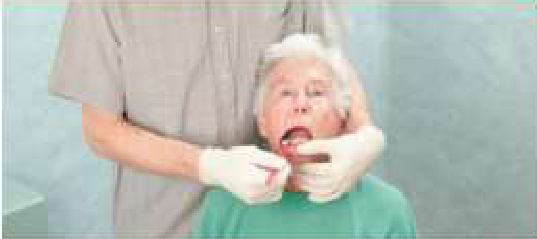 |
Prepare
- Read resident’s care plan
- Environment and set-up
- Timing and routine
Cleaning Someone Else’s Teeth
-
Introduce yourself
-
Explain and communicate throughout
-
Familiarise
-
Relaxed position
-
Position yourself
-
Relax mouth
-
Introduce brush at corner of mouth
-
Remove pouched food and oral debris
-
Brush gumline, from front of mouth to back
-
Remove food debris before brushing using gauze, swabs or sponge sticks where appropriate.
Lecturer — Assisted Toothbrushing
Clean a few teeth at a time using a systematic sequence, lifting the lip and adjusting the cheek position as required. Continue appropriate cleaning even when gingival bleeding occurs, and remove excess toothpaste safely when the patient has swallowing difficulties.
Helpful Hints
Preparation76
- It is suggested the resident be positioned in the semi-reclined position to facilitate the examination.
- The use of a plant lamp, hands-free light source or torch is recommended to assist in viewing the oral cavity.
- Assistance with the recording aspect of the assessment may help to decrease the amount of time required.
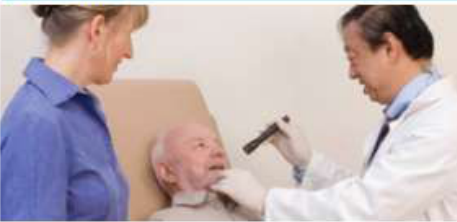 | 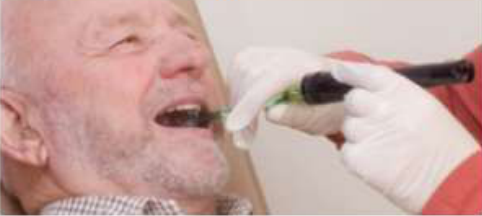 |  |
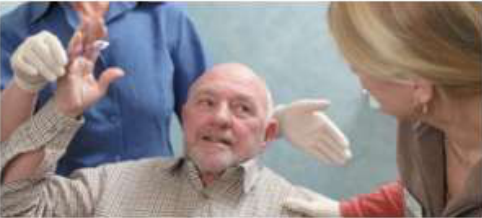 | 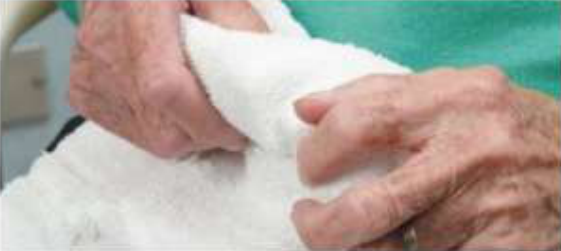 | 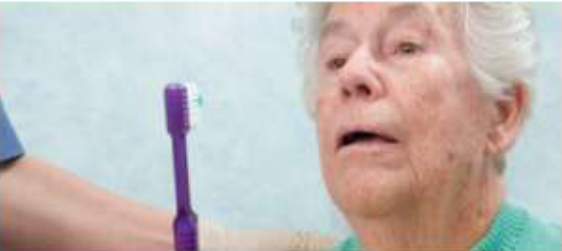 |
Using a Modified Toothbrush
- A backward bent toothbrush can be used to retract the cheek and provide better access to the mouth.
- Clear plastic toothbrushes are the easiest to bend. Some can be bent (without having to soften the plastic) to a 45 degree angle by simply using your hands.
- Others will need to be softened by placing the toothbrush in a cup of hot water. Apply gentle downward pressure on the toothbrush until it bends to a 45 degree angle.
Managing Changed Behaviours
Getting the resident’s attention
- Touch a neutral place such as the hand or lower arm. Firstly, focus on building a good relationship with the resident before you start the oral health assessment.
- Speak clearly and at the resident’s pace, giving one instruction at a time.
- Mime what you want the resident to do and allow the resident to inspect the items you are going to use.
- If the resident walks away, allow the resident to perch against a bench or table rather than sit during the assessment.
Counteracting grabbing or hitting out
-
Approach the resident from the diagonal front and at eye level. By standing directly in front you can look big and are more likely to be grabbed or hit.
-
If the resident holds onto items you are using and does not let go, stroke the resident’s forearm in long, gentle rhythmic movements as a distraction and to help relax the resident.
-
If the resident grabs out at you or grabs your wrist, pull back and give the resident space. Ask if the resident is OK. Offer the resident something to hold while you do the oral health assessment.
-
Think about what may have caused the resident’s behaviour. Did something hurt? Was the resident trying to help but the message was mixed?
-
Pause and try again later, use a carer who is more familiar with the resident, and avoid force where possible. Improving access to the mouth
-
If the resident does not open his or her mouth or keeps turning his or her face away, try to stimulate the resident’s rooting reflex by stroking the cheek.
-
If the resident bites the items you are using, ask the resident to release and distract the resident with gentle strokes to the head or shoulder, using soothing words.
Improving Access to the Mouth
Overcoming Fear of Being Touched77
The resident may respond fearfully to intimate contact when the relationship with you has not been established.
Firstly, concentrate on building up a relationship with the resident. Once you have engaged the resident, gently and smoothly stroke the resident’s face. The aim is to relax the resident and create a sense of comfort and safety.
This process may need to be staged over time until the resident becomes trusting and ready to accept oral care.
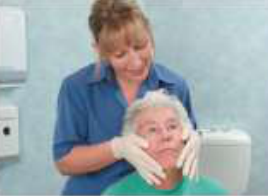 |  | 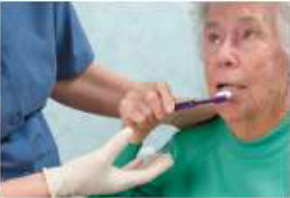 |
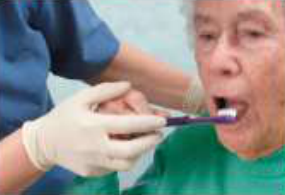 |  |  |
Bridging
Bridging aims to engage the resident’s senses, especially sight and touch, and to help the resident understand the task you are trying to do for him or her.
- Undertake this method only if the resident is engaged with you.
- Describe the toothbrush and show it to the resident.
- Mimic brushing your own teeth so the resident sees physical prompts, and smile at the same time.
- Place a brightly coloured toothbrush in the resident’s preferred hand (usually the right hand).
- The resident is likely to mirror your behaviour and begin to brush his or her teeth.
Chaining
If the resident does not initiate brushing his or her teeth through bridging, gently bring the resident’s hand and toothbrush to his or her mouth, describing the activity and then letting the resident take over and continue.
Hand over Hand
If chaining does not work, then place your hand over the resident’s hand and start brushing the resident’s teeth so you are doing it together.
Distraction
If the hand over hand method is not successful, place a toothbrush or a familiar item (such as a towel, cushion or activity board) in the resident’s hand while you use the other toothbrush to brush the resident’s teeth.
Familiar music may also be useful to distract and relax the resident during oral care.
Rescuing
If your relationship with the resident is not working and attempts at oral care are not going well, then tell the resident that you will leave it for now. Ask for help and have someone else take over the oral care.
Domiciliary Care78
What Is Domiciliary Care7980
-
Domiciliary care = oral health care and dental treatment carried out in an environment where a patient is resident either permanently or temporarily
- Includes residential care facilities, nursing homes, hospitals, day centres and patient’s own homes.
-
Aim = deliver appropriate oral health care to patients whose circumstances make it impossible, unreasonable or otherwise impracticable for them to receive that care in a fixed clinic, hospital site or from a mobile dental clinic.
- Though surgery-based care remains the best option for irreversible treatment procedures, where this is not reasonable or possible, patients should not be unduly disadvantaged by having to receive domiciliary oral healthcare.
Lecturer — Fixed Clinic Advantages
Fixed-clinic care remains preferable for irreversible operative treatment because it provides several practical advantages.
- A dental chair and better ergonomics.
- Better patient positioning.
- More complete equipment.
- More reliable infection-control arrangements.
- Familiar environment = reduced anxiety, improved behavioural compliance
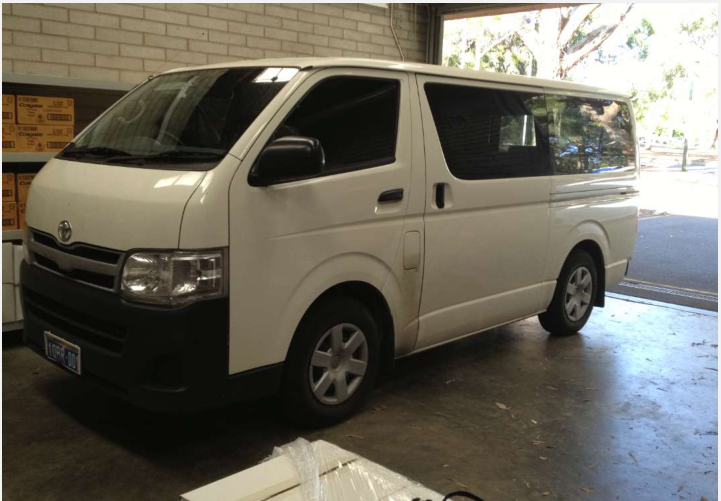 | 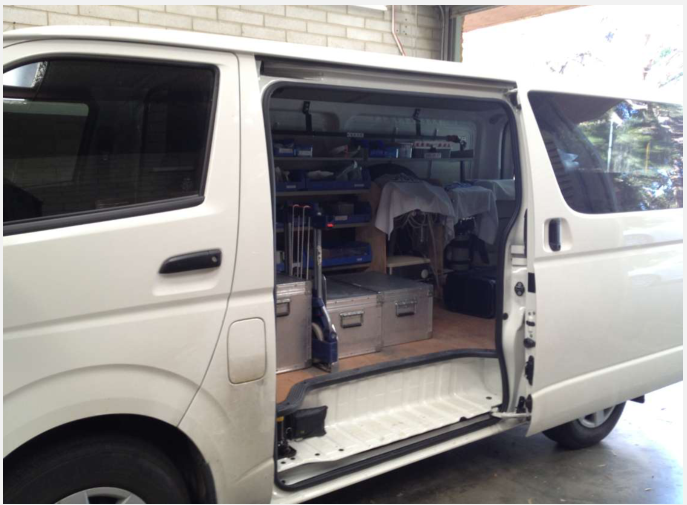 |
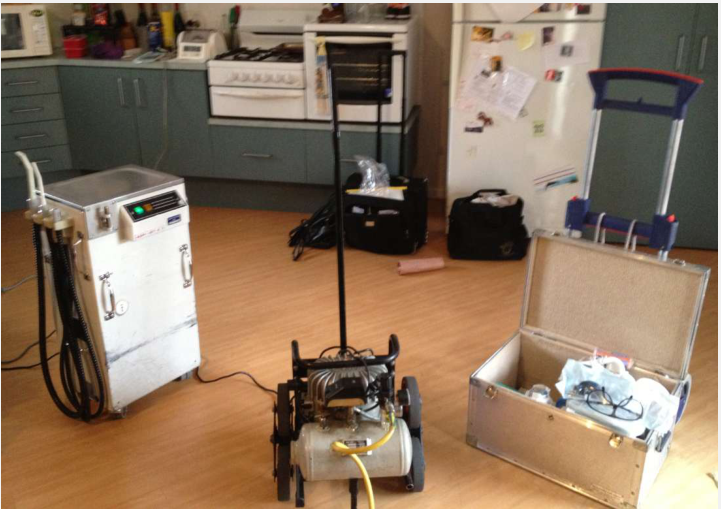 | 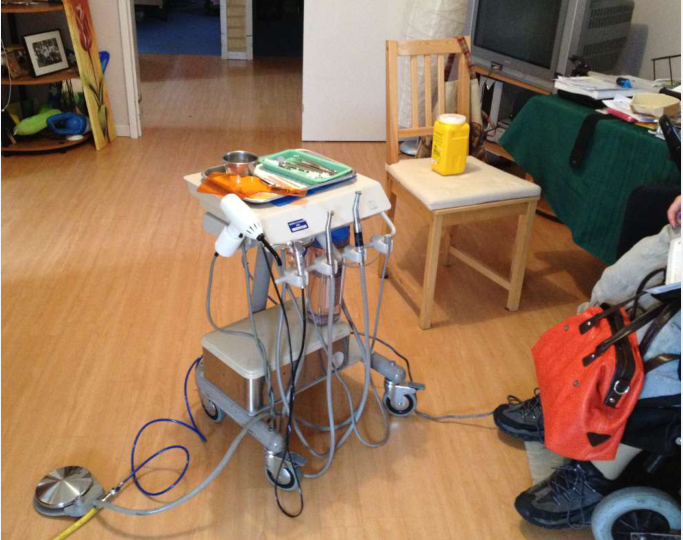 |
Kits and Portable Equipment
Kits81
General Kit
- Exam instruments (mirror/probe)
- Portable light
- Mask, face visors, gown/apron
- Patient glasses
- Blueys
- Waste bags
- Sharps disposal
- Dirty instruments hard container
- Disinfectant solution / wipes / hand sanitiser
Administrative Kit
- Identification badge
- Pens, prescription pad
- Forms: medical hx, consent, patient education, post-op instructions, lab slips, referrals
- Diary, appointment cards, patient records
Prosthetics Kit
- Impression material, trays, mixing equipment
- Shade guide, artic paper, pressure relief paste
- Denture fixative, tissue conditioner
- Wax knife, bite gauge, paint scraper, indelible pencil, scalpel
- Heating equipment
Extractions Kit
- Topical, LA, syringes, needles
- Forceps, elevators
- Suture kit and sutures
- Gauze bite packs
- Haemostatic agents
- Dry socket medicament
Cons Kit
- Topical, LA, syringes, needles
- Restorative and temporary dressing materials
- Handpieces, burs
- Matrix bands
- Gauze, cotton rolls, Vaseline
- Silver fluoride
Periodontal Kit
- Hand scalers
- Ultrasonic scalers
- Toothbrushes, toothpaste
- Prophy
- Fluoride varnish
Arranging the Appointment82
-
C: Check full address and helpful directions
-
A: Appointment sent in writing if possible
-
M: Medical history and consent – need to liaise with relevant people
-
P: Parking facilities
-
I: Information about who will be present (e.g. carer, relative, neighbour)
-
N: Name of dentist visiting, provided for security
-
G: Gain access to any special instructions/requirements (e.g. collect key from neighbour, dog barks but does not bite, etc)
-
Confirm the patient’s exact location within the facility, including the room and contact person.
-
Obtain the medication list and clarify consent arrangements.
-
Check access requirements, pets or other safety risks, and manual-handling needs.
-
Establish whether assistance is available to move or position the patient.
-
Consider whether the setting is suitable for the proposed treatment or whether transport to a fixed clinic should be arranged instead.
Procedures83
-
Initial visit
- Clinical assessment
- Find out if appropriate site for care (environmental risk assessment)
- Risk assessment
-
Treatment plan and consent
- Further investigations required?
- Need to liaise with medical practitioner?
- Cost, number of visits
- Risks:benefits of treatment
-
Emergency treatment may be able to be performed on the day if able to gain consent, appropriate environment, and no medical concerns
-
Return to base
- Clinical waste vs non-clinical waste disposal
- Equipment processing
- Notes, send forms, follow-up admin
- Chase consents
-
Plan subsequent treatment visit
Lecturer — Domiciliary Services
Public domiciliary services in Western Australia may provide pain-relief or emergency care for eligible patients, but generally do not provide routine ongoing care.
- Private domiciliary care may require higher fees to account for transport, setup, treatment time and equipment.
Portable Equipment84
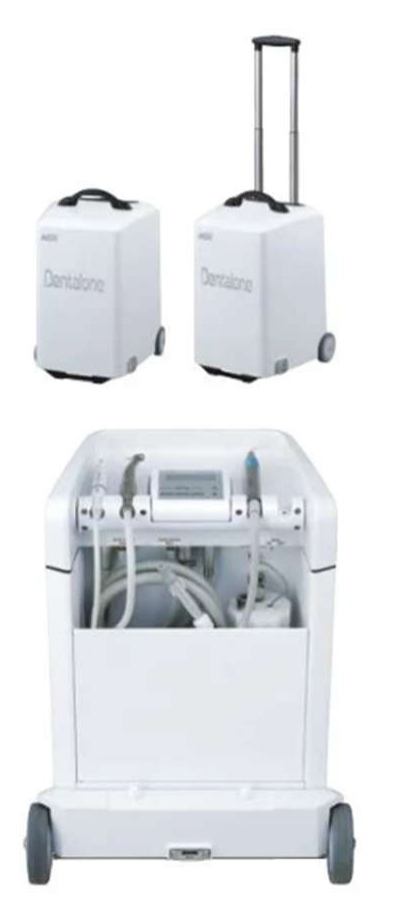 | 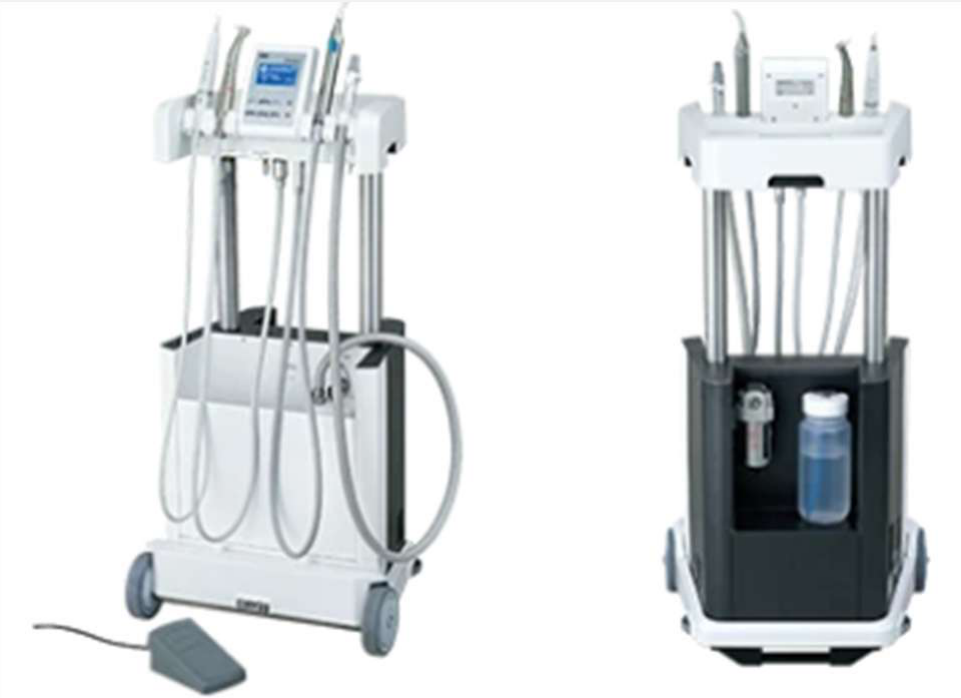 |
BPR Swiss Smart Port85
- 12 kg
- Self-contained high-performance suction 300 l/min
- Full performance of all handpieces
- 30 freely selectable programs incl. 10 Endo
- Piezo electric scaler with LED
- Electric motor with LED
- Silent oil-free compressor
- Easiest transport: rollable & portable
Features:
- Continuous operation
- Full performance
- Plug-and-play
- All-in-one
- Portable/light
- Mobile/rollable
BPR SWISS
- 4 drawers for instruments/consumables, separation of red and green zone
- On a single trolley: transport of unit/instruments/consumables
- Rollable and portable: in case of obstacles or for stowage the unit is undocked
Lecturer — Portable Equipment
Portable equipment involves balancing performance against the practical demands of repeated travel and setup.
- Important considerations include power, functionality, stability, weight, portability, suction capacity and waste-bottle size.
- A hospital service may prefer more powerful equipment, whereas a service travelling between care homes may prioritise lightweight equipment.
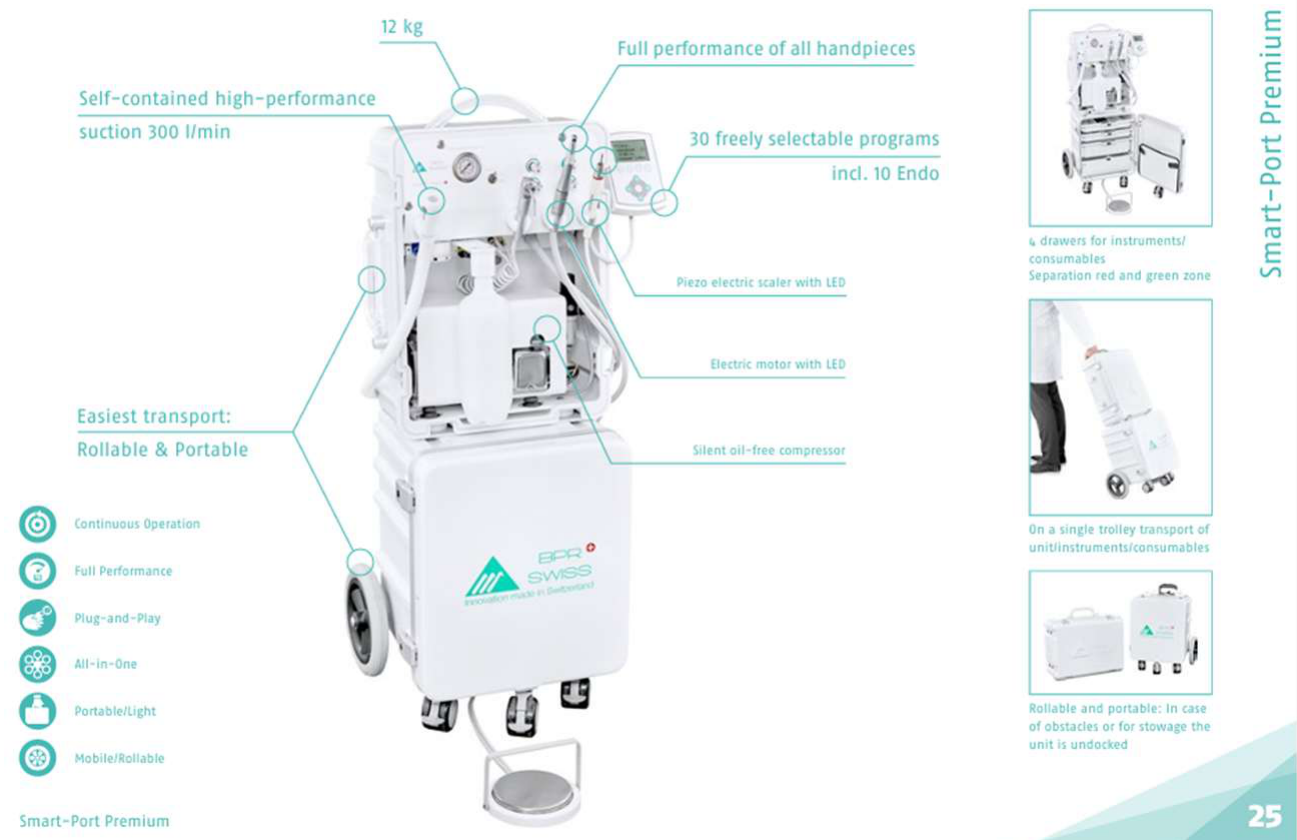 | 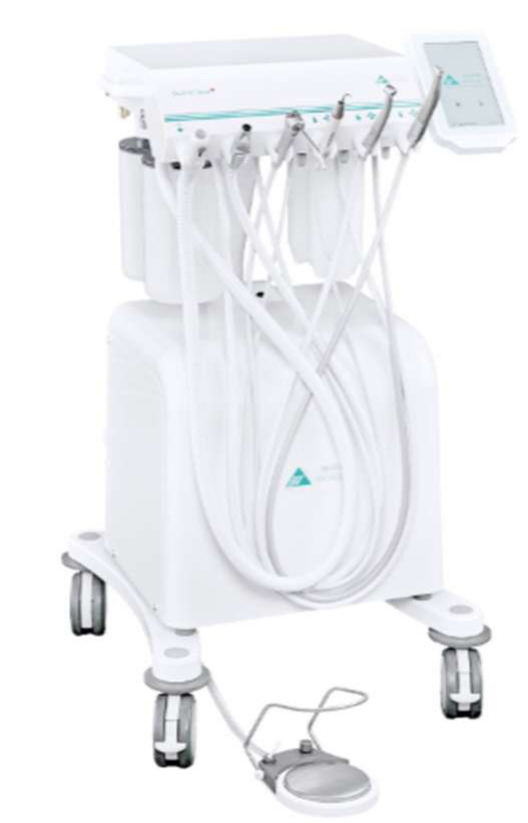 |
NSK Viva Ace86
- Lightweight and compact body
- Advanced functionality in a compact body
- All-in-one package
- Multipurpose ultrasonic scaler
- High functionality micromotor
- Suction
- 3 in 1 syringe
Dimensions: height 28.4 cm, depth 29.8 cm, width 46.2 cm
Lightweight at 8.6 kg*, it can be taken anywhere.
- NSK VIVAce: 8.6 kg
- Competitor A: 11.8 kg
- Competitor B: 15.2 kg
- Competitor C: 19.0 kg
* Weight without handpieces
Dentalone
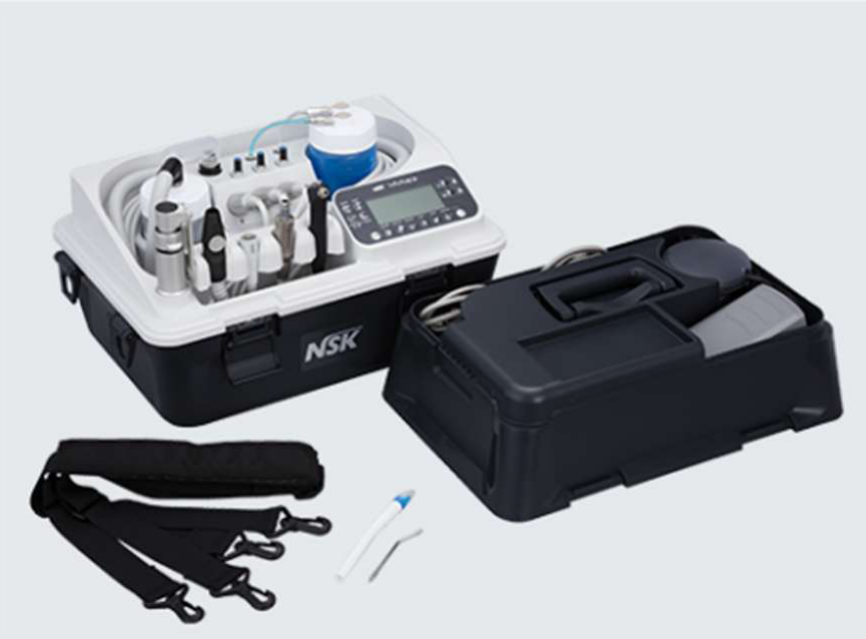
Radiography87
- Occlusal films for anterior periapical films
- Hand held devices (e.g. NOMAD)
Lecturer — Radiography Safety
Portable radiography can be used in domiciliary settings, but radiation protection remains necessary.
- Reduce the number of people in the room and use the radiation shield.
- Position the patient near a window where possible and direct the primary beam out of the window.
- Residential rooms may not have the radiation shielding of a dental clinic.
- Periapical films may be difficult when cooperation is limited, so occlusal views may provide reasonable anterior information.
Lecturer — Examination Medications
Medication knowledge for examinations will focus on important and commonly encountered drugs and their dental implications.
- Recognise key medication categories and risks, including anticoagulants and osteoporosis medications.
- Be aware of important brand and generic names because brand names may be used in general practice.
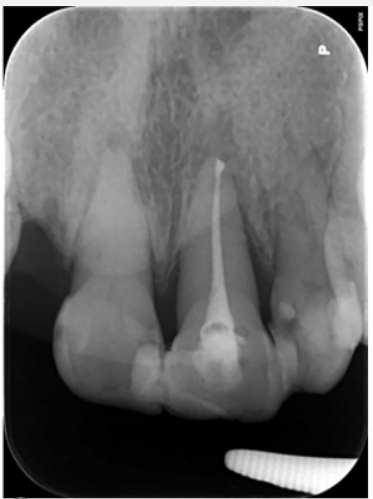 | 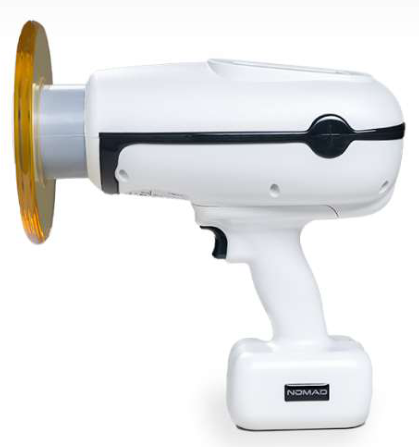 |
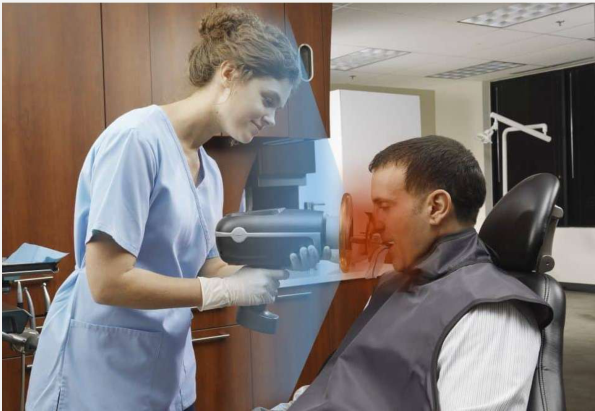 |
Thank You and Questions88
Thank you! Any questions?
Footnotes
-
Original PDF page 1: L12 Geriatric Dentistry Parts 1 2, p.1 ↩
-
Original PDF page 2: L12 Geriatric Dentistry Parts 1 2, p.2 ↩
-
Original PDF page 3: L12 Geriatric Dentistry Parts 1 2, p.3 ↩
-
Original PDF page 4: L12 Geriatric Dentistry Parts 1 2, p.4 ↩
-
Original PDF page 5: L12 Geriatric Dentistry Parts 1 2, p.5 ↩
-
Original PDF page 6: L12 Geriatric Dentistry Parts 1 2, p.6 ↩
-
Original PDF page 7: L12 Geriatric Dentistry Parts 1 2, p.7 ↩
-
Original PDF page 8: L12 Geriatric Dentistry Parts 1 2, p.8 ↩
-
Original PDF page 10: L12 Geriatric Dentistry Parts 1 2, p.10 ↩
-
Original PDF page 9: L12 Geriatric Dentistry Parts 1 2, p.9 ↩
-
Original PDF page 12: L12 Geriatric Dentistry Parts 1 2, p.12 ↩
-
Original PDF page 11: L12 Geriatric Dentistry Parts 1 2, p.11 ↩
-
Original PDF page 13: L12 Geriatric Dentistry Parts 1 2, p.13 ↩
-
Original PDF page 14: L12 Geriatric Dentistry Parts 1 2, p.14 ↩
-
Original PDF page 15: L12 Geriatric Dentistry Parts 1 2, p.15 ↩
-
Original PDF page 16: L12 Geriatric Dentistry Parts 1 2, p.16 ↩
-
Original PDF page 17: L12 Geriatric Dentistry Parts 1 2, p.17 ↩
-
Original PDF page 18: L12 Geriatric Dentistry Parts 1 2, p.18 ↩
-
Original PDF page 19: L12 Geriatric Dentistry Parts 1 2, p.19 ↩
-
Original PDF page 20: L12 Geriatric Dentistry Parts 1 2, p.20 ↩
-
Original PDF page 21: L12 Geriatric Dentistry Parts 1 2, p.21 ↩
-
Original PDF page 22: L12 Geriatric Dentistry Parts 1 2, p.22 ↩
-
Original PDF page 23: L12 Geriatric Dentistry Parts 1 2, p.23 ↩
-
Original PDF page 24: L12 Geriatric Dentistry Parts 1 2, p.24 ↩
-
Original PDF page 25: L12 Geriatric Dentistry Parts 1 2, p.25 ↩
-
Original PDF page 26: L12 Geriatric Dentistry Parts 1 2, p.26 ↩
-
Original PDF page 27: L12 Geriatric Dentistry Parts 1 2, p.27 ↩
-
Original PDF page 28: L12 Geriatric Dentistry Parts 1 2, p.28 ↩
-
Original PDF page 29: L12 Geriatric Dentistry Parts 1 2, p.29 ↩
-
Original PDF page 30: L12 Geriatric Dentistry Parts 1 2, p.30 ↩
-
Original PDF page 31: L12 Geriatric Dentistry Parts 1 2, p.31 ↩
-
Original PDF page 32: L12 Geriatric Dentistry Parts 1 2, p.32 ↩
-
Original PDF page 33: L12 Geriatric Dentistry Parts 1 2, p.33 ↩
-
Original PDF page 34: L12 Geriatric Dentistry Parts 1 2, p.34 ↩
-
Original PDF page 35: L12 Geriatric Dentistry Parts 1 2, p.35 ↩
-
Original PDF page 36: L12 Geriatric Dentistry Parts 1 2, p.36 ↩
-
Original PDF page 37: L12 Geriatric Dentistry Parts 1 2, p.37 ↩
-
Original PDF page 38: L12 Geriatric Dentistry Parts 1 2, p.38 ↩
-
Original PDF page 39: L12 Geriatric Dentistry Parts 1 2, p.39 ↩
-
Original PDF page 40: L12 Geriatric Dentistry Parts 1 2, p.40 ↩
-
Original PDF page 45: L12 Geriatric Dentistry Parts 1 2, p.45 ↩
-
Original PDF page 41: L12 Geriatric Dentistry Parts 1 2, p.41 ↩
-
Original PDF page 42: L12 Geriatric Dentistry Parts 1 2, p.42 ↩
-
Original PDF page 43: L12 Geriatric Dentistry Parts 1 2, p.43 ↩
-
Original PDF page 44: L12 Geriatric Dentistry Parts 1 2, p.44 ↩
-
Original PDF page 46: L12 Geriatric Dentistry Parts 1 2, p.46 ↩
-
Original PDF page 47: L12 Geriatric Dentistry Parts 1 2, p.47 ↩
-
Original PDF page 48: L12 Geriatric Dentistry Parts 1 2, p.48 ↩
-
Original PDF page 49: L12 Geriatric Dentistry Parts 1 2, p.49 ↩
-
Original PDF page 50: L12 Geriatric Dentistry Parts 1 2, p.50 ↩
-
Original PDF page 51: L12 Geriatric Dentistry Parts 1 2, p.51 ↩
-
Original PDF page 52: L12 Geriatric Dentistry Parts 1 2, p.52 ↩
-
Original PDF page 53: L12 Geriatric Dentistry Parts 1 2, p.53 ↩
-
Original PDF page 54: L12 Geriatric Dentistry Parts 1 2, p.54 ↩
-
Original PDF page 55: L12 Geriatric Dentistry Parts 1 2, p.55 ↩
-
Original PDF page 56: L12 Geriatric Dentistry Parts 1 2, p.56 ↩
-
Original PDF page 57: L12 Geriatric Dentistry Parts 1 2, p.57 ↩
-
Original PDF page 58: L12 Geriatric Dentistry Parts 1 2, p.58 ↩
-
Original PDF page 59: L12 Geriatric Dentistry Parts 1 2, p.59 ↩
-
Original PDF page 60: L12 Geriatric Dentistry Parts 1 2, p.60 ↩
-
Original PDF page 61: L12 Geriatric Dentistry Parts 1 2, p.61 ↩
-
Original PDF page 62: L12 Geriatric Dentistry Parts 1 2, p.62 ↩
-
Original PDF page 64: L12 Geriatric Dentistry Parts 1 2, p.64 ↩
-
Original PDF page 63: L12 Geriatric Dentistry Parts 1 2, p.63 ↩
-
Original PDF page 65: L12 Geriatric Dentistry Parts 1 2, p.65 ↩
-
Original PDF page 66: L12 Geriatric Dentistry Parts 1 2, p.66 ↩
-
Original PDF page 67: L12 Geriatric Dentistry Parts 1 2, p.67 ↩
-
Original PDF page 68: L12 Geriatric Dentistry Parts 1 2, p.68 ↩
-
Original PDF page 69: L12 Geriatric Dentistry Parts 1 2, p.69 ↩
-
Original PDF page 70: L12 Geriatric Dentistry Parts 1 2, p.70 ↩
-
Original PDF page 72: L12 Geriatric Dentistry Parts 1 2, p.72 ↩
-
Original PDF page 71: L12 Geriatric Dentistry Parts 1 2, p.71 ↩
-
Original PDF page 73: L12 Geriatric Dentistry Parts 1 2, p.73 ↩
-
Original PDF page 74: L12 Geriatric Dentistry Parts 1 2, p.74 ↩
-
Original PDF page 75: L12 Geriatric Dentistry Parts 1 2, p.75 ↩
-
Original PDF page 76: L12 Geriatric Dentistry Parts 1 2, p.76 ↩
-
Original PDF page 77: L12 Geriatric Dentistry Parts 1 2, p.77 ↩
-
Original PDF page 78: L12 Geriatric Dentistry Parts 1 2, p.78 ↩
-
Original PDF page 79: L12 Geriatric Dentistry Parts 1 2, p.79 ↩
-
Original PDF page 80: L12 Geriatric Dentistry Parts 1 2, p.80 ↩
-
Original PDF page 81: L12 Geriatric Dentistry Parts 1 2, p.81 ↩
-
Original PDF page 82: L12 Geriatric Dentistry Parts 1 2, p.82 ↩
-
Original PDF page 83: L12 Geriatric Dentistry Parts 1 2, p.83 ↩
-
Original PDF page 86: L12 Geriatric Dentistry Parts 1 2, p.86 ↩
-
Original PDF page 84: L12 Geriatric Dentistry Parts 1 2, p.84 ↩
-
Original PDF page 85: L12 Geriatric Dentistry Parts 1 2, p.85 ↩
-
Original PDF page 87: L12 Geriatric Dentistry Parts 1 2, p.87 ↩
-
Original PDF page 88: L12 Geriatric Dentistry Parts 1 2, p.88 ↩