Haematology 3: Platelets and Coagulation (Bleeding Disorders)1
2026 DMD3 DENT5311
Dr Jee-Yun Leung
BDSc(Hons) MSc(SCD) DSCD(RCSEng) DClinDent(SND) MRACDS(SND)
- Specialist, Special Needs Dentistry
- Consultant, Maxillofacial and Dental Surgery Department, Fiona Stanley Hospital
- Senior Lecturer, The University of Western Australia
Lecture Outline and Outcomes23
-
Physiology of haemostasis
-
Clinical red flags
-
Disorders of haemostasis
-
Investigations and general management
-
Dental implications
-
Understand the role of platelets and the coagulation cascade in haemostasis
-
Understand the congenital, acquired and drug-induced disorders of haemostasis that affect platelet count, platelet function, and clotting mechanisms
-
Assess and manage periprocedural bleeding risk in dental practice
-
Consider the implications of congenital bleeding disorders, thrombocytopenia and acquired medical conditions impairing haemostasis, and the treatment modifications required, when planning dental procedures
-
Manage patients taking antithrombotic drugs who are undergoing dental procedures
-
Basic management of bleeding during or after oral surgery
Setting the Scene4
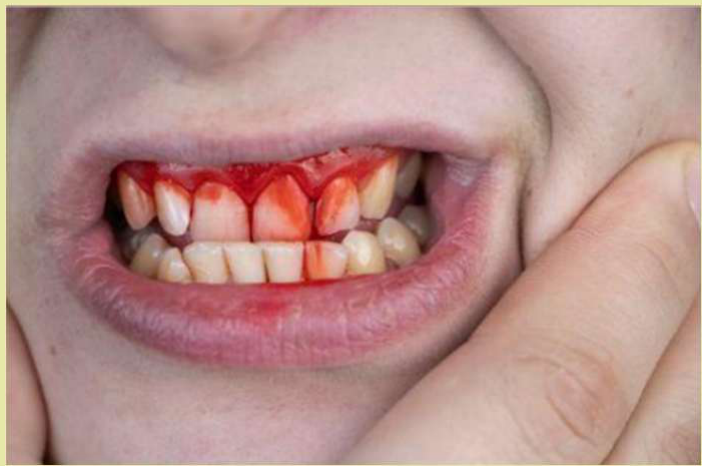
You’ve just performed a scale and clean, but your patient is continuing to ooze…
“I didn’t think the gingivitis was that bad!”
“I didn’t think I was any more traumatic than usual!”
… what could be wrong?
Lecturer — Possible Causes
Persistent oozing after apparently limited gingivitis or trauma may indicate an underlying bleeding disorder.
- The problem may involve platelet number or function.
- It may involve the coagulation cascade, a vascular disorder, or a medical condition or medication affecting haemostasis.
Physiology of Haemostasis5
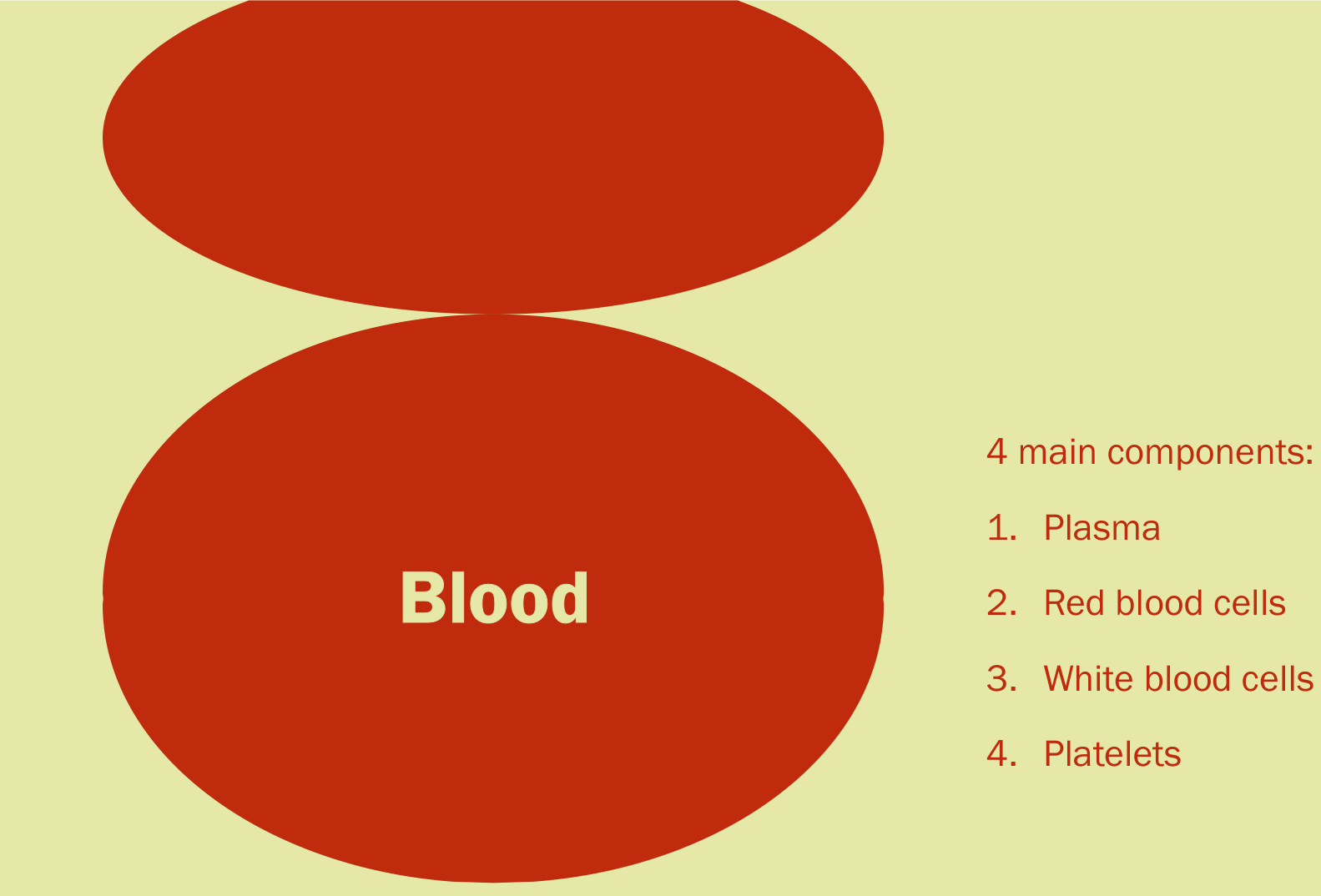
Blood Components
4 main components:
- Plasma
- Red blood cells
- White blood cells
- Platelets
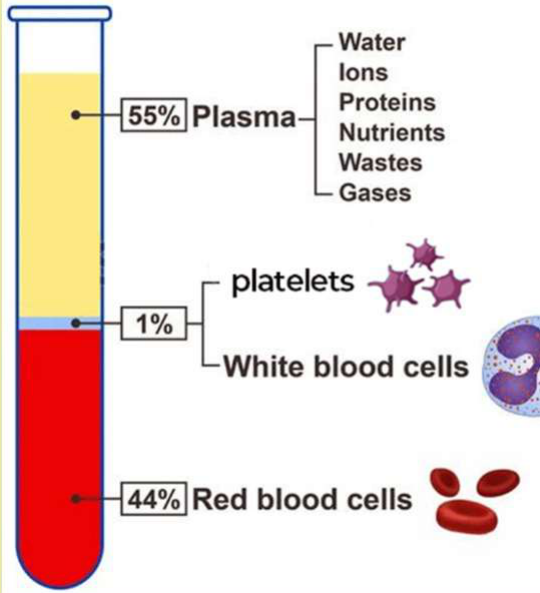
Composition of Blood6
- 55% Plasma
- Water
- Ions
- Proteins
- Nutrients
- Wastes
- Gases
- 1% Platelets and white blood cells
- 44% Red blood cells
 |  |
 |
Overview of Haemostasis7
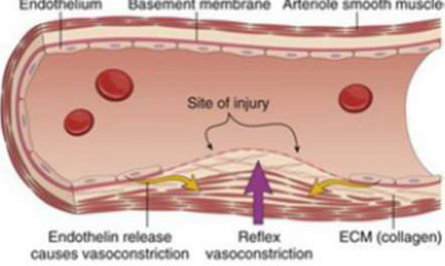
- Vasoconstriction = Vessel wall contraction
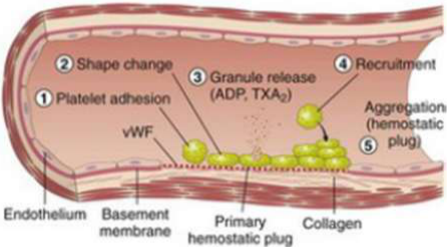
- Platelet aggregation (primary haemostasis) = Formation of platelet plug
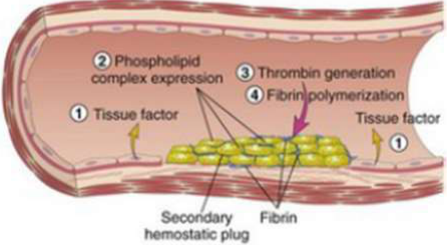
- Coagulation (secondary haemostasis) = Formation of fibrin clot
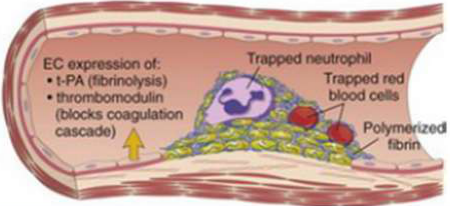
- Antithrombotic counter-regulation = Limit haemostatic process to site of injury
Kumar V, Abbas AK, Aster JC, Robbins SL, Perkins JA, ProQuest. Robbins basic pathology. 9th ed. Philadelphia: Elsevier/Saunders; 2013.
Lecturer — Endothelial Regulation
Endothelial cells are central regulators of haemostasis.
- The balance between prothrombotic and antithrombotic activity determines thrombus formation, propagation, and eventual dissolution.
- Intact endothelial cells help maintain blood flow by expressing regulatory factors.
- Following injury or activation, tissue factor and other procoagulant factors are upregulated while anticoagulant factors are downregulated.
- Loss of endothelial integrity exposes subendothelial von Willebrand factor and basement membrane collagen, initiating platelet adhesion, activation, and aggregation.
 |  |
 |  |
Vasoconstriction
Favour Thrombosis8
- Exposure of membrane-bound tissue factor (extrinsic coagulation sequence)
- Collagen
- vWF
- Platelet adhesion (held together by fibrinogen)
- Thrombin
Lecturer — Procoagulant Shift
Injury shifts endothelial activity towards a procoagulant state. Tissue factor expression increases, while exposed von Willebrand factor and collagen favour platelet adhesion and initiation of coagulation.
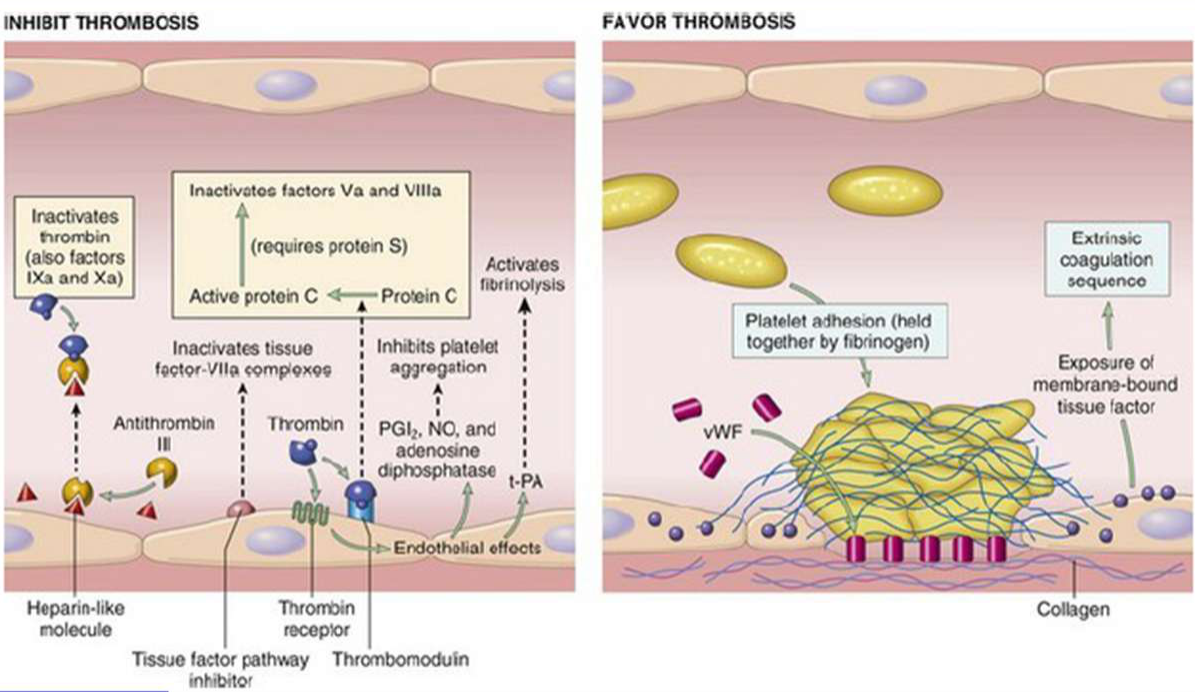
Inhibit Thrombosis
Endothelial effects:
- PGI2, NO, and adenosine diphosphatase — inhibit platelet aggregation
- Heparin-like molecule — inactivates thrombin (also factors IXa and Xa) via antithrombin III
- Thrombomodulin — active protein C (requires protein S), inactivates factors Va and VIIIa
- Tissue factor pathway inhibitor — inactivates tissue factor-VIIa complexes
- t-PA — activates fibrinolysis
Primary Haemostasis: Platelets9
- Platelet adhesion
- Platelet activation
- Platelet aggregation
Lecturer — Platelet Activation
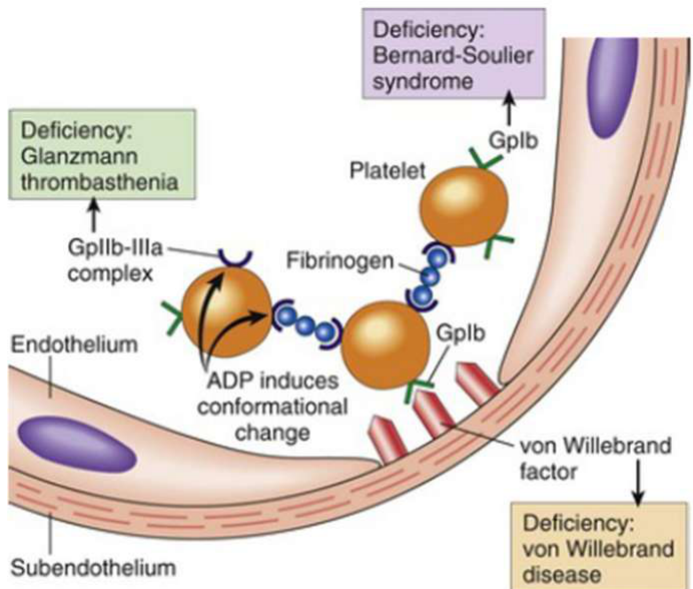
Adhesion activates platelets and triggers secretion of granule contents, including calcium and ADP.
- ADP mediates further platelet activation.
- Platelets change shape and membrane composition, and additional glycoprotein receptors become activated.
- Activated platelets cross-link through fibrinogen, helping cement the platelet plug in place.
Figure 3–7 Platelet adhesion and aggregation. Von Willebrand factor functions as an adhesion bridge between subendothelial collagen and the glycoprotein Ib (GpIb) platelet receptor. Platelet aggregation is accomplished by fibrinogen binding to platelet GpIIb-IIIa receptors on different platelets. Congenital deficiencies in the various receptors or bridging molecules lead to the diseases indicated in the colored boxes. ADP, adenosine diphosphate.
Secondary Haemostasis: Coagulation10
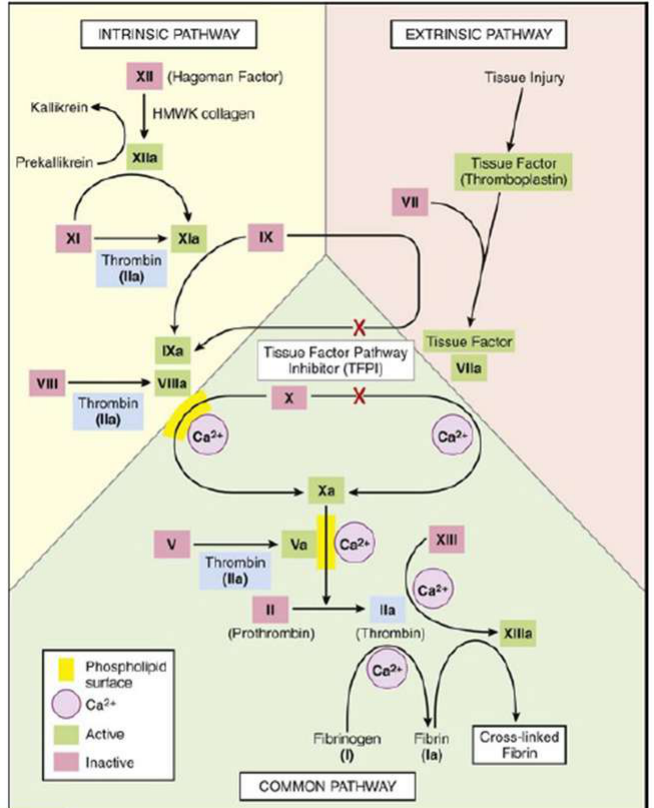
Coagulation cascade
Lecturer — Coagulation Pathways
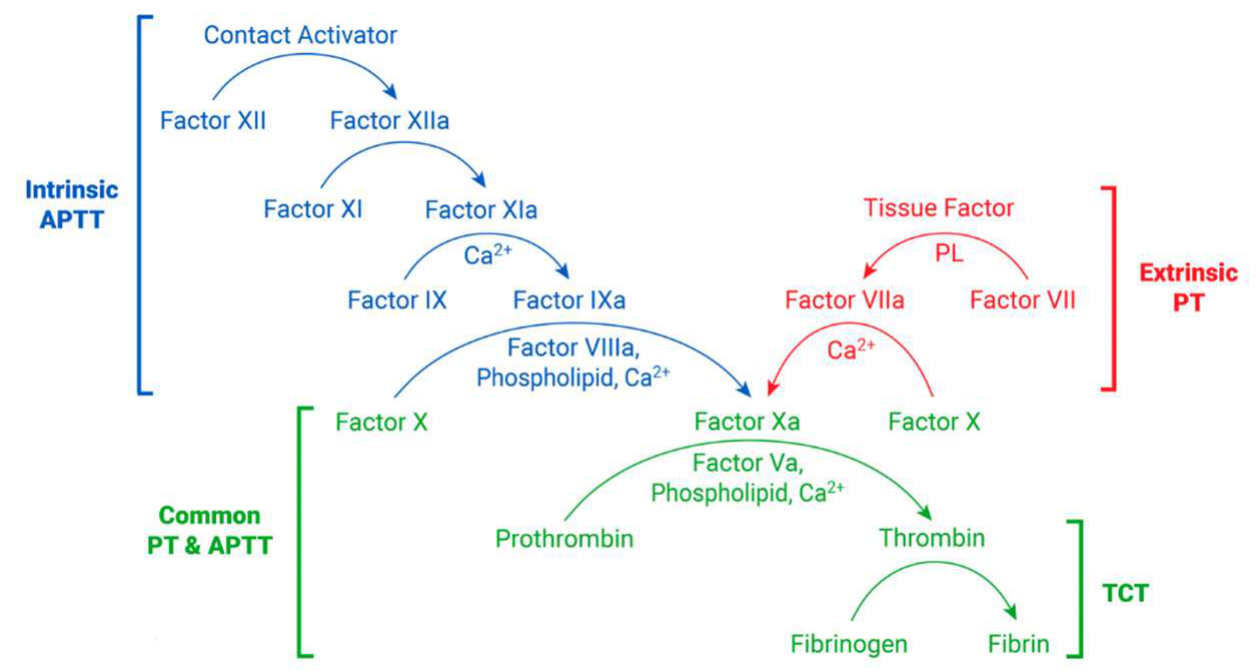
Coagulation follows platelet plug formation and involves sequential enzymatic conversion of circulating and locally synthesised precursor proteins.
- The traditional extrinsic and intrinsic pathways converge at activation of factor X.
- This division is partly an artefact of earlier in-vitro testing because the pathways have several interconnections.
- In the final stage, thrombin converts fibrinogen into insoluble fibrin, which contributes to formation of the definitive haemostatic plug.
Antithrombotic Counter-Regulation11
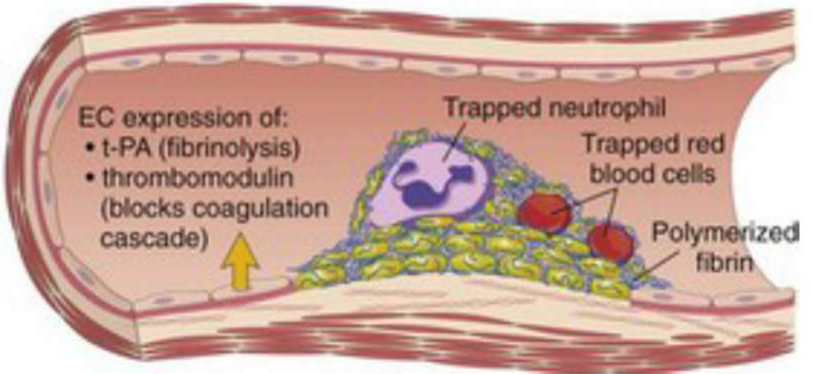
EC expression of:
- t-PA (fibrinolysis)
- thrombomodulin (blocks coagulation cascade)
Trapped neutrophil, trapped red blood cells, polymerized fibrin
Clinical Red Flags12
Red Flags (Clinical Manifestations)13
-
Medical history – any disorders of haemostasis listed?
-
Medications
-
Family history
-
Easy bruising, large superficial bruises
-
Prolonged bleeding from cuts or surgery
-
Frequent nosebleeds (epistaxis)
-
Heavy periods (menorrhagia)
-
Blood in stool or urine (GI bleed, haematuria)
-
Internal bleeding (joints, muscles)
-
Antithrombotic medication should be specifically sought in the medication history.
-
Prolonged bleeding may follow trauma as well as cuts or surgery.
-
Bleeding into joints is termed haemarthrosis.
Lecturer — Assessing Bleeding Risk
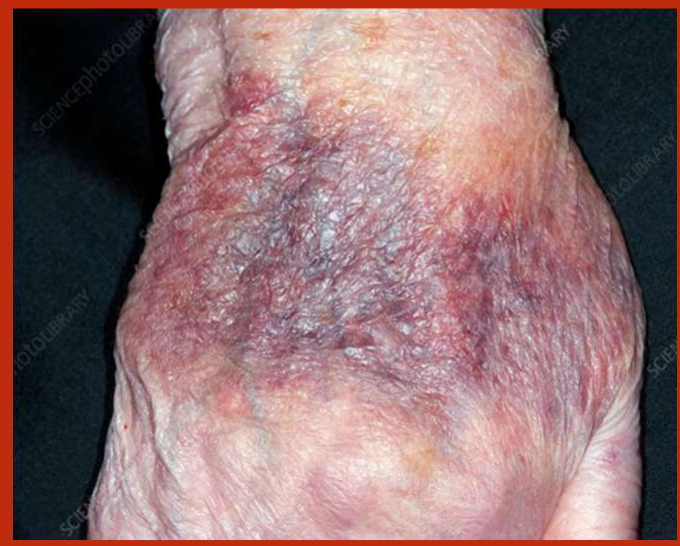
Large bruises may indicate increased bleeding risk, particularly in an elderly patient taking warfarin.
- The whole patient should be examined rather than looking only at the face.
Disorders of Haemostasis14
Classification of Haemostatic Disorders15
-
Abnormal platelet count or function (bleeding)
- Congenital
- Acquired disease
- Drugs
-
Abnormal clotting mechanism (coagulation)
- Congenital
- Acquired disease
- Drugs
-
Vascular disease
Abnormal Platelet Function16
Congenital:
- vWD (vWF facilitates platelet adhesion)
- Idiopathic thrombocytopenic purpura (ITP)
- Haemolytic uraemic syndrome (HUS)
- Thrombotic Thrombocytopenic purpura (TTP)
- Glanzmann Disease (Glanzmann Thrombasthenia)
- Bernard-Soulier Syndrome
Lecturer — Inherited Platelet Disorders
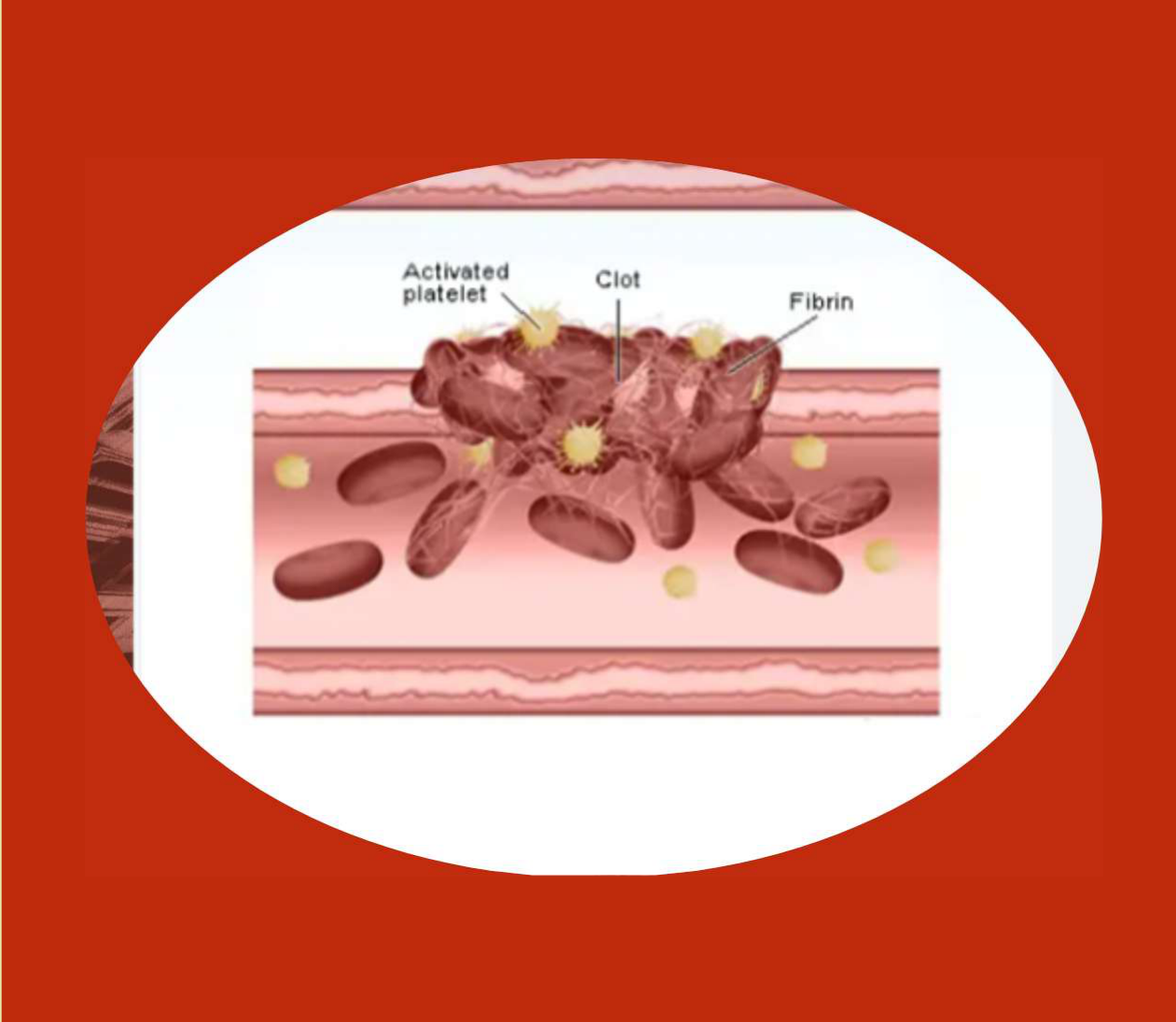
Haemolytic uraemic syndrome involves small-vessel wall damage, deposition of fibrin and platelets, and haemolysis.
- Thrombotic thrombocytopenic purpura can affect any tissue, most frequently the brain.
- Glanzmann disorder is a rare autosomal recessive disorder involving abnormal platelet glycoprotein receptors, defective platelet aggregation and subsequent bleeding.
- Bernard-Soulier syndrome is associated with large platelets.
Acquired:
- Renal failure
- Bone marrow disease: aplastic anaemia, metastatic disease, myeloproliferative disease, myelodysplastic syndromes, haematological oncology (multiple myeloma / leukaemia / lymphoma), transiently after BMT
- Viral infection: HIV, CMV, rubella, parvovirus B19, EBV
- Autoimmune: systemic lupus erythematosus, Felty syndrome, antiphospholipid syndrome
Lecturer — Viral Platelet Effects
Viral infections can affect platelets through several mechanisms.
- Immune destruction or antiviral antibodies cross-reacting with platelets.
- Direct platelet consumption through binding to viral particles.
- Bone marrow suppression caused by the virus.
- Inflammatory responses, including interferon release.
Drugs:
- Aspirin, clopidogrel, ticagrelor, prasugrel, etc
- Chemotherapy
- Drugs affecting CNS (carbamazepine, SSRIs)
Abnormal Coagulation
Congenital:
- vWD (vWF binds FVIII)
- Haemophilia A, B, C + Factor Deficiencies
- Fibrinogen disorders
Acquired:
- Liver disease
- Vitamin K Deficiency and Malabsorption
- Acquired Haemophilia
- Disseminated Intravascular Coagulation (DIC)
Lecturer — Coagulation Causes
Liver disease can cause coagulation problems because the liver produces coagulation factors.
- Acquired causes also include vitamin K deficiency, malabsorption and anticoagulant drugs.
Drugs:
- Heparin
- Vitamin K Antagonists
- DOACs
Vascular Disease
- Marfan Syndrome
- Vascular Ehlers-Danlos Syndrome
- Osler-Weber-Rendu Syndrome (Hereditary Haemorrhagic Telangiectasia - HHT)
Lecturer — Vascular Bleeding
Vascular causes of bleeding include connective tissue disorders and fragile or defective blood vessels.
Platelet Disorders
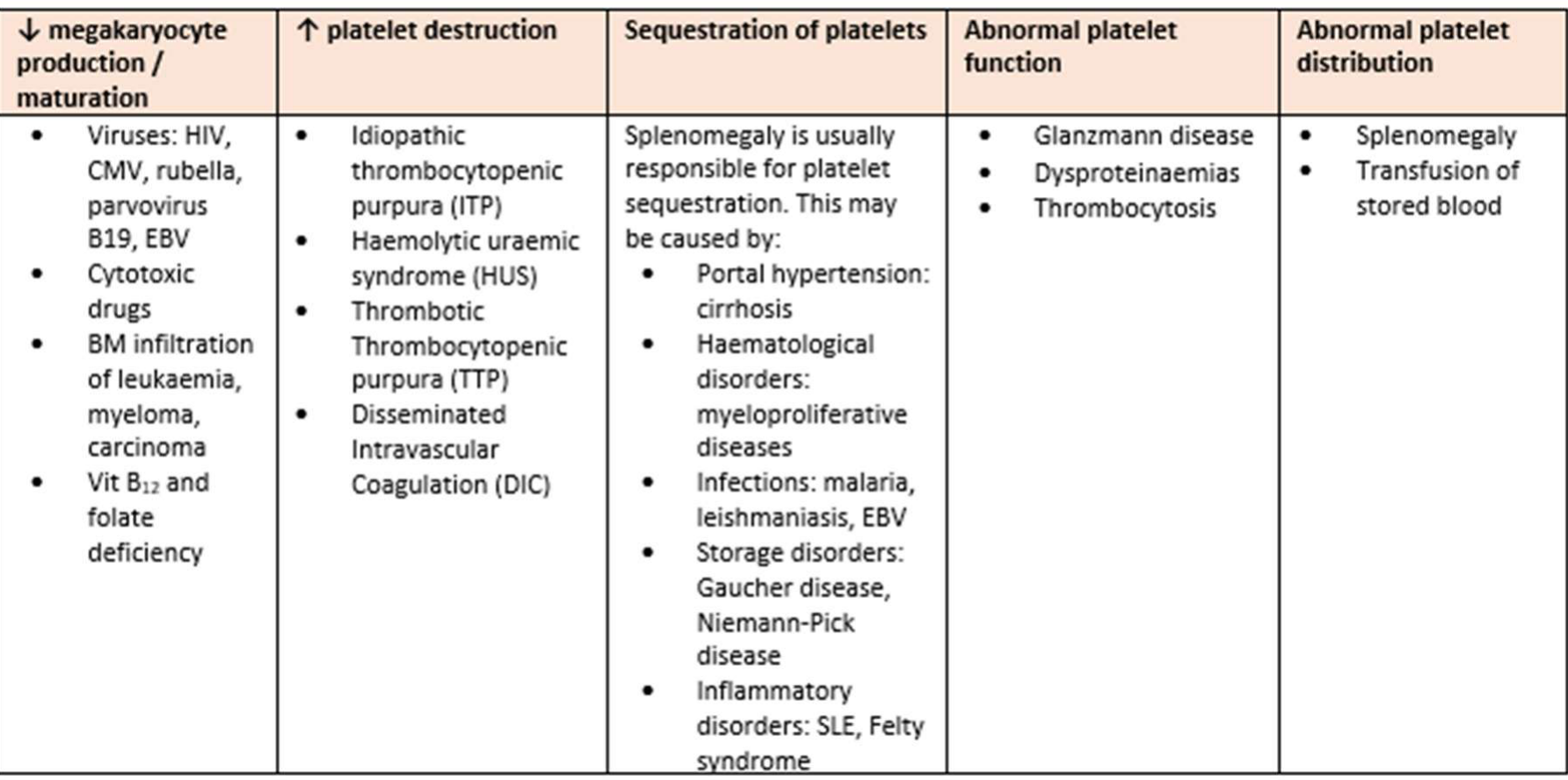
Decreased Megakaryocyte Production / Maturation17
- Viruses: HIV, CMV, rubella, parvovirus B19, EBV
- Cytotoxic drugs
- BM infiltration of leukaemia, myeloma, carcinoma
- Vit B12 and folate deficiency
Increased Platelet Destruction
- Idiopathic thrombocytopenic purpura (ITP)
- Haemolytic uraemic syndrome (HUS)
- Thrombotic Thrombocytopenic purpura (TTP)
- Disseminated Intravascular Coagulation (DIC)
Sequestration of Platelets
Splenomegaly is usually responsible for platelet sequestration. This may be caused by:
- Portal hypertension: cirrhosis
- Haematological disorders: myeloproliferative diseases
- Infections: malaria, leishmaniasis, EBV
- Storage disorders: Gaucher disease, Niemann-Pick disease
- Inflammatory disorders: SLE, Felty syndrome
Abnormal Platelet Function
Lecturer — Platelet Function
Platelet disorders are not limited to platelet count; platelet function may be abnormal even when the platelet count itself is not the main problem.
- As a general rule, acquired platelet abnormalities tend to affect platelet number, whereas inherited abnormalities tend to affect platelet function.
- Glanzmann disease
- Dysproteinaemias
- Thrombocytosis
Abnormal Platelet Distribution
- Splenomegaly
- Transfusion of stored blood
Investigations and General Management18
Clinical Laboratory Tests19
-
Full blood count (platelet count c.f. function)
-
Activated partial thromboplastin time (APTT): estimates activity of the intrinsic pathway proteins (factors XII, XI, IX, VIII, X, V, II and fibrinogen)
-
Prothrombin time (PT): estimates activity of the extrinsic pathway proteins (factors VII, X, V, II and fibrinogen)
-
Thrombin time (TT) / Thrombin Clotting Time (TCT): evaluates the final stage of the coagulation pathway – conversion of fibrinogen to fibrin via thrombin
-
Factor VII is vitamin K dependent, so prothrombin time can help guide treatment in patients taking vitamin K antagonists such as warfarin.
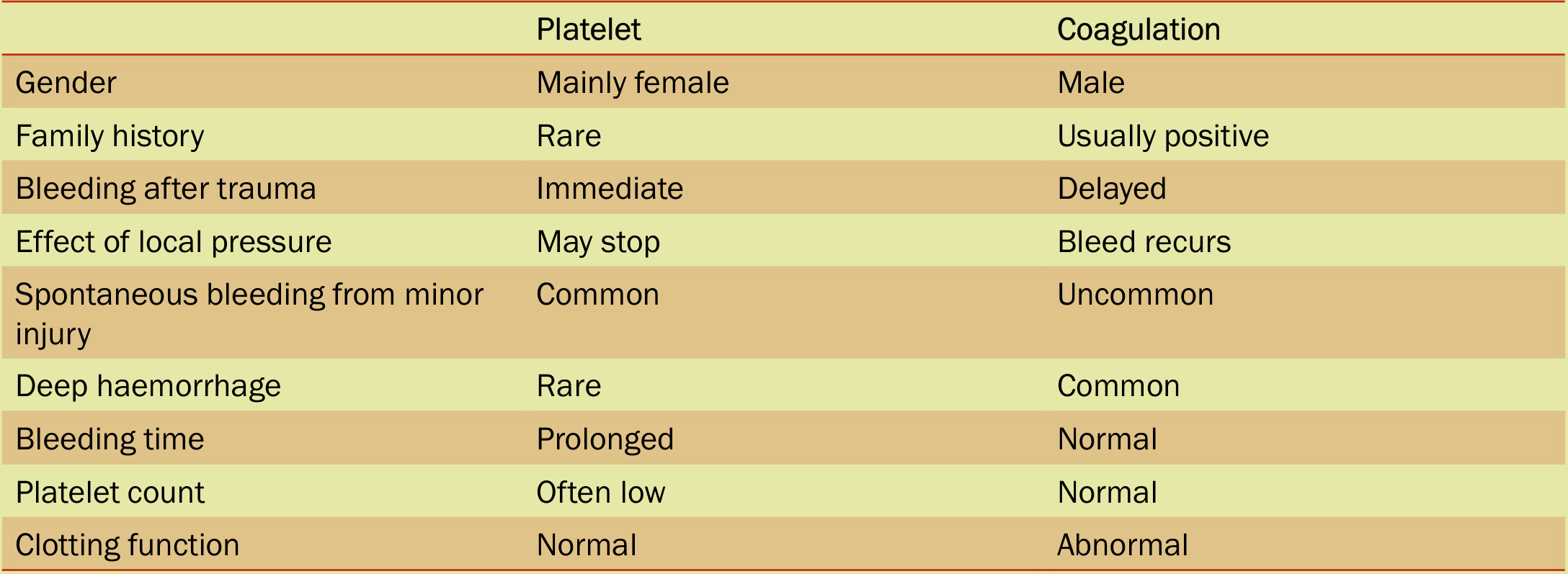
Platelet Versus Coagulation Disorders20
| Platelet | Coagulation | |
|---|---|---|
| Gender | Mainly female | Male |
| Family history | Rare | Usually positive |
| Bleeding after trauma | Immediate | Delayed |
| Effect of local pressure | May stop | Bleed recurs |
| Spontaneous bleeding from minor injury | Common | Uncommon |
| Deep haemorrhage | Rare | Common |
| Bleeding time | Prolonged | Normal |
| Platelet count | Often low | Normal |
| Clotting function | Normal | Abnormal |
Lecturer — Coagulation Patterns
Many coagulation disorders affect males more often because of the inheritance pattern of many coagulation disorders.
- Coagulation disorders may cause recurrent bleeding because a permanent clot cannot form properly.
- Coagulation disorders commonly cause bleeding into muscles or joints.
General Management Options21
- Routine blood tests for monitoring
- Drugs: corticosteroids, immunosuppressants, monoclonal antibodies
- Management of splenic, renal or hepatic underlying cause
- Thrombopoietin therapy
- Coagulation factor replacement therapy, desmopressin (DDAVP), tranexamic acid, emicizumab
- Platelet transfusions
- Chemotherapy
- Haematopoietic stem cell transplant / bone marrow transplant
Lecturer — Management Principles
Management targets the defective part of the haemostatic process.
- Chemotherapy may be used for immune-mediated conditions.
- The severity of management depends on the diagnosis and the severity of the disorder.
Dental Implications and Treatment Considerations22
Assessing Peri-Procedural Bleeding Risk
-
Many patients can receive most of their dental treatment in a general dental practice after careful assessment of peri-procedural bleeding risk, and planning.
-
Most dental procedures pose a relatively minor bleeding risk compared with extensive surgery elsewhere in the body.
Referral to Dental Specialist23
- Higher-risk procedure planned for patients with impaired haemostasis
- Higher severity of the patient’s condition impairing haemostasis
- Clinician does not feel comfortable administering the haemostatic measures required
Considerations24
-
The practitioner’s ability to achieve haemostasis (control of bleeding)
-
The likelihood of the procedure causing prolonged bleeding (procedural and patient factors)
-
The clinical consequence of bleeding, should it occur
-
Bleeding risk is dynamic and may change with the stage of chemotherapy, disease control, recent transfusion or factor replacement, and recently commenced treatment for the bleeding disorder; reassess it before each procedure.
Goals of Consultation
To determine:
- Appropriate investigations
- Additional haemostasis measures required
- Most appropriate setting for treatment
Assess risk: (1) Procedure, (2) Patient
Dental Procedural Factors252627
Scottish Dental Clinical Effectiveness Programme – 2nd Ed March 2022
https://www.sdcep.org.uk/published-guidance/anticoagulants-and-antiplatelets/
- Unlikely to cause prolonged bleeding
- Likely to cause prolonged bleeding
- Lower-risk invasive procedures
- Higher-risk invasive procedures
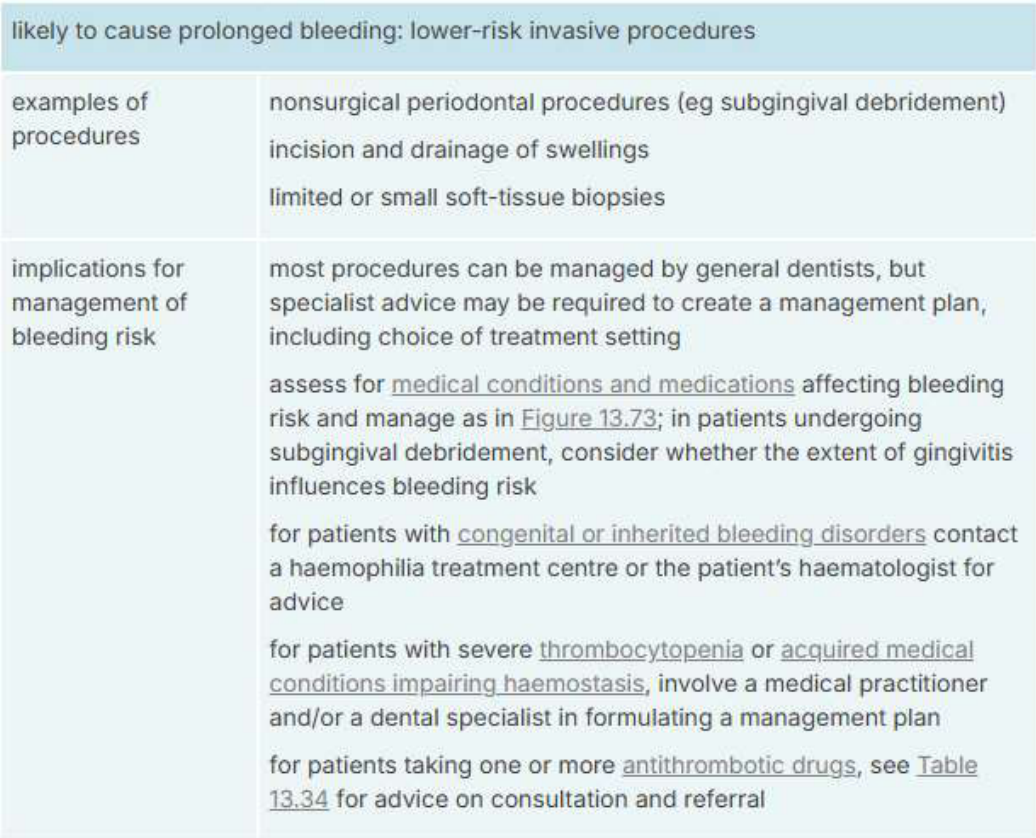 | 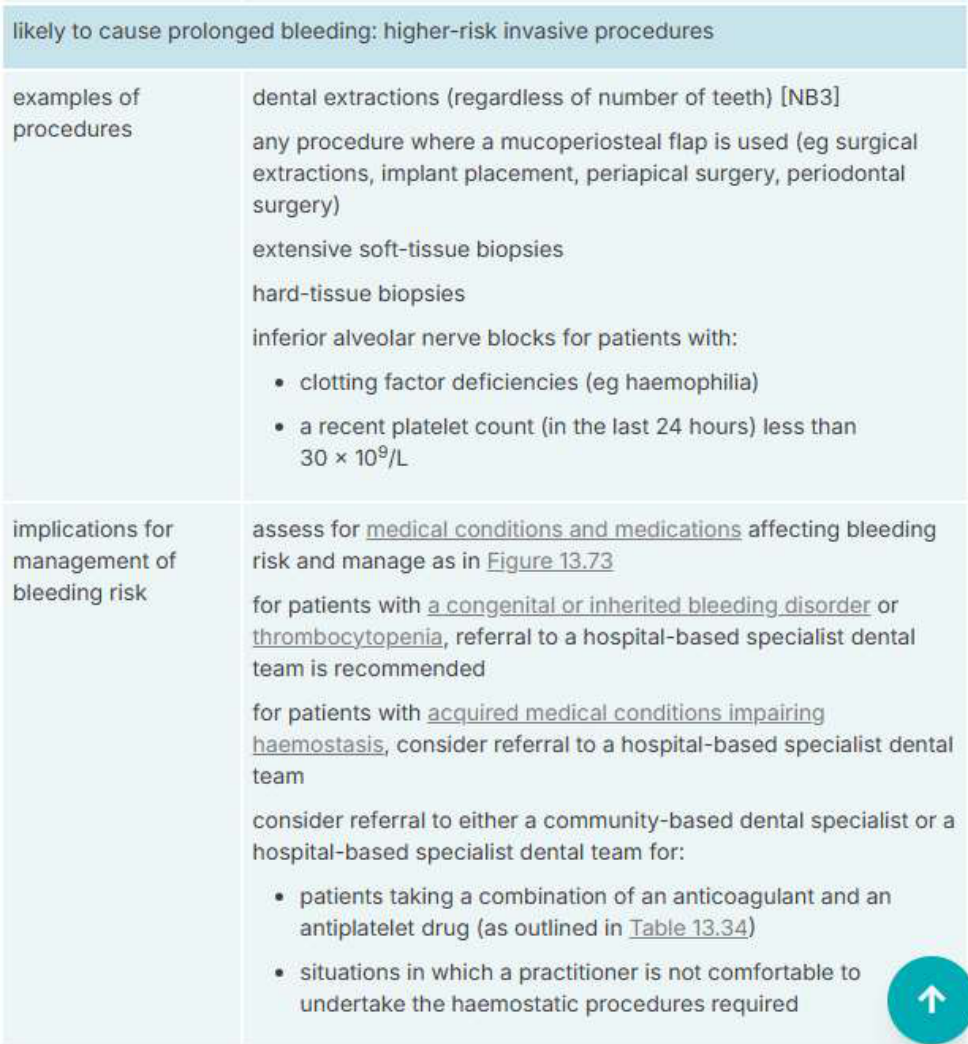 |
Table 1: Bleeding Risks for Dental Procedures28
| Unlikely to cause bleeding | Likely to cause bleeding (low risk of post-operative bleeding complications) | Likely to cause bleeding (higher risk of post-operative bleeding complications) |
|---|---|---|
| Local anaesthesia by infiltration, intraligamentary or mental nerve block^a^ | Simple extractions^c^ (1–3 teeth, with restricted wound size) | Complex extractions,^d^ adjacent extractions that will cause a large wound or more than 3 extractions at once |
| Local anaesthesia by inferior dental block or other regional nerve blocks^a,b^ | Incision and drainage of intra-oral swellings | Flap raising procedures^f^ including: |
| Basic periodontal examination (BPE)^c^ | Detailed six-point full periodontal examination | - Elective surgical extractions |
| Supragingival removal of plaque, calculus and stain | Root surface debridement (RSD) | - Periodontal surgery |
| Direct or indirect restorations with supragingival margins | Direct or indirect restorations with subgingival margins | - Preprosthetic surgery |
| Endodontics – orthograde | - Periradicular surgery | |
| Impressions and other prosthetics procedures | - Crown lengthening | |
| Fitting and adjustment of orthodontic appliances | - Dental implant surgery | |
| Gingival recontouring^f^ | ||
| Biopsies^f^ |
^a^ Local anaesthesia should be delivered using an aspirating syringe and should include a vasoconstrictor, unless contraindicated. Note that other methods of local anaesthetic delivery are preferred over regional nerve blocks, whether the patient is taking an anticoagulant or not.
^b^ There is no evidence to suggest that an inferior dental block performed on an anticoagulated patient poses a significant risk of bleeding. However, for patients taking warfarin, if there are any indications that the patient has an unstable INR (see Section 6), or other signs of excessive anticoagulation, an INR should be requested before the procedure to ensure <4 before proceeding.
^c^ Although a BPE can result in some bleeding from gingival margins, this is considered extremely unlikely to lead to complications.
^d^ Simple extractions refers to those that are expected to be straightforward without surgical complications.
^e^ Complex extractions refers to those that may be likely to have surgical complications.
^f^ Consideration should be given to the extent and invasiveness of the individual procedure. Some may be less invasive and could be treated as low risk.
Therapeutic Guidelines v4 [retrieved April 2026] – Table 13.30
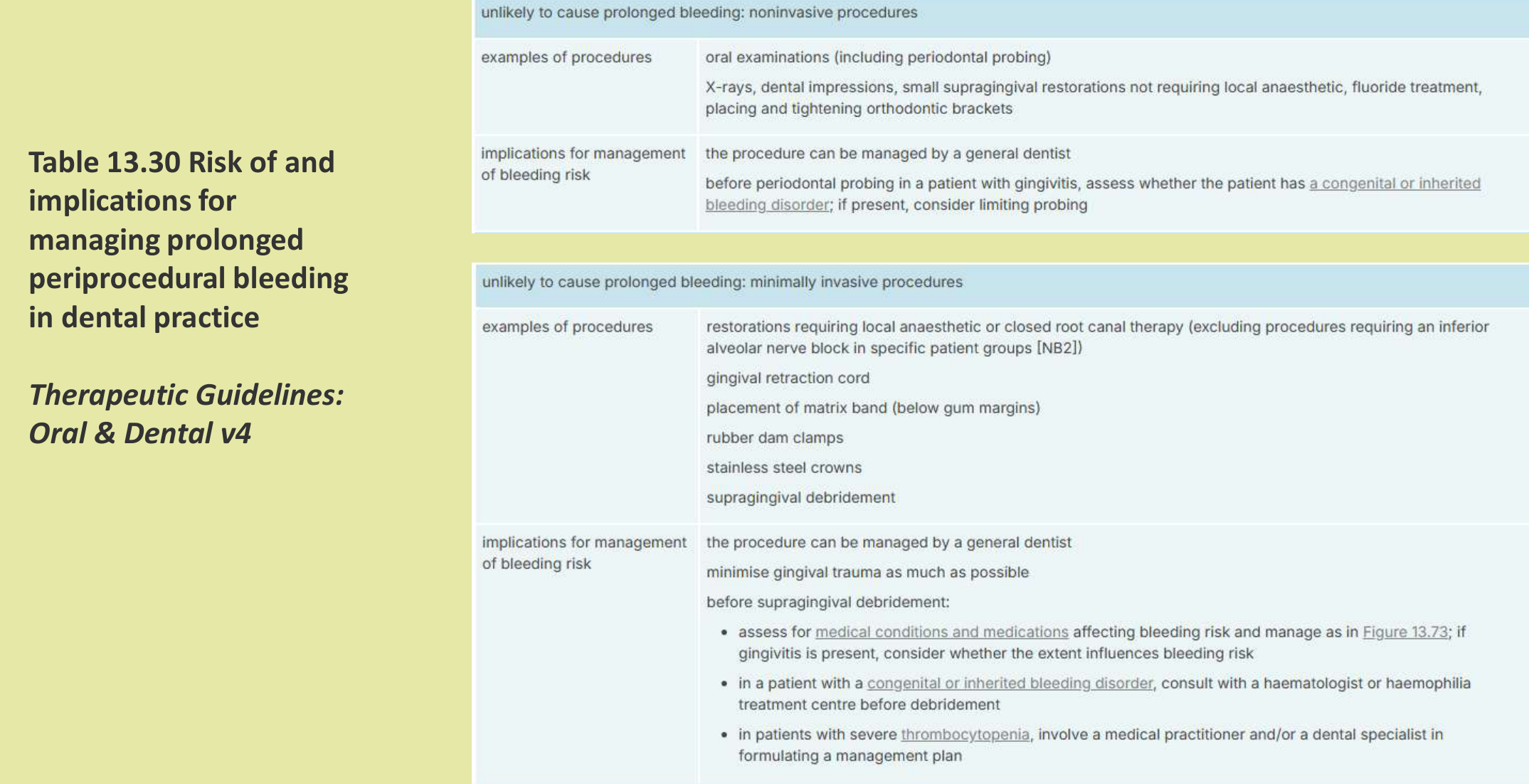
- Unlikely to cause prolonged bleeding
- Non-invasive procedures
- Minimally invasive procedures
- Likely to cause prolonged bleeding
- Lower-risk invasive procedures
- Higher-risk invasive procedures
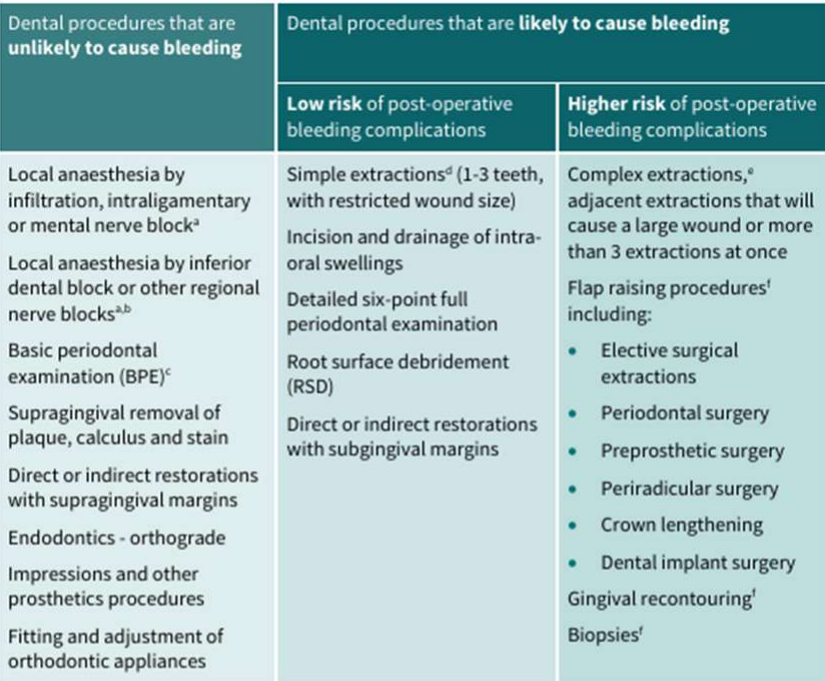
Table 13.30: Risk of and Implications for Managing Prolonged Periprocedural Bleeding in Dental Practice29
Therapeutic Guidelines: Oral & Dental v4
Unlikely to cause prolonged bleeding: non-invasive procedures
- Examples of procedures: oral examinations (including periodontal probing); X-rays, dental impressions, small supragingival restorations not requiring local anaesthetic, fluoride treatment, placing and tightening orthodontic brackets
- Implications for management of bleeding risk: the procedure can be managed by a general dentist; before periodontal probing in a patient with gingivitis, assess whether the patient has a congenital or inherited bleeding disorder; if present, consider limiting probing
Unlikely to cause prolonged bleeding: minimally invasive procedures
- Examples of procedures: restorations requiring local anaesthetic or closed root canal therapy (excluding procedures requiring an inferior alveolar nerve block in specific patient groups [NB2]); gingival retraction cord; placement of matrix band (below gum margins); rubber dam clamps; stainless steel crowns; supragingival debridement
- Implications for management of bleeding risk:
- The procedure can be managed by a general dentist; minimise gingival trauma as much as possible
- Before supragingival debridement:
- Assess for medical conditions and medications affecting bleeding risk and manage as in Figure 13.73; if gingivitis is present, consider whether the extent influences bleeding risk
- In a patient with a congenital or inherited bleeding disorder, consult with a haematologist or haemophilia treatment centre before debridement
- In patients with severe thrombocytopenia, involve a medical practitioner and/or a dental specialist in formulating a management plan
Therapeutic Guidelines: Oral & Dental v4
Likely to cause prolonged bleeding: lower-risk invasive procedures
- Examples of procedures: nonsurgical periodontal procedures (e.g. subgingival debridement); incision and drainage of swellings; limited or small soft-tissue biopsies
- Implications for management of bleeding risk:
- Most procedures can be managed by general dentists, but specialist advice may be required to create a management plan, including choice of treatment setting
- Assess for medical conditions and medications affecting bleeding risk and manage as in Figure 13.73; in patients undergoing subgingival debridement, consider whether the extent of gingivitis influences bleeding risk
- For patients with congenital or inherited bleeding disorders, contact a haemophilia treatment centre or the patient’s haematologist for advice
- For patients with severe thrombocytopenia or acquired medical conditions impairing haemostasis, involve a medical practitioner and/or a dental specialist in formulating a management plan
- For patients taking one or more antithrombotic drugs, see Table 13.34 for advice on consultation and referral
Likely to cause prolonged bleeding: higher-risk invasive procedures
- Examples of procedures:
- Dental extractions (regardless of number of teeth) [NB3]
- Any procedure where a mucoperiosteal flap is used (e.g. surgical extractions, implant placement, periapical surgery, periodontal surgery)
- Extensive soft-tissue biopsies
- Hard-tissue biopsies
- Inferior alveolar nerve blocks for patients with:
- Clotting factor deficiencies (e.g. haemophilia)
- A recent platelet count (in the last 24 hours) less than 30 × 10⁹/L
- Implications for management of bleeding risk:
- Assess for medical conditions and medications affecting bleeding risk and manage as in Figure 13.73
- For patients with a congenital or inherited bleeding disorder or thrombocytopenia, referral to a hospital-based specialist dental team is recommended
- For patients with acquired medical conditions impairing haemostasis, consider referral to a hospital-based specialist dental team
- Consider referral to either a community-based dental specialist or a hospital-based specialist dental team for:
- Patients taking a combination of an anticoagulant and an antiplatelet drug (as outlined in Table 13.34)
- Situations in which a practitioner is not comfortable to undertake the haemostatic procedures required
Lecturer — Inferior Alveolar Blocks
Inferior alveolar nerve blocks may be problematic because of the risk of a haematoma in the pharyngeal spaces.
- Alternative anaesthesia, such as infiltration with articaine, may be considered when adequate.
- Periodontal ligament infiltrations may also require caution compared with injections into the mucosa.
Patient Factors3031
- Assess the patient’s capacity to provide an accurate medical history and adhere to post-op requirements
Haemostasis Points in History Taking32
- Conditions and medications (including herbal, OTC)
- Previous bleeding episodes following dental procedures, and management required
- Family history of prolonged bleeding or bleeding disorders
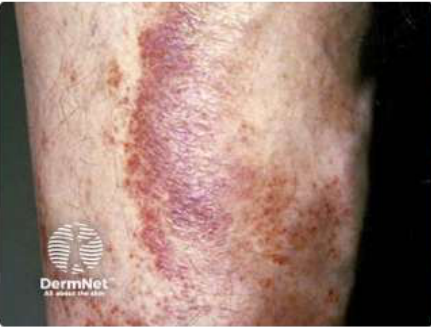
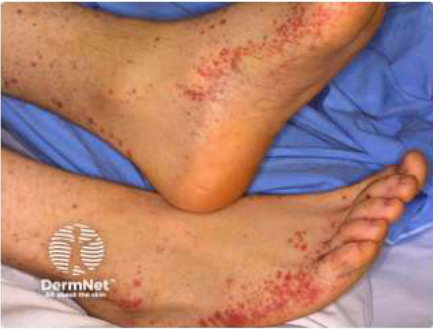
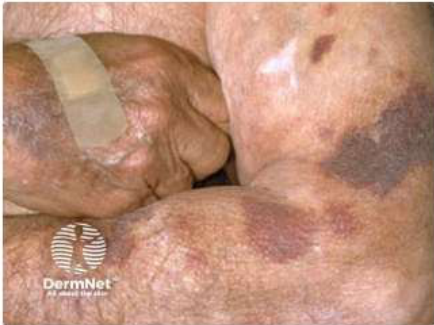
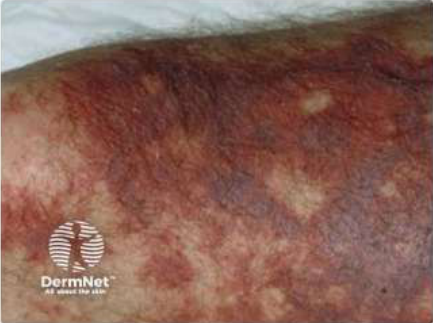
- Extent of any recent excessive bleeding (esp. if jaundice, purpura)
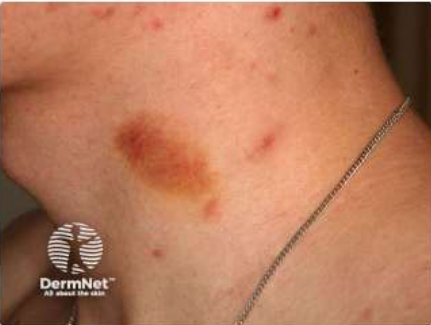
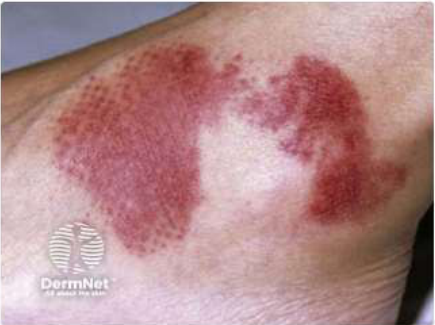
https://dermnetnz.org/topics/purpura
Lecturer — Purpura Features
Purpura is discoloration of skin or mucous membranes caused by bleeding from small vessels.
- It may range from petechiae, which are pinprick lesions, to ecchymoses, which are larger bruises.
- Extravasated blood may change colour over several weeks, from purple to orange, brown or blue-green.
- Confirm history with patient’s medical practitioner
- If possible, address any patient risk factors before elective dental procedures
- Bleeding risk is dynamic! Reassess before each procedure
 |  |  |
 |  |  |
Medical Conditions33
Scottish Dental Clinical Effectiveness Programme – 2nd Ed March 2022
https://www.sdcep.org.uk/published-guidance/anticoagulants-and-antiplatelets/
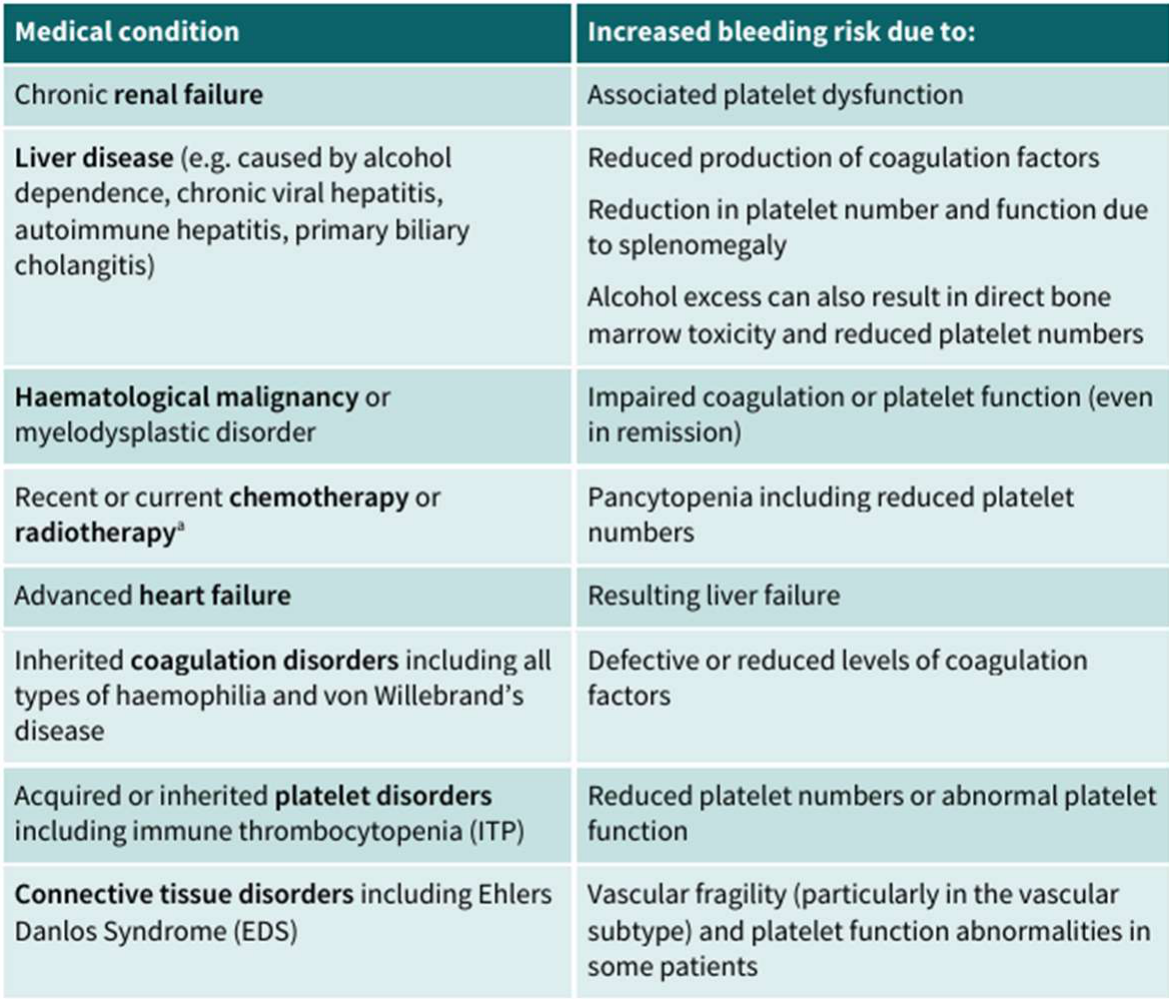
| Medical condition | Increased bleeding risk due to: |
|---|---|
| Chronic renal failure | Associated platelet dysfunction |
| Liver disease (e.g. caused by alcohol dependence, chronic viral hepatitis, autoimmune hepatitis, primary biliary cholangitis) | Reduced production of coagulation factors; reduction in platelet number and function due to splenomegaly; alcohol excess can also result in direct bone marrow toxicity and reduced platelet numbers |
| Haematological malignancy or myelodysplastic disorder | Impaired coagulation or platelet function (even in remission) |
| Recent or current chemotherapy or radiotherapy^a^ | Pancytopenia including reduced platelet numbers |
| Advanced heart failure | Resulting liver failure |
| Inherited coagulation disorders including all types of haemophilia and von Willebrand’s disease | Defective or reduced levels of coagulation factors |
| Acquired or inherited platelet disorders including immune thrombocytopenia (ITP) | Reduced platelet numbers or abnormal platelet function |
| Connective tissue disorders including Ehlers Danlos Syndrome (EDS) | Vascular fragility (particularly in the vascular subtype) and platelet function abnormalities in some patients |
Lecturer — Combined Medical Conditions
Multiple conditions may act synergistically by affecting coagulation, platelet count, and platelet function. A hospital-based specialist and the patient’s medical practitioner may need to help formulate a management plan for higher-risk procedures.
^a^ Have received chemotherapy less than three months ago, or total body irradiation less than six months ago.
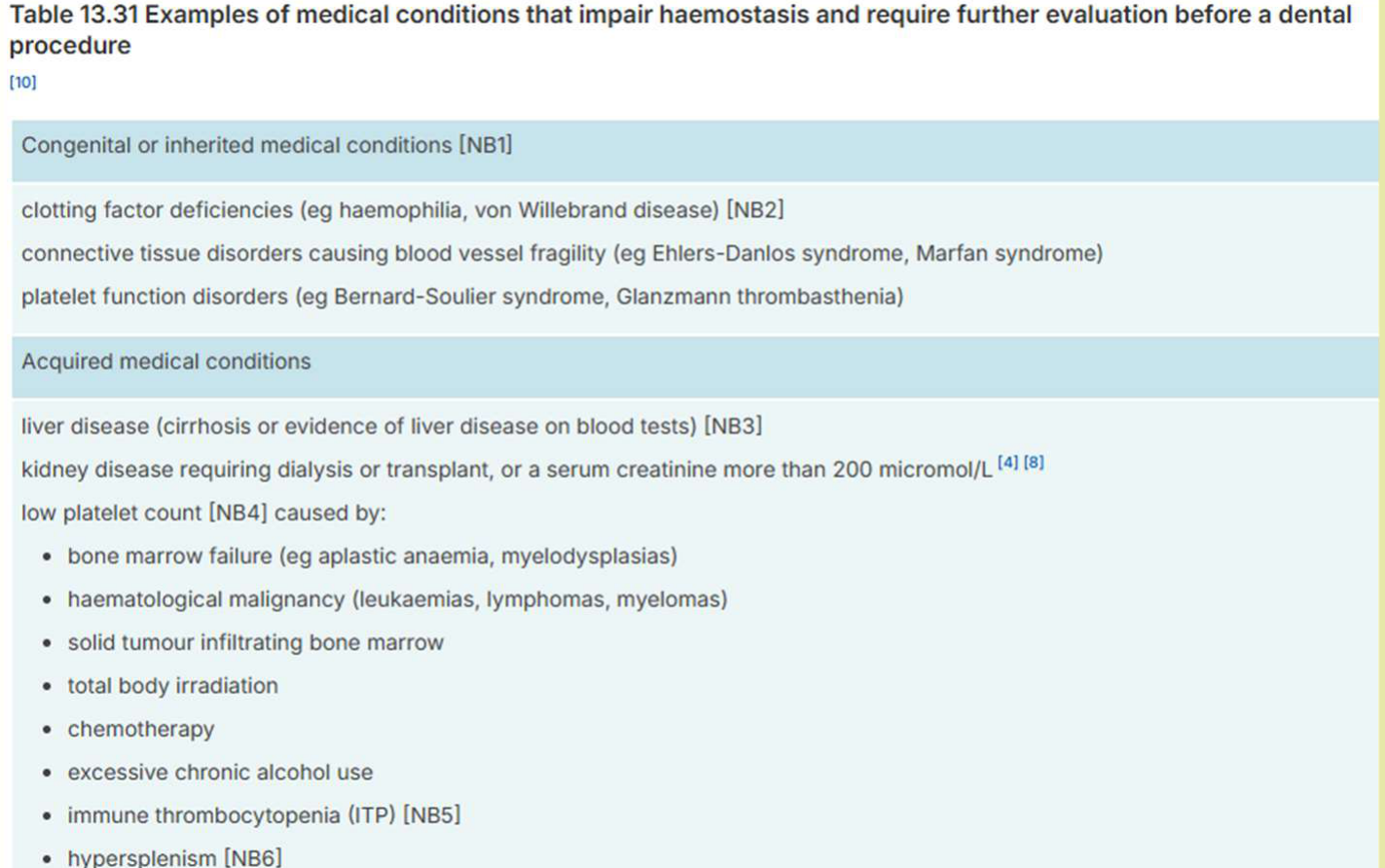
Congenital or inherited medical conditions [NB1]
- Clotting factor deficiencies (e.g. haemophilia, von Willebrand disease) [NB2]
- Connective tissue disorders causing blood vessel fragility (e.g. Ehlers-Danlos syndrome, Marfan syndrome)
- Platelet function disorders (e.g. Bernard-Soulier syndrome, Glanzmann thrombasthenia)
Acquired medical conditions
- Liver disease (cirrhosis or evidence of liver disease on blood tests) [NB3]
- Kidney disease requiring dialysis or transplant, or a serum creatinine more than 200 micromol/L [4] [8]
- Low platelet count [NB4] caused by:
- Bone marrow failure (e.g. aplastic anaemia, myelodysplasias)
- Haematological malignancy (leukaemias, lymphomas, myelomas)
- Solid tumour infiltrating bone marrow
- Total body irradiation
- Chemotherapy
- Excessive chronic alcohol use
- Immune thrombocytopenia (ITP) [NB5]
- Hypersplenism [NB6]
Patient Medications3435
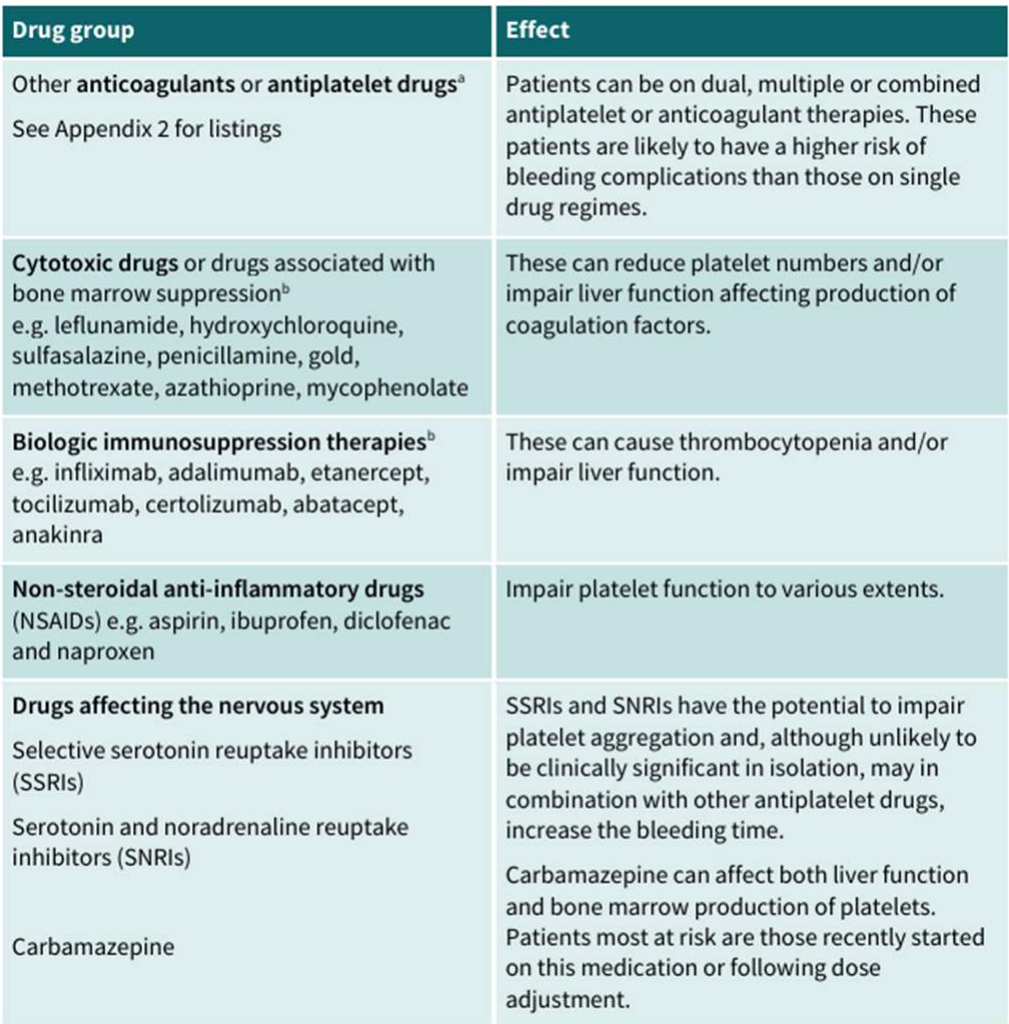
| Drug group | Effect |
|---|---|
| Other anticoagulants or antiplatelet drugs^a^ (see Appendix 2 for listings) | Patients can be on dual, multiple or combined antiplatelet or anticoagulant therapies. These patients are likely to have a higher risk of bleeding complications than those on single drug regimes. |
| Cytotoxic drugs or drugs associated with bone marrow suppression^b^ (e.g. leflunamide, hydroxychloroquine, sulfasalazine, penicillamine, gold, methotrexate, azathioprine, mycophenolate) | These can reduce platelet numbers and/or impair liver function affecting production of coagulation factors. |
| Biologic immunosuppression therapies^b^ (e.g. infliximab, adalimumab, etanercept, tocilizumab, certolizumab, abatacept, anakinra) | These can cause thrombocytopenia and/or impair liver function. |
| Non-steroidal anti-inflammatory drugs (NSAIDs), e.g. aspirin, ibuprofen, diclofenac and naproxen | Impair platelet function to various extents. |
| Drugs affecting the nervous system: selective serotonin reuptake inhibitors (SSRIs); serotonin and noradrenaline reuptake inhibitors (SNRIs); carbamazepine | SSRIs and SNRIs have the potential to impair platelet aggregation and, although unlikely to be clinically significant in isolation, may in combination with other antiplatelet drugs, increase the bleeding time. Carbamazepine can affect both liver function and bone marrow production of platelets. Patients most at risk are those recently started on this medication or following dose adjustment. |
^a^ Be aware that patients may also be taking non-prescribed aspirin, and this antiplatelet agent can in effect convert a prescribed monotherapy into a dual therapy.
^b^ Patients with inflammatory bowel disease or autoimmune/rheumatological conditions are commonly prescribed these drugs.
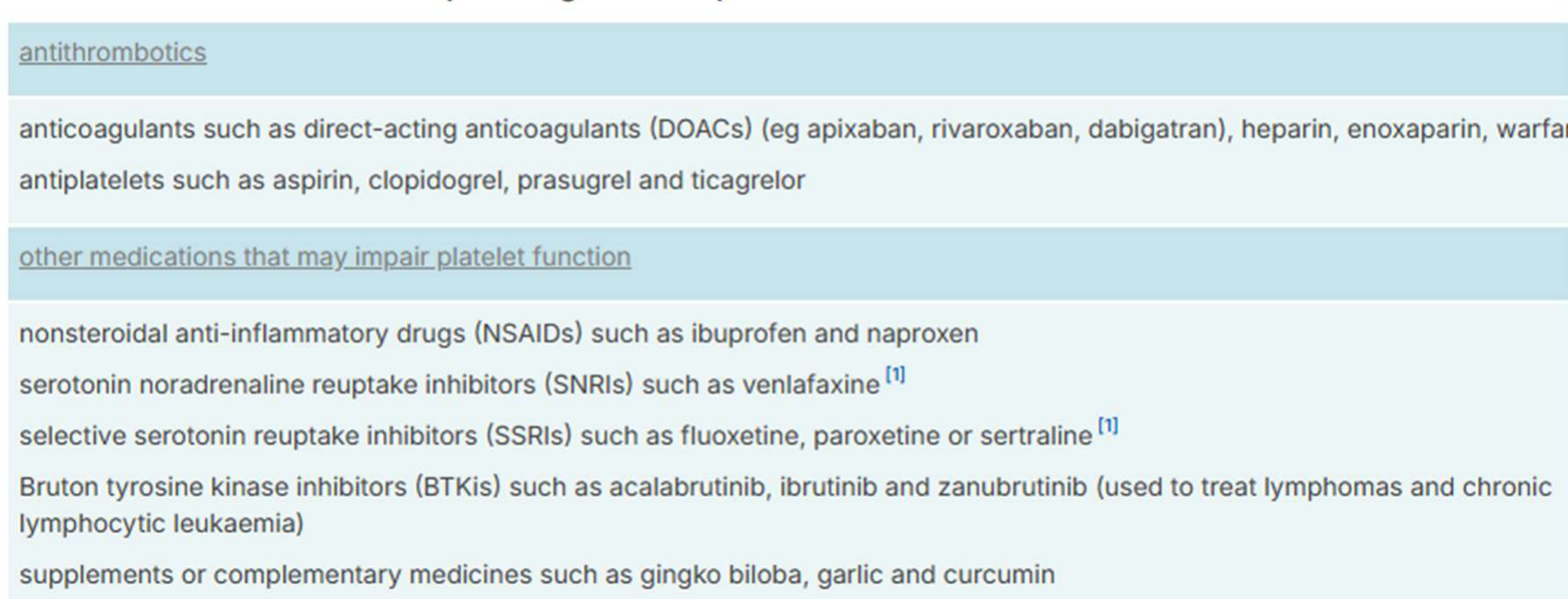
Antithrombotics
- Anticoagulants such as direct-acting anticoagulants (DOACs) (e.g. apixaban, rivaroxaban, dabigatran), heparin, enoxaparin, warfarin
- Antiplatelets such as aspirin, clopidogrel, prasugrel and ticagrelor
Other medications that may impair platelet function
-
Nonsteroidal anti-inflammatory drugs (NSAIDs) such as ibuprofen and naproxen
-
Serotonin noradrenaline reuptake inhibitors (SNRIs) such as venlafaxine [1]
-
Selective serotonin reuptake inhibitors (SSRIs) such as fluoxetine, paroxetine or sertraline [1]
-
Bruton tyrosine kinase inhibitors (BTKis) such as acalabrutinib, ibrutinib and zanubrutinib (used to treat lymphomas and chronic lymphocytic leukaemia)
-
Supplements or complementary medicines such as gingko biloba, garlic and curcumin
-
Carbamazepine levels are often monitored because the drug may affect both liver function and bone marrow production.
 |  |
Congenital and Inherited Bleeding Disorders36
-
Australian Bleeding Disorders Registry (ABDR) – wallet card
-
Haemophilia treatment centres
- Can provide support to GDPs to provide timely dental care
- https://www.haemophilia.org.au/support-services/find-a-treatment-centre/
-
Patients may also carry a letter from their haematologist.
-
Patients are generally managed by a haematologist, a haemophilia treatment centre and a specialist dental team.
-
Western Australian treatment centres include Fiona Stanley Hospital, Perth Children’s Hospital and Hollywood Haemophilia Treatment Centre.
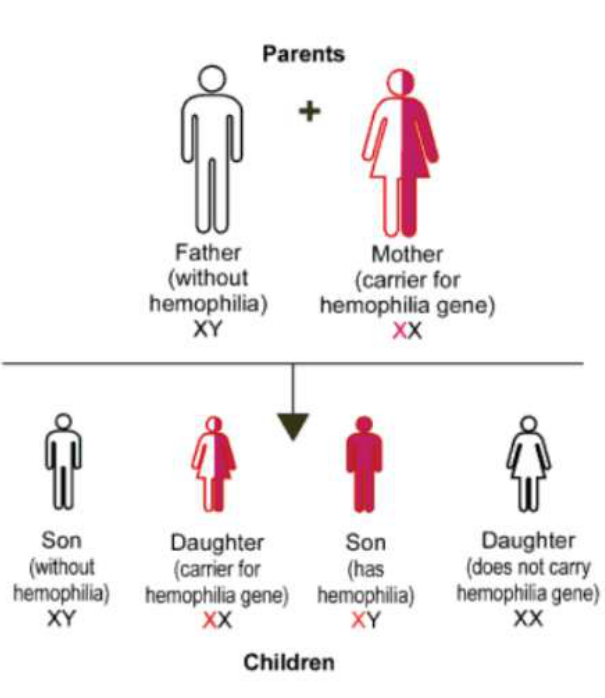
Haemophilia
- Haemophilia A (Factor VIII Deficiency)
- Haemophilia B (Factor IX Deficiency, Christmas Disease)
- Haemophilia C (Factor XI Deficiency)
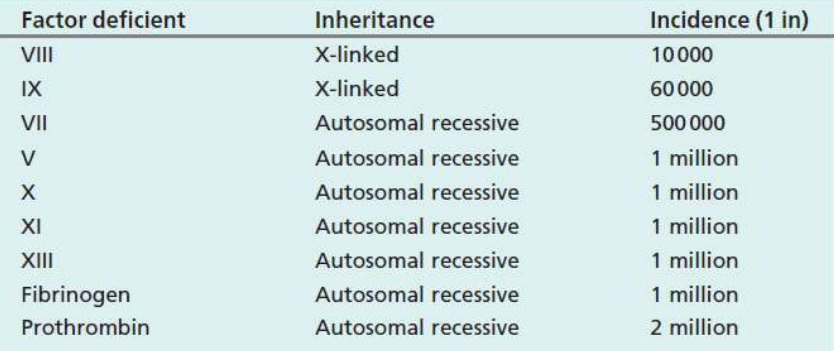
Blood Coagulation Factor Defects in Descending Order of Frequency (Table 8.11)37
| Factor deficient | Inheritance | Incidence (1 in) |
|---|---|---|
| VIII | X-linked | 10 000 |
| IX | X-linked | 60 000 |
| VII | Autosomal recessive | 500 000 |
| V | Autosomal recessive | 1 million |
| X | Autosomal recessive | 1 million |
| XI | Autosomal recessive | 1 million |
| XIII | Autosomal recessive | 1 million |
| Fibrinogen | Autosomal recessive | 1 million |
| Prothrombin | Autosomal recessive | 2 million |
Scully C, Medical Problems in Dentistry (Churchill Livingstone, 7th ed., 2015)
 |  |
Clinical Manifestations38
| Severity | Clotting factor level | Bleeding episodes |
|---|---|---|
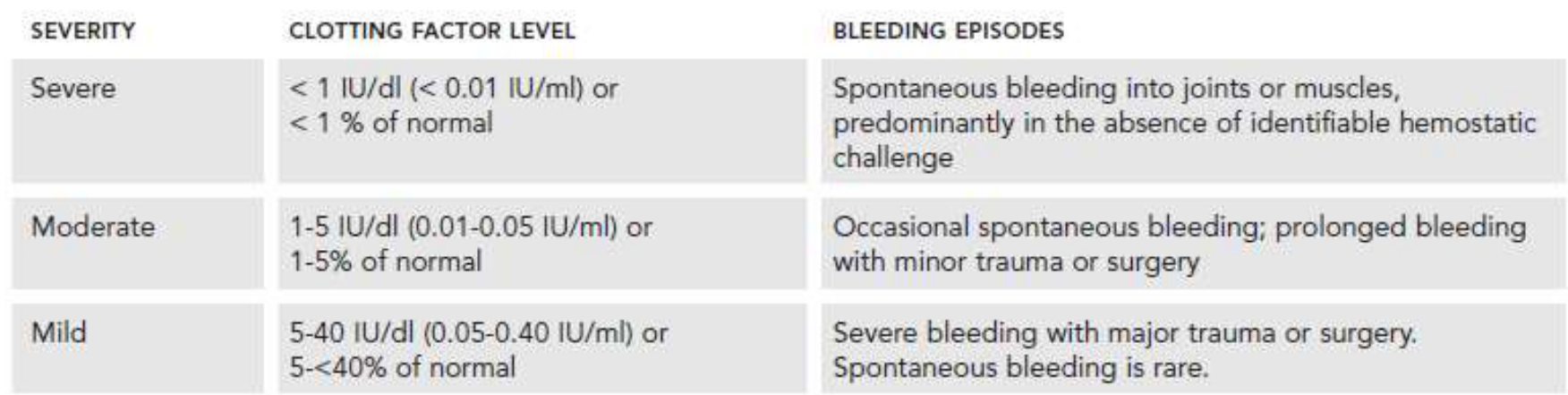
| Severe | < 1 IU/dl (< 0.01 IU/ml) or < 1% of normal | Spontaneous bleeding into joints or muscles, predominantly in the absence of identifiable hemostatic challenge |
| Moderate | 1–5 IU/dl (0.01–0.05 IU/ml) or 1–5% of normal | Occasional spontaneous bleeding; prolonged bleeding with minor trauma or surgery |
| Mild | 5–40 IU/dl (0.05–0.40 IU/ml) or 5–<40% of normal | Severe bleeding with major trauma or surgery. Spontaneous bleeding is rare. |
Lecturer — Delayed Bleeding
Haemophilia may cause excessive bleeding after trauma and sometimes spontaneous bleeding.
- Bleeding may initially appear to stop because the vascular and primary haemostatic responses are normal.
- After an hour or more, this can be followed by intractable oozing and rapid blood loss.
- Haemorrhage is dangerous because of acute blood loss, bleeding into tissues and damage to surrounding tissues.
 |  |
 |
Bleeding Sites by Consequence
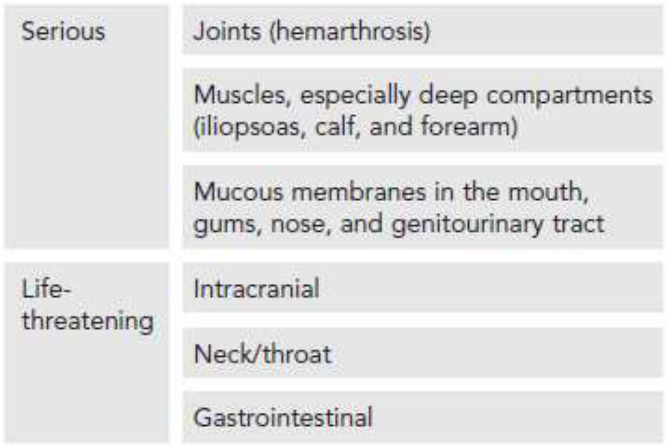
| Serious | Life-threatening |
|---|---|
| Joints (hemarthrosis) | Intracranial |
| Muscles, especially deep compartments (iliopsoas, calf, and forearm) | Neck/throat |
| Mucous membranes in the mouth, gums, nose, and genitourinary tract | Gastrointestinal |
Site of Bleeding and Approximate Frequency
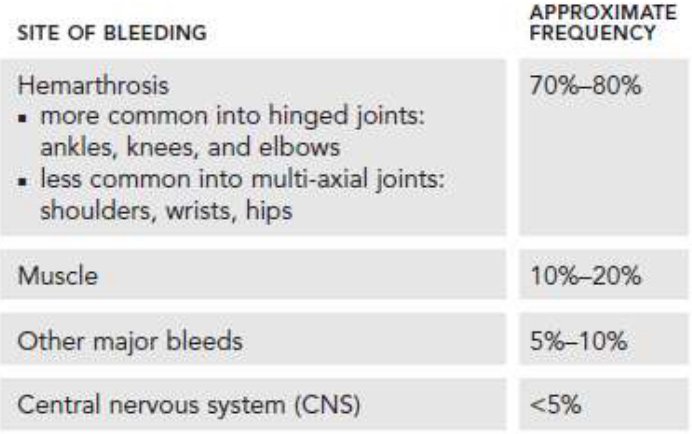
| Site of bleeding | Approximate frequency |
|---|---|
| Hemarthrosis — more common into hinged joints: ankles, knees, and elbows; less common into multi-axial joints: shoulders, wrists, hips | 70%–80% |
| Muscle | 10%–20% |
| Other major bleeds | 5%–10% |
| Central nervous system (CNS) | <5% |
Approach39
-
Prophylaxis = to prevent bleeds
- Continuous prophylaxis
- Intermittent “periodic” prophylaxis
-
Episodic (“on-demand”) treatment
-
Treatment is very expensive, particularly continuous prophylaxis.
-
In Australia, treatment is funded and accessible, although access may be limited in some parts of the world.
 |  |
 |
Management
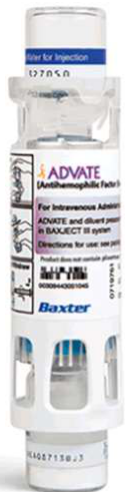
- Coagulation factor replacement therapy
- Recombinant FVIII and FIX (rFVIII, rFIX)
- Plasma-derived Factor
- Recombinant porcine Factor
- Prothrombin complex concentrates (PCC)
- Historically: fresh plasma, frozen plasma, cryoprecipitate, fractionated human factor concentrate from pooled blood sources (BBVs/CJD risk prior to screening)
- Release of endogenous factor stores
- Desmopressin (DDAVP)
- Antifibrinolytics (improve clot stability)
- Tranexamic acid
- Future
- Gene and stem cell therapy
- Rebalancing agents: anti-TFPI monoclonal antibodies (Concizumab), Fitusiran (ALN-AT3)
Lecturer — Gene Therapy
Gene therapy may introduce genetic material into cells so that they produce the missing protein.
- Factor IX gene therapy for haemophilia B has used adeno-associated virus 8 as a vector.
Inhibitors40
-
Neutralising allo-antibodies directed against either factor VIII or IX
-
Created following factor replacement therapy as an immunological reaction
-
Attach to FVIII or FIX to inhibit their ability to stop bleeding → prevent replacement therapy from working
-
Affect 30–35% of individuals with haemophilia A, 1–3% of haemophilia B
-
Detected using Bethesda inhibitor assay (blood test)
- Amount of antibody = number of Bethesda units (BU)
-
Immune tolerance induction (ITI) therapy
-
Bypassing agents
- Recombinant FVII
- Prothrombin complex concentrates (PCC)
- 3-factor PCC (II, IX, X)
- 4-factor PCC (II, VII, IX, X)
- Activated prothrombin complex concentrates (aPCC) e.g. FVIII inhibitor bypassing agent (FEIBA)
-
Antifibrinolytics, e.g. TXA
-
Plasmapheresis
-
High-dose factor concentrates
-
Emicizumab, rebalancing agents
Lecturer — Inhibitor Removal
Plasmapheresis may temporarily remove inhibitors when bypassing therapy is ineffective.
Von Willebrand Disease
- vWD: bleeding disorder resulting from inherited deficiency of von Willebrand factor (vWF)
- vWF: involved in platelet aggregation, and is the carrier for Factor VIIIc
Clinical Features41
-
Features more similar to bleeding (c.f. coagulation) disorders
-
Common pattern of bleeding from the mucous membranes → menorrhagia, GI bleeding, epistaxis, and purpura of mucous membranes and skin
-
Dental extraction or surgery may be the first time von Willebrand disease is identified.
Prevalence
- Most common inherited bleeding disorder:
- up to 1% of the general population
- ~1 in 1000 people have a form of vWD requiring medical treatment (severe form is rare)
Lecturer — Unrecognised Disease
Many people may be unaware that they have von Willebrand disease until serious injury, surgery or dental extraction.
(don’t have to know!)
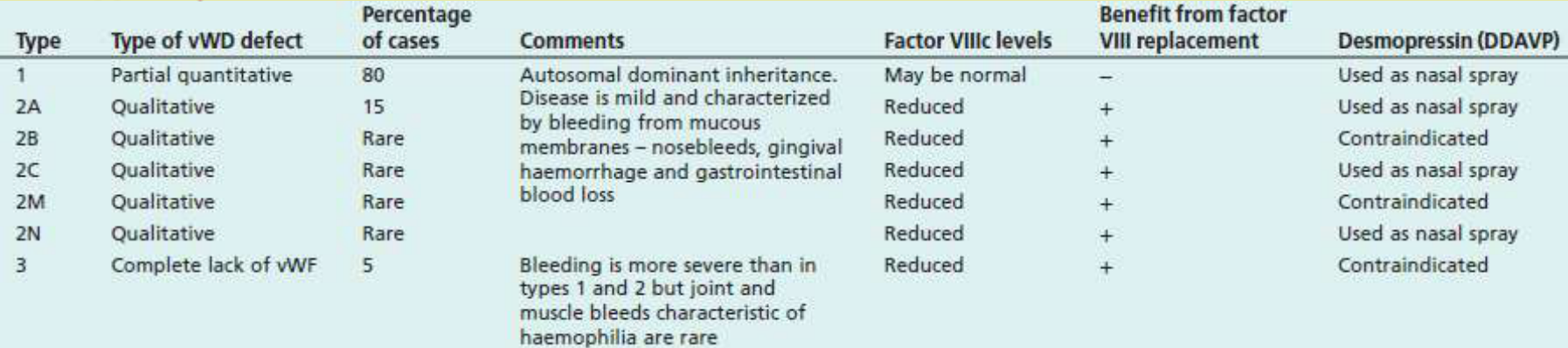
Classification42
| Type | Type of vWD defect | Percentage of cases | Comments | Factor VIIIc levels | Benefit from factor VIII replacement | Desmopressin (DDAVP) |
|---|---|---|---|---|---|---|
| 1 | Partial quantitative | 80 | Autosomal dominant inheritance. Disease is mild and characterized by bleeding from mucous membranes – nosebleeds, gingival haemorrhage and gastrointestinal blood loss | May be normal | – | Used as nasal spray |
| 2A | Qualitative | 15 | ↑ | Reduced | + | Used as nasal spray |
| 2B | Qualitative | Rare | ↑ | Reduced | + | Contraindicated |
| 2C | Qualitative | Rare | ↑ | Reduced | + | Used as nasal spray |
| 2M | Qualitative | Rare | ↑ | Reduced | + | Contraindicated |
| 2N | Qualitative | Rare | ↑ | Reduced | + | Used as nasal spray |
| 3 | Complete lack of vWF | 5 | Bleeding is more severe than in types 1 and 2 but joint and muscle bleeds characteristic of haemophilia are rare | Reduced | + | Contraindicated |
 | 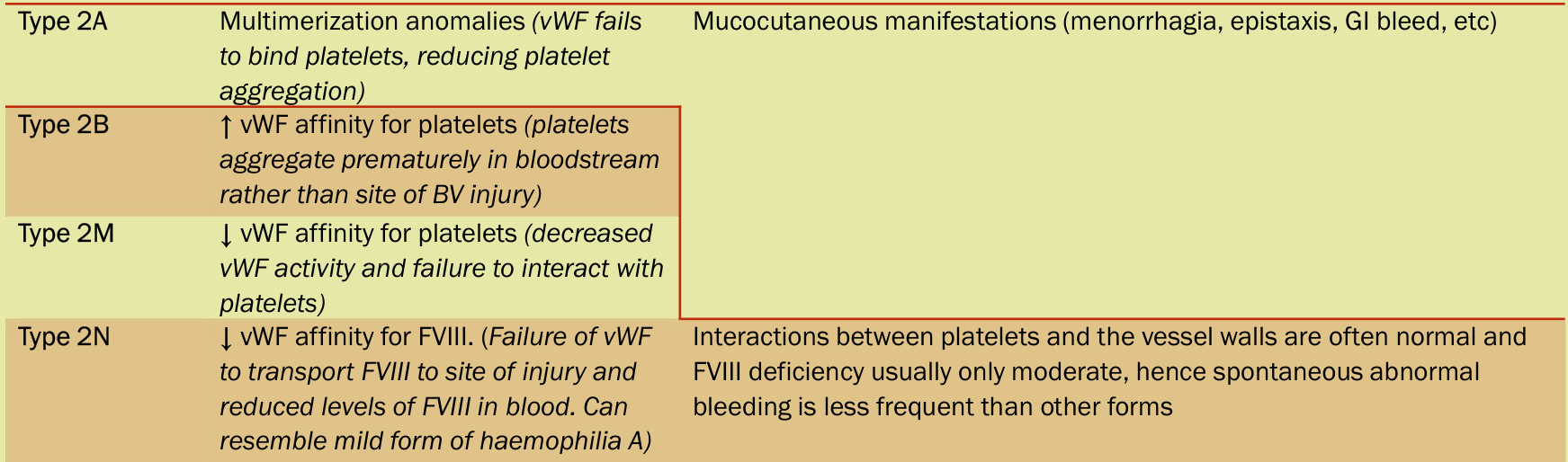 |
Type 2 Subtype Details
| Type | Defect | Comments |
|---|---|---|
| Type 2A | Multimerization anomalies (vWF fails to bind platelets, reducing platelet aggregation) | Mucocutaneous manifestations (menorrhagia, epistaxis, GI bleed, etc) |
| Type 2B | ↑ vWF affinity for platelets (platelets aggregate prematurely in bloodstream rather than site of BV injury) | ↑ |
| Type 2M | ↓ vWF affinity for platelets (decreased vWF activity and failure to interact with platelets) | ↑ |
| Type 2N | ↓ vWF affinity for FVIII (failure of vWF to transport FVIII to site of injury and reduced levels of FVIII in blood. Can resemble mild form of haemophilia A) | Interactions between platelets and the vessel walls are often normal and FVIII deficiency usually only moderate, hence spontaneous abnormal bleeding is less frequent than other forms |
Scully C, Medical Problems in Dentistry (Churchill Livingstone, 7th ed., 2015)
Management43
- Desmopressin: nasal spray or IV
- vWF plasma replacement
- Recombinant forms of vWF
- Antifibrinolytic drugs
- Fibrin glue
- Hormonal contraceptives
Dental Management of Congenital Bleeding Disorders44
Many dental procedures for patients with a congenital or inherited bleeding disorder can be done safely in general practice
- Many dental procedures are unlikely to cause prolonged bleeding
- Some procedures require advice from specialists
- Stratify the risk of prolonged bleeding associated with procedures (slides: Assessing peri-procedural bleeding risk: Dental Procedural Factors)
- *Inferior alveolar nerve blocks
- Work closely with patient’s haematologist re: haemostasis management plan
Lecturer — Local Anaesthesia
Inferior alveolar nerve blocks require particular consideration because of the risk of a haematoma in the pharyngeal spaces.
- Infiltration anaesthesia may be a safer alternative when it provides adequate anaesthesia.
- Routine examinations, intraoral radiographs and routine check-ups do not usually cause prolonged bleeding.
- The haemophilia treatment centre can review the proposed procedure, recommend preparatory medication and time factor or other treatment around the dental appointment.
- The dentist should describe the proposed procedure, expected bleeding and anaesthetic requirements to the treatment centre. Therapeutic Guidelines v4 [retrieved April 2026]
Research Article: Dentistry for Patients with Haemophilia
Received: 4 December 2023 | Revised: 16 January 2024 | Accepted: 20 January 2024
DOI: 10.1111/hae.14947
Haemophilia — WFH — WILEY — ORIGINAL ARTICLE — Clinical haemophilia
Title and Authors45
Dentistry for patients with haemophilia: Trialling a safe and economical change in management
Pritam Daniel Sundaresan¹,²,³ | Estie Kruger¹ | Mathew Lim⁴,⁵,⁶ | John McGeachie¹ | Marc Tennant¹
- School of Allied Health, The University of Western Australia, Perth, Australia
- Maxillofacial and Dental Surgery, Fiona Stanley Hospital, Perth, Australia
- Sedation and Special Care Dentistry, Guy’s and St Thomas NHS Foundation Trust, London, United Kingdom
- Melbourne Dental School, The University of Melbourne, Melbourne, Australia
- Dental Unit, The Alfred, Melbourne, Australia
- Maxillofacial Surgery, The Royal Melbourne Hospital, Melbourne, Australia
Correspondence
Pritam Daniel Sundaresan, School of Allied Health, The University of Western Australia, Australia.
Email: Pritam.Sundaresan@uwa.edu.au
Abstract
- Introduction: While the dental management of patients with haemophilia has changed considerably in the last decade, haemophiliacs in Western Australia have continued to receive pre-operative factor support for dentistry regardless of the type of dental procedure.
- Aim: To review the efficacy and safety of established dental protocols that reduce factor use in the dental management of patients with haemophilia and to estimate cost savings.
- Methods: Records of 11 patients with haemophilia that were seen in the pilot programme period were reviewed. These were cross-referenced with previous dental and haematology notes that stated the amount and type of pre-operative factor used. Cost savings were estimated using the Australian National Blood Authority’s Product List.
- Results: All study participants were male, and included those with haemophilia A (n = 9), and B (n = 2). Mean age was 45 years (range 22–80). A variety of dental treatments were undertaken, and no pre-operative factor was used. Patients on prophylaxis (n = 6) received dental treatment the same day as their regular factor administration. It was estimated AUD$26,314 was saved by not using pre-operative factor. One patient had bleeding post-extraction and was seen the following day to achieve haemostasis using local measures. The remaining patients had no complaints of post-operative bleeding, and did not require any further haemostatic measures.
- Conclusion: This pilot programme supports data that haemophiliacs can safely receive a variety of dental treatments without the need for pre-operative factor, and the significant cost savings of doing so. Further data is required to support this protocol for invasive dental procedures.
Keywords
cost, dentistry, public health
Implications for Care Delivery
Currently only the SND unit at Fiona Stanley Hospital provides dental care for patients with congenital bleeding disorders in Western Australia. Results of this present study suggest that given PWH does not routinely require FRT for dental procedures, some dental care can be safely provided/transitioned to General Dental Practitioners (GDPs) in the community.
Some dental care can be safely provided/transitioned to General Dental Practitioners (GDPs) in the community.
One of the concerns GDPs have with managing PWH is the increased bleeding risk in this group.¹⁶ However, the results of this study show that non-invasive procedures can be managed safely by practitioners with additional training or understanding of bleeding risk and management, but not necessarily specialist training.
Non-invasive procedures can be managed safely by practitioners with additional training or understanding of bleeding risk and management, but not necessarily specialist training.
Fiona Stanley Dental Pilot
A pilot study from Fiona Stanley Hospital involved 11 patients requiring dental treatment, who were not given additional blood products regardless of haemophilia severity.
- Most patients had either a mild phenotype or a severe phenotype receiving prophylaxis.
- Articaine infiltrations were used rather than inferior alveolar nerve blocks.
- Postoperative bleeding complications were minimal.
- One patient experienced bleeding after an extraction the following day and was treated with tranexamic acid, Surgicel and suturing of the socket.
- No further postoperative bleeding complaints occurred.
Thrombocytopenia
- Decisions for dental management, including the setting, should be made with medical and/or specialist dental advice
- Routine fillings under LA and debridement generally considered safe
- However consider other blood counts/function that may be affected by the underlying condition and/or its treatment
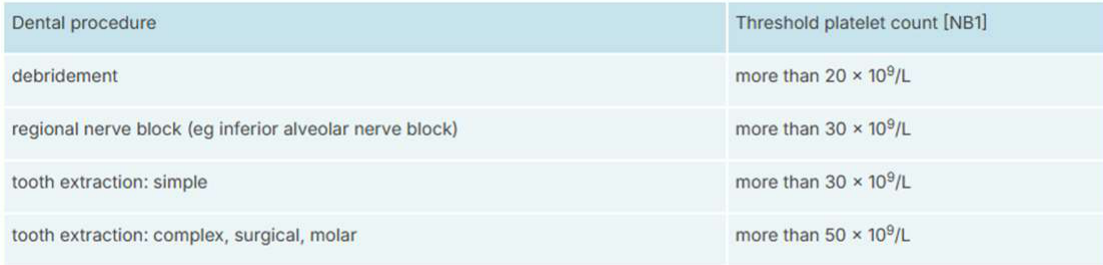
- Threshold platelet counts for common dental procedures
Threshold Platelet Counts for Common Dental Procedures46
| Dental procedure | Threshold platelet count [NB1] |
|---|---|
| Debridement | more than 20 × 10⁹/L |
| Regional nerve block (e.g. inferior alveolar nerve block) | more than 30 × 10⁹/L |
| Tooth extraction: simple | more than 30 × 10⁹/L |
| Tooth extraction: complex, surgical, molar | more than 50 × 10⁹/L |
NB1: Thresholds are sourced from the consensus guidelines for the management of immune thrombocytopenia from the Thrombosis and Haemostasis Society of Australia and New Zealand; they are considered applicable to thrombocytopenia arising from other causes.
Lecturer — Threshold Interpretation
The lecturer noted that platelet thresholds may be applied more cautiously in some circumstances.
- More than 30 may be preferred for debridement in some circumstances.
- A platelet count above 50 was preferred for simple tooth extraction.
- Inferior alveolar nerve blocks were identified as higher-risk procedures when the platelet count is below 30.
Acquired Medical Conditions Impairing Haemostasis47
- Include (but not limited to): kidney, liver and bone marrow disorders
- Multiple factors may act synergistically to increase bleeding risk (coagulation, platelet count, platelet function)
- Risk is difficult to quantify through investigations → consult medical practitioner
- Most dental procedures can be safely completed in GDP setting
- If procedure is likely to cause prolonged bleeding:
- consult with medical practitioner
- consider consulting a hospital-based specialist dental team in formulating management plan
- consider referring to hospital-based specialist dental team for higher-risk invasive procedures
Antithrombotic Drugs
Antiplatelet Drugs48
- COX-1 inhibitors: aspirin
- P2Y12 inhibitors: clopidogrel, prasugrel, ticagrelor
N.B.: Dual antiplatelet therapy usually prescribed for a specific duration
Lecturer — Antiplatelet Therapy
Aspirin may be taken without a prescription by some patients.
- Dual antiplatelet therapy usually consists of aspirin plus a P2Y12 inhibitor and is often followed by single-agent therapy after the defined treatment period.
Anticoagulant Drugs
- Oral anticoagulants
- Vitamin K antagonists: warfarin
- Direct-acting oral anticoagulants (DOACs):
- Factor Xa inhibitors: apixaban, rivaroxaban
- Direct thrombin inhibitors: dabigatran
- Injectable anticoagulants
- Heparin
- Low molecular weight heparins (enoxaparin, dalteparin)
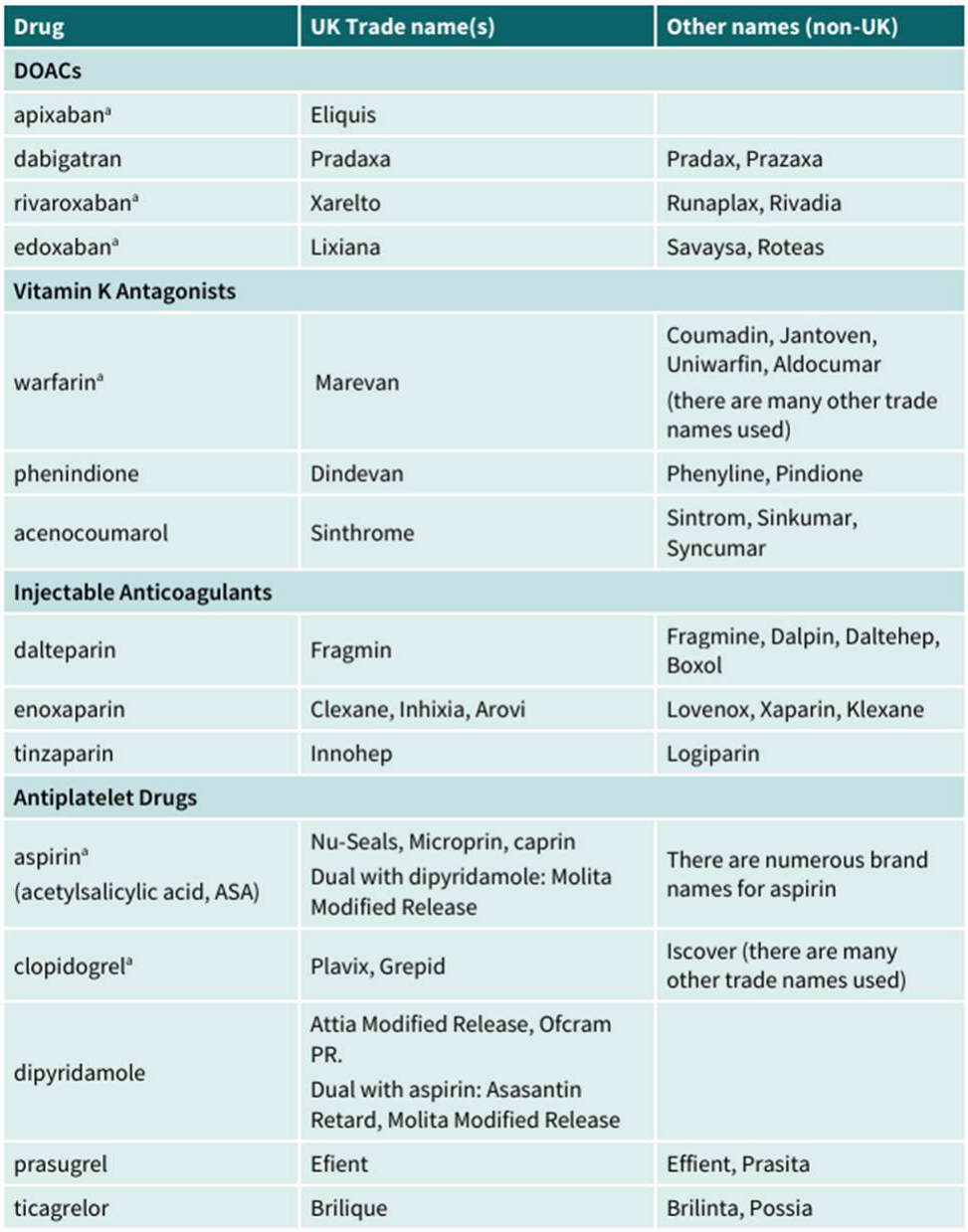
Overview of Antithrombotic Drugs49
| Drug | UK Trade name(s) | Other names (non-UK) |
|---|---|---|
| DOACs | ||
| apixabanᵃ | Eliquis | |
| dabigatran | Pradaxa | Pradax, Prazaxa |
| rivaroxabanᵃ | Xarelto | Runaplax, Rivadia |
| edoxabanᵃ | Lixiana | Savaysa, Roteas |
| Vitamin K Antagonists | ||
| warfarinᵃ | Marevan | Coumadin, Jantoven, Uniwarfin, Aldocumar (there are many other trade names used) |
| phenindione | Dindevan | Phenyline, Pindione |
| acenocoumarol | Sinthrome | Sintrom, Sinkumar, Syncumar |
| Injectable Anticoagulants | ||
| dalteparin | Fragmin | Fragmine, Dalpin, Daltehep, Boxol |
| enoxaparin | Clexane, Inhexia, Arovi | Lovenox, Xaparin, Klexane |
| tinzaparin | Innohep | Logiparin |
| Antiplatelet Drugs | ||
| aspirinᵃ (acetylsalicylic acid, ASA) | Nu-Seals, Microprin, caprin; Dual with dipyridamole: Molita Modified Release | There are numerous brand names for aspirin |
| clopidogrelᵃ | Plavix, Grepid | Iscover (there are many other trade names used) |
| dipyridamole | Attia Modified Release, Ofcram PR; Dual with aspirin: Asasantin Retard, Molita Modified Release | |
| prasugrel | Efient | Effient, Prasita |
| ticagrelor | Brilique | Brilinta, Possia |
Mechanisms of Action
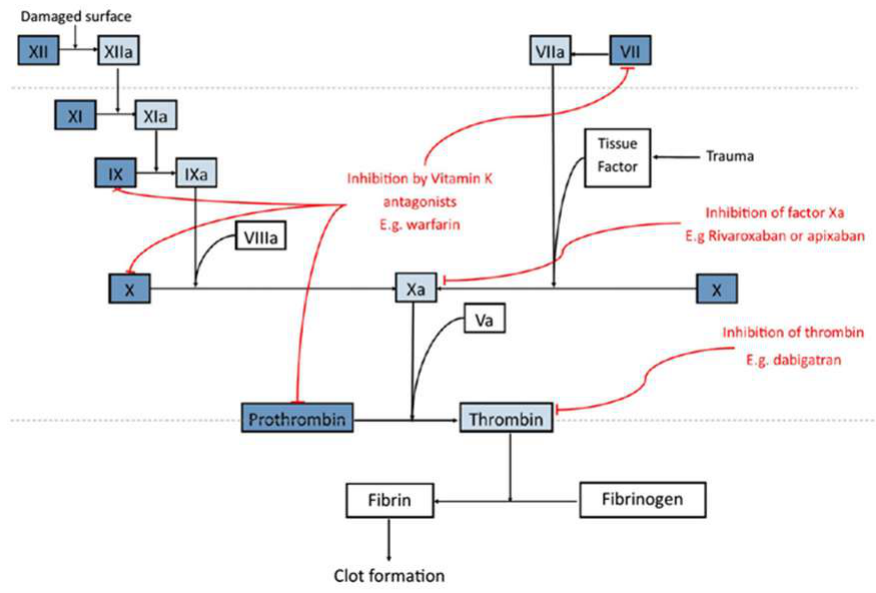
Coagulation Cascade and Sites of Drug Action50
Intrinsic pathway:
- Damaged surface → XII → XIIa
- XI → XIa
- IX → IXa (with VIIIa)
- X → Xa (with Va)
- Prothrombin → Thrombin
- Fibrinogen → Fibrin
- Clot formation
Extrinsic pathway:
- Trauma → Tissue Factor
- VII → VIIa
- X → Xa (with Va)
- Prothrombin → Thrombin
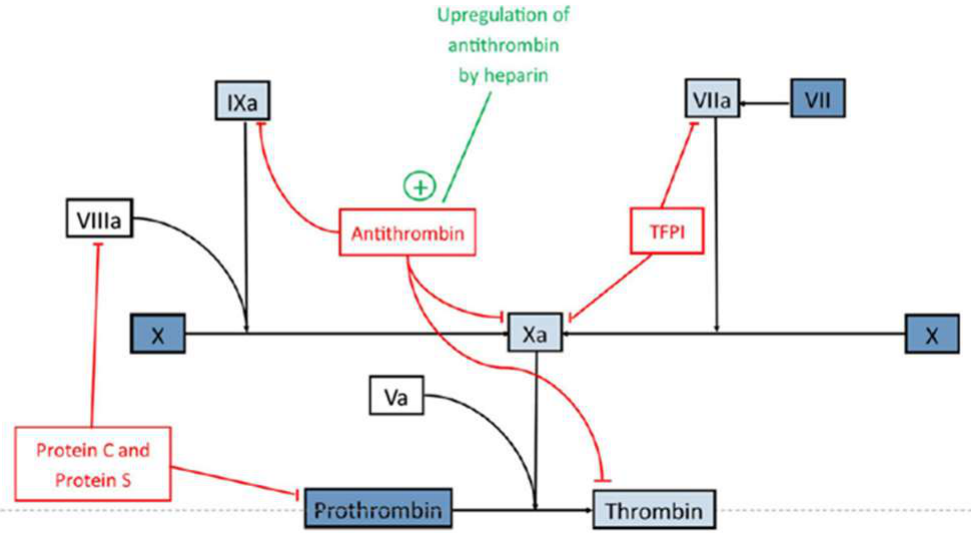
Natural anticoagulant mechanisms:
- Antithrombin (upregulated by heparin): inhibits IXa, Xa, thrombin
- TFPI: inhibits VIIa
- Protein C and Protein S: inhibit Va
Drug inhibition points:
-
Inhibition by Vitamin K antagonists (e.g. warfarin)
-
Inhibition of factor Xa (e.g. rivaroxaban or apixaban)
-
Inhibition of thrombin (e.g. dabigatran)
-
Warfarin inhibits production of vitamin K-dependent coagulation factors.
-
Heparin and related injectable anticoagulants are administered by injection.
 |  |
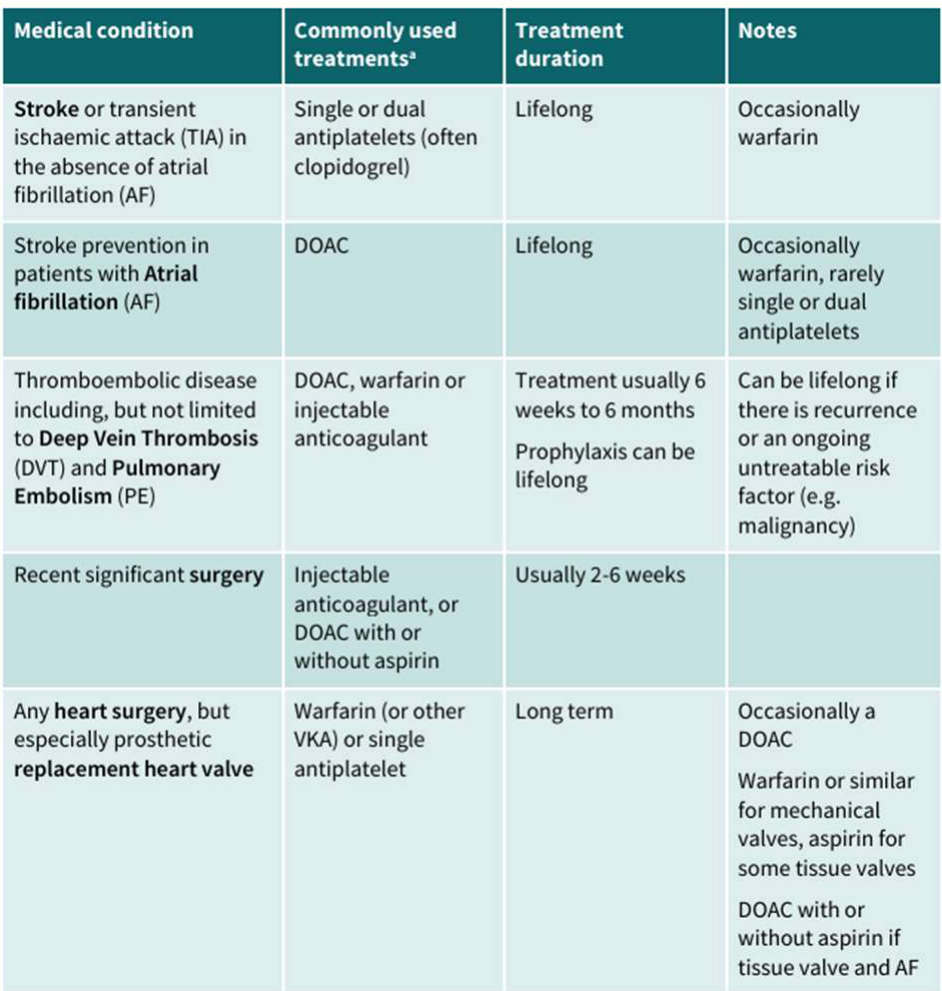
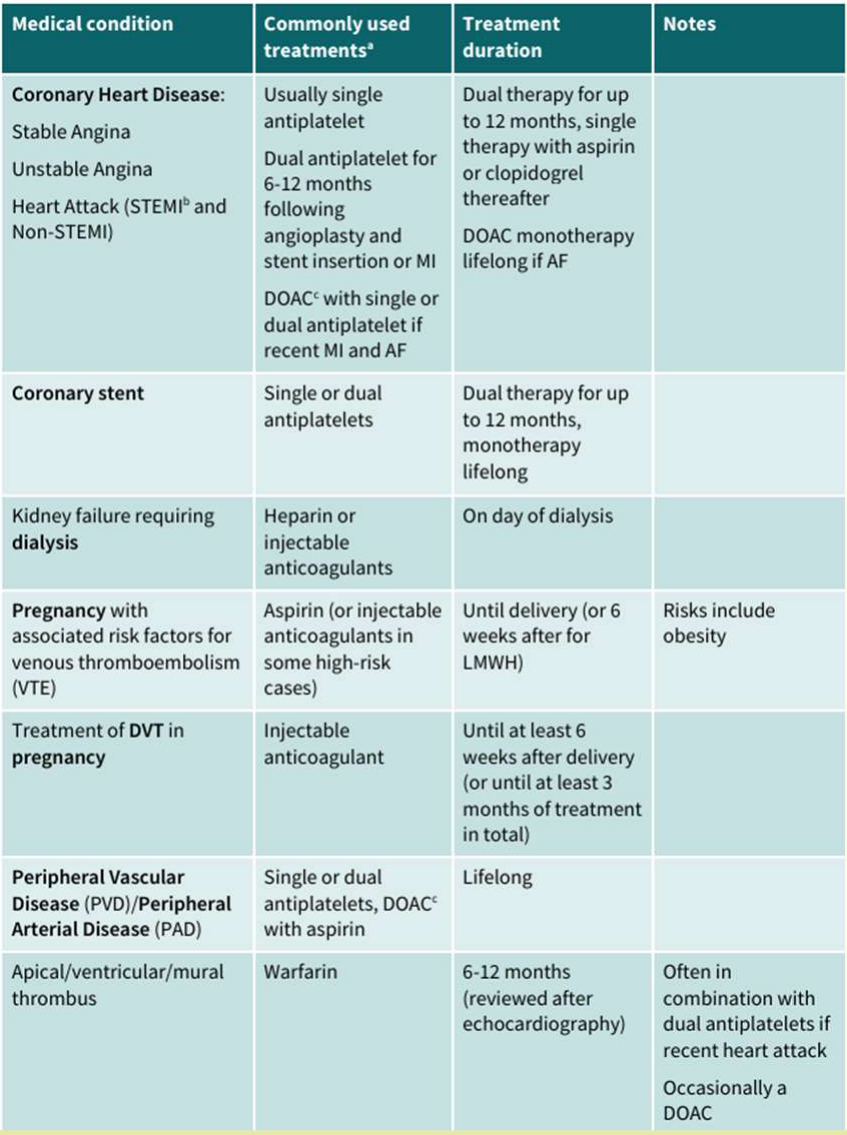
Indications for Antithrombotic Therapy51
| Medical condition | Commonly used treatmentsᵃ | Treatment duration | Notes |
|---|---|---|---|
| Stroke or transient ischaemic attack (TIA) in the absence of atrial fibrillation (AF) | Single or dual antiplatelets (often clopidogrel) | Lifelong | Occasionally warfarin |
| Stroke prevention in patients with Atrial fibrillation (AF) | DOAC | Lifelong | Occasionally warfarin, rarely single or dual antiplatelets |
| Thromboembolic disease including, but not limited to Deep Vein Thrombosis (DVT) and Pulmonary Embolism (PE) | DOAC, warfarin or injectable anticoagulant | Treatment usually 6 weeks to 6 months; prophylaxis can be lifelong | Can be lifelong if there is recurrence or an ongoing untreatable risk factor (e.g. malignancy) |
| Recent significant surgery | Injectable anticoagulant, or DOAC with or without aspirin | Usually 2–6 weeks | |
| Any heart surgery, but especially prosthetic replacement heart valve | Warfarin (or other VKA) or single antiplatelet | Long term | Occasionally a DOAC; warfarin or similar for mechanical valves, aspirin for some tissue valves; DOAC with or without aspirin if tissue valve and AF |
| Coronary Heart Disease: stable angina, unstable angina, heart attack (STEMIᵇ and Non-STEMI) | Usually single antiplatelet; dual antiplatelet for 6–12 months following angioplasty and stent insertion or MI; DOACᶜ with single or dual antiplatelet if recent MI and AF | Dual therapy for up to 12 months, single therapy with aspirin or clopidogrel thereafter; DOAC monotherapy lifelong if AF | |
| Coronary stent | Single or dual antiplatelets | Dual therapy for up to 12 months, monotherapy lifelong | |
| Kidney failure requiring dialysis | Heparin or injectable anticoagulants | On day of dialysis | |
| Pregnancy with associated risk factors for venous thromboembolism (VTE) | Aspirin (or injectable anticoagulants in some high-risk cases) | Until delivery (or 6 weeks after for LMWH) | Risks include obesity |
| Treatment of DVT in pregnancy | Injectable anticoagulant | Until at least 6 weeks after delivery (or until at least 3 months of treatment in total) | |
| Peripheral Vascular Disease (PVD) / Peripheral Arterial Disease (PAD) | Single or dual antiplatelets, DOACᶜ with aspirin | Lifelong | |
| Apical/ventricular/mural thrombus | Warfarin | 6–12 months (reviewed after echocardiography) | Often in combination with dual antiplatelets if recent heart attack; occasionally a DOAC |
ᵃ Further combinations are possible if the patient has multiple indications.
ᵇ STEMI: ST segment elevation myocardial infarction
ᶜ Rivaroxaban is licensed for acute coronary syndrome (co-administered with aspirin alone or with aspirin plus clopidogrel or ticlopidine) and coronary artery disease or peripheral artery disease (co-administered with aspirin).
 |  |
General Management Principles52
- Management depends on the type or combination of antithrombotic therapy
- Weigh up potential benefits vs harm of interrupting antithrombotic therapy
- In dental practice, the consequences of a thromboembolic event are usually more significant than the consequences of bleeding
- Clinical judgement from both dentist and clinician managing the antithrombotic therapy
- Patients on antithrombotic drug + additional risk factors for bleeding + require higher-risk invasive procedure ⇒ consider referral to community- or hospital-based specialist (e.g. OMFS, SND)
- Prescribed for specified period: delay elective dental procedure
Therapeutic Guidelines Approach53
Therapeutic Guidelines v4 Guidance covers:
- Single antiplatelet therapy
- Dual antiplatelet therapy
- Direct-acting oral anticoagulant (DOAC)
- Injectable anticoagulant
- Warfarin
- Combination of anticoagulant + single or dual antiplatelet therapy
Table 13.34 Approach to managing patients taking antithrombotic drugs undergoing a dental procedure – Therapeutic Guidelines Oral & Dental v4
Single Antiplatelet Therapy (e.g. aspirin, clopidogrel)54
- Assessment: consider consulting a medical practitioner if further advice is required (e.g. to exclude contraindications to elective dental treatment) [NB1]
- Interruption of antithrombotic therapy: interruption not required [9]
- Management: local haemostatic measures; consider performing extensive procedures in stages
Lecturer — Single Antiplatelet Therapy
Aspirin may typically be discontinued when it is the only antiplatelet therapy, whereas interruption may not be required for other antiplatelet therapy.
- Liaison with the medical practitioner may be required before changing therapy.
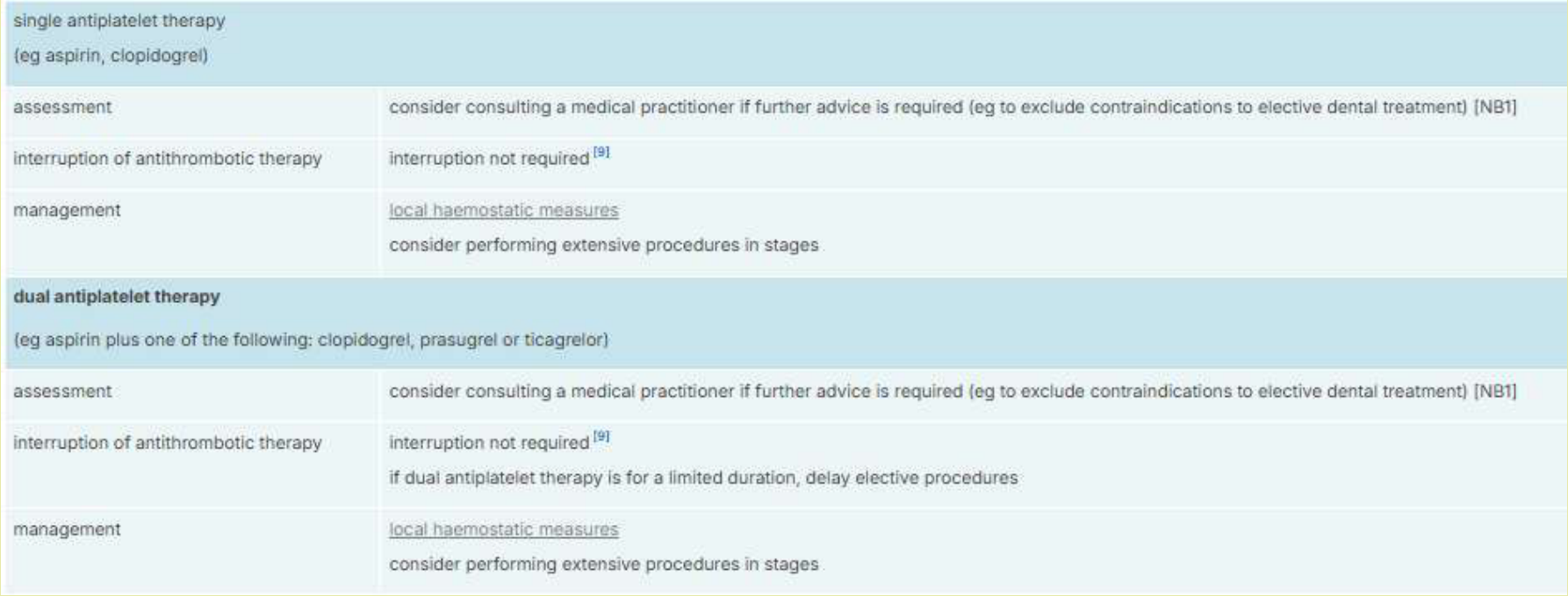
Dual Antiplatelet Therapy (e.g. aspirin plus one of the following: clopidogrel, prasugrel or ticagrelor)
- Assessment: consider consulting a medical practitioner if further advice is required (e.g. to exclude contraindications to elective dental treatment) [NB1]
- Interruption of antithrombotic therapy: interruption not required [9]; if dual antiplatelet therapy is for a limited duration, delay elective procedures
- Management: local haemostatic measures; consider performing extensive procedures in stages
NB1: Contraindications to elective dental procedures include these events in the previous 6 months: a myocardial infarction (heart attack), stent placement, coronary artery bypass surgery or valve procedure.
Table 13.34 Approach to managing patients taking antithrombotic drugs undergoing a dental procedure – Therapeutic Guidelines Oral & Dental v4
Direct-Acting Oral Anticoagulant (DOAC) (e.g. apixaban, dabigatran, rivaroxaban)55
- Interruption of antithrombotic therapy:
- For lower-risk procedures, interruption is not required
- For higher-risk procedures, consult a medical practitioner:
- if needed to establish the planned duration of DOAC therapy (to decide whether to delay an elective procedure)
- to assess safety and timing if considering any interruption to DOAC therapy (risks vary according to the indication for DOAC therapy) [NB2] [NB3]
- Management: local haemostatic measures; consider performing extensive procedures in stages
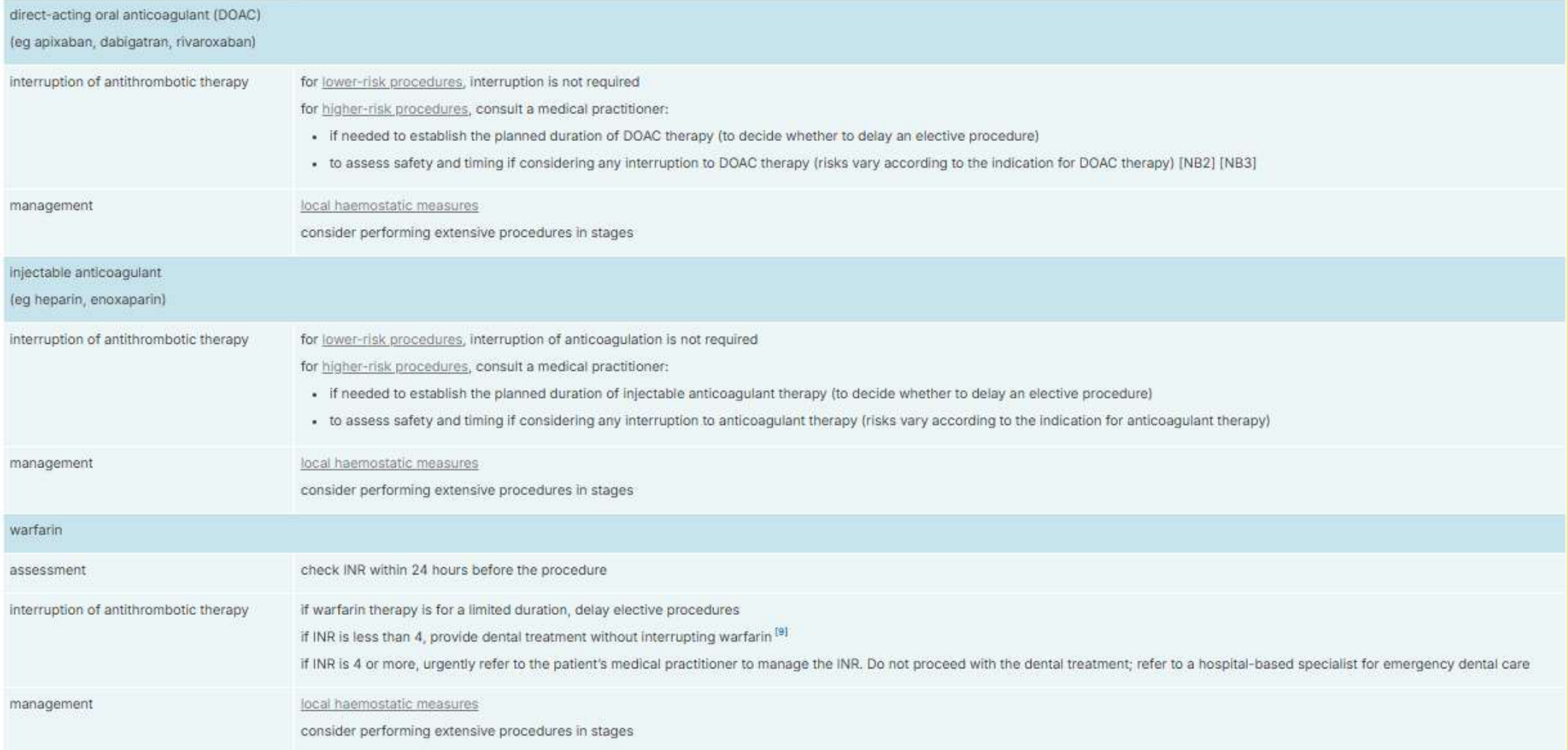
Injectable Anticoagulant (e.g. heparin, enoxaparin)
- Interruption of antithrombotic therapy:
- For lower-risk procedures, interruption of anticoagulation is not required
- For higher-risk procedures, consult a medical practitioner:
- if needed to establish the planned duration of injectable anticoagulant therapy (to decide whether to delay an elective procedure)
- to assess safety and timing if considering any interruption to anticoagulant therapy (risks vary according to the indication for anticoagulant therapy)
- Management: local haemostatic measures; consider performing extensive procedures in stages
Warfarin
- Assessment: check INR within 24 hours before the procedure
- Interruption of antithrombotic therapy:
- If warfarin therapy is for a limited duration, delay elective procedures
- If INR is less than 4, provide dental treatment without interrupting warfarin [9]
- If INR is 4 or more, urgently refer to the patient’s medical practitioner to manage the INR. Do not proceed with the dental treatment; refer to a hospital-based specialist for emergency dental care
- Management: local haemostatic measures; consider performing extensive procedures in stages
Managing Direct-Acting Oral Anticoagulants5657
Therapeutic Guidelines: Cardiovascular – Interruption of DOACs
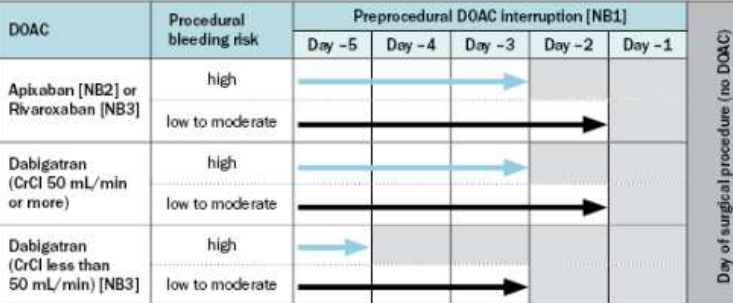
Figure 3.14 Timing of preprocedural interruption of direct-acting oral anticoagulant (DOAC) therapy [1] [6]
| DOAC | Procedural bleeding risk | Preprocedural DOAC interruption [NB1] (Day -5 → Day -1) |
|---|---|---|
| Apixaban [NB2] or Rivaroxaban [NB3] | high | interruption over days before procedure |
| low to moderate | interruption over days before procedure | |
| Dabigatran (CrCl 50 mL/min or more) | high | interruption over days before procedure |
| low to moderate | interruption over days before procedure | |
| Dabigatran (CrCl less than 50 mL/min) [NB3] | high | interruption over days before procedure |
| low to moderate | interruption over days before procedure |
Day of surgical procedure (no DOAC). The arrows indicate continuation of DOAC therapy, while the grey cells indicate DOAC therapy is withheld.
Creatinine clearance (CrCl) calculation:
- For creatinine in µmol/L: (1.23 × (140 − age [years]) × weight [kg] (× 0.85 if female)) ÷ serum creatinine [µmol/L]
- For creatinine in mg/dL: ((140 − age [years]) × weight [kg] (× 0.85 if female)) ÷ (72 × serum creatinine [mg/dL])
CrCl = calculated creatinine clearance; DOAC = direct-acting oral anticoagulant
NB1: Although these timings are based on patients with atrial fibrillation taking a DOAC at doses recommended for stroke prevention, these recommendations can be applied regardless of the indication.
NB2: For patients taking apixaban, seek specialist advice if CrCl is less than 25 mL/min — a longer duration of interruption to therapy may be required.
NB3: For patients taking rivaroxaban or dabigatran, seek specialist advice if CrCl is less than 30 mL/min — a longer duration of interruption to therapy may be required. Patients taking rivaroxaban with a CrCl of 15 to 29 mL/min were not included in the relevant study [1].
The need to interrupt DOAC therapy before a procedure depends on the nature of the procedure and patient-related factors (e.g. kidney function).
Lecturer — Dabigatran and Renal Function
Poor renal function increases bleeding risk with dabigatran because up to 80% of dabigatran is excreted by the kidneys.
- If a patient taking a DOAC requires an emergency procedure, rapid reversal of anticoagulant therapy may be required. For information on reversal, see Bleeding and overanticoagulation with dabigatran, Bleeding and overanticoagulation with apixaban or Bleeding and overanticoagulation with rivaroxaban.
- If a patient taking a DOAC is undergoing an elective procedure, assess the procedural bleeding risk to determine whether the procedure has a minimal, low to moderate, or high bleeding risk [6] — see Procedure-related factors affecting bleeding risk for more information.
- If the procedure has a minimal risk of bleeding (e.g. minor dental extractions, skin excisions of less than 1 cm, cataract procedures), interruption of DOAC therapy is usually not needed.
- If the procedural bleeding risk is low to moderate, or high, temporary interruption of DOAC therapy is required. The timing of preprocedural interruption depends on the drug used and the patient’s kidney function — see Figure 3.14. Also consider the patient-related risk factors for bleeding.
Dental procedures are generally considered ‘low to moderate risk’.
Scottish Dental Clinical Excellence Programme (SDCEP) – Interruption of DOACs
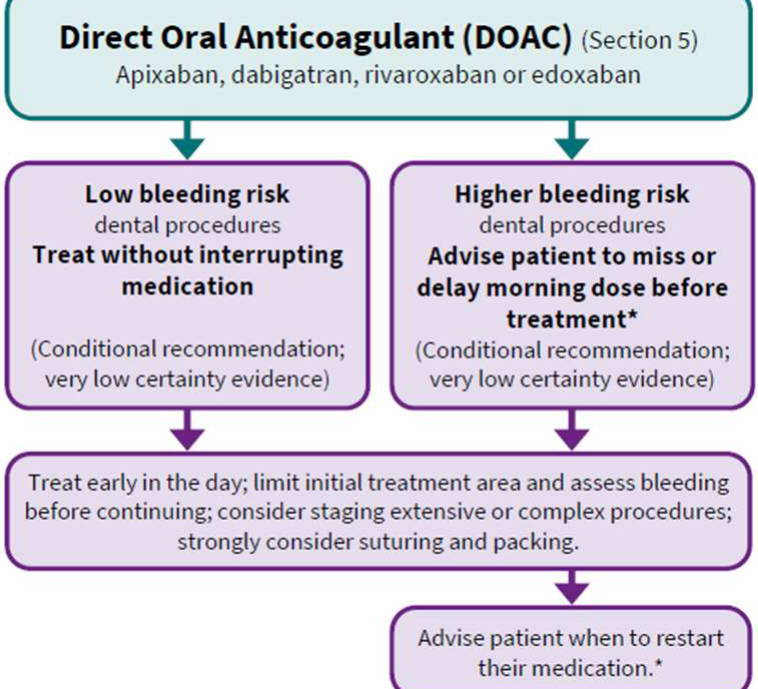
Direct Oral Anticoagulant (DOAC) (Section 5): apixaban, dabigatran, rivaroxaban or edoxaban
Low Bleeding Risk Dental Procedures58
Treat without interrupting medication (conditional recommendation; very low certainty evidence).
 |  |
Higher Bleeding Risk Dental Procedures
Advise patient to miss or delay morning dose before treatment* (conditional recommendation; very low certainty evidence).
- Treat early in the day; limit initial treatment area and assess bleeding before continuing; consider staging extensive or complex procedures; strongly consider suturing and packing.
- Advise patient when to restart their medication.*
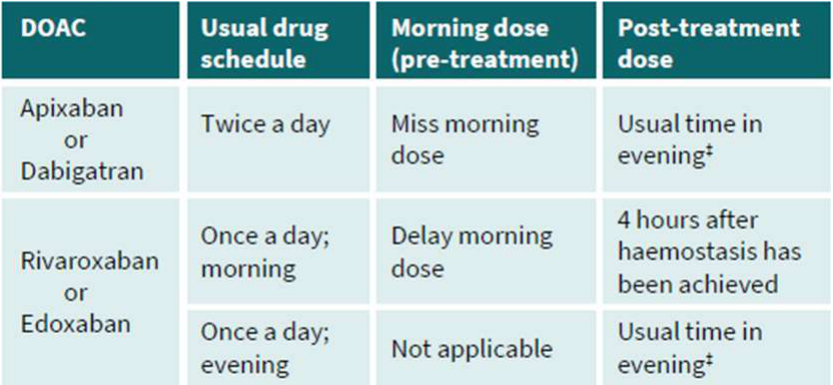
| DOAC | Usual drug schedule | Morning dose (pre-treatment) | Post-treatment dose |
|---|---|---|---|
| Apixaban or Dabigatran | Twice a day | Miss morning dose | Usual time in evening‡ |
| Rivaroxaban or Edoxaban | Once a day; morning | Delay morning dose | 4 hours after haemostasis has been achieved |
| Rivaroxaban or Edoxaban | Once a day; evening | Not applicable | Usual time in evening‡ |
‡ As long as no earlier than 4 hours after haemostasis has been achieved. The patient should continue with their usual drug schedule thereafter.
Do Not Interrupt Anticoagulant or Antiplatelet Therapy For
- patients with prosthetic metal heart valves or coronary stents;
- patients who have had a pulmonary embolism or deep vein thrombosis in the last three months;
- patients on anticoagulant therapy for cardioversion.
DOAC Pharmacology
- Rapid onset of action: 1–4 hrs
- Short half-lives:
- Rivaroxaban 5–13 hrs
- Apixaban 12 hrs
- Dabigatran 13–18 hrs
- *depends on renal function and age
Therapeutic Guidelines: Cardiovascular – Recommencement of DOACs
If DOAC therapy was interrupted, the timing to restart DOAC therapy after the procedure should be decided in consultation with the proceduralist.
Bridging therapy with a parenteral anticoagulant is not recommended for patients restarting a DOAC, because DOACs achieve maximum anticoagulant effect within 1 to 3 hours of the first dose [6] [10].
- For patients who had a procedure with a low to moderate risk of bleeding, DOAC therapy can be restarted 24 hours or more after the procedure if haemostasis has been achieved [1] [6].
- For patients who had a procedure with a high risk of bleeding, DOAC therapy can be restarted 2 to 3 days after the procedure if haemostasis has been achieved [1] [6].
- If a prolonged period without DOAC therapy is required (e.g. no oral intake), consider postoperative VTE prophylaxis or therapeutic parenteral anticoagulation [10].
Dental procedures are generally considered ‘low to moderate risk’.
DOAC Reversal Agents59
- Idarucizumab (Praxbind) = dabigatran
- Andexanet alfa (Andexxa) = apixaban, rivaroxaban
For use in hospital settings for life-threatening or uncontrolled bleeding.
Heparin
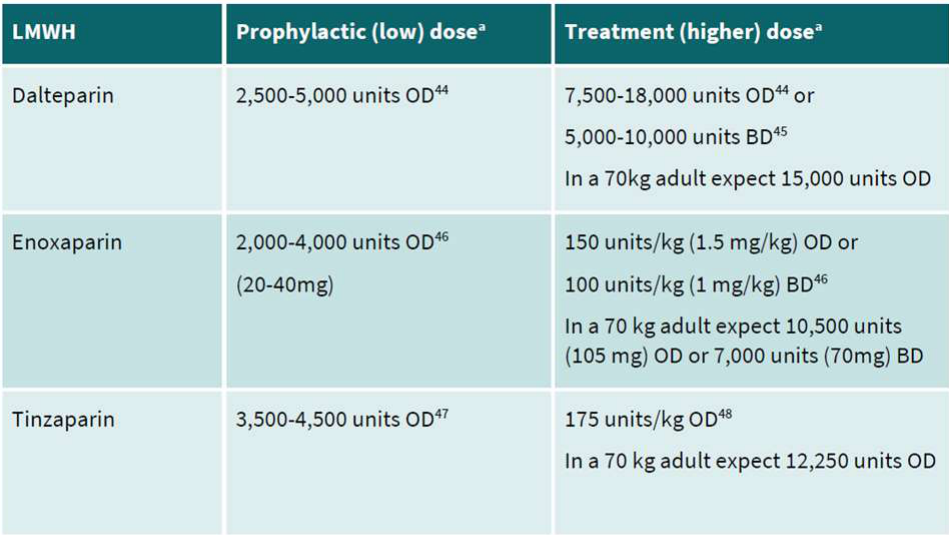
| LMWH | Prophylactic (low) doseᵃ | Treatment (higher) doseᵃ |
|---|---|---|
| Dalteparin | 2,500–5,000 units OD | 7,500–18,000 units OD or 5,000–10,000 units BD; in a 70 kg adult expect 15,000 units OD |
| Enoxaparin | 2,000–4,000 units OD (20–40 mg) | 150 units/kg (1.5 mg/kg) OD or 100 units/kg (1 mg/kg) BD; in a 70 kg adult expect 10,500 units (105 mg) OD or 7,000 units (70 mg) BD |
| Tinzaparin | 3,500–4,500 units OD | 175 units/kg OD; in a 70 kg adult expect 12,250 units OD |
OD, once daily; BD, twice daily
ᵃ Doses may be adjusted in patients with renal impairment, or body weight <50 kg or >100 kg.
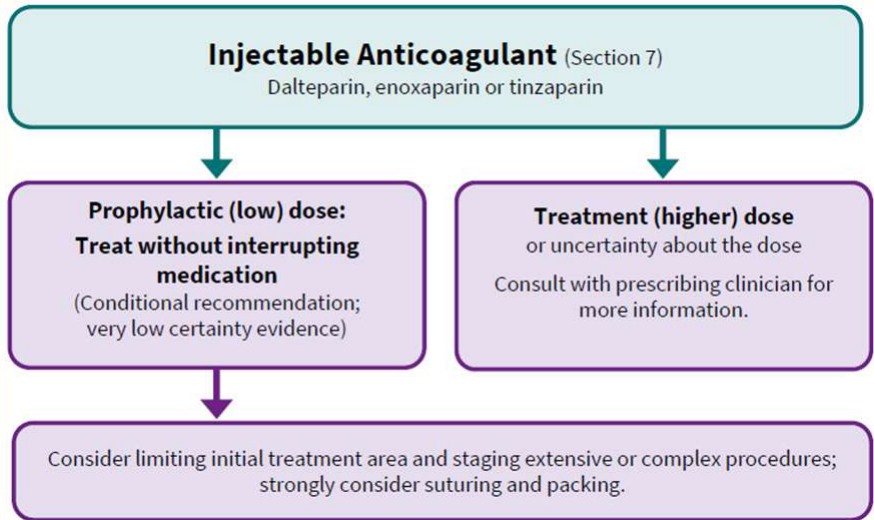
SDCEP Guidance: Injectable Anticoagulant (Section 7)60
Dalteparin, enoxaparin or tinzaparin
- Prophylactic (low) dose: treat without interrupting medication (conditional recommendation; very low certainty evidence)
- Treatment (higher) dose or uncertainty about the dose: consult with prescribing clinician for more information
- Consider limiting initial treatment area and staging extensive or complex procedures; strongly consider suturing and packing.
Lecturer — Injectable Anticoagulants
Heparin is generally used for shorter periods, so waiting for its washout period is usually the main management approach.
- Injectable anticoagulants may be used for dialysis, exchange transfusions, inpatient deep-vein thrombosis prophylaxis, or bridging before surgery.
- Heparin may be used for bridging because it has a short half-life and washes out quickly.
For a patient who is taking a LMWH and requires dental treatment that is likely to cause bleeding, with either a low or higher risk of bleeding complications (see Table 1):
- Establish whether the patient is taking a prophylactic (low) dose or a treatment (higher) dose (see Table 4).
- For patients with renal impairment, or body weight <50 kg or >100 kg, the dose of LMWH is likely to have been adjusted and consultation with the prescribing clinician (e.g. specialist or general medical practitioner) may be required to confirm whether the patient is taking a prophylactic or treatment dose.
- If the patient is taking a treatment (higher) dose, or there is uncertainty about the dose they are taking, consult with the prescribing clinician (e.g. specialist or general medical practitioner) in order to assess the likely impact on bleeding risk for the dental procedure.
- If the patient is taking a prophylactic (low) dose, treat according to the general advice for managing bleeding risk (see Section 4), without interrupting their LMWH.
 |  |
Warfarin and INR Monitoring61
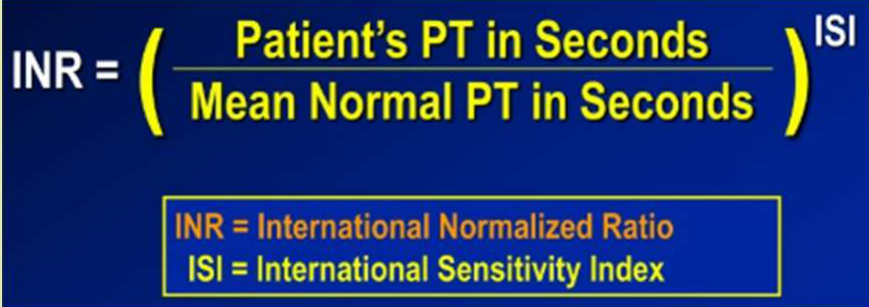
INR = (Patient’s PT in seconds ÷ Mean Normal PT in seconds)
-
INR = International Normalized Ratio
-
ISI = International Sensitivity Index
-
INR 1 = level of coagulation equivalent to the average patient not taking warfarin
-
INR >1 = longer clotting / bleeding time
Target INR = typically 2.5 – 3.5 ± 0.5
Check INR within 24 hrs of dental procedure → proceed if INR <4
Combined Anticoagulant and Antiplatelet Therapy
Table 13.34 Approach to managing patients taking antithrombotic drugs undergoing a dental procedure – Therapeutic Guidelines Oral & Dental v4
Combination of Anticoagulant + Single or Dual Antiplatelet Therapy62
- Interruption of antithrombotic therapy:
- If therapy is for a limited duration, delay elective procedures
- Consult the patient’s medical practitioner to evaluate impact of medical condition and medications on bleeding risk
- Management:
- Consider specialist dental referral or management by experienced clinicians
- Local haemostatic measures
- Consider performing extensive procedures in stages
Lecturer — Combined Therapy
Some patients take a DOAC or warfarin with aspirin, clopidogrel, or dual antiplatelet therapy.
- Triple therapy may occur rarely, including in patients with atrial fibrillation and a recent myocardial infarction.
- Recent stenting may mean that therapy cannot be safely stopped prematurely, so specialist referral should be considered.

Other Drugs Affecting Haemostasis
Drugs That Can Affect Platelet Function63
-
NSAIDs: e.g. ibuprofen, naproxen
-
Some antidepressants
- Serotonin noradrenaline reuptake inhibitors (SNRIs) — e.g. venlafaxine
- Selective serotonin reuptake inhibitors (SSRIs) — e.g. fluoxetine, paroxetine, sertraline
-
Lymphoma and chronic lymphocytic leukaemia treatments
- Bruton tyrosine kinase inhibitors (BTKis) — e.g. acalabrutinib, ibrutinib, zanubrutinib
-
Supplements or complementary medicines
- e.g. gingko biloba, garlic, curcumin
-
Carbamazepine
-
Patients may not report supplements or complementary medicines because they do not regard them as prescribed medications.
Management Based on Drug Combinations64
- Listed drug + concurrent medical condition → discuss bleeding risk with medical practitioner, create Mx plan
- Listed drug + concurrent antithrombotic drug → discuss bleeding risk with medical practitioner, create Mx plan
- Non-selective NSAID only (without concurrent medical condition or antithrombotic use) → local haemostatic measures
- Antidepressant medication only (without concurrent medical condition or antithrombotic use) → continue antidepressant
- Risk of discontinuation syndrome
- Supplements and complementary medicines → depending on indication, consider stopping 1 week prior
Approach to Managing Bleeding Risk in Dental Procedures65
Step 1 — Is the dental PROCEDURE likely to cause prolonged bleeding? (see table classifying procedural bleeding risk)
- NO → Treat using the standard approach.
- YES → Continue below.
Step 2 — Does the patient have any of the following MEDICAL CONDITIONS?
- a medical condition affecting haemostasis
- signs of bleeding, bruising or jaundice
- a personal or family history of prolonged bleeding after dental or other procedures
YES →
- Ask the medical practitioner or team for details of the medical history to clarify patient risk factors and ways to modify them (including review of medications).
- Create a management plan.
- Consider consultation with a specialist medical or dental team.
- Consider [NB2]:
- the level of risk
- the treatment setting and access to specific haemostatic measures
- access to after-hours care, especially for rural and remote patients.
Referral may be appropriate for higher risk procedures or conditions requiring measures outside the practitioner’s skill set.
NO → Continue below.
Step 3 — Is the patient taking an ANTITHROMBOTIC DRUG? (including over-the-counter aspirin) [NB1]
- NO →
- Is the patient taking any other medication that can impair haemostasis?
- YES → See advice for patients taking other medications.
- NO → Treat with standard approach.
- Is the patient taking any other medication that can impair haemostasis?
- YES →
- Is the antithrombotic drug for long-term (indefinite) use?
- YES → Defer nonurgent invasive dental procedures until antithrombotic therapy is complete.
- NO →
- Does the patient have AN ADDITIONAL FACTOR that heightens risk in conjunction with an antithrombotic, such as:
- uncontrolled hypertension (eg systolic blood pressure more than 160 mmHg)
- suboptimal anticoagulation control (eg fluctuating or high INR)
- age older than 65 years or frailty
- other medication that can impair haemostasis?
- YES → Ask the medical practitioner or team for details of the medical history (as above).
- NO → Manage according to the type of antithrombotic drug being used (see advice on management of antithrombotics).
- Does the patient have AN ADDITIONAL FACTOR that heightens risk in conjunction with an antithrombotic, such as:
- Is the antithrombotic drug for long-term (indefinite) use?
Seek advice from a medical practitioner or a specialist dental team if uncertain about assessing or managing bleeding risk.
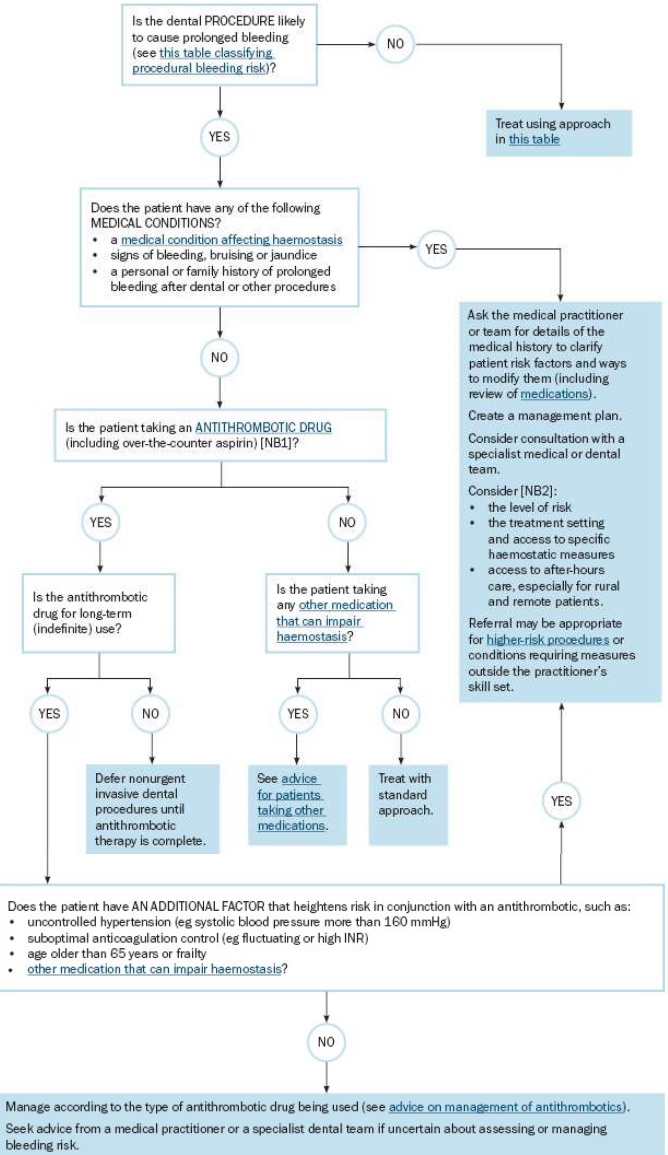
Table 1: Bleeding risks for dental procedures66
- Classify procedures as non-invasive, minimally invasive, lower-risk invasive or higher-risk invasive to guide the treatment setting, need for consultation, medication management and local haemostatic measures. | Unlikely to cause bleeding | Likely to cause bleeding: low risk of post-operative bleeding complications | Likely to cause bleeding: higher risk of post-operative bleeding complications | | :--- | :--- | :--- | | Local anaesthesia by infiltration, intraligamentary or mental nerve block | Simple extractions (1–3 teeth, with restricted wound size) | Complex extractions, adjacent extractions that will cause a large wound or more than 3 extractions at once | | Local anaesthesia by inferior dental block or other regional nerve blocks | Incision and drainage of intra-oral swellings | Flap raising procedures including: elective surgical extractions; periodontal surgery; preprosthetic surgery; periradicular surgery; crown lengthening; dental implant surgery; gingival recontouring. Biopsies | | Basic periodontal examination (BPE) | Detailed six-point full periodontal examination | | | Supragingival removal of plaque, calculus and stain | Root surface debridement (RSD) | | | Direct or indirect restorations with supragingival margins | Direct or indirect restorations with subgingival margins | | | Endodontics – orthograde | | | | Impressions and other prosthetics procedures | | | | Fitting and adjustment of orthodontic appliances | | |
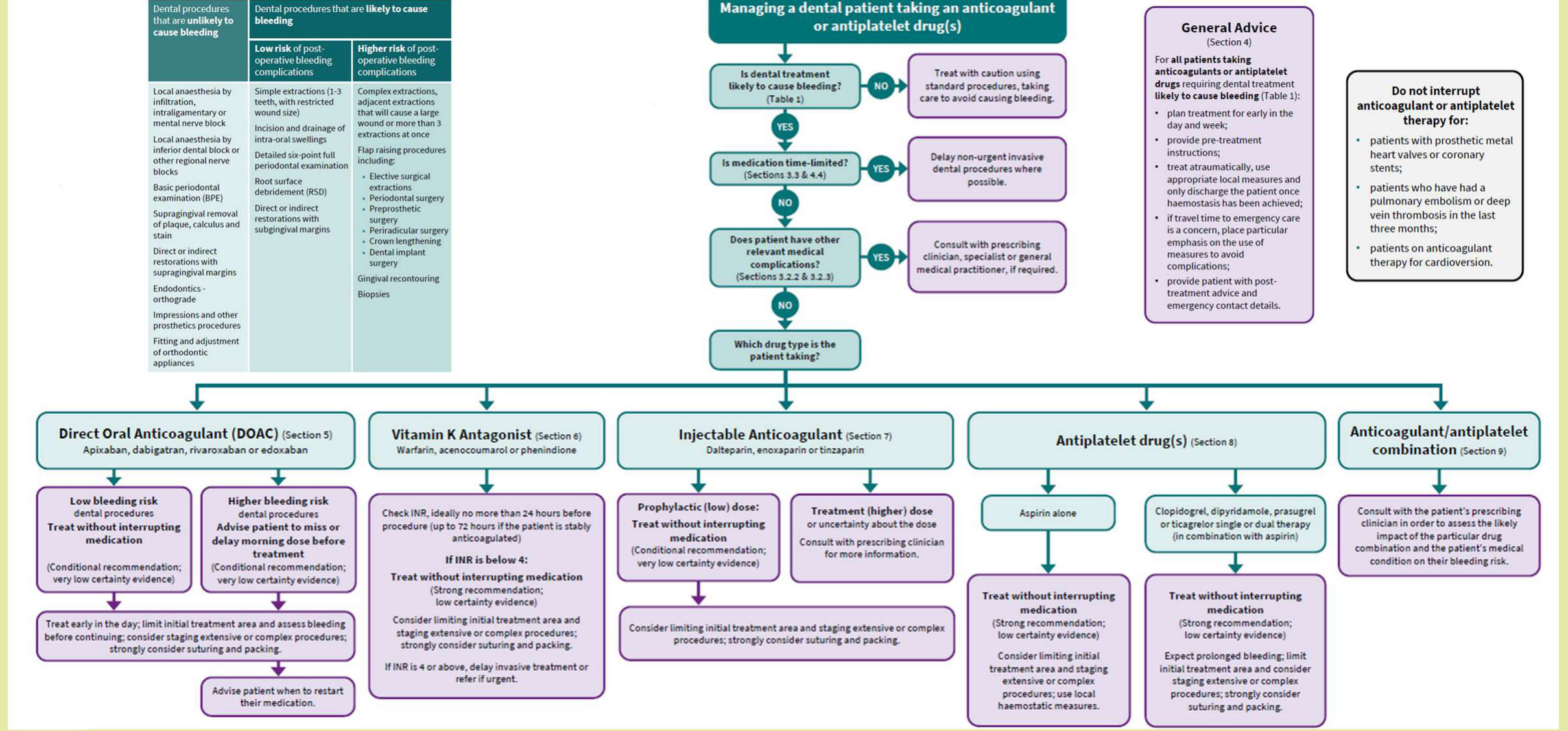 | 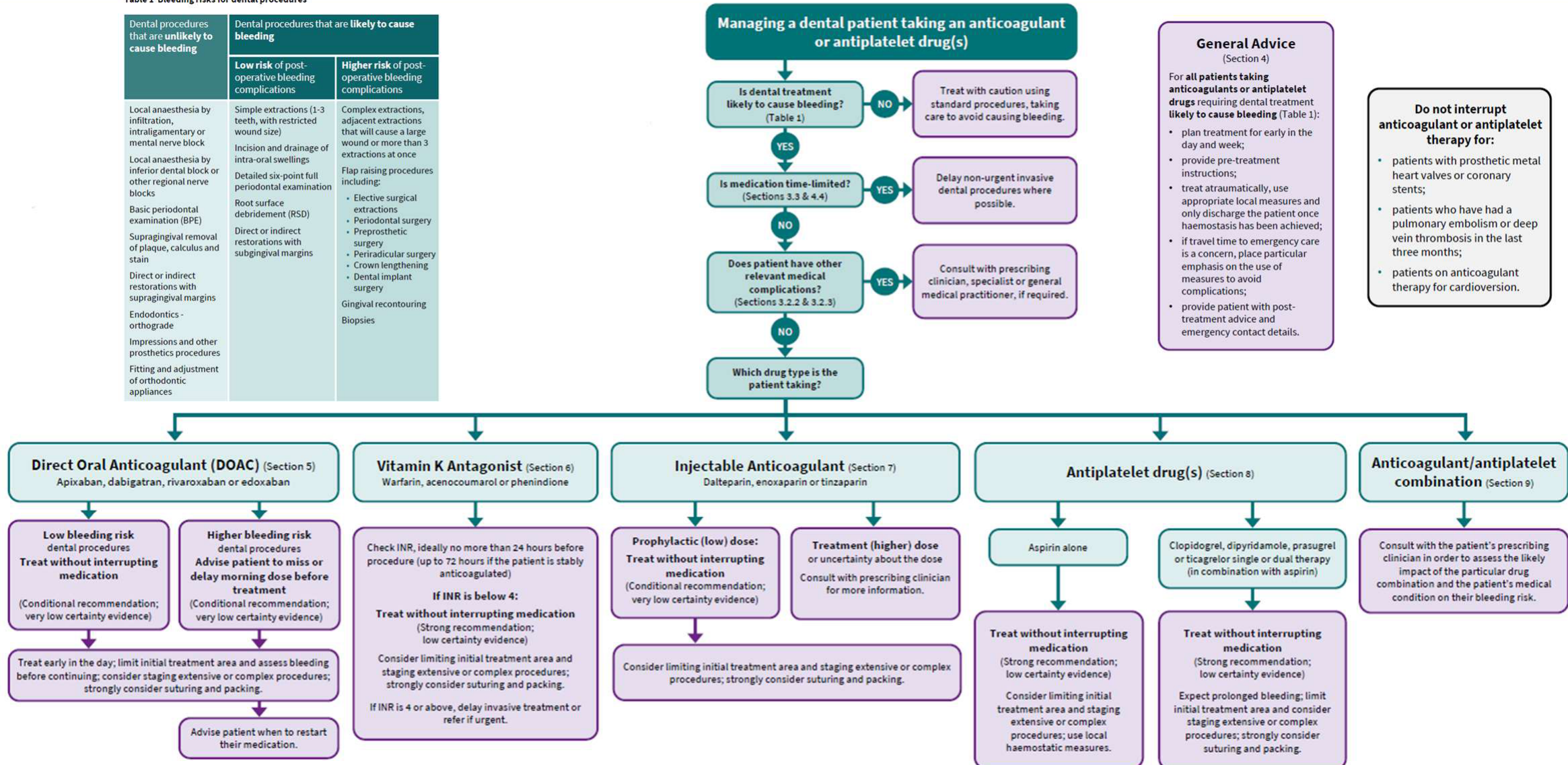 |
Managing a dental patient taking an anticoagulant or antiplatelet drug(s)
- Is dental treatment likely to cause bleeding? (Table 1)
- NO → Treat with caution using standard procedures, taking care to avoid causing bleeding.
- YES → continue.
- Is medication time-limited? (Sections 3.3 & 4.4)
- YES → Delay non-urgent invasive dental procedures where possible.
- NO → continue.
- Does patient have other relevant medical complications? (Sections 3.2.2 & 3.2.3)
- YES → Consult with prescribing clinician, specialist or general medical practitioner, if required.
- NO → continue.
- Which drug type is the patient taking?
Direct Oral Anticoagulant (DOAC) (Section 5)
Apixaban, dabigatran, rivaroxaban or edoxaban
-
Low bleeding risk dental procedures: Treat without interrupting medication (conditional recommendation; very low certainty evidence). Treat early in the day; limit initial treatment area and assess bleeding before continuing; consider staging extensive or complex procedures; strongly consider suturing and packing.
-
Higher bleeding risk dental procedures: Advise patient to miss or delay morning dose before treatment (conditional recommendation; very low certainty evidence). Treat early in the day; limit initial treatment area and assess bleeding before continuing; consider staging extensive or complex procedures; strongly consider suturing and packing. Advise patient when to restart their medication.
-
Assess thrombotic risk and renal function, especially when the patient is taking dabigatran; consult the medical practitioner before changing therapy if risk is uncertain.
Vitamin K Antagonist (Section 6)
Warfarin, acenocoumarol or phenindione
Check INR, ideally no more than 24 hours before procedure (up to 72 hours if the patient is stably anticoagulated).
- If INR is below 4: Treat without interrupting medication (strong recommendation; low certainty evidence). Consider limiting initial treatment area and staging extensive or complex procedures; strongly consider suturing and packing.
- If INR is 4 or above: Delay invasive treatment or refer if urgent.
Injectable Anticoagulant (Section 7)
Dalteparin, enoxaparin or tinzaparin
- Prophylactic (low) dose: Treat without interrupting medication (conditional recommendation; very low certainty evidence). Consider limiting initial treatment area and staging extensive or complex procedures; strongly consider suturing and packing.
- Treatment (higher) dose or uncertainty about the dose: Consult with prescribing clinician for more information.
Lecturer — Injectable Anticoagulants
Heparin has a short washout period, so procedure timing matters.
- Consider withholding a prophylactic dose only after appropriate medical advice.
Antiplatelet drug(s) (Section 8)
-
Aspirin alone: Treat without interrupting medication (strong recommendation; low certainty evidence). Consider limiting initial treatment area and staging extensive or complex procedures; use local haemostatic measures.
-
Clopidogrel, dipyridamole, prasugrel or ticagrelor — single or dual therapy (in combination with aspirin): Treat without interrupting medication (strong recommendation; low certainty evidence). Expect prolonged bleeding; limit initial treatment area and consider staging extensive or complex procedures; strongly consider suturing and packing.
-
Local haemostatic measures are generally sufficient, but liaise with the medical team before changing single or dual antiplatelet therapy.
Anticoagulant/antiplatelet combination (Section 9)
Consult with the patient’s prescribing clinician in order to assess the likely impact of the particular drug combination and the patient’s medical condition on their bleeding risk.
Lecturer — Combination Therapy
Combined anticoagulant and antiplatelet therapy makes management more complex.
- Interruption may be unsafe after a recent thrombotic event, and specialist referral may be appropriate.
General advice (Section 4)
For all patients taking anticoagulants or antiplatelet drugs requiring dental treatment likely to cause bleeding (Table 1):
-
plan treatment for early in the day and week;
-
provide pre-treatment instructions;
-
treat atraumatically, use appropriate local measures and only discharge the patient once haemostasis has been achieved;
-
if travel time to emergency care is a concern, place particular emphasis on the use of measures to avoid complications;
-
provide patient with post-treatment advice and emergency contact details.
-
Good pain control may reduce stress, blood pressure and blood flow, thereby reducing bleeding risk.
Do not interrupt anticoagulant or antiplatelet therapy for:
- patients with prosthetic metal heart valves or coronary stents;
- patients who have had a pulmonary embolism or deep vein thrombosis in the last three months;
- patients on anticoagulant therapy for cardioversion.
General Principles67
- If on a time-limited course of antithrombotic medication, delay non-urgent invasive dental procedures until medication discontinued, where possible.
- Extensive procedures, long duration procedures:
- Stage treatment.
- Limit the initial treatment area (e.g. single extraction or debride 3 teeth, then assess bleeding, before continuing).
- Consider hospital-based specialist dental team.
- Book early in the day and week.
- Local haemostatic measures.
- Written post-procedural instructions.
- Emergency contact info and advise to seek urgent medical attention (persistent ooze/bleed, bleeding restarts, bleeding of concern).
- Explain extensive bruising may occur.
- Explain post-procedural pain management (caution: NSAIDs).
- Follow-up within 2 days.
Prosthodontics68
- Avoid soft tissue trauma.
- Care with matrix bands, suction tip (esp floor of mouth).
- Rubber dam is useful, but take care with clamp.
- Moisten cotton rolls.
- Subgingival restorations: retraction cord + haemostatic agent with adrenaline.
- Fissure seal preventively.
- TXA mouthwash if required.
Endodontics / Orthodontics
-
Endo is a good alternative to extraction.
-
Avoid instrumenting past the apex.
-
Intracanal LA with adrenaline, or topically with paper point.
-
If pulp won’t stop bleeding, consider systemic measures (e.g. Factor — haemophilia).
-
Caution of sharp edges/fixtures.
-
In acute situations, retraction may provide an alternative approach.
Tranexamic Acid Mouthwash69
-
Warfarin: reduces bleeding after dental procedures with similar efficacy to other haemostatic measures.
-
DOACs: more limited data to support use.
-
TXA mouthwash is NOT commercially available:
- Compounding pharmacy $$$
- Prescribe TXA tablets
- Provide instructions for the label:
- 500 mg tablet to be crushed and mixed with 10 mL water and swirled in the mouth for 1 to 2 minutes before spitting out
- Use 6-hourly for up to 48 hours post-procedure
- Do NOT swallow tablets or mouthwash
-
Instructions must clearly state that tranexamic acid mouthwash is for topical use only, and patients should not swallow tablets intended for another route of administration.
Managing Bleeding During or After Oral Surgery70
If bleeding occurs during or after oral surgery:
- Local haemostatic measures
- Assess the site
- Check for contributing factors
Local Haemostatic Measures71
- Do not send a patient home until bleeding after oral surgery has stopped.
Therapeutic Guidelines Oral & Dental v4 — Measures to control bleeding during oral surgery:
Local haemostatic measures during oral surgery
- Apply pressure to the wound during the procedure; pressure is the most important factor in achieving haemostasis.
- Minimise tissue trauma.
- Use an absorbable haemostatic agent to pack the surgical wound. Haemostatic agents available include oxidised cellulose sheets, resorbable porcine skin gelatin sponges, and thrombin powders or solutions. Ribbon gauze is an alternative if a haemostatic agent is not available, but needs to be removed after 24 hrs.
- Suture the socket with a resorbable suture. This compresses the soft tissues into the adjacent bone of the socket and supports the maturing blood clot within the extraction socket.
- If pressure is insufficient to stop the bleeding, consider using a tranexamic acid rinse to stabilise an existing blood clot. This may be particularly useful in patients taking warfarin or other antithrombotics. A 5% tranexamic rinse is prepared by crushing a 500 mg tablet of tranexamic acid in 10 mL of water. Either rinse the bleeding site or use a gauze pad soaked in the rinse to dress the bleeding site.
Intraoperative measures to manage bleeding not controlled with local measures
- If bleeding is not controlled with local measures, use adequate lighting and suction to examine the bleeding site thoroughly. If a bleeding vessel is identified, apply thorough pressure, suture the vessel proximal to the bleeding point if accessible, pack the site tightly and arrange urgent transfer to the nearest hospital with an oral and maxillofacial surgery service.
Possible causes of bleeding persisting despite local measures include:
- an arterial bleed from an aberrant vessel within the socket or other surgical site
- an arteriovenous malformation (AVM)
- systemic factors, such as an undiagnosed bleeding disorder or antithrombotic use.
Postoperative measures before discharge
- Provide written information on postprocedural care to all patients, including contact information in an emergency.
- Do not discharge a patient after oral surgery until bleeding has stopped.
- For patients taking warfarin or a direct acting oral anticoagulant (eg apixaban, rivaroxaban, dabigatran), consider prescribing 5% tranexamic acid mouthwash as a postoperative measure. It is best prepared in a pharmacy.
- Ensure that patients who have temporarily interrupted antithrombotic therapy understand when to restart their medication (see Table 13.34).
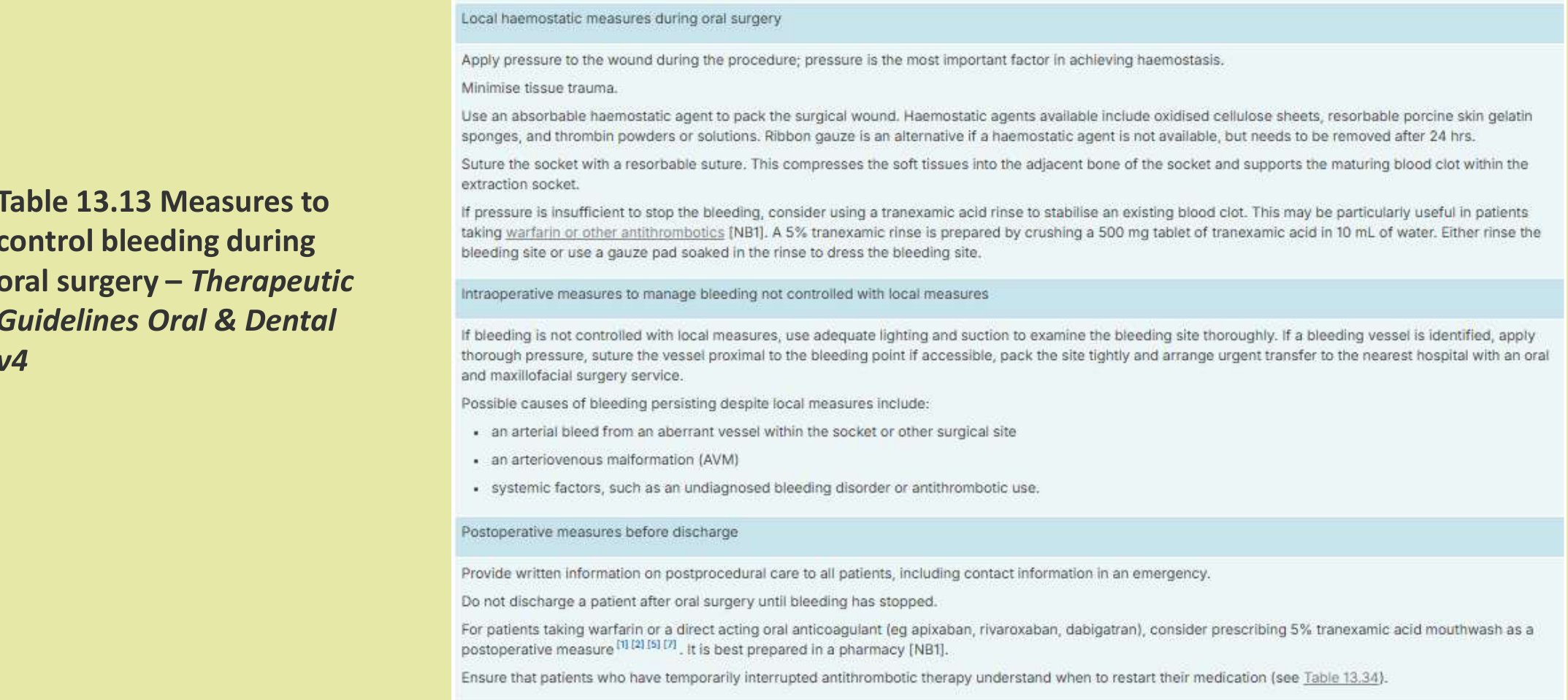
Topical Haemostatic Agents72
- Gelatin sponge (Gelfoam)
- Oxidised regenerated cellulose (Surgicel)
- Microfibrillar collagen (Avitene Ultrafoam, Davol, Warwick, Surgicel fibrillar)
- Collagen plugs
- Topical thrombin
- Chitosan-based agents (e.g. HemCon) — beware shellfish allergy
- Platelet-rich plasma gel
- Bone wax
- Tranexamic acid
- Fibrin glues, cyanoacrylate (consist of mainly fibrinogen or thrombin)
Lecturer — Surgicel Preference
Surgicel was preferred because it is synthetic and heals appropriately.
- It avoids concerns for patients who may object to porcine or bovine products for cultural reasons.
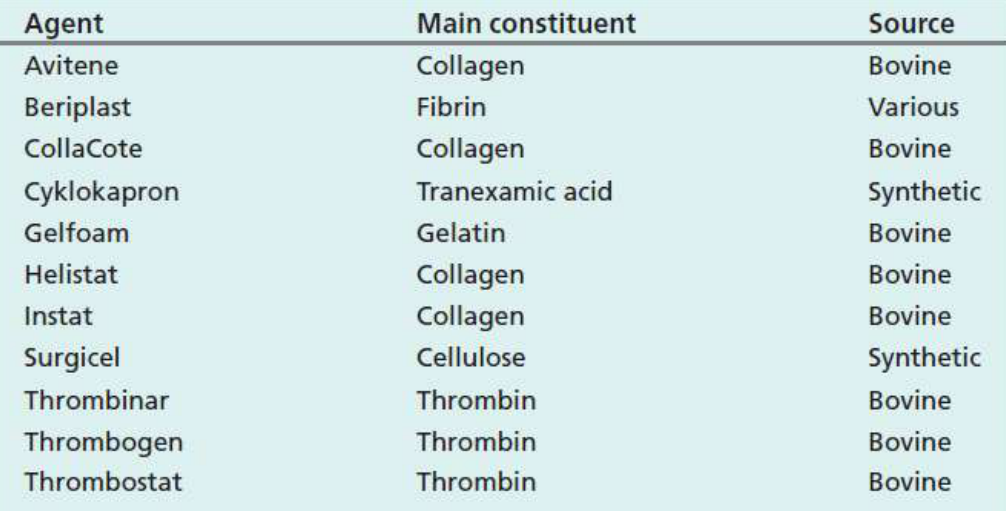
Assessing the Site of Bleeding
Sites of Bleeding During and After Oral Surgery73
- Mucosa near the floor of the mouth
- Subgingival region in tooth socket
- Socket wall — uncommon bleeding site
- Apical region in tooth socket
- Neurovascular bundle
Lecturer — Persistent Bleeding
If bleeding continues, examine the surgical site with good lighting and identify its source, considering the type of procedure performed.
- A local injection of a vasoconstrictor may be considered.
- If bleeding remains uncontrolled, re-debridement of the wound may be required because it may restart the haemostatic process when clot formation has failed.
- The neurovascular bundle is particularly relevant in implant surgery.
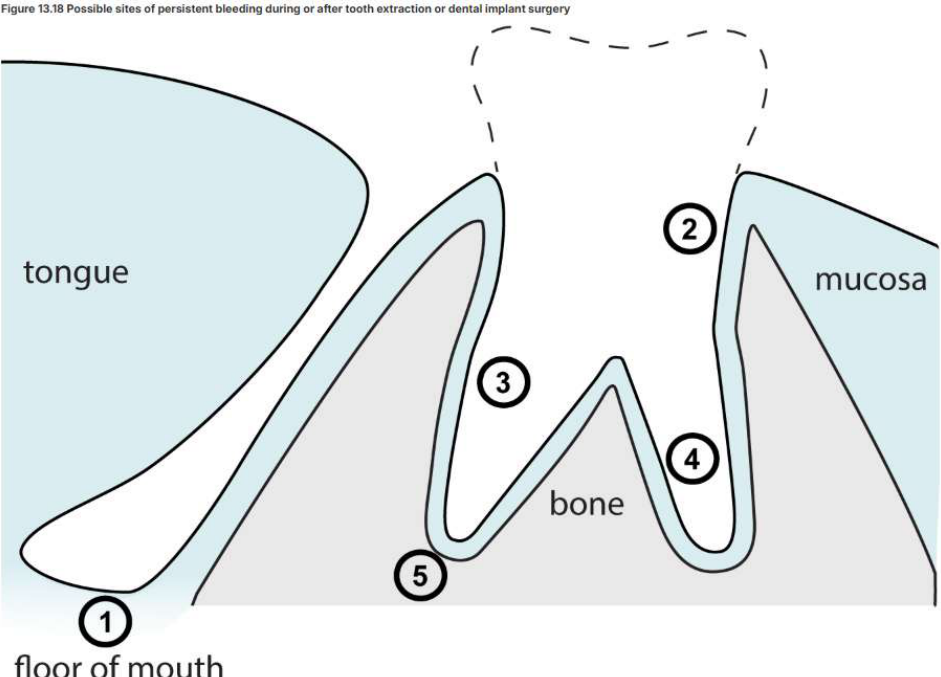
Checking for Contributing Factors
Contributing Factors to Check74
-
Check medical and medication history
-
Consider undiagnosed medical condition
-
Consider patient-specific factors that may impair haemostasis.
-
If bleeding cannot be controlled, urgently seek advice and refer the patient to an emergency department.
-
Contact the local emergency department and request communication with the oral and maxillofacial surgery registrar so the patient’s arrival is anticipated.
Purpose of Identifying Factors
Identifying factors →
-
Gauge likelihood bleeding will be controlled with local measures
-
Urgency for seeking advice or referring to ED
-
Management
-
Identify whether the bleeding is local, procedure-related, medication-related or due to an underlying haemostatic disorder.
-
Use the cause to guide further local measures, medical consultation or urgent referral.
Summary
Many patients can receive most of their dental treatment in a general dental practice after careful assessment of periprocedural bleeding risk, consultation with medical physician, and planning.
Lecturer — Risk Assessment Factors
Risk assessment should also account for the patient’s current medications, relevant laboratory results, and the thrombotic risk of changing therapy.
- Local haemostatic measures remain important for patients with bleeding disorders or those taking antithrombotic drugs.
Assess Risk: (1) Procedure, (2) Patient75
- Consider referral to a hospital-based clinic / dental specialist:
- Higher-risk procedure planned for patients with impaired haemostasis
- Higher severity of the patient’s condition impairing haemostasis
- Clinician does not feel comfortable administering the haemostatic measures required
- Follow general principles (local haemostatic measures, stage extensive procedures, book early in day/week, specific post-op instructions, etc)
Lecturer — Detailed Risk Assessment
Assess both the procedure and the patient before deciding how to manage treatment.
- For the procedure, consider whether it is invasive, whether prolonged bleeding is likely, and whether haemostasis can be achieved locally.
- For the patient, check for a known bleeding disorder, relevant medical condition, antiplatelet or anticoagulant medication, and additional risk factors.
- Bleeding risk may be dynamic because of treatment, disease control, or recent factor replacement.
- Management may involve modifying the procedure or treatment timing, using additional haemostatic measures, consulting the medical practitioner or haematology centre, or referring to a specialist dental or hospital service.
References76
- Therapeutic Guidelines [retrieved April 2026]
- Oral & Dental v4 → Dental Considerations for Patients with a Medical Condition → Periprocedural bleeding risk: dental considerations
- Oral & Dental v4 → Complications of oral surgery → Bleeding during or after oral surgery
- Cardiovascular → Periprocedural management of patients with cardiovascular disease → Periprocedural use of direct-acting oral anticoagulants
- Scottish Dental Clinical Effectiveness Programme: Anticoagulants and Antiplatelets (March 2022, 2nd ed): https://www.sdcep.org.uk/published-guidance/anticoagulants-and-antiplatelets/
- World Federation of Haemophilia: Guidelines for the Management of Hemophilia: https://guidelines.wfh.org/
- Australian Bleeding Disorders Registry: https://www.blood.gov.au/clinical-guidance/bleeding-disorders/australian-bleeding-disorders-registry
- Haemophilia Foundation Australia - Find a Treatment Centre: https://www.haemophilia.org.au/support-services/find-a-treatment-centre/
- World Federation of Hemophilia:
- Overview of the WFH Treatment Guidelines: https://guidelines.wfh.org/
- Brewer A. Dental Management of Patients with Inhibitors to Factor VIII or Factor IX. Quebec: World Federation of Hemophilia; 2008. Available from: http://www1.wfh.org/publications/files/pdf-1200.pdf
- Brewer A, Elvira Correa M. Guidelines for Dental Treatment of Patients with Inherited Bleeding Disorders. Quebec: World Federation of Hemophilia; 2006. Available from: http://www1.wfh.org/publications/files/pdf-1190.pdf
- Scully C, Diz Dios P, Giangrande P. Oral Care for People with Hemophilia or a Hereditary Bleeding Tendency. Quebec: World Federation of Hemophilia; 2008. Available from: http://www1.wfh.org/publications/files/pdf-1164.pdf
- Sundaresan PD, Kruger E, Lim M, McGeachie J, Tennant M. Dentistry for patients with haemophilia: Trialling a safe and economical change in management. Haemophilia. 2024 Mar;30(2):404–9
- Scully C, Medical Problems in Dentistry (Churchill Livingstone, 7th ed., 2015)
- Kumar V, Abbas AK, Aster JC, Robbins SL, Perkins JA, ProQuest. Robbins basic pathology. 9th ed. Philadelphia: Elsevier/Saunders; 2013.
Closing77
Thank you! Questions?
Lecturer — Risk Assessment
- The key approach is to assess both procedure-related and patient-related bleeding risk.
- Most patients can be treated safely when appropriate planning, consultation and local haemostatic measures are used.
Clinical Cases
Case: Elderly patient on warfarin with back bruising
Question
Scenario: An elderly patient taking warfarin is being assessed for potential bleeding risks during a clinical evaluation.
What’s shown: A clinical photograph of the patient’s back revealing large superficial bruises.
Consider: What do these clinical signs indicate about the patient’s bleeding risk, and what additional history should be explored?
Answer
Observations:
- Large superficial bruises on the back of an elderly patient on warfarin.
Reasoning: The presence of easy bruising and large superficial bruises indicates that the patient is prone to bleeding. This demonstrates the importance of looking beyond a patient’s face to identify physical signs of bleeding risk, especially in patients taking antithrombotic medications.
Outcome: None stated.
Takeaway: It is important to check for signs of easy bruising (such as on the back) and ask about a history of prolonged bleeding from cuts or surgery, frequent nosebleeds, heavy periods, blood in stool or urine, or internal bleeding (e.g., haemarthroses) when assessing patients on antithrombotic medications.
Case: Post-extraction bleeding in a patient with haemophilia
Question
Scenario: A patient with haemophilia, participating in a pilot study where dental treatment was provided without additional blood product support, undergoes a tooth extraction.
What’s shown: The lecturer describes a specific patient from the study who experienced post-operative bleeding and presented the following day.
Consider: How was the post-extraction bleeding managed, and what was the outcome?
Answer
Observations:
- The patient presented the day after an extraction with post-operative bleeding.
- Management included the application of tranexamic acid and Surgicel, followed by suturing of the socket.
Reasoning: The lecturer highlights this specific patient’s complication and its successful management to demonstrate that post-operative bleeding can be controlled with local measures. This provides confidence that patients with haemophilia can be safely treated in a community dental setting without routine pre-operative factor support.
Outcome: Following the local haemostatic measures, there were no further complaints of post-operative bleeding.
Takeaway: Post-extraction bleeding in patients with haemophilia can be effectively managed with local measures (tranexamic acid, Surgicel, and suturing), supporting the safe delivery of dental care in the community without additional systemic blood products.
Footnotes
-
Original PDF page 1: L5.3 Haematology 3 Platlet coagulation, p.1 ↩
-
Original PDF page 2: L5.3 Haematology 3 Platlet coagulation, p.2 ↩
-
Original PDF page 3: L5.3 Haematology 3 Platlet coagulation, p.3 ↩
-
Original PDF page 4: L5.3 Haematology 3 Platlet coagulation, p.4 ↩
-
Original PDF page 5: L5.3 Haematology 3 Platlet coagulation, p.5 ↩
-
Original PDF page 6: L5.3 Haematology 3 Platlet coagulation, p.6 ↩
-
Original PDF page 7: L5.3 Haematology 3 Platlet coagulation, p.7 ↩
-
Original PDF page 8: L5.3 Haematology 3 Platlet coagulation, p.8 ↩
-
Original PDF page 9: L5.3 Haematology 3 Platlet coagulation, p.9 ↩
-
Original PDF page 10: L5.3 Haematology 3 Platlet coagulation, p.10 ↩
-
Original PDF page 11: L5.3 Haematology 3 Platlet coagulation, p.11 ↩
-
Original PDF page 12: L5.3 Haematology 3 Platlet coagulation, p.12 ↩
-
Original PDF page 13: L5.3 Haematology 3 Platlet coagulation, p.13 ↩
-
Original PDF page 14: L5.3 Haematology 3 Platlet coagulation, p.14 ↩
-
Original PDF page 15: L5.3 Haematology 3 Platlet coagulation, p.15 ↩
-
Original PDF page 16: L5.3 Haematology 3 Platlet coagulation, p.16 ↩
-
Original PDF page 17: L5.3 Haematology 3 Platlet coagulation, p.17 ↩
-
Original PDF page 18: L5.3 Haematology 3 Platlet coagulation, p.18 ↩
-
Original PDF page 19: L5.3 Haematology 3 Platlet coagulation, p.19 ↩
-
Original PDF page 20: L5.3 Haematology 3 Platlet coagulation, p.20 ↩
-
Original PDF page 21: L5.3 Haematology 3 Platlet coagulation, p.21 ↩
-
Original PDF page 22: L5.3 Haematology 3 Platlet coagulation, p.22 ↩
-
Original PDF page 23: L5.3 Haematology 3 Platlet coagulation, p.23 ↩
-
Original PDF page 24: L5.3 Haematology 3 Platlet coagulation, p.24 ↩
-
Original PDF page 25: L5.3 Haematology 3 Platlet coagulation, p.25 ↩
-
Original PDF page 27: L5.3 Haematology 3 Platlet coagulation, p.27 ↩
-
Original PDF page 29: L5.3 Haematology 3 Platlet coagulation, p.29 ↩
-
Original PDF page 26: L5.3 Haematology 3 Platlet coagulation, p.26 ↩
-
Original PDF page 28: L5.3 Haematology 3 Platlet coagulation, p.28 ↩
-
Original PDF page 31: L5.3 Haematology 3 Platlet coagulation, p.31 ↩
-
Original PDF page 33: L5.3 Haematology 3 Platlet coagulation, p.33 ↩
-
Original PDF page 30: L5.3 Haematology 3 Platlet coagulation, p.30 ↩
-
Original PDF page 32: L5.3 Haematology 3 Platlet coagulation, p.32 ↩
-
Original PDF page 34: L5.3 Haematology 3 Platlet coagulation, p.34 ↩
-
Original PDF page 35: L5.3 Haematology 3 Platlet coagulation, p.35 ↩
-
Original PDF page 36: L5.3 Haematology 3 Platlet coagulation, p.36 ↩
-
Original PDF page 37: L5.3 Haematology 3 Platlet coagulation, p.37 ↩
-
Original PDF page 38: L5.3 Haematology 3 Platlet coagulation, p.38 ↩
-
Original PDF page 39: L5.3 Haematology 3 Platlet coagulation, p.39 ↩
-
Original PDF page 40: L5.3 Haematology 3 Platlet coagulation, p.40 ↩
-
Original PDF page 41: L5.3 Haematology 3 Platlet coagulation, p.41 ↩
-
Original PDF page 42: L5.3 Haematology 3 Platlet coagulation, p.42 ↩
-
Original PDF page 43: L5.3 Haematology 3 Platlet coagulation, p.43 ↩
-
Original PDF page 44: L5.3 Haematology 3 Platlet coagulation, p.44 ↩
-
Original PDF page 45: L5.3 Haematology 3 Platlet coagulation, p.45 ↩
-
Original PDF page 46: L5.3 Haematology 3 Platlet coagulation, p.46 ↩
-
Original PDF page 47: L5.3 Haematology 3 Platlet coagulation, p.47 ↩
-
Original PDF page 48: L5.3 Haematology 3 Platlet coagulation, p.48 ↩
-
Original PDF page 49: L5.3 Haematology 3 Platlet coagulation, p.49 ↩
-
Original PDF page 50: L5.3 Haematology 3 Platlet coagulation, p.50 ↩
-
Original PDF page 51: L5.3 Haematology 3 Platlet coagulation, p.51 ↩
-
Original PDF page 52: L5.3 Haematology 3 Platlet coagulation, p.52 ↩
-
Original PDF page 53: L5.3 Haematology 3 Platlet coagulation, p.53 ↩
-
Original PDF page 54: L5.3 Haematology 3 Platlet coagulation, p.54 ↩
-
Original PDF page 55: L5.3 Haematology 3 Platlet coagulation, p.55 ↩
-
Original PDF page 56: L5.3 Haematology 3 Platlet coagulation, p.56 ↩
-
Original PDF page 58: L5.3 Haematology 3 Platlet coagulation, p.58 ↩
-
Original PDF page 57: L5.3 Haematology 3 Platlet coagulation, p.57 ↩
-
Original PDF page 59: L5.3 Haematology 3 Platlet coagulation, p.59 ↩
-
Original PDF page 60: L5.3 Haematology 3 Platlet coagulation, p.60 ↩
-
Original PDF page 61: L5.3 Haematology 3 Platlet coagulation, p.61 ↩
-
Original PDF page 62: L5.3 Haematology 3 Platlet coagulation, p.62 ↩
-
Original PDF page 63: L5.3 Haematology 3 Platlet coagulation, p.63 ↩
-
Original PDF page 64: L5.3 Haematology 3 Platlet coagulation, p.64 ↩
-
Original PDF page 65: L5.3 Haematology 3 Platlet coagulation, p.65 ↩
-
Original PDF page 66: L5.3 Haematology 3 Platlet coagulation, p.66 ↩
-
Original PDF page 67: L5.3 Haematology 3 Platlet coagulation, p.67 ↩
-
Original PDF page 68: L5.3 Haematology 3 Platlet coagulation, p.68 ↩
-
Original PDF page 69: L5.3 Haematology 3 Platlet coagulation, p.69 ↩
-
Original PDF page 70: L5.3 Haematology 3 Platlet coagulation, p.70 ↩
-
Original PDF page 71: L5.3 Haematology 3 Platlet coagulation, p.71 ↩
-
Original PDF page 72: L5.3 Haematology 3 Platlet coagulation, p.72 ↩
-
Original PDF page 73: L5.3 Haematology 3 Platlet coagulation, p.73 ↩
-
Original PDF page 74: L5.3 Haematology 3 Platlet coagulation, p.74 ↩
-
Original PDF page 75: L5.3 Haematology 3 Platlet coagulation, p.75 ↩
-
Original PDF page 76: L5.3 Haematology 3 Platlet coagulation, p.76 ↩
-
Original PDF page 77: L5.3 Haematology 3 Platlet coagulation, p.77 ↩