Occlusion and Temporomandibular Joint Examination Form
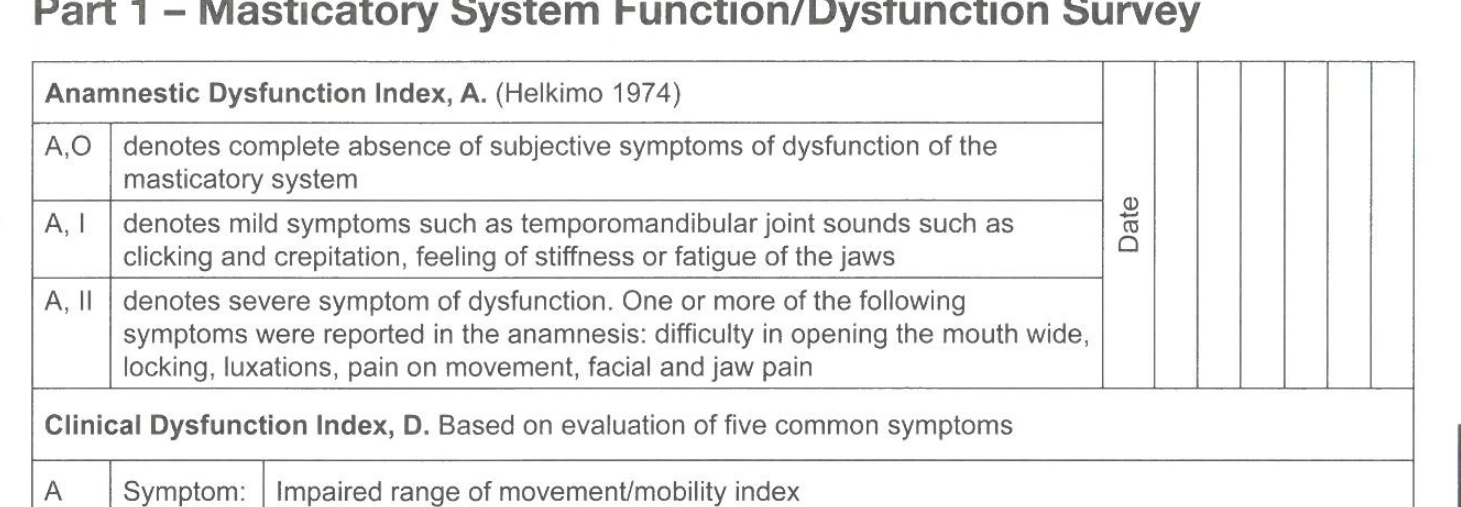
Anamnestic Dysfunction Index (Helkimo 1974)1
- A, O – denotes complete absence of subjective symptoms of dysfunction of the masticatory system
- A, I – denotes mild symptoms such as temporomandibular joint sounds (clicking, crepitation), feeling of stiffness or fatigue of the jaws
- A, II – denotes severe symptom of dysfunction. One or more of the following symptoms reported: difficulty opening the mouth wide, locking, luxations, pain on movement, facial and jaw pain
| Date | |||
|---|---|---|---|
 | 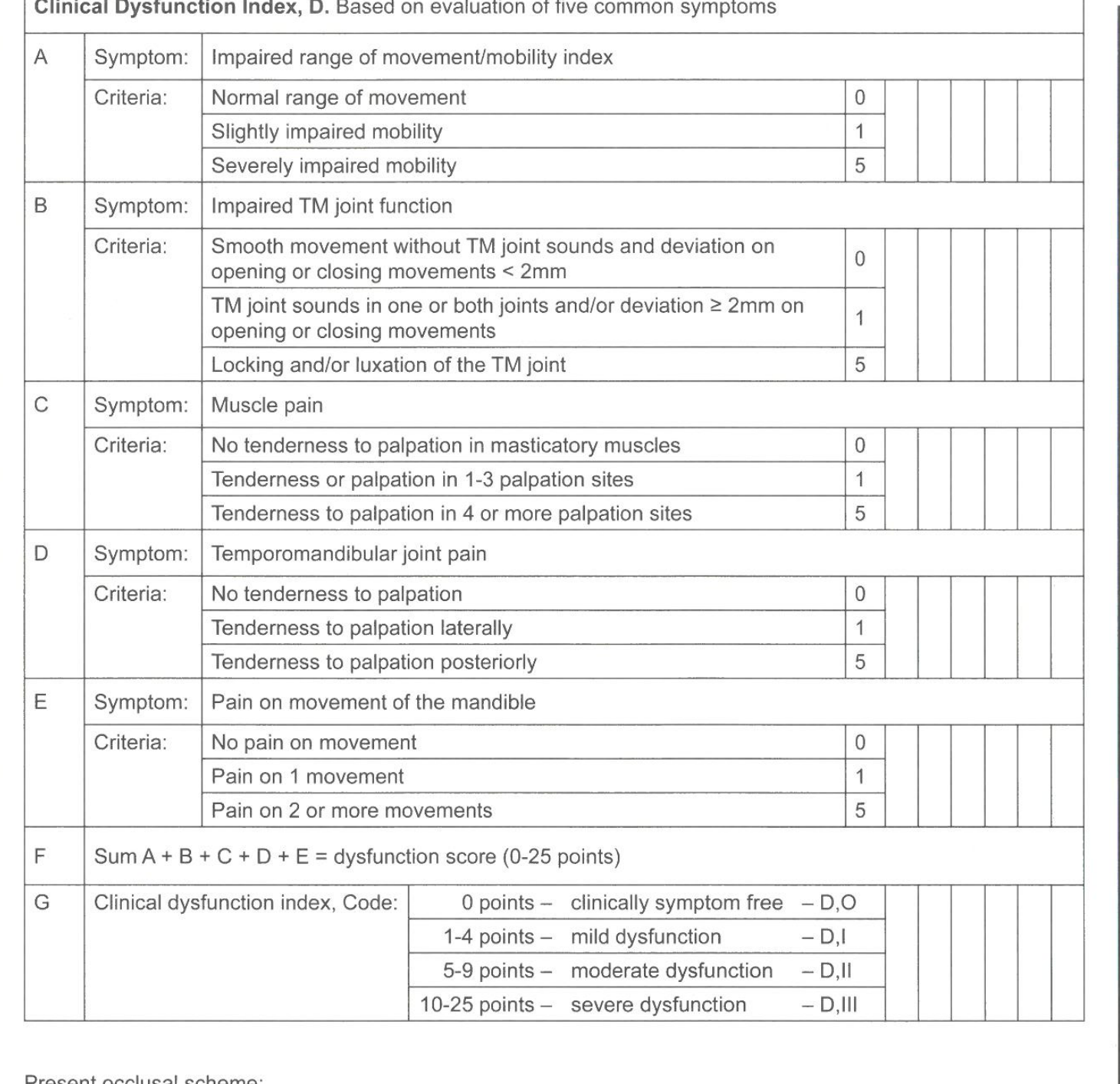 |
Clinical Dysfunction Index – Based on evaluation of five common symptoms
A. Impaired range of movement/mobility index
- Normal range of movement – 0
- Slightly impaired mobility – 1
- Severely impaired mobility – 5
B. Impaired TM joint function
- Smooth movement without TM joint sounds and deviation on opening/closing movements < 2 mm – 0
- TM joint sounds in one or both joints and/or deviation ≥ 2 mm on opening/closing movements – 1
- Locking and/or luxation of the TM joint – 5
Masticatory System Function and Dysfunction Survey
Anamnestic Dysfunction Index
C. Muscle pain
- No tenderness to palpation in masticatory muscles – 0
- Tenderness to palpation in 1–3 palpation sites – 1
- Tenderness to palpation in 4 or more palpation sites – 5
D. Temporomandibular joint pain
- No tenderness to palpation – 0
- Tenderness to palpation laterally – 1
- Tenderness to palpation posteriorly – 5
E. Pain on movement of the mandible
- No pain on movement – 0
- Pain on 1 movement – 1
- Pain on 2 or more movements – 5
F. Sum A + B + C + D + E = dysfunction score (0–25 points)
G. Clinical dysfunction index, Code:
- 0 points – clinically symptom free – D, O
- 1–4 points – mild dysfunction – D, I
- 5–9 points – moderate dysfunction – D, II
- 10–25 points – severe dysfunction – D, III
Present occlusal scheme: ______
Clinical Examination of Occlusion and Mandibular Movement
Mandibular Range of Motion and Deviation
- Max. opening in mm __________
- Max. opening at active stretch __________
- Deviation on opening
- Movement to Right / Left / Protrusion
- Slide from RCP to ICP
- Anterior component __________ mm
- Vertical component __________ mm
- Horizontal component ______ mm R or L
Occlusal Analysis and Terminal Hinge Position
Terminal Hinge Axis Initial Contact
| 18 | 17 | 16 | 15 | 14 | 13 | 12 | 11 | 21 | 22 | 23 | 24 | 25 | 26 | 27 | 28 |
|---|---|---|---|---|---|---|---|---|---|---|---|---|---|---|---|
| 48 | 47 | 46 | 45 | 44 | 43 | 42 | 41 | 31 | 32 | 33 | 34 | 35 | 36 | 37 | 38 |
Intercuspal Position Contacts
| 18 | 17 | 16 | 15 | 14 | 13 | 12 | 11 | 21 | 22 | 23 | 24 | 25 | 26 | 27 | 28 |
|---|---|---|---|---|---|---|---|---|---|---|---|---|---|---|---|
| 48 | 47 | 46 | 45 | 44 | 43 | 42 | 41 | 31 | 32 | 33 | 34 | 35 | 36 | 37 | 38 |
Laterotrusive Contacts
| 18 | 17 | 16 | 15 | 14 | 13 | 12 | 11 | 21 | 22 | 23 | 24 | 25 | 26 | 27 | 28 |
|---|---|---|---|---|---|---|---|---|---|---|---|---|---|---|---|
| 48 | 47 | 46 | 45 | 44 | 43 | 42 | 41 | 31 | 32 | 33 | 34 | 35 | 36 | 37 | 38 |
Mediotrusive Interferences
| 18 | 17 | 16 | 15 | 14 | 13 | 12 | 11 | 21 | 22 | 23 | 24 | 25 | 26 | 27 | 28 |
|---|---|---|---|---|---|---|---|---|---|---|---|---|---|---|---|
| 48 | 47 | 46 | 45 | 44 | 43 | 42 | 41 | 31 | 32 | 33 | 34 | 35 | 36 | 37 | 38 |
Protrusive Contacts
| 18 | 17 | 16 | 15 | 14 | 13 | 12 | 11 | 21 | 22 | 23 | 24 | 25 | 26 | 27 | 28 |
|---|---|---|---|---|---|---|---|---|---|---|---|---|---|---|---|
| 48 | 47 | 46 | 45 | 44 | 43 | 42 | 41 | 31 | 32 | 33 | 34 | 35 | 36 | 37 | 38 |
Bruxofacets
| 18 | 17 | 16 | 15 | 14 | 13 | 12 | 11 | 21 | 22 | 23 | 24 | 25 | 26 | 27 | 28 |
|---|---|---|---|---|---|---|---|---|---|---|---|---|---|---|---|
| 48 | 47 | 46 | 45 | 44 | 43 | 42 | 41 | 31 | 32 | 33 | 34 | 35 | 36 | 37 | 38 |
Fremitus at Intercuspal Position
| 18 | 17 | 16 | 15 | 14 | 13 | 12 | 11 | 21 | 22 | 23 | 24 | 25 | 26 | 27 | 28 |
|---|---|---|---|---|---|---|---|---|---|---|---|---|---|---|---|
| 48 | 47 | 46 | 45 | 44 | 43 | 42 | 41 | 31 | 32 | 33 | 34 | 35 | 36 | 37 | 38 |
Fremitus in Lateral Excursions
| 18 | 17 | 16 | 15 | 14 | 13 | 12 | 11 | 21 | 22 | 23 | 24 | 25 | 26 | 27 | 28 |
|---|---|---|---|---|---|---|---|---|---|---|---|---|---|---|---|
| 48 | 47 | 46 | 45 | 44 | 43 | 42 | 41 | 31 | 32 | 33 | 34 | 35 | 36 | 37 | 38 |
In the final assessment as to whether or not the patient has a problem related to occlusion, consider the following questions:
- Can the patient breathe properly? ________________________________________________________
- Can the patient chew adequately? ________________________________________________________
- Is the patient aesthetically satisfied? ________________________________________________________
- Is the phonetic pattern acceptable? ________________________________________________________
- Is the patient in periodontal health? ________________________________________________________
- Is the patient free of TMJ signs and symptoms? ________________________________________________________
- Is there an absence of retrograde patterns and wear? ________________________________________________________
- Is there a negative occlusal sense? ________________________________________________________
| Clinician Signature: | Clinician ID: | Date: |
|---|---|---|
| Supervisor Signature: (If student clinician) | Supervisor ID: |
Footnotes
-
Original PDF page 1: Form 29 - Occlusion TMJ Examination, p.1 ↩