Accurate Centric Relation Recording Using the Leaf Gauge Technique
This document describes a step-by-step clinical protocol for obtaining an accurate centric relation (CR) record using the leaf gauge. It includes the rationale, equipment, patient preparation, technique, materials, troubleshooting, and clinical applications.
Overview and Rationale
- Centric relation (CR): the condyles in their most superior-anterior position in the glenoid fossa with the mandible in a repeatable hinge closure.
- MIP (maximum intercuspation, formerly CO): the habitual maximal tooth contact. The first tooth contact when closing from CR is often called the centric occlusal contact.
- CR is the preferred starting relationship for full‑mouth rehabilitation and for cases where vertical dimension is to be altered; it provides a stable, repeatable reference.
- The leaf gauge is a simple deprogramming and recording tool useful for identifying the first point of contact when the mandible is guided into CR.
Equipment and Materials
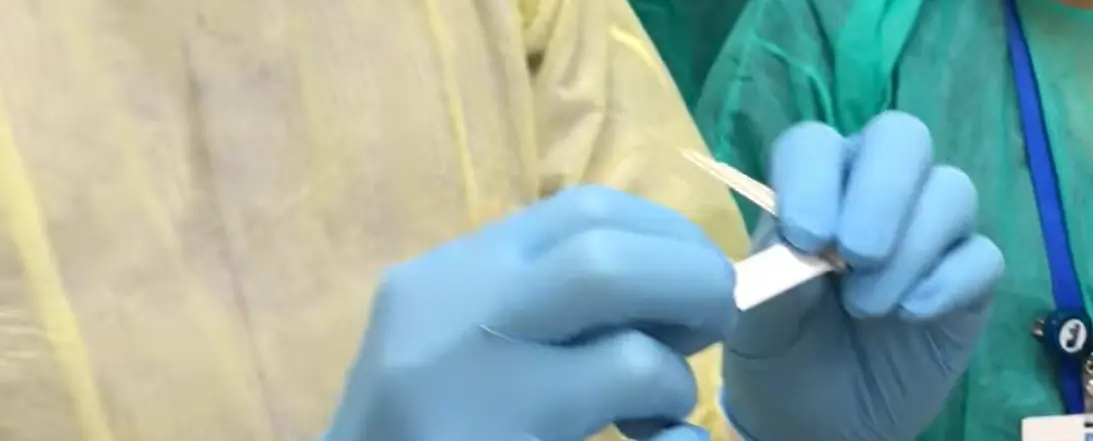
- Leaf gauge (fanned leaves):
- Each leaf ≈ 0.2 mm (200 microns). Approximately 5 leaves ≈ 1 mm.
- Note: systems vary in leaf thickness; treat thickness values as approximate.
- Bite registration material:
- Example: Kettenbach Futar Fast Set (regular).
- Comparison: Futar Fast Set (shore A scale, more flexible/trimmable — pink option) vs Futar D (shore D scale — much harder).
- Practical note: pink formulation is trimmable; other colors (e.g., green) may be used depending on availability.
- Drying materials (air syringe, gauze).
- Articulating paper (e.g., T‑foil) if needed to confirm first contact.
- Standard operatory setup and patient headrest.
Indications and Contraindications
Indications:
- Full‑mouth rehabilitations or any treatment requiring a reproducible starting relationship.
- Cases with unexplained occlusal discrepancies or postoperative tooth soreness when MIP appears acceptable.
- Quick CR verification and diagnosis chairside.
Contraindications / cautions:
- Patients who cannot be deprogrammed readily due to muscular pain, joint pain, or severe parafunction may fight the record or produce unreliable results. Some patients may require longer deprogramming (weeks) prior to CR registration.
- Overly forceful patient bite (squeezing) can distort the vector of the leaf gauge and produce a more retruded mandibular position.
Patient Preparation and Communication
- Explain the process and rehearse the jaw movements with the patient prior to placing the leaf gauge.
- Rehearsal sequence:
- Place the full leaf stack between anterior teeth so the patient feels front‑to‑back contact.
- Have the patient move the mandible forward and back several times to establish the rhythm.
- Teach the patient the required bite force — “half‑hard bite” (approximately the force used in swallowing). This approximates expected muscle pressure in CR and minimizes over‑retrusion.
- Establish signals:
- Ask the patient to indicate when they feel the first posterior tooth contact by pointing with the right hand (up/down to localize).
- Use consistent verbal cues each step (e.g., “bite together, slide forward, slide back, half‑hard bite”).
Step-by-Step Technique
- Seat the patient comfortably (upright or reclined — position does not alter CR).
- Start with the full leaf stack between the anterior teeth.
- Let the patient practice forward/back sliding and the half‑hard bite described above.
- Sequentially reduce leaf thickness:
- Remove approximately half the stack, then half of the remainder, and repeat until only a few leaves remain. This “binary halving” quickly narrows to the minimal thickness required.
- At each reduction:
- Instruct: “Bite together, slide forward, slide back, half‑hard bite.”
- Check if the patient indicates posterior tooth contact. If they do, have them point to the contact location.
- If no posterior contact, remove more leaves and repeat.
- Goal for CR record capture:
- Find the minimal leaf thickness that produces the first posterior point of contact when the mandible is guided into CR, but do NOT take the final registration with the jaws excessively open.
- Ideally there should be light clearance anteriorly but the posterior teeth are brought into near‑closure without direct posterior tooth contact during the guide into CR.
- If the patient cannot be deprogrammed (reports pain, fights the record), consider a deprogramming period (which may be up to one month) before attempting a CR record.
- Once the desired leaf thickness is determined:
- Reinsert an adequate number of leaves to provide space for the bite registration material (clinically, the presenter typically added about 10 leaves to allow ~2–3 mm interocclusal space).
- Dry the maxillary teeth to improve adhesion of the registration material.
- Express bite registration material over the posterior maxillary teeth (both sides). It is acceptable to produce separate right and left posterior records rather than a single U‑shaped piece (separate pieces are easier to trim).
- Place the leaf gauge and guide the patient: “Bite on the leaf gauge, slide forward, slide back, half‑hard bite — hold.”
- Allow the material to set, then remove the leaves and material segments.
- Verify coverage:
- Ensure registration covers second molars, first molars, second premolars, first premolars, and possibly canines.
- If desired, confirm first contact location with articulating paper prior to final trim.
- Trim and label the bite records as needed for mounting casts.
Practical Tips and Clinical Pearls
- Half‑hard bite: teach patients to approximate swallowing pressure; too light may be unstable, too hard may retrude the mandible.
- Gravity and patient posture: some clinicians prefer reclining the patient because it may feel more relaxed; CR is a spatially repeatable position and should be obtainable in any posture.
- If you find no posterior contact even at minimal leaves, you may need to add leaves back; some patients have large CR→MIP slides.
- For very accurate identification of the first point of contact, articulating paper can be used while the patient consolidates the position on a thin leaf (e.g., one leaf).
- Use multiple CR records to confirm reproducibility if there is any doubt.
- The leaf gauge is a useful diagnostic tool for:
- Identifying whether postoperative tooth soreness is occlusal (CR→MIP slide) versus endodontic origin.
- Detecting subtle occlusal interferences that are not apparent in MIP or excursive checks.
Troubleshooting
- Patient reports posterior pain or resists guidance:
- Stop and consider a deprogramming regimen (occlusal splint, anterior guidance, or a period of rest).
- Reassess temporomandibular and muscular comfort before proceeding.
- Patient bites too hard and mandibular position appears retruded:
- Instruct and rehearse the “half‑hard” bite again and reduce encouragement to squeeze.
- Registration material fails to adhere or bubbles:
- Ensure teeth are dried prior to material expression.
- Leaf gauge unable to be pulled out during registration:
- This is desirable while the material sets — the patient should hold a reproducible position.
Example Clinical Scenario
- After crown placement, a patient complains of tooth soreness despite seemingly correct MIP and lateral excursions.
- Use the leaf gauge to deprogram and guide the mandible into CR.
- Take CR records and evaluate whether the crowned tooth is a first point of contact when the mandible returns to MIP (CR→MIP slide).
- Identifying a CR→MIP discrepancy can avoid unnecessary endodontic referral and lead to occlusal adjustment instead.
Summary
- The leaf gauge technique is a rapid, reliable method to deprogram patients and obtain a reproducible centric relation record.
- Key factors for success: patient rehearsal, consistent signals, appropriate leaf thickness reduction, controlled “half‑hard” bite pressure, and proper bite registration material placement.
- The technique is useful both for precise CR mounting and for diagnostic assessment of occlusal problems.
For training purposes, practice the halving method and patient instructions until you achieve consistent records in routine cases.