Prosthodontics and Kennedy Classification1
Prosthodontics
Overview
In partial prosthodontics, the patient retains some of their natural teeth. Concepts such as edentulous anatomy, vertical dimension of occlusion, support, stability, and retention remain critical. The specific pattern of a patient’s remaining teeth determines their Kennedy classification.
Kennedy Classification System
The Kennedy classification system groups patterns of edentulism into four distinct classes.
Clinical Presentation2
- Bilateral distal extension
- Leading edge extraction
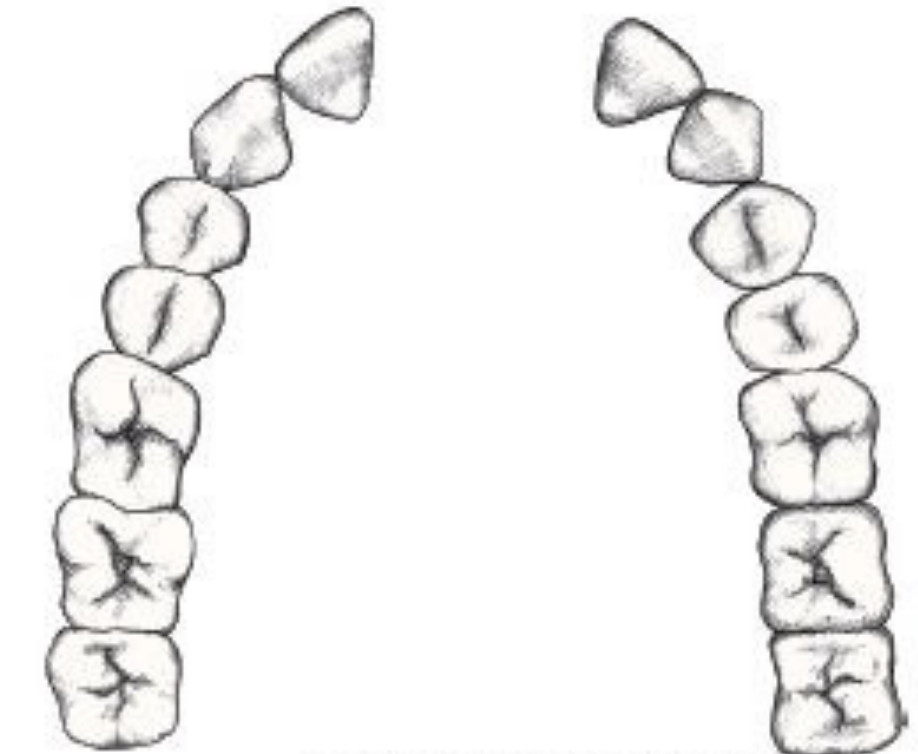
Class I: Bilateral Distal Extension
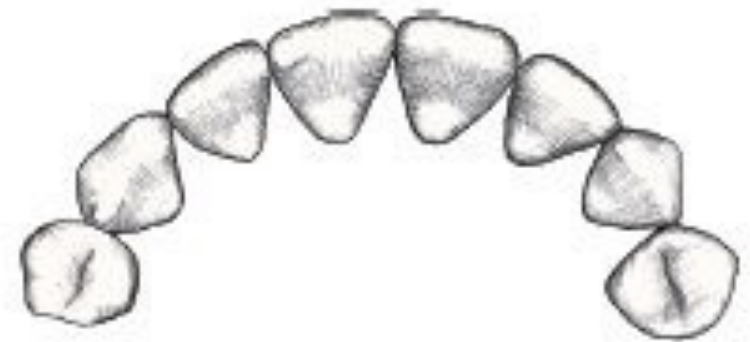
- A distal extension occurs when all teeth distal to a specific tooth are missing.
- Class I is characterized by having distal extensions on both the right and left sides of the arch.
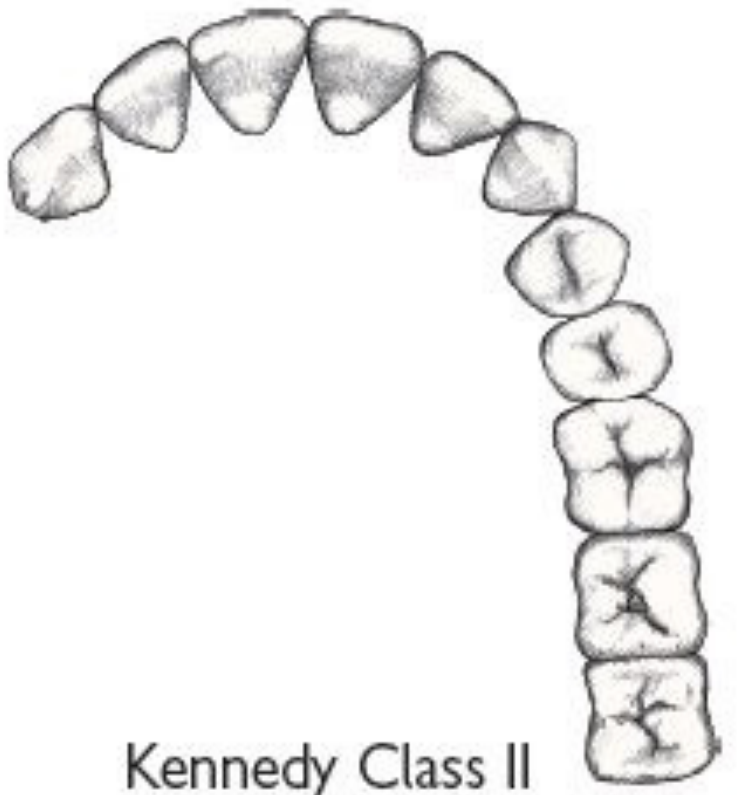
Class II: Unilateral Distal Extension
Clinical Presentation3
- Unilateral distal extension
- A helpful way to distinguish the first two classes is that Class 1 has two distal extensions, while Class 2 has only one.
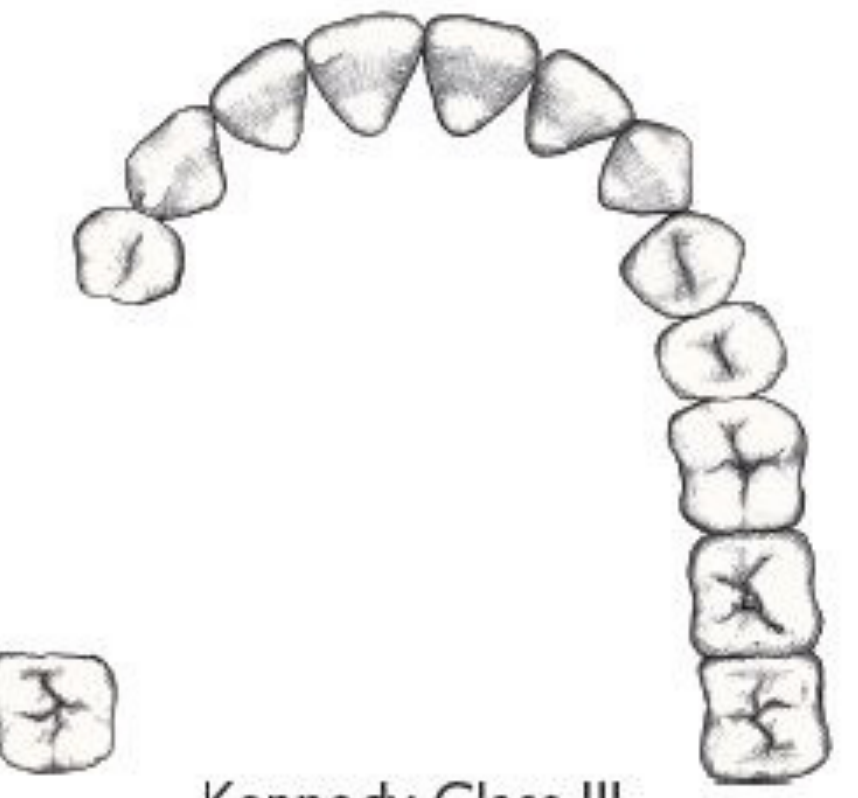
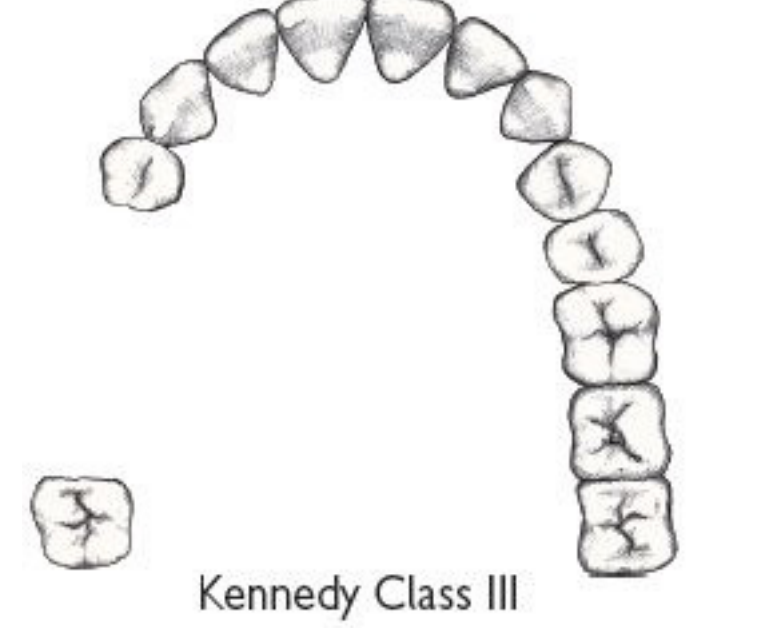
Class III: Unilateral Bounded Edentulous Space
Clinical Presentation4
- Unilateral bounded edentulous space (BES)
- A bounded edentulous space is an area of missing teeth that has natural teeth located both anterior and posterior to it (bounded on both sides).
- Class III refers to a single unilateral bounded space.
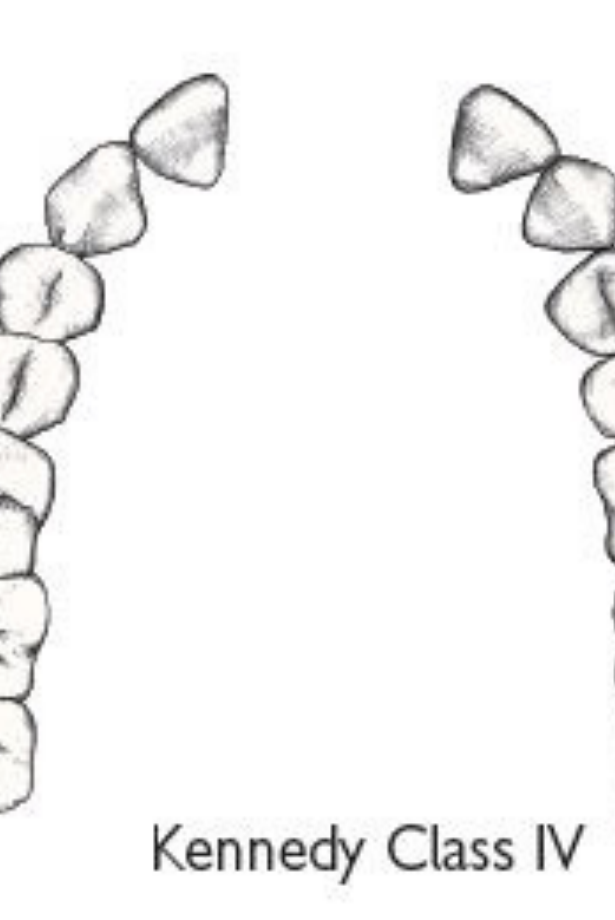
Class IV: Bilateral Bounded Edentulous Space
Clinical Presentation5
- Bilateral bounded edentulous space (BES)
- Space must cross the midline
- In Class IV, "bilateral" indicates that a single bounded edentulous space crosses the midline of the arch.
Applegate’s Rules for Classification
- Rule #1: Classification should be assigned after any extractions have been completed.
- This includes removing teeth with a hopeless periodontal prognosis or non-restorable conditions.
- Rule #2: If a third molar is missing and is not to be replaced, it is not considered in the classification.
- They do not count as distal extensions.
- Rule #3: If a third molar is present and is to be used as an abutment, it is considered in the classification.
Rules One Through Three6
Rules Four Through Six
- Rule #4: If a second molar is missing and is not to be replaced, it is not considered in the classification.
- This applies if they are not planned to be replaced by the partial denture.
- Rule #5: The most posterior edentulous area always determines the classification.
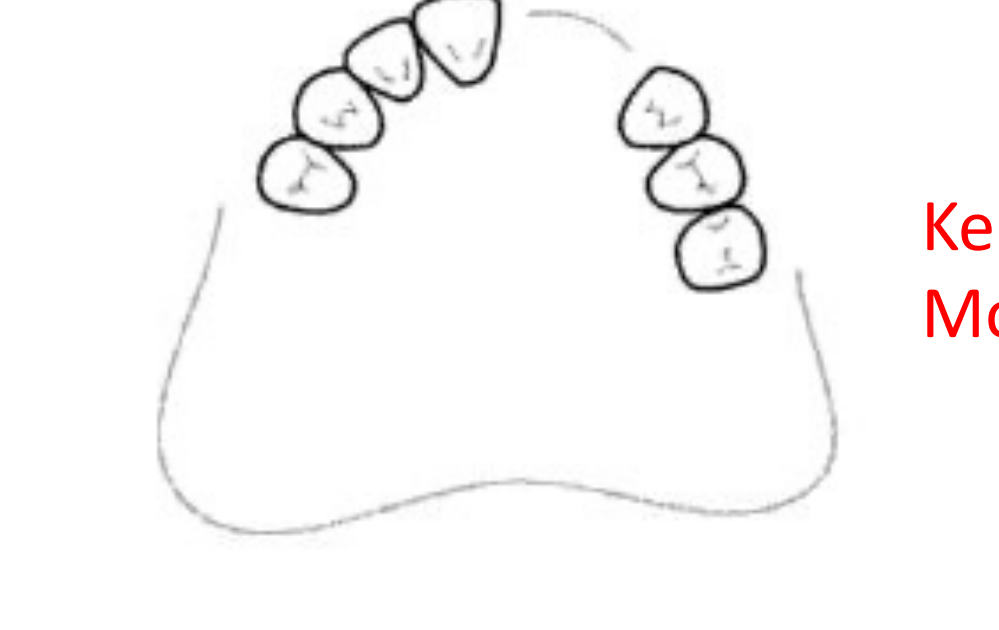
- Rule #6: Edentulous areas other than those determining the classification are referred to as modifications and are designated by their number.
Example Application7
Kennedy Class I, Modification 1
Rules Seven and Eight8
- Rule #7: The extent of the modification is not considered, only the number of additional edentulous areas.
- The number of teeth missing within the space does not matter; only the number of additional edentulous spaces matters.
- Rule #8: There can be no modification areas in Class IV arches. Any edentulous area lying posterior to the single bilateral area determining the classification would instead change the classification.
- By Rule 5, any edentulous space lying posterior to a bilateral bounded edentulous space would determine the classification instead.
Clinical Practice Problems9101112
Kennedy Class III Modification 1
Kennedy Class III Modification 2
Kennedy Class II Modification 3
Kennedy Class 1 Modification 1
Audio Appendix
Additional Audio Content
The following sections from the lecture audio did not correspond to any heading in the main document.
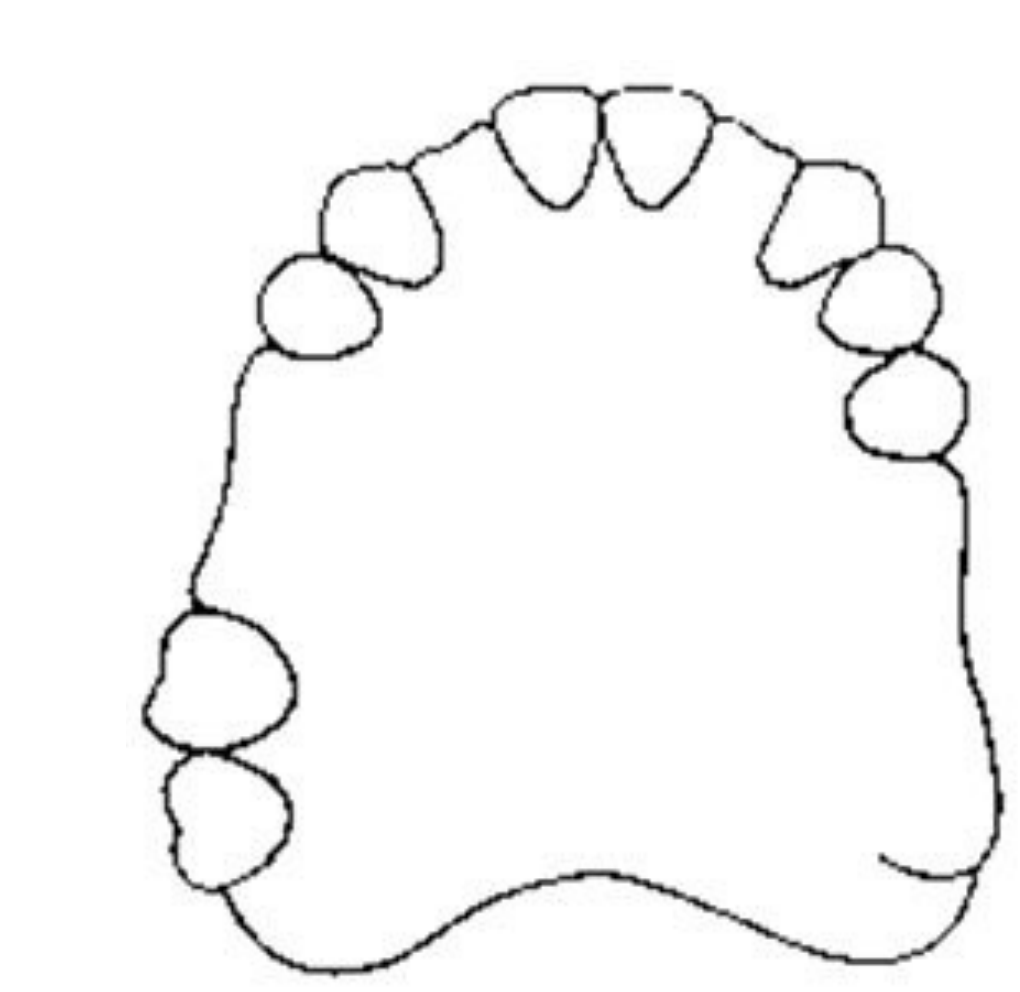
Case Study: Upper Arch with Bilateral Distal Extension and Midline Space
- Presentation: An upper arch featuring bilateral distal extensions and a bounded edentulous space that crosses the midline.
- Classification: The bilateral distal extensions define the arch as Class 1. Although the anterior space crosses the midline (which would be Class 4 in isolation), it is treated as a single modification because the Class 1 designation takes precedence.
- Result: Kennedy Class 1 modification 1.

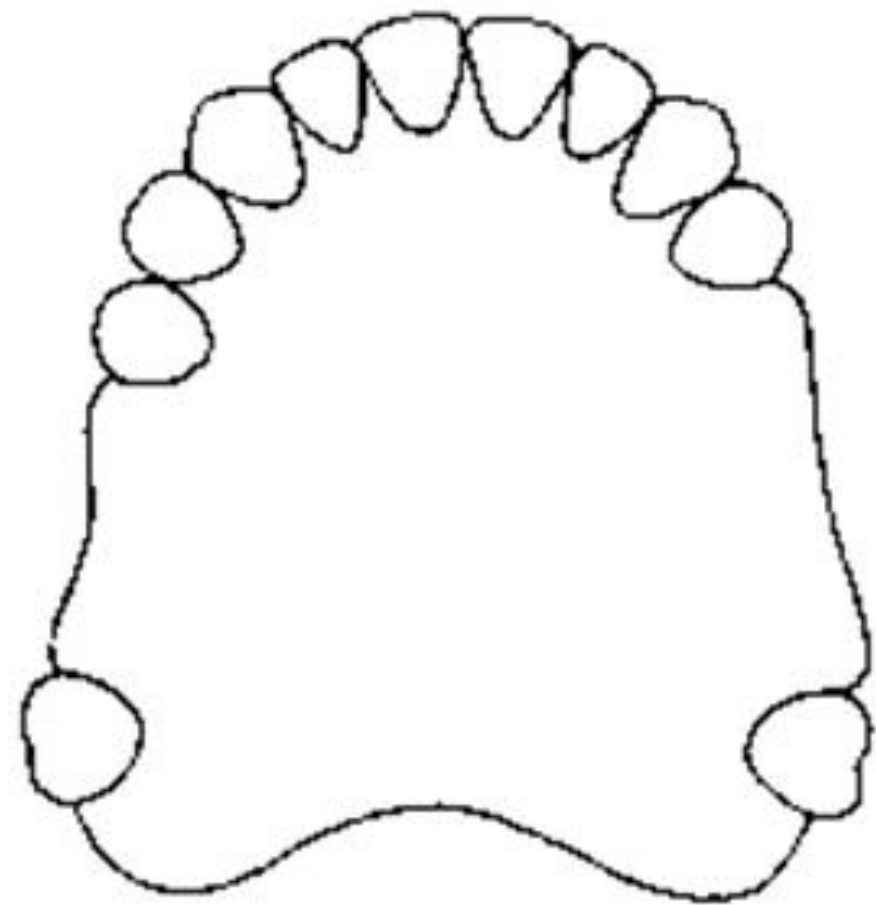
Case Study: Upper Arch with Third Molar Abutments
- Presentation: A partially edentulous upper arch with two bounded edentulous spaces. Third molars are present and acting as abutments.
- Classification: Because the third molars are present, the spaces are bounded. The most posterior space determines the class (Class 3). The second space is counted as a modification.
- Result: Kennedy Class 3 modification 1.
Case Study: Lower Arch with Multiple Bounded Spaces
- Presentation: A partially edentulous lower arch with three bounded edentulous spaces. The most posterior spaces involve missing first molars.
- Classification: One posterior space defines the Kennedy Class 3. The remaining two spaces are counted as modifications.
- Result: Kennedy Class 3 modification 2.

Case Study: Upper Arch with Distal Extension and Small Spaces
- Presentation: An upper arch with one distal extension and three small bounded edentulous spaces (including spaces where only one tooth is missing).
- Classification: The distal extension automatically determines the classification as Class 2. The three additional spaces are modifications.
- Result: Kennedy Class 2 modification 3.
Footnotes
-
Original PDF page 1: Prosthodontics - 10 - Kennedy Classification, p.1 ↩
-
Original PDF page 2: Prosthodontics - 10 - Kennedy Classification, p.2 ↩
-
Original PDF page 3: Prosthodontics - 10 - Kennedy Classification, p.3 ↩
-
Original PDF page 4: Prosthodontics - 10 - Kennedy Classification, p.4 ↩
-
Original PDF page 5: Prosthodontics - 10 - Kennedy Classification, p.5 ↩
-
Original PDF page 6: Prosthodontics - 10 - Kennedy Classification, p.6 ↩
-
Original PDF page 7: Prosthodontics - 10 - Kennedy Classification, p.7 ↩
-
Original PDF page 8: Prosthodontics - 10 - Kennedy Classification, p.8 ↩
-
Original PDF page 9: Prosthodontics - 10 - Kennedy Classification, p.9 ↩
-
Original PDF page 10: Prosthodontics - 10 - Kennedy Classification, p.10 ↩
-
Original PDF page 11: Prosthodontics - 10 - Kennedy Classification, p.11 ↩
-
Original PDF page 12: Prosthodontics - 10 - Kennedy Classification, p.12 ↩