Prosthodontics1
Removable Partial Denture Components
Definition of Rest2
- A rigid extension of a Removable Partial Denture (RPD) framework that contacts the occlusal, lingual, or incisal surface of an abutment tooth.
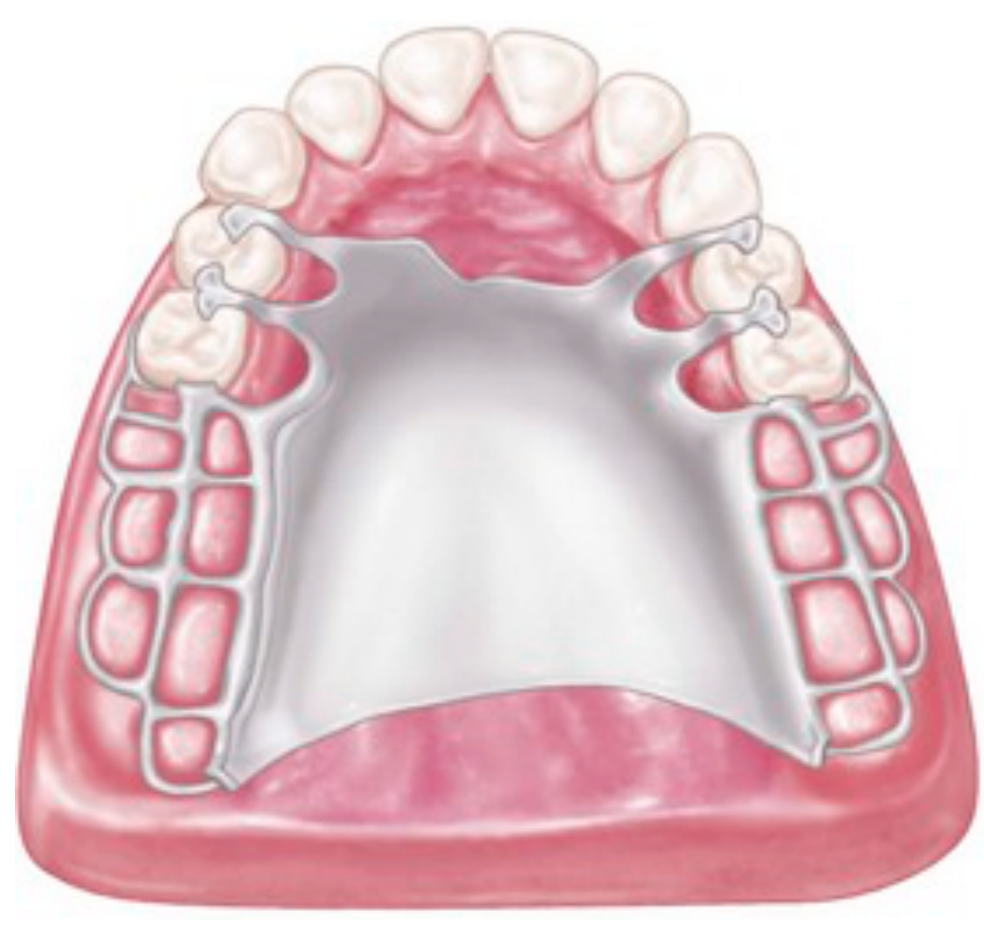 |  |
Rests and Rest Seats
Definition and Function of Rests
Primary Function
- Directs forces through the long axis of the tooth to provide support. board-exam-question
- Rests provide resistance to vertical seating forces, acting as a rigid vertical stop that prevents the partial denture from being seated too far down on the abutment teeth.
- While the rest is part of the metal framework, the rest seat is the space prepared into the tooth surface by an operator using a handpiece and burr to receive the rest.
Rest Seat Preparation3
A rest seat is prepared into the occlusal, lingual, or incisal surface of an abutment tooth in order to receive and support a rest.
Preparation Requirements
Preparation is required to ensure the rest fits properly and the metal has adequate thickness. If the preparation is too shallow, the metal rest may be too thin, leading to potential bending or breakage.
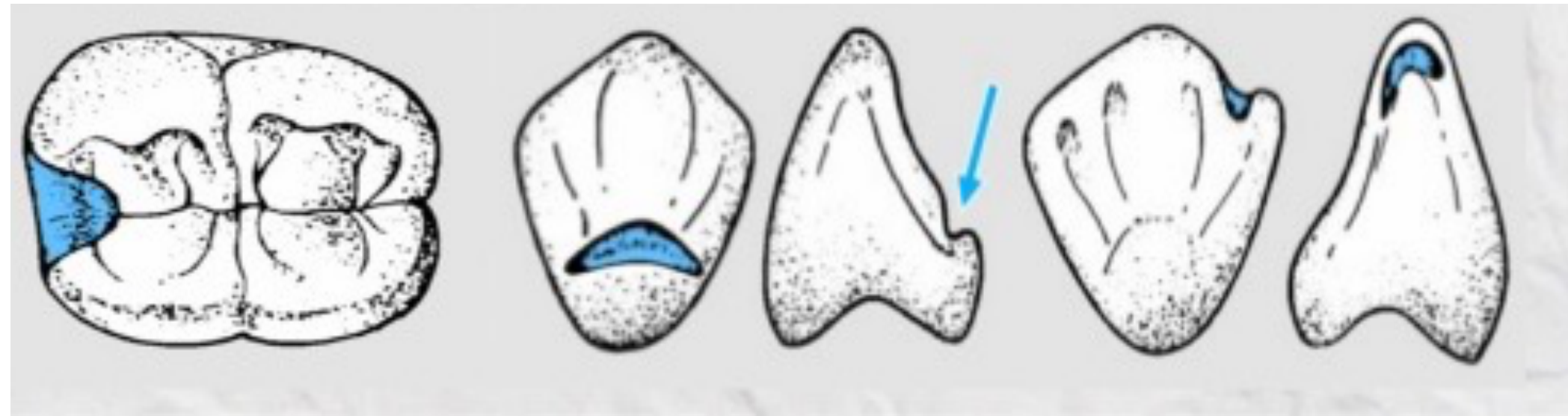
Occlusal Rest Specifications
Dimensions and Shape
- Outline Form: Rounded, semicircular (spoon-shaped).
- Location: Prepared on the occlusal surface of posterior abutment teeth (premolars or molars).
- Mesiodistal (MD) Width: One-third of the tooth width.
- Intercuspal Width: One-half of the tooth width.
- Bucco-lingual width: Approximately one-half of the intercuspal width (the distance between the buccal and lingual cusps).
- Depth: 1.5mm deep for base metal.
- Depth: At least 1.5 mm deep for base metal to ensure material strength.
Structural Requirements
- The floor of the rest seat inclines apically toward the center of the tooth.
- The angle formed with the vertical minor connector must be less than 90˚.
Cingulum Rest Specifications 4
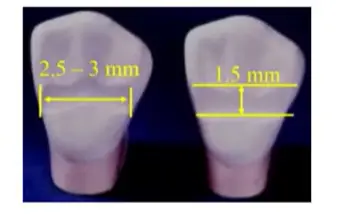
Dimensions and Shape
- Outline Form: Inverted V or U shape.
- Mesiodistal (MD) Length: 2.5–3mm.
- Labiolingual Width (Ledge): 2mm.
- Depth: 1.5mm.
Clinical Considerations
- Contraindications: Mandibular incisors.
- Benefits:
- Good distribution of occlusal load.
- Esthetically pleasing.
- Increased strength due to proximity to the major connector.
Incisal Rest Specifications
Dimensions and Shape
- Outline Form: Rounded notch at the incisal angle.
- Mesiodistal (MD) Length: 2.5mm.
- Depth: 1.5mm.
- Depth: 1.5 mm in the vertical dimension.

- Depth: 1.5 mm in the vertical dimension.
Clinical Considerations
- Used as an indirect retainer.
- Provides less favorable leverage than a lingual rest.
- Not used often due to esthetic compromise.
Proximal Plates and Guide Planes
Proximal Plate Definition5
A proximal plate is a metal plate that contacts the proximal surface of an abutment tooth.
- Classification: It is a specific type of minor connector that connects the major connector to other components of the partial denture.
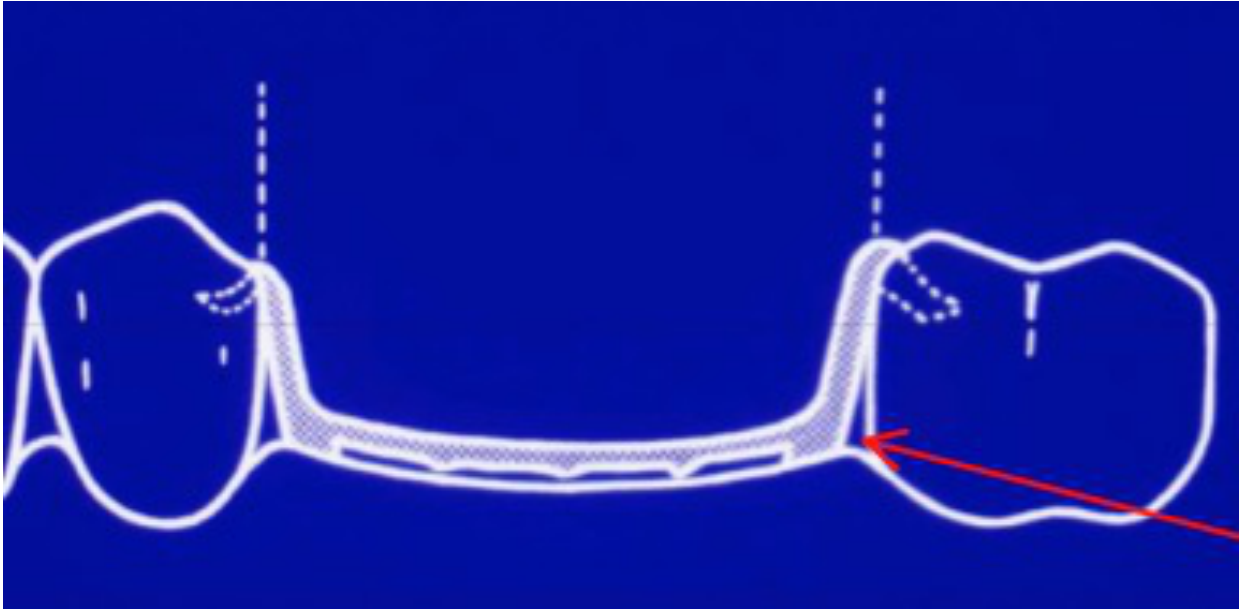
Guide Plane Specifications
Definition and Purpose
- Flat parallel surfaces of abutment teeth that provide a path of insertion and removal.
- Preparation: Operators often must plane the natural contour of the tooth to remove undercuts and create a parallel surface.
Dimensions
- Buccolingual Width: One-third of the tooth width.
- Vertical Extension: Extends 2–3mm vertically down from the marginal ridge.
Indirect Retainers
Mechanics of Distal Extensions6
- The distal extension area of a partial denture is “loose” and not anchored posteriorly.
- Rotational movement occurs around a fulcrum line, which is an imaginary line drawn through the most distal rests.
The Problem with Distal Extensions
In a distal extension RPD, the base rests on soft tissue. Because soft tissue is "bouncy," the partial can experience rotational movement around the axis of rotation (fulcrum line).
 | 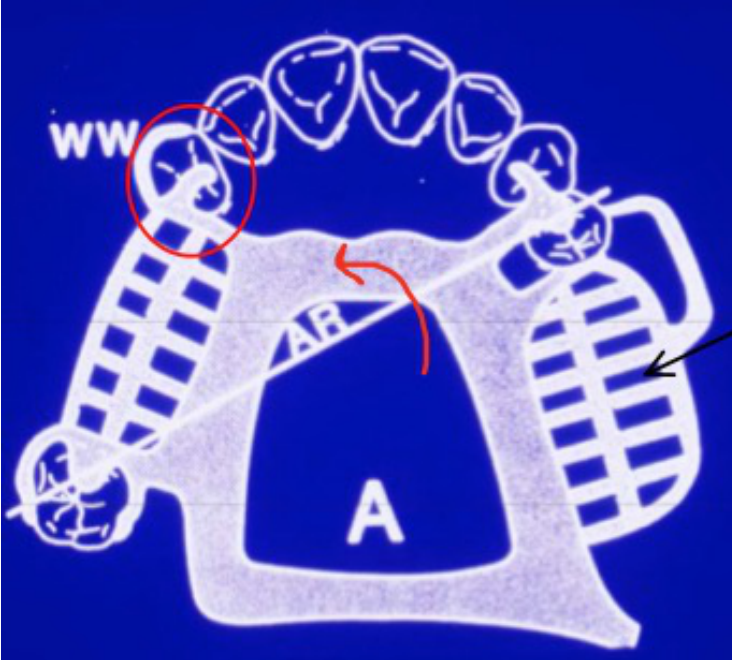 |
Function of the Indirect Retainer
- Positioned directly perpendicular and anterior to the fulcrum line.
- Provides bracing to resist the rotational movement of the distal extension area.
- Form: In most cases, the indirect retainer is a rest (such as a cingulum or occlusal rest).
- Retention: Together with direct retainers (clasps), indirect retainers prevent the displacement of the denture base in an occlusal direction (away from the tissues).
Footnotes
-
Original PDF page 1: Prosthodontics - 12 - Rests & Proximal Plates, p.1 ↩
-
Original PDF page 2: Prosthodontics - 12 - Rests & Proximal Plates, p.2 ↩
-
Original PDF page 3: Prosthodontics - 12 - Rests & Proximal Plates, p.3 ↩
-
Original PDF page 4: Prosthodontics - 12 - Rests & Proximal Plates, p.4 ↩
-
Original PDF page 7: Prosthodontics - 12 - Rests & Proximal Plates, p.7 ↩
-
Original PDF page 9: Prosthodontics - 12 - Rests & Proximal Plates, p.9 ↩