Smoking and Periodontal Disease1
- Dr Pradeep
- Dr Anna Hughes
- Dr Tina Choo
- Ass Prof Leticia A. Miranda
Smoking Statistics and Global Perspective23
-
America – 12.5% of adults (31 M)
-
America – 400K or 1/5 deaths
-
Europe – 26.4% of adults
-
Australia – 23% of adults (3.5M) smokers (NHS survey 2004-2005)
-
Now 13.6% in Australia, cost now $25+
-
More Men vs women
-
Contributes to 1/3 of cancer deaths
-
In 2015, nearly 21,000 deaths in Australia were attributable directly to tobacco smoking
-
As many as 6.25 trillion cigarettes are smoked annually across the globe.
-
Tobacco kills 6 million people each year.
-
Only 30% of the world’s population have access to smoking cessation services.
-
Only 22% of the world’s population are protected by smoke-free laws.
Chemical Composition of Cigarettes4
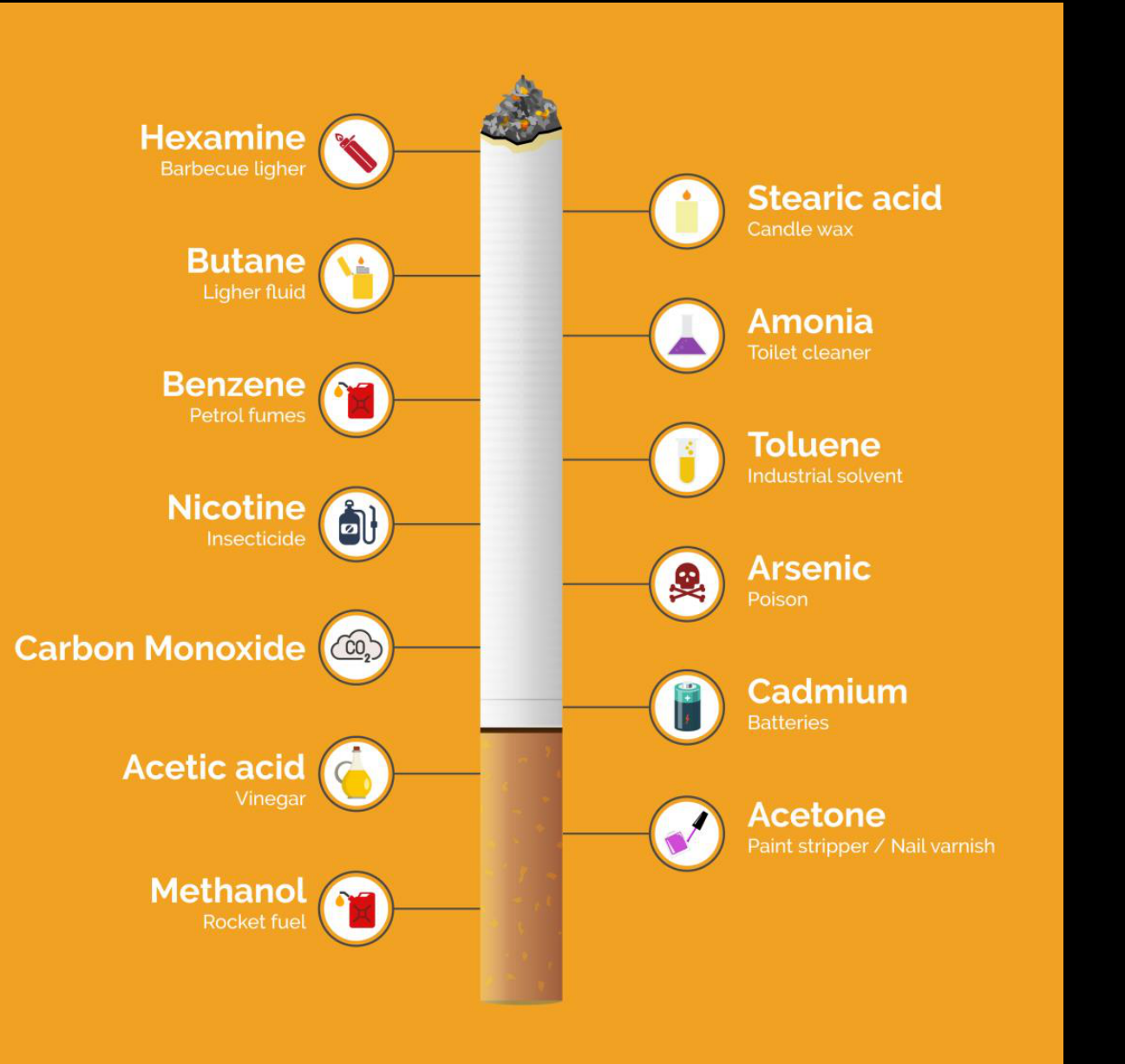
Over 4000 chemicals
Over 60 potentially toxic carcinogens: CO, hydrogen cyanide, reactive oxidizing radicals, nicotine, Tar – a chemical substance that occurs when tobacco is burnt.
Nicotine is the addictive part – physical effects similar to caffeine. Stimulant, increases BP & vasoconstriction.
Dangerous combination
Nicotine Absorption and Physiological Effects5
- Nicotine, which is an alkaloid, is found within the tobacco leaf and evaporates when the cigarette is lighted.
- It is quickly absorbed in the lungs, and it reaches the brain within 10 to 19 seconds.
- Nicotine is highly addictive. It causes a rise in blood pressure, increased heart and respiratory rates, and peripheral vasoconstriction.
Biochemical Assessment of Smoking Status6
- Biochemical tests can also be used to assess smoking status, including exhaled carbon monoxide and the measurement of cotinine (the major metabolite of nicotine) in serum, saliva, or urine.
- Cotinine is measured in preference to nicotine because the half-life of nicotine is short (≈1 to 2 hours), whereas that of cotinine is approximately 20 hours.
- Plasma and saliva cotinine concentrations in smokers are approximately 100 ng/mL and the urine concentration is approximately 1200 ng/mL.
- Nonsmokers usually have plasma and saliva cotinine concentrations of less than 2 ng/mL, unless they are passive smokers.
Types of Tobacco Products7
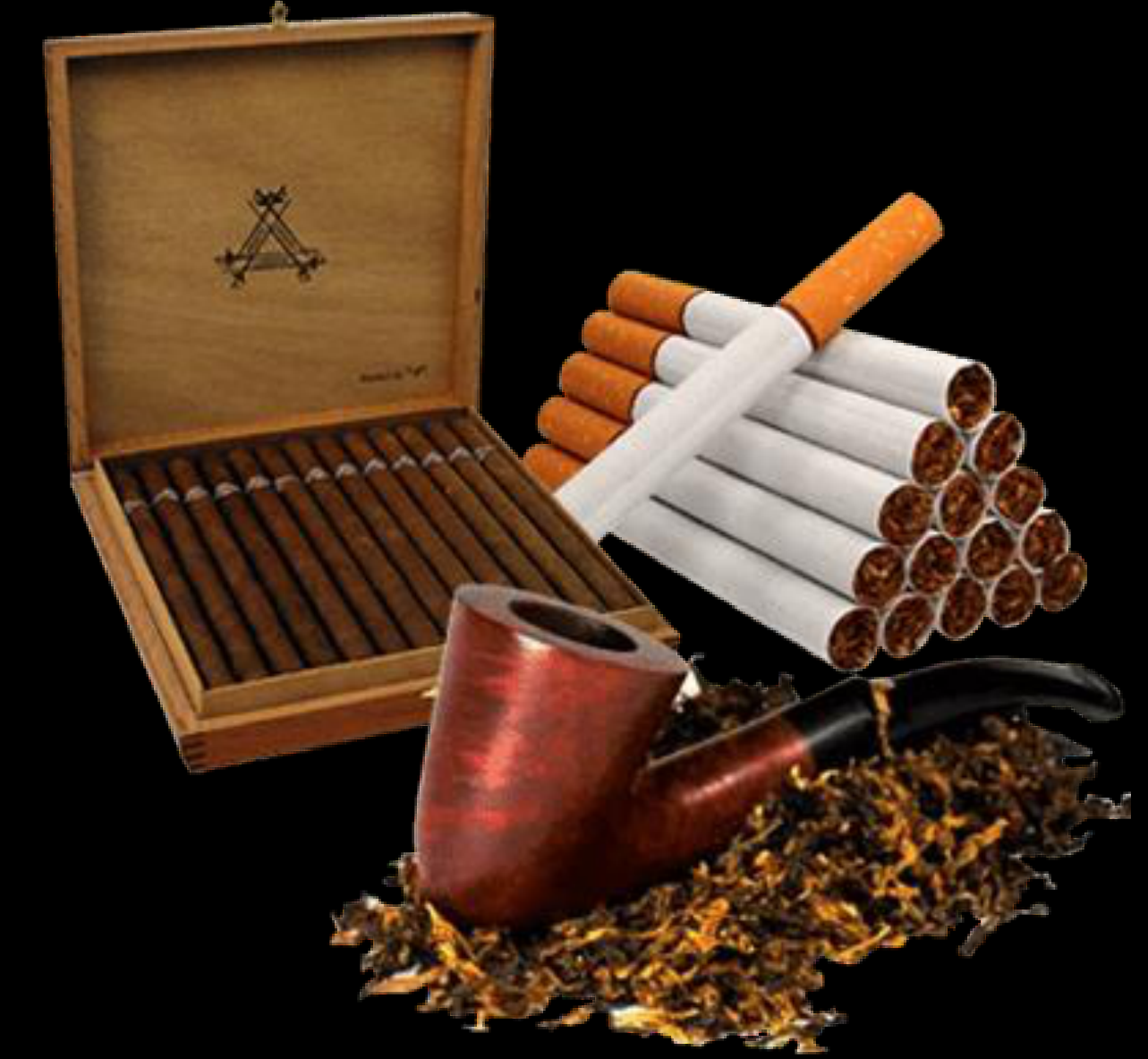
- Cigarettes
- Pipe smokers
- Cigar smokers
- Pouches
- Betel nut chewing
- Shisha
- Snus – smokeless, available in Scan, banned in Europe; Sweden has lowest rate of tobacco-related mortality, incl lung cancer.
Smokeless Tobacco Varieties
There is no safe way to use tobacco. Whether inhaled, sniffed, sucked, chewed, mixed with other ingredients or harmful chemicals added, tobacco is harmful in all its forms.
Smokeless Tobacco8
Consumed orally or nasally, without combustion (burning). There are two main types, snuff and chewing tobacco.
Dry Snuff Powdered tobacco inhaled through the nose or taken orally. Widespread use of dry snuff has declined. MOST USED: EUROPE
Moist Snuff Ground tobacco held in the mouth between the cheek and gum. Some moist snuff is wrapped into small paper or cloth packets. Other moist snuff products are known as khaini, nawa, shamman. MOST USED: WORLDWIDE
Chewing Tobacco Oral smokeless tobacco or tobacco pastes are placed in the mouth, chew or inner lip and sucked (dipped) or chewed. Also known as spit tobacco because users spit out saliva and tobacco juices. Other versions of smokeless tobacco include: plug, loose leaf, khaini, maras, gutka, and twist. Paan masala or betel quid consists of tobacco, areca nuts, catechu, slaked lime (calcium hydroxide), sweeteners and flavouring wrapped in a betel leaf. Paan masala includes: kadhipudi, hogeryale, gundi, kaddipudi, zarda, gutkha, krawm and mawa. MOST USED: ASIA, EUROPE
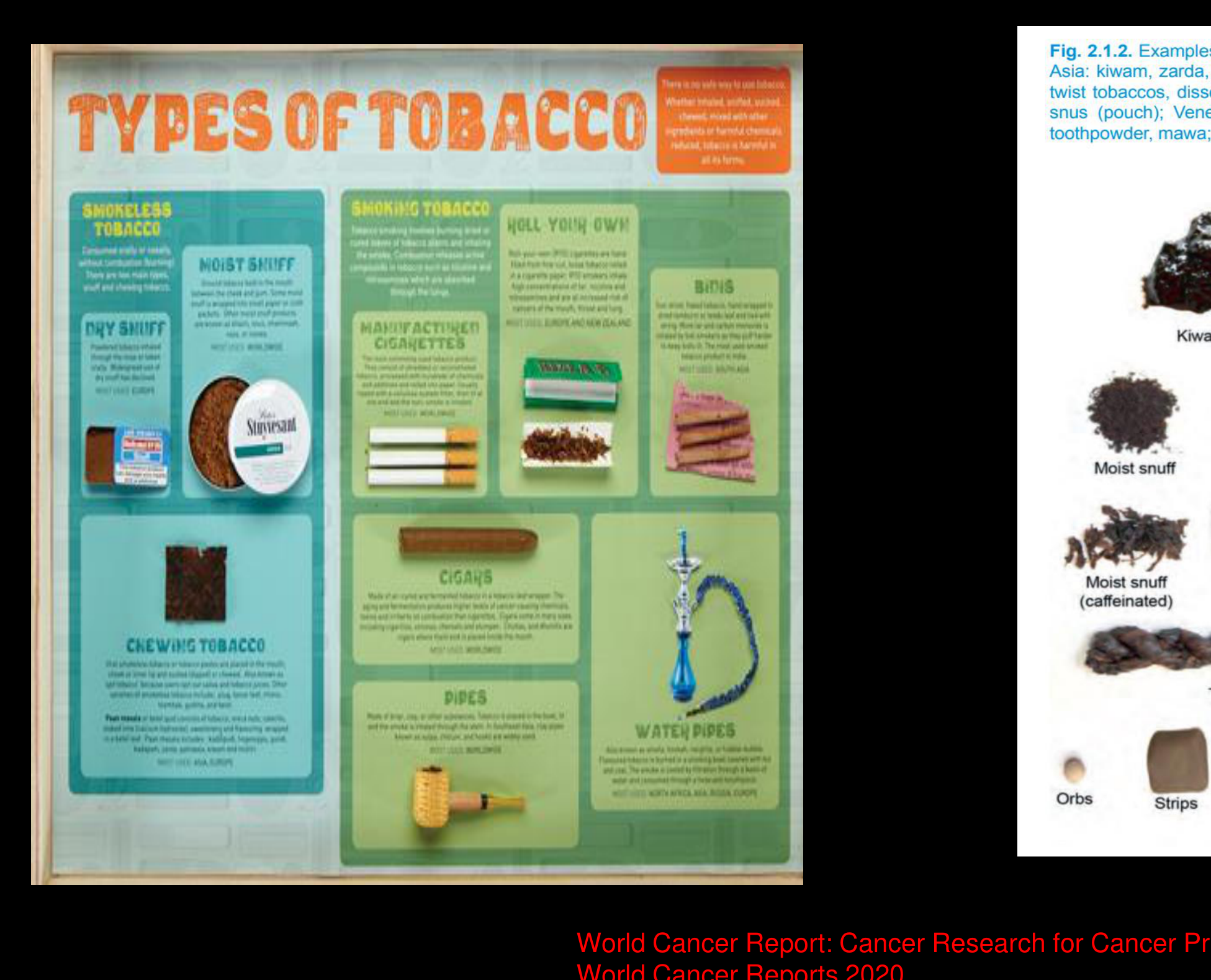 |  |
Smoking Tobacco
Tobacco smoking involves burning dried or cured leaves of tobacco plants and inhaling the smoke. Combustion releases active compounds in tobacco such as nicotine and nitrosamines which are absorbed through the lungs.
Manufactured Cigarettes The most commonly used tobacco product. They consist of shredded or reconstituted tobacco, processed with hundreds of chemicals and additives and rolled into paper covered tipping and with a cellulose acetate filter, that is lit at one end and the smoke is inhaled. MOST USED: WORLDWIDE
Roll Your Own Roll-your-own (RYO) cigarettes are hand-filled from fine-cut, loose tobacco rolled in a cigarette paper. RYO smokers inhale high concentrations of tar, nicotine and nitrosamines and are at increased risk of cancers of the mouth, throat and lung. MOST USED: EUROPE, AND NEW ZEALAND
Bidis Sun-dried, flaked tobacco, hand-wrapped in dried tendu (or temburni) leaf and tied with string. More tar and carbon monoxide is delivered by bidi smokers as they puff harder to keep bidis lit. The most used smoked tobacco product in India. MOST USED: SOUTH ASIA
Cigars Made of air-cured and fermented tobacco in a tobacco leaf wrapper. The aging and fermentation produces higher levels of cancer-causers. Cigars come in many sizes, including cigarillos, blunts, cheroots, and stumpen. Cheroots and shunnas are cigars where both ends are clipped. MOST USED: WORLDWIDE
Pipes Made of briar, clay, or other substances. Tobacco is placed in the bowl, lit and the smoke is inhaled through the stem. In Southeast Asia, clay pipes known as sullpa, chillum, and hookis are widely used. MOST USED: WORLDWIDE
Water Pipes Also known as shisha, hookah, narghile, or hubble-bubble. Flavoured tobacco is burned in a smoking bowl covered with foil and coal. The smoke is cooled by filtration through a basin of water and consumed through a hose and mouthpiece. MOST USED: NORTH AFRICA, ASIA, RUSSIA, EUROPE
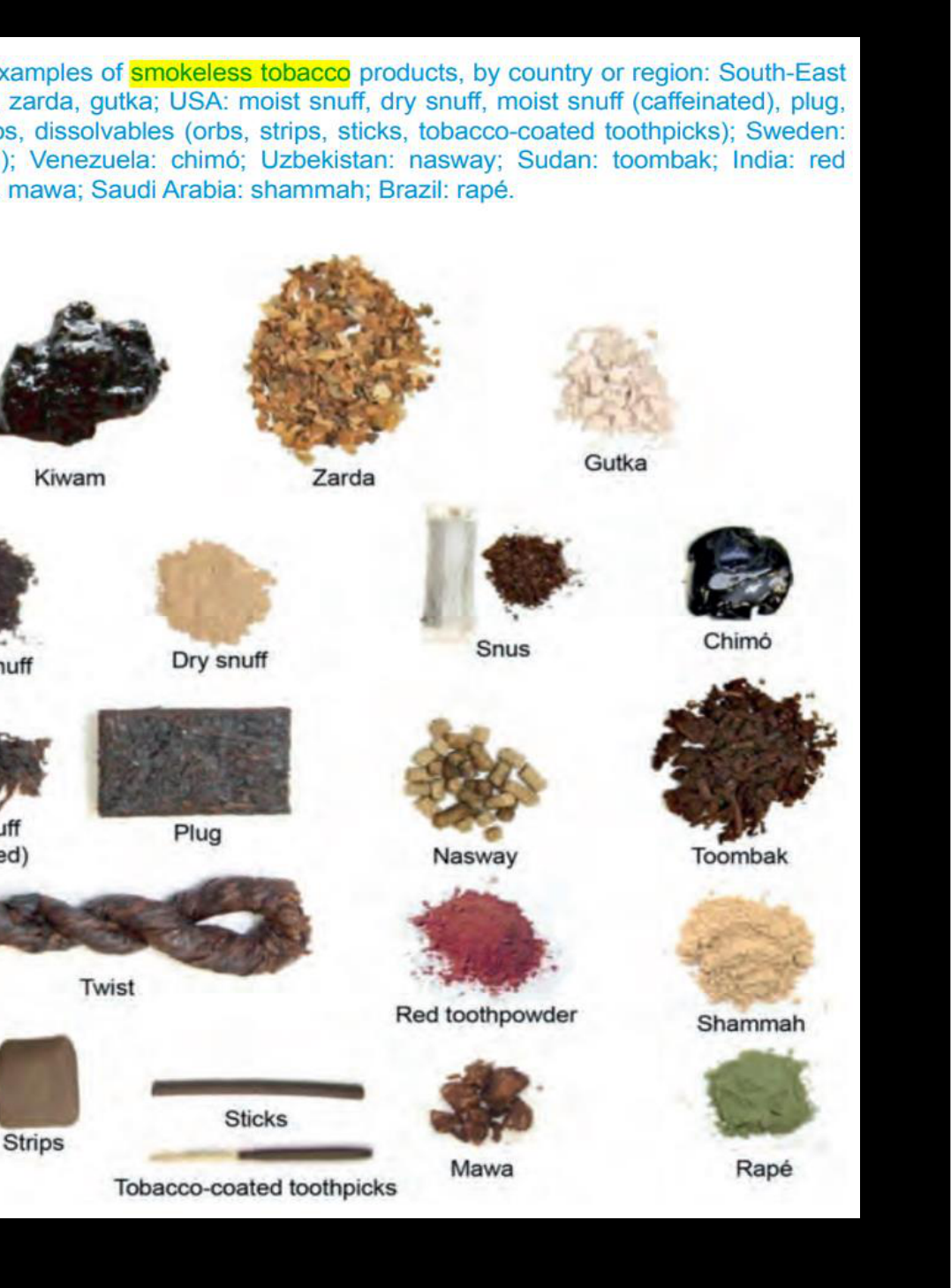
Fig. 2.1.2. Examples of smokeless tobacco products, by country or region: South-East Asia: kiwam, zarda, gutka; USA: moist snuff, dry snuff, moist snuff (caffeinated), plug, twist tobaccos, dissolvables (orbs, strips, sticks, tobacco-coated toothpicks); Sweden: snus (pouch); Venezuela: chimó; Uzbekistan: nasway; Sudan: toombak; India: red toothpowder, mawa; Saudi Arabia: shammah; Brazil: rapé.
Systemic Health Burden of Tobacco9
The use of tobacco is associated with a range of different diseases, contributing to the burden of nine disease groups. Below are the estimated percentages of the burden attributable to tobacco use for different disease groups, in 2015-16:
- 41% of respiratory diseases
- 22% of cancers
- 12% of cardiovascular diseases
- 7% of infections
- 4% of endocrine disorders
Biological Mechanisms of Periodontal Destruction
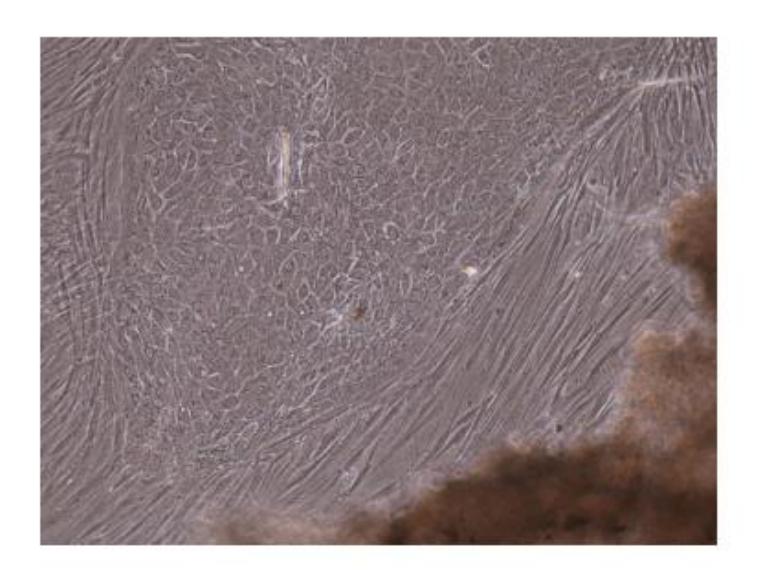
Biological Plausibility10
Effect on host
Local and Systemic
- Temperature and gases effect
- Vasoconstriction
- Microvasculature
- Fibroblast function
- Neutrophils
- Cytokines
- IgG reduced
- Adhesion molecules
Epidemiological Risk and Disease Prevalence11
- Previous epidemiological studies – smoking is a significant risk factor for the development of periodontal diseases
- Smokers have deeper PD, more deep pockets, more gingival recession, bone loss, more teeth with furcation involvement, more tooth loss, less gingivitis & less BOP
- Smokers & Former smokers have more periodontitis than NS
- 40% of Chronic Periodontitis cases may be due to smoking
- Link between passive smoking and periodontitis
Dose-Response Relationship in Attachment Loss1213
-
Effect is dose dependent: daily use, quantity & duration
-
Require a certain level of tobacco use
-
OR for severe attachment loss:
- OR 2 light smokers vs NS
- OR 4.75 in heavy smokers vs NS
-
Light (<10 cigs/day)
-
Heavy (>30 cigs/day)
-
Previously believed it was due to more plaque formation → more severe periodontitis
-
Current data suggest not
 |  |
 |
Clinical Comparison of Smokers and Non-Smokers
Smokers vs Non-Smokers14
In general, smokers present:
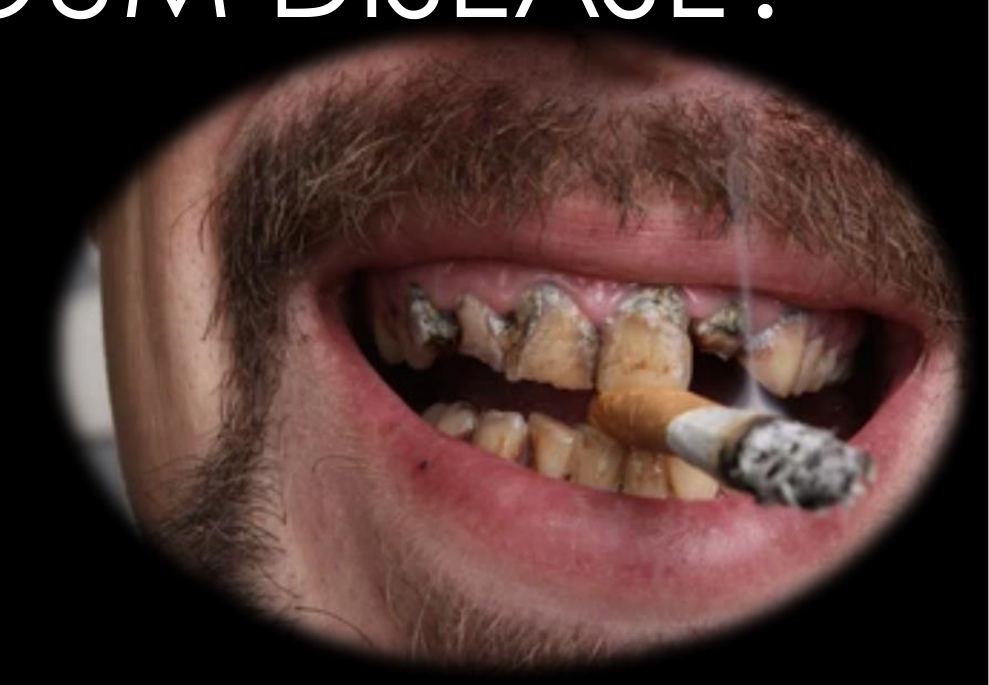
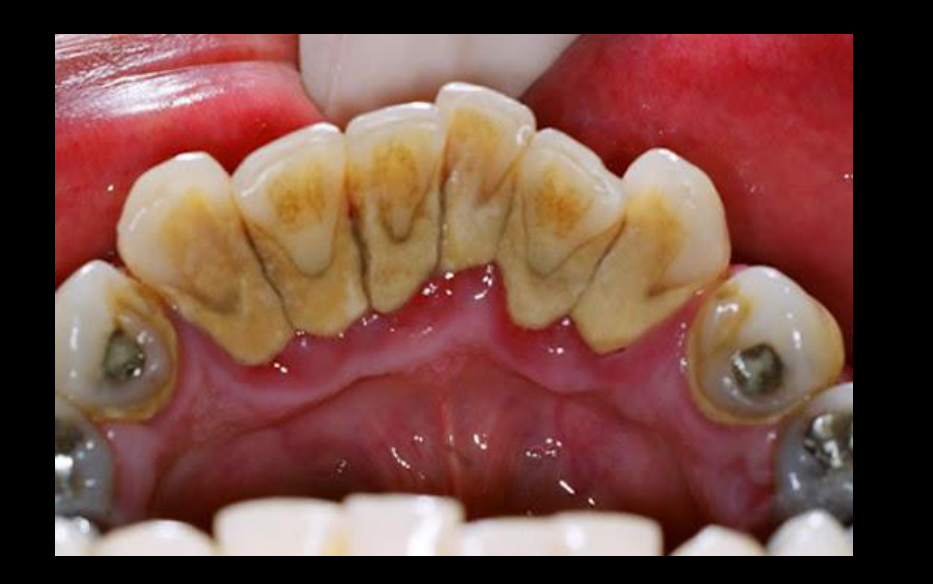
- Increased amounts of plaque and calculus (Bergstrom et al 1986 e 2005)
- LESS gingivitis and LESS BOP (Haffajee et al 2001)
- Deeper probing depths and increased number of sites with deeper probing depths (Bergstrom et al 2000)
- More attachment loss & recession (Haffajee et al 2001)
- More alveolar bone loss (Grossi et al 1995)
- More tooth loss (Krall et al 1997)
- More furcation involved teeth (Mullaly et al 1996)
Impact on Oral Microbiome and Flora15
Effect on Oral Flora Bacteria16
-
Tobacco smoke contains carbon monoxide (CO)
-
CO lowers O₂ – favour growth of anaerobic bacteria, even in shallower pockets <5mm
-
Favorable habitat for periopathogens (Aa, Pg)
-
Maxillary teeth, upper & lower incisors. Palatal areas
-
Some studies show no difference – inconsistent data on how smoking affects periodontal microbiome
-
On average, smokers were four times as likely to have periodontitis as compared with never smokers after adjusting for age, gender, race/ethnicity, education, and income/poverty ratio.
-
Former smokers were 1.7 times more likely to have periodontitis than persons who had never smoked.
-
This study also demonstrated a dose-response relationship between cigarettes smoked per day and the odds of having periodontitis.
-
In subjects smoking 9 or fewer cigarettes per day, the odds of having periodontitis were 2.8, whereas subjects who smoked 31 or more cigarettes per day were almost six times more likely to have periodontitis.
-
In former smokers, the odds of having periodontitis declined with the number of years since quitting
Effects on Gingival Vasculature and Redness
Effect on gingival blood vessels17
- Less redness & BOP
- Dose dependent
- Nicotine – Vasoconstrictive
- Fewer blood vessels
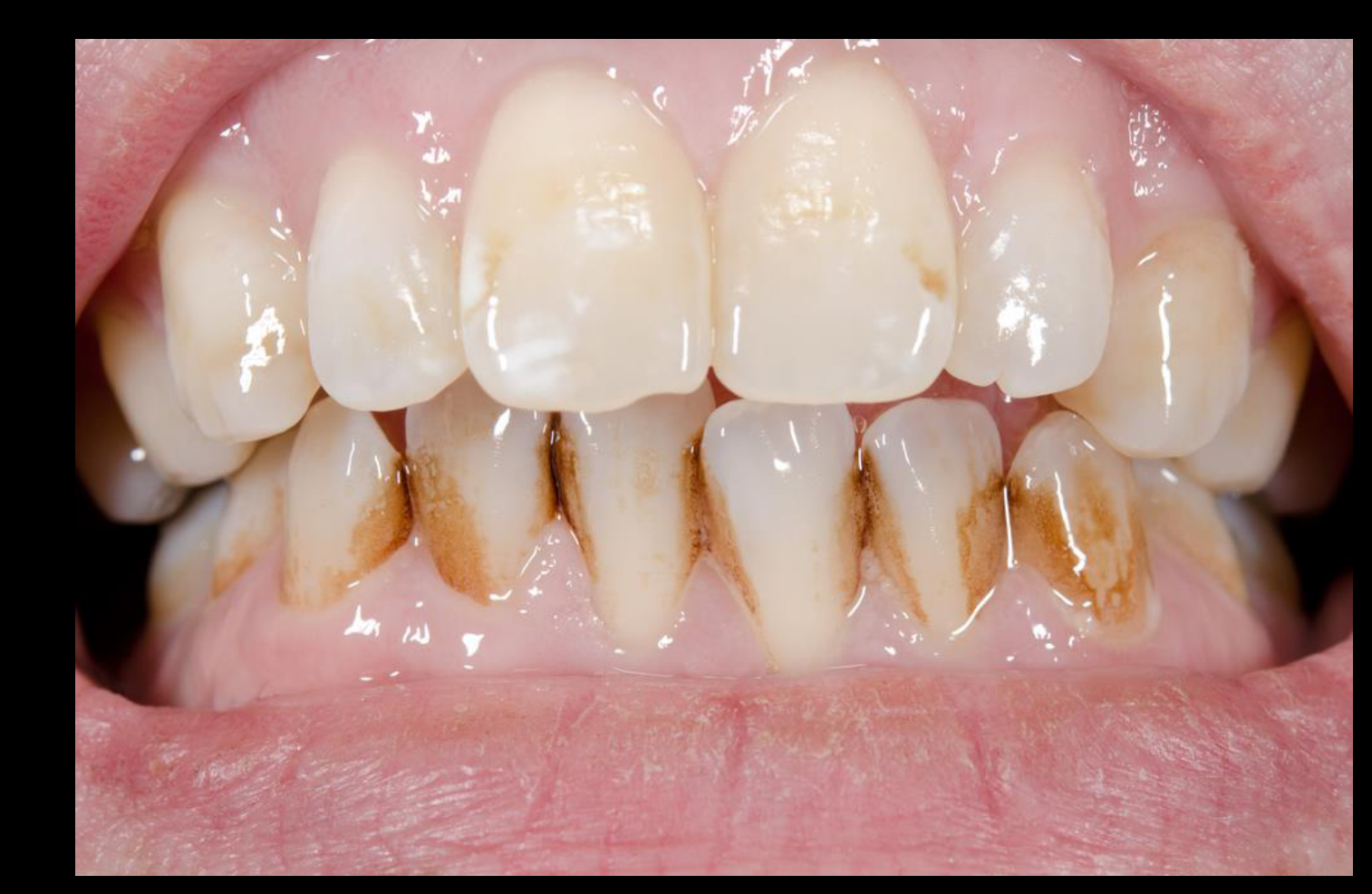
Clinical Appearance and Disease Progression18
 |  |
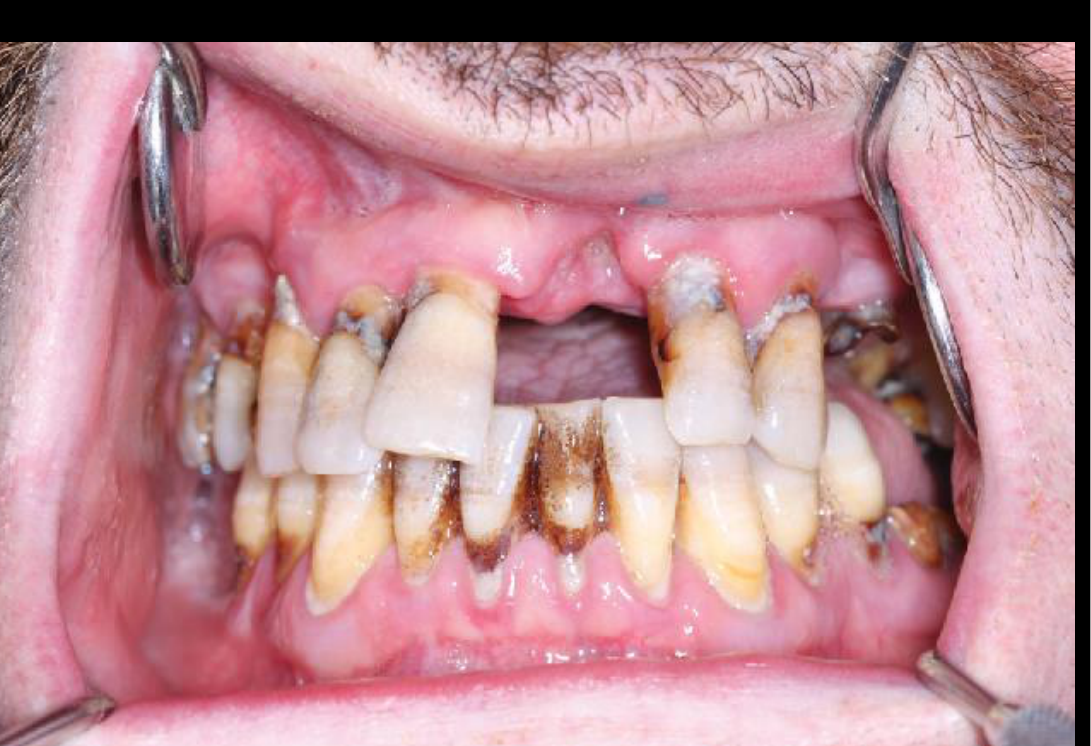
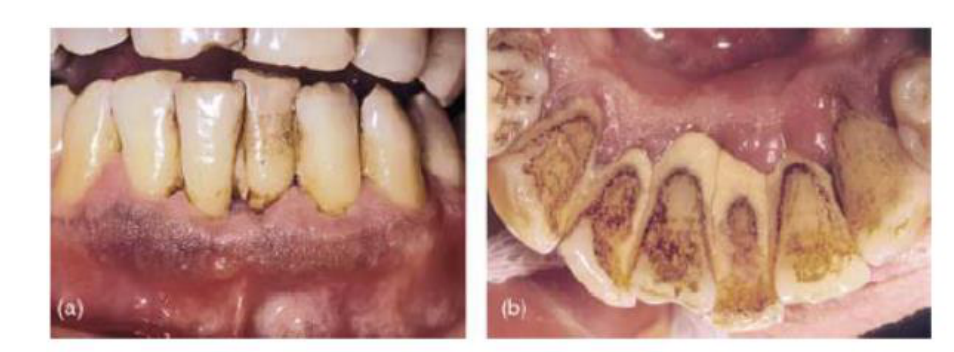
Clinical appearance in smoker19
- Fibrotic ‘tight’ gingiva, rolled margins
- Less gingival redness and bleeding
- More severe, widespread disease than same age non-smoking control
- Anterior, maxilla, palate are worst areas affected
- Anterior recession, open embrasures
- Nicotine staining
- Calculus
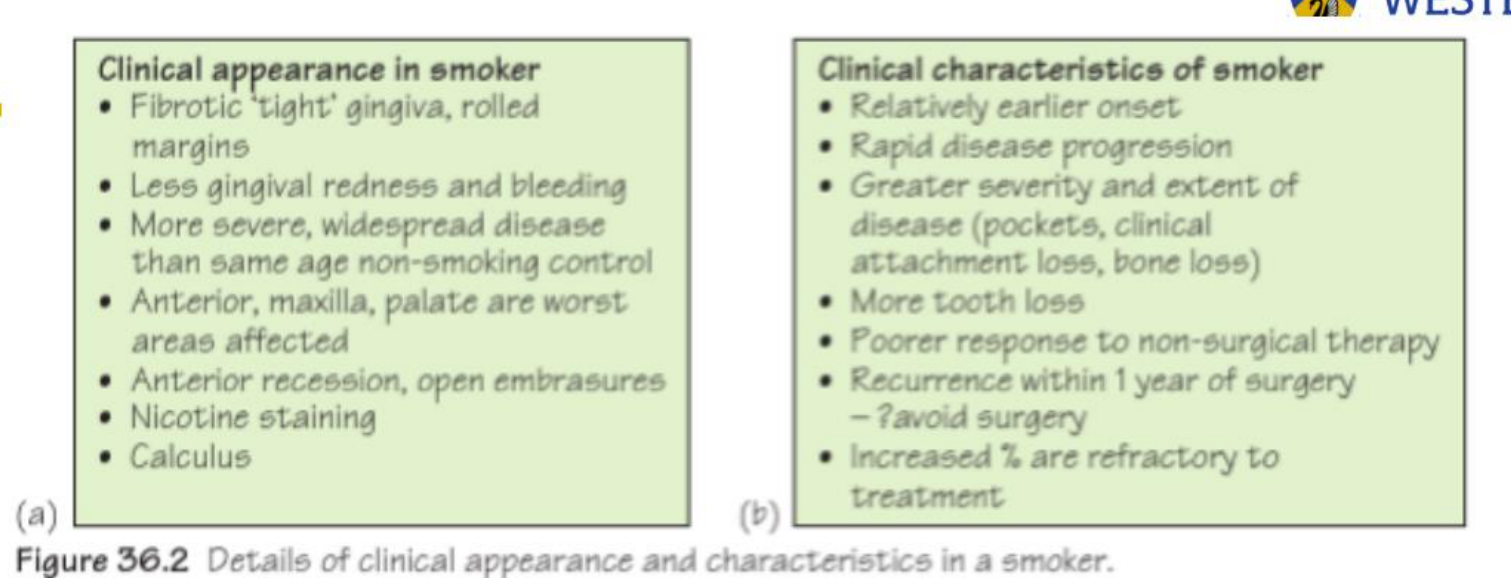 |  |
Clinical characteristics of smoker
- Relatively earlier onset
- Rapid disease progression
- Greater severity and extent of disease (pockets, clinical attachment loss, bone loss)
- More tooth loss
- Poorer response to non-surgical therapy
- Recurrence within 1 year of surgery – ?avoid surgery
- Increased % are refractory to treatment
Less gingivitis and BOP
- Bleeding index non-compatible with amounts of plaque and calculus
- Reduced bleeding due to vasoconstriction and reduced number of vessels in the gingiva of smokers
- Fibrotic gingiva with less edema
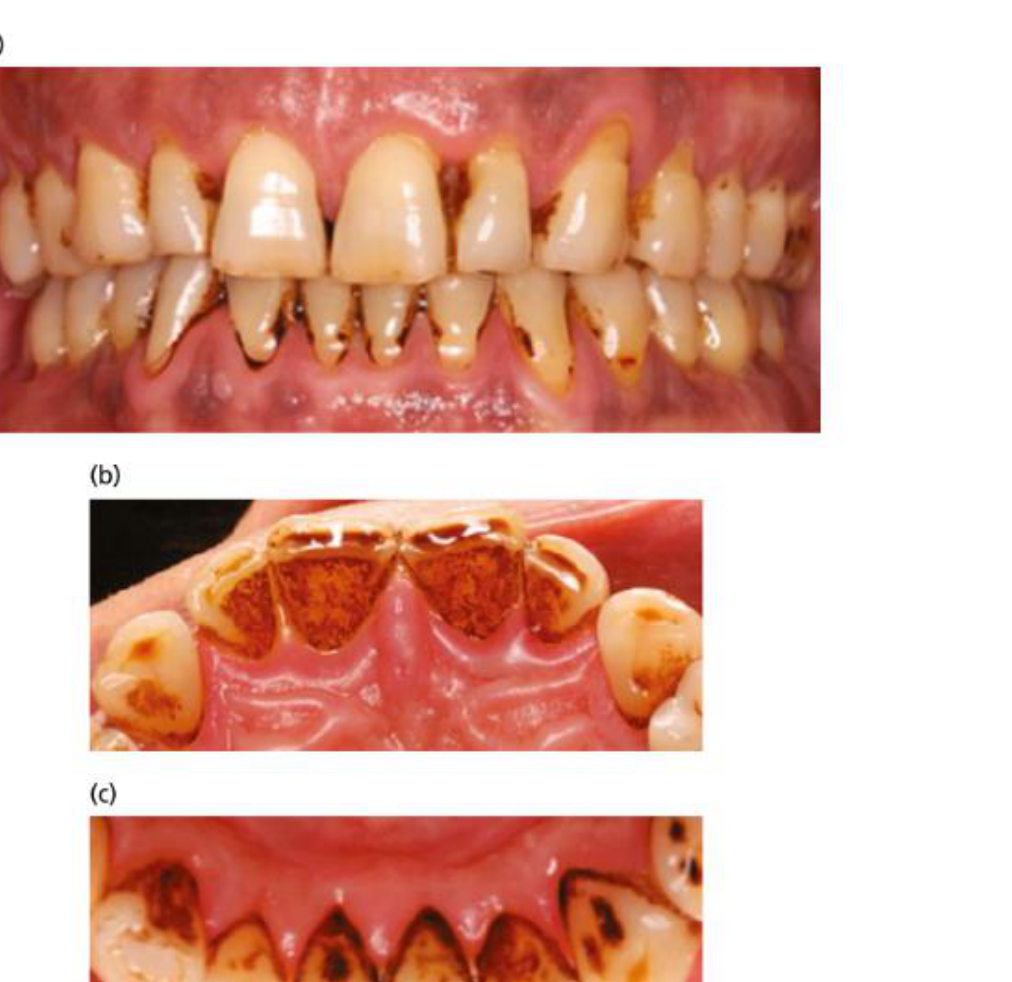
Fig. 11-8. Clinical appearance of a 53-year-old male patient who reports smoking one pack a day for 35 years. (a) Anterior view; (b) palatal view of the maxillary anterior teeth, and (c) lingual view of the mandibular anterior teeth. Note the heavy staining. Periodontal examination revealed probing depths of up to 9 mm, gingival recessions, and furcation involvements at all molars. (Source: Courtesy of Dr. Matthew Hickin.)
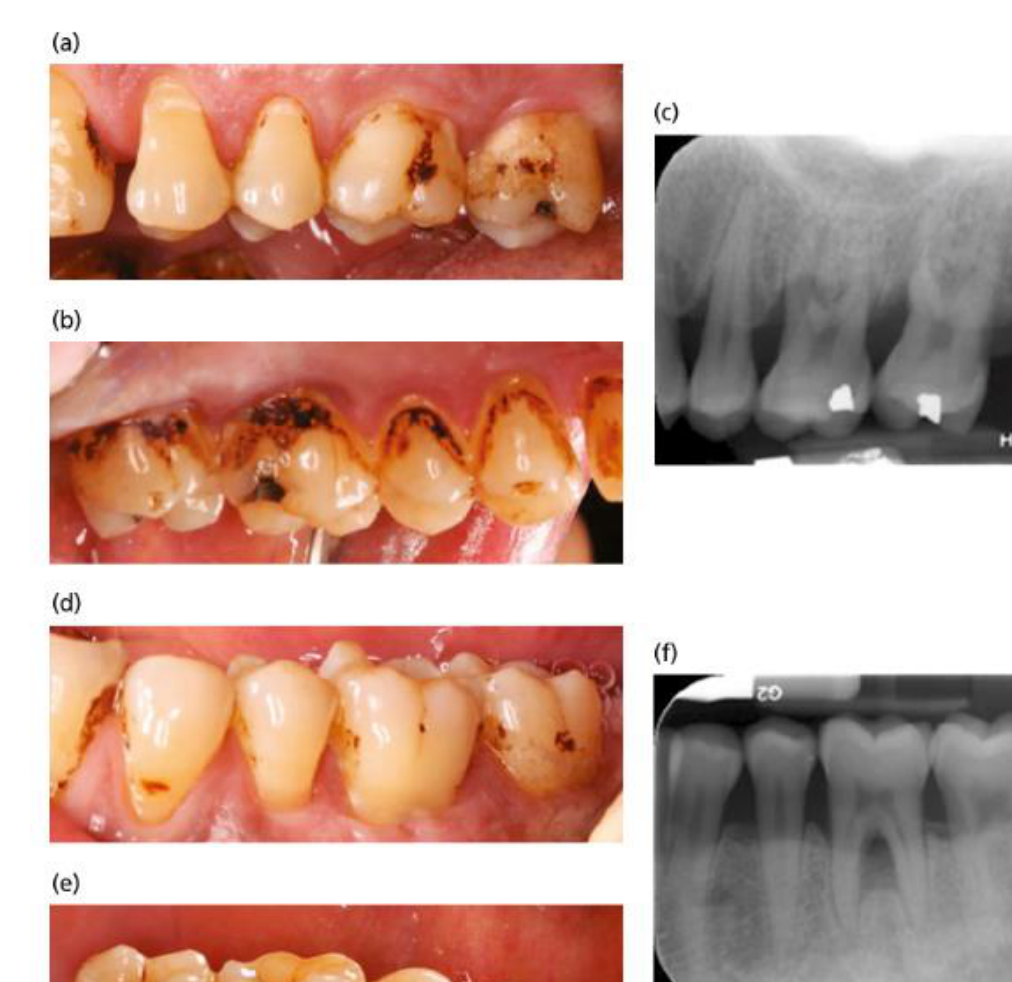
Fig. 11-9. Same patient as in Fig. 11-8. (a, b) Maxillary left buccal and palatal views and (c) corresponding radiograph; (d, e) mandibular left buccal and lingual views and (f) corresponding radiograph. Heavy staining and advanced bone loss are apparent. (Source: Courtesy of Dr. Matthew Hickin.)
Impact on Innate and Immune Host Response2021
 |  |
Effect on host response – both innate and immune response affected22
- Effect depends on duration & dose
- Impaired healing response & enhanced destruction
- Less neutrophils (PMNs) migrate into GCF & pocket
- Nicotine – PMNs produce more MMPs, impaired phagocytosis & chemotaxis
- PMNs – more inflammatory mediators released in response to bacteria
- Reduced fibroblast proliferation, migration, matrix production & attachment to root surface
- B cell function impaired – reduced levels of antibodies produced
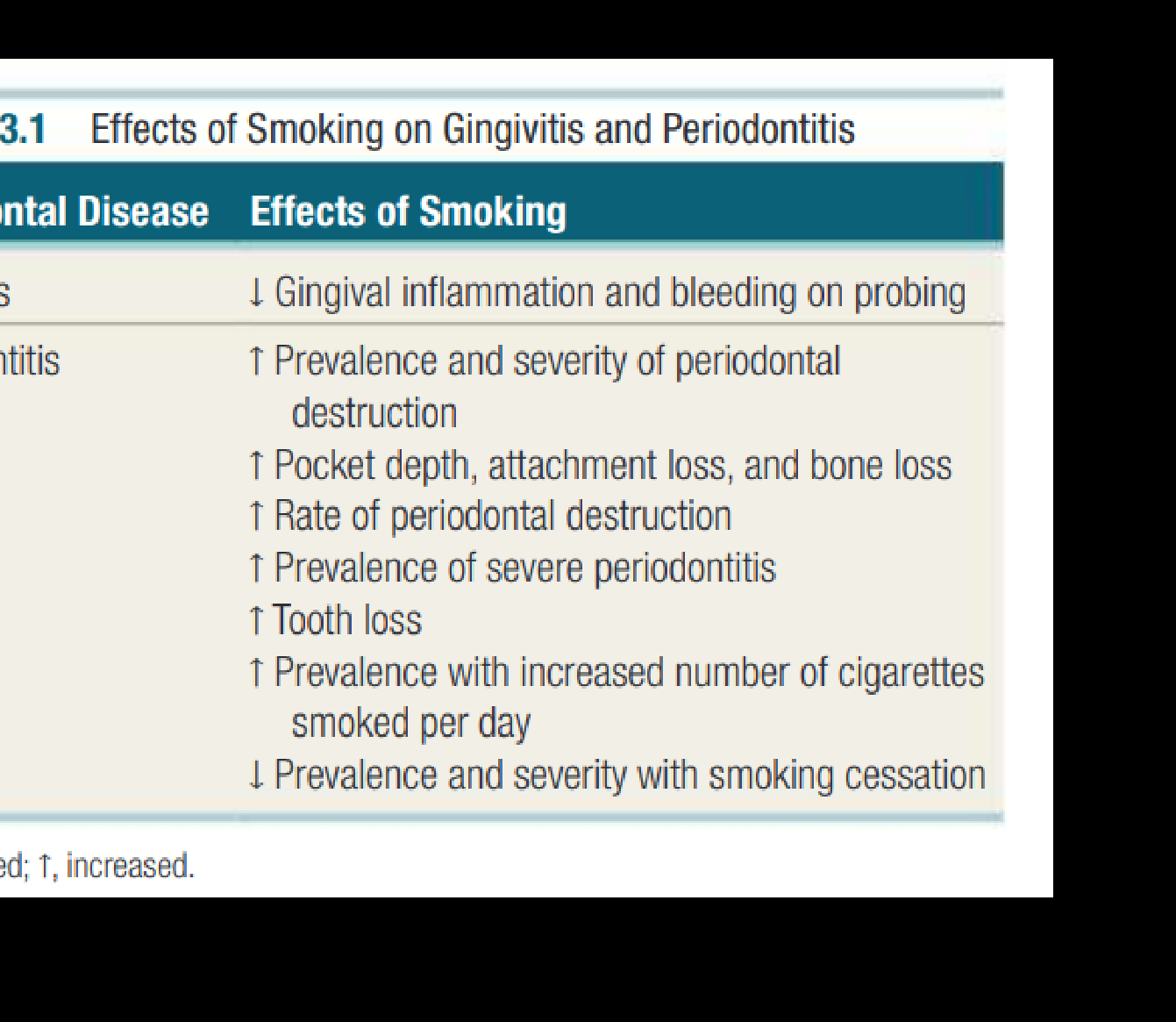
| Effects of Smoking on Gingivitis and Periodontitis | |
|---|---|
| Gingivitis | ↓ Gingival inflammation and bleeding on probing |
| Periodontitis | ↑ Prevalence and severity of periodontal destruction |
| ↑ Pocket depth, attachment loss, and bone loss | |
| ↑ Rate of periodontal destruction | |
| ↑ Prevalence of severe periodontitis | |
| ↑ Tooth loss | |
| ↑ Prevalence with increased number of cigarettes smoked per day | |
| ↓ Prevalence and severity with smoking cessation |
Note: ↓ decreased; ↑ increased
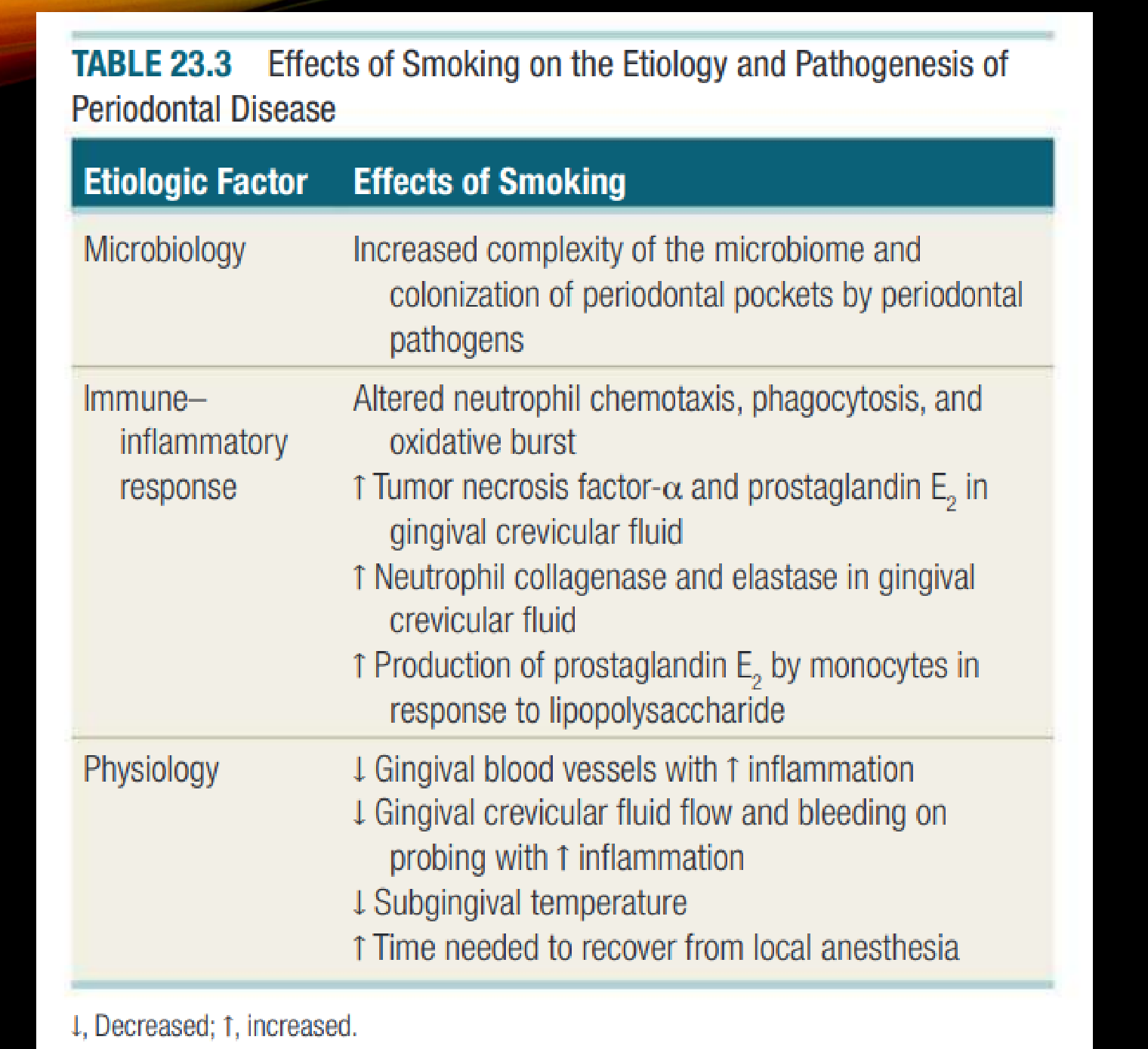
| Etiologic Factor | Effects of Smoking |
|---|---|
| Microbiology | Increased complexity of the microbiome and colonization of periodontal pockets by periodontal pathogens |
| Immune-inflammatory response | Altered neutrophil chemotaxis, phagocytosis, and oxidative burst |
| ↑ Tumor necrosis factor-α and prostaglandin E₂ in gingival crevicular fluid | |
| ↑ Neutrophil collagenase and elastase in gingival crevicular fluid | |
| ↑ Production of prostaglandin E₂ by monocytes in response to lipopolysaccharide | |
| Physiology | ↓ Gingival blood vessels with ↑ inflammation |
| ↓ Gingival crevicular fluid flow and bleeding on probing with ↑ inflammation | |
| ↓ Subgingival temperature | |
| ↑ Time needed to recover from local anesthesia |
Note: ↓ decreased; ↑ increased
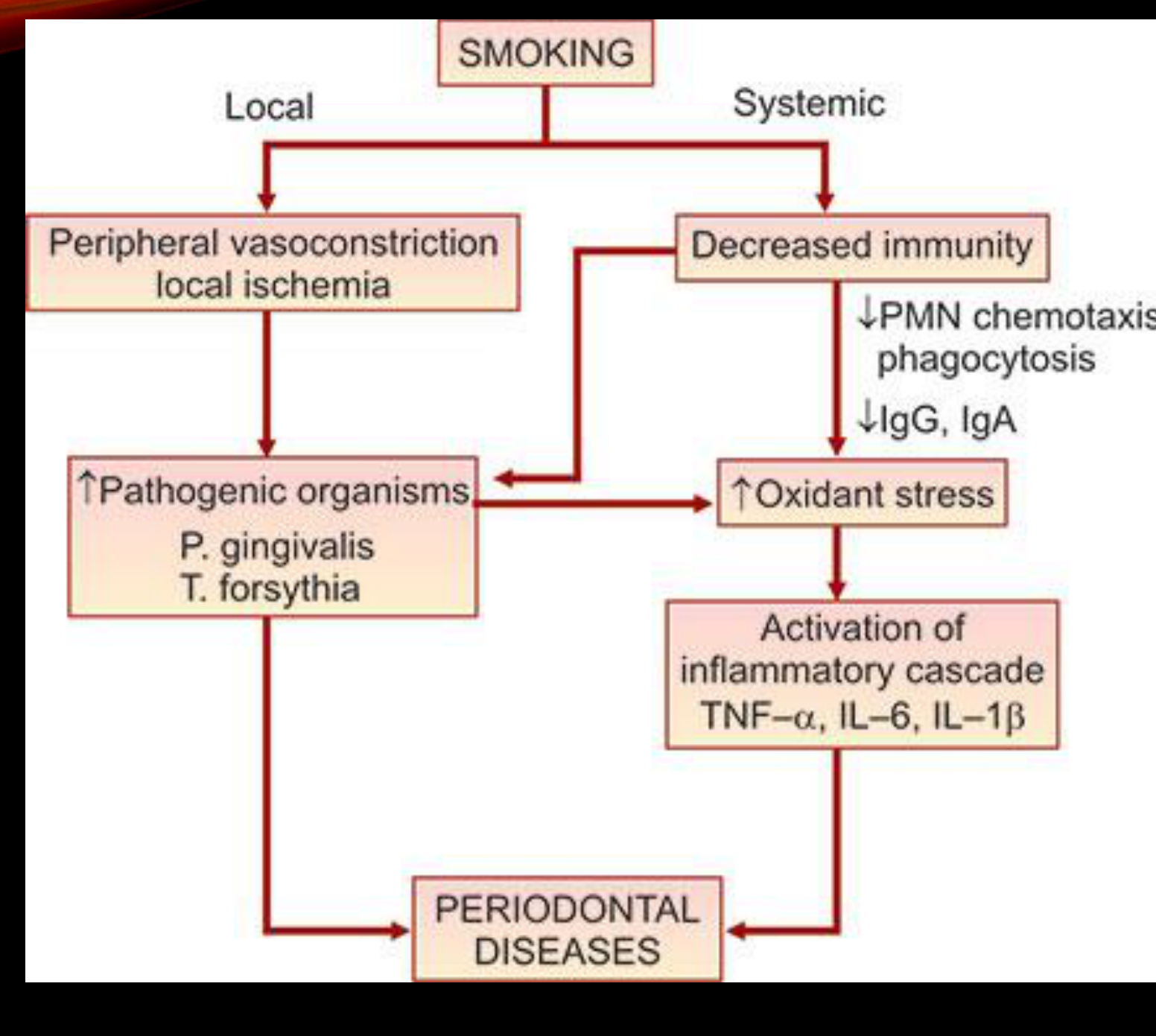
Smoking23
| Local | Systemic | |
|---|---|---|
| Peripheral vasoconstriction | Decreased immunity | |
| Local ischemia | ↓ PMN chemotaxis / phagocytosis / ↓ IgG, IgA | |
| ↑ Pathogenic organisms | ↑ Oxidant stress | |
| P. gingivalis | ||
| T. forsythia | ||
| Activation of inflammatory cascade | ||
| TNF-α, IL-6, IL-1β | ||
| PERIODONTAL DISEASES |
Note: ↓ decreased; ↑ increased
Impact on Periodontal Treatment Outcomes2425
- Less favorable response to any kind of periodontal treatment
- Pre-Tx clinical assessment: underestimate PD as gum is less swollen & more fibrosis – more resistant to probing (tight) vs NS
- Post-Tx SRP/SRD: less PD reduction & less attachment gain (avg 0.5 mm)
- Root surface contaminated by smoking products – may affect attachment of cells
-
10 cigs/day = heavy smoking
- Tooth loss? – Lack long-term studies
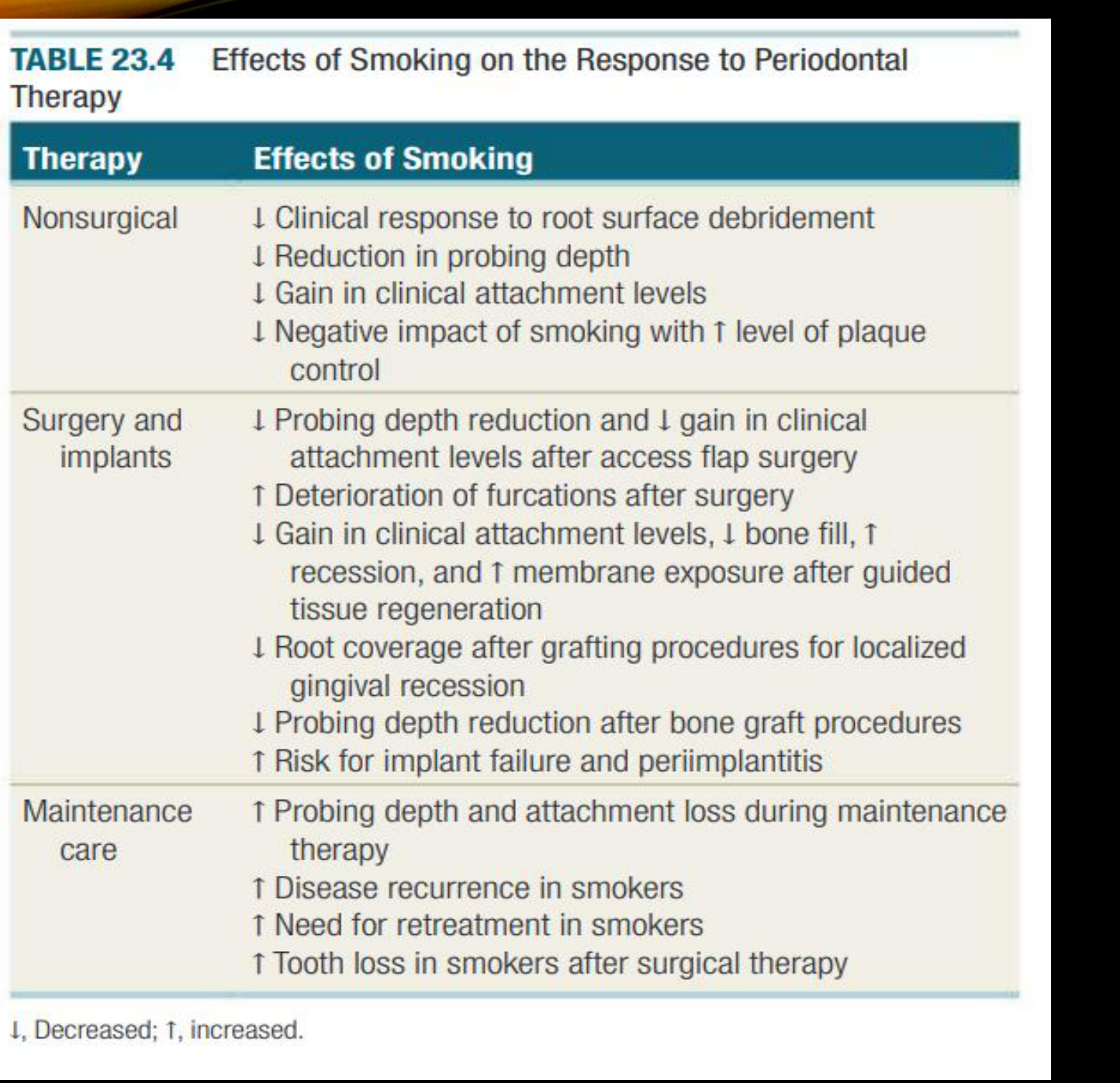
| Therapy | Effects of Smoking |
|---|---|
| Nonsurgical | ↓ Clinical response to root surface debridement ↓ Reduction in probing depth ↓ Gain in clinical attachment levels ↓ Negative impact of smoking with ↓ level of plaque control |
| Surgical | ↓ Probing depth reduction and ↓ gain in clinical attachment levels after access flap surgery ↓ Deterioration of furcations after surgery ↓ Gain in clinical attachment levels, ↓ bone fill, ↓ recession, and ↓ membrane exposure after guided tissue regeneration ↓ Root coverage after grafting procedures for localized gingival recession ↓ Probing depth reduction after bone graft procedures ↑ Risk for implant failure and periimplantitis |
| Maintenance | ↓ Probing depth and attachment loss during maintenance therapy ↑ Disease recurrence in smokers ↑ Need for retreatment in smokers ↑ Tooth loss in smokers after surgical therapy |
Note: ↓ decreased; ↑ increased
Surgical Healing and Wound Infection Risks
Periodontal Treatment on Smokers26
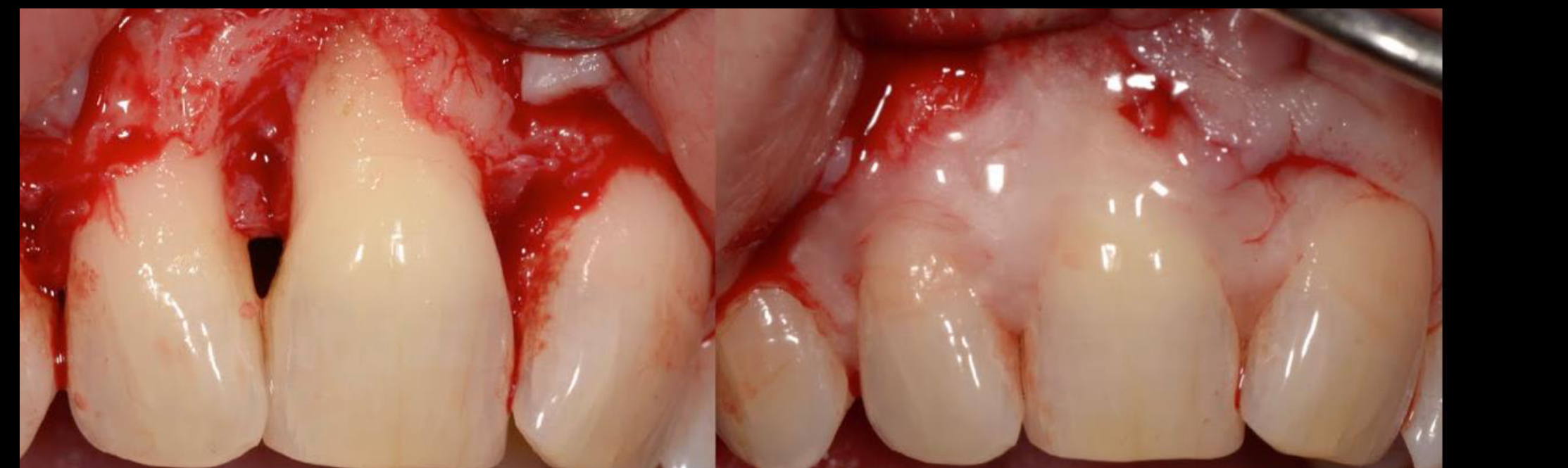
- Surgery: smoking decreases tissue oxygenation
- Tissues – prone to infection
- Increased risk of post-surgical wound infection
- Poorer results with all periodontal surgery & dental implants
Implant Therapy and Peri-Implantitis
Implant Therapy27
Smoking. There is strong evidence that smoking is a risk factor for adverse implant outcomes. The evidence shows that smokers have an increased risk of peri-implantitis (reported odds ratios ranged from 3.6 to 4.6) and radiographic marginal bone loss (reported odds ratios ranged from 2.2 to 10) compared to non-smokers. There is some evidence for a dose effect of cigarette smoking.
- Smoking. Smoking is not a contraindication for implant placement. However, patients should be informed that the survival and success rates are lower in smokers. Heavy smokers should be informed that they are at greater risk of implant failure and loss of marginal bone. Patients who smoke should be informed that there is an increased risk of implant failure when sinus augmentation procedures are used.
Smoking Cessation and Recovery28
- Better for gum health & tooth retention
- Increased gingival bleeding – improved vasculature
- Improved healing response: greater PD reductions
- Less risk for moderate or severe periodontitis (OR 3.3 current smokers, 2 for FS vs NS)
- Reduce smoking also reduces risk for developing periodontitis (30 cig/day to 10 cig/day)
- Passive smoking, foetal health, risk of offspring smoking, cost
- Time to revert to non-smoker (NS) status unknown but may take decades
Note: “NS” = Non-Smoker; “FS” = Former Smoker; “PD” = Periodontal Depth
Timeline of Health Benefits Post-Cessation2930
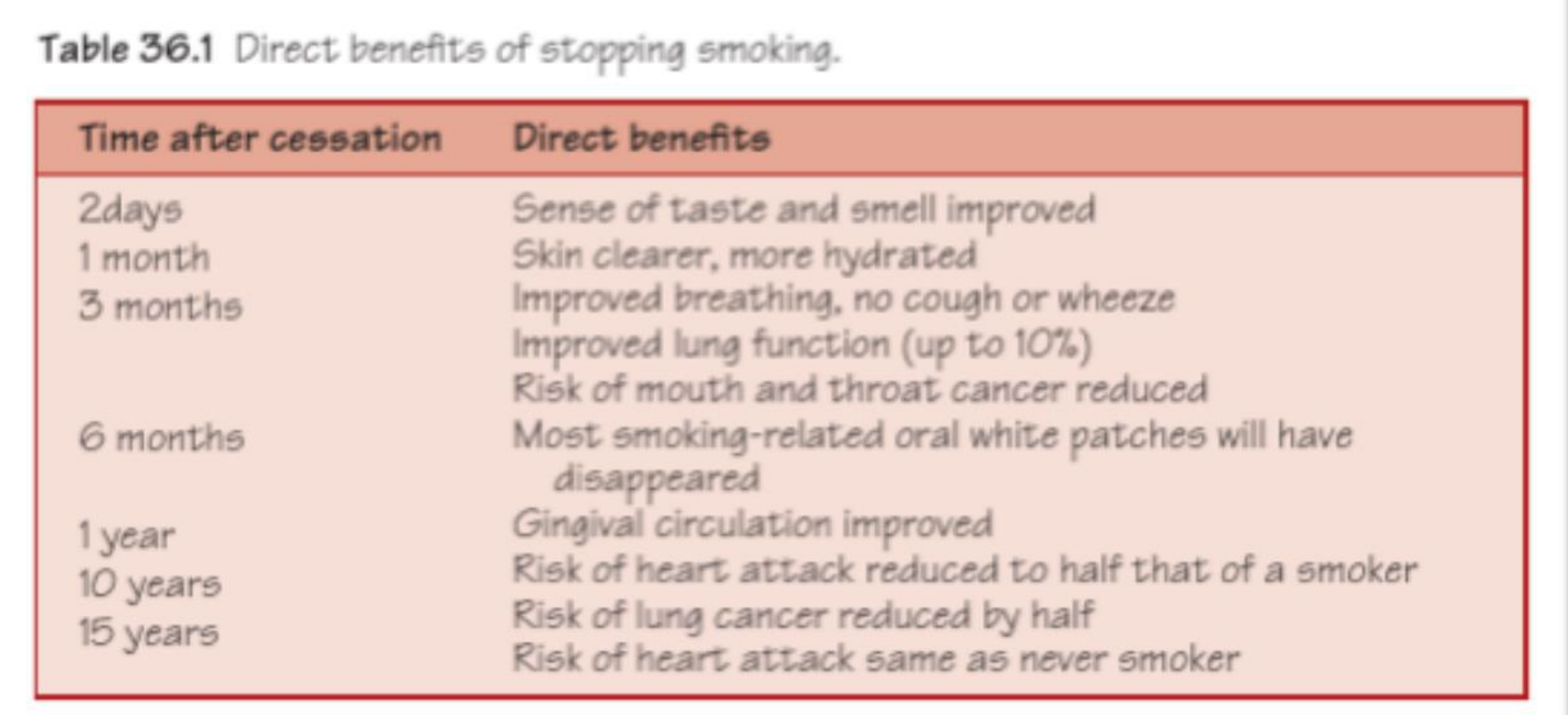
| Time after cessation | Direct benefits |
|---|---|
| 2 days | Sense of taste and smell improved |
| 1 month | Skin clearer, more hydrated |
| 3 months | Improved breathing, no cough or wheeze Improved lung function (up to 10%) Risk of mouth and throat cancer reduced |
| 6 months | Most smoking-related oral white patches will have disappeared |
| 1 year | Gingival circulation improved |
| 10 years | Risk of heart attack reduced to half that of a smoker |
| 15 years | Risk of lung cancer reduced by half Risk of heart attack same as never smoker |
REPRODUCED WITH PERMISSION FROM DROPE J, SCHLUGER NW, EDITORS, THE TOBACCO ATLAS, 6TH EDN, ATLANTA, GA, AMERICAN CANCER SOCIETY AND VITAL STRATEGIES, 2018, P. 37. COPYRIGHT 2018 THE AMERICAN CANCER SOCIETY, INC. REPRINTED WITH PERMISSION FROM WWW.CANCER.ORG1
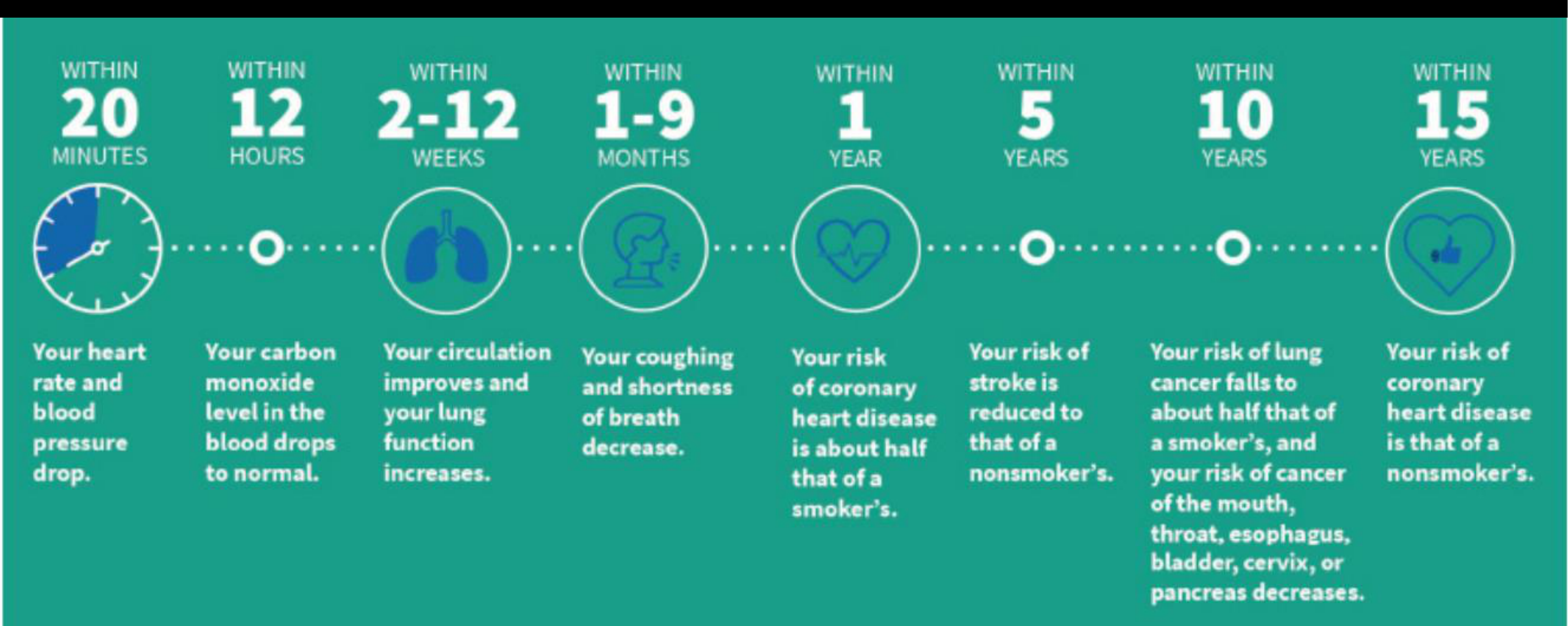
graph LR
    A("WITHIN 20 MINUTES: Your heart rate and blood pressure drop.") --> B("WITHIN 12 HOURS: Your carbon monoxide level in the blood drops to normal.")
    B --> C("WITHIN 2-12 WEEKS: Your circulation improves and your lung function increases.")
    C --> D("WITHIN 1-9 MONTHS: Your coughing and shortness of breath decrease.")
    D --> E("WITHIN 1 YEAR: Your risk of coronary heart disease is about half that of a smoker's.")
    E --> F("WITHIN 5 YEARS: Your risk of stroke is reduced to that of a nonsmoker's.")
    F --> G("WITHIN 10 YEARS: Your risk of lung cancer falls to about half that of a smoker's, and your risk of cancer of the mouth, throat, esophagus, bladder, cervix, or pancreas decreases.")
    G --> H("WITHIN 15 YEARS: Your risk of coronary heart disease is that of a nonsmoker's.")
 |  |
The Role of Dental Professionals in Quitting
Quitting Smoking – Our Role31
- About 70% of smokers would like to quit
- Most patients see dentists/hygienists more than their GP – opportunity for dentist to help..
- ?? Refer to medical GP
Vaping and Electronic Cigarettes
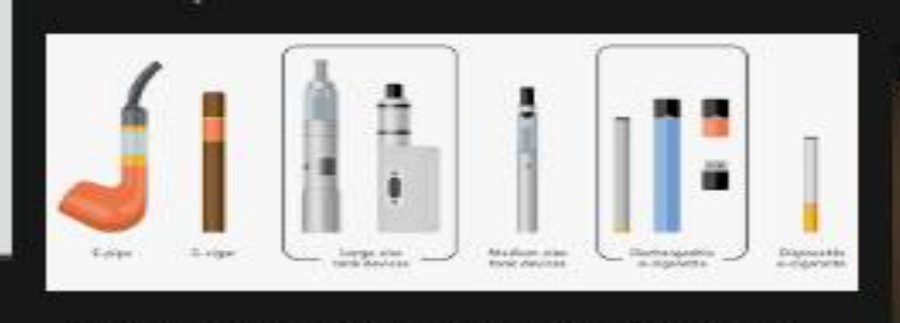
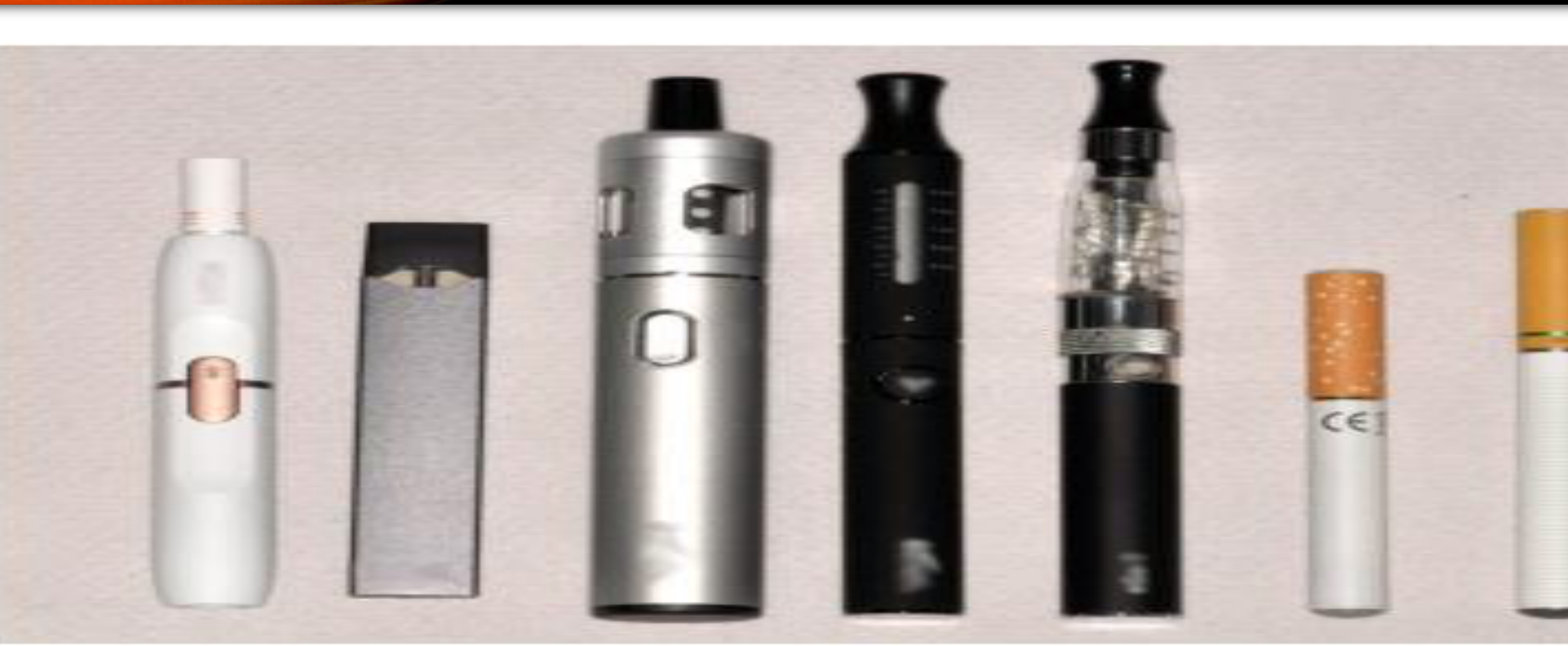
- Battery powered devices which heat a liquid containing chemicals and flavouring into an aerosol which is inhaled through a mouthpiece, and then exhaled by the user as a fine particulate smoke - NOT A TOBACCO PRODUCT
- Liquid - called e-liquid, e-juice, vape juice
- Water
- Carrier solution - propylene glycol, glycerine
- Nicotine - but only on prescription in Australia (and present in black market vapes)
- Flavouring - many types
- Reusable or disposable
Definitions and Device Components32
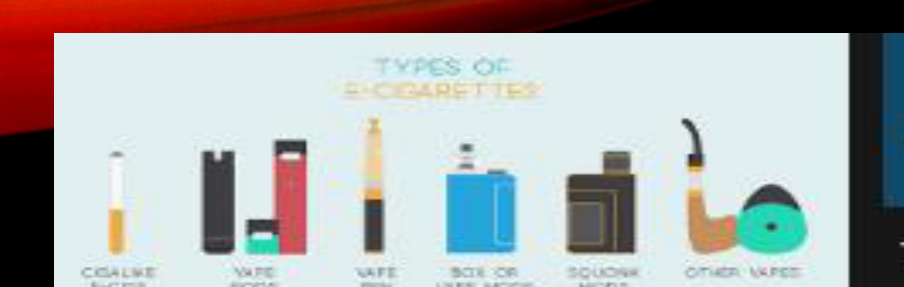
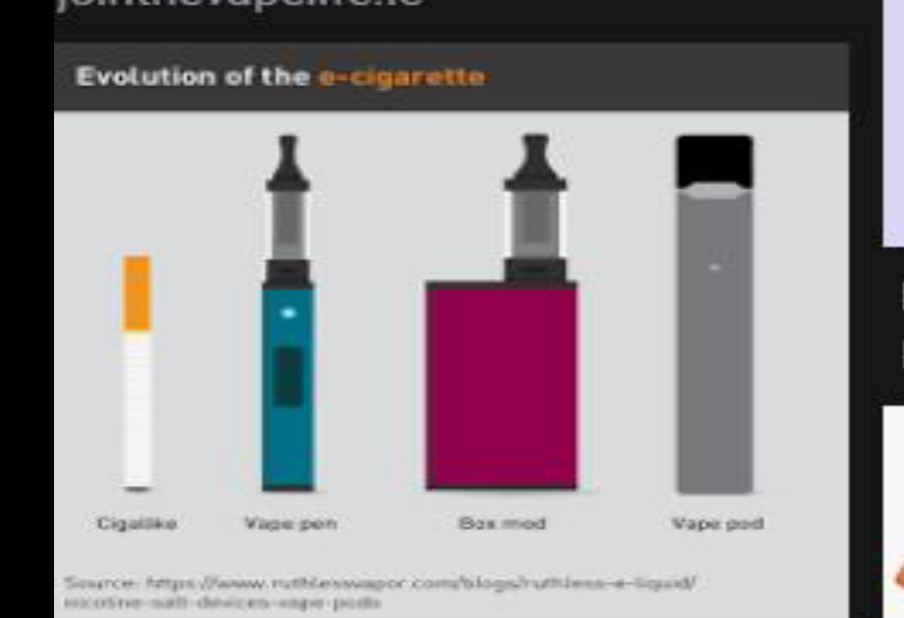
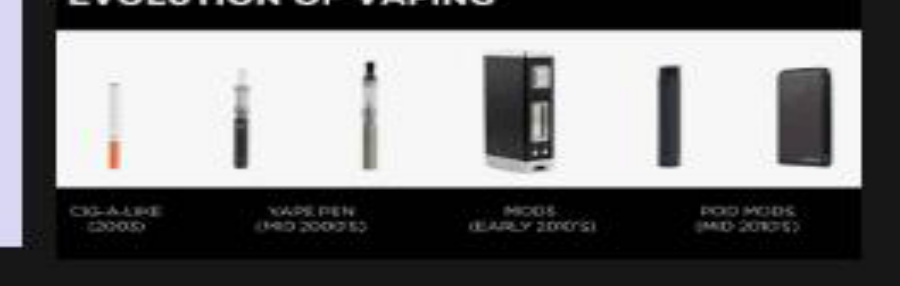
History and Evolution of Vaping333435
- “Vaping” like device first patented in 1965.
- Vaping word coined in 1979.
- In 2003, a Chinese pharmacist and smoker Hon Lik, in an attempt to give up smoking, is credited with inventing the modern device; his company patents were bought by Imperial tobacco in 2013.
- Vaping introduced into the EU in 2005/2006.
- Data collection started @ 2011 - then 2% of ex and current smokers in England.
- Now 4.2 million (8.3%) users in the UK, 7% are 11-17 year olds.
- In Australia in 2019, @ 400,000 users, dual use is 45% (of vapers who smoke cigs).
- Only 22% of 15-24 year olds have never vaped.
 |  |  |
 |  |  |
 |  |
Marketing and Youth Demographics36
2015 - Juul brand launched in the USA by a silicon valley group. High nicotine.
HUGE marketing - modern devices, targeted to millennials specifically.
Adverts in teen magazines, cartoons, school sites - huge increase in sales as not FDA regulated for years
FDA NEWS RELEASE FDA Denies Authorization to Market JUUL Products Currently Marketed JUUL Products Must Be Removed from the US Market
Understanding The Different Ty… jointhevapelife.ie
Vaping – Liberation Programs liberationprograms.org
The Different Types Of Vape De… buyv2cigs.co.uk
BIDI Vape – Types of Vaping D… bidivape.tumblr.com
alleroepediatrics.com
What Are The Different Types o… ruthlessvapor.com
EVOLUTION OF VAPING
What are vaping devices in 202… mrfog.com

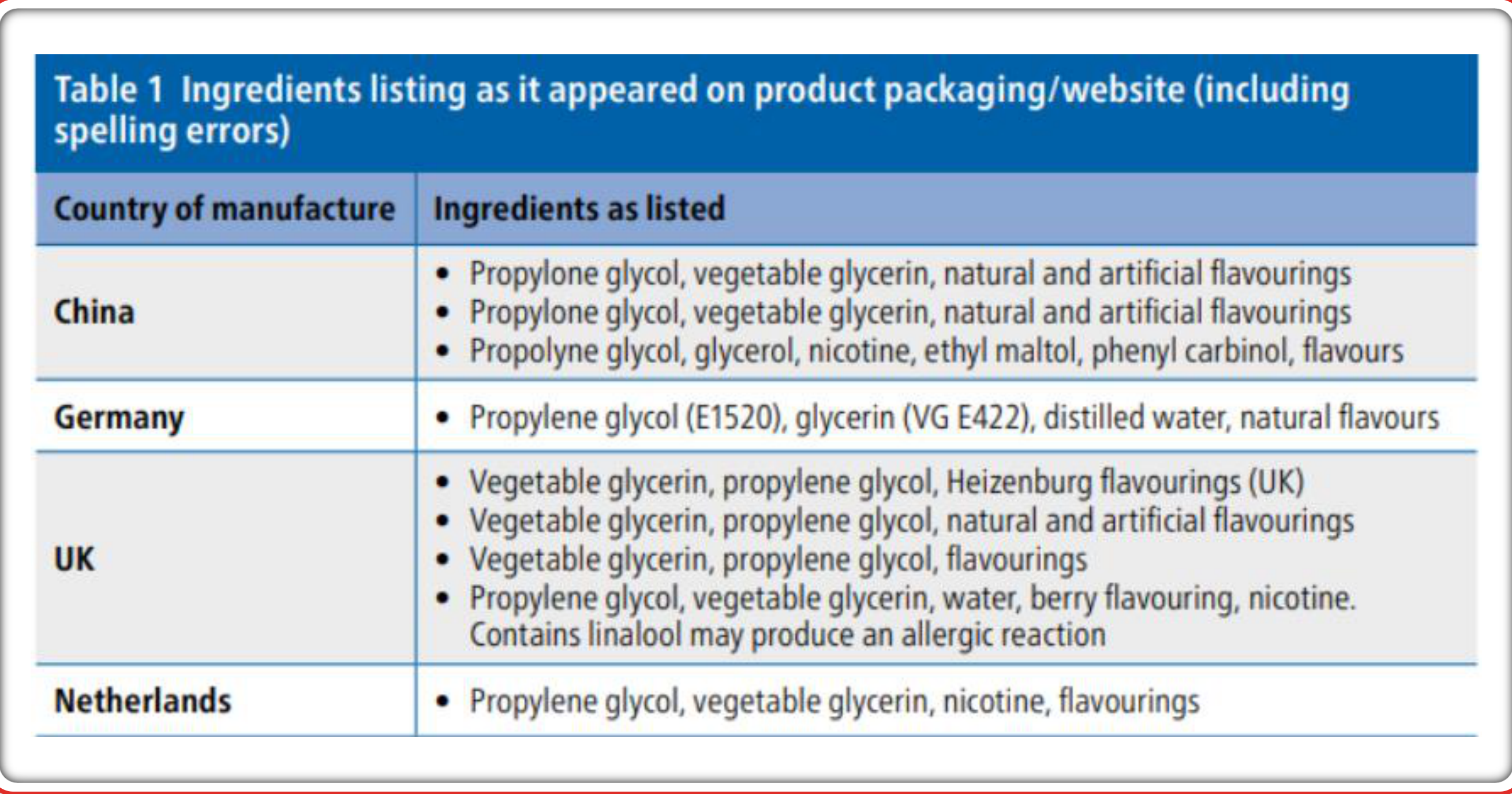
Chemical Ingredients and Toxicity3738
- Propylene glycol - humectant - used in food, chemical and pharmaceutical industries, generally recognised as safe to consume (toxic in high doses) - when vapourised - lactic acid, acetic acid, pyruvic acid. Present in theatrical fog - National Academy of Science 2018 Toxicity of E-cigarette Constituents
- Glycerine - also a humectant and preservative - not cariogenic - but with some fruit flavours may increase microbial adhesion and biofilm formation.
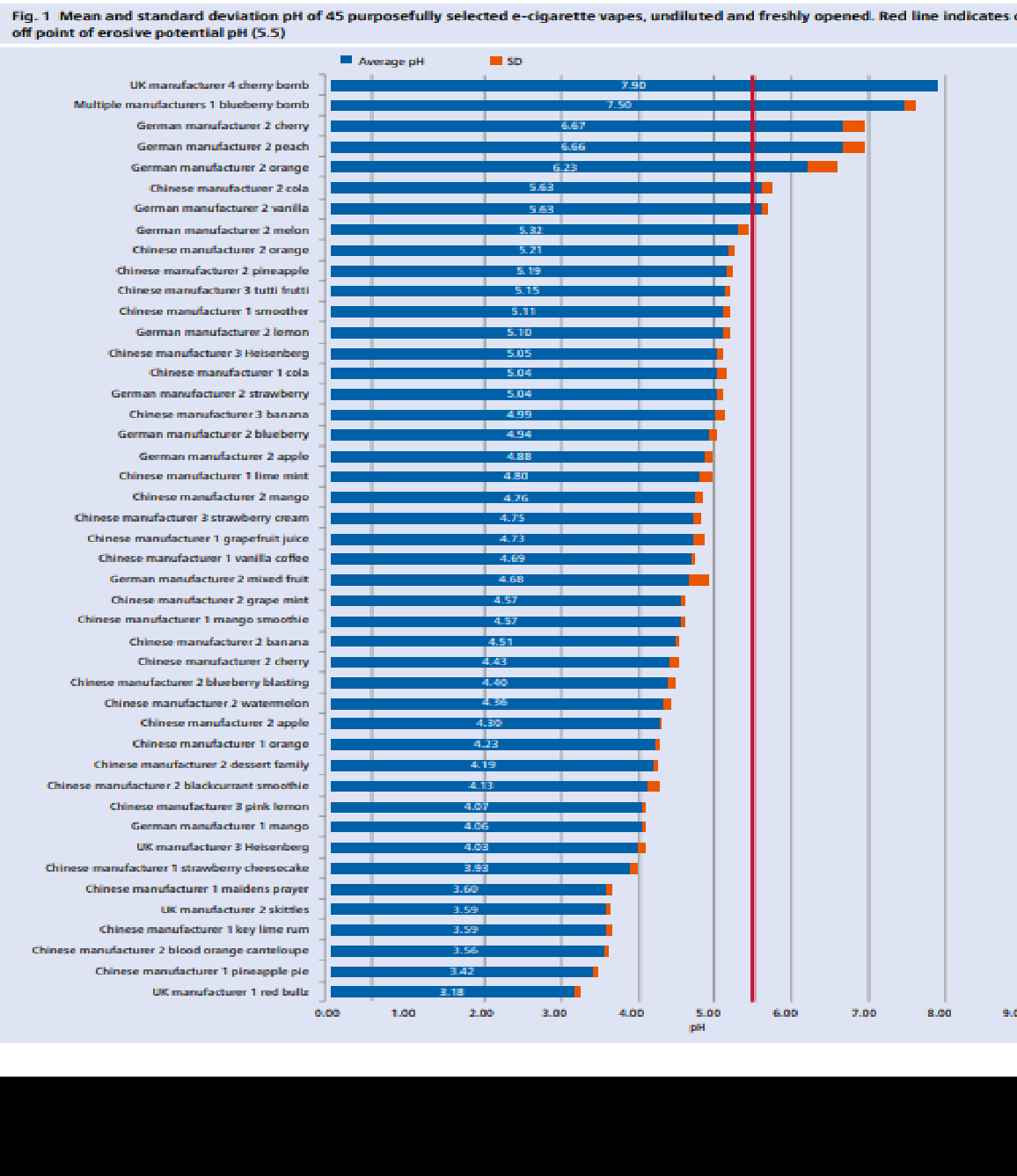
- Fruit flavours - some pH below 5.5
- Diacetyl - butter food flavouring, if inhaled can cause permanent lung damage
- Sweeteners - various
- Other chemicals found in the aerosol vapour not listed in the ingredients - VOC, nanoparticles, heavy metals, formaldehyde…
| Table 1 Ingredients listing as it appeared on product packaging/website (including spelling errors) | |
|---|---|
| Country of manufacture | Ingredients as listed |
| China |
|
| Germany |
|
| UK |
|
| Netherlands |
|
Current Evidence on Oral Health Impacts3940
The role of e-cigs in modifying smoking rates41
- Divided opinions and data
- Beard et al suggested vaping better than NRT 2020
- Main worry is non-smoking vaping youths x 3 risk of taking up smoking - some evidence that tobacco smoking has increased in the US recently
- Several studies have shown improved periodontal health with smoking cessation and uptake of vaping and increased bleeding
The health risks of e-cigs alone (+/- Nicotine)
- Consumption vs inhalation
- Lung damage associated with Vitamin E acetate/THC - cannabis derivatives in vaping
- Addiction to Nicotine and youth brain development
- Case reports of oral ulcerations, xerostomia, dry throat, cough
- Longterm data lacking
| Periodontitis | Xerostomia | Erosion and caries |
|---|---|---|
| Microbiological changes | Dry mouth and throat reported | pH of some vaping liquids low |
| E-cigs influence periodontal microbiome and cytokine profile, 6 month long study, Thomas et al 2022 - distinct subgingival microbiome changes in vapers | Nicotine + humectants | Propylene glycol and glycerine - may have an effect on biofilm (Ganesen et al 2020) |
| Clinical changes - In their SR, less BOP noted in several studies (Figueredo et al 2021 The impact of vaping on periodontitis) | PG - acidic byproducts | |
| Higher than average case and self reported gingival diseases in vapers (US and South Korea) | Flavours | |
| Nicotine - increase pH of vapes | ||
| No long term data |
| Fig. 1 Mean and standard deviation pH of 45 purposefully selected e-cigarette vapes, undiluted and freshly opened. Red line indicates cut off point of erosive potential pH (5.5) | |
|---|---|
| Product | Mean pH |
| UK manufacturer 6 cherry bomb | 7.55 |
| Multiple manufacturers 1 blueberry bomb | 7.49 |
| German manufacturer 2 cherry | 6.87 |
| German manufacturer 2 peach | 6.55 |
| German manufacturer 2 orange | 5.95 |
| Chinese manufacturer 2 cola | 5.83 |
| German manufacturer 2 vanilla | 5.63 |
| German manufacturer 2 melon | 5.37 |
| Chinese manufacturer 2 orange | 5.21 |
| Chinese manufacturer 2 pineapple | 5.12 |
| Chinese manufacturer 3 salt fruit | 5.11 |
| Chinese manufacturer 5 snooter | 5.10 |
| German manufacturer 2 lemon | 5.10 |
| Chinese manufacturer 1 Heisenberg | 5.05 |
| Chinese manufacturer 1 cola | 5.04 |
| German manufacturer 3 banana | 4.85 |
| German manufacturer 2 blueberry | 4.74 |
| German manufacturer 2 apple | 4.63 |
| Chinese manufacturer 1 lime mist | 4.60 |
| Chinese manufacturer 2 mango | 4.56 |
| Chinese manufacturer 1 strawberry cream | 4.52 |
| Chinese manufacturer 1 grapefruit juice | 4.71 |
| Chinese manufacturer 1 vanilla coffee | 4.50 |
| German manufacturer 2 mixed fruit | 4.50 |
| Chinese manufacturer 2 grape mist | 4.47 |
| Chinese manufacturer 1 mango smoothie | 4.57 |
| Chinese manufacturer 2 banana | 4.55 |
| Chinese manufacturer 2 cherry | 4.41 |
| Chinese manufacturer 2 blueberry blasting | 4.40 |
| Chinese manufacturer 2 watermelon | 4.30 |
| Chinese manufacturer 2 apple | 4.20 |
| Chinese manufacturer 1 orange | 4.13 |
| Chinese manufacturer 2 dessert vanilla | 4.10 |
| Chinese manufacturer 2 blackcurrant smoothie | 4.11 |
| Chinese manufacturer 3 pink lemon | 4.01 |
| German manufacturer 1 mango | 4.00 |
| UK manufacturer 3 Heisenberg | 4.00 |
| Chinese manufacturer 1 strawberry cheesecake | 3.92 |
| Chinese manufacturer 1 maidens prayer | 3.60 |
| UK manufacturer 3 sionites | 3.50 |
| Chinese manufacturer 1 bay lime rain | 3.52 |
| Chinese manufacturer 2 blood orange cantaloupe | 3.50 |
| Chinese manufacturer 1 pineapple pie | 3.42 |
| UK manufacturer 1 red bull | 3.15 |
Challenges in Vaping Research Data42
- Vaping has only begun being studied in the last few years.
- Hundreds of different e-cigarette devices, thousands of e-liquid formulations, nicotine concentrations and flavours, constantly changing market, in many countries unregulated.
- Different users:
- Current smokers with existing disease
- Healthy non-smokers with no disease
- Recent ex-smokers +/- disease
- Quitting smokers who smoke and vape +/- nicotine
Global and Australian Regulations434445
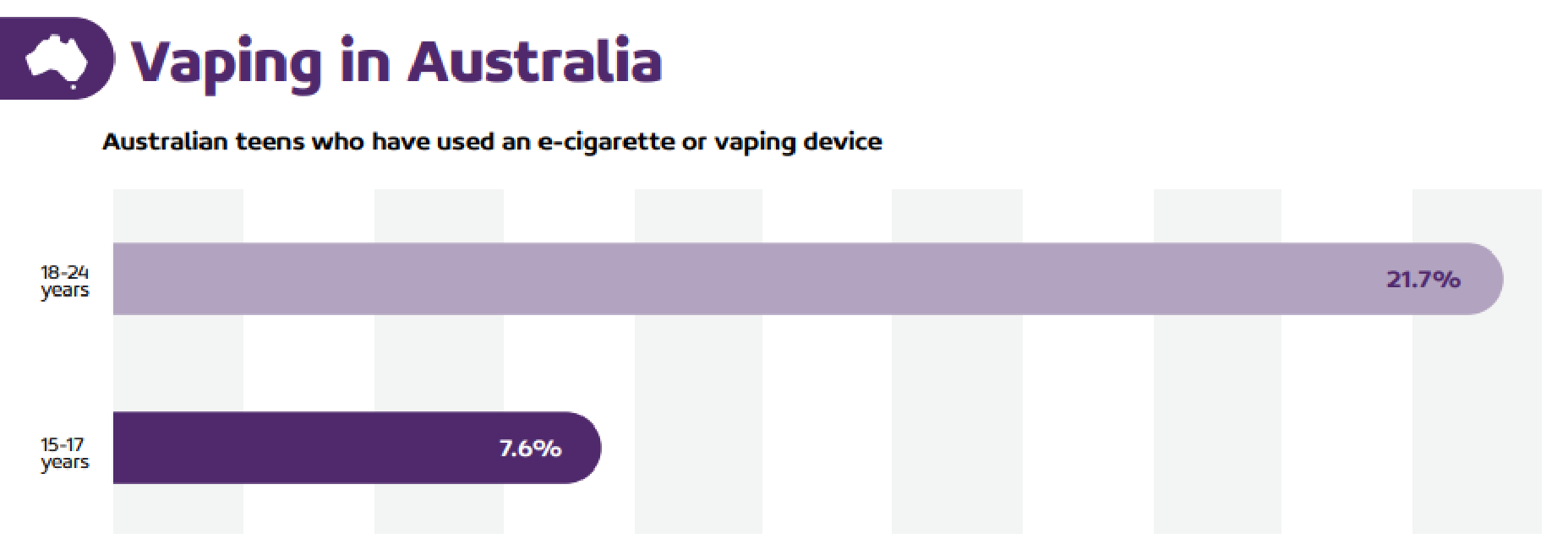
Vaping in Australia
| Age Group | Percentage |
|---|---|
| 18-24 years | 21.7% |
| 15-17 years | 7.6% |
According to the Australian Bureau of Statistics, more than 1 in 5 (21.7%) young Australians aged 18-24 and 7.6% of 15-17 year olds have used an e-cigarette or vaping device at least once. It’s likely that these figures are under-reported because responses were provided by an adult living in the same household.
With the exception of Western Australia, each state and territory permits the sale of vapes and e-cigarettes, but not the sale or purchase of liquid flavours that contain nicotine. For this reason, most users purchase their products and liquids online. Doctors in Australia can prescribe nicotine vaping products as a means of weaning off tobacco use, though there is little evidence that vaping is successful in achieving this outcome.
Lung Foundation Australia nib foundation
Vaping and young people For educators
Supporters
Where E-Cigarettes Are Banned46
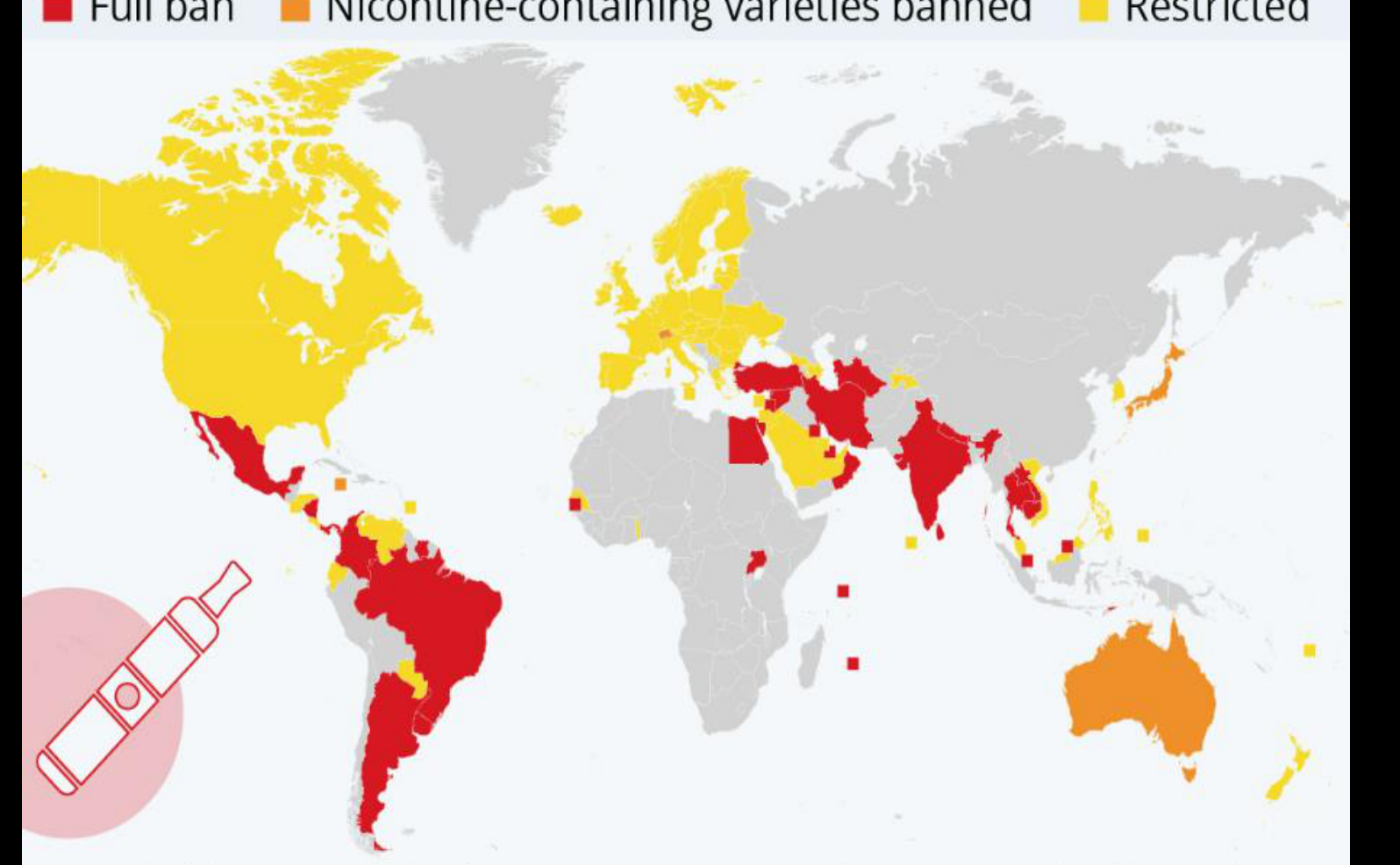
Laws banning or restricting the sale, use or marketing of e-cigarettes and vapes (2021)
- Full ban: 29 COUNTRIES
- Nicotine-containing varieties banned: 6 COUNTRIES
- Restricted: 45 COUNTRIES
Israel: liquids of >20mg nicotine/mL banned. Indonesia: 57% tax on liquids’ retail price. Source: Global Tobacco Control | statista
Global Regulations
- UK: Now regulated as a tobacco product.
- USA: From 2016, FDA is regulating e-cigs as a tobacco product. In 2019, the US CDC changed the age from 18 to 21.
- Australia:
- Nicotine restrictions apply.
- Non-nicotine vapes classified as legal consumer products.
- Nicotine classed as a poison and needs a script.
- Hence e-cigs in Australia not currently properly assessed.
Are e-cigarettes dangerous?
Electronic cigarettes (or e-cigarettes) are the most common form of electronic nicotine delivery systems (ENDS) and electronic non-nicotine delivery systems (ENNDS) but there are others, such as e-cigs and e-pipes. ENDS contain varying amounts of nicotine and harmful emissions.
E-cigarette emissions typically contain nicotine and other toxic substances that are harmful to both users, and non-users who are exposed to the aerosols second-hand. Some products claiming to be nicotine-free (ENNDS) have been found to contain nicotine.
The consumption of nicotine in children and adolescents has deleterious impacts on brain development, leading to long-term consequences for brain development and potentially leading to learning and anxiety disorders.
Nicotine is highly addictive and some evidence suggest that never-smoker minors who use ENDS can double their chance of starting to smoke tobacco cigarettes later in life.
Evidence reveals that these products are harmful to health and are not safe. However, it is too early to provide a clear answer on the long-term impact of using them or being exposed to them. Some recent studies suggest that ENDS use can increase the risk of heart disease and lung disorders. Nicotine exposure in pregnant women can have similar consequences for the brain development of the fetus.
www.who.int/news-room/questions-and-answers/item/tobacco-e-cigarettes# nicotine and other harmful chemicals.
Department of Health Western Australian Government HealthyWA Health information for Western Australians
Home > Healthy living > Electronic cigarettes (e-cigarettes)
Electronic cigarettes (e-cigarettes)
- Electronic cigarettes (e-cigarettes) are battery-operated devices that heat a liquid that emits an aerosol which is inhaled through a mouthpiece, and then exhaled by the user as a fine-particulate smoke.
- The liquid is often called ‘e-liquid’, ‘e-juice’, or ‘vape juice’ and is intended to deliver chemicals directly to the lungs.
- Using an e-cigarette is often called ‘vaping’.
- The device often comes in many shapes and sizes and may look like a cigarette. Others may look like everyday items such as pens, highlighters or USB memory sticks.
E-cigarettes can contain water, flavours, solvents and nicotine. Chemicals found in e-cigarettes, e-liquids, and the aerosol smoke or “vapour” that they generate include: very fine particles; heavy metals such as nickel, tin and lead; volatile organic compounds such as benzene, which is found in car exhaust; and poly-cyclic aromatic hydrocarbons such as naphthalene, found in mothballs. All of these are known to be toxic, including chemicals that can cause cancer.
Many e-cigarettes contain nicotine, which is the highly addictive and poisonous chemical also found in tobacco. Even though an e-cigarette’s packaging might say it is nicotine-free, testing has shown that many e-cigarettes in Australia are labelled incorrectly and in fact do contain nicotine.
E-liquids can come in thousands of different flavours, such as tobacco, confectionery, fruit and other flavours.
PDF: Electronic cigarettes
- Electronic cigarettes (e-cigarettes) are battery-operated devices that heat a liquid that emits an aerosol which is inhaled through a mouthpiece, and then exhaled by the user as a fine-particulate smoke.
- The liquid is often called ‘e-liquid’, ‘e-juice’, or ‘vape juice’ and is intended to deliver chemicals directly to the lungs.
- Using an e-cigarette is often called ‘vaping’.
- The device often comes in many shapes and sizes and may look like a cigarette. Others may look like everyday items such as pens, highlighters or USB memory sticks.
E-cigarettes can contain water, flavours, solvents and nicotine. Chemicals found in e-cigarettes, e-liquids, and the aerosol smoke or “vapour” that they generate include: very fine particles; heavy metals such as nickel, tin and lead; volatile organic compounds such as benzene, which is found in car exhaust; and poly-cyclic aromatic hydrocarbons such as naphthalene, found in mothballs. All of these are known to be toxic, including chemicals that can cause cancer.
Many e-cigarettes contain nicotine, which is the highly addictive and poisonous chemical also found in tobacco. Even though an e-cigarette’s packaging might say it is nicotine-free, testing has shown that many e-cigarettes in Australia are labelled incorrectly and in fact do contain nicotine.
E-liquids can come in thousands of different flavours, such as tobacco, confectionery, fruit and other flavours.
Electronic cigarettes (e-cigarettes)
General Health Risks and Poisoning4748
The preliminary findings from the review of health outcomes and findings from the review of smoking behaviour in relation to e-cigarettes are that there is:
- Conclusive evidence that intentional or accidental exposure to e-liquids related to e-cigarettes can lead to poisoning, and that poisonings can be severe and can result in death.
- Conclusive evidence that a significant number of poisonings occur in children under the age of six (8,296 between 2012 and 2017 in the United States alone).
- Conclusive evidence that the use of e-cigarettes is related to burns and injuries, and that burns and injuries can be severe and can result in death. There is evidence that the incidence of e-cigarette-associated burns and injuries has increased over time as use has increased (national
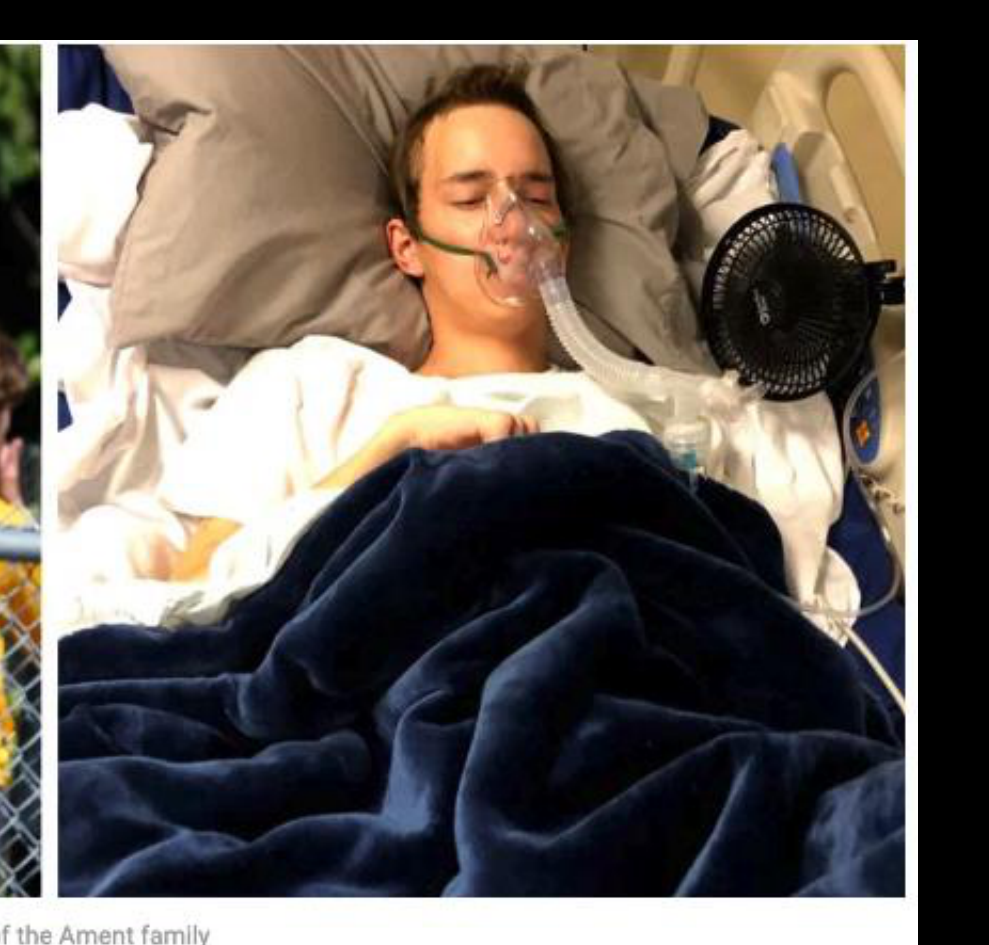
TIME MAGAZINE - THE TEENAGER WHO NEEDED A DOUBLE LUNG TRANSPLANT BECAUSE HE VAPED - MEDIA HYPE OR TIP OF THE ICEBERG?
 |  |
Clinical Case Studies4950
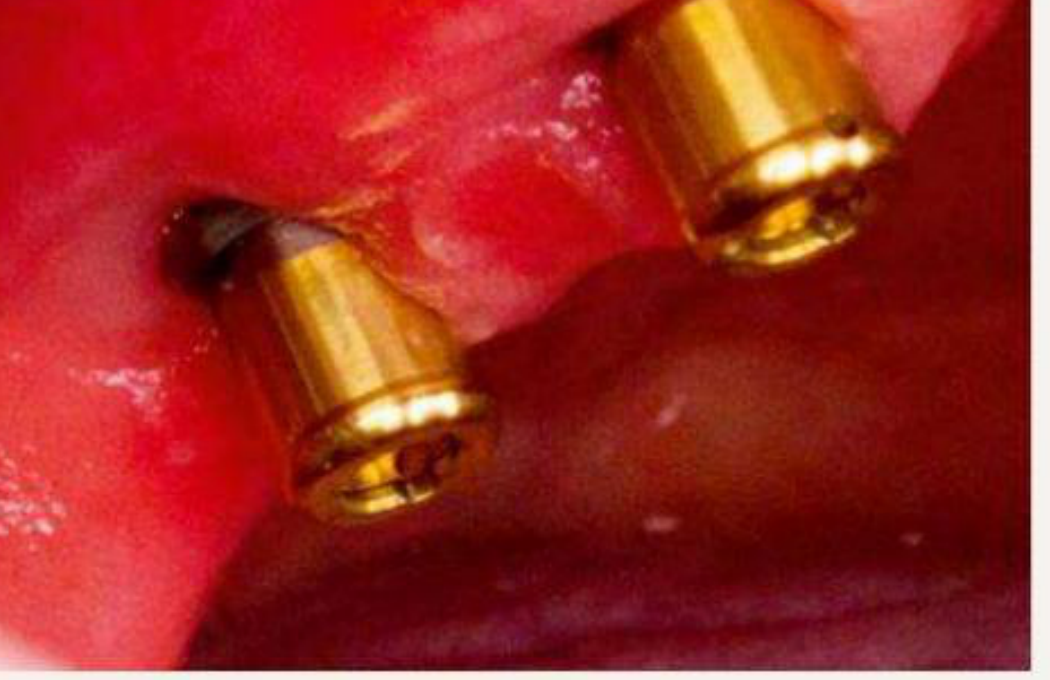
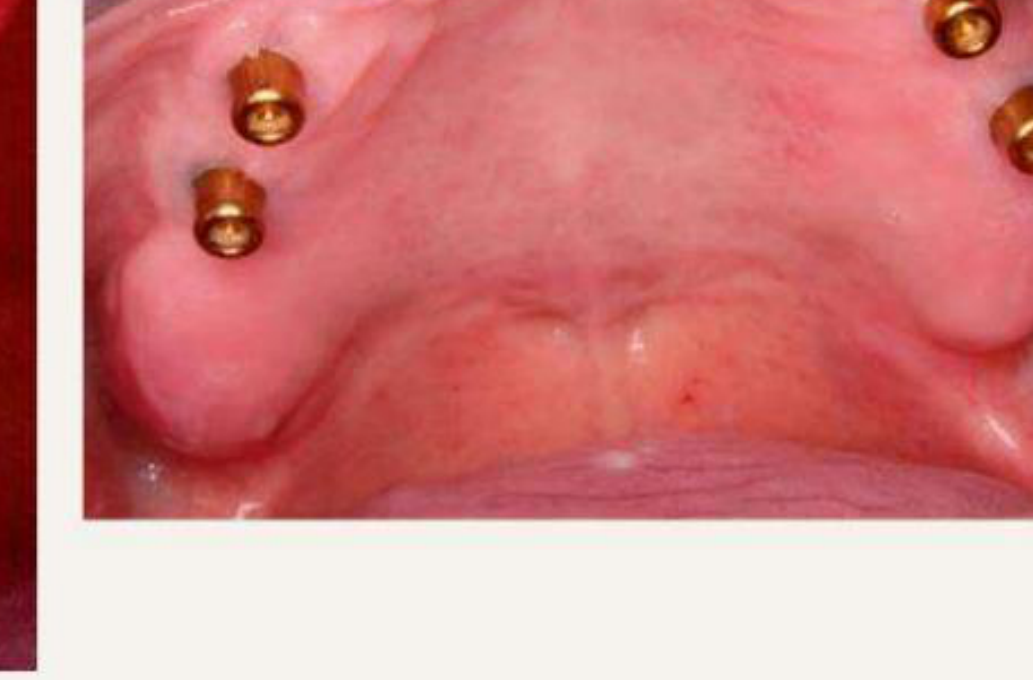
Case Scenario 23.1
Patient: 62-year-old male Chief Complaint: “I have tenderness around dental implants that were placed 1 year ago, and I notice bleeding when I’m brushing them.”
Background Information
The patient had a history of hypertension and hypothyroidism. He currently smokes 10–15 hand-rolled cigarettes per day, and he has smoked on and off for over 40 years. He managed to quit for a period around the time of implant placement, but he resumed smoking recently.
The patient sees his dentist regularly, has been edentulous for 10 years and struggled to wear a complete maxillary denture. He uses a powered toothbrush twice per day to brush around the implants.
Current Findings: (1 year after implant placement): Generalized probing depths of 5–6 mm around all the implants. Bleeding on probing score, 80%. Evidence of radiographic bone loss of 2–4 mm from baseline records. Generally poor oral hygiene.
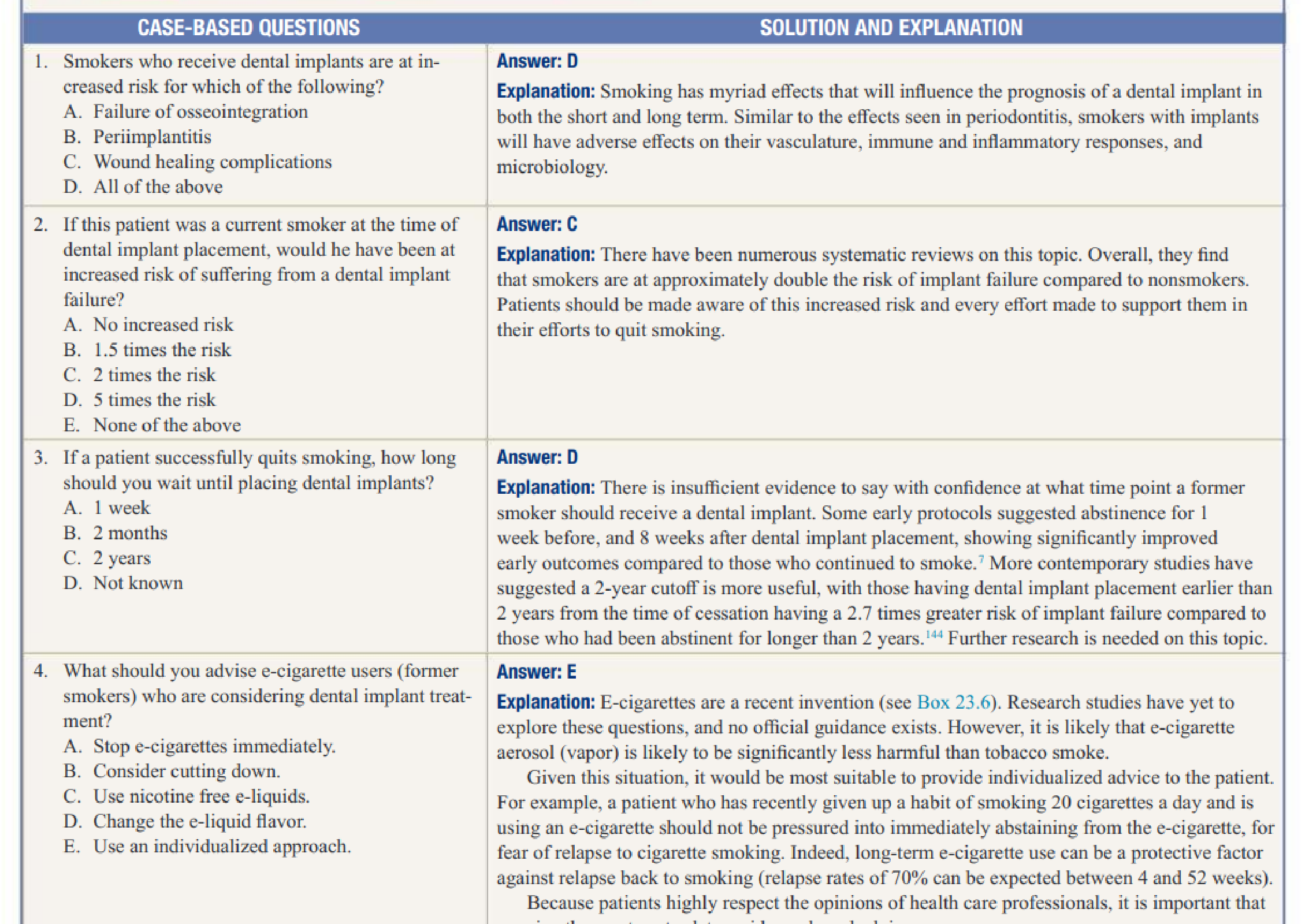
| CASE-BASED QUESTIONS | SOLUTION AND EXPLANATION |
|---|---|
| 1. Smokers who receive dental implants are at increased risk for which of the following? A. Failure of osseointegration B. Periimplantitis C. Wound healing complications D. All of the above | Answer: D Explanation: Smoking has myriad effects that will influence the prognosis of a dental implant in both the short and long term. Similar to the effects seen in periodontitis, smokers with implants will have adverse effects on their vasculature, immune and inflammatory responses, and microbiology. |
| 2. If this patient was a current smoker at the time of dental implant placement, would he have been at increased risk of suffering from a dental implant failure? A. No increased risk B. 1.5 times the risk C. 2 times the risk D. 5 times the risk E. None of the above | Answer: C Explanation: There have been numerous systematic reviews on this topic. Overall, they find that smokers are at approximately double the risk of implant failure compared to nonsmokers. Patients should be made aware of this increased risk and every effort made to support them in their efforts to quit smoking. |
| 3. If a patient successfully quits smoking, how long should you wait until placing dental implants? A. 1 week B. 2 months C. 2 years D. Not known | Answer: D Explanation: There is insufficient evidence to say with confidence at what time point a former smoker should receive a dental implant. Some early protocols suggested abstinence for 1 week before, and 8 weeks after dental implant placement, showing significantly improved early outcomes compared to those who continued to smoke.7 More contemporary studies have suggested a 2-year cutoff is more useful, with those having dental implant placement earlier than 2 years from the time of cessation having a 2.7 times greater risk of implant failure compared to those who had been abstinent for longer than 2 years.144 Further research is needed on this topic. |
| 4. What should you advise e-cigarette users (former smokers) who are considering dental implant treatment? A. Stop e-cigarettes immediately. B. Consider cutting down. C. Use nicotine free e-liquids. D. Change the e-liquid flavor. E. Use an individualized approach. | Answer: E Explanation: E-cigarettes are a recent invention (see Box 23.6). Research studies have yet to explore these questions, and no official guidance exists. However, it is likely that e-cigarette aerosol (vapor) is likely to be significantly less harmful than tobacco smoke. Given this situation, it would be most suitable to provide individualized advice to the patient. For example, a patient who has recently given up a habit of smoking 20 cigarettes a day and is using an e-cigarette should not be pressured into immediately abstaining from the e-cigarette, for fear of relapse to cigarette smoking. Indeed, long-term e-cigarette use can be a protective factor against relapse back to smoking (relapse rates of 70% can be expected between 4 and 52 weeks). Because patients highly respect the opinions of health care professionals, it is important that we give the most up-to-date, evidence-based advice. |
 |  |
 |
References5152
Smoking, periodontal disease and the role of the dental profession K K Hilgers, D F Kinane PMID: 16451463
Smoking and periodontal disease K-Y Zee* *Westmead Centre for Oral Health and Faculty of Dentistry, The University of Sydney, New South Wales.
- Lindhes Clinical Periodontology and Implant Dentistry Chapter 11, 7th Edition 2022
- Electronic cigarettes :un update on products, regulations public health approaches and oral health, Anthony Weke and Richard Holliday, Community Dental health 2022
- Electronic cigarettes and Oral Health, JDR, R. Holliday et al 2021
CHAPTER 23 Risk Factors of Periodontal Disease (Smoking) Philip M. Preshaw | Leandro Chambrone | Richard Holliday
CHAPTER OUTLINE
- The Smoking Epidemic
- Effects of Smoking on the Prevalence and Severity of Periodontal Disease
- Gingivitis
- Periodontitis
- Effects of Smoking on the Etiology and Pathogenesis of Periodontal Disease
- Microbiology
- Immune-Inflammatory Responses
- Physiology
- Effects of Smoking on the Response to Periodontal Therapy
- Nonsurgical Therapy
- Surgical Therapy and Implants
- Maintenance Therapy
- Effects of Smoking Cessation on Periodontal Treatment Outcomes
Footnotes
-
Original PDF page 1: L9 Smoking , vaping and Periodontal health (1), p.1 ↩
-
Original PDF page 2: L9 Smoking , vaping and Periodontal health (1), p.2 ↩
-
Original PDF page 3: L9 Smoking , vaping and Periodontal health (1), p.3 ↩
-
Original PDF page 4: L9 Smoking , vaping and Periodontal health (1), p.4 ↩
-
Original PDF page 5: L9 Smoking , vaping and Periodontal health (1), p.5 ↩
-
Original PDF page 6: L9 Smoking , vaping and Periodontal health (1), p.6 ↩
-
Original PDF page 7: L9 Smoking , vaping and Periodontal health (1), p.7 ↩
-
Original PDF page 8: L9 Smoking , vaping and Periodontal health (1), p.8 ↩
-
Original PDF page 9: L9 Smoking , vaping and Periodontal health (1), p.9 ↩
-
Original PDF page 10: L9 Smoking , vaping and Periodontal health (1), p.10 ↩
-
Original PDF page 11: L9 Smoking , vaping and Periodontal health (1), p.11 ↩
-
Original PDF page 12: L9 Smoking , vaping and Periodontal health (1), p.12 ↩
-
Original PDF page 13: L9 Smoking , vaping and Periodontal health (1), p.13 ↩
-
Original PDF page 14: L9 Smoking , vaping and Periodontal health (1), p.14 ↩
-
Original PDF page 16: L9 Smoking , vaping and Periodontal health (1), p.16 ↩
-
Original PDF page 15: L9 Smoking , vaping and Periodontal health (1), p.15 ↩
-
Original PDF page 17: L9 Smoking , vaping and Periodontal health (1), p.17 ↩
-
Original PDF page 19: L9 Smoking , vaping and Periodontal health (1), p.19 ↩
-
Original PDF page 18: L9 Smoking , vaping and Periodontal health (1), p.18 ↩
-
Original PDF page 21: L9 Smoking , vaping and Periodontal health (1), p.21 ↩
-
Original PDF page 22: L9 Smoking , vaping and Periodontal health (1), p.22 ↩
-
Original PDF page 20: L9 Smoking , vaping and Periodontal health (1), p.20 ↩
-
Original PDF page 23: L9 Smoking , vaping and Periodontal health (1), p.23 ↩
-
Original PDF page 24: L9 Smoking , vaping and Periodontal health (1), p.24 ↩
-
Original PDF page 25: L9 Smoking , vaping and Periodontal health (1), p.25 ↩
-
Original PDF page 26: L9 Smoking , vaping and Periodontal health (1), p.26 ↩
-
Original PDF page 27: L9 Smoking , vaping and Periodontal health (1), p.27 ↩
-
Original PDF page 28: L9 Smoking , vaping and Periodontal health (1), p.28 ↩
-
Original PDF page 29: L9 Smoking , vaping and Periodontal health (1), p.29 ↩
-
Original PDF page 30: L9 Smoking , vaping and Periodontal health (1), p.30 ↩
-
Original PDF page 31: L9 Smoking , vaping and Periodontal health (1), p.31 ↩
-
Original PDF page 32: L9 Smoking , vaping and Periodontal health (1), p.32 ↩
-
Original PDF page 33: L9 Smoking , vaping and Periodontal health (1), p.33 ↩
-
Original PDF page 35: L9 Smoking , vaping and Periodontal health (1), p.35 ↩
-
Original PDF page 36: L9 Smoking , vaping and Periodontal health (1), p.36 ↩
-
Original PDF page 34: L9 Smoking , vaping and Periodontal health (1), p.34 ↩
-
Original PDF page 37: L9 Smoking , vaping and Periodontal health (1), p.37 ↩
-
Original PDF page 38: L9 Smoking , vaping and Periodontal health (1), p.38 ↩
-
Original PDF page 40: L9 Smoking , vaping and Periodontal health (1), p.40 ↩
-
Original PDF page 41: L9 Smoking , vaping and Periodontal health (1), p.41 ↩
-
Original PDF page 39: L9 Smoking , vaping and Periodontal health (1), p.39 ↩
-
Original PDF page 42: L9 Smoking , vaping and Periodontal health (1), p.42 ↩
-
Original PDF page 43: L9 Smoking , vaping and Periodontal health (1), p.43 ↩
-
Original PDF page 45: L9 Smoking , vaping and Periodontal health (1), p.45 ↩
-
Original PDF page 46: L9 Smoking , vaping and Periodontal health (1), p.46 ↩
-
Original PDF page 44: L9 Smoking , vaping and Periodontal health (1), p.44 ↩
-
Original PDF page 47: L9 Smoking , vaping and Periodontal health (1), p.47 ↩
-
Original PDF page 48: L9 Smoking , vaping and Periodontal health (1), p.48 ↩
-
Original PDF page 49: L9 Smoking , vaping and Periodontal health (1), p.49 ↩
-
Original PDF page 50: L9 Smoking , vaping and Periodontal health (1), p.50 ↩
-
Original PDF page 51: L9 Smoking , vaping and Periodontal health (1), p.51 ↩
-
Original PDF page 52: L9 Smoking , vaping and Periodontal health (1), p.52 ↩