Heithersay 1999 - Clinical Features Pages 27-37
Source extract from L9, Clinical Features.
Citation and publication boundary
Heithersay, G. S. Quintessence International. 1999;30:27–37, as listed in L9. The lecture labels this page range “Clinical, radiologic and histopathologic features”; the exact article title is not established by the lecture.
L9 separately lists Heithersay’s pp. 83–95 report on potential predisposing factors and pp. 96–110 report on TCA treatment, curettage and restoration. This note covers only pp. 27–37. A nearby L9 lecturer note says the three publications were in 1990, conflicting with the 1999 citation; the year mapping remains unresolved.
The L9 extract is descriptive. It supplies no study design, sample size, denominator, follow-up, or quantitative outcome for these clinical features.
Clinical features attributed in L9
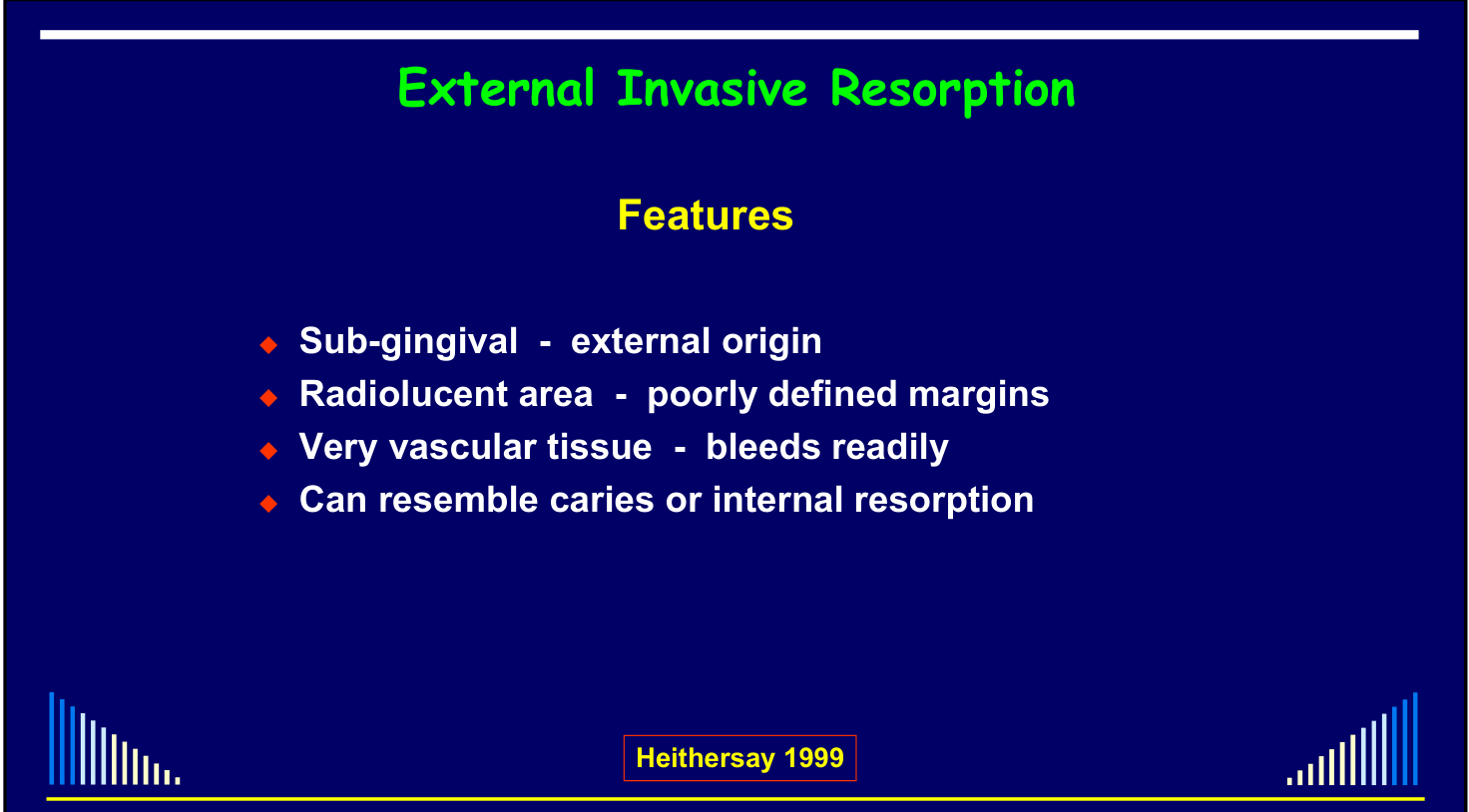
- Sub-gingival – external origin.
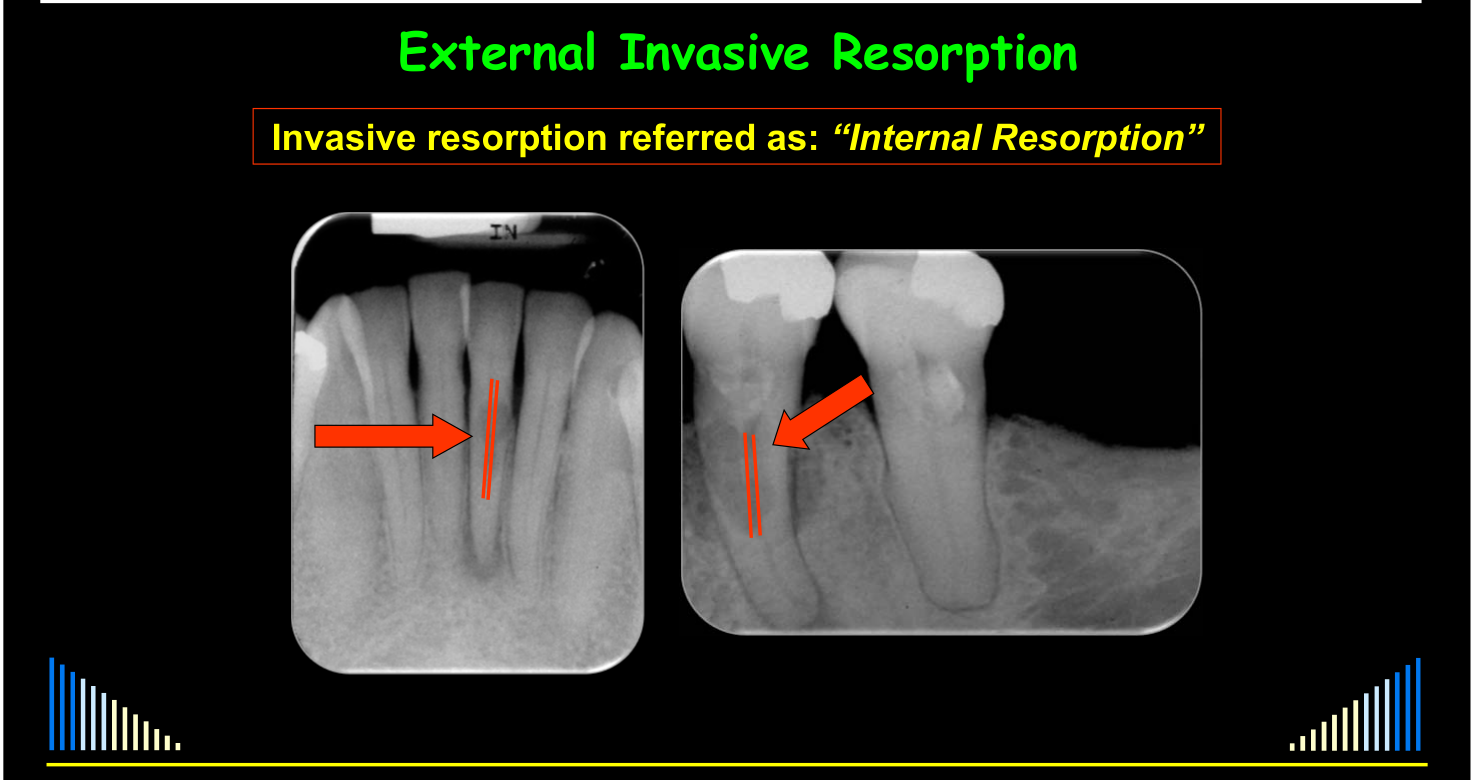
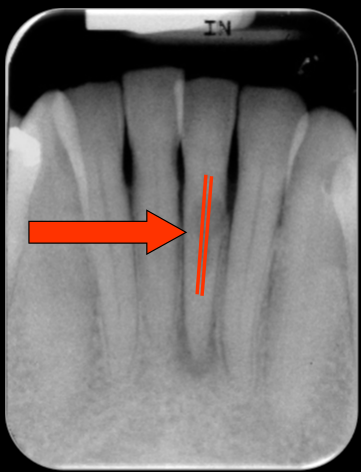
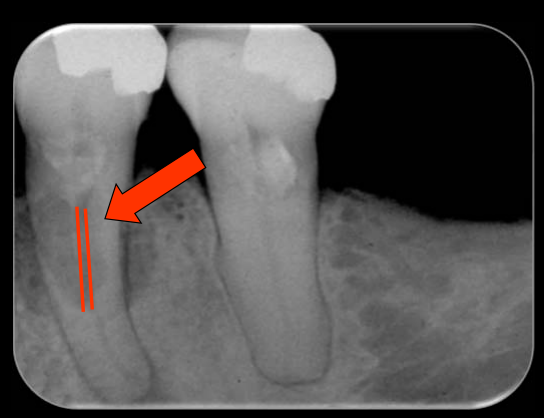
- Radiolucent area – poorly defined margins.
- Very vascular tissue – bleeds readily.
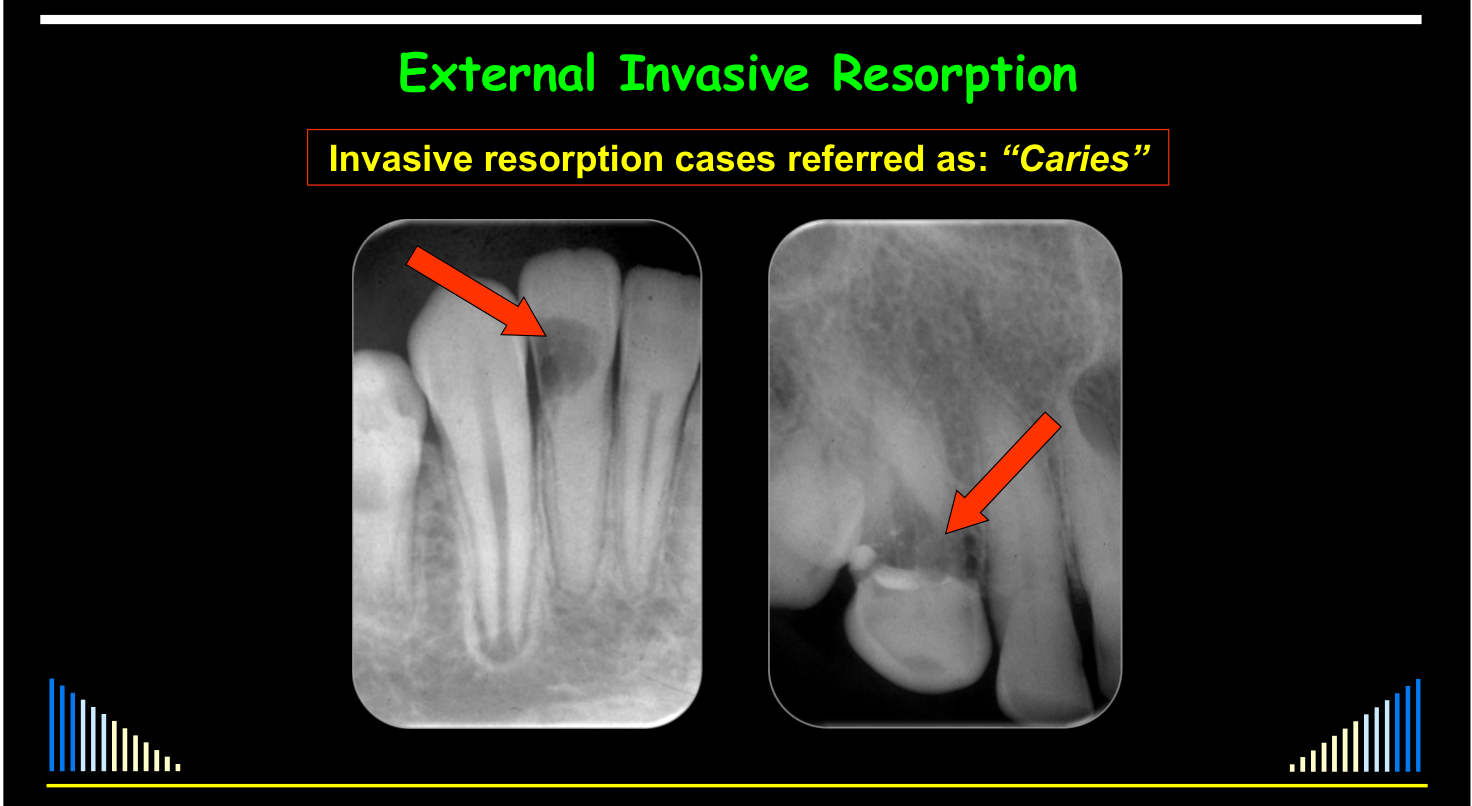
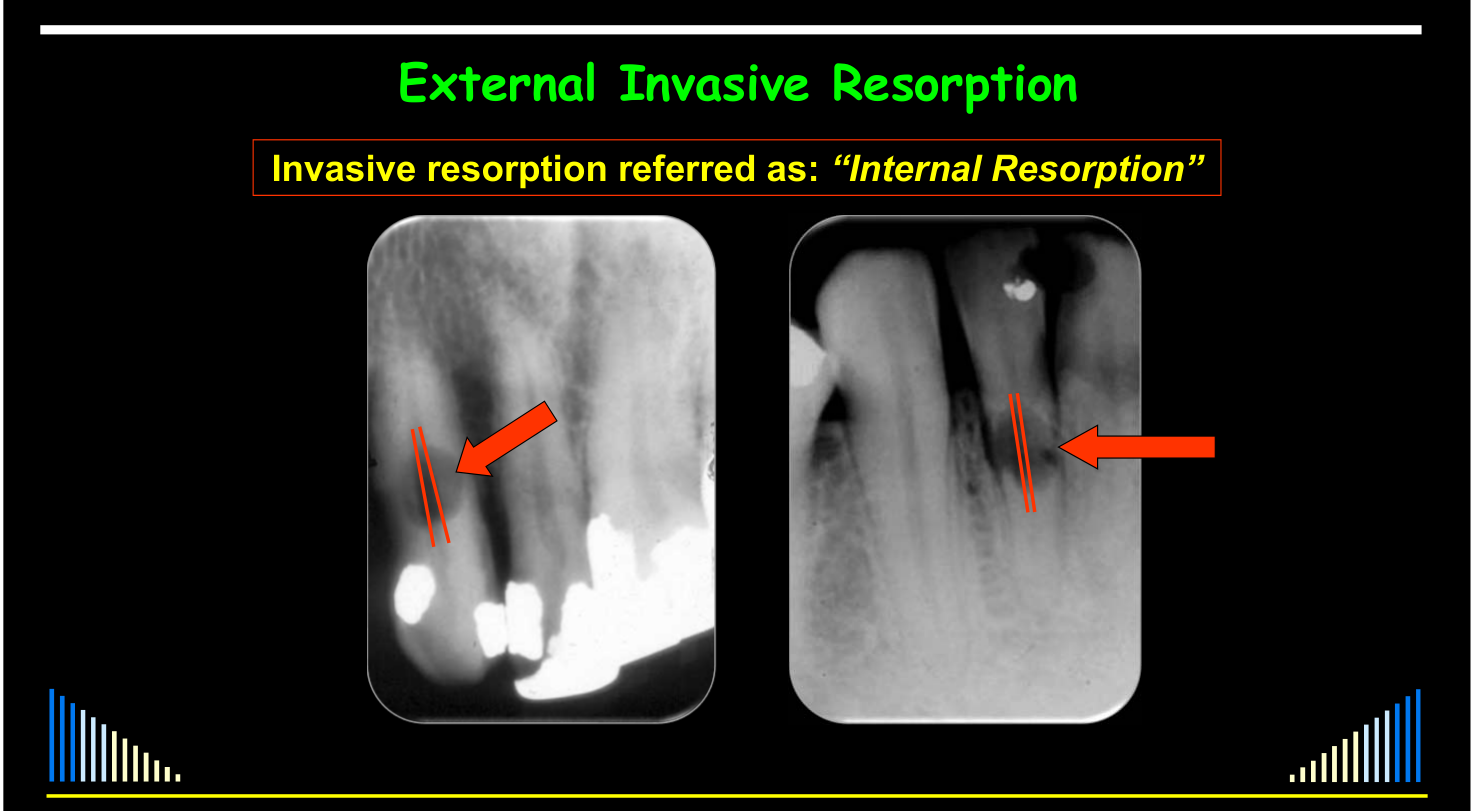
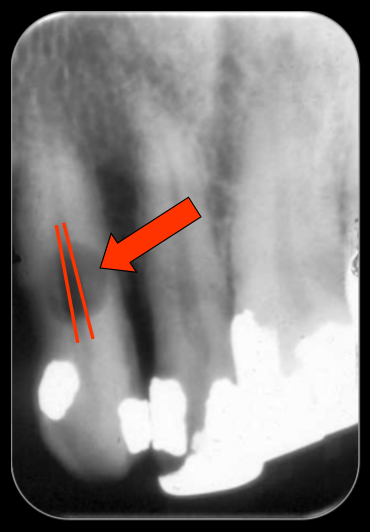
- Can resemble caries or internal resorption.
- Considerable variation in radiographic appearance.
- Little or no pain; many lesions are discovered incidentally during routine radiography or dental hygiene treatment.
- A dental hygienist or dentist may catch an instrument in the resorptive area during scaling and cleaning.
Figures shown with the extract
These seven images appear in the L9 clinical-features block. The first two carry captions in the source lecture; the remaining images are uncaptioned there. L9 does not identify the original article page for any individual figure, so their placement with this extract is preserved without claiming a verified pp. 27–37 figure match.
Contextual takeaway
L9 uses the pp. 27–37 citation for qualitative features of external invasive resorption: variable radiographic appearance, little or no pain with incidental discovery, vascular bleeding, and possible resemblance to caries or internal resorption; the extract supplies no case denominator.
Source lecture pages 12
Footnotes
-
Original PDF page 12 of L9: L9 Resorption 5 - External Invasive, p.12. ↩
-
Original PDF page 13 of L9: L9 Resorption 5 - External Invasive, p.13. ↩