Prosthodontics1
Major Connectors
Functional Characteristics2
- Provides rigidity board-exam-question
- Unites all other components
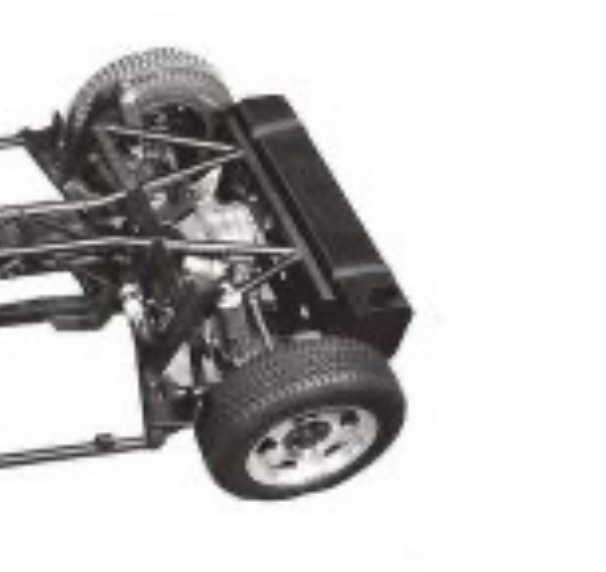
- Acts as the "chassis" of the framework, uniting all other components like meshwork, minor connectors, and rests into a single unit
- Not placed on movable tissue
Placement
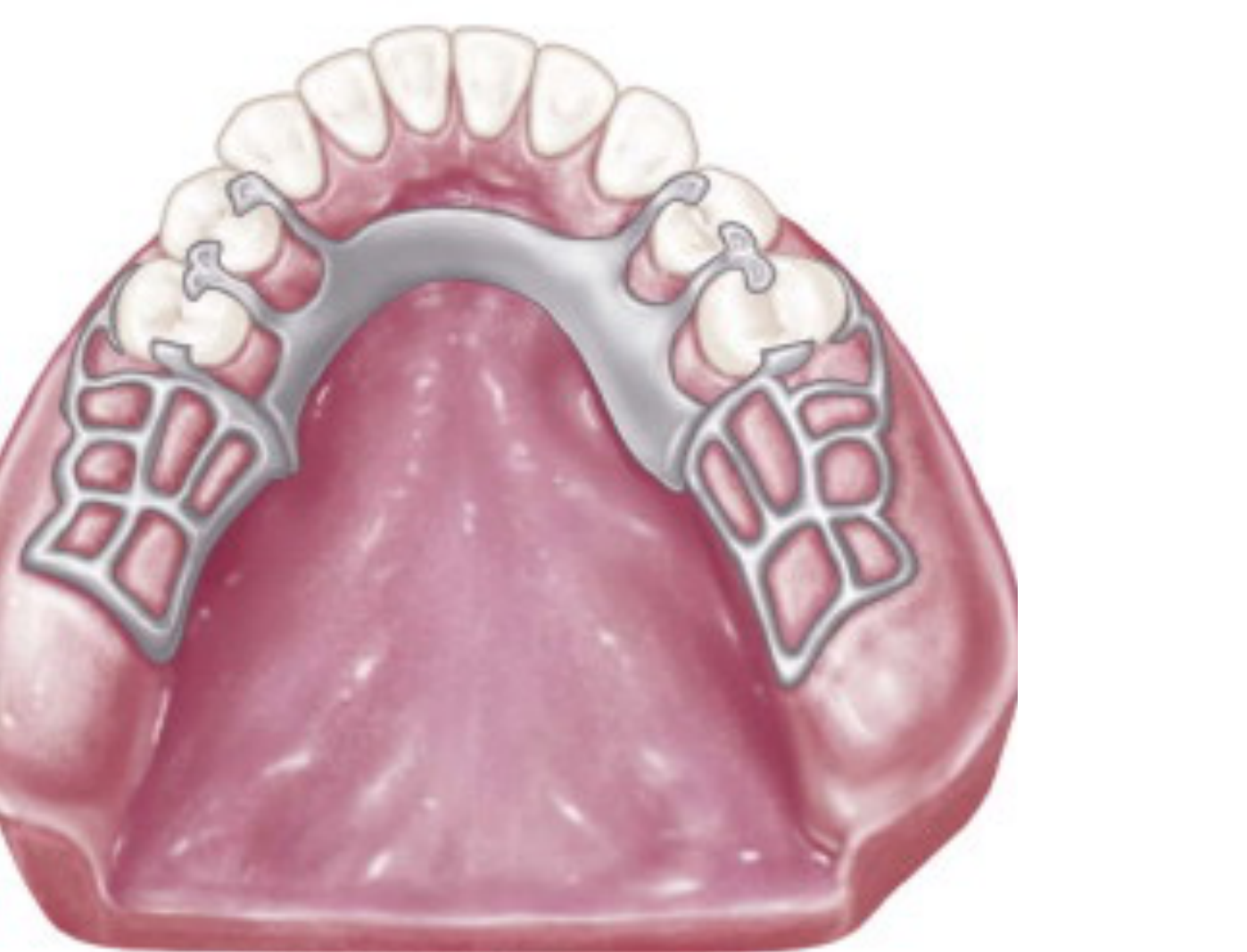
The major connector is the thickest central component of the metal partial denture framework and is placed on bounded tissue, such as the palate or the lingual aspect of the mandibular alveolar ridge.
 |  |
 |
Maxillary Major Connectors
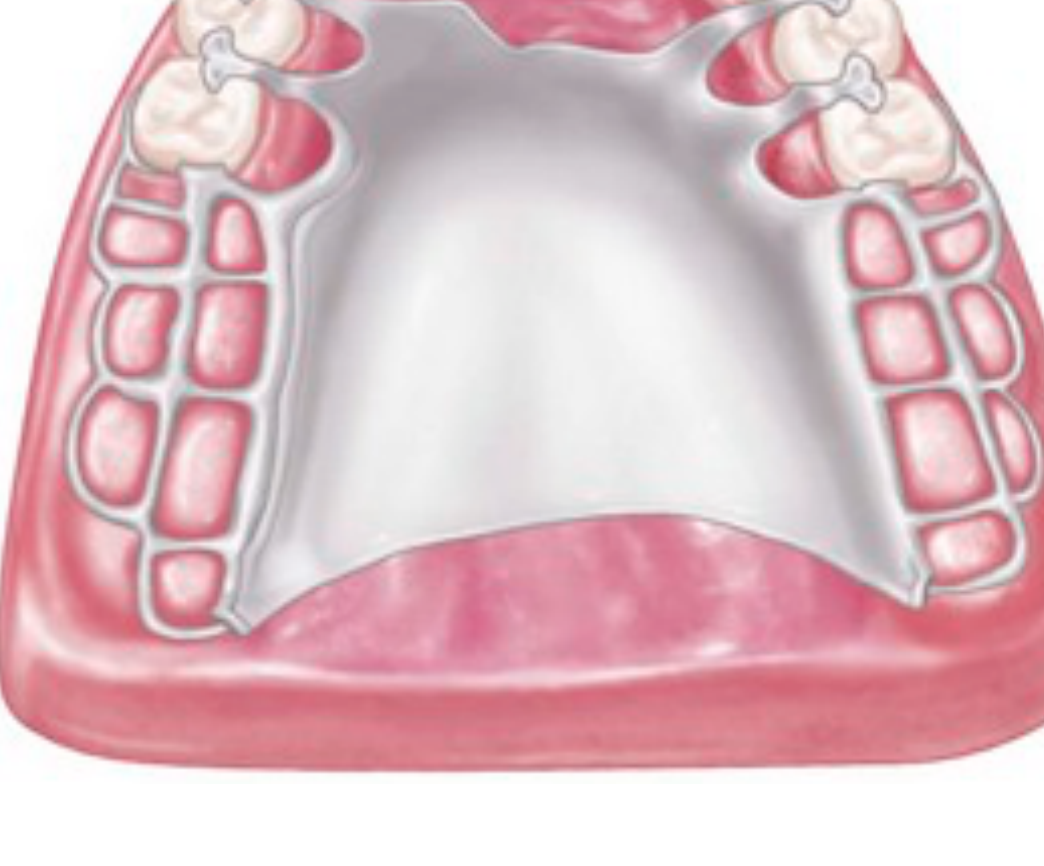
Complete Palatal Plate
Characteristics and Indications
- Most rigid maxillary major connector
- Indicated when all posterior teeth are missing bilaterally
- Used for periodontally compromised teeth, shallow vaults, small mouths, or flat/flabby ridges
- most common for kennedy class I
Horseshoe Design
Characteristics and Indications
- Least rigid maxillary major connector
- Only used if a large palatal torus is present
- Thinner than the complete palatal plate
- Allows the framework to bypass the torus if the patient does not wish to have it surgically removed
Palatal Strap
Design Requirements
- All major connectors should cross the midline at a right angle
- Crossing perpendicularly ensures an ideal, rigid design and maintains strength
Beading for Maxillary Connectors
Definition and Purpose3
- Exclusive for maxillary major connectors
- Involves scribing a 0.5mm rounded groove in the cast at the borders of the major connector
- Adds strength and maintains tissue contact to prevent food impaction
- Creates a slightly thicker metal border for added strength

Mandibular Major Connectors
Lingual Bar
Characteristics and Indications
- Indicated when the depth of the lingual vestibule is ≥7mm board-exam-question
- Simplest and most common mandibular major connector
- Vestibule depth is measured from the lingual gingival margin to the start of the lingual frenum
- This space is required to avoid impinging on the tongue musculature
Lingual Plate
Indications for Use
- When depth of lingual vestibule is <7mm
- When additional tooth loss is anticipated
- Presence of lingual tori
- When all posterior teeth are missing bilaterally
- Covers more surface area than a bar, potentially offering better support but sometimes less comfort
Labial Bar
Indications for Swinglock Design
- Also known as a swing lock design when it includes a hinge on one end and a locking mechanism on the other
- When there is a missing canine
- Unfavorable soft tissue contour
- Questionable periodontal prognosis
Minor Connectors
Primary Function4
- Connects major connector to rests, indirect retainers, and clasps
- Serve as the "branches" from the "tree trunk" (the major connector)
Footnotes
-
Original PDF page 1: Prosthodontics - 11 - Major & Minor Connectors, p.1 ↩
-
Original PDF page 2: Prosthodontics - 11 - Major & Minor Connectors, p.2 ↩
-
Original PDF page 6: Prosthodontics - 11 - Major & Minor Connectors, p.6 ↩
-
Original PDF page 10: Prosthodontics - 11 - Major & Minor Connectors, p.10 ↩