 | 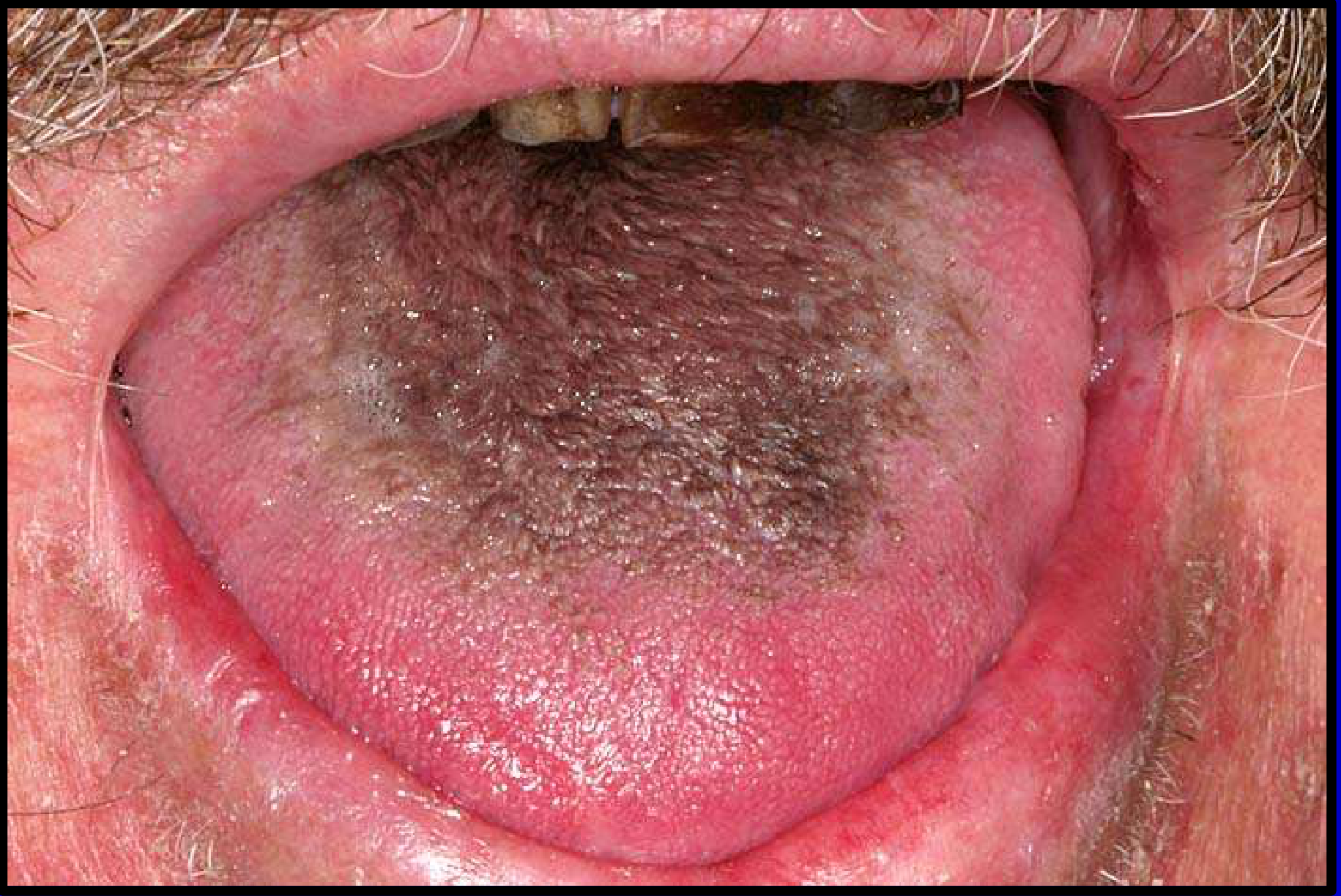 |
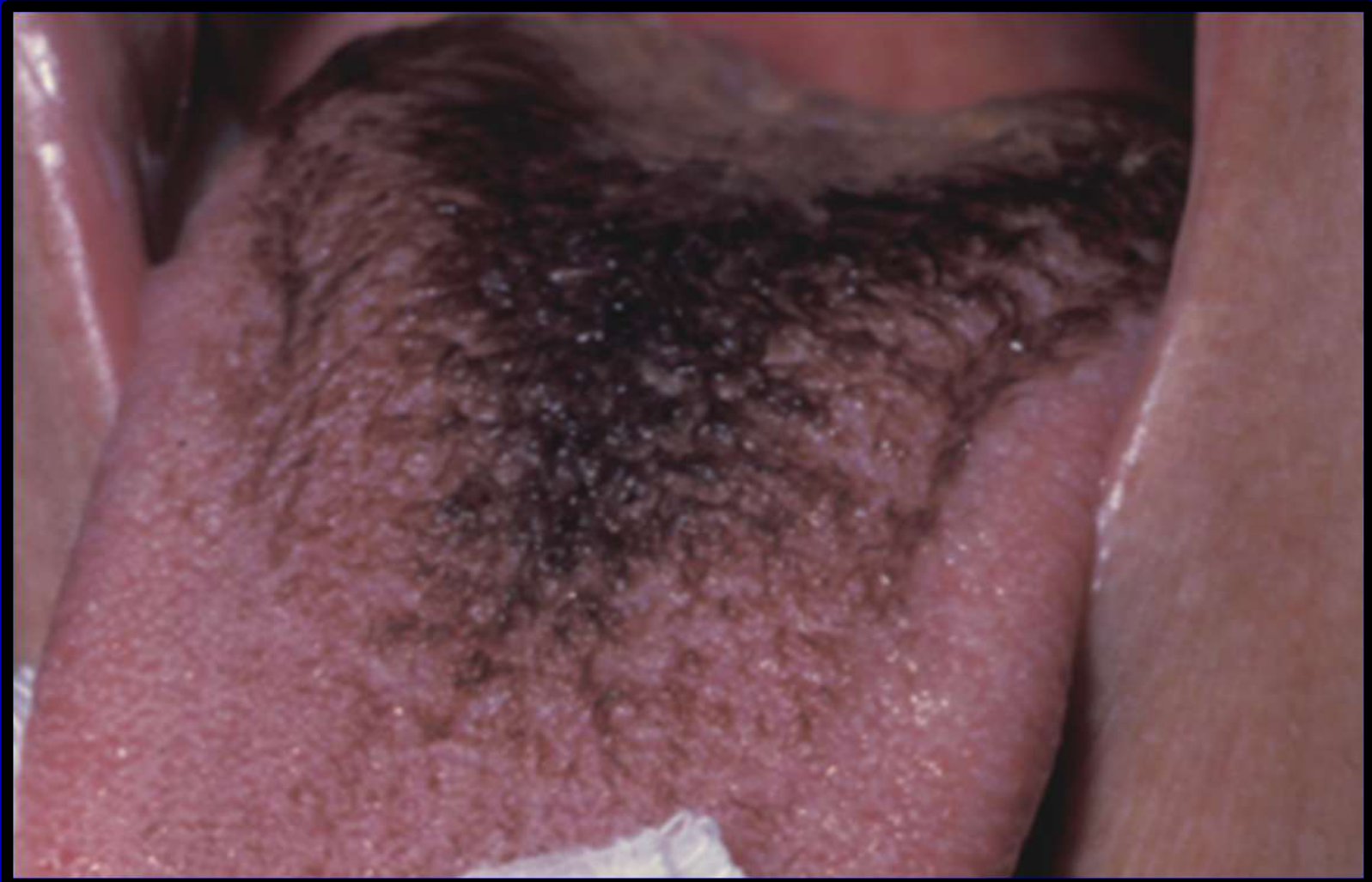
Hairy tongue is a benign reactive condition where retained keratin and reduced desquamation on filiform papillae lead to elongated, hairlike papillae and discoloration; it is usually asymptomatic and self-limiting. Contem L9 Ben
Etiology and Pathophysiology
Contributory factors :
- Hyposalivation/dehydration (anticholinergic meds, low water intake, chronic anxiety, smoking; less frequent causes include head & neck radiation or Sjögren’s). Contem
- Altered oral flora with filiform papillary overgrowth (broad-spectrum antibiotics, steroids, oxygenating mouthwashes, head & neck radiation, hematopoietic stem cell transplant) → proliferation of fungi and chromogenic bacteria. L9 Ben
- Poor diet low in fresh fruits/vegetables and hospital-associated dehydration; antibiotic association is indirect (illness/dehydration). 2. Phy Contem
Prevalence
- Seen mainly in adults with hyposalivation/chronic illness; possible male predilection. Contem
- Common in hospitalized inpatients (black hairy tongue). 2. Phy
Histological Features
- Extreme elongation of filiform papillae with hyperkeratosis. 2. Phy
- Surface contamination by bacterial colonies, microorganisms, and fungi; mild lamina propria inflammation. L9 Ben 2. Phy
Clinical Features
- Usually asymptomatic and primarily a cosmetic concern. L9 Ben Contem
- Discoloration depends on diet, oral hygiene, and bacterial composition; staining from foods, dyes, tobacco, or chromogenic bacteria. L9 Ben Contem
Location
- Dorsal tongue surface (filiform papillae). L9 Ben
Appearance
- Enlarged/elongated filiform papillae producing a dense, hairlike surface. L9 Ben
- Color ranges from white → brown → black. L9 Ben
- Papillae may appear matted and stained by foods, dyes, tobacco, or chromogenic bacteria. Contem
Differential Diagnoses
- Hairy leukoplakia: EBV-associated, typically in immunocompromised patients; non-removable white linear plaques on lateral tongue, often bilateral. 4. Maj
- Pseudomembranous candidosis (thrush): white curdy plaques that can be scraped off, leaving erythematous/bleeding mucosa. 3. Sof
- Erythematous candidosis / median rhomboid glossitis: erythematous raw-appearing lesions or midline dorsal tongue atrophy. 3. Sof
- Geographic tongue: depapillated red patches with a white rim in a map-like pattern; dorsal/ventral tongue. 3. Sof
Relevant Clinical Investigations
- Usually a clinical diagnosis based on the characteristic dorsal tongue appearance. L9 Ben
- If candidosis is suspected in the differential, consider cytology/scrape/swab to confirm. 3. Sof
Patient Management
- Reassure: self-limiting with no serious sequelae; not an infection. Contem
- Identify and correct underlying causes (dehydration/hyposalivation, poor diet, offending agents); success depends on stopping contributing factors. Contem L9 Ben
- Improve hydration and diet (fresh fruits/vegetables) and reduce dehydrating habits (smoking, alcoholic mouth rinses). Contem
- Gentle tongue brushing/scraping (soft brush/scraper) to remove retained keratin; sodium bicarbonate may help. Contem L9 Ben
- Management may be more difficult post-radiation therapy. L9 Ben